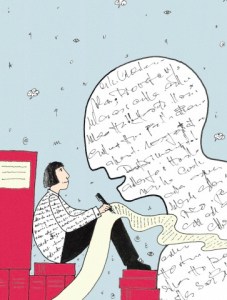
From the Archives: “There’s a Problem with Your Book”

Welcome back to our Tuesday segment, where we’ll be revisiting some of our most popular posts from the last few years.  What’s stayed the same?  And what’s changed?  We’ll be updating you on the facts, and taking a new (and hopefully refreshing) angle on a few timeless classics of Self Publishing Advisor.

∗∗∗∗∗

[ Originally posted: March 1st, 2011 ]

Your book published. Your family and friends have bought it. You’re excited…until they call you to tell you there were so many grammatical errors in the book that it was difficult to finish reading. “Oh no, I should have paid for copyediting”. Now you run the risk of “looking” unprofessional in the author community.

Too often authors are faced with the decision to either save their pennies or invest in editing services. They decide to bypass the editing. Fast forward to publication and many authors wish they would have made the extra investment. Even if you have gone through your manuscript with a fine tooth comb and had friends or family look it over, you’re almost guaranteed to find mistakes at publication. As a matter of fact, when you pay for professional copyediting services, the editor normally still has a 5% margin for error. With that margin of error from fresh and professionally trained eyes, imagine the level of error from amateur and familiar eyes.

When asked what they would have done differently when self-publishing their book, most authors agree they would have invested more money into professional copyediting and customizing their book cover.

So, I’m sold on the need for copyediting service, what do I need to know about working with an editor? Here are a few tips/things to keep in mind when you hire an editor:

  • Proofread and spell-check your work before sending it to an editor.
  • Remember that Editors are human and many work with about a 5% margin of error.
  • There are different levels of editing intensity: basic, moderate, and extensive.
  • Basic copyediting typically catches about 70% of errors in a manuscript.
  • As a self-publishing author, don’t focus on what the editor didn’t find, but rather what WAS found.
  • Review your manuscript again after you receive it from the editor to check for errors they may have missed.

If you want to be a successful author, it is important that you take the publishing process very seriously. That includes investing extra money into creating a polished product.

by Cheri Breeding

The topic of copyediting and the professional-grade book is not a new one to us here at Self-Publishing Advisor, but back in 2011 when Cheri first wrote her post it was not yet the standard by which most indie books were judged.  Since then, the industry has evolved, and we’ve written several times to try and sort out what copyediting might mean to the current aspiring self-publishing author.  (You can read those posts here and here.)

copyediting

Because we tackle this topic on a regular basis, it’s less helpful to rehash those posts than it is to do something a little different: I want to show you the difference between a professionally designed and copyedited book and one that hasn’t seen as much love and care put into its production.

Let’s start with covers.  To start, first let me say that it’s no exaggeration that there are two terribly designed self-published book covers out there for every good one.  All you have to do is look at the templates people are choosing from …

… to see why this is so easily and so often the case.  A professionally designed cover makes all the difference to your book’s impact on potential readers, and all the difference as to whether they actually choose to pay to purchase it.  Here are two neat examples of self-published books I’ve seen recently that I felt immediately drawn to for no other reason than the fact they are beautifully designed:

What I love most about these two examples is that they put the lie to any claim that genre fiction leans easily toward poor design.  Cazanav’s book is billed as paranormal fantasy, and Taylor’s as literary fiction––but if anything, Cazanav’s is sharper, more specific, and more revealing of the book’s content and tone.  That’s a good move!

So, let’s assume you’re sold on a professionally-designed cover.  What happens when you crack the spine and turn to the first page?  Does anything change?  Yes and no.  As Kyle Beshears writes on his blog, there’s real value to investing time and money into getting the exact design you want inside of your book as well as out.  Beshears chronicles his entire journey to self-publication, and points out that his choices––which always involved taking the cheapest option, even if it meant sacrificing untold hours of time and labor for his entire family––is not, in the end, a path worth following for many indie authors.

cover_comparison

Just getting the title page of his book to look the way he wanted (above, on the right) was a lengthy struggle.  Paying a little money up front doesn’t just ensure you get the design you want––it ensures you have an active advocate or team of advocates working for you and on your behalf to make sure your book is as beautiful as you’ve always hoped.

On a paragraph-by-paragraph basis, copyediting does for your sentences what a graphic designer does for your cover––which is to say, a copyeditor will whip your lines into shape and help you revise your book into something even stronger, and more compelling, than you could do on your own.  Relying on friends and family to be early readers is a good move, but relying on them to bring the same expertise and incisive vision as a career copyeditor who has been in the publishing industry for years and years is not such a good move.  Copyediting isn’t about changing what you do––it’s about making sure you create the best book possible and shifting some of the burden of perfection and hyperspecific industry insight off of your shoulders so that you can spend more time doing what you love: writing new books!

If you have any other ideas, I’d love to hear them.  Drop me a line in the comments section below and I’ll respond as quickly as I can.  ♠

KellyABOUT KELLY SCHUKNECHT: Kelly Schuknecht is the Executive Vice President of Outskirts Press. In addition to her contributions to the Outskirts Press blog at blog.outskirtspress.com, Kelly and a group of talented marketing experts offer book marketing services, support, and products to not only published Outskirts Press authors, but to all authors and professionals who are interested in marketing their books and/or careers. Learn more about Kelly on her blog, kellyschuknecht.com.

In Your Corner : Do I need a ghostwriter?

How do you know if it’s time to seek out a ghostwriter to help you complete your book?  And what all is involved in the process of ghostwriting, anyway?  Is it really any different from detailed copyediting?

If you’re asking these questions, I hope what I write here will help to answer at least a few of them.

As with any writing venture, ghostwriting is a unique experience that presents unique challenges in addition to unique benefits.  You won’t ever find me pretending otherwise, just as you won’t find me beating around the bush when it comes to recommending a thorough and professional edit of your manuscript once it’s been written––and just as I held no punches when I worked to draw a dividing line between copyediting and proofreading in my blog post two weeks ago.

So, what is ghostwriting?  It is, according to the “Publishing” page on About.com, “the practice of writing for and in the name of someone else. It is most commonly associated with book publishing, but today it is also widely used in public relations, corporate communications, social media, and many other industries and fields that are producing greater and greater amounts of written content.”  Many of our most prolific “superstar” genre specialists, like John Grisham and Tom Clancy and Nora Roberts (and so on and so on to infinity) employ a combination of understudies, assistants or secondary writers, and ghostwriters.  They are called upon to generate, quite simply, too much material for a single human being to keep pace.  But many if not most niche storytellers––whether famous or indie, traditionally published or self-publishing––lead hectic and busy lives that keep them from writing the books that they want to.  We just can’t ignore the fact that self-publishing authors deserve to know that there is another option out there for them!

ghostwriting

The process is relatively simple: most ghostwriters work on a contract or freelance basis for companies like Outskirts Press, so the fastest way to get yourself set up with an accomplished and expert ghostwriter is to go through one of these established websites.  Perhaps the best reason of all to go with someone who has been vetted and proven trustworthy is this: ghostwriting is, at its core, a collaborative venture between you (the author) and your ghostwriter.  How you choose to work depends more on you and what your vision for a piece demands than it does on time constraints, or one hopes for such a truth in a perfect universe.  (Being too rushed for time to go it alone is a wholly valid reason to hire a ghostwriter!)

Ghostwriting has been around awhile.  Long enough, in fact, that industry supergiants like Forbes have taken a look at it––and, circling back to my comment about collaboration:  In this article for Forbes, contributor Sydney LeBlanc writes that “you can turn [your] entire book project over to the writer (research and writing) or you can provide research, notes, periodicals, etc that will help the writer.”  That’s one option, but “You can also have regular ‘interviews’ with the writer who will take notes or record conversations with you about the topic. The writer will write draft chapters for you to review, edit, or make suggestions.”  LeBlanc says that, ultimately, “There are many ways to work with a ghostwriter; it all depends on what is convenient or best for you and what is in your budget.”  (Emphasis mine.)

Hopefully this is enough to convince you that seeking out a ghostwriter is a simple and easy thing to do, and that therefore we can move past one of several possible obstacles to taking that course of action!

(PERSONAL ASIDE & RANT: Enough with the stigma, already!  Everyone’s writing method looks different, anyway, so why do we feel guilty over choosing to bring someone else in on the process?  Let’s celebrate diversification through collaboration rather than taking ghostwriting as a marker of a lack of creativity!)

So, how do you know it’s time to start researching ghostwriting as a viable option for your book?  Well, here’s a simple rule of thumb: if you can answer all or even most of the following questions with “yes,” then it might be time:

  1. Are you overworked, overstressed, or overcommitted?
  2. Do you have a story to share?
  3. Do you need a little help developing your ideas beyond the outline or draft stage?
  4. Do you believe in artistic collaboration?
  5. Can you trust the ghostwriter you pick to do justice to your vision?

Here’s where ghostwriting diverges from that other industry-specific term, “copyediting” : a copyeditor’s job is to take a finished draft and polish it up for final publication.  A thorough copyedit involves more than just shuffling commas around, but it won’t substantially change the core content of a piece.  Ghostwriting, on the other hand, involves the conceptualization and generation of a great deal of new material.  Your ghostwriter becomes your collaborator and your partner in crime, your sounding board and scribe.  Ghostwriters become folded into your stories, and it is in their best interest as paid professionals to deliver the best service they can––but if you’re both lucky, your ghostwriter might even become your ally and friend.  And what could be better than that?  Writing can be such an isolating experience, but I’d like to assure you as I do each and every week:


You’re not alone. ♣︎

ElizabethABOUT ELIZABETH JAVOR: With over 18 years of experience in sales and management, Elizabeth Javor works as the Manager of Author Services for Outskirts Press. The Author Services Department is composed of knowledgeable publishing consultants, pre-production specialists, customer service reps and book marketing specialists; together, they all focus on educating authors on the self-publishing process to help them publish the book of their dreams. Whether you are a professional looking to take your career to the next level with platform-driven non-fiction or a novelist seeking fame, fortune, and/or personal fulfillment, Elizabeth Javor can put you on the right path.

In Your Corner : Speaking Out and Speaking Strong

For those of you who are new to self-publishing and who are new to writing book-length manuscripts as well, the act of cultivating of a resoundingly authentic and consistent voice can present a particularly difficult (and ongoing!) struggle.  What is voice?  And how do we go about cultivating one, much less stick with it through chapter after chapter while negotiating other, competing concerns?

Voice, simply put, is your personality made manifest in the style, characterization, plotting, and point of view that emerges over the course of your book.  Voice is the unique approach that distinguishes one author from another, even when they’re writing the same story.  Voice sets Jackson Pearce’s Sisters Red apart from Marissa Meyer’s Scarlet apart from Angela Carter’s The Bloody Chamber apart from the Brother’s Grimm and their transcription of the original Red Riding Hood tale.  Distinctive voices allow us to revisit even a familiar, beloved storyline and get something new from it each and every time.

But authors are very rarely the written equivalent of a Maybelline commercial: nobody, and I repeat, nobody is “born with it” in the sense that a kitten is born adorable and fire is born when a lit match touches a candlewick.  Which is not to say any of us use cosmetics companies as standards for authorial experience, but we do sometimes fall into the trap of comparing ourselves to other authors that we respect and admire as if those authors were delivered into the universe with the tools and skill and voice requisite to connect them with their readers in later life.  It simply doesn’t happen that way!  And a captivating voice, like every other aspect of good writing, takes time and work to acquire.

david mccullough

In order to develop clear thinking and therefore a clear voice, an author must do two things that might, at first glance, seem contradictory: pay close attention to detail, and relax into the writing process.  Whoa there, you’re thinking.  I can’t do both at the same time!  And this may in fact be true: everyone’s writing process looks different.  (And mine, I must admit, even looks different from one day to the next.)  Whether you apply yourself to both of these things at the same time or separately doesn’t matter so much as ensuring that you do them both at some point.  And I personally lean heavily towards relaxing first, and then applying a microscope later––but some authors prefer to go into the drafting stage with a rigorous outline and a bundle of research already in hand, which is perfectly wonderful too.

The benefit of paying close attention is that you’ll notice when your voice changes.  I find this particularly applies when reading aloud a passage I’ve written, although that might take more time than you have if you’re reading an entire manuscript.  Keep a weather eye out for shifts in tense, plurality, characterization, and vocabulary as well as sentence structure as you go along––a sudden jump in any of these things can give a reader pause, and halt the flow of your prose.  And sometimes, these shifts slide completely under the radar; after months or even years of writing our manuscripts, we as authors simply cannot edit our own books!  It becomes impossible to hold both the big picture and the finer points of editorial expertise in mind when writing––we tend to either fixate on all the little flaws that only we can see, or our eyes skip over plot holes and inconsistencies in voice because we know what’s going on and our minds fill in the gaps automatically.  This is where a professional editor, like the ones I work with over at Outskirts Press, comes in handy.

Editing is not optional for the dedicated author, but there are all sorts of reasons––including the ones stated above––why we need to seek out fresh sets of eyes in addition to our own during the editing and revision processes.  Casual editors and first readers, such as friends and family, can be useful during the early stages, but what we all really need––what self-publishing authors specifically need––is someone on hand who can recommend changes based on years of experience and a wealth of industry expertise.  Not to mention, someone who will help you spot the points in your manuscript when you need to circle back around to a consistent voice.  A good editor may recommend changes, but ultimately, the author’s wishes and vision for a book are respected––and that is what is published.  A captivating voice is, when push comes to shove, something that taps into a shared relationship between author and text … and that sort of relationship cannot be manufactured.

voice in self publishing

Which brings me to my second point.  To create a unifying and consistent voice, an author really must relax and let the inspiration flow uninterrupted.  Jack Kerouac’s On the Road may be an extreme example of continuity in writing leading to continuity in voice, but it does illustrate the point that whatever you can do to limit your exposure to emotional and physical disruptions while writing––do.  Kerouac locked himself away for three weeks while he typed up the continuous “scroll” that would eventually form the base manuscript for his book, but you don’t have to go to such extreme measures to write a good book or to relax into the writing process!  You know the boundaries of your own mind and attention best, so you know what must be done to cut through all of the white noise generated by everyday life.  And not to harp on like a broken record, but seeking a professional editor for your book will lift the burden of obsessing over the details and leave you free to do what you do best: write.  That’s it, that’s really it: you write books, and you’ll write better books when you’re “in the zone,” or when you’re physically and emotionally free to stack word on word until something beautiful and unexpectedly perfect happens––and you have a book.

Writing is hard.  Writing well is even harder.  But you have a voice that the world needs to hear, and a book that the world needs to read.  And always remember:

You’re not alone. ♣︎

ElizabethABOUT ELIZABETH JAVOR: With over 18 years of experience in sales and management, Elizabeth Javor works as the Manager of Author Services for Outskirts Press. The Author Services Department is composed of knowledgeable publishing consultants, pre-production specialists, customer service reps and book marketing specialists; together, they all focus on educating authors on the self-publishing process to help them publish the book of their dreams. Whether you are a professional looking to take your career to the next level with platform-driven non-fiction or a novelist seeking fame, fortune, and/or personal fulfillment, Elizabeth Javor can put you on the right path.

GUEST POST: Rob Mangelson of Outskirts Press on Editing

Every once in a while, we have the pleasure of featuring a blog post written by an expert outside of our small circle here at Self Publishing Advisor.  This week, we get to hear from Rob Mangelson, an independent contractor and marketing professional affiliated with Outskirts Press, a hybrid self-publishing company based out of the Denver, Colorado area.  We’ve actually run across the folks from OP before–as recently as two weeks ago, as a matter of fact–but here we have a chance to catch a few words direct from the source, so to speak.  So with no further ado, here are some of Rob’s thoughts on the subject of editing.


A professional editor is your last, best hurdle before sending your book off to publish. While it may seem an optional service, there are compelling reasons why you may not want to think of it as “optional” – not when your reputation and product quality are at stake.

editing

It’s humbling to submit a highly personal work to someone we imagine gleefully buying red ink by the barrel. However, in this case, red ink is your best friend. Here are three ways your investment in a professional editor will pay for itself:

  1. An editor is your best beta-tester. Your book is your product, and there’s no better way to “test” your product before it goes to market than with a professional editor – more than one editor, if it’s feasible. A test run of how your product might perform in the marketplace more than pays for itself, allowing you to tweak your writing and marketing to reach the right readers and keep them hooked once you do. In a perfect world, every publishing author would have the luxury of both an editor and a team of beta readers, but if you have to choose, hire a pro.
  2. Editors help you get your point across. You know what you mean to say – but will readers understand the ideas you’re trying to get across? There’s no way to know until you get someone “outside your head” to view your work from the perspective of a potential reader. This is one of the main missions of the editing process, and one that ensures that your words have the intended effect on the intended target audience so you can resonate with readers – and sell more books!
  3. Editors see “invisible” problems. By the time a book is close to finished and nearly ready for publication, most publishing authors have gone through it with a fine-toothed comb, often multiple times. But no matter how thoroughly and how often you review your own work, even the most conscientious authors can become blind to errors in their own prose. Even a couple of minor errors in your book can destroy your credibility and hurt your sales, making the services of a professional editor well worth a modest investment.

Remember, editors are, like you, avid readers and writers with the added advantage of having expertise in their field. Use that expertise to your advantage to get the most polished product possible. You’ll never regret it.


Thanks for reading!  Keep up with our guests and our archival visits by watching this space every Tuesday!

Self Publishing Advisor

selfpubicon1

Self-Publishing & Merchandising : A Book’s Interior Design

When we speak of books, we mostly speak of them as one of two things: an object, made up of surfaces and contours and textures, or as a vehicle for ideas.  We rarely pause to consider the interior design of a book, unless of course it is a book that draws attention with smart graphic design and accentuation.  What readers and producers of comic books, graphic novels, and illustrated fiction take for granted, the prose community has by and large neglected; that is, when we crack open the cover of a new book by Hugh Howey or Rachel Swaby or Sarah Taylor, we forget that every letter on those pages, every jot of ink and swathe of white space, has to be carefully arranged in order to make for a pleasant––and submersive––reading experience.

For the self-published author, a book’s interior aesthetic can spiral out of control quickly.  This is because a self-published author is not, generally speaking, a renaissance man with phenomenal powers of writing and artistry and graphic design.  A beautiful cover may seem like a more worthwhile use of a self-published author’s limited time.  Though there may be the rare exception, the average person who chooses (or is required by circumstances) to bypass traditional publishing also lacks the legion of highly specialized editorial staff who comb through manuscripts and ARCs looking for even the tiniest flaw––an orphan sentence, a snafu in line spacing, you name it.  And believe me, even though we don’t tend to think of readers as detail freaks, they have a sensitive nose for anything that feels “off.”  Your job as a self-published author is to keep your reader reading your book, not caught up in the intricacies of its design.  For that reason, a book’s interior should look as polished as possible.

Here are a few tips:

1. Choose your typeface carefully.

Whether you decide to opt for a serif or a sans-serif typeface, make sure you know what it will look like on whole blocks of text at once––pages and pages of text.  Also keep in mind that while sans-serif fonts have a sort of “cool” factor and are often evocative of popular science and science-fiction––and therefore add a dash of visual interest as well as genre resonance––serif fonts are actually easier to read at length.  That’s what the serif tags are there for, to help your eyes track seamlessly from one letter to the next.  Still, your choice will come down largely to preference (mine is for Monotype Bell and MVB Sirenne, both of which read well in multiple sizes, as well as in italicized passages and headings).

2. … And about those headings?

Not every book uses chapter headings on every page.  Take a look at the books in your genre, to get a feel for what’s normal there.  I’ve found in my collection that there’s a tendency toward headings in nonfiction and certain chapter-driven science fiction pieces, but that for the most part, fiction sticks with simple page numbers.  Also keep in mind that your inclusion (or exclusion) of headers and the positioning of your page number will affect your margins.  It’s absolutely essential that you leave extra white space on the edge of the page with a page number or heading––both of these things are considered extensions of your typewritten page, and they affect the eye as such.

3. Margins do deserve the attention, I promise.

Take a look at the nearest book.  (In my case, it’s Howey’s Wool.)  Compare the inside margins of the pages (the ones adjoining the binding) to the outside margins (the ones your thumbs touch as you flip pages).  In the standard book, the standard traditionally published book, those inside margins are significantly larger.  This is to allow the book’s binding to curve as you crack open the spine, letting the pages curl away and yet remain readable.  It is not uncommon for self-published authors to forget this tiny detail, and for the book to suffer for it.  If I have one piece of advice for authors looking to format their own books, it’s this: Don’t sacrifice your margins––for anything.  Yes, it’s cheaper to pack in more words per page, and so to save on printing fees.  But I promise, more people will want to buy your book if they pick it up and it feels gracious, spacious, and easy to read.  It’s wise to aim for about 12 words per line of text––this is the standard in traditional publishing, for good and time-honored reasons.

4. Justify your paragraphs.

Take a moment to modify your text alignment from “left” to “justified.”  This means that your text still begins at the left-hand margin of the page, but that it’s right-hand side also ends at its respective margin, creating a smooth visual block of text, all the way from the top to the bottom of any given page.  Leaving that text simply aligned “left” will create a jagged line along the right-hand side of the page, wherever the words leave off.  You want to check your kerning line to line before you release it to the printer, in order to ensure each page looks perfect, of course––that’s par for the course.

5. Leave no blank right-hand pages.

The first page of your book is going to be a right-hand page, and the first page of content––not the title page, not the copyright information, not the dedication––will be “Page One” and should be marked such.  (Page numbers should only appear once the content of your book begins, and not before.)  Every succeeding chapter should begin on a right-hand page, even if the previous chapter ended on a right-hand page.  The solution is to leave a blank left-hand page, which you can utilize for illustrations, quotations, or other related material.  The point, however, is to play to a kind of “psychology of reading,” which asserts that readers find it easier to begin new thoughts if there’s that reliable visual cue there.  Blank pages should be left entirely blank, including of page numbers and page headers.

6. Go easy on illustrations, graphics, and other addendums.

It’s easy to get carried away inserting pictures into our books––after all, a picture is worth quite a few jots of ink, right?  But there are a couple of dangers to watch out for here, as with everything else related to design.  First of all, your images need to look every bit as polished as your text.  If you’re inserting inexpert photographs, clipart, or hasty sketches, they’re going to negatively impact the reader’s opinion of your book’s quality.  (We do judge ideas based on their presentation, for better or worse.)   Secondly, they need to be important.  If they’re not somehow integral to a reader’s understanding of your book, then they don’t need to be there, and they shouldn’t be there.  Illustrations, like your words, have to work to earn their keep.  And finally, your images need to be high enough in resolution that they hold up and read well at different scales, both large and small, and on multiple platforms, including tablets and e-readers.  If readers can see pixellation, they’re likely to dismiss a book as amateurish.

And last but not least:

7. Fresh eyes are vital.

The best advice I ever received from a writing instructor was to work until I thought a piece was done, and then to walk away for days, preferably a week, and then to return for a final (or quarter-final) evaluation.  Invariably, coming back with fresh eyes led to me spotting weaknesses and glitches and errors that I would never have seen otherwise.  It’s also important to remember, as a self-published author, that there’s a promotional benefit to showing early readers advance copies of your book, with a plea that they give you feedback on what’s working and not working, in terms of design as well as content.  Their advice will help you tweak your book to perfection, while also spreading the word that you have an upcoming publication on its way!

[ NOTE: If you’re looking for the first blog in this post, a general overview of merchandising for self-published authors, you’ll want to look here.  If you’re interested in reading up on extras and special editions, take a look at my second post in this series.  For last week’s post, on book cover and jacket design, follow this link. ]

I’m realistic, or I like to think I am.  This topic is bigger than just me and my own thoughts.  I’d like to open the floor to you, dear reader.  If you have any thoughts to share on the topic of merchandising, or questions you’d like answered, send them my way via the comments box below!  I want to hear from you, and I love nothing more than a good excuse to do a little research if I don’t know something off of the top of my head.  Jump on in!

KellyABOUT KELLY SCHUKNECHT: Kelly Schuknecht is the Executive Vice President of Outskirts Press. In addition to her contributions to the Outskirts Press blog at blog.outskirtspress.com, Kelly and a group of talented marketing experts offer book marketing services, support, and products to not only published Outskirts Press authors, but to all authors and professionals who are interested in marketing their books and/or careers. Learn more about Kelly on her blog, kellyschuknecht.com.