In Your Corner : The Gift of Self-Publishing

Today, if you’ll let me, I’d like to speak a little bit about the gift of self-publishing–about how it’s a gift not to have to wait for an agent to accept your book, how you no longer need to give away your rights, and how with self-publishing, you’re in control of your book, your creation.  I want to speak about how self-publishing is a gift that keeps on giving to–quite literally–everyone who is touched by the process, from authors to readers to–yes, I mean it when I add–those who publish through or work within the boundaries of traditional publishing.

christmas gift self publishing

A Gift to Authors

I’ve already mentioned the fact that, with self-publishing, you maintain full creative control over your masterpiece from start to finish.  You also retain your rights, your royalties, and total control over your book.  The profit goes where it should go (into your pocket), the look and feel is exactly what you dictate, and you get the satisfaction of knowing you have brought your original vision into the world exactly how you wanted to, full-fledged and ready to meet its ideal readers.

A Gift to Readers

And let’s not neglect to give those readers their moment in the sun!  With self-publishing exploding onto the market in recent years, there’s an ever-more-broad and ever-more-diverse range of books for readers to choose from, new discovery tools to use to find new books, and ever-evolving ways to read those books.  I’m talking about e-readers and ebooks, smartphones and tablets, social media platforms and websites like Wattpad and Fanfiction.net.  Many of these websites lack the “respectability” of a professional product only in the eyes of purists; by and large, people are coming around to the idea that what makes for good reading and good writing boils down to personal taste–and there’s absolutely no reason to denigrate another person’s preferred reading material.  I’m even talking about websites like LinkedIn and Etsy, which smart authors and smart readers are repurposing to serve as new conduits for self-published works.  More options doesn’t always equate to more reading, but many of the tech-savvy silicon generation are connecting the dots and teaching each other how to leap that gap.

A Gift to Traditional Publishing

By broadening the field to make room for more authors and more works, self-publishing has raised the bar for the entire publishing industry.  Traditional publishing houses have been forced to adapt, evolve, and rise to the challenge presented by a diversified, richly textured market.  They can no longer sit back and take it easy when it comes to dominating sales; instead, the traditional industry is turning away from relying on mass-marketed and mass-printed books and towards so-called “niche” offerings.  This is good news for everyone, because niches are petri dishes for innovation and further change.  Authors can experiment more, readers can expect to find more cutting-edge work on bookstore shelves, and so on.  Which leads beautifully to my next point:

A Gift to the Marginalized

When reinvention is the name of the game, even the stodgiest of stodgy institutions tends to open its doors–or at the very least, crack a window––to let in texts or conversations that might previously have been deemed unacceptable or controversial.  As Zetta Elliot writes for the School Library Journal, “Like racism in police forces across this nation, racism in publishing is cultural and systemic.”  And why is racism a problem, specifically, in the publishing industry?  Miral Sattar of Mediashift puts it another way:

Ever since the birth of my daughter last fall I’ve become more acute to the fact that we live in a whitewashed world, and I don’t want her to go through the same experiences that I did as a child. I became more conscious about buying books that tell stories with characters from varying backgrounds. It’s hard to come by these books from traditional publishers since less than 6 percent of books published in 2012 had diverse characters. You have to look really really really hard or resort to buying books that have talking animals.

Sattar, who grew up in a Pakistani-American household, writes of attending publishing conferences and often finding herself the only woman much less the only woman of color in a room.  Like Elliot, she has felt the sting of underrepresentation, and understands what it means to grow up almost entirely locked out of the day-dreams and fantasies that others so take for granted.  (Astronauts, anyone?  President of the United States?  Mage in a fantasy universe?)   And skin pigmentation is just one reason that traditional publishers have historically used as an excuse to not publish certain books (and it’s a terrible reason, let’s face it).  With a new film adaptation of Annie and the advent of the new Hamilton musical, it might seem like we are making progress on this front–but authors like Elliot and Sattar warn of the dangers of complacency, especially since there are so many other factors that publishers still use and abuse in the same fashion.

Here’s the good news, though: self-publishing has become a safe-haven for authors of color, neurodivergent authors, and authors keen to address civil rights issues.  And readers are hungry for these books, hungry enough to prompt traditional publishers to get in on the movement.  Change to any institution so dead-set in its habits will be hard-won and slow, but it is happening.  If you have felt that there was no room for your work in the market, cast your eyes upon self-publishing!

You’re not alone. ♣︎

ElizabethABOUT ELIZABETH JAVOR: With over 18 years of experience in sales and management, Elizabeth Javor works as the Manager of Author Services for Outskirts Press. The Author Services Department is composed of knowledgeable publishing consultants, pre-production specialists, customer service reps and book marketing specialists; together, they all focus on educating authors on the self-publishing process to help them publish the book of their dreams. Whether you are a professional looking to take your career to the next level with platform-driven non-fiction or a novelist seeking fame, fortune, and/or personal fulfillment, Elizabeth Javor can put you on the right path.

In Your Corner : On Marketing


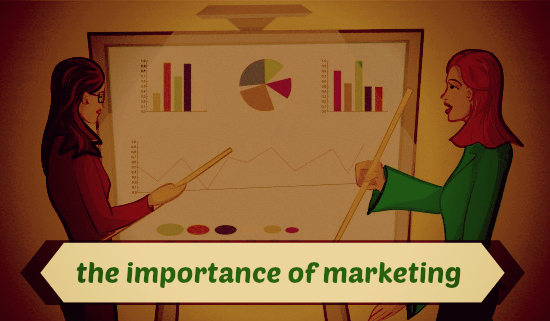
importance of marketing

Marketing, for the self-publishing author, is a many-headed hydra and prompts endless questions and dilemmas.  Major publishing houses have plenty of time and money to throw into marketing (although they would argue otherwise), particularly in comparison to you or me and any other self-publishing author out there.  They hire people whose entire careers revolve around taking care of the marketing process for their A-list authors, an enviable prospect because all we really want to do is write more books, right?  And yet, instead, we have both the blessing and the burden of running our own publicity campaigns.

Sometimes, I wake to a new day packed full with plans and routines to balance against each other, and I wonder:

  1. Aren’t we always told that the hardest part of writing a book is writing the first paragraph?  (Whoever says such things has clearly never attempted to tackle the tricky beast of self-promotion.)
  2. Are there ideas I can steal from others about how to be more effective, so that I have more time to spend on what I actually love?  (Which is, of course, writing.)
  3. Who gave the world permission to make me wake up to an empty coffee pot?

In all seriousness, though: the way we approach marketing, as self-publishing authors, matters.  Because it’s not optional.  It’s not something we can get away without doing.  We won’t sell books, and we won’t make room in our lives for the next book, either, if we don’t give some of our time over to marketing.

As Gareth Howard over at Infinity Publishing puts it: “Would you bake a delicious cake and not even eat it?  Would you revise for important exams and not bother sitting them?  Would you book an exotic vacation only to stay at home, wasting that precious deposit?”  The answer is, of course, no.  No, you wouldn’t want to waste the precious time and energy you’ve invested in crafting a beautiful manuscript–you want it to be read.  You want your ideas to reach your readers!  And sadly, we still haven’t figured out a way to guarantee authors that their books will just magically sell once they’re published.  There’s still a vital legwork and elbow-grease component to the whole thing.

You do, thankfully, have an advantage over the enormous publishing houses with their big budgets and their paid professionals: You can make it personal.  You can lend the marketing process a human touch, and you can take advantage of the most effective means of self-promotion known to humankind: your existing social network.  You can also pick the things you do well, and reach out for professional help (with a shout-out to my day job) only when you really need it.  The key is, of course, being prepared to work and work hard to achieve your marketing goals.

Others here on the SPA blog have written about marketing before, and have presented a number of ideas on how we can all be more effective at self-promotion as self-publishing authors.  This holiday season, however, I’d like to issue a specific challenge to you (and myself!): Let’s figure out the next workable, manageable, and sustainable step that we can use to bolster our existing strategies.  It’s no good if we have lofty goals that we never reach, so let’s be specific even while we’re also being optimistic.  I bet you my best unsharpened pencil that we can do better in 2016!

There is, of course, a danger in all of this:

Once we acknowledge just how important marketing is, the process has a tendency to take over our lives and erode away all semblance of spare time we might have.  Fortunately, there are a whole host of resources out there for you–to get you started, and to help you along once you’re already partway down the path.  And of course, I’m here for you too–and the SPA email as well as comments section is always open to lend you a listening ear.

You’re not alone. ♣︎

ElizabethABOUT ELIZABETH JAVOR: With over 18 years of experience in sales and management, Elizabeth Javor works as the Manager of Author Services for Outskirts Press. The Author Services Department is composed of knowledgeable publishing consultants, pre-production specialists, customer service reps and book marketing specialists; together, they all focus on educating authors on the self-publishing process to help them publish the book of their dreams. Whether you are a professional looking to take your career to the next level with platform-driven non-fiction or a novelist seeking fame, fortune, and/or personal fulfillment, Elizabeth Javor can put you on the right path.

In Your Corner : Giving Thanks for Self-Publishing

Why am I thankful for self-publishing?  Let me count the ways!

self-publishing bounty

  • I’m thankful because I don’t have to wait for an agent to read and accept my next book.  We just need to write a book in order for that book to exist out there in the world and be read by others!
  • I’m thankful because I get to keep my rights and royalties.  In a competitive market, this gives us both a leg up over authors who are published through traditional forms and processes, and a leg up on an industry that constantly seeks to inflate the profit margin for the publisher or film house–at the expense of ideas and the author at the heart of it all.
  • I’m thankful because I will maintain control over every aspect of my book that I want to, and I have a whole host of options to turn to (including my own employer, Outskirts Press) if there are aspects I don’t want to control.
  • I’m thankful for more flexibility.  We get to work from home, on our own timeline, meeting our own personal goals and performing according to our own expectations–and not racing to constantly measure up to someone else’s designs, or match our schedules with someone else’s calendar.
  • I’m thankful that we don’t live in fear of progress, but rather surf the cutting edge of the digital and silicon revolutions.  We are innovators, ambitious dreamers who make change happen and get stuff done.  Right now we self-publishers are masters of the ebook, including the e-audiobook.  What’s next?  We’ll figure it out.  And we’ll embrace it, I guarantee you, before anyone else in the publishing world.
  • I’m thankful that as a part of my job I get to help others sidestep the “information gatekeepers” who have historically limited access to publication for reasons to do with bias, influence over the industry, and profit.  When has a small group of people determining the parameters of another, larger group of peoples’ lives ever turned out well?  Vive la révolution!  The more voices we hear, the more lives we witness, the more we know of the world and the way other minds work, the better we can live as individuals and a collective whole.  I really believe that.
  • I’m thankful that this has been a big year for breakthroughs in terms of mainstream recognition and presence.  Ridley Scott’s adaptation of self-publishing superstar Andy Weir’s The Martian is still rocking the box office.  A film adaptation of Lisa Genova’s Still Alice received its wide release this year, too, and walked away with an Oscar, a BAFTA, a Golden Globe, and a Screen Actors Guild Award (among others).  And that’s just two of many self-published works that have been adapted for the big screen (and television) this year–a great litmus test and indicator of mainstream success.  Countless other self-published books have seen more moderate success, too, and the indie industry is as a whole seeing diversification and stabilization.
  • And lastly, it wouldn’t be Thanksgiving if I didn’t mention one of my greatest joys: the indie, hybrid, and self-publishing authors that I work with day and day out throughout the year at Outskirts Press. As a company, we are so very thankful for the authors that have made us a leading self-publisher in an energetic and ever-expanding market.  We never tire of learning how we have helped authors realize their dreams, how we have helped author after author to put their ideas and words into beautifully bound books to be enjoyed by others.  You inspire us to better ourselves every day.  You inspire me to believe in the power of the written word, and in the power of helping others sound their voices throughout the world.


I hope that you have a splendid Thanksgiving Day today.  As it is at all other times of year, it’s important to remember one simple fact this holiday season: You’re not alone. ♣︎

ElizabethABOUT ELIZABETH JAVOR: With over 18 years of experience in sales and management, Elizabeth Javor works as the Manager of Author Services for Outskirts Press. The Author Services Department is composed of knowledgeable publishing consultants, pre-production specialists, customer service reps and book marketing specialists; together, they all focus on educating authors on the self-publishing process to help them publish the book of their dreams. Whether you are a professional looking to take your career to the next level with platform-driven non-fiction or a novelist seeking fame, fortune, and/or personal fulfillment, Elizabeth Javor can put you on the right path.

In Your Corner : Do I need a ghostwriter?

How do you know if it’s time to seek out a ghostwriter to help you complete your book?  And what all is involved in the process of ghostwriting, anyway?  Is it really any different from detailed copyediting?

If you’re asking these questions, I hope what I write here will help to answer at least a few of them.

As with any writing venture, ghostwriting is a unique experience that presents unique challenges in addition to unique benefits.  You won’t ever find me pretending otherwise, just as you won’t find me beating around the bush when it comes to recommending a thorough and professional edit of your manuscript once it’s been written––and just as I held no punches when I worked to draw a dividing line between copyediting and proofreading in my blog post two weeks ago.

So, what is ghostwriting?  It is, according to the “Publishing” page on About.com, “the practice of writing for and in the name of someone else. It is most commonly associated with book publishing, but today it is also widely used in public relations, corporate communications, social media, and many other industries and fields that are producing greater and greater amounts of written content.”  Many of our most prolific “superstar” genre specialists, like John Grisham and Tom Clancy and Nora Roberts (and so on and so on to infinity) employ a combination of understudies, assistants or secondary writers, and ghostwriters.  They are called upon to generate, quite simply, too much material for a single human being to keep pace.  But many if not most niche storytellers––whether famous or indie, traditionally published or self-publishing––lead hectic and busy lives that keep them from writing the books that they want to.  We just can’t ignore the fact that self-publishing authors deserve to know that there is another option out there for them!

ghostwriting

The process is relatively simple: most ghostwriters work on a contract or freelance basis for companies like Outskirts Press, so the fastest way to get yourself set up with an accomplished and expert ghostwriter is to go through one of these established websites.  Perhaps the best reason of all to go with someone who has been vetted and proven trustworthy is this: ghostwriting is, at its core, a collaborative venture between you (the author) and your ghostwriter.  How you choose to work depends more on you and what your vision for a piece demands than it does on time constraints, or one hopes for such a truth in a perfect universe.  (Being too rushed for time to go it alone is a wholly valid reason to hire a ghostwriter!)

Ghostwriting has been around awhile.  Long enough, in fact, that industry supergiants like Forbes have taken a look at it––and, circling back to my comment about collaboration:  In this article for Forbes, contributor Sydney LeBlanc writes that “you can turn [your] entire book project over to the writer (research and writing) or you can provide research, notes, periodicals, etc that will help the writer.”  That’s one option, but “You can also have regular ‘interviews’ with the writer who will take notes or record conversations with you about the topic. The writer will write draft chapters for you to review, edit, or make suggestions.”  LeBlanc says that, ultimately, “There are many ways to work with a ghostwriter; it all depends on what is convenient or best for you and what is in your budget.”  (Emphasis mine.)

Hopefully this is enough to convince you that seeking out a ghostwriter is a simple and easy thing to do, and that therefore we can move past one of several possible obstacles to taking that course of action!

(PERSONAL ASIDE & RANT: Enough with the stigma, already!  Everyone’s writing method looks different, anyway, so why do we feel guilty over choosing to bring someone else in on the process?  Let’s celebrate diversification through collaboration rather than taking ghostwriting as a marker of a lack of creativity!)

So, how do you know it’s time to start researching ghostwriting as a viable option for your book?  Well, here’s a simple rule of thumb: if you can answer all or even most of the following questions with “yes,” then it might be time:

  1. Are you overworked, overstressed, or overcommitted?
  2. Do you have a story to share?
  3. Do you need a little help developing your ideas beyond the outline or draft stage?
  4. Do you believe in artistic collaboration?
  5. Can you trust the ghostwriter you pick to do justice to your vision?

Here’s where ghostwriting diverges from that other industry-specific term, “copyediting” : a copyeditor’s job is to take a finished draft and polish it up for final publication.  A thorough copyedit involves more than just shuffling commas around, but it won’t substantially change the core content of a piece.  Ghostwriting, on the other hand, involves the conceptualization and generation of a great deal of new material.  Your ghostwriter becomes your collaborator and your partner in crime, your sounding board and scribe.  Ghostwriters become folded into your stories, and it is in their best interest as paid professionals to deliver the best service they can––but if you’re both lucky, your ghostwriter might even become your ally and friend.  And what could be better than that?  Writing can be such an isolating experience, but I’d like to assure you as I do each and every week:


You’re not alone. ♣︎

ElizabethABOUT ELIZABETH JAVOR: With over 18 years of experience in sales and management, Elizabeth Javor works as the Manager of Author Services for Outskirts Press. The Author Services Department is composed of knowledgeable publishing consultants, pre-production specialists, customer service reps and book marketing specialists; together, they all focus on educating authors on the self-publishing process to help them publish the book of their dreams. Whether you are a professional looking to take your career to the next level with platform-driven non-fiction or a novelist seeking fame, fortune, and/or personal fulfillment, Elizabeth Javor can put you on the right path.

In Your Corner : Speaking Out and Speaking Strong

For those of you who are new to self-publishing and who are new to writing book-length manuscripts as well, the act of cultivating of a resoundingly authentic and consistent voice can present a particularly difficult (and ongoing!) struggle.  What is voice?  And how do we go about cultivating one, much less stick with it through chapter after chapter while negotiating other, competing concerns?

Voice, simply put, is your personality made manifest in the style, characterization, plotting, and point of view that emerges over the course of your book.  Voice is the unique approach that distinguishes one author from another, even when they’re writing the same story.  Voice sets Jackson Pearce’s Sisters Red apart from Marissa Meyer’s Scarlet apart from Angela Carter’s The Bloody Chamber apart from the Brother’s Grimm and their transcription of the original Red Riding Hood tale.  Distinctive voices allow us to revisit even a familiar, beloved storyline and get something new from it each and every time.

But authors are very rarely the written equivalent of a Maybelline commercial: nobody, and I repeat, nobody is “born with it” in the sense that a kitten is born adorable and fire is born when a lit match touches a candlewick.  Which is not to say any of us use cosmetics companies as standards for authorial experience, but we do sometimes fall into the trap of comparing ourselves to other authors that we respect and admire as if those authors were delivered into the universe with the tools and skill and voice requisite to connect them with their readers in later life.  It simply doesn’t happen that way!  And a captivating voice, like every other aspect of good writing, takes time and work to acquire.

david mccullough

In order to develop clear thinking and therefore a clear voice, an author must do two things that might, at first glance, seem contradictory: pay close attention to detail, and relax into the writing process.  Whoa there, you’re thinking.  I can’t do both at the same time!  And this may in fact be true: everyone’s writing process looks different.  (And mine, I must admit, even looks different from one day to the next.)  Whether you apply yourself to both of these things at the same time or separately doesn’t matter so much as ensuring that you do them both at some point.  And I personally lean heavily towards relaxing first, and then applying a microscope later––but some authors prefer to go into the drafting stage with a rigorous outline and a bundle of research already in hand, which is perfectly wonderful too.

The benefit of paying close attention is that you’ll notice when your voice changes.  I find this particularly applies when reading aloud a passage I’ve written, although that might take more time than you have if you’re reading an entire manuscript.  Keep a weather eye out for shifts in tense, plurality, characterization, and vocabulary as well as sentence structure as you go along––a sudden jump in any of these things can give a reader pause, and halt the flow of your prose.  And sometimes, these shifts slide completely under the radar; after months or even years of writing our manuscripts, we as authors simply cannot edit our own books!  It becomes impossible to hold both the big picture and the finer points of editorial expertise in mind when writing––we tend to either fixate on all the little flaws that only we can see, or our eyes skip over plot holes and inconsistencies in voice because we know what’s going on and our minds fill in the gaps automatically.  This is where a professional editor, like the ones I work with over at Outskirts Press, comes in handy.

Editing is not optional for the dedicated author, but there are all sorts of reasons––including the ones stated above––why we need to seek out fresh sets of eyes in addition to our own during the editing and revision processes.  Casual editors and first readers, such as friends and family, can be useful during the early stages, but what we all really need––what self-publishing authors specifically need––is someone on hand who can recommend changes based on years of experience and a wealth of industry expertise.  Not to mention, someone who will help you spot the points in your manuscript when you need to circle back around to a consistent voice.  A good editor may recommend changes, but ultimately, the author’s wishes and vision for a book are respected––and that is what is published.  A captivating voice is, when push comes to shove, something that taps into a shared relationship between author and text … and that sort of relationship cannot be manufactured.

voice in self publishing

Which brings me to my second point.  To create a unifying and consistent voice, an author really must relax and let the inspiration flow uninterrupted.  Jack Kerouac’s On the Road may be an extreme example of continuity in writing leading to continuity in voice, but it does illustrate the point that whatever you can do to limit your exposure to emotional and physical disruptions while writing––do.  Kerouac locked himself away for three weeks while he typed up the continuous “scroll” that would eventually form the base manuscript for his book, but you don’t have to go to such extreme measures to write a good book or to relax into the writing process!  You know the boundaries of your own mind and attention best, so you know what must be done to cut through all of the white noise generated by everyday life.  And not to harp on like a broken record, but seeking a professional editor for your book will lift the burden of obsessing over the details and leave you free to do what you do best: write.  That’s it, that’s really it: you write books, and you’ll write better books when you’re “in the zone,” or when you’re physically and emotionally free to stack word on word until something beautiful and unexpectedly perfect happens––and you have a book.

Writing is hard.  Writing well is even harder.  But you have a voice that the world needs to hear, and a book that the world needs to read.  And always remember:

You’re not alone. ♣︎

ElizabethABOUT ELIZABETH JAVOR: With over 18 years of experience in sales and management, Elizabeth Javor works as the Manager of Author Services for Outskirts Press. The Author Services Department is composed of knowledgeable publishing consultants, pre-production specialists, customer service reps and book marketing specialists; together, they all focus on educating authors on the self-publishing process to help them publish the book of their dreams. Whether you are a professional looking to take your career to the next level with platform-driven non-fiction or a novelist seeking fame, fortune, and/or personal fulfillment, Elizabeth Javor can put you on the right path.