Saturday Book Review: “My Truths: A Collection”

Book reviews are a great way for self-publishing authors to gain exposure. After all, how can someone buy your book if he or she doesn’t know it exists? Paired with other elements of your book promotion strategy, requesting reviews is a great way to get people talking about what you’ve written.

When we read good reviews, we definitely like to share them. It gives the author a few (permanent) moments of fame and allows us to let the community know about a great book. Here’s this week’s book review, courtesy of Midwest Book Review:
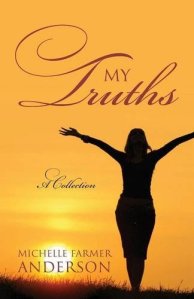
my truths a collection michelle farmer anderson

My Truths: A Collection

by Michelle Farmer Anderson

Publisher: Outskirts Press

ISBN: 978147877793

Synopsis*:

“My Truths” is a masterpiece that reminds us of our humanity. This book welcomes you to partake in a meal that will most certainly nourish your soul; an open invitation to sit at the table with victory and defeat as you turn each page, as you read each phrase. Spend quality time in a world, the architecture planted firmly on a solid soil of magical words. The building, a smorgasbord of positive light and negative energy, all saturated with a very real passion for writing and a zest for living. The contradictions are deliberate and they play along with the theme of life… the ultimate support and unconditional love of a mother in HER clashes with the feeling of not belonging in OUTSIDER. The redemption of WINNING which speaks to insecurities ultimately overshadowed by strengths to BAD BOY- a potpourri of what could have been, and what might be. POISON is a haunting take on the drug epidemic and TOMBSTONE TALKS takes us to a cemetery where we can trust the secrets won’t be shared. My Truths is a book about life, death and everything in between.

 * courtesy of Amazon.com

Critique:

“My Truths” in poetic verse delves into many different aspects of life. Anderson has a unique style that takes readers on a journey thru many things we all take for granted. She deals with children, mothers and daughters, grandparents and romantic relationships. There is much to enjoy in “My Truths” that will hold readers interest to the last poem.


reviewed by Gary Roen of Midwest Book Review ]

Here’s what some other reviewers are saying:

This is a great collection of personal, yet relatable, thoughts and feelings. Each poem offers a different perspective on a person or time in Michelle’s life. Some pieces are deep and emotional, while others are inspiring and uplifting. A little something for every moment in life- great mix! You won’t be disappointed!

– Amazon Reviewer Amazon Customer

Written in an inspiring lyrical form. “My Truths” is a wonderful read for any occasion; to feed the spirit and to contemplate. Each poem transmits a personal touch of faith, hope and unique experience.

– Amazon Reviewer Amazon Customer

saturday self-published book review

Thanks for reading!  Keep up with the latest in the world of indie and self-published books by watching this space every Saturday!

Self Publishing Advisor

selfpubicon1

Conversations: 2/3/2017

FOUR DOZEN ROSES—FOR WRITERS—I

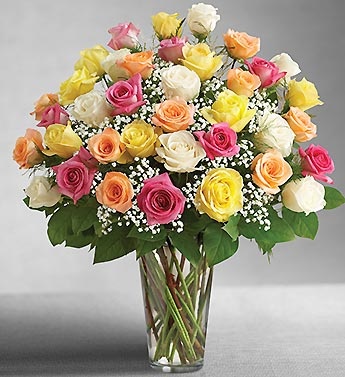
February (and the last week of January) is a season that is full of family birthdays for me. My Mother’s birthday started the celebrations rolling and she loved roses. When someone admired her centerpiece vase full of red, yellow and white roses, she was always pleased. However if anyone happened to mention that “a rose by any other name would smell as sweet,” she would gracefully argue the point. Often she took several roses from the vase and requested that each rose be smelled individually so that her visitor would realize the subtle differences. There was even one variety of rose (which I can’t seem to recall at the moment) that had no scent at all, yet was most exquisite. In my Mother’s world, each individual rose—no matter which bush it came from—was uniquely beautiful and brought joy into our home.

roses

So it is with each individual writer who writes with Passion and Purpose—which is exactly what I’m hoping you are doing. In the spirit of beautiful roses and beautiful writing you’ll find my first dozen roses for you below—things to consider as you build your writing career!

  1. READ a LOT of books in the genre you’re writing in! When you find something in one of those books that you don’t like about it—make a note about it—so you can avoid doing the same thing in your book.
  2. READ the occasional book that connects with your writing/story interests, but is from a different genre.
  3. Set yourself up for SUCCESS! Decide what time of day is the best for your creative mind to kick in and flow. Then set your writing schedule accordingly. This could be an everyday schedule, a 5-days-a-week schedule, 3-days a week. Being aware of the needs your life demands of you will (yes, WILL) give you the time you need to write.
  4. Then—if your schedule tells you it’s time to be writing—go write! Don’t allow moods the power to remove a day of writing.
  5. Do your best to relax while writing. If you’re a spiritual person, mediate or pray before you begin—or simply practice some deep breathing (to bring oxygen to your brain)—and begin.
  6. Prepare yourself to work hard. Writing and becoming a published author is not an easy career.
  7. Always, ALWAYS, back up your files on a disc and/or memory stick.
  8. Think about your audience. Who is that one person who will understand your story because they’ve lived it? Or because they’re dreaming about living it? IF you don’t know who this person is you’ll run the risk of boring them to sleep.
  9. Consider making your first notes (files) by hand. Those wonderful legal-pads of lined yellow paper are excellent tools and as you type them into a computer file the creative embellishments will flow with ease.
  10. Begin to write one-liners about the theme of your story(s). What words express this theme? Could you write an essay about the essence of it?
  11. Develop your characters TO THE MAX. Let them tell you who they are and what makes them This means ALL of your characters. IF you bring a character on stage you must know at least the basics about them.
  12. Develop the setting (environment) where your characters live. Use LOTS of descriptive words and detail as you break-out each specific setting in relation to each character’s timeline.

Next week: The second dozen!⚓︎


Royalene

ABOUT ROYALENE DOYLE: Royalene has been writing something since before kindergarten days and continues to love the process. Through her small business—DOYLE WRITING SERVICES—she brings more than 40 years of writing experience to authors who need “just a little assistance” with completing their projects. This is a nice fit as she develops these blogs for Outskirts Press (OP) a leading self-publisher, and occasionally accepts a ghostwriting project from one of their clients. Her recent book release (with OP) titled FIREPROOF PROVERBS, A Writer’s Study of Words, is already receiving excellent reviews including several professional writer’s endorsements given on the book’s back cover.  

Royalene’s writing experience grew through a wide variety of positions from Office Manager and Administrative Assistant to Teacher of Literature and Advanced Writing courses and editor/writer for an International Christian ministry. Her willingness to listen to struggling authors, learn their goals and expectations and discern their writing voice has brought many manuscripts into the published books arena.

In Your Corner: How to Rewrite WITHOUT Going Off the Deep End

We’ve all been there, haven’t we? FAcing the manuscript, the first draft, with the question “What’s next?” dying on our lips, and a growing realization sitting like a lead weight in our bellies: Rewriting. That’s what comes next. The Elysium Fields of publication seem to hurtle themselves back into the distance, once so close we could almost touch them, and that’s how we find ourselves staring at our computer screens at six in the morning, wondering how not to tear out our hair over the rewrite process.

I have some thoughts on that.

  • Take a clue from your normal writing habits.

This is assuming you have writing habits, of course. I’m an extremely disorganized writer, which means I’m writing at all times of days, usually in my pajamas with a cup of tea, but sometimes with a bowl of pretzels. Still, take a clue. Rewriting is often a point of contention because it doesn’t feel like “real writing”–it feels more like butchering something you produced while doing “real writing.” So put yourself in the same creative space, frame of mind, and habitual place as you would if you were generating new material–and make the leap to recognizing rewriting as an opportunity for creativity, too. Maybe if you feel the way you do about “real writing,” you can trick yourself into resenting it less! That’s my theory, anyway.

  • Pay attention to your body.

Some of the writers I went through school with ascribed to the “starving artist” stereotype, churning out reams of paper on old-school typewriters at 3 AM fueled solely by cigarettes and certain controlled substances. These authors were incredibly productive–to a point. They were also complete emotional wrecks who could do nothing else with their days than write (often disorganized) manuscripts. But you and I? We can’t afford to burn the candle at both ends, to let ourselves be eaten up by life-destroying fuels like these. We have lives and families to take care of, that we delight in taking care of, when we’re not writing. So writing, of course, has to take its place among an ever-changing, always difficult to manage, list of priorities … and the only way to manage them all is not to go off the deep end. So: pay attention to your body. You will produce your best work, and leave the most room for life outside of writing too, if you take care of this collection of bones and blood vessels and brain cells to the best of your ability. Write healthy, with a full meal under your belt and a full night’s sleep just over with. Don’t rely on anything that’s not good for you to be your brain fuel–even the seemingly harmless caffeine, which in point of fact is a strong bowel irritant and likely to break up your concentration with a half dozen bathroom breaks each writing session. (It also, naturally, will dehydrate you–even if you’re constantly chugging caffeinated liquids.)

  • Alternate between a “GET-UR-DONE” attitude & a more forgiving one.

Look, for some people, it’s never going to be fun, this rewrite thing. But constantly punishing yourself for not getting it done is counter-productive, and will leave you feeling more and more dissatisfied with the whole process over time, just as constantly forgiving yourself for not working on it will also snowball into a giant lump of self-loathing and regret. So: set yourself some deadlines, and carve out some time just to slam away at that keyboard. But also: establish some boundaries within which you can forgive yourself for not being as productive as you’d like, and etc. Always remember that rewriting, like “real writing,” requires moderation in all things. So alternate between those driven and those relaxed modes of working, and you’ll find yourself chipping away at the monolithic manuscript, despite your fear of the thing.

  • Accept change.

Duh, right? Only … no. This is actually the hardest part: reconciling your original vision for a book with what’s coming off of the page before you. There’s no more obvious place or time for this to happen than during the rewrite, when your analytical mind is hard at work trying to sew up loose ends and fix flaws. But producing something with a mind of its own isn’t a flaw–it’s a natural consequence of creating interesting characters who evolve past your original vision and into something greater, more complex, and … different. If you can, take a step back and admire the reality of what you’ve written instead of wasting time and energy bemoaning the departure from your intent. Then approach your book the way a professional editor might, from a mindset of: “This is what I’ve been given to work with, so how can I make it the best possible version of itself?” instead of feeling cheated of something different. You’re your own harshest critic, remember? And whatever you’ve put on the page, predicted or not, changed or not, is magnificent and wonderful–and we’re proud of you for it. Work with and not against this new and wonderful thing! You won’t regret it.

rewriting

You are not alone. ♣︎


Elizabeth

ABOUT ELIZABETH JAVOR: With over 18 years of experience in sales and management, Elizabeth Javor works as the Manager of Author Services for Outskirts Press. The Author Services Department is composed of knowledgeable publishing consultants, pre-production specialists, customer service reps and book marketing specialists; together, they all focus on educating authors on the self-publishing process to help them publish the book of their dreams. Whether you are a professional looking to take your career to the next level with platform-driven non-fiction or a novelist seeking fame, fortune, and/or personal fulfillment, Elizabeth Javor can put you on the right path.

Spending Money to Save Money!

Ever find yourself lured into buying something simply because it’s cheaper, only to find that it doesn’t work and then you have to spend more than twice as much money trying to replace it with what you actually need? We’ve all been there. We’ve chosen the cheap mechanic or car salesmen only to have our car break down just a few miles up the road.

As self-publishing authors, the temptation to choose the cheapest route is a dangerous one. A cheaper illustrator for your cover may save you a few bucks in production, but it could cost you exponentially more in sales. Spending money to make money always hurts initially. It’s a risk-based investment that you can’t guarantee will pay off. However, you can almost always guarantee that going a cheap route to save money will  never pay off.

Here are some things that cost money and are worth every penny:

  • Proofreading!!!!!
  • Developmental Editing and Copyediting
  • Interior Designer
  • Cover Designer/Illustrator
  • An up-to-date, visually appealing website
  • A book trailer or other social media marketing tools
  • Education — attend conferences, classes, writing retreats, etc. These things make you a better writer and will improve your sales, your networking and reputation as a writer.

Look at these investments as what they are: things that will pay off in the future. You invested so much time into creating a manuscript that you felt proud of, so don’t sell it short. Invest the money in it that you would like to get back and you will be amazed at the returns. If you just want a book to give to friends and families, feel free to skimp, but if you’re trying to market yourself, spend your money on quality investments.

money dollar bill


Thank you for reading!  If you have any questions, comments, suggestions, or contributions, please use the comment field below or drop us a line at selfpublishingadvice@gmail.com.  And remember to check back each Wednesday for your weekly dose of marketing musings from one indie, hybrid, and self-published author to another. ♠


Kelly

ABOUT KELLY SCHUKNECHT: Kelly Schuknecht is the Executive Vice President of Outskirts Press. In addition to her contributions to the Outskirts Press blog at blog.outskirtspress.com, Kelly and a group of talented marketing experts offer book marketing services, support, and products to not only published Outskirts Press authors, but to all authors and professionals who are interested in marketing their books and/or careers. Learn more about Kelly on her blog, kellyschuknecht.com

From the Archives: “Book Marketing: Magazine Reviews”

Welcome back to our Tuesday segment, where we’ll be revisiting some of our most popular posts from the last few years.  What’s stayed the same?  And what’s changed?  We’ll be updating you on the facts, and taking a new (and hopefully refreshing) angle on a few timeless classics of Self Publishing Advisor.

∗∗∗∗∗

[ Originally posted: April 2nd, 2010 ]

The following list comes compliments of ForeWord magazine in the interest of helping you secure reviews with not only their magazine, but all magazines you pursue.

1. Become familiar with the magazine
2. Read the submission guidelines for each magazine before submitting your book for review
3. Create a good cover letter
4. Include a sales sheet (ask your self-publisher or publishing rep).
5. Follow-up

The best way to familiarize yourself with a magazine you want to review your book is to read the magazine first.

You can usually find submission guidelines for magazines on the magazine’s website.

When sending your book out for review, always include your contact information so the reviewer can get in touch with you if necessary. This should be a part of your cover letter. You can also politely request that a reviewer notify you when/if they review your book (but realize that many may choose not to do this).


Is the day of the magazine editorial dead?

What about magazine reviews?

magazine magazines rack

No. No they’re not.

At least, so say the print magazines themselves–and yes, they have  a vested interest in trying to impress their shareholders as much as possible, but when everyone from CNN Money to the New York Post to Wired Magazine lines up to say it’s not so, ti’s time to listen to what they have to say. (It’s worth noting that these periodicals are often at odds over ethics disputes and general worldview, so for them to agree is something magical. And also, it’s far more in their interest to say they’re doing well despite industry trends than to state that everyone’s doing well. They want people to defect to be their subscribers, after all. That’s just marketing.)

And we’re here about marketing, too.

So how does knowing print’s not dead help you market your book?

First of all, it opens up untold numbers of possibilities that the average author might not think of for ad placement and reviews. Facebook, sure. A local radio station, sure. But a print magazine or journal? “I thought those were dead,” you might as well have said. But they’re not. They’re not dead. In fact, they’re thriving–so long as they reach a dedicated niche audience.

Secondly, print magazines and journals have a vested interest, too, in upholding the work of talented authors in a way that a local newspaper may not. Newspapers are looking for news, while magazines and journals are looking for talent. If you have it, and you reach out to the right ones, you might very well find yourself being scouted for additional pieces, or find yourself pushing against an open door as far as promoting your book goes.

So don’t give up on magazines. Well, maybe give up on some. Do your research, and dig around a little bit to see what your ideal reader is picking up at Barnes & Noble or their local indie bookstore or subscribing to digitally. Instead of firing scattershot into a great void and hoping to land some hits, you should spend your time and energy firing precise, surgical volleys at market niches which will both welcome you and connect you with more of those ideal readers.

Long live paper!

Thanks for reading.  If you have any other ideas, I’d love to hear them.  Drop me a line in the comments section below and I’ll respond as quickly as I can.  ♠


Kelly

ABOUT KELLY SCHUKNECHT: Kelly Schuknecht is the Executive Vice President of Outskirts Press. In addition to her contributions to the Outskirts Press blog at blog.outskirtspress.com, Kelly and a group of talented marketing experts offer book marketing services, support, and products to not only published Outskirts Press authors, but to all authors and professionals who are interested in marketing their books and/or careers. Learn more about Kelly on her blog, kellyschuknecht.com.