Marketing BASICS : Building an Online Presence

As I mentioned in last week’s post, I’m taking Wednesdays back to the B.A.S.I.C.S. of marketing for your self-published book.  And step one of every really effective marketing strategy in the silicon age requires us to tackle the “B” in B.A.S.I.C.S.: Building an Online Presence.  Given that you’re reading this blog post on the web, I’m going to assume you have already been initiated into the manifold wonders of the internet age, but I’m also going to assume that you’re starting your latest book marketing campaign from the ground up––which is to say, you’re looking to begin with that all-important keystone of any such strategy: motivation.

SIDE NOTE

I’m not going to lie: marketing your self-published book is hard.  Really hard.  It will requires a lot of time, energy, and trust––trust in yourself and your own capacity to make wise choices that fit your own project.  Without this trust, authors risk losing focus as they get sucked into a whirlpool of self-doubt and second-guessing.  I recommend skipping this arduous process entirely by embracing your own insight and the sometimes radical notion that you really can make good choices.  I know that you can, and I’m a perfect stranger!  Just think: you may be fixating at present on some of your own limitations, but you also have a front-row seat to your personal portfolio of strengths and skills!  Let’s put them to work in marketing.

BACK TO THE PROGRAM

The real reason to begin your book marketing campaign with a strong web presence is the simple fact that a comprehensive bundle of platforms––such as an author website, a blog site, as well as accounts on Facebook, Goodreads, Twitter, and even Instagram or Snapchat––is both an effective and inexpensive way to reach new readers.  We’ve written about many of these platforms before here on Self Publishing Advisor, in last year’s Social Media Primer and as far back as 2013 with Wendy’s discourse on improving blogs, but the fact remains that authors are presented with something of a moving target.

New platforms are becoming available all of the time, while less popular ones or ones that have outlived their usefulness are archived or excised from the web altogether.  This is why I used the key phrase “comprehensive bundle of platforms” above: to indicate that an effective presence requires a flexible, adaptable set of options––and above all, the freedom to experiment with emerging technologies as well as the courage to abandon unhelpful ones.  My own recent experiences with Twitter and Snapchat make for a good illustration; I’ve found a healthy and important niche for my Twitter use in broadcasting updates and news about my current work and upcoming publications, but I haven’t quite found a marketable use for Snapchat.  I tried, enjoyed it for a spell, and could even see quite a lot of potential there … but I could never quite invest in it the creative energy required to make it a success.  So I shut my account down in order to spend that time more effectively on platforms that better fit with my personality and web usage.

TWO TIPS

  • Your websites and blogs should be streamlined and easy to navigate; they must both catch a visitor’s eye and capture a visitor’s interest in regards to content, as well as make it easy for even the most unfamiliar of visitors to learn about and buy your book.  In building your websites, you can choose from among a whole host of free services, including WordPress (which is what we use), or Blogspot, or Tumblr, but whatever route you take you ought to consider purchasing your own domain name.  Make it something intuitive and easy to remember; many authors choose to use either their pen-names or the titles of their books as domain name inspiration.
  • Consistency is key.  Whether we’re talking about blog posts or social media updates, creating a sense of routine and reliability is important.  It both makes you more findable (especially if you integrate the tricks of SEO or Search Engine Optimization into your postings) and more trustworthy.  You  might even work up a schedule of what sorts of materials to post on which days of the week, as we do here at Self Publishing Advisor.  You know from following this blog in the past that every Monday we run through the major self-publishing related news items of the week, and every Saturday we run a book review compendium of a self-published book.  Because you know this, you already know that a) you can trust us to post new material on a regular basis, and b) which days of the week you’re most interested in spending some quality time on our website.

So that’s the “B” in B.A.S.I.C.S. … or at least, that’s a place to start!  There’s so much more to come.


Thank you for reading!  If you have any questions, comments, suggestions, or contributions, please use the comment field below or drop us a line at selfpublishingadvice@gmail.com.  And remember to check back each Wednesday for your weekly dose of marketing musings from one indie, hybrid, and self-published author to another. ♠

KellyABOUT KELLY SCHUKNECHT: Kelly Schuknecht is the Executive Vice President of Outskirts Press. In addition to her contributions to the Outskirts Press blog at blog.outskirtspress.com, Kelly and a group of talented marketing experts offer book marketing services, support, and products to not only published Outskirts Press authors, but to all authors and professionals who are interested in marketing their books and/or careers. Learn more about Kelly on her blog, kellyschuknecht.com.

In Your Corner : On Marketing


importance of marketing

Marketing, for the self-publishing author, is a many-headed hydra and prompts endless questions and dilemmas.  Major publishing houses have plenty of time and money to throw into marketing (although they would argue otherwise), particularly in comparison to you or me and any other self-publishing author out there.  They hire people whose entire careers revolve around taking care of the marketing process for their A-list authors, an enviable prospect because all we really want to do is write more books, right?  And yet, instead, we have both the blessing and the burden of running our own publicity campaigns.

Sometimes, I wake to a new day packed full with plans and routines to balance against each other, and I wonder:

  1. Aren’t we always told that the hardest part of writing a book is writing the first paragraph?  (Whoever says such things has clearly never attempted to tackle the tricky beast of self-promotion.)
  2. Are there ideas I can steal from others about how to be more effective, so that I have more time to spend on what I actually love?  (Which is, of course, writing.)
  3. Who gave the world permission to make me wake up to an empty coffee pot?

In all seriousness, though: the way we approach marketing, as self-publishing authors, matters.  Because it’s not optional.  It’s not something we can get away without doing.  We won’t sell books, and we won’t make room in our lives for the next book, either, if we don’t give some of our time over to marketing.

As Gareth Howard over at Infinity Publishing puts it: “Would you bake a delicious cake and not even eat it?  Would you revise for important exams and not bother sitting them?  Would you book an exotic vacation only to stay at home, wasting that precious deposit?”  The answer is, of course, no.  No, you wouldn’t want to waste the precious time and energy you’ve invested in crafting a beautiful manuscript–you want it to be read.  You want your ideas to reach your readers!  And sadly, we still haven’t figured out a way to guarantee authors that their books will just magically sell once they’re published.  There’s still a vital legwork and elbow-grease component to the whole thing.

You do, thankfully, have an advantage over the enormous publishing houses with their big budgets and their paid professionals: You can make it personal.  You can lend the marketing process a human touch, and you can take advantage of the most effective means of self-promotion known to humankind: your existing social network.  You can also pick the things you do well, and reach out for professional help (with a shout-out to my day job) only when you really need it.  The key is, of course, being prepared to work and work hard to achieve your marketing goals.

Others here on the SPA blog have written about marketing before, and have presented a number of ideas on how we can all be more effective at self-promotion as self-publishing authors.  This holiday season, however, I’d like to issue a specific challenge to you (and myself!): Let’s figure out the next workable, manageable, and sustainable step that we can use to bolster our existing strategies.  It’s no good if we have lofty goals that we never reach, so let’s be specific even while we’re also being optimistic.  I bet you my best unsharpened pencil that we can do better in 2016!

There is, of course, a danger in all of this:

Once we acknowledge just how important marketing is, the process has a tendency to take over our lives and erode away all semblance of spare time we might have.  Fortunately, there are a whole host of resources out there for you–to get you started, and to help you along once you’re already partway down the path.  And of course, I’m here for you too–and the SPA email as well as comments section is always open to lend you a listening ear.

You’re not alone. ♣︎

ElizabethABOUT ELIZABETH JAVOR: With over 18 years of experience in sales and management, Elizabeth Javor works as the Manager of Author Services for Outskirts Press. The Author Services Department is composed of knowledgeable publishing consultants, pre-production specialists, customer service reps and book marketing specialists; together, they all focus on educating authors on the self-publishing process to help them publish the book of their dreams. Whether you are a professional looking to take your career to the next level with platform-driven non-fiction or a novelist seeking fame, fortune, and/or personal fulfillment, Elizabeth Javor can put you on the right path.

From the Archives: “Using Listmania to Promote your Self-Published Book”

Welcome back to our new Tuesday segment, where we’ll be revisiting some of our most popular posts from the last few years.  What’s stayed the same?  And what’s changed?  We’ll be updating you on the facts, and taking a new (and hopefully refreshing) angle on a few timeless classics of Self Publishing Advisor.

∗∗∗∗∗

[ Originally posted: August 22nd, 2008 ]

If your self published book is available on Amazon.com, there are a lot of ways to promote it.  Since Amazon sales should account for a large percentage of your overall book sales, this site is a good place to concentrate a lot of your efforts.

I’m going to tell you about creating a “listmania” list on Amazon. Have you ever noticed when you browse for something on Amazon, there are lists that are related to that subject that are mentioning other books and/or products?

By strategically listing products on your lists, (including YOURS of course), you can start to generate more traffic to your book listing.

Here’s how YOU can create just such a list:

Sign up for an Amazon Author Connect account if you don’t have one yet. Or sign-in to your current account.

Click on your personal “store” on the top tabs. Then select “Your Profile” from the sub-menu.

You will see lots of things you can personalize, including your bio and your online photograph.

But scroll down and you will see a section called “Listmania!” And this is where you create a listmania list.

Creating a Listmania List is a good way to increase exposure for your book.

Obviously, you want to ensure that your book is on your list.

But the real trick to a successful Listmania list depends upon the OTHER books you put on your list, the ones written by other people.

There are two ways to go about it.

1 – Adding books to your list that are applicable to your subject. The idea behind this concept is easy — if someone reads your list because they were browsing a similar book, they’ll be more apt to buy YOUR book because they’re interested in the subject.

2 – On the other hand, you can add very popular books to your list, since more people may have a chance of seeing it, even if fewer of them will be interested in your book.

I recommend creating multiple lists and trying different tactics to see which is more successful. Amazon lets you track the number of times your list was viewed. Use these numbers to create better lists in the future.

If you have more specific questions about creating a listmania list, the Amazon FAQ will help you.

Amazon Listmania

So here’s the thing: Listmania doesn’t really exist anymore!  Back in 2013, Amazon ceased offering support and guidance on using the Listmania interface, and it was entirely dismantled and rendered unusable over the months following.  (Adrienne Dupree over at Leave The Corporate World Behind even wrote a lovely little lament to mark its final passing.)  And this fact means that, on the one hand, we have to throw the baby out with the bathwater when it comes to our original post … but on the other hand, this presents the perfect opportunity to present you with new and fresh ways of utilizing Amazon for your self-promoting and self-marketing ends (as a self-publishing author).

First, we need to break down exactly what Listmania offered the average author.  Essentially, this featured compiled lists–and this makes sense, given its name–but it was not to be confused with Amazon’s wish lists, gift lists, and registries, or even Goodreads’ Listopia lists (which still exist).  These lists were designed to focus a reader’s attention on products that were similar or in some way related to products that a customer had already been viewing. By strategically listing popular products on your lists, including your own book, you were–in theory–able to generate more traffic to your book listing when people viewed your Listmania lists.  This brings us full circle to that one key word I’ve been lobbing around a lot lately: findability.  An Amazon Listmania list was supposed to render you and your book more findable, but to many people it remained just another one of the giant retailer’s many algorithmic mysteries.

And yet … findability remains important.  There simply are better ways of going about it!

Here are my top 3 recommendations for filling that gaping hole in your heart once occupied by Amazon Listmania:

  1. Start a Pinterest page.  Not just any Pinterest page, mind.  (And I’ve written about Pinterest recently in depth, so I won’t make like a broken record and repeat myself too much here.)  Whip up a Pinterest page (or “pin” to a “board”) where you collect together other books along with other somehow related objects that your ideal reader might want to purchase.  For example, someone who reads Hugh Howey’s Wool might want to pick up some tickets to tour the Titan Missile Museum outside of Tucson, or perhaps some Wool-inspired art prints.
  2. Create a public Amazon Wishlist.  This is easy to do, and it serves much the same function as a Listmania list–only, you’ll have to do a touch more legwork to advertise the list’s existence, since these wishlists aren’t necessarily designed to be searchable.  For more information, hop on over to the Amazon how-to page for wishlists, and peruse at your leisure.  Each wishlist is shareable across any platform you might wish, and you can snag a web link to copy and paste into emails or Twitter, Tumblr, Facebook, Instagram, or any other kind of social media feed you can imagine.
  3. Take a stab at an entirely new social media platform.  The reason why Listmania disappeared is that nobody was using it, or at least, too few people were using it to make it worth Amazon’s efficiently allocated time to advertise and maintain.  It had a function, but it wasn’t one that really connected with Amazon’s user base.  To make yourself findable these days, you must needs throw yourself into the post-millennial age, and go where your readers are.  I’m not necessarily an advocate of just trying anything–you should always do a little cross-demographic market research to see if your readers actually are the sort who use Snapchat or Instagram or Tumblr or Twitter–but as a good friend told me last week, “Just doing what you’ve always done and expecting things to improve is a special kind of lunacy. Sometimes you have to innovate.”  So–innovate, with calm but cautious optimism. ♠
KellyABOUT KELLY SCHUKNECHT: Kelly Schuknecht is the Executive Vice President of Outskirts Press. In addition to her contributions to the Outskirts Press blog at blog.outskirtspress.com, Kelly and a group of talented marketing experts offer book marketing services, support, and products to not only published Outskirts Press authors, but to all authors and professionals who are interested in marketing their books and/or careers. Learn more about Kelly on her blog, kellyschuknecht.com.

An Indie Author’s Social Media Primer | Summary Edition

Well, it’s been quite a project, this social media primer of ours!  I hope it’s proven as useful to you, our readers, as it has been enjoyable for me to write!  I thought I’d take a couple of minutes to take a lingering glance in the rear-view mirror, and write a bit of a retrospective on what it means to carry out a social media marketing campaign–and how a primer fits in.

We’re here,” I wrote in that initial blog post, first and foremost, to talk about how to market your self-published book.”  And therein lies both the value and danger of social media as a marketing tool.  If you really are using social media effectively, as a natural and organic extension of your existing work and personality, then you’ll most definitely benefit, and your book sales will most definitely benefit as well.  If you approach social media as an all-purpose tool and the only tool you need in your toolbox–or if you present yourself falsely, inauthentically, or otherwise find yourself at odds with your fans–or if you bite off more than you can chew–or if you find yourself slipping into social media as just another time-waster–then you’re missing the point of being an author on social media.  These are the pitfalls, or at least a few of them, and they should not be taken lightly or underestimated.

social media

Here’s the trick to being a self-published author on social media:  You must always remember that you are, first and foremost, a writer.  And as we’ve said before here on Self Publishing Advisor, the absolute best decision you can ever make in marketing your book is to write another book.  If social media helps you spread the word, and helps you keep writing, then it has a place in your campaign.  If it distracts you, or distresses you, or eats into time you would otherwise spend writing, then you should revisit the expression “effective marketing.”  There is, however, a great deal of value to trying something new, especially when you hit a roadblock.  It is my hope that, by providing a primer guide to each of the major (and some of the minor) social media platforms, I may take some of the guesswork and fear out of launching yourself into the world of social media.  Maybe, just maybe, you’ll be able to bypass some of the misery and second-guessing and mistakes that I myself have made over the years–and find a new home, a new community, and an engaged readership in some unexplored corner of our digital universe.

The List:

  1. First Thoughts
  2. Twitter
  3. Tumblr
  4. Instagram
  5. Snapchat
  6. YouTube
  7. Pinterest
  8. Goodreads
  9. Etsy
  10. LinkedIn
  11. Flickr
  12. Facebook

Thank you for helping me build this Social Media Primer!  If you have any questions, comments, suggestions, or contributions, please use the comment field below or drop us a line at selfpublishingadvice@gmail.com.  And remember to check back each Wednesday for your weekly dose of marketing musings. ♠

KellyABOUT KELLY SCHUKNECHT: Kelly Schuknecht is the Executive Vice President of Outskirts Press. In addition to her contributions to the Outskirts Press blog at blog.outskirtspress.com, Kelly and a group of talented marketing experts offer book marketing services, support, and products to not only published Outskirts Press authors, but to all authors and professionals who are interested in marketing their books and/or careers. Learn more about Kelly on her blog, kellyschuknecht.com.

An Indie Author’s Social Media Primer | Facebook

It should come as no surprise that we’re going to take a quick look at Facebook as we work our way down the list of social media platforms the digitally-savvy indie or self-published author should consider using when launching a comprehensive self-promotion campaign.  And it probably is similarly unsurprising that we’ve looked at Facebook beforeseveral timesso many times–and that we’re just one blog among many to have done so.

Facebook

There are, in fact, so many resources out there about how indie authors can make use of Facebook, that the greater challenge is not in finding information–in contrast to, say, my posts about Etsy and Snapchat and so on–but in discerning which information is actually useful!  To that end, I’ve compiled and curated some of the better (and more well-maintained, that is, up-to-date) resources below for your easy review, as opposed to listing our own “best practices.”  My hope is that you’ll find all the appropriate details you might need at your disposal in order to navigate the intricacies of the complex proposition that is Facebook.

Debunking the Great Facebook Myth: “It’s just one giant moving target–there’s no point to trying to master anything about Facebook, because it’s just going to change again in a few months!”

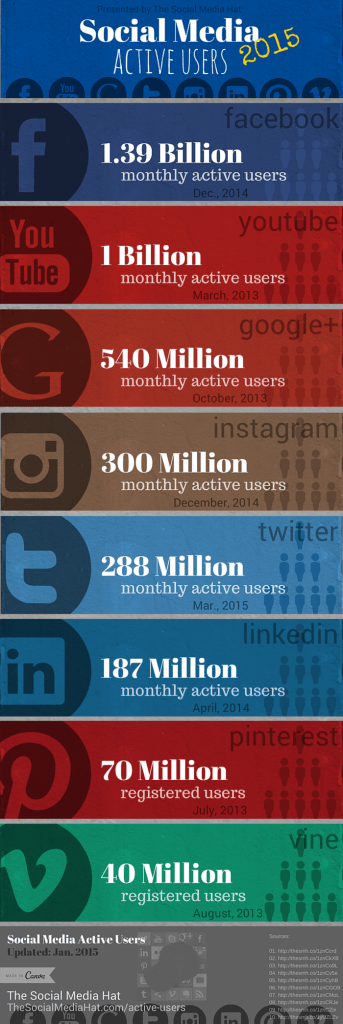
While Facebook’s developers are constantly tweaking the algorithms and codes and format of things (it’s true, we must admit), the website itself remains fairly stable in a number of ways.  First of all, the fact remains true that Facebook is where the people are–the people, the relationships, the possible connections, and the real market for your books.  Consider this infographic, courtesy of Rebekah Radice:

Social-Media-Active-Users

The people are staying put, and sticking by Facebook, despite the not-uncommon doomsday forecasts to the contrary.  But that’s not the only aspect of Facebook that is stable: the features may alter a bit in form and function, but the concept of what you’re using those features for remains the same.  I’ve written a great deal throughout this series of primers about social media marketing targeting certain specific pillars of the online experience: findability, adaptability, usability, and authenticity.  If any of these four aspects is missing from an author’s social media presence, they’re bound to suffer.  If, however, you are conscientious in maximizing your Facebook presence, as these resources should help you to do, then you’re practically guaranteed to grow your reading audience.

Top 5 Best Resources:

1. “The Power of Facebook for Authors” by David Henry Sterry over at The Author Online.

2. “30 Ways to Build Your Fanbase with Facebook” by the folks over at Duolit.

3. “My Experiments with Facebook Ads” by Rami Ungar over at Self-Published Authors Helping Other Authors.

4. “Facebook Ads: Should Indie Authors Buy Them?” by Joel Friedlander over at The Book Designer.

5. “7 Essential Elements for an Author’s Facebook Page” by Antonella Iannarino over at the David Black Agency’s official blog.

And a bonus additional resource:

The tag archive for “Facebook” over at ALLi‘s “How-to For Authors” blog.

Please keep us posted of your own successes as you experiment with new platforms.  You’re our most inspiring innovators, and the internet is your laboratory.  We can’t wait to see what you do!  And make sure to check back next week, as I wrap up this social media primer with the all-important summary edition!

If you have any questions, comments, suggestions, or contributions, please use the comment field below or drop us a line at selfpublishingadvice@gmail.com.  And remember to check back each Wednesday for your weekly dose of social media know-how. ♠

KellyABOUT KELLY SCHUKNECHT: Kelly Schuknecht is the Executive Vice President of Outskirts Press. In addition to her contributions to the Outskirts Press blog at blog.outskirtspress.com, Kelly and a group of talented marketing experts offer book marketing services, support, and products to not only published Outskirts Press authors, but to all authors and professionals who are interested in marketing their books and/or careers. Learn more about Kelly on her blog, kellyschuknecht.com.