In Your Corner: How Does One Stay Creative in the Midst of the Doldrums?

Have you ever struggled to figure out just how to keep generating good new material, as an author? Have you ever tangled with the doldrums when it comes to dredging up new ideas for marketing your self-publishing book?

Staying creative is hard.

Perhaps this is self-explanatory, or the sort of statement which prompts a “duh” reaction in some of our readers, but it’s worth saying nonetheless. Recognizing and honoring a difficulty like this is paramount in moving forward to address it. Denial is not a friend to productivity, on any level.

In all of my years working alongside self-publishing authors, one of the most common questions I receive is simply: “What else can I try?” The unspoken statement, uttered in the silences between words, is this: “I’ve run out of ideas, but I know I need to try something different since what I’m currently doing is not working or somehow not enough.” And perhaps that’s part of the difficulty; when authors go looking for just “enough,” they are hoping creativity will do what dogged persistence and dedication to craft won’t. They’re hoping creativity will level up their book’s success.

But that’s not strictly true. Creativity is a part of the whole, just as dogged persistence and dedication are. Creativity, however, differs greatly from those other two things, which can be counted on to produce measurable and reliable results. Generally speaking, if you put time and energy into something with persistence and dedication, you’ll be guaranteed to see results. Creativity, on the other hand, is fickle. It’s hard to qualify what it is, much less quantify what it does. I think of it as part of your navigation system; alone, it won’t get you anywhere, but it can certainly help you find your destination … but I don’t know, I think my metaphors tend to break down sooner than I can pin them down in pixels or on paper.

Instead of digging myself a deeper hole to step in, I thought I might shift gears a little bit, and talk about some of the tried-and-true methods to coax creativity out of hiding. What are some ways we can boost our creativity in at least a semi-reliable fashion?*

creativity listening

Ten Starter Tips to Summon Creativity

  1. Sleep (& walk to work) with a notebook and pen. The best ideas crop up when we least expect them, which is why it’s important to … well, expect them. Put yourself in the best possible position to jot down those nuggets of dream-time wisdom (at night) and kinetic inspiration (while you’re on the move) and contemplative excellence (when you’re at work, or eating dinner). And just as important as writing them down is the need to do something with them … so schedule a half hour or more every day to expand one of your jotspirations into something that later might fit into your larger project. Don’t put too much pressure on the individual pieces to become anything; they’ll assemble into something larger or inform your work as you go.
  2. Change your project. This is the scariest item on the list, perhaps. But it’s important to be open to changing directions mid-stream, no matter how far along in your project you are. I’ve known artists to destroy eight or nine of every ten artworks because they weren’t what they wanted, and I’ve known authors to strike one of every two pages during the editing stage, or delete entire drafts and start over from scratch. This might be a bit extreme for you, and there’s no need to go that far if it doesn’t fit your feeling for what’s right, but you should pay attention to your intuition. Is your current manuscript headed where you want it to? Has what you want changed? Should it?
  3. Steal like an artist. Beg, borrow, steal. You know how it goes: we are what we read, what we see, what we witness. Instead of feeling shame or repugnance at stealing from others whose work you admire, consider instead a system by which you acknowledge, pay homage to, honor, and celebrate these influences. I guarantee you that you already have a number of influences that are bleeding into your work; it’s simply a matter of recognizing them and working with them as a feature rather than a distraction.
  4. Get up earlier, don’t stay up later. Quite a few items on this list could have been taken up with “self-care” instructions, but use this item as the lynchpin of a body-friendly, healthy writing strategy. Studies show that getting up earlier (and going to bed earlier to account for the difference) and eating well, getting out and about, and seeking out friendly company are all significant physiological boosters for creativity and productivity both. You won’t be able to pin down your inspiration if you can’t even concentrate, so take the time and set a schedule which allows you to inhabit the best, healthiest possible body–and therefore create the best possible work you can.
  5. Read, read, read. Books are food for the soul, friends for the lonely, and so many other things. They’re also the raw material we chew up in our heads and turn into fuel for inspiration. Don’t shut down the assembly line which delivers this vital ingredient of your work! Spend as much time reading as you do watching television or scrolling through your Facebook timeline, and I guarantee your work will benefit.
  6. Diagram it. Not all brains work the same way, but many brains benefit from branching out and trying out some of the tried-and-true methods of people who might be gifted in other ways. Case in point? I am terrible at math. Or at least, I wasn’t a fond student of the subject. I’m a rather predictable writer in that I love words, words, always words–but once in a great while, when I get stuck, I find I really benefit from posing the question: “What would my friend A. do?” A. is an engineer and gifted mathematician. And what would she do? She’d diagram the thing. She’d figure out how to visually represent the component parts of an ongoing project: inputs, outputs, time and energy budgets, and the architecture of the piece itself. Seeing it laid out in this way helps me grasp where the holes are, and where to spend (or “budget”) my next writing session.
  7. Sing in the shower. No, seriously. Get up out of your chair if you’re struggling and go take a shower. Eat a piece of fruit. Pears are great for this, as are apples. Did you know a single apple contains more caffeine than a shot of espresso? True fact. I heard that one from my family doctor. Kick up your heels; put the radio on for a minute and go for a drive, just because. Belt out one of your favorite songs as if no one was listening. (If they are and don’t like it, well they can go lump it.) Get your blood moving, and vary your activities every fifteen or thirty minutes while writing.
  8. Clean your work space. Ha. Yeah, I know, I’m not doing too good on this front myself right now. But it’s a fact that most people operate best, focus best, when their work spaces are organized and cleared of clutter. Also, the act of cleaning often knocks out some of the cobwebs, maybe even knocks some new ideas loose. Don’t underestimate the power of those bubbling shower cleansers and elbow grease in prompting creativity to scuttle out of some dark corner.
  9. Finish something. And by this I mean: “If you can’t finish the big project, finish a little one.” It can be something related to your piece, as in, a chapter or a paragraph. And reward yourself for this! Or it can be something completely unrelated to your writing, like cleaning the bathroom or writing a thank-you letter to your niece for that lovely Christmas gift you forgot to mention earlier. (Oops.) Some people call this procrastination–but if you recognize the need to vary your tasks, and turn it into a productive deviation, one that you can reward yourself for finishing, your morale will spike. Just make sure you do get back around to writing again afterward.
  10. Count the ways. Count the ways you’re doing well. More than anything, struggling with creativity can sap your self-confidence, your morale, and your sense of your work’s value. But you’ve done so much good work already! Make a list, maybe, but no matter how you count the ways, make sure you celebrate each and every accomplishment!

*PLEASE NOTE: These tips are tricky, and the object elusive. If you’re struggling to make any one of them work (that is, you’re struggling to summon that spirit of creativity), there’s nothing at all wrong with you or with your methods, necessarily. There are no failures in the pursuit of creativity, merely delays. And as always, if you’re facing a daunting prospect, remember that we’re here for you, both to commiserate and offer up all of the expertise we collectively have on offer.

You are not alone. ♣︎


Elizabeth

ABOUT ELIZABETH JAVOR: With over 18 years of experience in sales and management, Elizabeth Javor works as the Manager of Author Services for Outskirts Press. The Author Services Department is composed of knowledgeable publishing consultants, pre-production specialists, customer service reps and book marketing specialists; together, they all focus on educating authors on the self-publishing process to help them publish the book of their dreams. Whether you are a professional looking to take your career to the next level with platform-driven non-fiction or a novelist seeking fame, fortune, and/or personal fulfillment, Elizabeth Javor can put you on the right path.

From the Archives: “Self Publish a Book in 2013”

Welcome back to our Tuesday segment, where we’ll be revisiting some of our most popular posts from the last few years.  What’s stayed the same?  And what’s changed?  We’ll be updating you on the facts, and taking a new (and hopefully refreshing) angle on a few timeless classics of Self Publishing Advisor.

∗∗∗∗∗

[ Originally posted: December 31st, 2012 ]

It is hard to believe another year is already behind us. As 2013 approaches, many of you will set New Year’s resolutions for yourself. One of the most popular resolutions is writing and publishing a book. Whether you write fiction, non-fiction, adult or children’s books, the Self Publishing Advisor blog is here to help. Every week we share tips, advice and news about self-publishing to help you achieve your goals, and I’m dedicating my January posts to authors whose 2013 resolution is to write and self-publish a book before the year ends.

Whatever your writing obstacles have been in the past (a busy schedule or a fear of failure), I am here to help! Enjoy the last night of 2012 and get ready for the best year of your life — the year you become a self-published author.

Happy New Year’s!

– by Jodee Thayer

Okay, so one last “resolutions-related” blog post for 2017 and I’ll be done. Probably. I suppose it has been on my mind a great deal in the last few months–what with my participation in NaNoWriMo this year and an encroaching sense that if I don’t finish my book now, I will never ever finish it–and I’ve been simply unable to let go of the hope that 2017 can somehow be different … that it has to be different, for my sanity’s sake and the sake of peace and equilibrium at home. And my back. My back would really appreciate it if I could stop internalizing all of my existentialist anxiety and self-recriminations over my lack of progress.

So, how to kick things into gear? Plan. Plan, and then turn plans into the kinds of good habits which lead to a finished book, and ultimately, a published book.

But enough about my story. What about yours? Is 2017 the year–or a year, for those of you who have already self-published–when you publish your next book? Oh, yes. Yes it is. I firmly believe it can be done–even if you haven’t started writing it yet. A dash of fierce dedication and a plethora of hot coffees and maybe a couple of kale smoothies every week, and you can get there. I firmly believe this, not just because I need to for my own reasons, but because 2017 is shaping up to be a fantastic year for self-publishing.

There are countless book expos and fairs making space for self-publishing authors and companies; there are dozens of new technologies and applications in the pipeline to smooth all of the ancillary experiences circling around publication, like marketing and scheduling and getting books into libraries; there are new products and services available pretty much everywhere you look when it comes to choosing your self-publishing company itself (you all already know which one I recommend!); and last but not least, readers are hungry, oh-so-hungry, just positively ravenous for new self-published material to read.

Let 2017 be the year you publish your book. It’s time. Conditions have never been better. And you’re ready. I know you are, because you were born for this.

antique old typewriter dandelion puff

Thanks for reading.  If you have any other ideas, I’d love to hear them.  Drop me a line in the comments section below and I’ll respond as quickly as I can.  ♠


Kelly

ABOUT KELLY SCHUKNECHT: Kelly Schuknecht is the Executive Vice President of Outskirts Press. In addition to her contributions to the Outskirts Press blog at blog.outskirtspress.com, Kelly and a group of talented marketing experts offer book marketing services, support, and products to not only published Outskirts Press authors, but to all authors and professionals who are interested in marketing their books and/or careers. Learn more about Kelly on her blog, kellyschuknecht.com.

Self-Publishing News: 1.16.2017

And now for the news!

This week in the world of self-publishing:

Since there’s not much going on in the world of self-publishing this week, I thought it’d be nice to follow up on the article we covered last week entitled, “Self-Publishing: An Insult to the Written Word”, as Huffington Post just released an article with a counter argument titled, “Self-Publishing: An Insult to the Written Word or a Boon to the Industry?”

In this article, Samita Sarkar–a self-published author herself–defends the industry with anecdotal and researched defenses for the industry that Gough had spent an entire article belittling. Sarkar points to the more intimate connectedness self-published authors can achieve with their audience, the freedom they experience with regards to subject matter and the opportunity they have to become their own small-scale printing press.

What Gough called the “burden” of editing independent authors work, Sarkar calls a pleasure and an honor. “These authors are investing in their book and realize that they need professional help to improve on their work and make it more enjoyable for their readers and more marketable,” she says, “Why put them down for that?”

Sarkar finishes the article by critiquing Gough for her heavy focus on the idea that the art of writing itself “has been cheapened by self-publishing,” she goes on, “But self-publishing can help to give people a voice. It provides them an outlet that they may otherwise never have had so they can connect with other people. Isn’t that what art is all about?”

Of course it is. Art is about creative expression. Maybe you don’t prefer the cubist art of Picasso, but instead find yourself more drawn to the High Renaissance art of Leonardo da Vinci; whether or not you have a palate for a particular type of art does not mean that one or the other isn’t art by definition. There are readers that will prefer self-published books and there are readers who will steer clear of them, don’t ever silence yourself because of those who don’t like your work, but keep writing for those who will continue to love and appreciate it.


spa-news

As a self-publishing author, you may find it helpful to stay up-to-date on the trends and news related to the self-publishing industry. This will help you make informed decisions before, during and after the self-publishing process, which will lead to a greater self-publishing experience. To help you stay current on self-publishing topics, simply visit our blog every Monday to find out the hottest news. If you have other big news to share, please comment below.


Kelly

ABOUT KELLY SCHUKNECHT: Kelly Schuknecht is the Executive Vice President of Outskirts Press. In addition to her contributions to the Outskirts Press blog at blog.outskirtspress.com, Kelly and a group of talented marketing experts offer book marketing services, support, and products to not only published Outskirts Press authors, but to all authors and professionals who are interested in marketing their books and/or careers. Learn more about Kelly on her blog, kellyschuknecht.com.

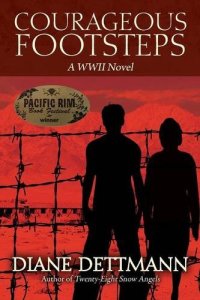
Saturday Book Review: “Courageous Footsteps: A WWII Novel”

Book reviews are a great way for self-publishing authors to gain exposure. After all, how can someone buy your book if he or she doesn’t know it exists? Paired with other elements of your book promotion strategy, requesting reviews is a great way to get people talking about what you’ve written.

When we read good reviews, we definitely like to share them. It gives the author a few (permanent) moments of fame and allows us to let the community know about a great book. Here’s this week’s book review, courtesy of Midwest Book Review:

Courageous Footsteps: A WWII Novel diane dettmann

Courageous Footsteps: A WWII Novel

by Diane Dettmann

Publisher: Outskirts Press

ISBN: 9781478755586

Synopsis:

PACIFIC RIM BOOK FESTIVAL WINNER!

Courageous Footsteps is a historical novel about two teenagers, Yasu and Haro Sakamoto, who, along with their family, are imprisoned in a Japanese internment camp in eastern California during WWII. Surrounded by barbwire fences, Yasu and her brother struggle to make sense out of their young lives. They long to return to the life they enjoyed in Glenville, California, but instead are forced to endure hardships and make choices that will change their lives forever. Awarded runner-up in the Great Midwest Book Festival in the young adult category, this piece of America’s history is an informative, eye-opening read for adults too.

Critique:

The majority of novels about World War II are directed to adult audiences, but Courageous Footsteps is a story for teens and presents the experiences of Yasu and Haro Sakamoto, who are removed (along with their family) from their Glenville, California home and interred in a concentration camp.

All ages will find Courageous Footsteps a gripping, eye-opening approach, for several reasons. One is its ability to provide a stark contrast between the comfortable, middle-class American lifestyle experienced by the family at the novel’s opening with life behind barbed wire fences after they are removed from their home.

Few other novels, adult or teen, so adequately portray the emotions, daily experiences, and struggles of the Japanese during this period of time. From the moment Pearl Harbor is bombed and war is declared with the Japanese to the President’s orders to take away their lives, Courageous Footsteps progresses swiftly and documents the quick rise of fear and its accompanying prejudice, which place the family in constant danger and flux.

Nearly overnight, the Sakamotos become enemies of the people and are attacked, beaten, and maligned by strangers who only see their Japanese faces and not their American identities. Their personal possessions (radios, guns, cameras, binoculars) are confiscated by the Army in the name of national security, the family is forced to do the best it can under prison conditions, and camp regulations take over their formerly-free lives.

How does a family stay together and preserve their shattered dreams under such conditions? Courageous Footsteps is as much a story of this survival process as it is a documentation of one girl’s evolving determination to escape this impossible life and resume her dreams.

Teens and new adult audiences alike will find Courageous Footsteps evocative, compelling, and hard to put down.

reviewed on Donovan’s Bookshelf of Midwest Book Review ]

Here’s what some other reviewers are saying:

Book really made me think about what these American born Japanese American citizens went thru at the hands of our government. How sad the way they were treated. This book evolves the characters so well with just enough info about them and not so much that you get bogged down with their personalities. Just a marvelous book that gives so much insight into what the Nisei’s went thru. How they worked so hard to build their lives and then to have it taken away and have them herded into these camps, how badly they were treated and how awful the conditions. OMG I admire and respect them for their perseverance and how they all worked together and were so respectful of their parents. Haro worked hard and applied himself and fought hard for this country after how badly he was treated. It was a different time…you won’t find many kids today with this kind of respect for their parents nor their work ethic. Just an amazing and enlightening book! Can’t wait for the sequel!

– Amazon Reviewer Karen Grossaint

The internment of Japanese Americans during WWII is a period of history which I was not familiar with. I had read magazine articles but they only touched the surface. Ms. Dettmann’s book is a real eye opener! I had no clue what my fellow Japanese Americans faced and the atrocities they lived through! While this book is a historical fiction novel, I had to continually remind myself of just that. The author’s extraordinary writing skills made it read like a true story. The characters and their experiences seemed so real.

After the attack on Pearl Harbor, the Japanese were rounded up and arrested like common criminals. They were forced in to camps against their will and remained there until the end of the war. The reader follows the painful journey the Sakomoto family through the eyes of their teenage daughter Yasu. They were law-abiding American citizens in 1941. They owned a small business in Glenville, California. Being a close knit family, they had a deep love for one another and their country. The quiet, peaceful life they had known changed quickly after the bombing. Persecution from fellow townspeople and even friends was immediate and harsh. Their lives became endangered in the very area and by the people that had been a part of their happiness.

My heart broke for young Yasu. Being a teenager is hard enough, but to face adolescence with such rejection and hostility was excruciating. Her sweet family continued to trust their country and government right up to their arrests. The gentle humble spirits of the Japanese were a great contrast as to how most Americans would have responded to this extreme discrimination.

I had no clue the camp conditions were so degrading and horrific. My first thought was about the concentration camps of the Jews. These camps were not as severe as Hitler’s, but they were shocking. There was filth, crowding, squalid living conditions, poor food, such as I would never have dreamed could take place in America. The author took me into the camp, to walk daily with the Sakamotos, living their experiences and allowing my heart of feel their emotions.

Though each era had different details, I saw a common thread running through history in the injustice toward other groups: the slavery of African Americans, the Chinese in the early 1900’s, the Jews, and the Japanese. People that had done no wrong but were victims of fear and misunderstanding.

I do disagree with this being labeled as a “young adult fiction”. This book is for teens and adults too! A must read for all! Watch for a sequel!

– Amazon Reviewer Moonpie

 AUTHOR INTERVIEW


saturday self-published book review

Thanks for reading!  Keep up with the latest in the world of indie and self-published books by watching this space every Saturday!

Self Publishing Advisor

selfpubicon1

Conversations: 1/13/2017

WRITER SEEKS SUPPORT TEAM

Have you collected several years-worth of Writer’s Digest magazines anhelp!d multiple editions of the Writer’s Market? Have you gone to Writer’s Conferences, sat in the back row and collected every handout? Have you walked bookstore aisles searching for that one writing advice book that would motivate you to actually publish what you’ve written? These are, indeed, excellent resources and you’ll learn many things through listening to their articles and fact-finding pieces and reading each chapter. However, they are not the hands-on, personally invested assistants that we all need in our writing lives at various strategic moments. I’ve been told that the journey I’ve taken in my writing career is similar to that of many authors—even the famous ones. So it is that I hope the following examples of my personal experiences will encourage you to seek and accept help along your own writing path.

  • Stories popped into my head ALL the time and I never found/took the time to write them down except for the occasional basic concept which I filed Then a neighbor mentioned that our local county library was hosting a writing workshop—and I signed up! The instructor was an experienced author whose encouraging manner led to the completion of my first published short story!
  • That library workshop group of people grew in solidarity as we invested in each other during the next several 8-week sessions. Then times—and county library budget—changed and we learned that there would be no more workshops in the foreseeable future. SO—we established our own Writers-at-Work group and the instructor joined us as one of the working This group remains loosely connected today—after close to 45 years together! We will never stop mentoring each other!
  • One particular short story caught my husband’s eye. It is a Christmas story titled DEPLOYED, and its storyline touched several of my author-friends as well. With his big nudge and support we printed 500 copies and donated the majority of them to encourage military units as they were deployed. Later, I published it on Amazon/Kindle, and am now developing it into a novel. This would not be happening if I’d never surrounded myself with my Personal Support Team.
  • As I grew in writing skills and knowledge, and my supporters grew in their nudging skills, I became an Advance Writing teacher! What an amazing experience to work with high school students! Their imaginations inspired each other, I was inspired, too! Those are the years that I began setting aside notes for a different kind of book which eventually became FIREPROOF PROVERBS, A Writers Study of Words—self-published with Outskirts Press.
  • When the teaching season of my life concluded, a new door opened, and I started working with beginning authors to edit, critique, and prepare their projects for publication—and that has been my writing life for the past ten years. With the publication of each author’s book I am again blessed beyond measure!

So there you have it—a personal example of one writer who has experienced the multiple benefits of supportive people throughout one writing career. I call this the TEAM EFFECT, similar to the concept of a ripple effect as each individual nudges you along and widens your horizons making your writing better!

About my decision to self-publish? I simply did not want to wait years to be accepted by a traditional publishing house as I queried and/or worked with an agent who would receive part of my royalty. Instead, I did my research into self-publishing companies, talked with other authors who have self-published, and then selected Outskirts Press. Their Author Consultant, Publishing Consultant, and Design Specialist were excellent additions to my Support Team. When the time comes, I’ll be publishing with them, again! ⚓︎


Royalene

ABOUT ROYALENE DOYLE: Royalene has been writing something since before kindergarten days and continues to love the process. Through her small business—DOYLE WRITING SERVICES—she brings more than 40 years of writing experience to authors who need “just a little assistance” with completing their projects. This is a nice fit as she develops these blogs for Outskirts Press (OP) a leading self-publisher, and occasionally accepts a ghostwriting project from one of their clients. Her recent book release (with OP) titled FIREPROOF PROVERBS, A Writer’s Study of Words, is already receiving excellent reviews including several professional writer’s endorsements given on the book’s back cover.  

Royalene’s writing experience grew through a wide variety of positions from Office Manager and Administrative Assistant to Teacher of Literature and Advanced Writing courses and editor/writer for an International Christian ministry. Her willingness to listen to struggling authors, learn their goals and expectations and discern their writing voice has brought many manuscripts into the published books arena.