Self-Publishing News: 1.23.2017

And now for the news!

This week in the world of self-publishing:

Due to the ease of publishing anything from documents to novels on Amazon, some authors are finding that their work is being appropriated without their permission, or even without their knowledge. This kind of plagiarism can be straight copy-and-paste, word for word plagiarism, or it can be slight alterations to the story or wording.

Rachel Ann Nunes, a writer of Mormon fiction, found that one of her stories had been hijacked by a plagiarist who added sex scenes to remarket her stories as more mainstream romance novels. Luckily, a reader of Nune’s picked up on this copyright infringement and asked the plagiarist about the similarities and was told that the authors had collaborated on the piece. When Nune confronted the other author, Mullens, she received a vast amount of backlash on social media from whoever this troll was on the other end of the keyboard. One-star reviews of her book began springing up, hostile Facebook messages from strangers and the like. With this, Nunes was faced with a decision: drop it and let the theft slide, or take legal action. Nunes decided to sue who she believed to be Mullens for damages of $150,000, the trial taking place after the time of this article.

Without astute readers out there to catch this, there is a lot of this word theft that can fly under the radar for vast amounts of time. If it is discovered, you can imagine as an author how absolutely violating that must feel. People pour their heart and souls into their work when creating any piece of writing. To have someone else come along and throw their name on it and take credit for your creative outpouring is not just insulting, it’s a downright slap in the face.

The plagiarism trend seems to hit hardest in romance novels, as they are the biggest sellers in the ebook world, but any genre can fall prey to this. More surprisingly, the culprits aren’t always who you’d imagine they’d be either. Take Laura Harner, for example, a plagiarist who had put out 75 books in just two years. Due to Amazon’s rewards system, which puts authors who publish more often higher in the rankings. Unfortunately, Amazon gets to keep 30% of the profits from all books published on its site, stolen or not, as long as it removes the stolen work if it is discovered to be as such. This means the safeguards for authors who publish through Amazon will never be as good as those when publishing through a traditional publisher, who would be personally liable for violating copyright laws.

In short, the internet makes it quite easy for plagiarists to keep stealing work and making money under new names and new accounts. If signing up is as easy as having an email, and the company your publishing with is more focused on creating lots of content, i.e. lots of money, then it becomes relatively easy to work the system and pass off other people’s work as your own. This is the ugly side of a beautiful technological advance. Anyone can sit behind a keyboard and create a convincing online profile of themselves that does not match their true identity, which makes catching and prosecuting this type of offense extremely difficult.

I highly recommend reading this article for more examples of authors who dealt with this issue. I will also say, that as it is most often readers who catch these perpetrators in the act, remember that your role as a reader is equally as important as it is as a writer. Reading our fellow author’s works is one of the best safeguards we have in this digital age. I found myself profoundly impressed and inspired by the vigilance and support of readers who helped the victims mentioned in this article. It just goes to show how much showing appreciation for your fans can go.


spa-news

As a self-publishing author, you may find it helpful to stay up-to-date on the trends and news related to the self-publishing industry. This will help you make informed decisions before, during and after the self-publishing process, which will lead to a greater self-publishing experience. To help you stay current on self-publishing topics, simply visit our blog every Monday to find out the hottest news. If you have other big news to share, please comment below.

Kelly

ABOUT KELLY SCHUKNECHT: Kelly Schuknecht is the Executive Vice President of Outskirts Press. In addition to her contributions to the Outskirts Press blog at blog.outskirtspress.com, Kelly and a group of talented marketing experts offer book marketing services, support, and products to not only published Outskirts Press authors, but to all authors and professionals who are interested in marketing their books and/or careers. Learn more about Kelly on her blog, kellyschuknecht.com.

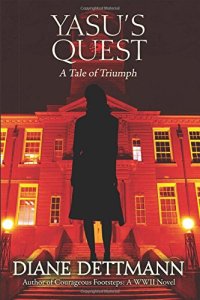
Saturday Book Review: “Yasu’s Quest: A Tale of Triumph”

Book reviews are a great way for self-publishing authors to gain exposure. After all, how can someone buy your book if he or she doesn’t know it exists? Paired with other elements of your book promotion strategy, requesting reviews is a great way to get people talking about what you’ve written.

When we read good reviews, we definitely like to share them. It gives the author a few (permanent) moments of fame and allows us to let the community know about a great book. Here’s this week’s book review, courtesy of Midwest Book Review:

yasu's quest diane dettmann

Yasu’s Quest: A Tale of Triumph

by Diane Dettmann

Publisher: Outskirts Press

ISBN: 9781478755791

Synopsis:

In this skillfully woven coming-of-age story, Yasu Sakamoto continues her journey that began in Dettmann’s award-winning book, Courageous Footsteps: A WWII Novel. Yasu’s Quest: A Tale of Triumph carries readers into the next phase of Yasu Sakamoto’s life so smoothly that the book can be read independently or as a sequel.

With a keen sense for detail, author Diane Dettmann skillfully draws readers into an engaging story about an unexpected friendship that develops between Yasu Sakamoto and Martha Annala, a university professor. When they first meet on a train headed to Minneapolis, Yasu is afraid to trust Martha with any information about her past and lies about her identity to protect herself and her family. Alone and with no place to go, Yasu eventually tells Martha about leaving her home in Glenville and the three years she spent imprisoned in the internment camp. Martha feels Yasu’s pain and opens her heart and home to her.
As the war intensifies anti-Japanese attitudes escalate in America and the hostility runs rampant. Martha’s decision to befriend Yasu ultimately creates hardships and challenges in her own life. Relationships with university colleagues become strained, but Martha remains committed to her friendship with Yasu. Negative looks and anti-Japanese comments surround Yasu everywhere she goes. She deeply misses her parents, her brother, Haro, and Kenta, her loving German shepherd, but knows she must push forward.

Critique:

How can an eighteen-year-old girl escape from a U.S. internment camp for the Japanese that has been heavily and successfully guarded for three years? The opening of Yasu’s Quest, continues the saga begun in Courageous Footsteps, which observed the pre-camp life and early internment of the Sakamoto family. Familiarity with this prior novel will lend a special appreciation for this powerful sequel, which goes in a different direction as it outlines Yasu’s choices.

The Sakamotos have been devastated by the war as much or more so than any other American family (“How can this be happening? First my son dies in combat, then my daughter disappears and now my husband’s in jail.”). Yasu’s escape is just one more trial they have to bear in an impossibly changed world; and as for Yasu herself – how can she hide when her Japanese heritage gives her away?

Her journey to Minneapolis results in a chance encounter and an unexpectedly friendly face, and her life changes. Yasu and Martha each confront their changing world with innovative survival techniques that provide insights into both the larger issues of domestic World War II and its daily challenges (“With sugar rationing still on, women often use beer for setting their hair. So I gave it a try. Seems to work and I just put it in the refrigerator and use it over and over until it’s gone. Sometimes even spit works.”).

Diane Dettmann’s careful attention to focusing on both aspects of this world and both bigger and smaller pictures of changed lives makes for a far more thoughtful, detailed inspection than most World War II accounts provide, creating a series of insights based on Yasu’s evolving experiences in college and the family’s life as the war draws to a close.

The contrast between a young woman making her way in this changed world and a family on the edge of return to a world both familiar and alien makes for a riveting story line that clearly reveals the difficulties of the times: “Even the letters to the editor were filled with vicious comments about preventing the Japanese Americans from returning to their homes. Mr. Sakamoto folded up the paper and tucked it in his suitcase. His joyful thoughts of returning home were replaced with fear and anxiety.”

Will the family reunite, and how will they pick up the pieces of shattered lives and rebuild, along with the rest of America? One woman’s act of kindness could change all their lives. Yasu’s Quest neatly covers issues of loss, grief, recovery, and acts of kindness as it presents a journey that ultimately transcends the forces of division and injustice pummeling the Japanese family.

While teens will be the likely readers of this novel, many an adult will find that Yasu’s Quest holds perspectives and details that are as enlightening as they are involving. It, along with its companion, are thus highly recommended picks for any reader interested in a powerful, ultimately hopeful, view of World War II’s lasting effects on the Japanese in America.


reviewed by Diane Donovan of Midwest Book Review ]

Here’s what some other reviewers are saying:

I have been waiting for the sequel to Courageous Footsteps – which I couldn’t put down! What a great novel with important historical references, but also developed characters that I could relate to. Thank you Diane! A must read!

– Amazon Reviewer Kelly McNelis

Love this book…fast read…held your interest…hard to put it down!

– Amazon Reviewer Karen Grossaint


saturday self-published book review

Thanks for reading!  Keep up with the latest in the world of indie and self-published books by watching this space every Saturday!

Self Publishing Advisor

selfpubicon1

Conversations: 1/20/2017

WRITER SEEKS A TRIBE

Do you have a Native American heritage? I do. So when I heard authors talking about all the amazing help they received from their tribes I was more than a little confused. There was a workshop “All About Tribes,” at last years’ writers conference and curiosity caught me. If you’ve not heard this term before—associated with authors—here’s my paraphrased definition: A tribe is any group of people who care about something they have in common. End of definition. However, applying this concept to authors who are seeking the support of a tribe was a whole different twist for me. My paradigms had not shifted into the “real world of Internet groups” which are being re-labeled “tribes” even as I write this blog.holding hands

Please allow me to come at this concept from another perspective. There are two things I’m absolutely certain about. One is that Writers and basically loners. We develop our stories alone, in our heads, and they pour out onto the computer screen through our fingers. Two, we love words! The shorthand of the majority of Internet users can (and often does) frustrate writers to the max! What most of us are NOT savvy about is marketing and/or networking in order to get the wonderful book we’ve just published actually into READERS hands. Here is where the TRIBE comes in—the group of people out there on the Internet on social media venues who will TALK about our books. I’m not referring to a small group of media-types who populate television media—the “talking heads” who announce and pronounce success (or not) concerning everything from politics to cookie recipes. I’m referring to the thousands of people (hopefully more) who are talking about our books—genre, topic/concepts, characters, settings, etc.—because they have found a common thread within those pages that they care about.

For example: I mentioned my short story/book titled DEPLOYED. Doing a quick Internet search of groups for our deployed military, I found over 30 pages of potential resources—groups of people that are talking about some element of military deployment. This is FREE information that can lead you people who “care about” the same topics you do—and who will tell other people about the book(s) you’ve written! And when they talk, people listen.

Now the questions become: How do you find the appropriate groups/tribes? How do you contact them—all of them? How do you introduce yourself? Should you start a tribe of your own, without connecting to other tribes first?

When I typed out these questions from my workshop notes, I floundered. I want to write the books I’m passionate about and share those writings with lots of Readers. I don’t want to become a marketing specialist! And yet, the tribe concept intrigued me. I do want to encourage other writers, dig deep into this spinning wheel of creative writing and help them make something beautiful, too.

So my personal definition of my writing career is expanding. I am no longer the solitary author. I’m an author/mentor who is seeking the Tribe(s) of people in this world who appreciate and care about what I’m writing. And possibly, just possibly, there are a few writers in that Tribe (as well as Readers) who will talk about, write about and help even more writers, too.

How will I find them? It’s a little late tonight, but first thing tomorrow morning I’ll be calling my Publishing Consultant and asking her to connect me with their Personal Marketing Assistant. That’s all I need—just a little help from a friend—and I’ll be connected to my Tribe very soon. ⚓︎


Royalene

ABOUT ROYALENE DOYLE: Royalene has been writing something since before kindergarten days and continues to love the process. Through her small business—DOYLE WRITING SERVICES—she brings more than 40 years of writing experience to authors who need “just a little assistance” with completing their projects. This is a nice fit as she develops these blogs for Outskirts Press (OP) a leading self-publisher, and occasionally accepts a ghostwriting project from one of their clients. Her recent book release (with OP) titled FIREPROOF PROVERBS, A Writer’s Study of Words, is already receiving excellent reviews including several professional writer’s endorsements given on the book’s back cover.  

Royalene’s writing experience grew through a wide variety of positions from Office Manager and Administrative Assistant to Teacher of Literature and Advanced Writing courses and editor/writer for an International Christian ministry. Her willingness to listen to struggling authors, learn their goals and expectations and discern their writing voice has brought many manuscripts into the published books arena.

In Your Corner: How Does One Stay Creative in the Midst of the Doldrums?

Have you ever struggled to figure out just how to keep generating good new material, as an author? Have you ever tangled with the doldrums when it comes to dredging up new ideas for marketing your self-publishing book?

Staying creative is hard.

Perhaps this is self-explanatory, or the sort of statement which prompts a “duh” reaction in some of our readers, but it’s worth saying nonetheless. Recognizing and honoring a difficulty like this is paramount in moving forward to address it. Denial is not a friend to productivity, on any level.

In all of my years working alongside self-publishing authors, one of the most common questions I receive is simply: “What else can I try?” The unspoken statement, uttered in the silences between words, is this: “I’ve run out of ideas, but I know I need to try something different since what I’m currently doing is not working or somehow not enough.” And perhaps that’s part of the difficulty; when authors go looking for just “enough,” they are hoping creativity will do what dogged persistence and dedication to craft won’t. They’re hoping creativity will level up their book’s success.

But that’s not strictly true. Creativity is a part of the whole, just as dogged persistence and dedication are. Creativity, however, differs greatly from those other two things, which can be counted on to produce measurable and reliable results. Generally speaking, if you put time and energy into something with persistence and dedication, you’ll be guaranteed to see results. Creativity, on the other hand, is fickle. It’s hard to qualify what it is, much less quantify what it does. I think of it as part of your navigation system; alone, it won’t get you anywhere, but it can certainly help you find your destination … but I don’t know, I think my metaphors tend to break down sooner than I can pin them down in pixels or on paper.

Instead of digging myself a deeper hole to step in, I thought I might shift gears a little bit, and talk about some of the tried-and-true methods to coax creativity out of hiding. What are some ways we can boost our creativity in at least a semi-reliable fashion?*

creativity listening

Ten Starter Tips to Summon Creativity

  1. Sleep (& walk to work) with a notebook and pen. The best ideas crop up when we least expect them, which is why it’s important to … well, expect them. Put yourself in the best possible position to jot down those nuggets of dream-time wisdom (at night) and kinetic inspiration (while you’re on the move) and contemplative excellence (when you’re at work, or eating dinner). And just as important as writing them down is the need to do something with them … so schedule a half hour or more every day to expand one of your jotspirations into something that later might fit into your larger project. Don’t put too much pressure on the individual pieces to become anything; they’ll assemble into something larger or inform your work as you go.
  2. Change your project. This is the scariest item on the list, perhaps. But it’s important to be open to changing directions mid-stream, no matter how far along in your project you are. I’ve known artists to destroy eight or nine of every ten artworks because they weren’t what they wanted, and I’ve known authors to strike one of every two pages during the editing stage, or delete entire drafts and start over from scratch. This might be a bit extreme for you, and there’s no need to go that far if it doesn’t fit your feeling for what’s right, but you should pay attention to your intuition. Is your current manuscript headed where you want it to? Has what you want changed? Should it?
  3. Steal like an artist. Beg, borrow, steal. You know how it goes: we are what we read, what we see, what we witness. Instead of feeling shame or repugnance at stealing from others whose work you admire, consider instead a system by which you acknowledge, pay homage to, honor, and celebrate these influences. I guarantee you that you already have a number of influences that are bleeding into your work; it’s simply a matter of recognizing them and working with them as a feature rather than a distraction.
  4. Get up earlier, don’t stay up later. Quite a few items on this list could have been taken up with “self-care” instructions, but use this item as the lynchpin of a body-friendly, healthy writing strategy. Studies show that getting up earlier (and going to bed earlier to account for the difference) and eating well, getting out and about, and seeking out friendly company are all significant physiological boosters for creativity and productivity both. You won’t be able to pin down your inspiration if you can’t even concentrate, so take the time and set a schedule which allows you to inhabit the best, healthiest possible body–and therefore create the best possible work you can.
  5. Read, read, read. Books are food for the soul, friends for the lonely, and so many other things. They’re also the raw material we chew up in our heads and turn into fuel for inspiration. Don’t shut down the assembly line which delivers this vital ingredient of your work! Spend as much time reading as you do watching television or scrolling through your Facebook timeline, and I guarantee your work will benefit.
  6. Diagram it. Not all brains work the same way, but many brains benefit from branching out and trying out some of the tried-and-true methods of people who might be gifted in other ways. Case in point? I am terrible at math. Or at least, I wasn’t a fond student of the subject. I’m a rather predictable writer in that I love words, words, always words–but once in a great while, when I get stuck, I find I really benefit from posing the question: “What would my friend A. do?” A. is an engineer and gifted mathematician. And what would she do? She’d diagram the thing. She’d figure out how to visually represent the component parts of an ongoing project: inputs, outputs, time and energy budgets, and the architecture of the piece itself. Seeing it laid out in this way helps me grasp where the holes are, and where to spend (or “budget”) my next writing session.
  7. Sing in the shower. No, seriously. Get up out of your chair if you’re struggling and go take a shower. Eat a piece of fruit. Pears are great for this, as are apples. Did you know a single apple contains more caffeine than a shot of espresso? True fact. I heard that one from my family doctor. Kick up your heels; put the radio on for a minute and go for a drive, just because. Belt out one of your favorite songs as if no one was listening. (If they are and don’t like it, well they can go lump it.) Get your blood moving, and vary your activities every fifteen or thirty minutes while writing.
  8. Clean your work space. Ha. Yeah, I know, I’m not doing too good on this front myself right now. But it’s a fact that most people operate best, focus best, when their work spaces are organized and cleared of clutter. Also, the act of cleaning often knocks out some of the cobwebs, maybe even knocks some new ideas loose. Don’t underestimate the power of those bubbling shower cleansers and elbow grease in prompting creativity to scuttle out of some dark corner.
  9. Finish something. And by this I mean: “If you can’t finish the big project, finish a little one.” It can be something related to your piece, as in, a chapter or a paragraph. And reward yourself for this! Or it can be something completely unrelated to your writing, like cleaning the bathroom or writing a thank-you letter to your niece for that lovely Christmas gift you forgot to mention earlier. (Oops.) Some people call this procrastination–but if you recognize the need to vary your tasks, and turn it into a productive deviation, one that you can reward yourself for finishing, your morale will spike. Just make sure you do get back around to writing again afterward.
  10. Count the ways. Count the ways you’re doing well. More than anything, struggling with creativity can sap your self-confidence, your morale, and your sense of your work’s value. But you’ve done so much good work already! Make a list, maybe, but no matter how you count the ways, make sure you celebrate each and every accomplishment!

*PLEASE NOTE: These tips are tricky, and the object elusive. If you’re struggling to make any one of them work (that is, you’re struggling to summon that spirit of creativity), there’s nothing at all wrong with you or with your methods, necessarily. There are no failures in the pursuit of creativity, merely delays. And as always, if you’re facing a daunting prospect, remember that we’re here for you, both to commiserate and offer up all of the expertise we collectively have on offer.

You are not alone. ♣︎


Elizabeth

ABOUT ELIZABETH JAVOR: With over 18 years of experience in sales and management, Elizabeth Javor works as the Manager of Author Services for Outskirts Press. The Author Services Department is composed of knowledgeable publishing consultants, pre-production specialists, customer service reps and book marketing specialists; together, they all focus on educating authors on the self-publishing process to help them publish the book of their dreams. Whether you are a professional looking to take your career to the next level with platform-driven non-fiction or a novelist seeking fame, fortune, and/or personal fulfillment, Elizabeth Javor can put you on the right path.

From the Archives: “Self Publish a Book in 2013”

Welcome back to our Tuesday segment, where we’ll be revisiting some of our most popular posts from the last few years.  What’s stayed the same?  And what’s changed?  We’ll be updating you on the facts, and taking a new (and hopefully refreshing) angle on a few timeless classics of Self Publishing Advisor.

∗∗∗∗∗

[ Originally posted: December 31st, 2012 ]

It is hard to believe another year is already behind us. As 2013 approaches, many of you will set New Year’s resolutions for yourself. One of the most popular resolutions is writing and publishing a book. Whether you write fiction, non-fiction, adult or children’s books, the Self Publishing Advisor blog is here to help. Every week we share tips, advice and news about self-publishing to help you achieve your goals, and I’m dedicating my January posts to authors whose 2013 resolution is to write and self-publish a book before the year ends.

Whatever your writing obstacles have been in the past (a busy schedule or a fear of failure), I am here to help! Enjoy the last night of 2012 and get ready for the best year of your life — the year you become a self-published author.

Happy New Year’s!

– by Jodee Thayer

Okay, so one last “resolutions-related” blog post for 2017 and I’ll be done. Probably. I suppose it has been on my mind a great deal in the last few months–what with my participation in NaNoWriMo this year and an encroaching sense that if I don’t finish my book now, I will never ever finish it–and I’ve been simply unable to let go of the hope that 2017 can somehow be different … that it has to be different, for my sanity’s sake and the sake of peace and equilibrium at home. And my back. My back would really appreciate it if I could stop internalizing all of my existentialist anxiety and self-recriminations over my lack of progress.

So, how to kick things into gear? Plan. Plan, and then turn plans into the kinds of good habits which lead to a finished book, and ultimately, a published book.

But enough about my story. What about yours? Is 2017 the year–or a year, for those of you who have already self-published–when you publish your next book? Oh, yes. Yes it is. I firmly believe it can be done–even if you haven’t started writing it yet. A dash of fierce dedication and a plethora of hot coffees and maybe a couple of kale smoothies every week, and you can get there. I firmly believe this, not just because I need to for my own reasons, but because 2017 is shaping up to be a fantastic year for self-publishing.

There are countless book expos and fairs making space for self-publishing authors and companies; there are dozens of new technologies and applications in the pipeline to smooth all of the ancillary experiences circling around publication, like marketing and scheduling and getting books into libraries; there are new products and services available pretty much everywhere you look when it comes to choosing your self-publishing company itself (you all already know which one I recommend!); and last but not least, readers are hungry, oh-so-hungry, just positively ravenous for new self-published material to read.

Let 2017 be the year you publish your book. It’s time. Conditions have never been better. And you’re ready. I know you are, because you were born for this.

antique old typewriter dandelion puff

Thanks for reading.  If you have any other ideas, I’d love to hear them.  Drop me a line in the comments section below and I’ll respond as quickly as I can.  ♠


Kelly

ABOUT KELLY SCHUKNECHT: Kelly Schuknecht is the Executive Vice President of Outskirts Press. In addition to her contributions to the Outskirts Press blog at blog.outskirtspress.com, Kelly and a group of talented marketing experts offer book marketing services, support, and products to not only published Outskirts Press authors, but to all authors and professionals who are interested in marketing their books and/or careers. Learn more about Kelly on her blog, kellyschuknecht.com.