Demystifying the Digital Census : Self Love Levels Drop

Two weeks ago, I launched this series by laying the groundwork for understanding what the FutureBook (and its parent organization, The Bookseller) is all about and, as a result, what the annual Digital Census seeks to measure and comment upon.  (In summary: it tracks emerging and outgoing matters of interest for authors and publishers and other trade experts invested in digital publishing, whether through traditional or indie, hybrid, and self-publishing platforms.)  I also took a quick peek at the FutureBook‘s first confirmed trend of 2015: the fact that mobile has overtaken both tablets and dedicated e-readers as the primary means for reading ebooks.  And last week, I applied a microscope to the FutureBook’s second confirmed trend of 2015: the fact that digital sales are still growing, but that growth is slowing.  

self-love

This week, I’m going to examine the FutureBook’s third confirmed trend for the year.  Straight from the horse’s mouth, so to speak: “Self-love levels recede as many indie authors report lower satisfaction levels.” The FutureBook publication, which you can read here, says:

futurebook

Screen Shot 2015-11-24 at 11.44.01 PM

You can imagine how deeply sad I feel when I see a well-respected and industry-enriching publication commenting on authors tanking in the self-love department.  As it turns out, the data indexed by the Digital Census isn’t necessarily asking authors to psychoanalyze their performance and self-satisfaction, so “self-love” may be a bit strong of a term––but then again, maybe not.  Many authors do equate self-satisfaction (and their identity, really) with their performance in respect to sales figures.  And that’s a deeply problematic way to measure self-worth, as everyone is well aware … but sometimes we can’t help but believe it to be an accurate yardstick, especially when we’re spoon-fed a certain narrative by the mainstream media: the narrative in which success means J.K. Rowling, means Veronica Roth, means Tom Clancy and P.D. James and Agatha Christie, means George R.R. Martin, means blockbuster film adaptations and interviews with Ellen or Oprah or Jimmy Kimmel.

Maybe other self-publishing authors and bloggers might be content to state that this is wrong and it shouldn’t be the case, but I can’t just let it lie.  Where does the narrative of success originate?  And how can we alter the conversation to reflect a more holistic, life-affirming reality––the selfsame reality that indie, hybrid, and self-publishing authors of great quality and phenomenal worth experience on a day-to-day basis?

I think a lot of it comes down to the whole do as I say, not as I do syndrome that applies to many other grand social narratives in our modern world.  For example, we affirm again and again to our children that whatever path life takes them on, they have value––as plumbers as well as princesses, as garbage collectors and astronauts––but we flood their lives with films, television shows, and books that highlight the “exceptional” nature of the same “grand narratives” that the world will later try and tell them are impossible to actually attain, in adulthood.  (When was the last time we turned to a college student and said, “You can totally be a princess!” … and actually mean it?)

It’s the same with publishing, including self-publishing: we tell warn aspiring authors again and again that success doesn’t look like any one thing, and it certainly isn’t equatable with sales figures.  But at the same time, the narratives of “successful” authors that we learn about and spread through news articles and social media are almost always about authors who rake in the big bucks and attention from the Big Five publishing houses (after a successful “grassroots campaign,” of course), and about rags-to-riches stories like Andy Weir’s and Christopher Paolini’s.  And I’m here to say: it’s too little, and too late.  It’s simply not good enough to affirm our indie authors as individual successes with trite sayings and cold comfort.  By the time we need comforting, it’s too late.  We have to break the stereotypes and unravel the threadbare story before authors publish.

Otherwise, we’re always going to be playing catch-up and damage control.  I will always, always be on hand to affirm that you’re a success simply because you did the hard thing and you (self-) published your book, but I think we can do more to set you up for a healthy sense of your own value and worth and general excellence, and do it earlier and better.  Let’s start by teaching the next wave of future authors that numbers do not an identity make!


Thank you for reading!  If you have any questions, comments, suggestions, or contributions, please use the comment field below or drop us a line at selfpublishingadvice@gmail.com.  And remember to check back each Wednesday for your weekly dose of marketing musings from one indie, hybrid, and self-published author to another. ♠
In Your Corner : Do I need a ghostwriter?

How do you know if it’s time to seek out a ghostwriter to help you complete your book?  And what all is involved in the process of ghostwriting, anyway?  Is it really any different from detailed copyediting?

If you’re asking these questions, I hope what I write here will help to answer at least a few of them.

As with any writing venture, ghostwriting is a unique experience that presents unique challenges in addition to unique benefits.  You won’t ever find me pretending otherwise, just as you won’t find me beating around the bush when it comes to recommending a thorough and professional edit of your manuscript once it’s been written––and just as I held no punches when I worked to draw a dividing line between copyediting and proofreading in my blog post two weeks ago.

So, what is ghostwriting?  It is, according to the “Publishing” page on About.com, “the practice of writing for and in the name of someone else. It is most commonly associated with book publishing, but today it is also widely used in public relations, corporate communications, social media, and many other industries and fields that are producing greater and greater amounts of written content.”  Many of our most prolific “superstar” genre specialists, like John Grisham and Tom Clancy and Nora Roberts (and so on and so on to infinity) employ a combination of understudies, assistants or secondary writers, and ghostwriters.  They are called upon to generate, quite simply, too much material for a single human being to keep pace.  But many if not most niche storytellers––whether famous or indie, traditionally published or self-publishing––lead hectic and busy lives that keep them from writing the books that they want to.  We just can’t ignore the fact that self-publishing authors deserve to know that there is another option out there for them!

ghostwriting

The process is relatively simple: most ghostwriters work on a contract or freelance basis for companies like Outskirts Press, so the fastest way to get yourself set up with an accomplished and expert ghostwriter is to go through one of these established websites.  Perhaps the best reason of all to go with someone who has been vetted and proven trustworthy is this: ghostwriting is, at its core, a collaborative venture between you (the author) and your ghostwriter.  How you choose to work depends more on you and what your vision for a piece demands than it does on time constraints, or one hopes for such a truth in a perfect universe.  (Being too rushed for time to go it alone is a wholly valid reason to hire a ghostwriter!)

Ghostwriting has been around awhile.  Long enough, in fact, that industry supergiants like Forbes have taken a look at it––and, circling back to my comment about collaboration:  In this article for Forbes, contributor Sydney LeBlanc writes that “you can turn [your] entire book project over to the writer (research and writing) or you can provide research, notes, periodicals, etc that will help the writer.”  That’s one option, but “You can also have regular ‘interviews’ with the writer who will take notes or record conversations with you about the topic. The writer will write draft chapters for you to review, edit, or make suggestions.”  LeBlanc says that, ultimately, “There are many ways to work with a ghostwriter; it all depends on what is convenient or best for you and what is in your budget.”  (Emphasis mine.)

Hopefully this is enough to convince you that seeking out a ghostwriter is a simple and easy thing to do, and that therefore we can move past one of several possible obstacles to taking that course of action!

(PERSONAL ASIDE & RANT: Enough with the stigma, already!  Everyone’s writing method looks different, anyway, so why do we feel guilty over choosing to bring someone else in on the process?  Let’s celebrate diversification through collaboration rather than taking ghostwriting as a marker of a lack of creativity!)

So, how do you know it’s time to start researching ghostwriting as a viable option for your book?  Well, here’s a simple rule of thumb: if you can answer all or even most of the following questions with “yes,” then it might be time:

  1. Are you overworked, overstressed, or overcommitted?
  2. Do you have a story to share?
  3. Do you need a little help developing your ideas beyond the outline or draft stage?
  4. Do you believe in artistic collaboration?
  5. Can you trust the ghostwriter you pick to do justice to your vision?

Here’s where ghostwriting diverges from that other industry-specific term, “copyediting” : a copyeditor’s job is to take a finished draft and polish it up for final publication.  A thorough copyedit involves more than just shuffling commas around, but it won’t substantially change the core content of a piece.  Ghostwriting, on the other hand, involves the conceptualization and generation of a great deal of new material.  Your ghostwriter becomes your collaborator and your partner in crime, your sounding board and scribe.  Ghostwriters become folded into your stories, and it is in their best interest as paid professionals to deliver the best service they can––but if you’re both lucky, your ghostwriter might even become your ally and friend.  And what could be better than that?  Writing can be such an isolating experience, but I’d like to assure you as I do each and every week:


You’re not alone. ♣︎

ElizabethABOUT ELIZABETH JAVOR: With over 18 years of experience in sales and management, Elizabeth Javor works as the Manager of Author Services for Outskirts Press. The Author Services Department is composed of knowledgeable publishing consultants, pre-production specialists, customer service reps and book marketing specialists; together, they all focus on educating authors on the self-publishing process to help them publish the book of their dreams. Whether you are a professional looking to take your career to the next level with platform-driven non-fiction or a novelist seeking fame, fortune, and/or personal fulfillment, Elizabeth Javor can put you on the right path.

News From the Self-Publishing World: 11/09/15

This week in the world of self-publishing:

In this article for the Irish Times from November 7th, Sarah Keating reviews new titles being released by self-publishing authors Rachel Abbott, Angela Currie, Fat Roland, and Thijs de Boer.  These titles are particularly interesting to Keating because they represent a larger trend––a trend wherein indie and self-published titles have come to amount to roughly 31% of the Amazon Kindle Store’s overall sales figures.  She makes reference to an ongoing lawsuit Amazon itself has filed against “false reviewers” who are paid to boost sales figures for these authors––a lawsuit that may turn up dirt on more than just hybrid self-publishing companies and reviewers looking to earn a little extra cash.  (The consequences could be huge for traditional publishing companies, as well, in that it could either privilege them in the extreme or it could undercut a part of their promotional strategies as well.)  Keating’s reviews are themselves quite worth a look, as are her comments about the new self-publishing discovery tool, MacGuiffin.

Bleeding Cool has long been a litmus test for emerging technologies and paradigms; this week, in a November 5th article by contributor Michele Brittany, the digital magazine documents a panel of indie comic artists and writers at at Stan Lee’s “Comikaze” conference.  The panel, titled “Indie Creators, Unite! A Guide to Self-Publishing” was moderated by Fanboy Comics’ Managing Editor Barbra Dillon and featured Siike Donnelly (Solestar, The King of Neverland), William Orr (Hunter Black), Kevin Bieber (Man vs. Rock), Bryant Dillon (Identity Thief, Something Animal), and Madeleine Holly-Rosing (Boston Metaphysical Society, Kickstart for the Independent Creator: A Practical and Informative Guide To Crowdfunding)––many of whom have become well-known in the comic community, despite their longstanding indie roots.  It’s a happy circumstance that, in comics as well as in prose of all kinds, the self-publishing author now has representation at major industry events!  The panelists answered questions which ranged from “Why is self-publishing so important?” to whether authors should seek publication in digital or print formats, and all of the answers shed new light on the range of possible paths authors can follow in this brave new world of self-publishing.

Last week in a November 2nd piece for Publisher’s Weekly, Daniel Lefferts wrote that “Most authors write books with the hope of reaching a mass audience […] who buy and consume books because they enjoy them,” but recommends authors instead make efforts to “consider another, smaller (but possibly more influential) network—that of ‘professional readers.'”  What he means is, authors––particularly self-published authors––ought to keep the existence of one particular website in mind: NetGalley.  NetGalley, a web-based platform that enables publishers and authors to upload books for review by these professional readers, can be (in Lefferts’ words) “pricey.”  For this reason, Lefferts writes that “it’s best to do some preparation before taking the plunge”––a truth we find applies to more than just this one service.  He also describes in detail how authors might make better use of NetGalley, and how to help make their submissions stand “out from the crowd.”  All in all, very useful information to know!

Eileen Mullan, in this November 4th article for the digitally-based EContent Magazine, reports on the evolution of the publishing path over the last ten to fifteen years.  Mullan, whose own graduate school experience typified a larger “normal,” writes that “the worst part of being friends with a group of writers is that you are constantly seeing talented people who take their craft very seriously get rejected.”  And rejection is, ultimately, what Mullan sees as both a necessary crucible and the greatest trial through which today’s writers (still) must pass––only, Mullan sees a question mark in that sentence.  Is rejection, which underpins the traditional publishing method, really necessary to shape a book into something … “good”?  We know the answer to this one, and Mullan cites Andy Weir’s runaway self-publishing success, The Martian, as an example of a fine book that needed no rigamarole of rejection to reach excellence.  The rest of his article is equally as uplifting––and all the more useful for that.


As a self-publishing author, you may find it helpful to stay up-to-date on the trends and news related to the self-publishing industry.This will help you make informed decisions before, during and after the self-publishing process, which will lead to a greater self-publishing experience. To help you stay current on self-publishing topics, simply visit our blog every Monday to find out the hottest news. If you have other big news to share, please comment below.

KellyABOUT KELLY SCHUKNECHT: Kelly Schuknecht is the Executive Vice President of Outskirts Press. In addition to her contributions to the Outskirts Press blog at blog.outskirtspress.com, Kelly and a group of talented marketing experts offer book marketing services, support, and products to not only published Outskirts Press authors, but to all authors and professionals who are interested in marketing their books and/or careers. Learn more about Kelly on her blog, kellyschuknecht.com.

Conversations With A Self-Publishing Writer: 10/30/2015

THE NOAH WEBSTER LEGACY – PART V

THE LOVE OF WORDS led Noah Webster, Jr. into a life of writing and authorship. While he is known as possibly the most important lexicographer of his time, who author S.C. Roberts (The Story of Doctor Johnson) defined as “a writer of dictionaries, a harmless drudge,” Webster is also an example of confident tenacity. His passion for developing word definitions and pronunciations that FIT the New World—our United States of America—went beyond “the common passions” to an absolute need to complete his work and be part of something bigger than himself…the birth of a nation. It is my belief that you would not be reading this blog today unless you, too, held that love, that passion, that wakes you up—or doesn’t let you sleep—in order to write one more sentence and make a difference.

local author

Are you re-creating words? Are you developing extended definitions for the words you’re using in the dialogue of your characters? Most writers I know would say, “Certainly not.” “Specific words and their specific definitions are the only way to clearly communicate what writers want to say.” However, I challenge you keep this question in the margins of your thoughts as you write. Words and additional definitions are being added to the Merriam-Webster dictionary every year and no one else would be happier about that that Noah Webster who deeply understood the concept of language as a living thing. Just a few examples of his work include transforming such words as:

  • defence to defense: “Anything that opposes an attack; The Almighty is the defense of the righteous.”
  • gaol to jail: “A prison; place for confinement; also, something written very improperly and as improperly pronounced.”
  • musick to music: “Melody or harmony; entertainment; the science of harmonic sounds;”
  • nabor to neighbor: “One who lives near another; an intimate or confidant; a fellow being;”

In the Preface of Webster’s 1828 Dictionary he writes: “It is not only important, but, in a degree necessary, that the people of this country, should have an American Dictionary of the English Language; for, although the body of the language is the same as in England, and it is desirable to perpetuate that sameness, yet some differences must exist. Language is the expression of ideas; and if the people of one country cannot preserve an identity of ideas, they cannot retain an identity of language.” Webster’s two-volume work of more than 70,000 entries became the first truly American dictionary. He eliminated Old English words that were not useful to Americans and included words specifically used in the U.S. such as squash and skunk.

Building and enhancing the world of words is now in our hands and the editors of the Merriam-Webster dictionary invites our participation. Their website www.merriam-webster.com tells us that they “scour books, newspapers, magazines, electronic publications [and more] in search of new words, new usages of existing words, variant spellings, and inflected forms–in short, anything that might help in deciding if a word belongs in the dictionary, understanding what it means, and determining typical usage. Any word of interest is marked, along with surrounding context that offers insight into its form and use.” It is also made clear that for a word “to be included in a Merriam-Webster dictionary, a word must be used in a substantial number of citations that come from a wide range of publications over a considerable period of time. Specifically, the word must have enough citations to allow accurate judgments about its establishment, currency, and meaning.”

SO, Dear Author, write your book, your articles, your blogs and tweets and BE CREATIVE. Who knows, one of your uniquely developed terms may just be added to the next edition of The Merriam-Webster Dictionary. Just think of the publicity you could glean from that in the promotion of your work! And, don’t hesitate to self-publish. Make Noah Webster, Jr. proud! ⚓︎

RoyaleneABOUT ROYALENE DOYLE: Royalene has been writing something since before kindergarten days and continues to love the process. Through her small business—DOYLE WRITING SERVICES—she brings more than 40 years of writing experience to authors who need “just a little assistance” with completing their projects. This is a nice fit as she develops these blogs for Outskirts Press (OP) a leading self-publisher, and occasionally accepts a ghostwriting project from one of their clients. Her recent book release (with OP) titled FIREPROOF PROVERBS, A Writer’s Study of Words, is already receiving excellent reviews including several professional writer’s endorsements given on the book’s back cover.  

Royalene’s writing experience grew through a wide variety of positions from Office Manager and Administrative Assistant to Teacher of Literature and Advanced Writing courses and editor/writer for an International Christian ministry. Her willingness to listen to struggling authors, learn their goals and expectations and discern their writing voice has brought many manuscripts into the published books arena.

The Current State of E-Readers | An Author’s Guide (Part V––iPads )

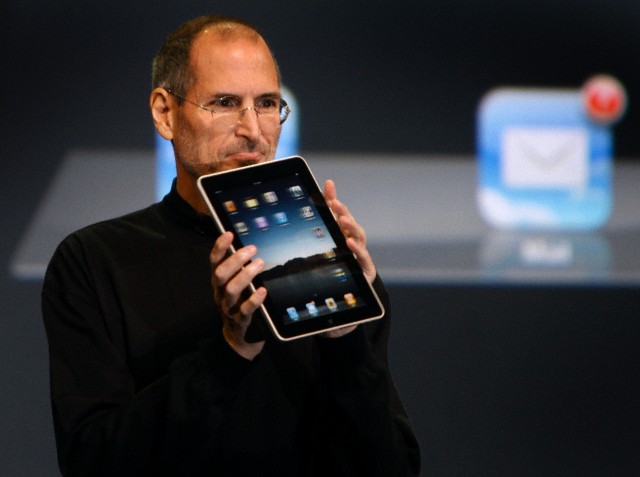
I started off this series by examining the Kindle, and then the NOOK, and then the Samsung Galaxy Tab.  This week, I’m going to take a (quick) look at the whole suite of Apple products that have by and large eroded any hold the dedicated e-reader held over the general reading public.  I’m talking about the computers you carry around in your pockets and backpacks, the mobile forward operating bases and command centers of your life, the little devices that have had a big impact on how we interpret our lives and arrange our days: the iPhone and the iPad.  Apple manufactures laptops, too, though making room for more traditional computers in this conversation might lengthen it to a mere century or two in length.  You might say that I could “talk for hours” about the changing role of the home or personal computer in everyday life.  I’m just going to allude to the fact that you can use an Apple Air or its predecessors to read e-books, using the same apps you might use on your mobile device.

It’s possible. It’s just that a laptop tends to not be the preferred device for most consumers who own more than one kind of Apple device.  And there are a lot of people who own multiple Apple devices.  In 2012, USA Today reported that roughly half of American households had at least one Apple product.  And the numbers didn’t end there; the article also stated that: “Americans don’t stop with just one device. Homes that own least one Apple, own an average of three. Overall, the average household has 1.6 Apple devices, with almost one-quarter planning to buy at least one more in the next year.”  And that was in 2012!  And when it comes to the iPad specifically, there’s even more reason to be hopeful: according to a report from the Stamford Advocate (drawing upon a longer piece for the Business Insider)  that’s so hot off the press it might smudge if you even look at it, Apple Inc just reported its quarterly earnings and the outlook for iPads remains good, despite a slight decline in total global tablet sales.  The Stamford Advocate’s Jay Yarow records Apple’s CEO Tim Cook as saying: “70% of people planning to buy a tablet plan to buy an iPad, per [a] ChangeWave survey.”  Seventy percent!  And that’s on top of the 200+ million units sold prior to 2014.  So, in summary … there are a lot of iPads out there, and there will be plenty more, as Apple continues to dominate the tablet market.

steve jobs with ipad

But what does this mean for you as an indie, hybrid, or self-publishing author?  Do people really use iPads the way they would use dedicated e-readers like Kindles and NOOKs?  As illustrated by this article for PC Magazine, the matter of what constitutes a dedicated e-reader and how it’s different from a tablet like the iPad has grown steadily more confusing.  Everyone more or less admits that they like the look and feel of the dedicated devices (which eschew backlighting, making for a more comfortable experience) but they are more likely to purchase a tablet like the iPad because of its versatility.  An iPad can simply do more, the general opinion runs, even though many devices like the new Kindle have a whole suite of apps a la tablet, and many tablets (including the iPad) have Kindle apps to sync a person’s reading experience via the Cloud.

In theory, it would be entirely possible to own a Kindle, an iPhone, an iPad, and a Macbook laptop, and move seamlessly from one device to another, picking up on one where you left off on the other––including if you happen to be listening to an audiobook version on your iPhone and use the WhisperSync function.  WhisperSync means you no longer have to worry about trying to find your place, even if you’re switching back and forth between reading and listening to a given book.  (Have I mentioned that I “nerd out” over technological innovations like this?  Ones that actually make life easier?  I do.  Often.)

So, yes, people really do use their iPads as their primary reading devices, in part because they’re so easily integrated into a larger “reading experience” as designed and made possible by Apple’s entire product line.  And because the iPad runs on an app-based (or “application-based”) operating system, you as an author need to know how best to make your books discoverable to the average iPad user.  Consider this list by ZDNet of top ebook apps as downloadable through the App Store:

  1. iBooks (Apple’s own signature e-reading app)
  2. Amazon’s Kindle app
  3. Barnes & Noble’s NOOK Library app
  4. The Kobo Books app
  5. The Google Play Books for iPad app
  6. The Bluefire Reader for iPad app

… and it’s worth noting, before even discussing the pros and cons of each app, that all of these apps are downloadable for free through the App Store, even if the content for them must be subscribed to, purchased, or loaned (in the case of both Bluefire and the Overdrive Media Console app, which are favorites of many public libraries which offer downloadable ebooks in addition to their physical lending collections).  Books with half a century under their belts are (for the most part) available under Public Domain, and many of these classics are available for free in a variety of formats.

Now, don’t get me wrong, but even while all of this is great news for readers, it doesn’t necessarily make for light work for you, the indie author.  Why?  Because, with so many reading app options easily available on the iPad, the chances of readers discovering your work diminishes with every app your book is not available through.  Not to mention, you probably want to make a profit, so a library’s free ebook loaning system doesn’t benefit your bottom line at all––unless readers run out of time and end up purchasing a copy in order to finish (which does, on occasion, happen).  In summary, it’s a good idea to cover all of your bases and not just the “big three” of ebook sales (Amazon, Apple, and B&N).  Google Play has been on the uptick ever since its creation as the primary sales conduit to devices running Android operating systems, but now it’s emerging as a contender for iPad owners as well, after the development of an attractive and intuitive app for iPads.  The Kobo Books app and the Adobe Reader app should also be kept in mind––many readers enjoy the streamlined experience of opening .PDF files with the Adobe Reader app, so you should not rule out offering a .PDF download of your book through some online retailer or your own personal website.  Basically, the more places a reader is likely to see your book, coupled with more ways and editions and formats in which it can be downloaded, the more likely that reader is to spend hard-earned currency on purchasing your book.  Balancing expense (of time, energy, and money) against discoverability is, perhaps, one of the trickiest of self-marketing arts that you must master––but you’re not alone.  We’re here to help, and to be a sounding board for your own strategic plan!

Thank you for reading!  If you have any questions, comments, suggestions, or contributions, please use the comment field below or drop us a line at selfpublishingadvice@gmail.com.  And remember to check back each Wednesday for your weekly dose of marketing musings from one indie, hybrid, and self-published author to another. ♠

KellyABOUT KELLY SCHUKNECHT: Kelly Schuknecht is the Executive Vice President of Outskirts Press. In addition to her contributions to the Outskirts Press blog at blog.outskirtspress.com, Kelly and a group of talented marketing experts offer book marketing services, support, and products to not only published Outskirts Press authors, but to all authors and professionals who are interested in marketing their books and/or careers. Learn more about Kelly on her blog, kellyschuknecht.com.