Conversations: 1/15/2016

IT’S A NEW DAY! NEW MONTH! NEW YEAR!

Audience Expectations Are Running HIGH


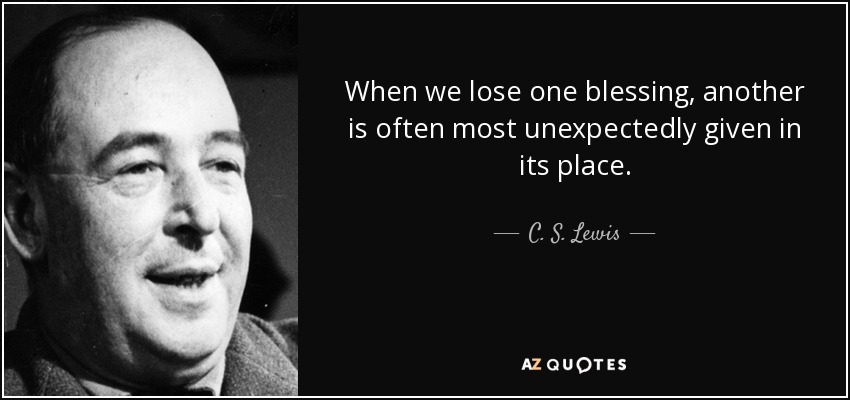
Lots of authors I know expound on the concept that there is a “very thin line” between writing for yourself and writing for your audience. Every time I hear this I challenge that thinking. I’ve come to understand that there is NO LINE AT ALL and I suggest to my writing students (and clients) that they constantly weave the two perspectives together. This allows for authenticity to resonate within lives of every character no matter how many developing stages they pass through. It also sets the stage for writers to add the intrigue of unexpected reactions when the plot turns against a favorite character. C. S. Lewis wrote: “When we lose one blessing another one is often most unexpectedly given in its place.” This is an excellent writing perspective that enhances both Reader and Author expectations of exceptional writing.
cs lewis

Have you ever heard of an old theater drama called the Saturday Afternoon Serial? They were designed to leave their audience “dangling off a cliff” of excitement at the end of that Saturday film segment so they’d come again the next Saturday to discover what happened next. Often the writers themselves had no idea what might happen next—which is the perfect picture of writer/audience expectations woven tightly together. How did they do it?

FIRST—they had to know their characters inside and out—especially the odd, quirky things each character might do in a crisis. Wikipedia gives excellent definitions of the consistent characters audiences could expect to find in these mini-stories and if they weren’t there, the theater lost patrons. These character types exist in every book and film in existence. It is up to each writer to make them into unique individuals that today’s audience will love.

  • “The saddle pal or sidekick was the helper or assistant of the hero or heroine. That person was most often a bumbling comic or a more serious, steady assistant.
  • The brains heavy was the man (or, on occasion, woman) who issued the orders to his henchmen. He often wears a suit, and pretends to be an upright, lawful member of the community. He usually has little to actually DO until the last chapter except talk, snarl, grind his teeth in anger or grimace.
  • The action heavy is the assistant or second-in-command to the brains heavy who usually wore workmanlike duds, did the physical labor, and often had more brawn than brains. He went from one chapter to the next trying desperately to kill the hero with fists, knives, guns, bombs, or whatever else was handy at the time.
  • The oldtimer was the man that (a) owned the ranch, (b) was the father of the hero (or heroine) and often had a short film lifespan, as well (3) those who wore the badge of a Sheriff, Marshall, or Ranger.
  • The middle-aged and older performers who were judges, lawyers, storeowners, wardens, owners of the local newspaper, attorneys, judges, scientists, executives, or professors.”


Does any of this sound familiar in the books and films your reading/watching today? This is how Charles Dickens wrote the famous novel/film OLIVER. This is how Sir Arthur Conan Doyle developed the adventures of Sherlock Holmes. This is how the TV “serial” LOST was written by J.J. Abrams. They are cliffhanger authors whose work has withstood the test of time—AS yours’ will—while you enjoy the process of weaving audience expectations together with your own. And, as you fall in love with writing like this, publishers and readers will fall in love with you! ⚓︎


RoyaleneABOUT ROYALENE DOYLE: Royalene has been writing something since before kindergarten days and continues to love the process. Through her small business—DOYLE WRITING SERVICES—she brings more than 40 years of writing experience to authors who need “just a little assistance” with completing their projects. This is a nice fit as she develops these blogs for Outskirts Press (OP) a leading self-publisher, and occasionally accepts a ghostwriting project from one of their clients. Her recent book release (with OP) titled FIREPROOF PROVERBS, A Writer’s Study of Words, is already receiving excellent reviews including several professional writer’s endorsements given on the book’s back cover.  

Royalene’s writing experience grew through a wide variety of positions from Office Manager and Administrative Assistant to Teacher of Literature and Advanced Writing courses and editor/writer for an International Christian ministry. Her willingness to listen to struggling authors, learn their goals and expectations and discern their writing voice has brought many manuscripts into the published books arena.

In Your Corner : Resolutions for 2016 That Every Aspiring Author Should Make (pt 2)


Last week, I opened a new series of blog posts with a simple question:

What’s your goal for 2016?

To steal a line from Spiderman’s playbook, “With great power comes great responsibility,” and with great optimism I think you’ll find a great capacity for willpower and determination to see your New Year’s resolutions through.  When it comes to self-publishing, I realize that I have a bit of a vested interest––alright, I definitely have an extremely vested interest––in that I both work professionally as an advisor within the parameters of the self-publishing industry and I personally believe in the mission of self-publishing, and in recapturing the rights and privileges that come with calling the shots on your own manuscript.  But despite my proximity to the issue, I think I’m being fully objective when I say that self-publishing this year is not “too much” or somehow “beyond” your ability to make happen.  You can publish in 2016, and I hope to provide you with some resources here in this series that will help you make that happen.

Last week, I examined four goals to get you started down the path to self-publishing this year.  They were to:

  1. Set goals.
  2. Facilitate goals.
  3. Make writing a priority, and
  4. Read, read, read.

parkour goals

This week, I’m going to take a close look at three additional goals, and challenge you to:

  1. Master at least the basics of social media.
  2. Research deeply, and
  3. Connect with other authors.


So, how does one become a social media guru overnight?  Well the short answer is, you can’t.  Or I should rather say, I couldn’t.  Not easily, anyway.  As with so many tips and tricks of the trade, mastery of social media platforms doesn’t just require proficiency––it requires significance.  Because social media is selling a product and that product is you, self-publishing authors have to be careful to create extensive social media presences without sacrificing what makes platforms like Facebook and Twitter and Goodreads so attractive in the first place: personality, presence, and authenticity.  (And a side note: it’s always better to pick up new social media skills slowly and incorporate them into a sustainable long-term strategy rather than burning yourself out on producing new content at a breakneck pace all of the time.)  Given all of the hassle of setting up a dozen separate accounts with their own quirks and password combinations, is it really worth going through the trouble?  Short answer: YES.  If you want to publish your book, you need to connect with your readers, and you need to stay up-to-date on the ways in which they discover and respond to their favorite stories.  If you’re strapped for time, you can always turn to a hybrid self-publishing company like mine, Outskirts Press, to take care of this part of the process for you.

And what’s this about “research”?  I thought I’d left all that behind when I graduated from school.  But research, when push comes to shove, is what elevates a book from being “interesting in theory” to “convincing and immersive.”  This isn’t to say you should stifle your impulse towards creative license, but it is to say that you should always be intentional about your digressions from fact––you should alter reality, not out of ignorance, but rather out of ambition, curiosity, and cleverness.  Says author Robert McKee,

“Do research. Feed your talent. Research not only wins the war on cliche, it’s the key to victory over fear and it’s cousin, depression.”

But “research” can look like many things, including visits to your local library to grill the staff on duty or, yes, even the occasional perusal of Wikipedia pages.  These are not the only options, however!  As Roman Payne writes,

“Who’s to say what a ‘literary life’ is? As long as you are writing often, and writing well, you don’t need to be hanging-out in libraries all the time.  Nightclubs are great literary research centers. So is Ibiza!”

Speaking from my own personal experience, boots-on-the-ground research is every bit as invaluable for the writing process as is amassing a databank of all of the relevant facts which circle your piece like electrons around the nucleus of an atom.  Research is not, however, the end goal: The end goal is to write and publish your book.  Never forget, in the immortal words of Dune author Frank Herbert:

“Highly organized research is guaranteed to produce nothing new.”

Which is to say, research alone won’t write your book for you.  Only you can actually bring a world to life on the page!

And while there are many ways to motivate yourself to leap (back) into the writing process, none has proven so valuable as the chance to connect with other writers.  Ultimately, no one knows the internal life––and struggles, and strengths, and successful strategies––of a writer than … you guessed it! … another writer.  This year, I recommend that each and every one of us involved in the indie, hybrid, and self-publishing industry should resolve to use social media or in-person or even online writing groups to connect with these rare global citizens, these other writers.  The relationships we build will prove invaluable, and provide us with opportunities to share publishing tips, encourage and inspire each other, and transform the “solitary life” of a writer into a journey that feels less lonely and more part of a greater collective effort to move forward.

Always remember: you are not alone. ♣︎

ElizabethABOUT ELIZABETH JAVOR: With over 18 years of experience in sales and management, Elizabeth Javor works as the Manager of Author Services for Outskirts Press. The Author Services Department is composed of knowledgeable publishing consultants, pre-production specialists, customer service reps and book marketing specialists; together, they all focus on educating authors on the self-publishing process to help them publish the book of their dreams. Whether you are a professional looking to take your career to the next level with platform-driven non-fiction or a novelist seeking fame, fortune, and/or personal fulfillment, Elizabeth Javor can put you on the right path.


Marketing BASICS : Building an Online Presence

As I mentioned in last week’s post, I’m taking Wednesdays back to the B.A.S.I.C.S. of marketing for your self-published book.  And step one of every really effective marketing strategy in the silicon age requires us to tackle the “B” in B.A.S.I.C.S.: Building an Online Presence.  Given that you’re reading this blog post on the web, I’m going to assume you have already been initiated into the manifold wonders of the internet age, but I’m also going to assume that you’re starting your latest book marketing campaign from the ground up––which is to say, you’re looking to begin with that all-important keystone of any such strategy: motivation.

SIDE NOTE

I’m not going to lie: marketing your self-published book is hard.  Really hard.  It will requires a lot of time, energy, and trust––trust in yourself and your own capacity to make wise choices that fit your own project.  Without this trust, authors risk losing focus as they get sucked into a whirlpool of self-doubt and second-guessing.  I recommend skipping this arduous process entirely by embracing your own insight and the sometimes radical notion that you really can make good choices.  I know that you can, and I’m a perfect stranger!  Just think: you may be fixating at present on some of your own limitations, but you also have a front-row seat to your personal portfolio of strengths and skills!  Let’s put them to work in marketing.

BACK TO THE PROGRAM

The real reason to begin your book marketing campaign with a strong web presence is the simple fact that a comprehensive bundle of platforms––such as an author website, a blog site, as well as accounts on Facebook, Goodreads, Twitter, and even Instagram or Snapchat––is both an effective and inexpensive way to reach new readers.  We’ve written about many of these platforms before here on Self Publishing Advisor, in last year’s Social Media Primer and as far back as 2013 with Wendy’s discourse on improving blogs, but the fact remains that authors are presented with something of a moving target.

New platforms are becoming available all of the time, while less popular ones or ones that have outlived their usefulness are archived or excised from the web altogether.  This is why I used the key phrase “comprehensive bundle of platforms” above: to indicate that an effective presence requires a flexible, adaptable set of options––and above all, the freedom to experiment with emerging technologies as well as the courage to abandon unhelpful ones.  My own recent experiences with Twitter and Snapchat make for a good illustration; I’ve found a healthy and important niche for my Twitter use in broadcasting updates and news about my current work and upcoming publications, but I haven’t quite found a marketable use for Snapchat.  I tried, enjoyed it for a spell, and could even see quite a lot of potential there … but I could never quite invest in it the creative energy required to make it a success.  So I shut my account down in order to spend that time more effectively on platforms that better fit with my personality and web usage.

TWO TIPS

  • Your websites and blogs should be streamlined and easy to navigate; they must both catch a visitor’s eye and capture a visitor’s interest in regards to content, as well as make it easy for even the most unfamiliar of visitors to learn about and buy your book.  In building your websites, you can choose from among a whole host of free services, including WordPress (which is what we use), or Blogspot, or Tumblr, but whatever route you take you ought to consider purchasing your own domain name.  Make it something intuitive and easy to remember; many authors choose to use either their pen-names or the titles of their books as domain name inspiration.
  • Consistency is key.  Whether we’re talking about blog posts or social media updates, creating a sense of routine and reliability is important.  It both makes you more findable (especially if you integrate the tricks of SEO or Search Engine Optimization into your postings) and more trustworthy.  You  might even work up a schedule of what sorts of materials to post on which days of the week, as we do here at Self Publishing Advisor.  You know from following this blog in the past that every Monday we run through the major self-publishing related news items of the week, and every Saturday we run a book review compendium of a self-published book.  Because you know this, you already know that a) you can trust us to post new material on a regular basis, and b) which days of the week you’re most interested in spending some quality time on our website.

So that’s the “B” in B.A.S.I.C.S. … or at least, that’s a place to start!  There’s so much more to come.


Thank you for reading!  If you have any questions, comments, suggestions, or contributions, please use the comment field below or drop us a line at selfpublishingadvice@gmail.com.  And remember to check back each Wednesday for your weekly dose of marketing musings from one indie, hybrid, and self-published author to another. ♠

KellyABOUT KELLY SCHUKNECHT: Kelly Schuknecht is the Executive Vice President of Outskirts Press. In addition to her contributions to the Outskirts Press blog at blog.outskirtspress.com, Kelly and a group of talented marketing experts offer book marketing services, support, and products to not only published Outskirts Press authors, but to all authors and professionals who are interested in marketing their books and/or careers. Learn more about Kelly on her blog, kellyschuknecht.com.

From the Archives: “Self-publishing’s Strongest According to Inc. Magazine”

Welcome back to our new Tuesday segment, where we’ll be revisiting some of our most popular posts from the last few years.  What’s stayed the same?  And what’s changed?  We’ll be updating you on the facts, and taking a new (and hopefully refreshing) angle on a few timeless classics of Self Publishing Advisor.

∗∗∗∗∗

[ Originally posted: August 13th, 2009 ]

Inc500Cover2Inc. Magazine released its annual top 500 fastest growing US businesses yesterday. Outskirts Press, Inc ranked #268 on the list, and exclusive among full-service self publishing firms. With on-demand publications up 132% over the previous year, Outskirts Press finds itself the fastest growing provider in the fastest growing segment of the book publishing industry. Congratulations Outskirts Press.
Author Solutions – the only other self-publishing related provider recognized, came in at 3266 among the top 5000 companies.

Congratulations self-publishing.

by Karl Schroeder


Six years later, Inc. 500 has morphed into the Inc. 5000 but the list remains a stellar launch point for discussions about what industries are seeing success in a mostly-post-recession USA––and not just for the men and women who walk Wall Street.  It remains a fantastic resource for indie and self-publishing authors, too.

Inc. 5000

But first, the bad news: This year, no self-publishing providers made the list.  The good news is that this is because the self-publishing industry has begun to stabilize, diversify, and revisit its offerings in order to better tailor them to the end user.  Because the Inc. 5000 only lists the fastest-growing companies, a stable market fast reaching its maturity just doesn’t quite fall within its purview.

And while indie, hybrid, and self-publishing companies may not have made it into last year’s list in the Inc. 5000, they continue to occupy headlines over at the Digital Book World (see here), Publisher’s Weekly (see here), and one of my personal favorites, Library Journal (see here).  We’ll be following the news within the industry as it emerges this year, and while indications seem to be present that e-book sales remain down from this time two years ago, it may very well be that Hachette’s battle with Amazon and the resulting price hike has driven readers back to print.  That’s a profitable (and surprisingly cheerful) piece of information, I think!  Watch our Monday morning posts for more statistics as companies head into their Spring quarter. ♠

KellyABOUT KELLY SCHUKNECHT: Kelly Schuknecht is the Executive Vice President of Outskirts Press. In addition to her contributions to the Outskirts Press blog at blog.outskirtspress.com, Kelly and a group of talented marketing experts offer book marketing services, support, and products to not only published Outskirts Press authors, but to all authors and professionals who are interested in marketing their books and/or careers. Learn more about Kelly on her blog, kellyschuknecht.com.

Self-Publishing News: 1.11.2016

This week in the world of self-publishing:

Corine la Font, in this January 10th article for the Jamaican Gleaner, writes that “it is wise and cost-effective to just obtain the free assigned ISBNs from the platform you are using”–since most platforms provide ISBNs automatically–instead of buying them directly.  Since ISBNs are sold in batches of 10, you may end up with a whole lot more than you need, unless you use a third party service or hybrid publishing company.  ISBNs, for those who aspire to self-publish but have yet to do so, are numeric codes of either 10 or 13 digits that publishing companies, booksellers, readers, and others will use to identify your book as well as the format in which your book is published.  “Ideally,” says la Font, “each format should have its own ISBN, that is print, audio and Kindle/ebook, but what tends to happen is that Amazon, when publishing the ebook of the same title, assigns an ASIN (a topic for another article) to that specific format.”  ISBNs are a key element of the publication process; for more information, visit la Font’s original article here!

Under the “Booklife Report” heading in this week’s Publisher’s Weekly roundup–published on January 10th–-you’ll find a link to an earlier 2016 article by Leylha Ahuile on the explosion of opportunities for self-publishing authors in the Spanish language market.  While the article itself is only available to Publisher’s Weekly subscribers (leaving us with the tantalizing introductory sentence: “Self-publishing is a well-established part of the English-language book trade, but Spanish-language self-publishing is just starting to take off”), it reminds me of this 2013 article by Tina Folsom of the Indie Voice blog, titled “Exploring the Foreign Markets for Self-Publishing.”  Ahuile’s article may claim that opportunities in Spanish language markets have some element of newness to them, but Folsom’s piece and many other articles besides have long been touting the possible benefits of looking beyond the tangible boundaries of geographical divides and the abstract boundaries of language.  Whether you’re looking to self-publish in English and translate your book to Spanish, or publish directly in Spanish, don’t neglect to consider the fact there are more native Spanish speakers and Spanish-language readers in the world than there are native English speakers.  And this doesn’t even touch the percentage of global citizens who speak and read other languages, like Mandarin Chinese!  There has never been a better time to sell your book abroad.

“Penguin Random House, the largest book publisher in the world, is chopping off its self-publishing arm,” writes Amy Wang of the Quartz blog in this January 7th article: “The company said Tuesday (Jan. 5) that it has sold Author Solutions—the self-publishing author-tools platform that it bought in 2012.”  Author Solutions has long been a mainstay of the self-publishing toolbox, but has struggled to emerge from its ownership transfer and other internal problems and to overcome significant obstacles to satisfying end-user demands.  While a sale does not necessarily spell the utter end for Author Solutions, it does seem to indicate a continued slide towards irrelevance as other, better, and easier-to-use options reach a mainstream audience.  Writes Wang, the sale is also an admission of defeat in the battle to stave off market dominance by Amazon, “which already churns out an estimated 85% of self-published titles via its various platforms.”  That’s a tough number to beat.  For more of Wang’s article, follow the link.

“There’s too much grumbling among authors,” says Carol Buchman in this January 7th contribution to The Bookseller.  But Buchman, a self-publishing author of Western fiction based out of Montana’s Flathead Valley, sees a lot of cause for hope: “some people seem to overlook the wonderful benefits of various publishing modes these days,” she says, citing the “freedom to publish and to read in the manner that suits [one] best,” the choice “among e-readers, audio devices, and paper—hardbound or paperback,” and the opportunity for authors to “publish their works in all three formats” as reasons not to despair for the world of words.  “As a storyteller,” she writes, “I’m enthralled by the possibilities in technological development for storytelling.”  She goes on to address “the innovative energy inherent in technology” as an empowering force, and to rally readers and authors alike to a more hopeful, optimistic outlook.  Her full “five-minute manifesto” is available, courtesy of The Bookseller, here!


spa-news

As a self-publishing author, you may find it helpful to stay up-to-date on the trends and news related to the self-publishing industry.This will help you make informed decisions before, during and after the self-publishing process, which will lead to a greater self-publishing experience. To help you stay current on self-publishing topics, simply visit our blog every Monday to find out the hottest news. If you have other big news to share, please comment below.

KellyABOUT KELLY SCHUKNECHT: Kelly Schuknecht is the Executive Vice President of Outskirts Press. In addition to her contributions to the Outskirts Press blog at blog.outskirtspress.com, Kelly and a group of talented marketing experts offer book marketing services, support, and products to not only published Outskirts Press authors, but to all authors and professionals who are interested in marketing their books and/or careers. Learn more about Kelly on her blog, kellyschuknecht.com.