Marketing BASICS : Building an Online Presence

As I mentioned in last week’s post, I’m taking Wednesdays back to the B.A.S.I.C.S. of marketing for your self-published book.  And step one of every really effective marketing strategy in the silicon age requires us to tackle the “B” in B.A.S.I.C.S.: Building an Online Presence.  Given that you’re reading this blog post on the web, I’m going to assume you have already been initiated into the manifold wonders of the internet age, but I’m also going to assume that you’re starting your latest book marketing campaign from the ground up––which is to say, you’re looking to begin with that all-important keystone of any such strategy: motivation.

SIDE NOTE

I’m not going to lie: marketing your self-published book is hard.  Really hard.  It will requires a lot of time, energy, and trust––trust in yourself and your own capacity to make wise choices that fit your own project.  Without this trust, authors risk losing focus as they get sucked into a whirlpool of self-doubt and second-guessing.  I recommend skipping this arduous process entirely by embracing your own insight and the sometimes radical notion that you really can make good choices.  I know that you can, and I’m a perfect stranger!  Just think: you may be fixating at present on some of your own limitations, but you also have a front-row seat to your personal portfolio of strengths and skills!  Let’s put them to work in marketing.

BACK TO THE PROGRAM

The real reason to begin your book marketing campaign with a strong web presence is the simple fact that a comprehensive bundle of platforms––such as an author website, a blog site, as well as accounts on Facebook, Goodreads, Twitter, and even Instagram or Snapchat––is both an effective and inexpensive way to reach new readers.  We’ve written about many of these platforms before here on Self Publishing Advisor, in last year’s Social Media Primer and as far back as 2013 with Wendy’s discourse on improving blogs, but the fact remains that authors are presented with something of a moving target.

New platforms are becoming available all of the time, while less popular ones or ones that have outlived their usefulness are archived or excised from the web altogether.  This is why I used the key phrase “comprehensive bundle of platforms” above: to indicate that an effective presence requires a flexible, adaptable set of options––and above all, the freedom to experiment with emerging technologies as well as the courage to abandon unhelpful ones.  My own recent experiences with Twitter and Snapchat make for a good illustration; I’ve found a healthy and important niche for my Twitter use in broadcasting updates and news about my current work and upcoming publications, but I haven’t quite found a marketable use for Snapchat.  I tried, enjoyed it for a spell, and could even see quite a lot of potential there … but I could never quite invest in it the creative energy required to make it a success.  So I shut my account down in order to spend that time more effectively on platforms that better fit with my personality and web usage.

TWO TIPS

  • Your websites and blogs should be streamlined and easy to navigate; they must both catch a visitor’s eye and capture a visitor’s interest in regards to content, as well as make it easy for even the most unfamiliar of visitors to learn about and buy your book.  In building your websites, you can choose from among a whole host of free services, including WordPress (which is what we use), or Blogspot, or Tumblr, but whatever route you take you ought to consider purchasing your own domain name.  Make it something intuitive and easy to remember; many authors choose to use either their pen-names or the titles of their books as domain name inspiration.
  • Consistency is key.  Whether we’re talking about blog posts or social media updates, creating a sense of routine and reliability is important.  It both makes you more findable (especially if you integrate the tricks of SEO or Search Engine Optimization into your postings) and more trustworthy.  You  might even work up a schedule of what sorts of materials to post on which days of the week, as we do here at Self Publishing Advisor.  You know from following this blog in the past that every Monday we run through the major self-publishing related news items of the week, and every Saturday we run a book review compendium of a self-published book.  Because you know this, you already know that a) you can trust us to post new material on a regular basis, and b) which days of the week you’re most interested in spending some quality time on our website.

So that’s the “B” in B.A.S.I.C.S. … or at least, that’s a place to start!  There’s so much more to come.


Thank you for reading!  If you have any questions, comments, suggestions, or contributions, please use the comment field below or drop us a line at selfpublishingadvice@gmail.com.  And remember to check back each Wednesday for your weekly dose of marketing musings from one indie, hybrid, and self-published author to another. ♠

KellyABOUT KELLY SCHUKNECHT: Kelly Schuknecht is the Executive Vice President of Outskirts Press. In addition to her contributions to the Outskirts Press blog at blog.outskirtspress.com, Kelly and a group of talented marketing experts offer book marketing services, support, and products to not only published Outskirts Press authors, but to all authors and professionals who are interested in marketing their books and/or careers. Learn more about Kelly on her blog, kellyschuknecht.com.

From the Archives: “Self-publishing’s Strongest According to Inc. Magazine”

Welcome back to our new Tuesday segment, where we’ll be revisiting some of our most popular posts from the last few years.  What’s stayed the same?  And what’s changed?  We’ll be updating you on the facts, and taking a new (and hopefully refreshing) angle on a few timeless classics of Self Publishing Advisor.

∗∗∗∗∗

[ Originally posted: August 13th, 2009 ]

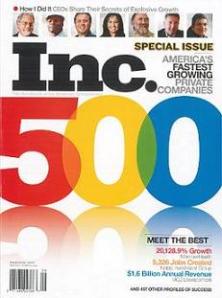
Inc500Cover2Inc. Magazine released its annual top 500 fastest growing US businesses yesterday. Outskirts Press, Inc ranked #268 on the list, and exclusive among full-service self publishing firms. With on-demand publications up 132% over the previous year, Outskirts Press finds itself the fastest growing provider in the fastest growing segment of the book publishing industry. Congratulations Outskirts Press.

Author Solutions – the only other self-publishing related provider recognized, came in at 3266 among the top 5000 companies.

Congratulations self-publishing.

by Karl Schroeder


Six years later, Inc. 500 has morphed into the Inc. 5000 but the list remains a stellar launch point for discussions about what industries are seeing success in a mostly-post-recession USA––and not just for the men and women who walk Wall Street.  It remains a fantastic resource for indie and self-publishing authors, too.

Inc. 5000

But first, the bad news: This year, no self-publishing providers made the list.  The good news is that this is because the self-publishing industry has begun to stabilize, diversify, and revisit its offerings in order to better tailor them to the end user.  Because the Inc. 5000 only lists the fastest-growing companies, a stable market fast reaching its maturity just doesn’t quite fall within its purview.

And while indie, hybrid, and self-publishing companies may not have made it into last year’s list in the Inc. 5000, they continue to occupy headlines over at the Digital Book World (see here), Publisher’s Weekly (see here), and one of my personal favorites, Library Journal (see here).  We’ll be following the news within the industry as it emerges this year, and while indications seem to be present that e-book sales remain down from this time two years ago, it may very well be that Hachette’s battle with Amazon and the resulting price hike has driven readers back to print.  That’s a profitable (and surprisingly cheerful) piece of information, I think!  Watch our Monday morning posts for more statistics as companies head into their Spring quarter. ♠

KellyABOUT KELLY SCHUKNECHT: Kelly Schuknecht is the Executive Vice President of Outskirts Press. In addition to her contributions to the Outskirts Press blog at blog.outskirtspress.com, Kelly and a group of talented marketing experts offer book marketing services, support, and products to not only published Outskirts Press authors, but to all authors and professionals who are interested in marketing their books and/or careers. Learn more about Kelly on her blog, kellyschuknecht.com.

Self-Publishing News: 1.11.2016

This week in the world of self-publishing:

Corine la Font, in this January 10th article for the Jamaican Gleaner, writes that “it is wise and cost-effective to just obtain the free assigned ISBNs from the platform you are using”–since most platforms provide ISBNs automatically–instead of buying them directly.  Since ISBNs are sold in batches of 10, you may end up with a whole lot more than you need, unless you use a third party service or hybrid publishing company.  ISBNs, for those who aspire to self-publish but have yet to do so, are numeric codes of either 10 or 13 digits that publishing companies, booksellers, readers, and others will use to identify your book as well as the format in which your book is published.  “Ideally,” says la Font, “each format should have its own ISBN, that is print, audio and Kindle/ebook, but what tends to happen is that Amazon, when publishing the ebook of the same title, assigns an ASIN (a topic for another article) to that specific format.”  ISBNs are a key element of the publication process; for more information, visit la Font’s original article here!

Under the “Booklife Report” heading in this week’s Publisher’s Weekly roundup–published on January 10th–-you’ll find a link to an earlier 2016 article by Leylha Ahuile on the explosion of opportunities for self-publishing authors in the Spanish language market.  While the article itself is only available to Publisher’s Weekly subscribers (leaving us with the tantalizing introductory sentence: “Self-publishing is a well-established part of the English-language book trade, but Spanish-language self-publishing is just starting to take off”), it reminds me of this 2013 article by Tina Folsom of the Indie Voice blog, titled “Exploring the Foreign Markets for Self-Publishing.”  Ahuile’s article may claim that opportunities in Spanish language markets have some element of newness to them, but Folsom’s piece and many other articles besides have long been touting the possible benefits of looking beyond the tangible boundaries of geographical divides and the abstract boundaries of language.  Whether you’re looking to self-publish in English and translate your book to Spanish, or publish directly in Spanish, don’t neglect to consider the fact there are more native Spanish speakers and Spanish-language readers in the world than there are native English speakers.  And this doesn’t even touch the percentage of global citizens who speak and read other languages, like Mandarin Chinese!  There has never been a better time to sell your book abroad.

“Penguin Random House, the largest book publisher in the world, is chopping off its self-publishing arm,” writes Amy Wang of the Quartz blog in this January 7th article: “The company said Tuesday (Jan. 5) that it has sold Author Solutions—the self-publishing author-tools platform that it bought in 2012.”  Author Solutions has long been a mainstay of the self-publishing toolbox, but has struggled to emerge from its ownership transfer and other internal problems and to overcome significant obstacles to satisfying end-user demands.  While a sale does not necessarily spell the utter end for Author Solutions, it does seem to indicate a continued slide towards irrelevance as other, better, and easier-to-use options reach a mainstream audience.  Writes Wang, the sale is also an admission of defeat in the battle to stave off market dominance by Amazon, “which already churns out an estimated 85% of self-published titles via its various platforms.”  That’s a tough number to beat.  For more of Wang’s article, follow the link.

“There’s too much grumbling among authors,” says Carol Buchman in this January 7th contribution to The Bookseller.  But Buchman, a self-publishing author of Western fiction based out of Montana’s Flathead Valley, sees a lot of cause for hope: “some people seem to overlook the wonderful benefits of various publishing modes these days,” she says, citing the “freedom to publish and to read in the manner that suits [one] best,” the choice “among e-readers, audio devices, and paper—hardbound or paperback,” and the opportunity for authors to “publish their works in all three formats” as reasons not to despair for the world of words.  “As a storyteller,” she writes, “I’m enthralled by the possibilities in technological development for storytelling.”  She goes on to address “the innovative energy inherent in technology” as an empowering force, and to rally readers and authors alike to a more hopeful, optimistic outlook.  Her full “five-minute manifesto” is available, courtesy of The Bookseller, here!


spa-news

As a self-publishing author, you may find it helpful to stay up-to-date on the trends and news related to the self-publishing industry.This will help you make informed decisions before, during and after the self-publishing process, which will lead to a greater self-publishing experience. To help you stay current on self-publishing topics, simply visit our blog every Monday to find out the hottest news. If you have other big news to share, please comment below.

KellyABOUT KELLY SCHUKNECHT: Kelly Schuknecht is the Executive Vice President of Outskirts Press. In addition to her contributions to the Outskirts Press blog at blog.outskirtspress.com, Kelly and a group of talented marketing experts offer book marketing services, support, and products to not only published Outskirts Press authors, but to all authors and professionals who are interested in marketing their books and/or careers. Learn more about Kelly on her blog, kellyschuknecht.com.

Saturday Book Review: “Pluto the Starfish: An Undersea Tale for Children 1 to 101”

Book reviews are a great way for self-publishing authors to gain exposure. After all, how can someone buy your book if he or she doesn’t know it exists? Paired with other elements of your book promotion strategy, requesting reviews is a great way to get people talking about what you’ve written.

When we read good reviews, we definitely like to share them. It gives the author a few (permanent) moments of fame and allows us to let the community know about a great book. Here’s this week’s book review, courtesy of the Midwest Book Review:

pluto the starfish

Pluto The Starfish: An Undersea Tale for Children 1 to 101

by Bonnie M. Anderson
Illustrated by Malinda Raines

Publisher: Outskirts Press

ISBN: 9781478730408

Synopsis:

It’s a beautiful day in the crystal blue waters surrounding Buck Island. This magical undersea world, with its glittering rainbow of colors and fine, sparkling sand, is home to Pluto the Starfish…but Pluto is feeling sad and confused. Many of his friends can swim gracefully and swiftly. Some can even breathe air and move about on land, and others are large and fierce-looking. But Pluto can’t even swim! It took him all day to move two feet in the sand near the coral reef. He believes he’s not even good enough to be considered dinner! Pluto wonders why he is so different.

Why can’t he do more things like most of the other underwater creatures? What is his purpose?

Luckily, Pluto has good friends-like Lewis the Lobster, Lolita the Latina Leatherback Turtle and Nancy the Nurse Shark-who teach him that everyone is important and wonderfully different. Pluto the Starfish is a charming, delightfully illustrated book that not only helps children discuss their feelings and fears but it also teaches respect and care for the spectacular and varied inhabitants of our waters. A must-read for children of all ages.

Critique:

Pluto the Starfish: An Undersea Tale for Children 1 to 101 is a delightful children’s ocean allegory that stars special marine creatures in a search for life’s purpose and meaning. Pluto the Starfish is sad because he has no idea of his purpose in life. He is comforted by many different marine characters, including Lewis the Lobster, Nancy the Nurse Shark, Lolita the Latina Leatherback Turtle, Harriet the Humpback Whale, Konky the Conch, and even a human diver. Answering Pluto’s fear and sadness, Lewis the Lobster tells him: “You are the star of the ocean…You don’t have to swim… or be fast… or be furious…. or even be big. You are our star and you are humble, beautiful and kind. You are a good friend, too. That is your role and we respect and love you.” Pluto the Starfish is an entertaining and imaginative marine fantasy that encourages outside the box thinking while educating about many fascinating facts of marine biology. The expressive illustrations provide living, vivid background to every page of white text.

reviewed on the Fantasy/SciFi Shelf of MBR ]

Here’s what some other reviewers are saying:

Like all truly universal tales, chances are anyone who reads “Pluto the Starfish” will see aspects of themselves in the little guy who feels he doesn’t quite measure up to his underwater friends. But thanks to their kindness and wisdom, Pluto learns that everyone has something to contribute and that “we’re all here for a purpose.”
Apart from teaching little ones about our neighbors who live under the sea, Pluto also imparts lessons about why we must all look out for one another through charming characters, a touching story and illustrations so vivid they jump off the page.

– Amazon Reviewer Gail O’Neill

This is a great tale to encourage children and to show that while everyone has unique qualities and talents, everybody is important and of value. Personally, I found this story oozing with morale, but then this is my personal impression from the POV of an adult which is not the target group and therefore shouldn’t affect the rating of this book too much.

My son really loves the story of little Pluto and his friends, which shows that its simplicity combined with the beautiful pictures meet a child’s perception perfectly. He had a lot of questions regarding the different sea animals and their characteristics as well as each animal’s talent and worth. We had to interrupt reading several times to discuss the story’s details and the book kept us thinking for a long time. His detailed and lasting interest in this charming adventure show that Pluto the Starfish is a fascinating book sure to attract and inspire children.

– Goodreads Reviewer Elke

Book Trailer:


saturday self-published book review

Thanks for reading!  Keep up with the latest in the world of indie and self-published books by watching this space every Saturday!

Self Publishing Advisor

selfpubicon1

Conversations: 1/8/2016

IT’S A NEW DAY! NEW MONTH! NEW YEAR!

FILLED with Expectations!


Way back in my memory files there is a quote I’ve preserved attributed to a fella named Aristotle. He wrote an essay titled Rhetoric examining the art of persuasion, which is (of course) every writer’s goal—to persuade every Reader that their book is a must-have. Aristotle says, “A good style is, first of all, clear. The proof is that language which does not convey a clear meaning fails to perform the very function of language.” Keeping the concept of clear language to convey clear meaning as a priority can be a challenge when a writer is FULL of excitement about the story that is bursting forth and demanding to be written.

aristotle

SO—after you’ve selected the book/story you’re going to complete this year (from last week’s exercise), here are a few thoughts to help you with the element that gives me the biggest headaches: PLOT. Logic is needed to develop an excellent plot! LOTS of LOGIC!

It is said that Aristotle was the founder of “formal logic.” Well, he may have used clear language to inform others of the (clear) meaning of logic, but he certainly wasn’t the “founder” of it. Logic was being used since the beginning of time and whether your characters are pre-historic, historic, modern or futuristic, then you must develop their story using the logic behind their actions and reactions to the conflict/events you’ve given them. Author Charles Swindoll says, “We are all faced with a series of great opportunities brilliantly disguised as impossible situations.” Now, that is an excellent definition of utilizing multiple PLOT elements.

In our universities today, the Science and Psychology departments utilize two basic elements of logic: deduction and induction. With deduction a Writer begins with a characters beliefs about the world they live in—that they assume to be true—and creates their responses to plot conflicts based on those “logical” assumptions. With induction characters develop theories based on deductive data that could explain their actions/reactions. However they are walking on thin ice never really certain what might be the best course of action. Excellent writers will weave these two elements throughout the story leading Readers on a journey that offers them “opportunities” to resolve “impossible situations” in their own imaginations.

In our publishing world today, the savvy Readers who purchase our books are demanding more clearly defined pieces to the story-puzzle. They want to be challenged!  SO…

  • DO YOUR RESEARCH! Discover the technical aspects of the plot/conflict piece you want to use and portray them accurately.
  • BE WILLING to create the conflict “simply.” But don’t over-simplify. Your characters must face a realistic “opportunity” to resolve the “impossible situation.”
  • Your characters must BE “real people” acting and reacting to these events. IF your imagination is operating in slow-motion, google key words from your conflict scene and see what appears in the “real” world. Learning how real people deal with events gives clear and authentic language you can use to portray most any event.
  • The conflict/plot situation must trigger motivation from within your characters. If they could care less about what happened, so will the Reader.

Bottom line, the writing skills and abilities that you’re developing today will GROW as you use your own LOGIC—satisfy your own EXPECTATIONS—and write the WHOLE story that resides within you. KEEP WRITING and be ready to PUBLISH by year’s end. ⚓︎


RoyaleneABOUT ROYALENE DOYLE: Royalene has been writing something since before kindergarten days and continues to love the process. Through her small business—DOYLE WRITING SERVICES—she brings more than 40 years of writing experience to authors who need “just a little assistance” with completing their projects. This is a nice fit as she develops these blogs for Outskirts Press (OP) a leading self-publisher, and occasionally accepts a ghostwriting project from one of their clients. Her recent book release (with OP) titled FIREPROOF PROVERBS, A Writer’s Study of Words, is already receiving excellent reviews including several professional writer’s endorsements given on the book’s back cover.  

Royalene’s writing experience grew through a wide variety of positions from Office Manager and Administrative Assistant to Teacher of Literature and Advanced Writing courses and editor/writer for an International Christian ministry. Her willingness to listen to struggling authors, learn their goals and expectations and discern their writing voice has brought many manuscripts into the published books arena.