Saturday Book Review: “What Was I Thinking? Volume 1: My Brainy Best Friend”

Book reviews are a great way for self-publishing authors to gain exposure. After all, how can someone buy your book if he or she doesn’t know it exists? Paired with other elements of your book promotion strategy, requesting reviews is a great way to get people talking about what you’ve written.

When we read good reviews, we definitely like to share them. It gives the author a few (permanent) moments of fame and allows us to let the community know about a great book. Here’s this week’s book review, courtesy of The Fairview Review:

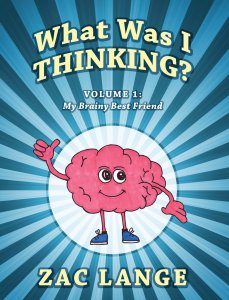
What Was I Thinking? Volume 1: My Brainy Best Friend

What Was I Thinking?

Volume 1: My Brainy Best Friend

by Zac Lange

Publisher: Outskirts Press

ISBN: 978-0996849005

Synopsis:

As everyone who has ever been a kid knows, mistakes and accidents are a part of growing up. “What Was I Thinking?” is a series that examines and finds solutions to an endless list of experiences that are universal to both children and families using the incredible tool of brainpower. It is told from the engaging, humorous, and relatable perspective of a young boy in the process of figuring out his place in the world, and whose creative mind, Brain, is his own best friend. “What Was I Thinking? Volume 1” encourages kids to celebrate their brains and their amazing potential. It also teaches the importance of using those powerful brains to think before acting, and to consider consequences both good and bad. Ultimately, the series wants to help kids be aware of their own thought processes, so they can make positive decisions for any given situation in their own lives. Hopefully, there will be fewer and fewer times when they have to ask themselves, “What was I thinking?”

Critique:

“As much as I love my brain, sometimes it seems like it takes a break for a while and forgets to tell me.” Who hasn’t had that feeling at one time or another? The narrator of the story imagines his brain snoozing in a hammock under some palm trees while taking a break. That is the reason he decides to kick a ball inside the house and winds up breaking his mother’s favorite vase. As soon as his mother sees the damage she asks, “What were you thinking?” Of course he didn’t think, he just did it. And then, when the damage is done, his brain decides to show up again. Kids and parents alike will recognize such a familiar situation and the results. Our narrator and his brain come up with a plan to avoid this trouble in the future; a plan which begins with STOP and THINK.

Readers will find plenty to laugh about in the story and the illustrations. The boy and his brain do everything together (except when Brain takes those unexpected breaks). A picture of the boy when he was a baby shows his brain nearby, also wearing a diaper. When the boy is at the playground, he is on one end of the see-saw and his brain is on the other. His mother is also shown in humorous ways. When she hears the vase break and runs into the room, she is shown dressed as a police officer and the boy is in a prison uniform. When he claims it was an accident, the picture shows his mother behind the desk at “Moms’ Olde Tyme Excuse Shoppe” pointing to ‘No Sale” because she does not buy his excuse. (That’s probably my favorite of the illustrations.)

Youngsters will enjoy the story line and see the similarities to their own experiences. Parents and teachers will appreciate the suggestion to stop and consider consequences before acting. Talking about what happens in the story can lead to a very helpful discussion on thinking things through instead of acting impulsively. It could also spark a class discussion where students might share their own memories of times when they should have taken a moment to consider their actions, but didn’t.

Recommended for children up through elementary school age, as well as the adults who care for them.

reviewed Suzanne Costner of The Fairview Review  ]

Here’s what another reviewer is saying:

Everyone has one and believe it or not you cannot function without one
You need to love it, admire it and use it wisely in order to succeed in life
It is always with you helping to guide you to make the right choices
It is your very best friend and you are never alone without this precious thing. Everyone loves friends, mom’s brownies or even just hanging out with friends. But, how any of us realize that our Brains share our feelings too and without it we would not be able to think!

Using your brain you can tell when something is sad, funny or just plain fun
Look at the pictures and see just how your brain helps you when you need to feel loved and wanted. Sometimes great things happen and it’s your brain that lets you know. Check out what happens when the bulb stays lit and you realize you have a great and fantastic idea. Great ideas come and guess where you get them? You experience things together so it is wise to take care of yourself and keep your best pal, your brain healthy!

You love to play with your friends and even have fun exploring outside and having adventures and my favorite things that helps keep my brain active, healthy and smart is reading lots of books just like this one and the ones the boy in the book is showing up that he is reading too. But, sometimes we are careless and mistakes happen when we forget to consult our brain and we accidentally kick something and our mother’s flower vase breaks and the flowers and water splatter all over the place. The author of this great book will now teach all children and parents some valuable lessons when this happens so that he understands that mistakes happen but it’s how we handle them in the present and hoping to avoid more in the future. You start by making a thinking chart and placing the words and heading it with Thought Process! Interesting as this is the first step to remembering what to do and not to do. Number one says: Do it when you admit to yourself that you forget to think before you did something and just did it! Excuses do not always work so sometimes we need to rethink our actions and create something to help us to remember. When you are not sure of what you do wrong check with you brain and find out! Ask “Where were you brain when I messed up? Hopefully the two of you will come to some sort of solution and figure out where you both went wrong!

After much deliberation and thinking and rethinking both our narrator, our little boy and of course our brain with the help of our creative author came up with what young children and even adults need to do before something else happens. Check out the Special List that gives you three steps that will help keep you out of trouble. If you stop and think decide if this could hurt and could doing this get you in trouble before you do it you might not do the wrong thing. If the answers to the last two questions happen to be YES: DON’T DO IT! The author continues with examples of how you can implement this great list to keep you out of trouble and not has to deal with mom’s consequences.

Each time you do something and if you are not sure stop and think, look at the chart, think again and figure out if you should do it or not. Check with your brain, remember no one is perfect, check out the checklist and see add who will be happy as a result of what you have learned and if you remember to Think before doing something. Learning is the best and soaking up as much knowledge and information will keep you and your brain healthy, smart, growing and having fun together now and forever. So, create your own checklist of who you want to make happy besides you and you can add things to your list like: Will I get a consequence if I do this? Will my parents be disappointed in me? Will I let myself down? Is there someone I can ask about what I am about to do before I do it and get into trouble? Stop: Look: Think and Listen. This is a great book for teachers to help children avoid getting consequences in school. This is great for parents to teach children how to understand the differences between doing the right thing and the wrong. Great for discussion groups and teachers and parents can even create lists of things that I do that are great and things that I know I should avoid and look at the lists to make sure you are not doing the ones that will get you in trouble. This is a great book for everyone. What Was I Thinking: I was thinking that I just read a great FIVE GOLDEN BRAIN BOOK! Your brain is what keeps you alert, alive, thinking and in the know: Keep reading, keep learning and keep out of trouble.

– Amazon Reviewer Amazon Customer

Book Trailer:


saturday self-published book review

Thanks for reading!  Keep up with the latest in the world of indie and self-published books by watching this space every Saturday!

Self Publishing Advisor

selfpubicon1

Website Glitch Addressed : 4.1.2016

Dear Readers,

There was a glitch with the schedule this morning, and those of you who subscribe to the blog will notice that you got a little early “preview” of tomorrow’s book review–only for the actual post to disappear.  Well, I have only good news for you: the universe has re-aligned, the book review will reappear as if by magic at its designated time tomorrow, and we have every hope that the technology we love so much will continue to behave.

so full of questions

Thanks for all for your patience, and thank you for reading!  Keep up with the latest in the world of indie and self-published books by watching this space every day.

Self Publishing Advisor

selfpubicon1

Conversations: 4/1/2016

THE MUSIC OF WORDS

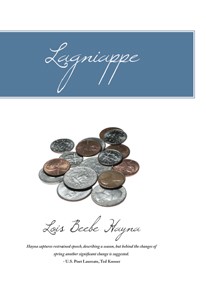
It was in early 2014, I believe, that I mentioned my creative writing mentor, Lois Beebe Hayna, in my blogs. She had just turned 101 years young and was actively writing and selecting poems to publish her next book of poetry titled Lagniappe (released in December 2014). The word lagniappe means a little bit extra. Lois tells us that she feels she’s been given extra time in this life to write poetry, and that’s exactly what she intends to continue doing. Today at 103, she ignores the physical challenges of losing her hearing and eyesight, and continues to create her unique music with words.

Lagniappe-206x300

This month marks the 20th anniversary of National Poetry Month, and I can think of no better way to honor the great poets of history—past, present, and future—than by sharing Lois’ story of becoming a highly respected poet and mentor to anyone who knows her and reads her works. The following is how Lois speaks about her writing life “in brief” calling it “a cautionary tale.”

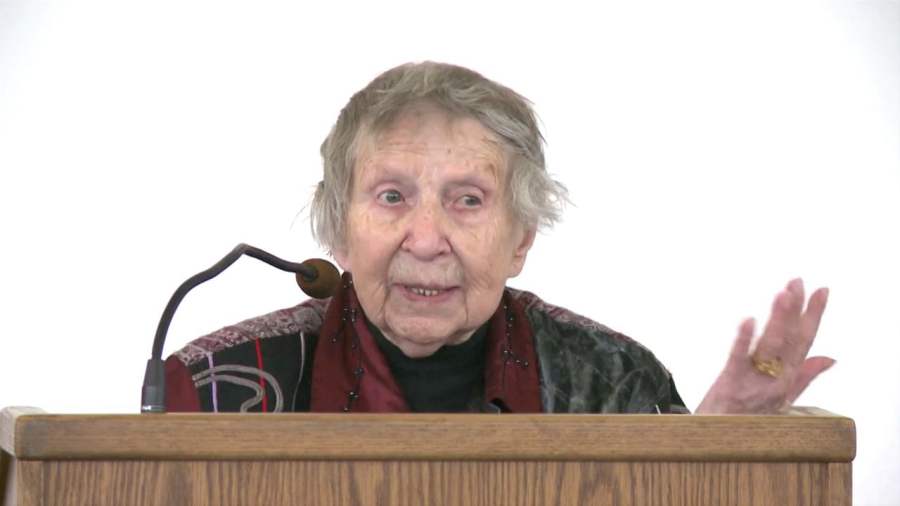
Lois Beebe Hayna
[ Lois Beebe Hayna ]
“If you want your life to include writing or painting or any of the vocations which don’t produce a paycheck, nobody’s going to make it easy for you. Nobody’s even going to take you seriously until after you’ve somehow done it. In my case, friends and neighbors had plenty of reasons to caution me. I grew up in a one-parent family in the tiny village of Vesper, up in the center of Wisconsin. It was the middle of the Depression—that big one—and I think we knew no one who was not worried about his future. Even the best of farmers were going bankrupt.

I went from our two-room school which did offer good teaching, to high school in neighboring Wisconsin Rapids, and then I taught a one-room rural school, fortunate to be hired. During that winter I learned I’d been awarded a partial scholarship which allowed me to enter the University of Wisconsin at Madison. Aside from great classes and wonderful teachers—among them S.I Hayakawa and Helen C. White, William Sumner, and R.E.N. Dodge, I met other writers and even published a few poems.

The Depression was still on. A degree helped no one find work, and certainly nobody was paying for poetry, then or now. We drifted into low-paying jobs or no-paying research, or, as in my case, got married; which introduced me to the southern states.

After three children and many moves, I found myself newly-divorced in Denver, Colorado, at a time when luckily for me, jobs had become available, never mind that for someone with no training or experience, the pay scale was dismal. But the children grew up. I remarried, and somehow, though I still read poetry avidly, I thought my chance for writing was past.

Only a remark from a college classmate sent me back to see if I still had anything to say, or any skill in saying it. I was in my early sixties. I was that close to never writing anything.”

SO POETS! Writers of one or multiple styles! Follow this example. NEVER QUIT! Hang in there and keep writing! And don’t hesitate to self-publish! Should you be as blessed as Lois Hayna and live into your 100s, you’ll deeply enjoy holding ALL your books in your hands! And, so will your fans! ⚓︎

RoyaleneABOUT ROYALENE DOYLE: Royalene has been writing something since before kindergarten days and continues to love the process. Through her small business—DOYLE WRITING SERVICES—she brings more than 40 years of writing experience to authors who need “just a little assistance” with completing their projects. This is a nice fit as she develops these blogs for Outskirts Press (OP) a leading self-publisher, and occasionally accepts a ghostwriting project from one of their clients. Her recent book release (with OP) titled FIREPROOF PROVERBS, A Writer’s Study of Words, is already receiving excellent reviews including several professional writer’s endorsements given on the book’s back cover.  

Royalene’s writing experience grew through a wide variety of positions from Office Manager and Administrative Assistant to Teacher of Literature and Advanced Writing courses and editor/writer for an International Christian ministry. Her willingness to listen to struggling authors, learn their goals and expectations and discern their writing voice has brought many manuscripts into the published books arena.

In Your Corner : Celebrate National Reading Month With These Marketing Tips! (summary edition)

Four weeks ago, I set out to gather together my absolute all-time favorite marketing advice––advice I have both given and received over my years as a self-publishing advocate working in sales and management––and today is a good day, because I get to look at it all together.  Over the course of four Thursdays, I have laid out a map––a blueprint––for an indie author’s success on the marketing trail: Fourteen tips you can put to work as you decide upon your own personal priorities as an author and put together your own marketing campaign.

They are:

Part One:

  • GETTING STARTED : Become the local expert.
  • TIP TWO: Get ’em while they’re young
  • TIP THREE: Consider online advertising
  • TIP FOUR: Introduce new formats of your book

Part Two:

  • TIP FIVE : Ask for book reviews
  • TIP SIX: Request peer reviews
  • TIP SEVEN : Create a mailing list or Facebook group

Part Three:

  • TIP EIGHT : Craft a “keep in touch” plan
  • TIP NINE : Go to the Press
  • TIP TEN : Get your next manuscript off the drawing board
  • TIP ELEVEN : The book must be blogged!

Part Four:

  • TIP TWELVE : Give your blog or website a face lift
  • TIP THIRTEEN : Play well with others
  • TIP FOURTEEN : Take the Grand Tour


If you think this list is a long one, consider this: Marketing is no joke.  It’s not an easy thing to do, especially if you’re embarking upon the journey solo.  You’ve already done some mammoth work in finishing your manuscript––in being an author, period––and to be faced with a list like this might seem daunting.  Which is why I didn’t really want to leave you with fourteen tips.  What I really want is to leave you with one.  And so, without further ado, I give you:

THE ONLY TIP YOU’LL EVER NEED: Let others help shoulder the burden

This is both the simplest and the hardest thing of all.  We’re indie authors.  We are accustomed not just to wanting to go it alone, but to having to go it alone.  But the thing is, we’re at a critical and beautiful point in the self-publishing industry’s evolution: every door is open to us, and nobody is looking to slam them shut on someone just starting out, or on a veteran who needs to change things up.  Take a breath.  Take all the time you need.  This is and always will be, your story.  And it will be exactly what you want it to be, even if you have to ask for a little assistance along the way.

There are more resources than ever before available at your Google-savvy fingertips.  There are hybrid self-publishing companies offering incredibly diverse kinds of assistance, tailored to your needs.  There are advocates like me and like many of the people I work with at Outskirts Press who want nothing more than to help you achieve what you want to achieve.  We’re here for you, and we’ll always be here for you.

Now more than ever before, one thing is true:

You are not alone. ♣︎

making a list and checking it twice


ElizabethABOUT ELIZABETH JAVOR: With over 18 years of experience in sales and management, Elizabeth Javor works as the Manager of Author Services for Outskirts Press. The Author Services Department is composed of knowledgeable publishing consultants, pre-production specialists, customer service reps and book marketing specialists; together, they all focus on educating authors on the self-publishing process to help them publish the book of their dreams. Whether you are a professional looking to take your career to the next level with platform-driven non-fiction or a novelist seeking fame, fortune, and/or personal fulfillment, Elizabeth Javor can put you on the right path.


Marketing Missteps Episode 2: Confusing the Sales Message with the Marketing Campaign

Those of you who have been following my Wednesday posts here on Self Publishing Advisor for a while will probably have picked up on a couple of my habits by now, and one of them is diving into series that examine the many facets of an issue under a microscope.  I like to see every angle, follow every lead, and to be thorough.  Which is why, in continuing this new series that began with last week’s post on the subject of “Marketing Missteps” I want to do full justice to the heart of the matter.

What, then, is the heart of marketing?

This is the question that has rightfully dominated boardroom discussions at the top traditional publishing houses as well as the living rooms and kitchens and offices of thousands of entrepreneurial independent authors’ homes. Marketing, when push comes to shove, is about raising both awareness about and motivated interest in your product.  And by “motivated interest,” I mean the kind of interest that leads to product sales.  But note one thing: the sales come after the awareness.  To push for sales with a mercenary if understandable motive is, as an author, to do both your book and your readers a disservice.

To prioritize sales above the human being on the other end of the Facebook group, the email listserv, the Twitter feed, the phone line, the book signing table, and the Goodreads book page is to declare your financial gain to be more important than quality human communication, and art.  Readers, like everyone else in the market for new acquisitions, have a sixth sense about pushy and over-eager sellers.  And here’s a fact:

Your readers want you to be a storyteller, not the stereotype of a used-car salesman.

sales

So, what does “pushy” look like and how can you avoid it?

Many first-time self-publishing authors release a book accompanied by persistent announcements across all social media platforms––and not just cute little notices, but noisy and self-interested announcements.  (And if you’ll remember, we talked about the self-centered marketing campaign last week in detail.)  Marketing is a more subtle endeavor than a Sears Factory Clearance ad, however.  You are entering a crowded market––with around five hundred thousand new books released each year––with every other entry clamoring for readers to spend money.  When you as an indie author begin shouting into the void, cramming shotgun marketing messages into every available Tweet and post and picture and conversation––well, you do nothing but damage.  You have become part of the background noise readers must filter through every day, in search of a story they actually connect with.

And how not to become yet another unheard voice?  Lead with your wit and your humanity.  Look to the authors you admire on social media and their blogs and elsewhere––how much space do they dedicate to explicitly sales-related messaging?  I guarantee you it’s not much.  Instead of constantly pushing links to sales pages, the successful self-publishing author and marketer is increasing the value proposition of both their own personal brand––as an author and person––as well as the value proposition of the their work (published and ongoing).

We’ve mentioned it many times before and elsewhere that the best marketing strategy is to write another book and to talk about that process instead of constantly pushing sales for an already published book––readers will have their interest piqued by a work still in progress in a way they won’t be by something they can simply hop on to Amazon or Goodreads to read detailed reviews about.  The mystery of an unfinished novel is an incredible asset!  Whatever else you do, don’t stop writing––offline.

Don’t confuse sales messaging with a healthy and engaged marketing campaign.  Do remember how you first fell in love with a book, an author, and filling your bookshelves.  That is the kind of positive impulse that you want to tap into.

sales


Thank you for reading!  If you have any questions, comments, suggestions, or contributions, please use the comment field below or drop us a line at selfpublishingadvice@gmail.com.  And remember to check back each Wednesday for your weekly dose of marketing musings from one indie, hybrid, and self-published author to another. ♠

KellyABOUT KELLY SCHUKNECHT: Kelly Schuknecht is the Executive Vice President of Outskirts Press. In addition to her contributions to the Outskirts Press blog at blog.outskirtspress.com, Kelly and a group of talented marketing experts offer book marketing services, support, and products to not only published Outskirts Press authors, but to all authors and professionals who are interested in marketing their books and/or careers. Learn more about Kelly on her blog, kellyschuknecht.com. 10:00 AM