Marketing BASICS : Investing in a Little Advice

Your book isn’t just a product, as neat and simple as that might seem to make things when it comes to marketing; it’s much, much more.  It is, in every way and shape and form, an investment.

  • you have already invested valuable time, energy, and other resources in writing it; and
  • you will continue to invest valuable time, energy, and other resources in marketing it.

More importantly, however, you should constantly monitor how you are spending these resources in respect to spreading the word and promoting it to fans and followers and readers alike.  In a impossibly cool and detached financial sense, you need to know when you’re spending more on your book than you should be––and then be prepared to take action.  (Though, let’s face it, who of us is ever cool and detached about our precious offspring of the imagination?  Not I.)  The Return on Investment (ROI) of your book should always reflect a balanced approach and a sustainable increase of returns.


Welcome back to my series on marketing B.A.S.I.C.S.!  This is the fifth in a series of blog posts where I tackle the fundamentals of marketing in hopes of making things a little more manageable for you, the self-publishing author.  Four weeks ago I launched the series with this introductory post, followed by:

This week, as you might have guessed, we’re taking a look at:

  • I. “Investing in a Little Advice.”

So, what happens when your investment isn’t paying off?

First off, I’d like to remind you that no matter what profit you make off of your book in financial terms, it’s an absolutely fantastic thing that you’ve done!  You’ve written a book!  You’ve published it!  You’ve sent it out into the world for others to be changed by!

Secondly, I’d like to clear up a myth about self-publishing: you don’t have to go through it alone.  Let me phrase it a little differently:

There’s nothing wrong with asking for help.

I wish I had known this sooner––I wish I’d felt convicted of the truth of this sooner.  I’ll be the first to admit that one of the greatest appeals to me of self-publishing is that it provides a platform to and a haven for the fierce individualist, exactly the sort of person to incur the wrath of Traditional Publishing for wanting too much artistic control, among other things.  But the truth of the matter is that self-publishing is for everyone, including the insecure first-time author, including the burnt-out and disillusioned veteran author, including the technologically-challenged author, including the risk-averse author, including authors who find themselves at the end of the rope and in desperate need of assistance.

The indie community isn’t just a community of self-assured and confident entrepreneurs; we’re far more diverse than that.  And the indie community is a remarkably non-judgmental, unsnobby collection of people, in possession of vast and varied resources and an overwhelmingly supportive, generous spirit.  I promise you, if you hop on to a forum or listserv or social media group dedicated to indie authors and pose a question, you will be inundated with advice and shared resources.

Of course, sometimes what you really need is targeted advice.  If you have been posting promotional material to a blog or social media platform for a long time with very little engagement, or if you’ve been spending hours upon hours obsessing over marketing only to sell very few books, it’s time you sought professional advice.  But where to begin?  Even just a quick Google search for “Consultant for self-publishing a book” turns up “About 7,330,000 results,” which says a lot about the growth in this sector of the publishing industry––even once Google’s many duplicates, oblique references, outdated listings, and other “wrong” search results are set aside.  Seven million results!

There are a lot of marketing consultation websites out there geared toward you, the self-publishing author, ranging from freelance consultants (including many who’ve transitioned from being publishing consultants within Traditional Publishing) to personal marketing assistants with hybrid/self-publishing companies.  Freelance consultants can be excellent, but it’s difficult to know which ones have the know-how you need.  The benefit of going through a hybrid/self-publishing company is that every consultant has been vetted for expertise, experience, and the quality of their insight.  That’s a pedigree worth exploring.

marketing consultant

No illusions here: when it comes to seeking professional advices on marketing your book, you’ll have to spend some money.  Remember how I spoke about your book as an investment?  So too any money you spend on marketing is the same.  The only difference is, exchanging money to save yourself the time and energy and frustration of sorting out all the details on your own is what we might call a “fair market value.”  It’s worth it, in other words, to see your book’s future set on a solid foundation and to use your time far more effectively in writing the next book.


Thank you for reading!  If you have any questions, comments, suggestions, or contributions, please use the comment field below or drop us a line at selfpublishingadvice@gmail.com.  And remember to check back each Wednesday for your weekly dose of marketing musings from one indie, hybrid, and self-published author to another. ♠

KellyABOUT KELLY SCHUKNECHT: Kelly Schuknecht is the Executive Vice President of Outskirts Press. In addition to her contributions to the Outskirts Press blog at blog.outskirtspress.com, Kelly and a group of talented marketing experts offer book marketing services, support, and products to not only published Outskirts Press authors, but to all authors and professionals who are interested in marketing their books and/or careers. Learn more about Kelly on her blog, kellyschuknecht.com.

From the Archives: “5 Ways to Increase Book Sales by Giving Away the First Chapter”

Welcome back to our Tuesday segment, where we’ll be revisiting some of our most popular posts from the last few years.  What’s stayed the same?  And what’s changed?  We’ll be updating you on the facts, and taking a new (and hopefully refreshing) angle on a few timeless classics of Self Publishing Advisor.

∗∗∗∗∗

[ Originally posted: June 17th, 2011 ]

I love Amazon!  I frequently search for books on Amazon.  I pay attention to what Amazon recommends for me.  I have a Kindle and often check Amazon’s list of “Top 100 Free” Kindle Ebooks.  As a reader, the choices for “what to read next” are endless.  My “to read” list is never under 25 books.  Readers have so many choices these days, so, as an author, how do you convince readers to choose your book to read next?

One idea is to give away the first chapter of your book.  Everyone likes getting something for free, right?  The first chapter will give the reader a taste of the book and will entice them to want to read more.  There are a few ways you can get your first chapter into the hands (or onto the screens) of your potential readers:

  1. Add a message in your email signature asking your contacts to let you know if they would like to receive a copy of the first chapter of your book.  For those who reply, send them a PDF copy of the first chapter and let them know where to buy the hardcopy if they like it and want to read more.
  2. Put an ad in your local newspaper with a short (1-2 sentence) synopsis of your book, inviting potential readers to email you for a PDF copy of the first chapter for free.  When you email the file to these contacts, let them know where to buy the hardcopy if they like it and want to read more.
  3. Similarly, put an ad on Craigslist (in the “free” section) with a short synopsis of your book, inviting potential readers to contact you for a free PDF copy of the first chapter.  And – you guessed it! – when you send it to them, let them know where to buy the hardcopy if they like it and want to read more.
  4. First Chapter Plus publishes and distributes a monthly e-catalog, which includes the first chapters of print and digital books, and mp3 clips of audio books to over 35,000 opt-in subscribers.  This listing will include the necessary details for where potential readers can find and purchase a copy of your book.
  5. If you’re a blogger, publish the first chapter of your book in a blog post or link to a PDF file where your readers can open the first chapter and read it.  Be sure to let readers know where to buy the book once they’ve read the first chapter and want more.  Author Ian Lurie actually allows his viewers to read the entire contents of his book, Conversation Marketing, online.  See how he does this here: http://www.conversationmarketing.com/internet-marketing-book/

DISCUSSION: What are some other ways that you might distribute the first chapter of your book to potential readers?

– by Kelly Schuknecht

The world has shifted somewhat since 2011.  By that, I don’t mean to suggest that my original points are somehow now invalid––they’re all still great ideas and, except for the newspaper advertisement and First Chapter Plus (which runs about $100 for one month of promotion) they’re free–but I do mean to introduce social media to this list.  Back in 2011, most of the more popular websites (such as Facebook, Twitter, and Instagram) already existed––but they hadn’t yet quite reached the cultural tipping point where they are now at, where a single post can go viral and by force of sheer momentum, alter reality offline, outside of the internet.  This makes for some very good news for you, the self-publishing author, especially when it comes to promotions like free sample chapters.

Here are three more ways to get your first chapter into the hearts and homes and hands of your potential readers:

  1. Take advantage of your existing social media presence (and maybe even beef it up a little).  There’s never been an easier way to spread the news that you have a sample chapter out there waiting to be read than by alerting your followers on Facebook, Twitter, Instagram, Goodreads, Tumblr, and elsewhere.  Not familiar with one of these social media platforms?  It might just be worth taking a look to see whether it might be of use to you, both for this promotion and for other networking purposes.  Except for Tumblr, none of these platforms can actually serve as host for your chapter’s file––with Tumblr, you can just copy and paste into a text post, and it will preserve almost all of your formatting––but part of their appeal is that they create exactly the right kind of “bite-sized” bits of information that makes for shareable content.  My suggestion is this: upload your .PDF file online or steal your Amazon book listing’s hyperlink, and paste that link into a cute little promotional post for each of these platforms.

    Screen Shot 2016-02-02 at 6.59.08 AM
    Fans will sometimes do the sharing for you, as with this sample chapter to George R.R. Martin’s next book that appeared on Tumblr recently.
  2. Take advantage of the Kindle Store’s automatic sample*––in several ways.  Did you publish through KDP, or Kindle Direct Publishing?  If you did, then 10% of your book is automatically accessible to your readers for free.  It’s worth noting at the outset that one of the downsides to publishing through KDP is that you can’t choose which chapter or what content is made available this way, but such are the hazards of publishing through a large company with little customizability.  If you do publish through Amazon’s KDP, however, take full advantage!  As I mentioned above in point #1, you can grab the hyperlink to your book listing and share the sample chapter’s availability far and wide.  Additionally (or alternatively) you might use the automatic sample as a guidepost to what you should steer clear of including in your own promotion.  If Amazon, for example, offers the first chapter, you might upload a .PDF to your blog of chapter two.  This might prove to be an especially clever move, since dedicated readers will have to access both your Amazon book listing and your personal blog––and doing so increases their exposure to your product, which in turn increases the odds they’ll purchase your book!
  3. Make it visual, and make it embeddable.  Software designer Nathan Barry writes that “moving from a text link to a more visual graphic can double the number of downloads of a sample chapter. That’s expected since it is much more visual and will grab more attention.”  How do you go about doing this?  First, create a graphic snapshot of your book’s cover or first few pages––something attractive that intimates the look and feel of your book––and then use a software app or program like ConvertKit to generate email subscription and download options.  This will create an embeddable piece of HTML code that you can insert into your blog and any other platform that allows for HTML content.

    Authority-Full-Form
    image credit: nathanbarry.com

And there you have it: three new ways to engage your readers with the wonderful promotional tool that is the free sample chapter!

* NOTE: several other publishers, including indie and hybrid self-publishing companies, offer sample chapter options.  You should always inquire after the options by contacting your Personal Marketing Assistant.


If you have any other ideas, I’d love to hear them.  Drop me a line in the comments section below and I’ll respond as quickly as I can.  ♠

KellyABOUT KELLY SCHUKNECHT: Kelly Schuknecht is the Executive Vice President of Outskirts Press. In addition to her contributions to the Outskirts Press blog at blog.outskirtspress.com, Kelly and a group of talented marketing experts offer book marketing services, support, and products to not only published Outskirts Press authors, but to all authors and professionals who are interested in marketing their books and/or careers. Learn more about Kelly on her blog, kellyschuknecht.com.

Self-Publishing News: 2.1.2016

This week in the world of self-publishing:

In a coup for indie authors everywhere, self-publishing won a favorable mention in a January 28th Newswire article by Doug Crowe.  “Self-publishing helps authors find success on their own terms,” Crowe writes by way of introduction (emphasis mine).  “Authors are able to be at ease when navigating the world of publishing, building their own brands and writing the books they want.”  He goes on to describe the veritable Renaissance in self-publishing abroad, particularly India, and the success of the Espresso Book Machine in diversifying the offerings of important indie-friendly stores, like Powell’s Books in Portland.  “Writing a book is one of the most fulfilling things anyone can do. It’s as important a milestone as getting married and having a child,” Crowe quotes author Radu Balas as saying.  Balas continues:

“In fact, it’s just like having a child. You’ll think about it, wait for it to develop over many months, watch it grow, nurture it, give it everything you’ve got, and then send it on its way – out to the public to live a life of its own, and it will be part of your legacy, something you’ll leave to the world. But just like a child, after you have created it you need to help it grow before setting it in the world.”

And that, according to Crowe, is where self-publishing comes into its own.  One only hopes that Newswire‘s discerning readers take Crowe’s words to heart.

Ever wondered how Andy Weir did it––how this plain-spoken self-published author became a blockbuster success seemingly overnight?  Well, according to Michelle Dean of The Guardian in this January 27th article, “one of the strangest items in the Martian origin story is who first approached Weir for a proper deal. It wasn’t print publishers or film producers. It was a small Canadian audiobook company called Podium Publishing. Run by a pair of friends, James Tonn and Greg Lawrence, the company produces what it calls ‘award-winning quality’ audiobooks ‘for indie-minded’ authors.”  In a market sector that Lawrence describes as an “auxiliary business” in that audiobooks were “tacked on to the end of a publishing deal” without much fanfare, Podium set out to “change that, by working with the sort of writer who was interested in publishing their audiobook independently.”  They’d been witness to the insatiable corporate need for maximum profits, and that just didn’t seem the way to go, especially when authors and their audiobook partners got the raw end of the bargain.  Well, long story short, they contracted with popular audiobook reader RC Bray and purchased rights to The Martian, their first fiction selection.  And the rest is history.  I think it’s worth noting, however, that The Martian‘s success in large part comes down to people being willing to take risks: Weir, by pursuing self-publishing in the first place, and then Tonn and Lawrence by diversifying their company’s selection.  For more information on Tonn and Lawrence’s involvement in The Martian’s road to success, check out the original Guardian article here.

Now that we’ve basked a little in the glory of everyone’s current favorite as far as indie success stories go, how can you go about launching your own book with the greatest possible chance of success?  Well, according to K.M. Weiland of Cultured Vultures in this January 27th piece, the process begins with setting aside fear of failure and the public perception that self-publishing is “so not legit.”  (Note: that line may only make sense when read in American teenage vernacular.)  Once you’ve expunged doubt from your mind, the next steps come easier.  They are, according to Weiland:

  1. WRITE A BUNCH OF STUFF YOU CAN’T PUBLISH
  2. WRITE A BOOK YOU CAN PUBLISH
  3. GET THE BEST HELP YOU CAN AFFORD
  4. GET A WEBSITE
  5. BUILDING A FOLLOWING
  6. LAUNCH BIG OR GO HOME

Weiland follows up each point with a lengthy description of what she means, and they all very much fall in line with what we here at Self Publishing Advisor think of as foundational practices.  For all of those lovely details, visit Weiland’s full article at the link.

We tend to follow the progress of indie, hybrid, and self-publishing companies like Outskirts Press fairly closely, in part because the indie community is small and everyone seems to know someone who works with or has published through their services, and in part because we’ve discovered some rare and excellent gems among their publications.  In a January 26th press release to PRWire, Outskirts announced its latest “Top 10” list, and some of them sound genuinely exciting!  The list, arranged alphabetically, is as follows:

  1. Cool Breeze by Ganelle Gaddy Sutton
  2. The Day I Thought That I Made a Terrible, Terrible Grade by Rosie Wiggins
  3. Elusive Loves; Amores Esquivos by Mirtha Michelle Castro Marmol
  4. Hang In There At Christmas by Brad Myers
  5. How Toxic Are You? by Dr. James Martin
  6. The Legend of the Icelandic Yule Lads by Heidi Herman
  7. The Magic Pouch by Hank Angus
  8. Through Their Eyes by Harshal Mehdi and Aminder Mehdi
  9. The Ultimate Guide for Bank Directors by Catherine A. Ghiglieri and Jewell D. Hoover
  10. What She Feels by Chidozie Osuwa

Ganelle Gaddy Sutton’s Cool Breeze, for example, is a genre-defying look into poverty and life on the streets for America’s most marginalized communities, while Elusive Loves; Amores Equivos is the second book of poetry by actress and author Mirtha Michelle Castro Marmol and may prove, with its bilingual appeal and its lyric intent, to be just as big of a success as her first (Letters, To The Men I Have Loved).  Dr. James Martin’s How Toxic Are You? takes a long hard look at environmental pollution and its effects on the human body, and physicians Harshal and Aminder Mehdi’s Through Their Eyes tackles the complicated intersection of philosophical, religious, and mental concerns in the course of dealing with chronic illness.  And if you are looking to defy cliché but still process loves won and lost (as we all do), then What She Feels by Chidozie Osuwa with its beautiful cover art and unexpected and powerful imagery may prove to be exactly what you need.  To access the original press release, click here.


spa-news

As a self-publishing author, you may find it helpful to stay up-to-date on the trends and news related to the self-publishing industry.This will help you make informed decisions before, during and after the self-publishing process, which will lead to a greater self-publishing experience. To help you stay current on self-publishing topics, simply visit our blog every Monday to find out the hottest news. If you have other big news to share, please comment below.

KellyABOUT KELLY SCHUKNECHT: Kelly Schuknecht is the Executive Vice President of Outskirts Press. In addition to her contributions to the Outskirts Press blog at blog.outskirtspress.com, Kelly and a group of talented marketing experts offer book marketing services, support, and products to not only published Outskirts Press authors, but to all authors and professionals who are interested in marketing their books and/or careers. Learn more about Kelly on her blog, kellyschuknecht.com.

Saturday Book Review: “Ghost Chaser: The Curse of Steel”

Book reviews are a great way for self-publishing authors to gain exposure. After all, how can someone buy your book if he or she doesn’t know it exists? Paired with other elements of your book promotion strategy, requesting reviews is a great way to get people talking about what you’ve written.

When we read good reviews, we definitely like to share them. It gives the author a few (permanent) moments of fame and allows us to let the community know about a great book. Here’s this week’s book review, courtesy of the jbronderbookreviews blog:

41uLRG4-zJL._SX331_BO1,204,203,200_

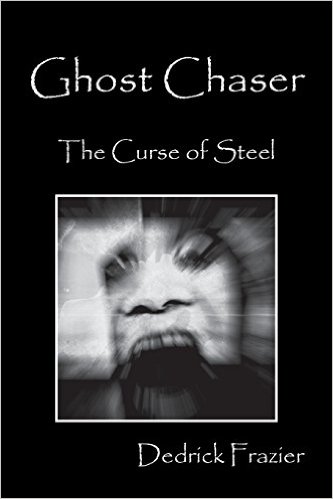
Ghost Chaser: The Curse of Steel

by Dedrick Frazier

Publisher: Outskirts Press

ISBN: 978-1478750741

Synopsis:

Dorian Steel is a lone wolf on a journey searching for an identity now that the orphanage in which he was raised in is several light-years behind him. Serving time in prison due to a jealous ex-girlfriend’s vendetta was not how he saw his life progressing, but through it all, he has finally found peace. Once the visions start however, his isolated world is shattered – leaving only the shards of glass for him to walk on.

The always quiet, unassuming landscaper quickly goes from a life of hiding in the bushes to the forefront of the battle lines for survival – facing an army of ghosts, demons, and human turncoats loyal to a demonic force intent on the systematic destruction of mankind as we know it. When the woman he has suppressed his feelings for re-enters his life, Steel realizes that if she dies, blood will be on his hands for the second time.

Dorian Steel will face a roller coaster of emotions ranging from fear, love, fear of love, and everything in-between. Whether it is demons, detectives, or the occasionally possessed vagrant, Steel’s life, as well as the lives of his loved ones’ are in serious danger – not to mention the fate of the world. However, he does have a chance to save everyone and everything important to him. It all hinges on the one thing Steel despises more than anything else – those damned psychic powers.

Critique:

Dorian had a rough start in life. He grew up in an orphanage and through the foster system. None of it was really helpful for him. Then a wrong turn leads him to jail time and distance from the one girl in his life that meant something. Now that he is out, he just wants a simple life as a landscaper. Then he starts having visions of horrible creatures, like the ones he had as a kid. Dorian doesn’t want to deal with this but he has no choice, he is the only one that can save the world from the demons.

I admit that the first couple chapters were a little rough as you start feeling out the story. But once you get caught up on the background of Dorian’s life, you will hit the ground running. I couldn’t help feeling for Dorian. He has had a rough start but finds his way until an ex-girlfriend gets him sent to prison. But the one girl that he has always loved hasn’t forgotten about him even though he wants to keep her at a distance and safe. When the demons drag him into this war he has no choice to do what he needs to do to keep her and the world safe.

This is a great story, it’s well written and developed. Once you get into the action there is no putting this book down. I had to force myself to stop reading so I could get some sleep. Then all I could think about is what is going to happen next.

If you like kick great thriller/paranormal stories this book is for you. I can’t wait for other books from Dedrick Frazier.

To purchase Ghost Chaser: The Curse of Steel make sure to visit Amazon, Barnes and Noble, and Goodreads.

[ reviewed by Jennifer Lara  ]

Here’s what some other reviewers are saying:

Want to be genuinely scared? Let the author’s rich prose take you on an exhilarating ride of good and evil. The story reveals itself through the testament of one Dorian Steele, who tells his story in a confidential tone as if speaking just to you. The characters and setting convey the sumptuous and colorful world of coastal Georgia, as only someone who resides there could so genuinely recreate. Once I started this story, I couldn’t stop till I read how it all would end. I highly recommend this book for the entertaining read it is, the scare is a bonus.

– Amazon Reviewer Constance Rose

I really enjoyed this. Parts made me screech, parts had me laugh and all of it was good. I did have a couple parts that I fought to get through just because it got slow for me, but overall the plot was interesting. There was a lot of adventure and creepiness which I enjoy both of. Glad I got to read this author and story. I cant wait to read more.

– Goodreads Reviewer Kaila

Book Trailer:


saturday self-published book review

Thanks for reading!  Keep up with the latest in the world of indie and self-published books by watching this space every Saturday!

Self Publishing Advisor

selfpubicon1

Conversations: 1/29/2016

IT’S A NEW DAY! NEW MONTH! NEW YEAR!

Readers Also Have Eagle-Eye Expectations


“Be careful—be very careful—never to misspell, misuse, or make a pronoun error!” This advice came from an experienced writing acquaintance. He had just experienced a lengthy discussion (argument) with an editor who had been assigned “review” his manuscript. This gentleman author used creative spelling in the dialogue segments of one particular character throughout the whole book and the editor wanted it corrected. That was not going to happen! Within the week the author and the publishing house had a mutual parting-of-the-way and the author self-published!

Although I was very excited for my writing friend, I could also see the editor’s perspective. Word usage is extremely important and a skill that we must all develop: GRAMMAR! When I was in elementary and high school, I disliked that word (grammar) a lot! However, I now look upon it more kindly as I’ve grown into the “study of linguistics.”

LINGUISTICS

Have you ever heard someone try to dodge a point being made in a discussion by saying, “Oh, that’s just your own semantics!” It sounds like—and may be meant as—a dismissive statement. However, the person/character who says that is usually doing their best to avoid accepting the other person’s perspective. Here are a few things I’ve learned about linguistics and how this study continues to enhance my writing abilities.

  • When you and I speak/write in our own language, we use “internalized rules” to shape phrases and sentences that best communicate what we want another person to understand. This is essentially the use of grammar—our personal grammar—acquired since our ears first heard sounds.
  • Linguistics is the “bigger picture” of the basic grammar we learned in school—those clauses, and dangling participles we had to diagram. Writers who want to communicate to their readers must step into this expanded study and hear their characters speaking phonetically.
  • Writers of the exceptional and well-received books have learned the rules that govern the linguistic behavior of a characters and/or a group of characters.
  • AND writers must also accept the challenges of accurate spelling! Words may sound alike, even have similar spellings, however VERY different meanings. (e.g. their, there, they’re)

Systems of Grammar have been with us since the days of Sanskrit which existed in the Iron Age. In approximately 100 B.C. a fella named Dionysius Thrax developed his “Art of Grammar” which appeared closely to the 1st century Latin grammars. In the High Middle Ages, the Hebrew grammar developed very specific rules, leading into the Middle Ages where grammar was taught—to those of privilege—as a “core discipline” of communication. By the time the Renaissance Period was bringing about world-wide changes, all nations and people groups had some form of “grammar rules” by which to more clearly communicate.

I’ve heard it said that the Americanized grammar “rules” are no more than guidelines and extremely frustrating to authors of all genres. Personally, I prefer the term guidelines because—like the characters I’m developing—language is a living entity. It grows and changes with each individual person/character and culture. It is up to us—our creative writing ears—to hear and write in the best forms of linguistic grammar that will communicate exactly what we want our readers to hear. ⚓︎


RoyaleneABOUT ROYALENE DOYLE: Royalene has been writing something since before kindergarten days and continues to love the process. Through her small business—DOYLE WRITING SERVICES—she brings more than 40 years of writing experience to authors who need “just a little assistance” with completing their projects. This is a nice fit as she develops these blogs for Outskirts Press (OP) a leading self-publisher, and occasionally accepts a ghostwriting project from one of their clients. Her recent book release (with OP) titled FIREPROOF PROVERBS, A Writer’s Study of Words, is already receiving excellent reviews including several professional writer’s endorsements given on the book’s back cover.  

Royalene’s writing experience grew through a wide variety of positions from Office Manager and Administrative Assistant to Teacher of Literature and Advanced Writing courses and editor/writer for an International Christian ministry. Her willingness to listen to struggling authors, learn their goals and expectations and discern their writing voice has brought many manuscripts into the published books arena.