In Your Corner : Amplifying Your Voice, OR, “What IS a Press Release Anyway?”

Are you ready to amplify your voice? A press release may just be your next step.

I know what you’re thinking: You’ve written your book, and now you’re on track to building a marketing campaign to do it justice. The hard part’s over … right? But it’s never easy getting word out to new readers about a brilliant new book they should be reading, especially for a self-publishing author with limited resources of time and energy to spend building connections and broadcasting the release. But while there are few events you might think worth publicizing with a press release, publishing your book should definitely one of them!

But … what is a press release?

Generally speaking, a press release is a written or visual bundle of information sent to members of the news media in order to announce something newsworthy. They are typically sent to the staff of newspapers, magazines, radio or television stations, and the administrators of various popular websites. If this sounds like a lot of work for one person to organize and distribute, that’s because … it is. But the benefits of a press release are extraordinary: the resulting national and even international exposure cultivates the interest of untold numbers of new readers who otherwise would never hear about your book.

There are a number of ways to go about writing and posting a press release. You can do what I’ve just said, and carry the entire burden yourself, or you can work with a self-publishing company that will partner with you to produce the press release for a small fee.  Every company is different in what it bundles together, but I do know that Outskirts Press (my employer) offers its authors the opportunity to have a professional writer draft a press release as a part of its Book Blast package.

Generally speaking–whichever company you opt to run with–once the first draft has been composed, you can elect to make moderate changes and corrections before the final draft is published. You should then receive a copy to use in your own marketing campaign, while the company makes use of its existing connections to distribute your professional custom press release through the News Wire–an electronic database of around 100,000 media contacts, newsrooms, industry analysts, and freelance writers who choose to receive daily emails regarding press releases that fit certain criteria. If the company you’ve chosen is on top of its game, it will also ensure that a number of popular websites and ezines, magazines like ForeWord Reviews and Publisher’s Weekly as well as newspapers like the Wall Street Journal, New York Times, and USA Today will receive notice of your book’s publication.

This press release will help drive sales by piquing the interest of reviewers, journalists, bloggers, and members of the media and encouraging them to pick up copies of your book. If you read the fine print of your publishing company’s press release package, you might find hidden gems to maximize each distribution, as OP does by optimizing your press release for search engine indexing, and working hard to ensure a speedy one-month start-to-finish turnaround on press releases. Always read the fine print!

Once you have your press release in hand, what next? I’d recommend a PR Publicist, if you have the free capital–it costs a bit, but the payoff is extraordinary, especially for self-publishing authors who don’t yet feel like they have a good handle on publicity and marketing campaigns. Ever and always in search of ways to make your work as an author easier and to help you build a successful marketing campaign worthy of your book, a PR Publicist will assist you distributing your press release to the personal email inboxes of credible book reviewers and editors in print, radio, and television, with connections to multiple trades, ezines, syndicates, and local, regional, and national wires. Unlike many authors, who don’t have the time to cultivate relationships with “influencers” in the publishing world, a PR Publicist’s entire job is to build a powerful distribution circuit that will help but your book on the map with those experts and resources who wield real influence over new readers.

A PR Publicist is not just confined to the digital world. In addition to email distribution, your publicist should follow up your press release with phone calls to key editors, beat writers, and particularly important reviewers to lift your press release to the top of the pile. This kind of detailed and personal contact increases the probability of both interest and coverage by these industry experts, and because these experts have agreed to receive press releases relevant to their interest, these qualify as something altogether more valuable than a “cold call.”

But here, too, I recommend taking a look at the fine print. A good PR Publicist, just like a well-written and widely-distributed press release, can go a long way to raising awareness about your book. But not all PR Publicists and not all press release packages are created equal. I work for Outskirts Press, so I’m definitely not unbiased in recommending who to choose, and in all things I want to place the power of choice back where it should be: in the hands of the author. Do your research, and balance your needs against what you can afford–what will prove most useful to you. You and your satisfaction are my priority, and I want to be here as a resource for you, no matter what course you choose in navigating the world of self-publishing!

You are not alone. ♣︎

ElizabethABOUT ELIZABETH JAVOR: With over 18 years of experience in sales and management, Elizabeth Javor works as the Manager of Author Services for Outskirts Press. The Author Services Department is composed of knowledgeable publishing consultants, pre-production specialists, customer service reps and book marketing specialists; together, they all focus on educating authors on the self-publishing process to help them publish the book of their dreams. Whether you are a professional looking to take your career to the next level with platform-driven non-fiction or a novelist seeking fame, fortune, and/or personal fulfillment, Elizabeth Javor can put you on the right path.

Marketing Missteps Episode 8 : Not Finding Your People

As the weeks go by, our list of marketing missteps grows longer, but here’s the thing: no matter which step you take next, or which foot you put forward, whether it turns out to be a mistake or a blinding success, there are options.  This is because you have chosen to self-publish, and self-publishing by its very nature puts the narrative into your hands at all stages of the process.  And while I do not advocate for underestimating the impact of these missteps I’m chronicling and examining here, I do advocate for not giving up if you happen to make one.  There are ways to overcome disaster–and I’ll write about those, too, in my next series!

The Missteps So Far:

This week, I’ll be looking at a mistake that at first glance might seem like a directive to the Millennial Generation, what with its emphasis on social connectivity and whatnot, but is actually a guidepost for us all.  The misstep?

Not Finding Your People

Many years back, when I was still in college, I took a course on the architecture of Frank Lloyd Wright.  (Yes, yes, I know.)  I’m more than 90% sure that I took the class exclusively because of inglenooks, a strange little architectural quirk endemic to Wright’s earliest buildings.  “And pray, what is this inglenook?” you might ask.  It’s a fireside niche, or place to tuck yourself away in, with a book and a quilt and a hot mug of coffee.  It’s a tiny little retreat that Wright carved out of designs that seemed to leave no room for more experimentation.

Forgive me if architectural anecdotes seem a little out of line with marketing your self-published book, but here’s the thing: niches aren’t just useless ornamentation, whether we’re talking about someone’s home or someone’s book hitting the market.  We need niches.

building blueprint

When it comes to publishing your book, we’re talking about placing something into a market already packed with hundreds of thousands of new books published each year.  It’s more important than ever for authors to understand their niches if they want to sell books, because niches provide access to readers through hyperspecific keyword searches and in the “If you liked this book, you might also enjoy…” tools generated by websites like Amazon, Goodreads, and so forth.

Ideally, authors should figure out what niche their books will fall into before they even write their book, but it’s never too late to put the power of niche marketing at your fingertips.  I’m not just talking about broad sweeping genre categories–like “Western” or “Crime”–but the hyperspecific demographic of who among the world’s millions of devoted readers will really love and devour your book.  Whether your book is in its beginning conceptual stages or is well down the road to publication, it’s well worth sitting down and making a list that takes into account all the major demographic data points: ages, genders, interests, hobbies, and geographic locations.  This will help you narrow down your target audience.  And once you know your target audience, you can start compiling another list of keywords that relate to these people (think “parachute silk” or “dinosaur bones”) and that you can use to flesh out your website and book page metadata to make your book more findable by people interested in these specific things.

I absolutely guarantee that it’s easier to market your book if you sell it as a piece about baking out-of-doors in a kiln oven with all-natural ingredients than to sell it as a simple organic cookbook.  A book that is confident in its niche–in its dedicated readership–is a book that knows where they’re at and how to sell to them.  You want to be the one selling a book that declares:

tumblr_inline_nhma94hBqD1qbk0s4


I suppose, when push comes to shove, what I mean to say is this: you both need to find your people and make them your people.


Thank you for reading!  If you have any questions, comments, suggestions, or contributions, please use the comment field below or drop us a line at selfpublishingadvice@gmail.com.  And remember to check back each Wednesday for your weekly dose of marketing musings from one indie, hybrid, and self-published author to another. ♠

KellyABOUT KELLY SCHUKNECHT: Kelly Schuknecht is the Executive Vice President of Outskirts Press. In addition to her contributions to the Outskirts Press blog at blog.outskirtspress.com, Kelly and a group of talented marketing experts offer book marketing services, support, and products to not only published Outskirts Press authors, but to all authors and professionals who are interested in marketing their books and/or careers. Learn more about Kelly on her blog, kellyschuknecht.com. 10:00 AM

From the Archives: “7 THINGS TO KNOW ABOUT TRADITIONAL PUBLISHERS”

Welcome back to our Tuesday segment, where we’ll be revisiting some of our most popular posts from the last few years.  What’s stayed the same?  And what’s changed?  We’ll be updating you on the facts, and taking a new (and hopefully refreshing) angle on a few timeless classics of Self Publishing Advisor.

∗∗∗∗∗

[ Originally posted:June 18th, 2010 ]

Things every author consider when considering self-publishing vs. the old-fashioned model…

7 – Traditional publishers lose money on over 85% of the books they publish, so they only accept around 2% of those that are submitted.

6 – They typically accept manuscripts only from established authors who have demonstrated a proven track record.

5 – Authors lose content control of their work during the editing process.

4 – Authors must still invest an enormous amount of time, energy, and money promoting a traditionally-published book.

3- Authors typically receive 5-10% royalty on the wholesale price of the book, and from that have to give 15-25% to their agent. Do the math.

2 – The majority of books published by old-fashioned publishers go out of print within 3 years. Many books that are stocked on book shelves remain stocked for as little as five weeks before being returned, unsold, to the publisher.

1- Old-fashioned publishers acquire all rights to your book and keep them, even when the book goes out of print or the publisher goes out of business. Yikes.

Publishing is hard and weird, and the process takes far more energy and attention than it rightfully should.  If you’re lingering in the balance between opting in to the traditional publishing mechanism or choosing to pursue a self-publishing option, this list from 2010 may just provide the last swing vote.  To pretend that we are unbiased would be disingenuous, I know, but isn’t there another side to this list?  Isn’t there some dirty laundry to air about indie, hybrid, and self-publishing companies, too?

Yes, no doubt.  That’s the honest answer.  The self-publishing model isn’t for everyone, and there are certainly the requisite number of soulless opportunists who have spotted a new means to exploit newcomers, as there are in any industry, but for the most part I do find that the people who work with and alongside self-publishing authors are a good lot.  They’re genuinely interested in helping you succeed–according to your own standards and expectations, not under the unrealistic ones set by traditional publishing.

So here’s my claim for the day, with a proviso:

When self-publishing is done right and all of the people involved in a project operate by the foundational tenets of the indie spirit, the experience provides authors the exact opposite experience of traditional publishing.

7: Self-publishing has no gatekeepers, censors, or men in suits wagging their fingers at innovation.

6: Anyone can self publish, no matter their background or prior experience with publishing (traditionally or otherwise).

5: Authors retain full artistic and legal control over their work.

4: Authors get to see a direct proportional relationship between the time, energy, and money they spend promoting and marketing their book–and sales figures.

3: With no middleman to split the earnings, self-publishing authors can keep anywhere up to 100% of their own royalties.  That’s, well, a lot better.

2: Self-publishing authors have a weapon in their artillery that traditionally published authors do not which resolves both the overstocked and the understocked problems facing traditionally published authors and their distributers: Print on Demand (POD).  Because you can always go back and print more copies of your book, there’s no danger of running out.  And because you get to choose how many books you print in the first place and how they’ll be distributed, you’re not shipping crates of untouched books to distributers who will never be able to move copies.  Precision targeted sales, that’s what POD enables!

1: Nobody will ever own your work except you.  Nobody.


When you cast things in a certain light, it gets really and truly hard to see the benefits of opting in to a broken system that has yet to meet the rapidly-evolving needs of a digital market where they live.  And I’m not just saying this because I’m biased–I am biased, 100%–but because I’ve been through the wringer of traditional publishing.  I know what it’s like.  Like most self-publishing authors, I’ve dipped my toe into the world of traditional publishing and come away angry, hurt, and disappointed.  And I’m committed to making sure as many authors get to move on to far better and more positive things, as I have.  I’m committed to making sure authors know they have another, better option.

And yes, it’s called self-publishing.

Thanks for reading.  If you have any other ideas, I’d love to hear them.  Drop me a line in the comments section below and I’ll respond as quickly as I can.  ♠

Self-Publishing News: 5.9.2016

This week in the world of self-publishing:

“‘I decided to choose my own magic and publish my book,'” writes Brittany Britto for the Baltimore Sun in this May 6th article, quoting indie author Elodie Nowodazkij, whose first self-published romance novel (One, Two, Three) hit the internet in 2014.  Nowodazkij, who had queried at least thirty agents the year before and received so-called “kind” rejections across the board, is one of seven self-publishing authors, experts, and entrepreneurs whose journeys Britto anthologizes in her article.  “The success of a self-published book, as with any book, can vary depending on any number of factors, including timing, topic and genre,” says Britto, citing marketing expert Penny Sansevieri.  And while some indie authors still founder, an increase in the diversity of platforms available and the general maturation of the indie publishing impulse provides as many if not more opportunities than it does hazards.  Britto’s article, while it uses local Baltimore authors as inspiration, forms a lengthy exploration of the topic on a national and even international scale, with many insightful references, anecdotes, and questions asked and answered.  To read the full piece, follow the link.

In her latest addition to Inverse‘s “Job Hacks” series of articles (in which the media insight company “shake[s] down experts for the insights they cultivated on their way to the top of their field”), Lauren Sarner takes a look at the backstory of Joseph Devon, a “Self-published novelist before self-publishing was big, [and] co-creator of The Writer’s Arena, an iron chef-style competition forum for authors.” The interview, published on May 4th, delves into Devon’s approach to self-publishing before self-publishing even became (as the Tumblr kids put it) “a thing” … and he did it by giving everyone, traditionally published, self-published, and altogether new authors “an even playing field.”  Engagement on The Writer’s Arena is up, with disagreements over winning pieces and authors thoughtfully fostered within healthy boundaries and managed by careful moderation.  “I actually self-published way back in 2000, which isn’t that far but in the world of self-publishing, it is,” Sarner quotes Devon as saying. “But then as the internet came along, people starting creating more tools and it became a lot easier. There’s still a lot of challenges—it may not be for everyone—but I fell in love with the notion of how to create an audience and the marketing side of things.” Devon has been there from the beginning, as Sarner makes clear, and his evolution as an author/entrepreneur has deep ties to the evolution of the internet as a digital space.  For more of his interview with Sarner, click here!

“LinkedIn is considering introducing its own version of Facebook’s Instant Articles, a feature that would allow publishers to host content directly on LinkedIn instead of posting links that direct people back to their own sites,” writes Alex Kantrowitz in this May 5th piece for BuzzFeed News.  We’ve written about LinkedIn Pulse here on Self-Publishing Advisor before, but this latest acquisition or evolution could provide indie authors with still more practical benefits.  Quotes Kantrowitz: “‘Publishers remain a very important part of our content ecosystem and we are in regular conversations with them about new ways to work together,’ a LinkedIn spokesperson said in response to a BuzzFeed News request for comment on the effort. ‘Our goal is to ensure we get the right content in front of the right member at the right time to deliver the best member experience possible.'”  This is good news for indie authors precisely because it provides access to a flexible, responsive platform for publication that allows for the distribution of timely written material–the arena of all things indie.  You may or may not see any new end-user tools added to the existing Pulse platform, but the potential reach of posts to said platform may expand as partnerships with other publishing media develop.  All the more reason to tap into this resource as soon as possible!


spa-news

As a self-publishing author, you may find it helpful to stay up-to-date on the trends and news related to the self-publishing industry.This will help you make informed decisions before, during and after the self-publishing process, which will lead to a greater self-publishing experience. To help you stay current on self-publishing topics, simply visit our blog every Monday to find out the hottest news. If you have other big news to share, please comment below.

KellyABOUT KELLY SCHUKNECHT: Kelly Schuknecht is the Executive Vice President of Outskirts Press. In addition to her contributions to the Outskirts Press blog at blog.outskirtspress.com, Kelly and a group of talented marketing experts offer book marketing services, support, and products to not only published Outskirts Press authors, but to all authors and professionals who are interested in marketing their books and/or careers. Learn more about Kelly on her blog, kellyschuknecht.com.

Saturday Book Review: “First Born : The Preevitt Chronicles”

Book reviews are a great way for self-publishing authors to gain exposure. After all, how can someone buy your book if he or she doesn’t know it exists? Paired with other elements of your book promotion strategy, requesting reviews is a great way to get people talking about what you’ve written.

When we read good reviews, we definitely like to share them. It gives the author a few (permanent) moments of fame and allows us to let the community know about a great book. Here’s this week’s book review, courtesy of Books, Reviews, Etc:

5109WOsl1lL

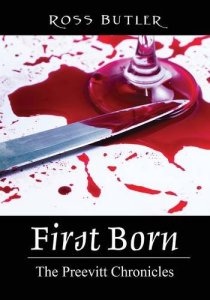
First Born : The Preevitt Chronicles

by Ross Butler

Publisher: Outskirts Press

ISBN: 978-1478771722

Synopsis:

She thought that life in a new town would be boring; boy, was she wrong! Fifteen-year-old Ruth Daniels has never had a lucky break due to being a lifelong orphan living in Michigan, but she ends ups going from a orphan to a family girl after she gets adopted by a widowed businessman and moves to New Jersey to live with him and his family, including a stereotypical teenage brother, a snobby sister and two twins. Yep, that’s all there is to it. Soon after her arrival, she starts school and almost instantly ends up with two new friends: Rachel Evans, a redheaded senior, and Justin Reynolds, a quiet, lonely and withdrawn sophomore. The latter of whom Rachel seems to hate with a vengeance. As Ruth and Justin’s friendship begin to evolve, Rachel starts to stalk and attack them almost constantly, and Justin knows why: He’s a human/animal hybrid called a Preevitt, he and Rachel are longtime mortal enemies, and Ruth is now part of their longtime war that also includes Justin’s twin siblings, Jaz and Wheeler.

Critique:

Ruth Daniels from Michigan evolves from an orphan to an adopted daughter of a widowed Businessman. Him and his family are in New Jersey.  Ruth moves to New Jersey with her new family. What a family.  We have twins,  a typical brother who is a teenager and a real uppity sister.  That’s the family.  Quite a change for Ruth.  She has always been an orphan.  After she moves to New Jersey she starts high school and immediately makes two new friends. Justin Reynolds is an introvert, and a sophomore.  Ruth then makes friends with a senior, redheaded Rachel Evans.   Rachel isn’t happy with the friendship that Ruth and Justin are developing.  Right off she detests Justin. Rachel goes on the attack, especially against Justin.  What is it about Justin?  Why are Rachel and Justin at odds with each other?  Is there a secret between them? Will this war between Justin and Rachel affect Ruth? The author takes you into another world.  One minute the world is as you live in.  The next, you’re facing another world. The book is fast paced as the author takes you into some well developed characters’ lives.  As you turn the pages, you’re not quite sure what you will find next.  This isn’t your typical high school friendship. This isn’t a jealousy issue.  This is way more.  The author starts out with a quiet story about Ruth and it slowly gains momentum until you’re in another world.  What does Preevitt mean?  Read and find out. Good book for teens and adults.

I would give this book 4 STARS.

[ reviewed by Gayle Pace of Books, Reviews, Etc ]

Here’s what other reviewers are saying:

In this Urban Fantasy, we read the story from the perspective of a moody, disgruntled and contrary fifteen year old. She was orphaned at an early age, and when the orphanages closed down, she lived with her elderly social worker. She is adopted by a family in New Jersey, far away from Michigan. She doesn’t want to go, but has no choice. Once she is there and meets her family, she settles down slightly. Starting a new school, she meets new friends and starts her new life.

With a very fast-pace and a severe case of insta-love, this book tells the story of Preevits and Mugglers. Now Preevits may sound bad, but they have nothing on the Mugglers. And then, of course, you have bad Preevits thrown into the mix too.

Finishing on a high, with a possible link to a further book, this is a book for readers of YOUNG adult, with a paranormal twist.

– Amazon Reviewer Merissa (Archaeolibrarian)

And last but not least, an excerpt from the author’s Smashwords interview:
What is the greatest joy of writing for you?
The greatest joy of writing for me is putting down what I want to see on paper and throw it to the world for all to see. It’s basically me being myself and not worrying about being called for it. I can as funny, biting and sarcastic as I want to be and no one can take that from me. That’s one of the greatest joys of being a writer.
What are you working on next?
My next book is now being written. It’s A Satirical Western called “How The West went South”. It’s about an 18-year old guy who, after saving the life of the U.S. Senator is rewarded with a job as a U.S. Marshall and the hijinks that ensure afterwards. It’s already in the works and I’ll release more info when I’m ready to.
Who are your favorite authors?
Eoin Colfer, (The Artemis Fowl Series, “The Wish List” and “The Supernaturalist”) Rick Riordan, (Percy Jackson and the Olympians) Cassandra Clare, (The Shadowhunter Chronicles) and James Patterson, (The Maximum Ride Series)
What is your writing process?
My writing process involves me writing one book, I get it published and distributed, then I start work on my next one while still attending promotion events to market it. Many authors try to write several books at once. I prefer to keep it simple.

saturday self-published book review

Thanks for reading!  Keep up with the latest in the world of indie and self-published books by watching this space every Saturday!

Self Publishing Advisor

selfpubicon1