From the Archives: “HUGE MISTAKE: Using ‘Traditional’ Business Cards as a Coach/Speaker”

Welcome back to our Tuesday segment, where we’ll be revisiting some of our most popular posts from the last few years.  What’s stayed the same?  And what’s changed?  We’ll be updating you on the facts, and taking a new (and hopefully refreshing) angle on a few timeless classics of Self Publishing Advisor.

∗∗∗∗∗

[ Originally posted: February 28th, 2011 ]

You’re an AMAZING speaker. You know how to work the room when you’re in front of an audience. Once your presentation is over, though, you make a HUGE mistake. This one is really big, but no one told you what you were doing wrong: you hand out a business card. That sounds harmless enough, right? Not if you’re a coach or speaker.

A business card can’t portray the true value of a speaker’s knowledge in their field. Last week, I presented at Kathleen Gage’s New Horizon’s Telesummit on the topic “Your Book – Your Business Card”. If you haven’t published a book, you are doing your business (yourself) a great disservice. Think about how easy it will be to attract/retain clients and book speaking gigs if you had a published book

  • Your audience can get to know more about you and your business
  • You can share your expertise with your target customer and others in your field
  • Coaching is intangible. A book allows the client to touch the coach via the book.
  • A well written content rich book will validate the author as an expert. Experts get to charge more.

Okay, I’m sold. I know I need to publish a book to build my business. How can I get started? If you decide to self-publish, it’s not as difficult as you think. There are some companies that offer self-publishing packages for coaches and speakers, including Outskirts Press. Packages like these are designed for busy professionals that are always on the go. If you think self-publishing is right for you be sure to choose a self-publisher that can accommodate your marketing and distribution goals. Truthfully, creating the actual book is the easiest part. Make sure that you are maintaining the rights to your material and that you have control over your retail piece and your trade discount.

Some authors don’t want to pay to publish their books. In cases like these, you may consider going the “traditional” publishing route. Remember that you will be selling your rights to the book, but you will still be responsible for promoting your book after the process is complete. Also, publishing your book this way could take months or even years (if it’s accepted).

It is important that you weigh the pros and cons of each option and decide which one works for you.

– by Wendy Stetina

Wendy was right–the best advertisement for an author is a book, and the best means of marketing a new book is to start working on the next one. This isn’t to say you won’t have valuable things to add to the conversation about self-publishing if you yourself haven’t finished publishing your book, but as someone interested in indie publishing you probably know better than most the true importance of timing. It’s worth waiting to give that big presentation until after you have some hard copies of your book in hand, even though waiting is agonizing and fun for no one.

We’re talking about the power of tangibles. There’s a lot you can do with the force of your personality alone in terms of capturing an audience and convincing its various members of your sincerity and authenticity … but there will always be at least one person who will lobby a comment during the Q&A session asking how and where to purchase your book.  If you don’t have an answer for that person, your credibility as a presenter tanks.  It may not tank a lot, but any tanking is a bad thing.  On the other hand, if your book is for sale digitally and you can confidently state its retailers, you’ll earn credibility.  The more at home you are with the particulars of your own publishing experience–the date on which your book was or will be published, the retailers where it can be purchased, and your personal website address and social media account handles where your audiences can seek out more information–the more your image as a worthwhile presenter is built and the more your listeners will see you as an author and not just as any old speaker.

When it comes to speaking about self-publishing, there’s real currency in sharing your personal experience.  This is why I’m 100% an advocate of signing yourself up to be a presenter … and just a tad cautious about signing up too soon.  Make it worth your while.  And if you’re absolutely going to be steam-rolled into a presentation before your book is out in print, make your business card an access point to the publication process.  By which I mean: make sure it not only includes your publication date and website information, but make the giving of it an actual incentive to buy.  Incentivization is king!  You might offer a 15% discount to everyone who can provide proof of business card acquisition at online checkout–perhaps each business card is printed with a discount code–or you might use it as the first clue in a series that will lead your presentation listeners on an Easter egg hunt around town to friendly businesses that are promoting your work.  You can get really creative at this point–my suggestions barely scratch the surface!

Just … don’t let your business card be boring.

Thanks for reading.  If you have any other ideas, I’d love to hear them.  Drop me a line in the comments section below and I’ll respond as quickly as I can.  ♠


Kelly

ABOUT KELLY SCHUKNECHT: Kelly Schuknecht is the Executive Vice President of Outskirts Press. In addition to her contributions to the Outskirts Press blog at blog.outskirtspress.com, Kelly and a group of talented marketing experts offer book marketing services, support, and products to not only published Outskirts Press authors, but to all authors and professionals who are interested in marketing their books and/or careers. Learn more about Kelly on her blog, kellyschuknecht.com.

Self-Publishing News: 9.19.2016

And now for the news!

This week in the world of self-publishing:

Ever heard of self-publishing sensation Samantha Bond?  If you haven’t already, Maya Fleischmann of the Huffington Post blog fame is here to save the day with this September 14th article on Bond, an author she introduces first as fleeing the corporate sector to find solace in writing–prolifically–for traditional publishers until launching her own self-publishing company in 2011.  “And she hasn’t looked back,” writes Fleischmann before launching into a lengthy interview with Bond, featuring questions like “What was the inspiration for your Coma Girl Daily Serial?” (Bond’s latest series), and “You have numerous books in the works. What makes you want to share your writing progress with your followers? How do you focus on so many books and decide which book to work on each day?”  Fleischmann’s skill at stacking questions is equaled only by Bond’s ability to answer them; if you’re curious to find out her answers and learn more about her latest round of work, you can read Fleischmann’s full interview with Bond here.  (We here on the SPA blog find it utterly relatable.)

“There are plenty of perks to self-publishing,” writes Kylee McIntyre for Tech In Asia in this September 14th article: “You get a lot more control over the way your work is presented. You can also can end up making more money in the long run – e-publishers can take just around 40 percent of sales, much smaller than the 75 percent cut that traditional publishers receive.”  But there are downsides, too, she warns–including the assumption “that you’re responsible for plenty of the publishing process yourself, including marketing and design. You also probably charge much less for people to buy and download your work.”  Which brings us to the nebulous “they” of the article’s title.  As it turns out, writes McIntyre, there are some parties out there who are interested in “trying to level the playing field” for authors who choose to publish digitally.  This company, Notion Press is based out of Chennai and was founded by three men, only one of whom has a background in publishing.  The other two, McIntyre writes, have backgrounds in engineering–“appropriate,” she writes, for a company which “describes itself as an accelerator for books.”  With roughly 1,500 books under its belt and 120 members on staff, Notion Press is doing quite well.  Its authors are doing even better.  It has turned what it calls “productivity trash into treasure,” meaning that its founders have a pretty good handle on transforming authors’ experiences in self-publishing by way of social and personal management tools.  To learn more about their fascinating approach, read the full article at the link.

Some self-publishing stories are not standout successes.  Some of them, sadly but truthfully, are horror stories.  As Melissa Nightingale reports in this September 16th piece for the New Zealand National Herald, author Sean Colenso’s story is one such nightmare.  After choosing to self-publish his photo book of material gathered around his home town of Twizel, NZ, through Xlibris, he found himself  “$11,000 out of pocket.”  (These are NZ dollars.)  “Now,” writes Nightingale, “he is using his experience to warn other new authors to be careful choosing a self-publishing business.”  His experience stacked miscommunication upon miscommunication, and he faced repeated demands from Xlibris for more money to cover services they didn’t seem to make good on.  (For instance, he was promised that his book would be published in both print and digital editions, but to date the only version available to buy on Amazon is the e-book.  There’s also the issue of marketing–which as yet Colenso has seen none of, despite paying $3,000 NZ to cover those costs.)  The price of his e-book soared.  His books appeared at none of the promised outlets and book fairs.  His royalty payments haven’t come through and he hasn’t been told why.  “It’s just left me absolutely screwed,” Nightingale quotes him as saying.

Luckily, New Zealand-based authors have at least one advocate: The New Zealand Society of Authors.  “There are honest, reputable self-publishing services that can help a writer who wants to self-publish but who doesn’t feel confident about doing it alone,” NZSA president Kyle Mewburn said, as quoted by Nightingale.  “Unfortunately there are some rogue offshore organisations charging large fees to do very little. They misrepresent their services in order to profit from writers.”  Xlibris may be offshore for New Zealanders, but it’s very much onshore for those of us who happen to be based in the USA.  The moral of this story?  Read the fine print.  Be careful.  Trust no one until you have seen evidence, through previously published authors, of reliability and accessibility.  If this sounds like a mobster initiation rite, that may tell you something about the current state of affairs in self-publishing.  We must continue to advocate for truly ethical practices.  For more of Nightingale’s report, follow the link.


spa-news

As a self-publishing author, you may find it helpful to stay up-to-date on the trends and news related to the self-publishing industry. This will help you make informed decisions before, during and after the self-publishing process, which will lead to a greater self-publishing experience. To help you stay current on self-publishing topics, simply visit our blog every Monday to find out the hottest news. If you have other big news to share, please comment below.


Kelly

ABOUT KELLY SCHUKNECHT: Kelly Schuknecht is the Executive Vice President of Outskirts Press. In addition to her contributions to the Outskirts Press blog at blog.outskirtspress.com, Kelly and a group of talented marketing experts offer book marketing services, support, and products to not only published Outskirts Press authors, but to all authors and professionals who are interested in marketing their books and/or careers. Learn more about Kelly on her blog, kellyschuknecht.com.


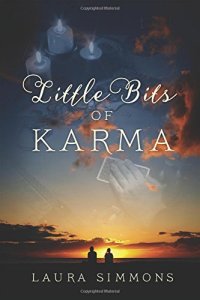
“Little Bits of Karma” : A Saturday Self-Published Book Review

Book reviews are a great way for self-publishing authors to gain exposure. After all, how can someone buy your book if he or she doesn’t know it exists? Paired with other elements of your book promotion strategy, requesting reviews is a great way to get people talking about what you’ve written.

When we read good reviews, we definitely like to share them. It gives the author a few (permanent) moments of fame and allows us to let the community know about a great book. Here’s this week’s book review, courtesy of Romance Writer and Lover of Books…Vikki Vaught:

little bits of karma by laura simmons

Little Bits of Karma

by Laura Simmons

Publisher: Outskirts Press

ISBN: 978-1478757160

Synopsis*:

Even though Holly O’Rourke is having problems with her longtime significant other, James, she has never considered cheating…that is, until the day she has a very interesting encounter with Charlie, a handsome coworker. Desperate to understand her increasingly conflicting emotions, Holly schedules an appointment for a reading with a psychic medium.

She learns a surprising deeper meaning to her present-day troubles: Her past lives are full of adultery and tragic consequences―and not just with James and Charlie. The threads of her soul have been interwoven for centuries with those of several people in her present life. And the cost of karmic justice has finally come due. Little Bits of Karma follows Holly across time and space, weaving little stories of romance into one sweeping soulful tale of two souls who’ve chased each other through the centuries, but always been torn apart. Until now.

Critique:

I was gifted an e-copy from the author in exchange for an honest review. When I read the book description I was intrigued and decided to accept this book for review. I have never read a book by Laure Simmons, and I didn’t know what to expect. The story if fascinating, and did enjoy Little Bits of Karma.

The immediate difference in this book is the age of characters. Most of them are middle-aged, but that did not detract from my reading pleasure. In fact, it made the book unique. I can honestly say it is the most unusual book I have ever read.

Holly O’Rourke is forty-five years old and has been through two bad marriages, and her current relationship is stagnant. James Macklin and Holly have been together for eleven years. The first nine were mutually fulfilling, but during the last two, they have grown apart. James is keeping secrets, and Holly can’t put her finger on what is wrong.

After running into Charlie Thomas, a co-worker, she starts to question her relationship with James even more that she had been. When she seeks out a psychic who may be able to give her some insight into her past lives and information regarding her future relationships. This starts Holly on a path of discovery. Through her dreams, she learns about her relationships with the men in her life, men who have followed from one life to the next.

Will her past give her the answers she is seeking, or only leave her with more questions. Is she supposed to be with James, or does her karma lead her to Charlie?

While I did find Little Bits of Karma intriguing, I did have a difficult time with some aspects of the story. First and foremost is the constant head hopping. While interest to have so many introspections from the main character, it kept me from truly becoming invested if Holly and James. That may have been a good thing because Holly’s relationship with James is very convoluted.

Another problem I had was when Holly regressed back to other lives as far back as Atlantis. I felt as if I was still reading a contemporary story because the language and attitudes were way too modern for the historical times of her regressions.

Nonetheless, I am glad I read Little Bits of Karma, and if you are looking for a story that will titillate your imagination and get you wondering whether reincarnation exists, then you will be fascinated by this unique book. Happy reading!

reviewed by Vicki Coker at Romance Writer and Lover of Books…Vikki Vaught ]

Here’s what other reviewers are saying:

If you are looking for a sweet-cute-cheesy read than this one can do. Little Bits of Karma started out really good, I like the whole thought about incarnation and our past lives. I’m not going to lie, I sometimes wonder if my past life transgressions are being paid in this life.

As I said this is a cute read about love, reincarnation, and bits of karma catching up with the characters from their previous lives. There are paranormal aspects in this story but don’t let that deter you if you are not into paranormal… it’s mostly regarding heroine Holly’s past lives, and how she does regression and explores all (or most) of her past lives.

The things that happens to the characters is in consequence to their behavior in their previous lives. They are all intertwined from a life time ago. Some of the regression were (in my opinion) more entertaining than the current events. There is romance and it was easy to follow, at times it was too much to soon but it makes sense when visiting past lives.

I found the whole scenario of what is happening and how the characters come together, a bit forced and just too coincidental to take it serious. There were plenty of instances that I just couldn’t hold in the eye-roll and chuckle at the cheesiness. Also, I had a hard time picturing the characters as mature 40+ 50-year-old adults with how they acted and thought. It was more like reading the thoughts of teens. Lol.

With all that said it was an ok read. Nothing dramatic. It was a so so in my opinion.

Amazon Reviewer Love Words And Books/ Kathy

This book was really great. Once I picked it up I could not put it down.

It follows Holly a woman who believes in reincarnation. Her fascination and interest leads her to a psychic which leads her into looking into her past lives. It really is an interesting read.

I love books like this. I love learning about history and all of Holly’s lives were really cool to look back on. I have to say at first I thought I wouldn’t really like the book because Ive never thought much about Psychics and reincarnation. I am so glad I read this book though. It was deeply intriguing from page one. It was written very well. Based on the Prologue I thought it would be confusing, but it was a very smooth read. It was full of good, bad, and lots of romance.

Overall this was a great, hard to put down, read!…Stormi

.

– Amazon Reviewer Boundless Book Reviews

Book Trailer:

* = courtesy of the book’s Amazon book page.


saturday self-published book review

Thanks for reading!  Keep up with the latest in the world of indie and self-published books by watching this space every Saturday!

Self Publishing Advisor

selfpubicon1

Conversations: 9/16/2016

THE MANUSCRIPT IS JUST ABOUT FINISHED

It’s Time to Think About adding the Frosting!

cake with frosting

Just last week I went to a writers’ workshop and within the first two minutes of the speaker’s presentation she said, “From the minute you sit down to begin your first book, you need to be thinking about marketing.” OH, my! I printed my first book in 2004, self-published my second book in 2015, and have a good start on book number three. With the help of several very creative friends, I’ve dipped my toes into the marketing river, but it’s not a comfortable place for me. I really don’t know many writers who are (honestly) comfortable wearing marketing shoes.

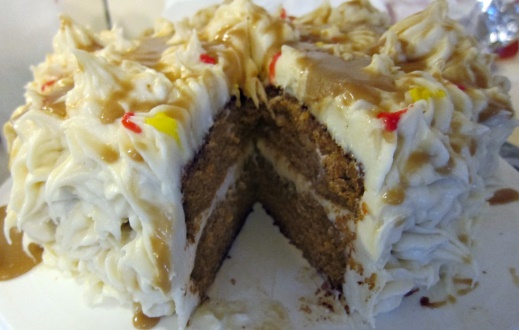
So, today, I’m encouraging every writer I know to think about the book you’re beginning—or about to finish—as if it were a delicious cake just waiting to be tasted and enjoyed. If it were sitting in the bakery with no frosting covering it, how many people would buy it? All the other frosted and decorated cakes would appeal to buyers first. Your cake/book would sit there for a long time—maybe not be selected at all.

If you’re a self-published author you may be familiar with the concept of “optional assistance” publishing companies offer to help launch our books into the world. One such option for most of my clients has been the Professionally Designed Book Cover. This is really the frosting-on-the-cake! I remember working with a client who knew the image she wanted to present on her book cover. We spent hours discussing it. She wanted to have it ready to submit with the manuscript, and did not want to add the expense of using the publisher’s Designer. So, she had me “spend” hours researching potential images—multiple illustrations—and finally selected two possibilities. When her manuscript was sent in, with the cover images, the Designer showed her the two she’d selected. He also showed her a proposed option—his interpretation of what she wanted. WOW! That book cover “popped!” It was immediately clear to both of us that when her book was placed on a shelf, it would be quickly noticed.

We both learned a valuable lesson that day—to consider what the publisher can offer us in the areas where we are weak. Our time is a valuable commodity, as is our brain-power which we need to begin the next book(s). If we need editing assistance (see last week’s blog), marketing inspiration or help with developing a video trailer that will catch the attention of today’s Readers who search the Internet before making the book-purchase selections, then that’s what we must do.

Even if you have a contract with a traditional publisher, you may need to seek out assistance in the marketing arena. These publishing houses may introduce the book and give authors a nudge into the world of book-promotion, but they rarely offer additional help beyond that. Their book will go out of print after only a few years if the sales don’t keep it alive.  (This is not the case with self-publishing companies. For a very modest yearly “storage fee” your book will be available as long as you want it to be.)

So it is that I encourage you to build up that layer of frosting/visibility as thick as you can for the book you’ve worked so hard to deliver. ⚓︎


Royalene

ABOUT ROYALENE DOYLE: Royalene has been writing something since before kindergarten days and continues to love the process. Through her small business—DOYLE WRITING SERVICES—she brings more than 40 years of writing experience to authors who need “just a little assistance” with completing their projects. This is a nice fit as she develops these blogs for Outskirts Press (OP) a leading self-publisher, and occasionally accepts a ghostwriting project from one of their clients. Her recent book release (with OP) titled FIREPROOF PROVERBS, A Writer’s Study of Words, is already receiving excellent reviews including several professional writer’s endorsements given on the book’s back cover.  

Royalene’s writing experience grew through a wide variety of positions from Office Manager and Administrative Assistant to Teacher of Literature and Advanced Writing courses and editor/writer for an International Christian ministry. Her willingness to listen to struggling authors, learn their goals and expectations and discern their writing voice has brought many manuscripts into the published books arena.

In Your Corner: Choosing a Trim Size for Your Book

Decisions, Decisions

(where would we be without decisions?)

When it comes to choosing the form in which your book will be sent forth into the world–hardcover, paperback, small, or large–it’s the rare author who has considered the book’s actual trim size.  Those other elements?  They’re easy to visualize in your head, to picture your book as taking one such form.  Trim size is not so easy, in part because many authors don’t even know what the term means.

trim size definition

Thanks to Dictionary.com, we can safely interpret trim size to mean the page area left after final production is completed–which is not the same thing as the page area throughout the printing process.  While a book is being printed, the pages are slightly larger than their final size.  Once your content has been printed, the pages are cut down to their final size–their trim size.

Depending on which self-publishing company you choose, you ought to have a choice of trim sizes to select from.  Print on Demand (POD) options will often constrain your choices simply because each size uses its own machinery, so the more sizes on offer = the more expensive the machinery is to purchase and maintain for the operator, and ultimately, the end user–you.

There are so many sizes to choose from, it almost boggles the mind.The most common trade paperback sizes, for example, run from 6″ by 9″ to 5.5″ by 8.5″, but you’ll also see 5.25″ by 8″ and 5″ by 8″ in some POD services. It’s not unheard of to choose even larger sizes–6″ by 9″, 7″ by 10″, 8.25″ by 8.25, or even 8″ by 10″–especially if you’re working within the children’s picture book or technical manual markets.

trim size
[ a pleasant-looking trim size ]
Sometimes the decision might be self-explanatory.  If you’re a photographer, for example, it makes sense to go with a larger trim size to allow your images to be shown off to greatest effect.  But why does size–or even deciding between hardcover and paperback– matter at all to everyone else?  The answer boils down to reader perception, and reader perception can be greatly affected by the minutiae.  A nice balance between text and white space, for example, is a subconscious clue that the author took great pains to be professional while designing their book.  A crowded page, while maximizing the text-to-page ratio and lowering the total page count (and therefore cost) of a book, looks clunky and dense, making it difficult to read.  Similarly, a hardcover book is a sign that, on a fundamental level, the author cares about creating a durable, treasured possession–while a paperback enables portability and a voracious consumption of words.

Think about how your book will be used, and by whom, and what the typical expectations are within a genre.  Fiction titles typically run in smaller trim sizes, since readers typically read them for pleasure–whether on the train to work in the morning, or while sitting on the back porch.  Nonfiction titles, including memoirs and the ever-growing Creative Non-Fiction (CNF) field typically run in the middle of the pack–unless they’ve been penned by someone famous, like a film or a football star.  Those are often oversized, just like the personalities they describe.  Technical manuals, cookbooks, photography tabletop books, and children’s picture books are always the largest books on the shelf–and often, they are used while lying flat on a table or the floor.

I guess my recommendation is rather simple: take a ruler with you to the bookstore and library.  Measure the books that fall within the “if you like my book, you might also like X book” category, whether you’re thinking of similarities in genre or thematic content.  Weigh it in your hand.  Are you more likely to pick up the hardcover or the paperback of that book?  And don’t just measure the outside cover.  Look inside–at the trim size, the the margins.  It may not be an easily quantifiable thing, but readers are most likely to buy books that strike them as visually balanced and attractive–and the trim size of a book contributes to this a great deal!

You are not alone. ♣︎

*  And when Thomas himself took the poem seriously and made some rather intense life choices–for example, going off to WWI–Frost was devastated.  He was even more devastated when Thomas died in Arras.  The moral of this story being, it would seem, to make major life decisions upon thorough research and consideration, not the (misread) interpretation of a poem.

Elizabeth

ABOUT ELIZABETH JAVOR: With over 18 years of experience in sales and management, Elizabeth Javor works as the Manager of Author Services for Outskirts Press. The Author Services Department is composed of knowledgeable publishing consultants, pre-production specialists, customer service reps and book marketing specialists; together, they all focus on educating authors on the self-publishing process to help them publish the book of their dreams. Whether you are a professional looking to take your career to the next level with platform-driven non-fiction or a novelist seeking fame, fortune, and/or personal fulfillment, Elizabeth Javor can put you on the right path.