This fantastic article from the Star Tribune puts the spotlight on Laura Vosika, mother of nine, author and musician who still somehow finds time to run an independent publishing company out of her home. Voskia inhabits a world where self-publishing has highly inflated the number of books being published per year. The rise of self-publishing has turned authors into simultaneous entrepreneurs who must be tuned in to the world of marketing and design. With this rise in quantity, however, there has not necessarily been a rise in quality, which is why Voskia adds a weekly writing group to her already jam packed routine.
Find out how this inspiring woman balances all of these aspects of her life and still was able to sell over 60,000 copies of her book as a self-published author by reading the article above.
When Ben Batchelder took to the backroads of Brazil with his black labrador retriever, he claims that his new book essentially ‘wrote him.’ Of course, after the book was written, self-publishing did not come nearly as easily. Batchelder says that self-publishing should be see as a grand opportunity for learning how to market, how to proof, how to design a book, etc. etc.
While Batchelder learned these important new skills focused on publishing, he also learned how to be patient and persistent, and the importance of reaching out to friends, old and new. He says, “[Publicity] events have flushed out old friends, made new ones, built contacts lists, and provided fodder for blogs and various social media platforms.”
In this poingant article, Tom Chalmers addresses some harsh realities of the publishing world in general balanced with the corresponding silver linings of those realities. For example, he points to the fact that prints sales are finally not falling, ebook sales have stabilized and authors have accepted digitization as a core aspect of the publishing world who have learned to work with online conglomerates such as Amazon, rather than against them. He goes on to say that authors have acknowledged and accepted that bookshops will not be on the rise, and that “the all-powerful customer will continue to demand more for less, or preferably for free. We are long past any return to the past.”
While acknowledging those realities, Chalmers makes clear that self-publishing authors have been paving the way in this revolutionizing world of book publishing in general. Self-published authors have shown the importance of being close to the customer, of tireless marketing and promotion online and elsewhere, and of business savvy practices. So if self-published authors are leading the way, does traditional publishing have anything to offer authors anymore? Chalmers makes it clear that traditional publishing companies cannot simply try and rehash the innovations of the self-publishing market, but need to find new ways to prove that they are still contributing unique and relevant things to the field. The question is, will traditional publishing companies make this a priority, and if not, what does the future look like for them?
As a self-publishing author, you may find it helpful to stay up-to-date on the trends and news related to the self-publishing industry. This will help you make informed decisions before, during and after the self-publishing process, which will lead to a greater self-publishing experience. To help you stay current on self-publishing topics, simply visit our blog every Monday to find out the hottest news. If you have other big news to share, please comment below.
ABOUT KELLY SCHUKNECHT: Kelly Schuknecht is the Executive Vice President of Outskirts Press. In addition to her contributions to the Outskirts Press blog at blog.outskirtspress.com, Kelly and a group of talented marketing experts offer book marketing services, support, and products to not only published Outskirts Press authors, but to all authors and professionals who are interested in marketing their books and/or careers. Learn more about Kelly on her blog, kellyschuknecht.com.
Blogrunner’s Note: This is the post which was scheduled to post on Wednesday, November 23rd. For some reason unbeknownst to us, it failed to post successfully—so we’re bringing it to your feeds today! And still in plenty of time for NYE, thankfully. Thank you for your forebearance.
As New Year’s Eve approaches, we authors can often be found meticulously scribing resolutions for becoming more active writers or more active in our book marketing in the coming year. Some of these resolutions are probably rehashed from last year’s list, resolutions that we just couldn’t seem to uphold. They are resolutions that have become Ghosts of New Year’s past, ever returning to haunt us and remind us of our floundering in hopes to try to inspire “real change” this time around.
Hopefully when you look back at 2016–presuming you aren’t actually the Scrooge–you will have done some great and productive things that can be built on in the year(s) to come. That’s one of the great things about New Year’s: it forces us to look ahead. It is a unique day–much like a birthday–that reminds one of the passing of time, and that another year of our lives has “just begun,” so to speak.
So with 2017 about to begin, as an author it is important to evaluate what are important aspects of your writing and publishing that you need to improve upon. If you’re like most authors, when you’re trying to formulate goals, resolutions or whatever label you want to give them, you are probably at least in part motivated by a desire to sell more books.
While marketing is not every author’s forte, it is essential to be as skilled at marketing as you are at writing, that is, if you ever want anyone to read your stuff. If you set aside time each day for writing, why should you not also set aside time for marketing?
This year, I implore self-published authors to set aside 30 minutes a day for marketing efforts. 30 minutes is a small enough amount of time that the tediousness of such a task won’t weigh on you, but over days and weeks, it is enough time to help you make huge strides in building your audience.
In those 30 minutes you can do a myriad of things. Reach out to people on Twitter, Facebook, Google+. Reach out to blogs that have a similar subject matter as your book. Gues what? Getting featured on a blog means that you get to do what you actually love–writing–while also promoting your book. It’s a two for one!
Creating a Goodreads profile, updating your Amazon author page and updating your headshot are all also quick and easy ways to revamp your book marketing.
Another relatively easy task that can fill your 30 minute time slot is to send emails to potential reviewers. Reviews are a monumentally important marketing tool, especially when they’re reviews from respected authors or professionals. Speaking of respected professionals…it’s never a bad idea to send a signed copy of your book to your college alumni magazine as well!
In summation, this New Year, commit to a small, daily marketing effort that will pay off for years to come.
Thank you for reading! If you have any questions, comments, suggestions, or contributions, please use the comment field below or drop us a line at selfpublishingadvice@gmail.com. And remember to check back each Wednesday for your weekly dose of marketing musings from one indie, hybrid, and self-published author to another. ♠
ABOUT KELLY SCHUKNECHT: Kelly Schuknecht is the Executive Vice President of Outskirts Press. In addition to her contributions to the Outskirts Press blog at blog.outskirtspress.com, Kelly and a group of talented marketing experts offer book marketing services, support, and products to not only published Outskirts Press authors, but to all authors and professionals who are interested in marketing their books and/or careers. Learn more about Kelly on her blog, kellyschuknecht.com
Book reviews are a great way for self-publishing authors to gain exposure. After all, how can someone buy your book if he or she doesn’t know it exists? Paired with other elements of your book promotion strategy, requesting reviews is a great way to get people talking about what you’ve written.
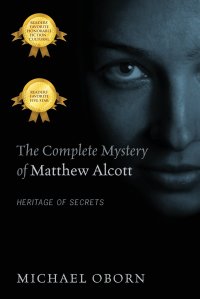
When we read good reviews, we definitely like to share them. It gives the author a few (permanent) moments of fame and allows us to let the community know about a great book. Here’s this week’s book review, courtesy of BlogCritics.org:
Matthew was fired from his job as church historian. His wife divorced him. At the funeral of his father, he realized it was his excommunication that killed him. Does Caitlynn have to die also, because Matthew was a naughty boy? Can he find her before it’s too late? They took everything from Matthew. All he had left was his rage.
Critique:
I was interested in how a book written in the thriller genre could answer “Was Joseph Smith the Hugh Hefner of the early 1800s?” and was soon to find out.
The beginning of the plot finds Matthew Alcott in the desert, naked and beaten. He makes his way to a small New York town, Resurrection Corner, and settles in find solace in a 12-step meeting for alcoholics. Alcott writes a book, gleaned from information gathered while he was a historian for the Mormon Church, which exposes Joseph Smith and revelations that were hidden by the church. The hierarchy of the church finds out about the manuscript and uses unscrupulous ways to prevent its publication.
That is the premise and the mainstay of the plot, but there is another side to the story and that is the struggles of an alcoholic and how the disease influences life. There was a complete sub-culture that readers, especially men in recovery, would relate to and get pulled into the story.
Personally, I found the exposed information on the Mormon Church interesting. Being this is a fiction book, I’m not sure how much of the information is embellished, but I would assume the basis is true. The power of the church and those running it are viewed as being corrupt with political and cultural clout.
The beginning of the book was very difficult to read because it in written in staccato style. The overuse of fragmented sentences presented flow issues and got boring. I also found redundant and irrelevant parts of the book that could be left out. These alone were burdening. As well, there were a significant number of editing issues that a professional editor would catch and polish up. Because of these issues, it was hard for me to convince myself to continue reading, but after reading reviews of the book, I continued with the challenge.
The second half of the book became more urgent than the first half, and the writing style changed to give the plot more flow and begged interest to move forward. I enjoyed reading the second half because the writing was more grounded. In fact, a few chapters did end up being page-turners, but the whole book fell short of the thriller genre.
I believe Michael Oborn has a gift of writing and could have his work developed into thrillers worth mentioning. His dedication to research the topic is noted and his knowledge of alcohol dependency and addiction certainly comes through in his writing. Although fiction, I do encourage readers interested in some aspects of the Mormon Church to check out The Complete Mystery of Matthew Alcott: Heritage of Secrets. I think you will find it fascinating.
This somewhat fact-based, action packed fiction, is suitable for any ‘thriller’ reader – and you do not have to be Mormon or ex-Mormon to understand or enjoy it. Other reviews have already explained the storyline, and I don’t like to write ‘spoilers’, so I will in the main concentrate instead on the actual ‘read’.
One reviewer commented that they did not like the clipped sentence style but I found it dramatic and compelling. One or two other authors are renowned for it but it must be difficult to make it work as the style is rare. Mike Oborn has no such problem and I found it refreshing, quite appropriate for the story, and absolutely delightful to read. For me it added a quality to the work which is somewhat unique and I found it very enjoyable.
The book contains a book within a book, a story within a story, as our hero tries to publish a book which his Church would rather did not see the light of day. Another review describes the work as being similar to ‘Angels and Demons’; something I very much doubted – until I read it. Turns out that it is that good and it would make a very powerful movie. I simply could not put it down – all the time captured by where we were and wondering what happens next – just the way a good thriller should be.
I know the author suffered at the hands of the Mormon Church and left the fold several decades ago and it has taken this long for him to find a way of putting the past behind him – he finally found it in the form of writing. This I can thoroughly empathise with as I am a fellow ex-Mormon. I resigned membership and wrote my own way (non-fiction) through the trauma that follows such action, with the loss of friends and family who reject you as an apostate. Unconditional love is preached, but not practiced with someone who discovers that Mormonism is a provably hoax religion in which the conspiracy to deceive modern day members and investigators is alive and well. Only those who have experienced discovery of the truth and subsequent rejection could ever empathise with what Mike Oborn has been through in real life.
The main storyline is current, but to clarify and update background as we go along, the author constantly takes us momentarily back in time to several points, from the early 1800s and Joseph Smith’s depravity, to Matt’s (our lead character’s) earlier life and to what was happening a few years previously, to him and also to other characters in the book. This again is criticised in another review, but I thought that was harsh as it is not an unusual style of writing and I was very happy with the way this not only helps the reader understand appropriate background right at the point where such understanding is required, but I was also impressed by the way the author cleverly integrated such departure each time in a succinct and meaningful way – always tying in such links clearly and professionally, and quickly – back to the present.
I for one was never confused, never lost – and always on the edge of my seat with anticipation. It was a very satisfying way of bringing essential background into the story. I didn’t have to try to remember anything important for later in the book – it was brought in at exactly the right point in a ‘short and sweet’ manner. The fact that there is indeed quite a lot of such departure was clearly a deliberate style adopted by the author in order to enable the reader to understand everything in context and it worked very well; it enhanced and explained – but never detracted. All the threads were carefully and expertly brought together in a very satisfying manner.
In short, I cannot say enough about this work. Whilst writing it was an outlet for the author’s grief at the loss of so much – the outcome, regardless of what is ultimately true and what is fiction – is a masterpiece of writing and will be enjoyed by anyone who loves a good thriller. The Mormon aspect in this work detracts no more than the Catholic aspect in Angels and Demons – it is a natural integral part of the plot which is as easy to understand for someone who has no idea what the Mormon Church believes as for someone who does. All I can say in conclusion is – just get the book and enjoy the ride – you won’t be disappointed.
A classic novel starts with a crisis. As this book begins, Mathew Alcott has been divorced, fired, robbed, drugged and left naked in the Nevada desert. Powerful forces want him silenced, but have stopped short of killing him. Having already fled his native Utah and cut ties with his family, Mathew resolves to change his identity and disappear altogether.
He sets off on a drunken odyssey across the country. Arriving at random in New York State, Matthew goes to ground in a small town called Resurrection Corner. There he finds rest, companionship and a measure of peace. I enjoyed how Oborn built up slowly the relationship between Matthew and his new lover Cate. She is intrigued but disgusted by him at first, a drunk trying not-too-successfully to sober up. The description of their first night together is original and beautiful. But Matthew has brought with him burdens that he cannot easily put down.
A former newspaper journalist, he is determined to write a book examining critically the foundations of the Mormon Church. Matthew sees something of himself in Joseph Smith, the Church’s charismatic founder. And Matthew is determined to bring to light discoveries he made while working in the Church archives. The novel alternates between vignettes of Smith’s life and Matthew’s.
I cannot vouch for the accuracy of Oborn’s portrayal of Mormonism in general or Smith in particular. Suffice it to say that the Church and its members portray the rich, powerful and morally challenged opposition, a role played in other novels by capitalists or politicians depending on the author’s taste. We are meant to despise the bad guys, so they are made loathsome.
As a Chemical Dependency Professional, Oborn writes with passion and compassion about Matthew’s struggles with alcoholism. Other characters in the story -fellow addicts, counselors and caregivers – share this theme. The novel’s climax and conclusion feature an ensemble of unlikely heroes.
Like the Da Vinci Code, Oborn’s novel is at one level a long-running battle between Mathew Alcott and a secret society allied with the church. At another level it explores men’s use of religion to subjugate and control women. One may read it for entertainment, or to ponder deeper questions not limited to fiction.
As the month of November reaches into December, most of the world will be celebrating a seasonal time of Thanksgiving. Even though many years have passed, I can still smell the aromas coming from our kitchen as my Mother created the holiday meal. November 1st was her scheduled day to call the poultry shop and order the turkey. By the 15th, all the ingredients were stocked (and stacked) in our kitchen. Then two days before “Turkey-Day” she would wash and drain the turkey, set aside the “innards,” and bring out the electric counter-top oven, slow-cooking that bird for close to 48 hours. Are you hungry yet?
As one of those “pinch of this and dash of that” cooks, my Mother had a collection of handwritten recipes from family and friends. However, wanting to experience different tastes she began collecting cookbooks. Today our local and online booksellers offer us exciting options on their cookbook shelves, so that we can appreciate the creativeness of chefs and the designers of unique recipes.
By now, you’re asking WHY is this blogger talking about FOOD, and Thanksgiving turkey on this Writer’s Advice site? Answer: Every time I see a table “set” for family celebration, I barely notice the beautiful place settings, the napkins, the water and wine glasses, the candles and flowers or any of the other special touches. I see the characters of my current novel seated at the table. Like my Mother, who added “a pinch of salt and a dash of garlic” to almost everything, my writer’s imagination wants to do the same with (and for) my characters. Maybe the following points will feed your imagination, too, and help you add more meat (detail) to all of your characters—even the supporting “actors”—as you view them around the table. (Draw a rectangle on a blank piece of paper)
Place your Protagonist and Antagonist at opposite ends of the table by writing their names at each end of the rectangle.
Place the name of one main supporting character of each of those two characters next to them at the edge of the rectangle.
Then begin adding the other characters from your story along both sides of the rectangle/table.
At this point, I hope you’re having a little difficulty in deciding which of the supporting characters “fit” as true associates of the main characters. Not every antagonist or protagonist ally will be on their side—which is where writers begin to have a clearer understanding of the complexities of the specific characters. I like this exercise of Character Development because it allows me a different perspective of each person as they look into the eyes of the person seated across the table. It also helps me feel the intrusion, comfort or discomfort levels felt when one characters is seated between two others. I do hope you’ll try this technique as I believe it will give you a great amount of material to help you create believable people who will share the story you’re writing.
AND, if you’re still hungry, try one of the meals from the delightful collection of America’s
Favorite Recipes by Uma Aggarwal. Her focus upon our U.S.A as being a “melting pot” nation that incorporates cuisine from all the different cultures among us, will tickle your taste-buds. Better yet! Start collecting recipes from all the folks at your Thanksgiving table and publish a book of your own! ⚓︎
ABOUT ROYALENE DOYLE:Royalene has been writing something since before kindergarten days and continues to love the process. Through her small business—DOYLE WRITING SERVICES—she brings more than 40 years of writing experience to authors who need “just a little assistance” with completing their projects. This is a nice fit as she develops these blogs for Outskirts Press (OP) a leading self-publisher, and occasionally accepts a ghostwriting project from one of their clients. Her recent book release (with OP) titled FIREPROOF PROVERBS, A Writer’s Study of Words, is already receiving excellent reviews including several professional writer’s endorsements given on the book’s back cover.
Royalene’s writing experience grew through a wide variety of positions from Office Manager and Administrative Assistant to Teacher of Literature and Advanced Writing courses and editor/writer for an International Christian ministry. Her willingness to listen to struggling authors, learn their goals and expectations and discern their writing voice has brought many manuscripts into the published books arena.
Last week, dear readers, I wrote at length about how Thanksgiving isn’t just a holiday for giving and receiving things–if it were, then it would be no different from Halloween and Christmas, save for the stitching and embroidery–but I have to be the first person to own up to the fact that what I wrote wasn’t the whole picture. Yes, Thanksgiving is about doing things and not just about a fantastic dinner spread. Yes, Thanksgiving was borne as a tradition out of a time of real need and desperation–of near starvation, to be specific.
Everything I wrote last week remains true. But it’s not everything that ought to be said about Thanksgiving. And today, the final Thursday of November and Thanksgiving Day itself, I wanted to leave room for reflection. For gratitude. For joy unmixed with lingering doubts or fears over what’s to come, if that’s possible in today’s hectic world. (Oh, let’s face it: It’s always been a hectic world. Maybe once it was safe to eat those candied apples in our Halloween buckets, but by and large life has always delivered challenges in equal measure to its happinesses.)
Ugh–let me start over.
I want to leave the door cracked for thankfulness untouched by everything else that’s happening or going to happen. For you, dear reader. For sticking with us for so many years, for your likes and your comments and your feedback and, occasionally, for calling us out on what we need calling out on. Thank you for being loyal, for being so smart, for recommending us to your friends (or at least, we’re assuming our newer followers are here because they heard about us from someone). For being writers. For bearing the torch and mustering the determination to slog forward through thick and thin. For being ours, and for being yourselves. I know I speak for everyone else here at Self Publishing Advisor when I say thank you, dear reader, for joining us as we all walk down this road together–a road that leads to new challenges, new joys, and a new year.
You are the spice of life.
~ Thank you. ~
You are not alone. ♣︎
ABOUT ELIZABETH JAVOR: With over 18 years of experience in sales and management, Elizabeth Javor works as the Manager of Author Services for Outskirts Press. The Author Services Department is composed of knowledgeable publishing consultants, pre-production specialists, customer service reps and book marketing specialists; together, they all focus on educating authors on the self-publishing process to help them publish the book of their dreams. Whether you are a professional looking to take your career to the next level with platform-driven non-fiction or a novelist seeking fame, fortune, and/or personal fulfillment, Elizabeth Javor can put you on the right path.





 eel the intrusion, comfort or discomfort levels felt when one characters is seated between two others. I do hope you’ll try this technique as I believe it will give you a great amount of material to help you create believable people who will share the story you’re writing.


 Self Publishing Advisor