Time For a Spring Reset!

Spring often signifies new beginnings in literature and poetry, a rebirth, if you will. All that which lay dormant in winter now slowwwly stretches its limbs, lets out a big yawn and sigh of relief and comes back out to bask in the sun. The trees are budding, the deer are grazing, we now awake to the calming sounds of birds chirping, the sun stays with us well into the evening, it’s finally warm enough for sandals and everyone seems to be in generally better spirits because of those things aforementioned.

spring stretch

The charm and warmth of spring should not only put a pep in your step in your day to day life, but it should also be a time to pep up your writing and marketing efforts!


  1. Let spring be a new beginning for you. Make a list of things you’d like to begin with a fresh start. Do you need to begin editing, creating a marketing plan, blogging, etc? Now’s the time to do it!
  2. Use some springtime writing prompts to get the creative juices flowing and to help you “reset” after winter. Write about how the sunshine affects your mood and creativity, write about spring as a symbol of birth/life, write about the your sensuous experience wandering around in the natural world in springtime, etc. etc.
  3. Host an outdoor reading event in your community. Pick a nice sunny afternoon to encourage members of your community to get outside and share their love of the spoken and written word. This is a great way to network, to connect with other writers in your area and to have some fun in the sun!
  4. Start being more active on social media! Take pictures of the beauty around you, toss in a quote from a work of yours or of your favorite author’s and share with your audience! Blog, post about new developments in your publishing process, connect with readers on Facebook, Instagram and Twitter! Now that the butterflies are back, why not be a little social butterfly?
  5. Spruce up your website. Who knows more about you than…well, you? Write up a fresh author bio that includes recent accomplishments, publications, life developments and so forth.
  6. Join some forums, join Goodreads! These are both terrific venues for marketing your book and they help you connect more intimately with your audience.
  7. Host a drawing contest for the cover of your next book! The winner gets a free copy of your book and gets featured on your website and social media pages!
  8. Add a “Store” page to your website. This is a great way to increase sales and to have your readers buy directly from you rather than some third party website.
  9. Do some spring cleaning of your writing space and bookshelves. See our last few blogs for tips on how to “declutter” as a writer!
  10. Take advantage of this nice weather! Try writing outside, even if it’s just brainstorming. A little vitamin D and time in nature can go a longgg way!


Thank you for reading!  If you have any questions, comments, suggestions, or contributions, please use the comment field below or drop us a line at selfpublishingadvice@gmail.com.  And remember to check back each Wednesday for your weekly dose of marketing musings from one indie, hybrid, and self-published author to another. ♠


Kelly

ABOUT KELLY SCHUKNECHT: Kelly Schuknecht is the Executive Vice President of Outskirts Press. In addition to her contributions to the Outskirts Press blog at blog.outskirtspress.com, Kelly and a group of talented marketing experts offer book marketing services, support, and products to not only published Outskirts Press authors, but to all authors and professionals who are interested in marketing their books and/or careers. Learn more about Kelly on her blog, kellyschuknecht.com

In Your Corner: Nom de Plume (Part III)

Two weeks ago, I began a quick series on the merits of using a nom de plume–otherwise known as a pen name, otherwise known as a pseudonym–under which to self-publish your next book. The series continued last week, with an examination of the drawbacks of using such a cover, and concluded with the question:

So: You’re ready. What next?

And … here we go.

masked unmasked nom de plume pseudonym pen name

If you’ve decided to adopt a pseudonym, there are a few steps you should take to ensure you do it right. (And by right, I mean correctly!)

  1. Choose wisely. Once you’ve selected a pen name, yup, you’re stuck with it. Or rather, you will want to be stuck with it for a whole host of reasons to do with convenience and consistency, so make sure it’s not a name that ages poorly or that you will grow out of in a year or two. Don’t go overboard in making up a name so memorable that it comes off as goofy to others. Use friends and family that you trust as a sounding board for pseudonym ideas–they’ll let you know if they catch a whiff of something goofy immediately, since your reputation is important to them.
  2. Choose something unique. Don’t settle for your first idea; your pen name should be unique, so it’s well worth your time to do a little searching through Google and so forth in order to check that your pseudonym of choice is not already used by another writer (past or present) since you want to avoid confusion. Also: steer clear of imitating famous names. Stephen King will not be happy when he hears you’ve stolen his name, and you’re favorite dead author wants you to know her estate will be calling to sue, even though she’s long gone. Hunt through the U.S. Trademark Office website to make doubly sure you won’t get into any hot water for duplication, conscious or unconscious.
  3. Put a ring on it. Or, you know, your personal domain. Search for available domain names before committing to a pseudonym, and then buy it. Also make sure to file a Fictitious Business Name Statement if you’re likely to receive payments made out to your nom de plume instead of your real name. This is a real thing, and you should do it.
  4. Put your mouth where your money is. I know, I know, this is a total reversal of the usual statement. But once you put money down on a domain name, you want to make good on that expenditure. Put your pseudonym on your book’s cover and on your copyright notice. It is worth putting the notice in both your real and pen names.
  5. Keep your publisher in the loop. I know this sounds obvious, but it’s crucial that you be in touch with your self-publishing company at every step of this process. They’re the ones who will catch a lot of the flack if something goes wrong, but they also can do a lot to make sure your pseudonym is a success. Talk with them! And if total anonymity is your desire, then you’ll want to make that clear to them, possibly even going so far as to set up a corporation, LLC, or other entity in order to sign your contract under a name other than your real one. But that’s expensive, and complicated. If you are content with being anonymous only to the general public and fully frank with your publisher, there’s little need for that step.
  6. Register that copyright. Look, this might sound like an extra detail, but it’s 100% worth the fiddly work. You really ought to register the copyright of your work under your real name, your pseudonym, or both. There are different ways of going about this, but my personal recommendation is to lean towards “both.” That way, all of your bases are covered and you’ll never be caught out in a tricky legal situation where you can’t prove that your works are, well, products you made yourself.

No matter what, the decision about choosing a pen name rests with you, the self-publishing author, and while there are several potential missteps you might make, good intentions go a long way in the world of words. The one crucial thing you’ll need to do in choosing a pseudonym is to choose it sooner rather than later, especially if secrecy is something you want to weave into your relationship with your publisher. But the sooner you settle on a name, the sooner you can get your cover designs settled, and your copyright paperwork filed, and so on and so forth. “The early bird publishes in a timely fashion” would seem to be the moral of our story this week!

Do you have any questions about pseudonyms that we can answer here on SPA? I’d love to tackle them, or to hear you weigh in on your past experiences with pseudonyms, good or bad. We’re here for you, as a listening ear and a resource.

You are not alone. ♣︎


Elizabeth

ABOUT ELIZABETH JAVOR: With over 18 years of experience in sales and management, Elizabeth Javor works as the Manager of Author Services for Outskirts Press. The Author Services Department is composed of knowledgeable publishing consultants, pre-production specialists, customer service reps and book marketing specialists; together, they all focus on educating authors on the self-publishing process to help them publish the book of their dreams. Whether you are a professional looking to take your career to the next level with platform-driven non-fiction or a novelist seeking fame, fortune, and/or personal fulfillment, Elizabeth Javor can put you on the right path.

In Your Corner: Nom de Plume (Part II)

Last week, I launched a short new series on the pen name, AKA the nom de plume. I examined some of the reasons, historically, why some authors have been drawn to the partial anonymity it provides—as well as some of the “pros” to doing so today. (Hint: some of the old reasons don’t apply any more, so it’s worth knowing that time has not been kind to nom de plume-rs.)

But what are some of the “cons”? What are some of the reasons not to use a pen name for you, the self-publishing author?

pseudonym pen name nom de plume

PEN NAME CONS:

Some reasons which lead authors to publish under a pseudonym can lead to problems, whether legal, ethical, or moral—or might simply be bad for business. If your motivation for using one involves any of the following reasons, you might want to reconsider:

  • Skipping libel lawsuits. Lambasting your rivals under a pen name will not keep you from facing a libel or slander lawsuit in the slightest. The libelees may not be able to personally identify you, but your publisher can be subpoenaed and forced to turn over your name, and you should never underestimate the regular old information highways of the Grapevine and social media to reveal you to fans and foes alike.
  • Riding on someone else’s coattails. Adopting the name of some other, more famous writer can land you in serious trouble for identity theft, or for copyright infringement. So don’t give yourself a nom de plume like “Edgar Poe” or “Stephen King” unless you’re prepared by the original (or the original’s estate, in the case of deceased persons). Besides, that’s just confusing. Some authors whose real and actual names are shared with other, more famous authors will even choose a pseudonym simply to differentiate their works from their more famous namesake’s.
  • Tax evasion. Nope. Don’t do this. It’s dangerous! Tax fraud is something which the IRS takes very seriously, and authors are not exempt from the law. As with other legal issues, your publisher or publishing company can be subpoenaed for your information if the government has fair reason to suspect you (or your pseudonym) of doing something shady.

There are, of course, other “cons” which have nothing to do with misdemeanors. They include:

  • Making the processing of your advances and royalties more complicated, thus complicating your relationship to both your agent (or company) and bank, as well as complicating the sale of your reprints and subsidiary rights, the administration of your personal estate, and the transfer of title to heirs upon your decease.
  • Making marketing an acrobatic act. If you’re trying to maintain anonymity, it is hard to take advantage of your personal and social networks for promotional purposes without immediately giving up your actual identity. Your real name carries a weight with family, friends, coworkers, and even more tenuous connections that a pseudonym won’t. How will you maintain anonymity at readings or signings, if anyone you know might see your face in pictures or other coverage? (And remember: Facebook can ruin things for you too, with its face-matching algorithms which “suggest” name matches to faces in uploaded pictures.)
  • Shortening your copyright protection. This will only apply if you fail to register your pseudonym with the Copyright Office, but it’s a very real concern since so many people do.
  • Not seeing your name in print. I mean, come on! It’s half of the fun.

All of this is not to say that not choosing to publish under a pen name is the only good way to go … but it is to say that you ought to be cautious, and make sure you’re willing to take on all of the challenges associated with doing so.

So: You’re ready. What next?

Don’t worry, that’s what next week is for! We’ll go over how to choose a nom de plume, and best practices for doing so. It’s going to be fun!

You are not alone. ♣︎


Elizabeth

ABOUT ELIZABETH JAVOR: With over 18 years of experience in sales and management, Elizabeth Javor works as the Manager of Author Services for Outskirts Press. The Author Services Department is composed of knowledgeable publishing consultants, pre-production specialists, customer service reps and book marketing specialists; together, they all focus on educating authors on the self-publishing process to help them publish the book of their dreams. Whether you are a professional looking to take your career to the next level with platform-driven non-fiction or a novelist seeking fame, fortune, and/or personal fulfillment, Elizabeth Javor can put you on the right path.


Spending Money to Save Money!

Ever find yourself lured into buying something simply because it’s cheaper, only to find that it doesn’t work and then you have to spend more than twice as much money trying to replace it with what you actually need? We’ve all been there. We’ve chosen the cheap mechanic or car salesmen only to have our car break down just a few miles up the road.

As self-publishing authors, the temptation to choose the cheapest route is a dangerous one. A cheaper illustrator for your cover may save you a few bucks in production, but it could cost you exponentially more in sales. Spending money to make money always hurts initially. It’s a risk-based investment that you can’t guarantee will pay off. However, you can almost always guarantee that going a cheap route to save money will  never pay off.

Here are some things that cost money and are worth every penny:

  • Proofreading!!!!!
  • Developmental Editing and Copyediting
  • Interior Designer
  • Cover Designer/Illustrator
  • An up-to-date, visually appealing website
  • A book trailer or other social media marketing tools
  • Education — attend conferences, classes, writing retreats, etc. These things make you a better writer and will improve your sales, your networking and reputation as a writer.

Look at these investments as what they are: things that will pay off in the future. You invested so much time into creating a manuscript that you felt proud of, so don’t sell it short. Invest the money in it that you would like to get back and you will be amazed at the returns. If you just want a book to give to friends and families, feel free to skimp, but if you’re trying to market yourself, spend your money on quality investments.

money dollar bill


Thank you for reading!  If you have any questions, comments, suggestions, or contributions, please use the comment field below or drop us a line at selfpublishingadvice@gmail.com.  And remember to check back each Wednesday for your weekly dose of marketing musings from one indie, hybrid, and self-published author to another. ♠


Kelly

ABOUT KELLY SCHUKNECHT: Kelly Schuknecht is the Executive Vice President of Outskirts Press. In addition to her contributions to the Outskirts Press blog at blog.outskirtspress.com, Kelly and a group of talented marketing experts offer book marketing services, support, and products to not only published Outskirts Press authors, but to all authors and professionals who are interested in marketing their books and/or careers. Learn more about Kelly on her blog, kellyschuknecht.com

From the Archives: “Book Marketing: Magazine Reviews”

Welcome back to our Tuesday segment, where we’ll be revisiting some of our most popular posts from the last few years.  What’s stayed the same?  And what’s changed?  We’ll be updating you on the facts, and taking a new (and hopefully refreshing) angle on a few timeless classics of Self Publishing Advisor.

∗∗∗∗∗

[ Originally posted: April 2nd, 2010 ]

The following list comes compliments of ForeWord magazine in the interest of helping you secure reviews with not only their magazine, but all magazines you pursue.

1. Become familiar with the magazine
2. Read the submission guidelines for each magazine before submitting your book for review
3. Create a good cover letter
4. Include a sales sheet (ask your self-publisher or publishing rep).
5. Follow-up

The best way to familiarize yourself with a magazine you want to review your book is to read the magazine first.

You can usually find submission guidelines for magazines on the magazine’s website.

When sending your book out for review, always include your contact information so the reviewer can get in touch with you if necessary. This should be a part of your cover letter. You can also politely request that a reviewer notify you when/if they review your book (but realize that many may choose not to do this).


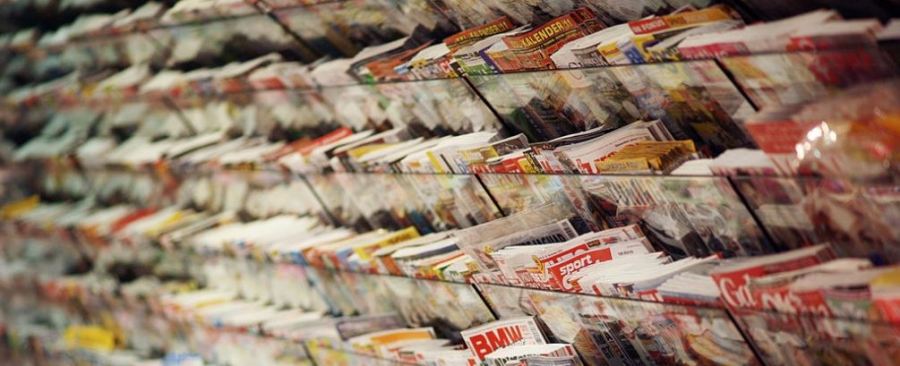
Is the day of the magazine editorial dead?

What about magazine reviews?

magazine magazines rack

No. No they’re not.

At least, so say the print magazines themselves–and yes, they have  a vested interest in trying to impress their shareholders as much as possible, but when everyone from CNN Money to the New York Post to Wired Magazine lines up to say it’s not so, ti’s time to listen to what they have to say. (It’s worth noting that these periodicals are often at odds over ethics disputes and general worldview, so for them to agree is something magical. And also, it’s far more in their interest to say they’re doing well despite industry trends than to state that everyone’s doing well. They want people to defect to be their subscribers, after all. That’s just marketing.)

And we’re here about marketing, too.

So how does knowing print’s not dead help you market your book?

First of all, it opens up untold numbers of possibilities that the average author might not think of for ad placement and reviews. Facebook, sure. A local radio station, sure. But a print magazine or journal? “I thought those were dead,” you might as well have said. But they’re not. They’re not dead. In fact, they’re thriving–so long as they reach a dedicated niche audience.

Secondly, print magazines and journals have a vested interest, too, in upholding the work of talented authors in a way that a local newspaper may not. Newspapers are looking for news, while magazines and journals are looking for talent. If you have it, and you reach out to the right ones, you might very well find yourself being scouted for additional pieces, or find yourself pushing against an open door as far as promoting your book goes.

So don’t give up on magazines. Well, maybe give up on some. Do your research, and dig around a little bit to see what your ideal reader is picking up at Barnes & Noble or their local indie bookstore or subscribing to digitally. Instead of firing scattershot into a great void and hoping to land some hits, you should spend your time and energy firing precise, surgical volleys at market niches which will both welcome you and connect you with more of those ideal readers.

Long live paper!

Thanks for reading.  If you have any other ideas, I’d love to hear them.  Drop me a line in the comments section below and I’ll respond as quickly as I can.  ♠


Kelly

ABOUT KELLY SCHUKNECHT: Kelly Schuknecht is the Executive Vice President of Outskirts Press. In addition to her contributions to the Outskirts Press blog at blog.outskirtspress.com, Kelly and a group of talented marketing experts offer book marketing services, support, and products to not only published Outskirts Press authors, but to all authors and professionals who are interested in marketing their books and/or careers. Learn more about Kelly on her blog, kellyschuknecht.com.