Self-Publishing News: 2.8.2016

This week in the world of self-publishing:

In recent days, it seems as though we’ve crossed a rubicon in regards to where the topic of self-publishing arises as a mainstay news item.  It might once have been unusual to see multiple references in a single issue of Publisher’s Weekly, but these days it seems as though they’re beginning to––can it be?––specialize in matters of an indie nature.  This week, in a February 5th article by PW contributor Drucilla Shultz, we are privileged with the chance to see both what an industry titan defines as “success” in self-publishing, and how that titan advocates for achieving said definition.  Shultz consults with Jessica Lourey, an author who began her career in the traditional publishing industry and transitioned to indie publication because she couldn’t let her latest project, The Catalain Book of Secrets, “wither on the vine” due to its genre-defying niche appeal.  Together, Lourey and Shultz recommend three steps to the aspiring self-publishing author:

  1. Submit First
  2. Be Professional, and
  3. Don’t Expect Immediate Success

Of course, these points mean a great deal more when considered in the context of Lourey and Shultz’s explanations, which you can access by reading the original article here.

“Every author I’ve ever met gets almost starry-eyed at the completion of their written work,” writes David Smith in his February 5th article for the Southern Utah Independent. “The problem with most authors is that while they may have indeed written the next “Twilight” series, they need to make people who might be interested in reading their book aware that it is out there.”  How to solve this dilemma?  Writes Smith, the key is to go digital:

There are websites that have blogs, podcasts, topical material, and point-of-sale opportunities to help authors promote, market, and sell their books. There are social media sites, (Facebook, Twitter, LinkedIn, etc.), that you can use to connect with individuals and groups that may have an interest in your book. Email blasts to friends and family with the ability for each to forward notes to their circle of friends is another way to gain a following or make your information go viral.

And, of course, there are marketing programs that range in cost but provide more specific means to reach potential readers.

We couldn’t agree more, which is why it might be worthwhile to check out Smith’s complete article at the link.

Jurgen Appelo knows a little about being remarkable.  In this February 4th piece for Entrepreneur, the self-made businessman and CEO of Happy Melly writes that “Entrepreneurs always have it backwards. They want to be more successful at what they do, so they watch and copy what others do who are very successful.”  But this modus operandi doesn’t often work, he goes on to say: “Copying the tips and tricks of the experts rarely results in replication of their successes.”  Why?  And what can an aspiring author looking for inspiration––a true entrepreneur if ever we saw one––do without falling into that exact trap?  Says Appelo, failure is as much a taught principle as it is an avoidable reality. “I believe 80 percent of your success is determined by your unique approach to solving a problem,” he says. “Before anything else, understand what problem you’re solving and what makes your solution remarkable. After you’ve figured that out, it’s OK to read books and articles that may help you to polish and tweak your production and marketing. But if what you offer has little value and is not remarkable for anyone, no amount of other people’s scripts, routines and checklists will make it so.”  For Appelo’s full thoughts on the subject, access the latest edition of Entrepreneur here.

The internet, writes Anna Tims in this February 4th piece for British heavyweight paper The Guardian, is making room for more authors to innovate and in so doing, to make a living from what they do.  She writes that such global digital access “enables anyone to be an author with access to an audience and increasing numbers of people are discovering that they can earn an income from their own ebooks.”  This is good news for self-publishing authors, she goes on to say, because there’s a direct connection between the rise of ebooks and the rise of self-publishing.  She takes as her guiding star the story of Tracy Bloom, a self-publishing author whose first ebook, No-One Ever Has Sex on a Tuesday, reached the top rank in Amazon’s romance category.  “I realised that my best chance lay in ebooks and spent three months analysing the mechanics of how to make a book successful on Amazon,” Tims quotes Bloom as saying.  Hers was a long road, riddled with necessary research and with the intricacies to be ironed out before she considered her book “published,” but her journey may prove both interesting and insightful for the aspiring self-publishing author.  For more of Bloom’s story and Tims’ reflections thereon, take a peek at the original piece over at The Guardian.


spa-news

As a self-publishing author, you may find it helpful to stay up-to-date on the trends and news related to the self-publishing industry.This will help you make informed decisions before, during and after the self-publishing process, which will lead to a greater self-publishing experience. To help you stay current on self-publishing topics, simply visit our blog every Monday to find out the hottest news. If you have other big news to share, please comment below.

KellyABOUT KELLY SCHUKNECHT: Kelly Schuknecht is the Executive Vice President of Outskirts Press. In addition to her contributions to the Outskirts Press blog at blog.outskirtspress.com, Kelly and a group of talented marketing experts offer book marketing services, support, and products to not only published Outskirts Press authors, but to all authors and professionals who are interested in marketing their books and/or careers. Learn more about Kelly on her blog, kellyschuknecht.com.
Saturday Book Review: “Dreams to Dance in Moonlight: Ways of Seeing, Feeling & Imagining”

Book reviews are a great way for self-publishing authors to gain exposure. After all, how can someone buy your book if he or she doesn’t know it exists? Paired with other elements of your book promotion strategy, requesting reviews is a great way to get people talking about what you’ve written.

When we read good reviews, we definitely like to share them. It gives the author a few (permanent) moments of fame and allows us to let the community know about a great book. Here’s this week’s book review, courtesy of Foreword Reviews:

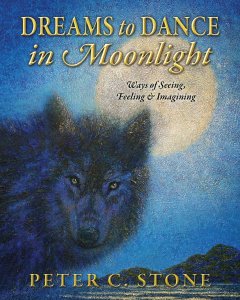
"Dreams to Dance in Moonlight" by Peter Stone

Dreams to Dance in Moonlight: Ways of Seeing, Feeling & Imagining

by Peter C. Stone

Publisher: Outskirts Press

ISBN: 978-1478727514

Synopsis:

A dazzling how-to adventure for young artists and writers!

“Playful, artful, and at times, profound…”

-Linda Booth Sweeney, EdD, author of Connected Wisdom, Living Stories About Living Systems.

Celebrating the natural world and its symbols, Dreams to Dance in Moonlight is a playful way to nurture the creative spirit in all of us. It asks, “How does your imagination bloom?” and the story will fire up a dialogue between children, parents, and teachers. With visual-thinking strategies for drawing and writing, this book offers lyrical prose and painterly riddles to engage young readers, while its magical creatures and environments call for inventive attention and stewardship.

Beautifully illustrated with the author’s “dreamy…evocative” (School Library Journal) paintings, every page contains a story. Wolves, tigers, cows, and condors stare back from gorgeous landscapes, challenging readers: When is what you see much more than what you think you see? When you awake!

“This simple yet profound book of poetry, imagery, and challenge will serve as a portal through which a child may become reacquainted with his or her imagination that may one day develop into a mature and confident enthusiasm.”

-Peter S. Dean, Professor of Nature-Culture-Sustainability Studies, Rhode Island School of Design.

Critique:

In a world filled with distraction and noise, Stone’s book is a welcome call to come home to ourselves and to our place in nature.

There is magic in the music of the birds, wild dreams to be dreamed, and much, much more to be seen around us than we think. Peter C. Stone’s Dreams to Dance in Moonlight, with its evocative prose and engaging original art, calls children and their parents and teachers to encounter the world with body, mind, and spirit and let their imaginations soar.

While written for children, Stone’s book will appeal to adults as well, especially those who feel they’ve lost their innate sense of wonder and awe at the beauty and majesty of the world. Through the use of repetitive questions, Stone provokes an exploration of the thoughts and feelings that arise when encountering nature in all its mystery and glory. To deepen the adventure of exploring the inner world, Stone has placed hidden symbols in his paintings and has included a section, “Notes on the Paintings,” at the end of the book that not only explains them, but opens the way for personal interpretations of their meanings.

The book is graced by attractive, mysterious front cover art, and the back cover matter is ample, well laid out, and informative. The interior design, featuring a short page of text side by side with a full-page painting, makes reading to a child easy. Italics are overused, however, and leaving more strategically placed white space in the layout of the text would invite pauses for reflection.

Stone’s paintings are colorful, simple, and tactile—though smooth on the page, their strong brush strokes and splatters almost beg to be touched. Although some of the concepts presented seem advanced for a child (how many children would know about shape-shifting, for example?) they do open the door to questions that may lead to rich, creative discussions about spiritual matters, the interconnectedness of humans with the other creatures that share this planet, the importance of our feelings, and why each of us is worthy of honor and respect.

In a world filled with distraction and noise, Stone’s book is a welcome call to come home to ourselves and to our place in nature. For those who fear setting aside their electronic devices long enough to find their own path through the forest—or to read to a child—Stone offers comfort: “And if you suppose you are lost, don’t fear. / Stand still, take a breath. You are in a place called … Here!”

reviewed by Kristine Morris  ]

Here’s what some other reviewers are saying:

This most recent jewel in the crown of Peter C. Stone’s offerings provides parents and children with the tools to reconnect to the innate creativity within us all, the creativity long buried by current educational systems. Using his own sumptuous paintings of the natural world to illustrate what has been right in front of our eyes for eons, and what is rapidly being eradicated, Peter Stone guides us back to what we’ve always known, deep in our hearts, and reawakens the possibility of creating a wholistic, sustainable and life-affirming future using exercises and examples of seeing our extraordinary planet as it is meant to be seen: clearly and lovingly. A fantastic contribution!

– Amazon Reviewer Eubaleana

I loved the book Dreams to Dance in the Moonlight by Peter C. Stone. It is marvelous, with all the well written pages and images. I enjoyed that the pictures had twist an turns. They are not easy to see the first time but when you see them you can’t go back to the first image. This book teaches you to explore beyond what you see the first time. You might not realize this the first time you read the book.”When is what you see more than what you think you see?” I didn’t realize the meaning of the book cover and the title until the last page. I realized this because it showed the people dancing in the Moonlight happily and joyfully. This book is intended for a deep thinker or an artist. I think this author’s style is poetic, because each page is like a poem, but it is not a poem it is a short story. This book is fiction but it connects to what I am learning in school, because the book talks about the right path to take, and we are also thinking about that.

– Amazon Reviewer Shana Silva

Book Trailer:


saturday self-published book review

Thanks for reading!  Keep up with the latest in the world of indie and self-published books by watching this space every Saturday!

Self Publishing Advisor

selfpubicon1

Conversations: 2/5/2016

IMPASSIONED VISION

Whether you are a fledgling writer (just drying your feathers so you can fly) or an experienced eagle-author (whose books soar into the headlines with ease), I believe there is a key that will unlock even more writing abilities for you beyond developing additional skills and techniques.  This key is labeled: PASSION. It unlocks the door to discovering the passions that drive us to write what we write. When that happens—throughout the writers lifetime—we experience vision elements that pave the way to developing the next book, and the next.

What does this quality of Impassioned Vision look like?

  • Clarity concerning the mission and/or purpose to what we write.
  • Focused research that will provide more details on the subject matter.
  • Connection to other writers, researchers, inspired scientists and thinkers.
  • New perspectives that will challenge current thinking and cause us the build and rebuild our own viewpoints (and the various views of our characters).

Although I’ve yet to read every book by Author Anne Lamott, she continues to be one of my favorite writers. Even though some might call her more of a political activist, I enjoy her honesty and impassioned style which has, time-after-time, touched the lives of readers and challenged them to look deeper within.

Ms. Lamott has published a book titled: Bird by Bird: Some Instructions on Writing and Life.  Many of her statements inspire me and, yes, some confuse me a bit.  However, what Lamott talks about in this book indicates to me that she’s utilizing this impassioned vision key. Her words in the following quote—speaking directly to all writers—are so beautifully written that I must share it:

"Bird by Bird" by Ann Lamott

And so it is, my friends, that I encourage every writer out there to “build your sand castles!” Dig deep to discover your very personal impassioned visions! Weave your passions, your perspectives, your “Aha” moments with research and imagination into every manuscript page.  Let your stories be told with sharpened telescopic vision through the characters—the “people”—whose passions must be heard.

Then PUBLISH! If you have a publisher-in-waiting, review the contract and sign. If not, don’t be fearful of the self-publishing marketplace. It is growing by-the-minute and offering authors partnerships with creative consultants, marketing specialists and so much more. ⚓︎

RoyaleneABOUT ROYALENE DOYLE: Royalene has been writing something since before kindergarten days and continues to love the process. Through her small business—DOYLE WRITING SERVICES—she brings more than 40 years of writing experience to authors who need “just a little assistance” with completing their projects. This is a nice fit as she develops these blogs for Outskirts Press (OP) a leading self-publisher, and occasionally accepts a ghostwriting project from one of their clients. Her recent book release (with OP) titled FIREPROOF PROVERBS, A Writer’s Study of Words, is already receiving excellent reviews including several professional writer’s endorsements given on the book’s back cover.  

Royalene’s writing experience grew through a wide variety of positions from Office Manager and Administrative Assistant to Teacher of Literature and Advanced Writing courses and editor/writer for an International Christian ministry. Her willingness to listen to struggling authors, learn their goals and expectations and discern their writing voice has brought many manuscripts into the published books arena.

In Your Corner : Super Bowl 50 Edition

Will you be watching the Denver Broncos go toe-to-toe with the Carolina Panthers this Sunday?  Super Bowl 50 promises to be quite the event, and not just for the teams on the field––or their fans far and wide, or the support teams, or the cities which are represented, or even the disappointed followers of teams that didn’t make it.  The Super Bowl, like many other big sporting events in America and abroad, has the power to bring people together.  And whenever people gather together, whether it’s for Super Bowl 50 or some other occasion, you as an author have a unique opportunity to gather something else: stories.

superbowl50_banner

My favorite moment in many of the books I read and movies I watch is when a family gets together and the drama ends up spilling into the kitchen.  There’s something special about having all the generations represented, with their conflicting memories and versions of reality and worldviews.  These moments usually lay the foundation for some kind of resolution later in the story––resolution that smacks of reconciliation, and the importance of family (for better or worse).  The Swiss Family Robinson was among my favorite books as a child, and now as an adult I see the same thing happening in Isabel Allende, Kate Morton, Louise Erdrich, and Jonathan Franzen’s books––and the list goes on and on.  Some of my best storytelling memories––both as speaker and listener––revolve around my grandparent’s dinner table.  These are the moments we can’t afford to miss, as authors.

Am I recommending that you bring an exploitative reportorial mind to family gatherings?  No.  As writers we do have some obligation to report on reality––whether through the intimations of fiction or the facts of nonfiction––but we are not reporters.  (Unless, of course, that is your bread and butter profession.)  We do not inhabit those moments as objective observers, but rather intimate witnesses, and participants.  These stories have the potential to mean something to your readers (as inspiration for fiction, or the backbone of a memoir) precisely because you’re not objective.  They mean something to others only because they first mean something to you.

As an author, you have to strike the balance between participant and recorder.  It’s worth noting that some authors do not ask permission of family members and friends before writing about them (claiming that this allows more freedom of expression and less fear of even well-intentioned censorship), while others firmly advocate for asking permission out of respect.  I happen to be one of the latter, but I do recognize that it can be awkward to pull people aside to ask if it’s okay if I write down some of their stories.  A little awkwardness seems worth it to me, however, to know that I’m doing justice to the wishes as well as the words of the people who inspire me.

A couple of years back, when a relative of mine entered the hospital during her final days of struggling with cancer, my whole family came together––far flung cousins and aunts and nephews and great-grandchildren.  People had traveled from the far reaches of the country and in some cases, from abroad.  And something magical happened: the stories began to unspool themselves all around us.  I’ve never learned so much about my family’s history and legacy as I did in those days––and while it was magical, I wish it had been something other than suffering to have brought us together.  This isn’t exactly a recommendation to shout “Carpe Diem!” and add pressure to organize family reunions to all of the other responsibilities you face, but I do hope all of you find a whole host of precious shared moments that are rich with storytelling––whether this weekend watching the Super Bowl, or elsewhere––to enjoy in the coming years.

Always remember: you are not alone. ♣︎

ElizabethABOUT ELIZABETH JAVOR: With over 18 years of experience in sales and management, Elizabeth Javor works as the Manager of Author Services for Outskirts Press. The Author Services Department is composed of knowledgeable publishing consultants, pre-production specialists, customer service reps and book marketing specialists; together, they all focus on educating authors on the self-publishing process to help them publish the book of their dreams. Whether you are a professional looking to take your career to the next level with platform-driven non-fiction or a novelist seeking fame, fortune, and/or personal fulfillment, Elizabeth Javor can put you on the right path.

Marketing BASICS : Investing in a Little Advice

Your book isn’t just a product, as neat and simple as that might seem to make things when it comes to marketing; it’s much, much more.  It is, in every way and shape and form, an investment.

  • you have already invested valuable time, energy, and other resources in writing it; and
  • you will continue to invest valuable time, energy, and other resources in marketing it.

More importantly, however, you should constantly monitor how you are spending these resources in respect to spreading the word and promoting it to fans and followers and readers alike.  In a impossibly cool and detached financial sense, you need to know when you’re spending more on your book than you should be––and then be prepared to take action.  (Though, let’s face it, who of us is ever cool and detached about our precious offspring of the imagination?  Not I.)  The Return on Investment (ROI) of your book should always reflect a balanced approach and a sustainable increase of returns.


Welcome back to my series on marketing B.A.S.I.C.S.!  This is the fifth in a series of blog posts where I tackle the fundamentals of marketing in hopes of making things a little more manageable for you, the self-publishing author.  Four weeks ago I launched the series with this introductory post, followed by:

This week, as you might have guessed, we’re taking a look at:

  • I. “Investing in a Little Advice.”

So, what happens when your investment isn’t paying off?

First off, I’d like to remind you that no matter what profit you make off of your book in financial terms, it’s an absolutely fantastic thing that you’ve done!  You’ve written a book!  You’ve published it!  You’ve sent it out into the world for others to be changed by!

Secondly, I’d like to clear up a myth about self-publishing: you don’t have to go through it alone.  Let me phrase it a little differently:

There’s nothing wrong with asking for help.

I wish I had known this sooner––I wish I’d felt convicted of the truth of this sooner.  I’ll be the first to admit that one of the greatest appeals to me of self-publishing is that it provides a platform to and a haven for the fierce individualist, exactly the sort of person to incur the wrath of Traditional Publishing for wanting too much artistic control, among other things.  But the truth of the matter is that self-publishing is for everyone, including the insecure first-time author, including the burnt-out and disillusioned veteran author, including the technologically-challenged author, including the risk-averse author, including authors who find themselves at the end of the rope and in desperate need of assistance.

The indie community isn’t just a community of self-assured and confident entrepreneurs; we’re far more diverse than that.  And the indie community is a remarkably non-judgmental, unsnobby collection of people, in possession of vast and varied resources and an overwhelmingly supportive, generous spirit.  I promise you, if you hop on to a forum or listserv or social media group dedicated to indie authors and pose a question, you will be inundated with advice and shared resources.

Of course, sometimes what you really need is targeted advice.  If you have been posting promotional material to a blog or social media platform for a long time with very little engagement, or if you’ve been spending hours upon hours obsessing over marketing only to sell very few books, it’s time you sought professional advice.  But where to begin?  Even just a quick Google search for “Consultant for self-publishing a book” turns up “About 7,330,000 results,” which says a lot about the growth in this sector of the publishing industry––even once Google’s many duplicates, oblique references, outdated listings, and other “wrong” search results are set aside.  Seven million results!

There are a lot of marketing consultation websites out there geared toward you, the self-publishing author, ranging from freelance consultants (including many who’ve transitioned from being publishing consultants within Traditional Publishing) to personal marketing assistants with hybrid/self-publishing companies.  Freelance consultants can be excellent, but it’s difficult to know which ones have the know-how you need.  The benefit of going through a hybrid/self-publishing company is that every consultant has been vetted for expertise, experience, and the quality of their insight.  That’s a pedigree worth exploring.

marketing consultant

No illusions here: when it comes to seeking professional advices on marketing your book, you’ll have to spend some money.  Remember how I spoke about your book as an investment?  So too any money you spend on marketing is the same.  The only difference is, exchanging money to save yourself the time and energy and frustration of sorting out all the details on your own is what we might call a “fair market value.”  It’s worth it, in other words, to see your book’s future set on a solid foundation and to use your time far more effectively in writing the next book.


Thank you for reading!  If you have any questions, comments, suggestions, or contributions, please use the comment field below or drop us a line at selfpublishingadvice@gmail.com.  And remember to check back each Wednesday for your weekly dose of marketing musings from one indie, hybrid, and self-published author to another. ♠

KellyABOUT KELLY SCHUKNECHT: Kelly Schuknecht is the Executive Vice President of Outskirts Press. In addition to her contributions to the Outskirts Press blog at blog.outskirtspress.com, Kelly and a group of talented marketing experts offer book marketing services, support, and products to not only published Outskirts Press authors, but to all authors and professionals who are interested in marketing their books and/or careers. Learn more about Kelly on her blog, kellyschuknecht.com.