From the Archives: “Espresso Book Machine”

Welcome back to our Tuesday segment, where we’ll be revisiting some of our most popular posts from the last few years.  What’s stayed the same?  And what’s changed?  We’ll be updating you on the facts, and taking a new (and hopefully refreshing) angle on a few timeless classics of Self Publishing Advisor.

∗∗∗∗∗

[ Originally posted: January 31st, 2012 ]

The Espresso Book Machine® (the “EBM”), which Time Magazine named an “Invention of the Year,” provides a revolutionary direct-to-consumer distribution model for books. Put simply, the EBM is an automated book-making machine. The operator selects a title to print, and within a few minutes a book emerges, with a full-color cover, trimmed to an exact size, and indistinguishable from the publisher’s version. As we say, “Hot off the press!”

Currently, Espresso Book Machines have been set-up in select universities and libraries including:

  • New York Public Library
  • University of Michigan Library
  • World Bank InfoShop, Washington
  • New Orleans Public Library
  • San Francisco Internet Archive
  • Manchester Center Northshire Bookstore
  • University of Alberta
  • McMaster University Bookstore
  • London Newsstand UK
  • Library of Alexandria, Egypt
  • Melbourne, Australia Angus & Robertson Bookstore

New locations are constantly being added. The EBM is a great opportunity for self-published authors. Some self-publishing companies, such as Outskirts Press, offer this marketing option. By purchasing this option, your book will be available to be ordered, printed, and sold at every current and future Espresso Book Machine location. To learn more about this option, contact your self-publishing company.

– by Cheri Breeding

It’s been rather a long time since we’ve touched on the subject of the Espresso Book Machine here at Self Publishing Advisor, despite the fact that the above post from 2012 remains one of our most popular posts of all time.  What is it about this machine––what’s the big deal?  And more importantly, is it delivering upon its promise as a revolution for the self-publishing print-on-demand (POD) business?

espresso book machine
photo by Chuck Zovko of Columbia College Today

There’s a long and a short answer to both of these questions, of course.  The EBM is not just a pretty gadget that happens to churn out new books as quickly as the average human takes to brew an espresso; it’s a gadget that has the potential to close the last leg of the loop and put full creative (and financial) rights into the hands of those who have historically been excluded from the publishing process.  I’m speaking of the author.  While its many bells and whistles are nice features––like the database of rare or out-of-print books you can resurrect in all their original glory––the real appeal of the EBM is that it literally as well as physically puts a high-quality printed book in your hand in around seven minutes.  For the average self-publishing author, the experience of holding and experiencing the weight of all those sleepless nights and odd hours writing is simply unattainable––that is, without a service like the EBM making a limited run financially manageable.  Holding a clean and professional copy of your baby is a reward in and of itself, and the expediency for which the EBM is renowned makes it easy to share the joy of your book.  That’s the magic of the Espresso Book Machine!

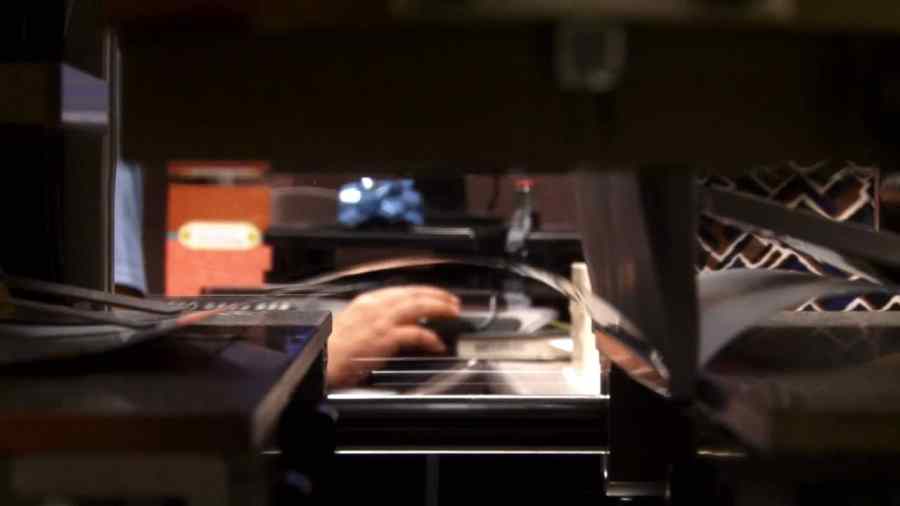
espresso book machine
photo by the University of Arizona

As for the EBM’s outlook and longevity, the news seems to be good.  The machines aren’t available “just anywhere” yet, but they’re becoming less of a trial to find.  I recently had the pleasure of witnessing an EBM at work in the University of Arizona’s library, where undergraduates printed out copies of research-related texts, graduates printed out beautiful bound editions of their thesis projects, and professors printed out volumes of their own masterworks-in-progress.

Members of the public, too, have made the UofA’s EBM a popular destination––and it’s not just an Arizonan phenomenon!  According to Canada’s The Windsor Starthe Windsor Public Library’s EBM alone produced “10,699 books” between 2012 and July 2015, when the article was published.  Says librarian Sue Perry, the EBM’s installation “led to the birth of a writer’s group and gave people a way to publish their work even if they only want one book.” Now that’s quite a testimonial.

According to WorldCrunch, the EBM and its competitors are on track to “save” the print publishing industry.  At the Paris Book Fair, the CEO of the EBM’s main shareholder (reinsurance company SCOR) went on the record to say that the Espresso Book Machine and those who use it “will be the invisible hand that will adjust the market,” eliminating what he called “economies of scale” by making it possible to print either 1 copy of a book or 1000 without the gymnastics of traditional publishing arrangements.  WordCrunch goes on to note that, a decade after stealing the limelight of both tech and print-on-demand industries, the Espresso Book Machine is still “experimental but game-changing.”  And that’s about as good of news as one might hope for!

We look forward to seeing what 2016 holds for the Espresso Book Machine.

If you have any other ideas, I’d love to hear them.  Drop me a line in the comments section below and I’ll respond as quickly as I can.  ♠

KellyABOUT KELLY SCHUKNECHT: Kelly Schuknecht is the Executive Vice President of Outskirts Press. In addition to her contributions to the Outskirts Press blog at blog.outskirtspress.com, Kelly and a group of talented marketing experts offer book marketing services, support, and products to not only published Outskirts Press authors, but to all authors and professionals who are interested in marketing their books and/or careers. Learn more about Kelly on her blog, kellyschuknecht.com.

Self-Publishing News: 2.22.2016

This week in the world of self-publishing:

It looks like Reedsy––a self-publishing marketplace platform that “empower[s] writers, publishers, editors and designers to build hybrid careers and work together quickly and effortlessly through bespoke, user-friendly digital tools”––is filling in some very important gaps for the indie community, as this February 19th article by founder Emmanuel Nataf for The Bookseller intimates.  Writes Nataf, “Until only recently, the self-publishing arena was an unchecked battleground, a veritable free-for-all where authors and freelancers alike placed their profits in the hands of lady luck.”  But a sea change has arrived as the indie publishing industry matures, as he goes on to say––a sea change that has taken some endurance to see through, as self-publishing authors and companies face social stigma and constant critical examination coming from the traditional commercial publishing sector.  Things may be changing, however: recently named FutureBook’s BookTech Company of the Year, Reedsy is looking to find its place in a stabilizing conversation with other industry standouts about the future of self-publishing.  “After all,” writes Nataf, “if there’s one thing we’ve learnt, it’s that successful growth as a startup depends on looking out, as well as in.”  For more information about Reedsy and the FutureBook awards, follow the link!

Big news for the digitally inclined!  As per this February 16th press release, Outskirts Press has officially completed work on a suite of apps for smartphone users that aim to make the self-publishing experience an even richer and more rewarding one; the apps are available to authors with both iPhone and Android devices, says the article, and “provide users with self-publishing guides and information, connect users with the Outskirts Press social media community of self-publishing authors, and provide direct links to contact Outskirts Press instantly by phone or email.”  Outskirts––which describes itself as offering “full-service, custom self-publishing and marketing services for authors seeking a cost-effective, fast, and flexible way to publish and distribute their books worldwide while retaining all their rights and full creative control”––sees the apps as a way for its authors to connect with both their audience and their self-publishing team.  Other indie publishing companies, like Kobo and Amazon Direct, offer supplementary apps, but Outskirts’ newest offerings may prove to be the most streamlined yet.  For more information, visit the original press release here.

If you’re looking for the latest and greatest news when it comes to bodice-rippers and steamy romance, Publisher’s Weekly has got you covered.  In its annual review of what’s going on in and what’s to come in the genre––this year courtesy of Ryan Joe on February 19th––PW first takes a moment to define the difference between the two terms:

Erotic romance, according to a definition from the Romance Writers of America, refers to “novels in which strong, often explicit, sexual interaction is an inherent part of the love story, character growth, and relationship development and could not be removed without damaging the story line.”

And erotica? “Erotica is just people doing it,” says Cordelia Logan, who has written 19 stories under five pen names and is beginning to focus on BDSM.

Good to know.  More importantly, erotic romance and erotica make for a good slice of the self-publishing industry’s total footprint (written and read) … so even if you don’t like it, don’t read it, or don’t like to admit that it exists––it does!  And it’s churning along in any case.  And “Thanks to the rise of self-publishing,” writes Joe, “authors can now experiment more.”  For the full article, and lots more pith for the aspiring indie erotica or erotic romance writer, you can always stop by the original Publisher’s Weekly article.


spa-news

As a self-publishing author, you may find it helpful to stay up-to-date on the trends and news related to the self-publishing industry.This will help you make informed decisions before, during and after the self-publishing process, which will lead to a greater self-publishing experience. To help you stay current on self-publishing topics, simply visit our blog every Monday to find out the hottest news. If you have other big news to share, please comment below.

KellyABOUT KELLY SCHUKNECHT: Kelly Schuknecht is the Executive Vice President of Outskirts Press. In addition to her contributions to the Outskirts Press blog at blog.outskirtspress.com, Kelly and a group of talented marketing experts offer book marketing services, support, and products to not only published Outskirts Press authors, but to all authors and professionals who are interested in marketing their books and/or careers. Learn more about Kelly on her blog, kellyschuknecht.com.

Saturday Book Review: “The Chorus Effect”

Book reviews are a great way for self-publishing authors to gain exposure. After all, how can someone buy your book if he or she doesn’t know it exists? Paired with other elements of your book promotion strategy, requesting reviews is a great way to get people talking about what you’ve written.

When we read good reviews, we definitely like to share them. It gives the author a few (permanent) moments of fame and allows us to let the community know about a great book. Here’s this week’s book review, courtesy of SadieForsythe.com:

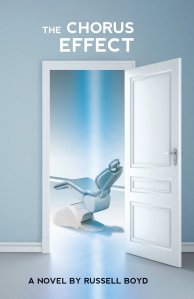
"The Chorus Effect" by Russell Boyd

The Chorus Effect

by Russell Boyd

Publisher: Outskirts Press

ISBN: 978-1478750321

Synopsis:

Until recently, Chintz had been a relatively normal guy with a relatively normal cat. For example, neither he, nor his cat, had ever journeyed to a synthetic parallel universe. He had never encountered a teleporting baby or an emotionally mature computer. He could count on one hand the number of philosophical discussions he’d had with people holding multiple degrees in advanced physics. And thus far, his relationship with the voices in his head had been purely platonic. Suddenly, Chintz finds himself working alongside a dysfunctional team of scientists and their astonishing creations, seeking answers to age-old questions – answers that could change our concept of humanity. Of course, that’s only if they can survive federal law enforcement, starvation, psychopathic figments of imagination, the hostile old man who lives across the street, and the end of the “known universe.” Well, actually it’s the end of “a” universe, that “only some people know about.” But for Chintz, that may not be any better at all.

Critique:

I suppose there will be an audience out there for this book. It’s trying very hard to be Douglas Adams-like and plenty of people (myself included) love Douglas Adams’ quirky humor. IMHO, this doesn’t quite make it though, as a Douglas Adam’s clone or on it’s own.

On a positive note, it’s well written and surprisingly well edited for a self-published book. There are some interesting, odd-ball characters and had the whole thing been a set up for Katie and Chintz’s last moment’s, I’d have called it a success. But it’s about 1/3 too long (if not more) for that to be the case.

If I had to condense this review to a few carefully chosen words, they would be presumptuous and self-indulgent. The author’s constant breaking of the fourth wall especially. As if the book wasn’t quite quirky enough the author/narrator had to stick his two cents in too. It was annoying and broke up the story.

It was this over the top quirkiness that eventually ruined the book for me. You have characters who speak in mixed up, nonsense for no apparent reason at all. You have POVs from the perspective of a cat. You have a narrative style dedicated to pointing out the absurd over the expected, which could have been great if not quite so over played. You have philosophy passed off as science and science of the hard-core hand waving variety. It was all too much for me.

And that is a shame; because Boyd’s descriptive ability is wonderful. I appreciated the distinct lack of alpha hero and the success of the socially anxious, nerd heroes. I liked that there was a strong female character (though I’m borderline on the fact that her sexuality caused such ruptions. I think the book skirted the cliché, but JUST BARELY). But there was just too much else crowding these good things out. In the end, I bored and just hoping to finish.

reviewed by Sadie Forsythe  ]

Here’s what some other reviewers are saying:

Whether you like Science Fiction or not, this novel is for you. Alright, admittedly, some of the science did go over my head. But that doesn’t take away from the enjoyment of the book. If anything, it makes it that much more fun to realize just how much thought and effort went it to creating this fantastical story! You wouldn’t know this is Russell’s first novel; he writes like this is old hat, creating characters you care about, want to know even better, laugh with – and laugh at. Even the cat has a personality that reminds you of every other cat you’ve ever known – and like no other – all at once. From the first inkling something was even slightly awry in Chintz’ life through to the very end – I was engrossed in the story. And that’s saying a lot from me. I’m not really a Sci-Fi reader, preferring more of the legal-thrillers, crime dramas and even supernatural mysteries. But that’s just it; there was so much humor, and such depth to the characters and richness to the environments and story line that I just couldn’t put it down. I found myself empathizing with Chintz in his sudden, surreal situation, as well as most all of the people in their various life stories as well as their involvement in this one. Well, except for Carter. I didn’t care about Carter at all (that’s not a spoiler; you won’t either, trust me). I’m eagerly looking forward to Russell’s next novel. I’m sort of hoping for a sequel, so I can see how everyone’s lives turned out. But I also think any story the author plans to write will definitely be on my short list of books I need to add to my library. I’d recommend The Chorus Effect to anyone that loves Sci-Fi, satire, seriousness, and a bit of mystery. There’s love stories, frightening moments, highs and lows. Really, give it a try. You’ll be glad you did. :oD

– Amazon Reviewer mandacakes

I was gifted this book and can say I didn’t know what to expect. It had been a long time since I’d read a book without being in the know of the content or style of writing and I’m glad this one crossed my path.

The writing kept me tuned in by not allowing me to breeze through for information, as I tend to speed read, but rather caused me to read the story the author intended. It was a nice change of pace to slow down and I feel I enjoyed both the story and ideas more than I would have otherwise.

The concepts and ideas might be out of the comfort zone for some, but shouldn’t intimidate those who feel that way about Sci-Fi. I’d recommend this book to anyone and look forward to future works.

– Amazon Reviewer Jester

Book Trailer:


saturday self-published book review

Thanks for reading!  Keep up with the latest in the world of indie and self-published books by watching this space every Saturday!

Self Publishing Advisor

selfpubicon1

Conversations: 2/19/2016

IMPASSIONED LITTLE PIECES

A year ago this week, one of my very, very best friends (yes, I know, it’s not quality writing to use the word very, let alone use it twice; but the truth of it stands as is) passed from this earth.  She was one of the people I consider to be an extraordinary writer; one who could write with great passion and empathy whether she was developing a children’s novel, poetry, or creating magazine articles.  Her gift of writing extended beyond the written page as she used those intricate, intuitive skills to bring out the best in all the people she knew—whether writer or not.

I will give my friend the name Suzy, so this will read more smoothly.

Suzy never wanted to stop learning.  This desire sent her back to school in later adult years, where she graduated from college the same year as one of her sons.  Of course, her favorite class assignment was writing essays, and she was often acknowledged for the excellent work.

This love and passion for writing was what drew both Suzy and me to the same Creative Writing summer class which eventually spun itself into the cocoon of our own monthly writer’s workshop.  We both fed off the high energy of our eclectic group of writers.  When we organized weekend retreats (once or twice a year), the many hours of critique and work sessions inspired us for weeks and months to come.

writing at desk

Over these many years, being privileged to know numerous writers, I’ve developed a great appreciation in the uniqueness of each individual.  But it was Suzy who taught me how to listen to their writing voices and see their unique perspectives—ideas that they were passionate about. Yet, not matter how many manuscript pages a writer produces, IF THEY DON’T PUBLISH, their voice—their perspective—their passion—won’t reach beyond the few people in their daily lives.  The writer must become the author who releases their work to the world.

Much of Suzy’s work has been published, especially in her magazine editorial years.  But she always returned to her prose writing.  At one point, Suzy became a member of the Society of Children’s Book Writers which helped her hone writing techniques for this specific genre.  One story in particular carried such intensity of emotion, woven with the power of colliding circumstances, that I have not forgotten it—in all these years.  The characters were alive and the workable resolutions were clearly inspiring to all of us who were privileged to read the manuscript.  However, she never published that novel.

So it is that I dedicate my writings today—in honor of my very, very best friend Suzy—and to all those writers out there who are holding tightly to a manuscript that needs to see the light of day.  Don’t hold back!  If you need help to complete it, call a writing friend, join an active workshop, or find a ghostwriter who shares the passion for your topic, and GET IT PUBLISHED! ⚓︎

RoyaleneABOUT ROYALENE DOYLE: Royalene has been writing something since before kindergarten days and continues to love the process. Through her small business—DOYLE WRITING SERVICES—she brings more than 40 years of writing experience to authors who need “just a little assistance” with completing their projects. This is a nice fit as she develops these blogs for Outskirts Press (OP) a leading self-publisher, and occasionally accepts a ghostwriting project from one of their clients. Her recent book release (with OP) titled FIREPROOF PROVERBS, A Writer’s Study of Words, is already receiving excellent reviews including several professional writer’s endorsements given on the book’s back cover.  

Royalene’s writing experience grew through a wide variety of positions from Office Manager and Administrative Assistant to Teacher of Literature and Advanced Writing courses and editor/writer for an International Christian ministry. Her willingness to listen to struggling authors, learn their goals and expectations and discern their writing voice has brought many manuscripts into the published books arena.

In Your Corner : What You Need to Know About Book Fairs

Book fairs are wonderful.  They are also terrifying.  Where else can you find tens of thousands of highly passionate literary fiends massing together to further the art form that is the book?  Where else can you find teeming crowds of people determined to find their next bit of reading material, and eager to simply browse among hundreds of tables of books and authors on display in order to find it?  Simply put: nowhere.  The book fair is an experience unparalleled by anything else in the reading and writing world, and because it most often reflects the best aspects of the writing and reading and publishing processes, it has quickly evolved to make room for you, the self-publishing author.  Many self-publishing platforms and hybrid publishing companies send representatives to book fairs.  Many, like Outskirts Press, will even sponsor booths in order to feature self-published books at home and abroad.

London Book Fair
 

Case in point, the 2014 London Book Fair is world-renowned & well-attended.


So, what do you need to know about book fairs?

First, you need to know your audience. 

What kind of person attends a book fair?  Interestingly, the London Book Fair has already answered that question and thoroughly; according to the LBF website, the 2015 event drew exhibitors from 60 countries and some 25,000 attendees from 124 countries.  In attendance also were around 900 members of the media, also from all over the world.  Since Planet Earth only sports around 196 countries at the moment, this means that the London Book Fair managed to represent at least 60% of the world’s population in some way, shape, or form!  Not every book fair can lay claim to such a draw, of course, but it serves as a good example of the power of books to bring people together.

There is no one-size-fits-all description for who attends a book fair.  The LBF welcomes “anyone who is involved with the creation, distribution, sale or treatment of content.  Authors, talent scouts, editors, designers, digital gurus, all walk the floor, meeting, talking, observing, discovering.”  I’d like to re-emphasize the digital gurus part of that sentence, since the LBF had 400 delegates at the Publishing for Digital Minds Conference.  If you’re a self-publishing author who’s looking to make a break into digital formats–or perhaps digital formats are your only or preferred option–there is still room for you at a book fair!  Whether you go as an attendee, a vendor, or wholly solo, the conversations you begin and the display zone in which your book is featured will reflect your digital-friendly nature.  Often, fair-goers will pause, snap a picture of a QR code, and queue new ebooks for immediate or future download–on the spot!  That’s the power of the digital-friendly book fair.

London Book Fair

Second, you need to know you belong there.

I know that it’s easy to think of book fairs as the stomping ground of the New York Times bestseller list and not for midlist authors–much less self-starting indie authors!  But making the leap to recognizing the value and worthiness of your book to keep those Big Names company at a book fair is an important one to make.  I can’t necessarily teleport to your location and give you a pep talk, but I can use this space to encourage you, I hope.  Your book is wonderful.  It needs to be read.  Critical acclaim and a blurb in notoriously biased magazines or ranking in notoriously rigged bestseller lists  doesn’t make a book better or more inherently deserving.  It just means someone with the right access to people and time and resources put out a book perfectly timed to fit into the publishing machine.

But you’re already a rebel.  You’re already striking out on your own, dispensing with the false and burdensome values of traditional publishing.  You and your book are free to take advantage of scaffolding like book fairs without being shackled to the rest of it, and your book is a bonafide example of an author designing and creating and publishing exactly what he or she envisioned.  That kind of artistic integrity creates its own gravity, its own magnetic attraction to readers.  Fair-goers will pick up on that authenticity right away!

Third, you need to make your book the star of the show.

What’s the trick to making sure fair-goers notice your book?  Creating intimacy in a warehouse-like environment.  If this sounds like an impossible task, let me be the first to assure you that it’s not.  Take a look around you whenever you next step foot in a mall or retail space, public library, or family-friendly health clinic.  How do those professionals section off space and create a warm and welcoming atmosphere?  Take note of what you personally respond to–because your ideal readers will most likely respond to the same.

London Book Fair

Often a busy or crowded space isn’t the most comfortable environment to spend time talking or browsing for new reading material.  Think of Starbucks–and of bookstores like Denver’s the Tattered Cover.  Both of these companies use small nooks to great effect, and it’s not by just packing in a lot of stuff and posters and wallpapering the whole area with product information.  A book fair is not a bookstore; it doesn’t revolve around books.  A book fair revolves around authors and the worlds that they create.  People can order whatever they like off of Amazon and have it in their hands with far less expense of time and energy and money than attending a book fair–but people still flock to them!  And why?  Because they want to participate in the social world of books.  They want to meet the people who make books happen.  They want to meet you.

So, how do you make your book the star of the show?  You winnow down your display and your presence to the absolute essentials, and you focus on building human connections with the people there.  And the London Book Fair is just the beginning–your book could just as easily find new readers in Beijing or Frankfurt!  All you need is the confidence to go, and perhaps the support of those who have gone before.

Always remember: you are not alone. ♣︎

ElizabethABOUT ELIZABETH JAVOR: With over 18 years of experience in sales and management, Elizabeth Javor works as the Manager of Author Services for Outskirts Press. The Author Services Department is composed of knowledgeable publishing consultants, pre-production specialists, customer service reps and book marketing specialists; together, they all focus on educating authors on the self-publishing process to help them publish the book of their dreams. Whether you are a professional looking to take your career to the next level with platform-driven non-fiction or a novelist seeking fame, fortune, and/or personal fulfillment, Elizabeth Javor can put you on the right path.