Conversations: 2/19/2016

IMPASSIONED LITTLE PIECES

A year ago this week, one of my very, very best friends (yes, I know, it’s not quality writing to use the word very, let alone use it twice; but the truth of it stands as is) passed from this earth.  She was one of the people I consider to be an extraordinary writer; one who could write with great passion and empathy whether she was developing a children’s novel, poetry, or creating magazine articles.  Her gift of writing extended beyond the written page as she used those intricate, intuitive skills to bring out the best in all the people she knew—whether writer or not.

I will give my friend the name Suzy, so this will read more smoothly.

Suzy never wanted to stop learning.  This desire sent her back to school in later adult years, where she graduated from college the same year as one of her sons.  Of course, her favorite class assignment was writing essays, and she was often acknowledged for the excellent work.

This love and passion for writing was what drew both Suzy and me to the same Creative Writing summer class which eventually spun itself into the cocoon of our own monthly writer’s workshop.  We both fed off the high energy of our eclectic group of writers.  When we organized weekend retreats (once or twice a year), the many hours of critique and work sessions inspired us for weeks and months to come.
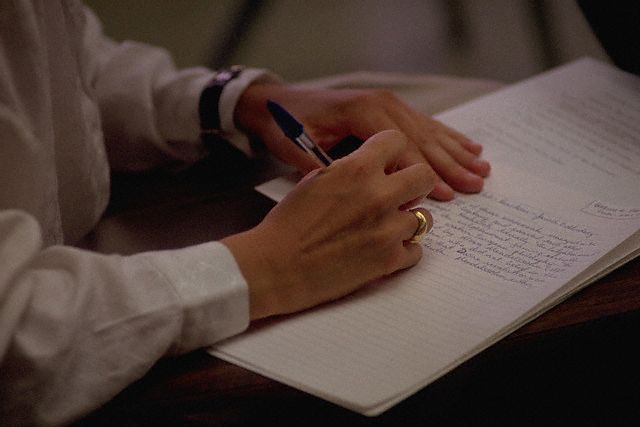
writing at desk

Over these many years, being privileged to know numerous writers, I’ve developed a great appreciation in the uniqueness of each individual.  But it was Suzy who taught me how to listen to their writing voices and see their unique perspectives—ideas that they were passionate about. Yet, not matter how many manuscript pages a writer produces, IF THEY DON’T PUBLISH, their voice—their perspective—their passion—won’t reach beyond the few people in their daily lives.  The writer must become the author who releases their work to the world.

Much of Suzy’s work has been published, especially in her magazine editorial years.  But she always returned to her prose writing.  At one point, Suzy became a member of the Society of Children’s Book Writers which helped her hone writing techniques for this specific genre.  One story in particular carried such intensity of emotion, woven with the power of colliding circumstances, that I have not forgotten it—in all these years.  The characters were alive and the workable resolutions were clearly inspiring to all of us who were privileged to read the manuscript.  However, she never published that novel.

So it is that I dedicate my writings today—in honor of my very, very best friend Suzy—and to all those writers out there who are holding tightly to a manuscript that needs to see the light of day.  Don’t hold back!  If you need help to complete it, call a writing friend, join an active workshop, or find a ghostwriter who shares the passion for your topic, and GET IT PUBLISHED! ⚓︎

RoyaleneABOUT ROYALENE DOYLE: Royalene has been writing something since before kindergarten days and continues to love the process. Through her small business—DOYLE WRITING SERVICES—she brings more than 40 years of writing experience to authors who need “just a little assistance” with completing their projects. This is a nice fit as she develops these blogs for Outskirts Press (OP) a leading self-publisher, and occasionally accepts a ghostwriting project from one of their clients. Her recent book release (with OP) titled FIREPROOF PROVERBS, A Writer’s Study of Words, is already receiving excellent reviews including several professional writer’s endorsements given on the book’s back cover.  

Royalene’s writing experience grew through a wide variety of positions from Office Manager and Administrative Assistant to Teacher of Literature and Advanced Writing courses and editor/writer for an International Christian ministry. Her willingness to listen to struggling authors, learn their goals and expectations and discern their writing voice has brought many manuscripts into the published books arena.

In Your Corner : What You Need to Know About Book Fairs

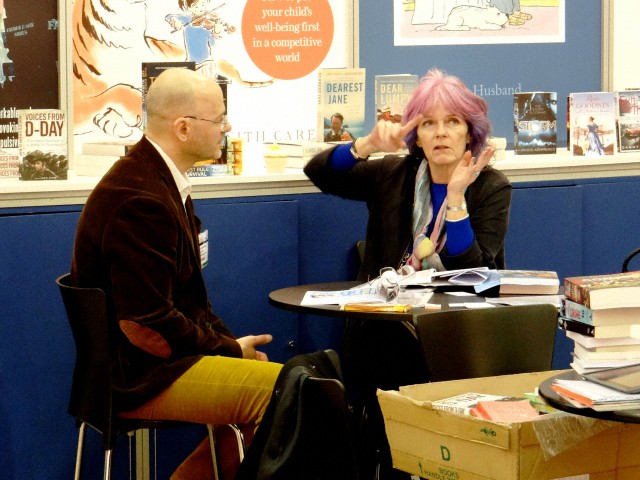
Book fairs are wonderful.  They are also terrifying.  Where else can you find tens of thousands of highly passionate literary fiends massing together to further the art form that is the book?  Where else can you find teeming crowds of people determined to find their next bit of reading material, and eager to simply browse among hundreds of tables of books and authors on display in order to find it?  Simply put: nowhere.  The book fair is an experience unparalleled by anything else in the reading and writing world, and because it most often reflects the best aspects of the writing and reading and publishing processes, it has quickly evolved to make room for you, the self-publishing author.  Many self-publishing platforms and hybrid publishing companies send representatives to book fairs.  Many, like Outskirts Press, will even sponsor booths in order to feature self-published books at home and abroad.

London Book Fair
 

Case in point, the 2014 London Book Fair is world-renowned & well-attended.


So, what do you need to know about book fairs?

First, you need to know your audience. 

What kind of person attends a book fair?  Interestingly, the London Book Fair has already answered that question and thoroughly; according to the LBF website, the 2015 event drew exhibitors from 60 countries and some 25,000 attendees from 124 countries.  In attendance also were around 900 members of the media, also from all over the world.  Since Planet Earth only sports around 196 countries at the moment, this means that the London Book Fair managed to represent at least 60% of the world’s population in some way, shape, or form!  Not every book fair can lay claim to such a draw, of course, but it serves as a good example of the power of books to bring people together.

There is no one-size-fits-all description for who attends a book fair.  The LBF welcomes “anyone who is involved with the creation, distribution, sale or treatment of content.  Authors, talent scouts, editors, designers, digital gurus, all walk the floor, meeting, talking, observing, discovering.”  I’d like to re-emphasize the digital gurus part of that sentence, since the LBF had 400 delegates at the Publishing for Digital Minds Conference.  If you’re a self-publishing author who’s looking to make a break into digital formats–or perhaps digital formats are your only or preferred option–there is still room for you at a book fair!  Whether you go as an attendee, a vendor, or wholly solo, the conversations you begin and the display zone in which your book is featured will reflect your digital-friendly nature.  Often, fair-goers will pause, snap a picture of a QR code, and queue new ebooks for immediate or future download–on the spot!  That’s the power of the digital-friendly book fair.

London Book Fair

Second, you need to know you belong there.

I know that it’s easy to think of book fairs as the stomping ground of the New York Times bestseller list and not for midlist authors–much less self-starting indie authors!  But making the leap to recognizing the value and worthiness of your book to keep those Big Names company at a book fair is an important one to make.  I can’t necessarily teleport to your location and give you a pep talk, but I can use this space to encourage you, I hope.  Your book is wonderful.  It needs to be read.  Critical acclaim and a blurb in notoriously biased magazines or ranking in notoriously rigged bestseller lists  doesn’t make a book better or more inherently deserving.  It just means someone with the right access to people and time and resources put out a book perfectly timed to fit into the publishing machine.

But you’re already a rebel.  You’re already striking out on your own, dispensing with the false and burdensome values of traditional publishing.  You and your book are free to take advantage of scaffolding like book fairs without being shackled to the rest of it, and your book is a bonafide example of an author designing and creating and publishing exactly what he or she envisioned.  That kind of artistic integrity creates its own gravity, its own magnetic attraction to readers.  Fair-goers will pick up on that authenticity right away!

Third, you need to make your book the star of the show.

What’s the trick to making sure fair-goers notice your book?  Creating intimacy in a warehouse-like environment.  If this sounds like an impossible task, let me be the first to assure you that it’s not.  Take a look around you whenever you next step foot in a mall or retail space, public library, or family-friendly health clinic.  How do those professionals section off space and create a warm and welcoming atmosphere?  Take note of what you personally respond to–because your ideal readers will most likely respond to the same.

London Book Fair

Often a busy or crowded space isn’t the most comfortable environment to spend time talking or browsing for new reading material.  Think of Starbucks–and of bookstores like Denver’s the Tattered Cover.  Both of these companies use small nooks to great effect, and it’s not by just packing in a lot of stuff and posters and wallpapering the whole area with product information.  A book fair is not a bookstore; it doesn’t revolve around books.  A book fair revolves around authors and the worlds that they create.  People can order whatever they like off of Amazon and have it in their hands with far less expense of time and energy and money than attending a book fair–but people still flock to them!  And why?  Because they want to participate in the social world of books.  They want to meet the people who make books happen.  They want to meet you.

So, how do you make your book the star of the show?  You winnow down your display and your presence to the absolute essentials, and you focus on building human connections with the people there.  And the London Book Fair is just the beginning–your book could just as easily find new readers in Beijing or Frankfurt!  All you need is the confidence to go, and perhaps the support of those who have gone before.

Always remember: you are not alone. ♣︎

ElizabethABOUT ELIZABETH JAVOR: With over 18 years of experience in sales and management, Elizabeth Javor works as the Manager of Author Services for Outskirts Press. The Author Services Department is composed of knowledgeable publishing consultants, pre-production specialists, customer service reps and book marketing specialists; together, they all focus on educating authors on the self-publishing process to help them publish the book of their dreams. Whether you are a professional looking to take your career to the next level with platform-driven non-fiction or a novelist seeking fame, fortune, and/or personal fulfillment, Elizabeth Javor can put you on the right path.

Marketing BASICS : Silencing Your Own Inner Critic

In this, my last post in this Marketing B.A.S.I.C.S. series, I’m going to keep things simple.  Or rather, I’m going to keep them as simple as is possible when dealing with a highly complicated situation.  Marketing, as you’re most likely very well aware already, is no joke.  It’s not easy.  It’s not even moderately difficult.  It’s hard.  Especially for the fledgling self-publishing author who’s looking to make a break from the traditional mode and its dependence on the commercial machine.


The Recap

Five weeks ago I launched the Marketing B.A.S.I.C.S. series with this introductory post, followed by posts that broke it down letter by letter:

… and last but not least, as you no doubt have already guessed, we’ll be looking at:

  • S. “Silencing Your Own Inner Critic.”

You’ve probably heard it said:

We are our own worst critics.  As authors, we demand perfection from the words we spill in pen and pixels across the blank page and screen.  We hold ourselves to impossibly high standards that we subject no other person in the world to, except perhaps our religious and sporting icons.  But even then, quirks and flaws tend to round out the narratives we love to follow.  Only, not in our own writing.  The tiniest error, the slightest imperfection, the minutest of mistakes, and we latch on like barnacles to a cargo ship’s hull.  And, well, barnacles are a terrible nuisance.

The error-fixating mindset to which authors are prone isn’t confined to the writing process, either.  It bleeds beyond the margins and into the world of marketing, especially when we consider marketing from a self-publishing standpoint.  The buck stops here, an indie author might say, because I’m the only one in this self-publishing machine.  If I want it done, I have to go out and do it, by golly.  And while that may be true to an extent, there’s venom in the assumption that marketing your self-published book has to be an exhausting and isolating experience.  As we’ve already discussed in previous posts, there’s both a paid professional community and a thriving social network that feeds the self-publishing industry.  You’re not alone, and recognizing this is key to silencing your own inner self-critic.  Knowing that there are resources out there to lean on to strengthen your work and your marketing strategy takes a load off … as long as you’re open to accepting outside help.

How else can we silence that inner critic?

I find the best way to move forward is, well, to move forward.  To willingly put on the blinkers to any and all negative voices that might wander through our minds and lead to self-doubt, distraction, and stagnancy.  We must fill the silence with the sound of our progress, and deafen our doubts by continuing to do what we love most: writing.  Never forget that you are, first and foremost, a writer!

silencing your own inner critic

Silencing your inner critic is wonderful.  But your critic is, often, just a reflection of the highly critical world we live in, where expressing dissatisfaction has become high fashion.  Perhaps we should all do as Israelmore Ayivor recommends and “Don’t agree to accept what critics say; be prepared to silence them by doing what they think you can’t do!”  Silence your own inner critic, and all the world’s many malcontents, by loving what you do so much that you don’t even see the obstacles in your way–and you’ll fly right through them like quantum particles burning through the universe.


Thank you for reading!  If you have any questions, comments, suggestions, or contributions, please use the comment field below or drop us a line at selfpublishingadvice@gmail.com.  And remember to check back each Wednesday for your weekly dose of marketing musings from one indie, hybrid, and self-published author to another. ♠

KellyABOUT KELLY SCHUKNECHT: Kelly Schuknecht is the Executive Vice President of Outskirts Press. In addition to her contributions to the Outskirts Press blog at blog.outskirtspress.com, Kelly and a group of talented marketing experts offer book marketing services, support, and products to not only published Outskirts Press authors, but to all authors and professionals who are interested in marketing their books and/or careers. Learn more about Kelly on her blog, kellyschuknecht.com.

From the Archives: “5 Tips for Finding Errors in Your Writing”

Welcome back to our Tuesday segment, where we’ll be revisiting some of our most popular posts from the last few years.  What’s stayed the same?  And what’s changed?  We’ll be updating you on the facts, and taking a new (and hopefully refreshing) angle on a few timeless classics of Self Publishing Advisor.

∗∗∗∗∗

[ Originally posted: March 23rd, 2010 ]

1 – Utilize an editor

The most common mistakes are minor, such as misspellings or incorrect use of punctuation. Other common errors are incorrect word use (their, they’re, there). A professional copyeditor is adept at noticing and correcting these kinds of mistakes. Do not make the mistake of relying solely upon a computerized spell-checker, which cannot tell the difference between “worse” and “worst” since they are both properly spelled words. Use an editor – a human one. Good self-publishing options will provide copyediting and other more advanced services. Be sure to ask your rep.

2 – Get a second (and third) set of eyes

Even if you do not wish to pay a professional, anyone who reviews your writing will find mistakes you invariably miss. Since you are overly familiar with your own work you are much more likely to miss obvious mistakes because your mind already knows what it is supposed to say, rather than what it actually says. When someone else reads your work, they have no preconceived notions about your writing. In addition to finding mistakes, other people may offer helpful suggestions to make your business writing stronger.

3 – Come back to it later

Do you wait long enough after writing something to begin editing it? Many writers edit their work as they write it. Not only does this slow down the creative process, it increases the chance that your mind will ignore blatant errors in deference to your intentions. Once your brain thinks a paragraph is free from errors, it tends to overlook any new errors that are introduced during the rewriting process. Put your writing away for several hours, days, or weeks and revisit it later. After some time away from your work, you will be more likely to read the words as they appear on the page, not as you envisioned them in your mind. The mind is error-free, the page is not.

4 – Read your material backwards

You are only familiar with your writing in one direction – forward. Reading your material backwards makes it seem entirely different and fools your mind into ignoring the intention and only concentrating on the reality. Furthermore, your critical view of the writing at its most technical level will not be corrupted by the flowing exposition you have massaged into sparkling prose. When you read your manuscript backwards, it becomes a collection of words. Without contextual meaning, the brain has nothing to focus upon other than the words themselves. Mistakes literally jump off the page.

5 – Read your material out loud

When you read words aloud, your brain must slow down and concentrate on the material. How fast can you read the following sentence? The quick brown fox jumped over the lazy dogs. Now how fast can you read it out loud? It takes at least twice as long, and those precious milliseconds sometimes make all the difference between a typo that is missed, and one that is caught and corrected.

As a popular Internet posting informed us in 2003, it deosn’t mttaer in waht oredr the ltteers in a wrod are, the olny iprmoetnt tihng is taht the frist and lsat ltteer be in the rghit pclae. The rset can be a toatl mses and you can sitll raed it wtihuot any porbelm. Tihs is bcuseae the huamn mnid deos not raed ervey lteter by istlef, but the wrod as a wlohe. But try raednig tihs out luod and see how far you get. An extra bonus for reading your material out loud is that you may discover stumbling blocks like awkward sentence structure and choppy dialogue.

Writing is weird and hard … and sometimes we just can’t make it work without a little help from a third party, be it a casual acquaintance or a paid professional.  Those pesky little demons, typos, seem to slip under the radar at every opportunity––and there’s no way to catch them all, since every author has unique and quirky “characteristic typos.”  I, for instance, have a tendency to self-edit in the middle of writing a sentence, and doing so often leaves relics behind: duplicate words, confounded sentence structure, and incomplete thoughts.  One of my closest friends, a trilingual émigré from France, has a wholly different weakness: transcription errors and run-on sentences.  Still another friend is prone to switch tense and person faster than Marvel churns out movie plotlines.

On the subject of typos:

“If we are our own harshest critics,” asks Nick Stockton of WIRED magazine, “why do we miss those annoying little details?” The answer may be more life-affirming than you think.  Writes Stockton, “The reason typos get through isn’t because we’re stupid or careless, it’s because what we’re doing is actually very smart.”  He goes on to quote psychologist Tom Stafford of the University of Sheffield.  “When you’re writing, you’re trying to convey meaning. It’s a very high level task,” said Stockton.  The reason we miss typos is because we are too smart, instinctively and unconsciously, about how we process information.  Expediency requires our brains to distill language down to its component parts and to extrapolate or guess rather than literally consider each letter on a page.  Stockton says it much better:

“Generalization is the hallmark of all higher-level brain functions. It’s similar to how our brains build maps of familiar places, compiling the sights, smells, and feel of a route. That mental map frees your brain up to think about other things. Sometimes this works against you, like when you accidentally drive to work on your way to a barbecue, because the route to your friend’s house includes a section of your daily commute. We can become blind to details because our brain is operating on instinct. By the time you proof read your own work, your brain already knows the destination.”

Today I went to the movies with a friend, and despite having discussed (in detail) beforehand how we needed to pick up cheese from the grocery store on the way home to make omelets later, I found myself well past the turnoff before it even computed that I was supposed to be doing something other than following instinctive muscle memory.  All this to say, I feel the truth of Stockton’s words on a profound and immediate level.  And as an author, I’m well aware of just how prone I am to skip my characteristic typos.

The original 5 tips are still relevant

… but it’s just as important to understand why typos happen and to recognize three key things about them:

  • everyone makes errors;
  • these errors are unique and originate from somewhere that makes sense for each person; and
  • you are not a successful author if you magically avoid making any typos––you’re a successful author if you take steps to address the reality of errors in your writing and trust the tried-and-true editorial tips above to catch them.

It’s so easy to fixate on finding errors before you hand your manuscript off for other people to read, but in all reality part of the reason authors find early readers is to help with the editorial process!

tips for editing

If you have any other ideas, I’d love to hear them.  Drop me a line in the comments section below and I’ll respond as quickly as I can.  ♠

KellyABOUT KELLY SCHUKNECHT: Kelly Schuknecht is the Executive Vice President of Outskirts Press. In addition to her contributions to the Outskirts Press blog at blog.outskirtspress.com, Kelly and a group of talented marketing experts offer book marketing services, support, and products to not only published Outskirts Press authors, but to all authors and professionals who are interested in marketing their books and/or careers. Learn more about Kelly on her blog, kellyschuknecht.com.

Self-Publishing News: 2.15.2016

This week in the world of self-publishing:

“Maybe you’re already got the #girlboss title of your dreams,” writes Ashley Mason in this February 12th article for Brit + Co, an online media index that “enables creativity through inspirational content, online classes and do-it-yourself kits.”  A major hit since its debut in 2011, Brit + Co turns out to be the perfect platform for Mason’s advocacy efforts on behalf of self-publishing: “Publishing a book can instantly make you an authority in your industry,” she writes, “but getting picked up by a publisher is out of reach for most people because they don’t have a large enough following or the established reputation that attracts book giants.”  The solution?  Taking advantage of the multiplying resources out there for first-time self-publishing authors.  “It’s tough, but the payoff is big,” says Mason, and closes out her article with her list of 5 benefits to going indie (HINT: the list includes personal branding, better royalties, and improving your communications skills).  For the rest of Mason’s stellar article, follow the link!

It’s not every day that self-publishing makes it into the BBC news digest, but Dougal Shaw has taken the conversation to the biggest international media playing field in this BBC Business piece, published on February 9th (and indexed at Digital Book World).  As has become common, Shaw segweys into his piece with an almost obligatory shout-out to Fifty Shades of Grey, followed shortly thereafter by a description of Andy Weir’s journey to fame with The Martian.  Interestingly, Shaw then takes a look at what he calls a “cautionary tale”–the story of Douglas Wight, a “former News of the World tabloid journalist [who] set up his own company to self-publish a biography of pop diva Rita Ora, in the run up to Christmas.”  According to Shaw, “Self-publishing wasn’t as straight-forward as [Wight] had hoped,” with the author shouldering “the different formatting requirements of the various e-book outlets, organising cover illustrations and marketing, all while bearing the financial risk of the whole enterprise.”  Wight’s book made good on his investment, however, and is earning its keep.  As such, an expression like “cautionary tale” might seem like overkill when the very same person is on the record as saying “he feels his gamble paid off.”  The moral of the story?  When jumping into a new endeavor like self-publishing, it’s best to be prepared for a steep learning curve, and to lean on the assistance that is out there.  For more of Shaw’s article and the accompanying news video, visit the BBC Business article here.

“The day my book got to the number one spot on the psychological thriller best seller list, I knew it finally bumped The Girl On The Train off the perch it had practically owned for the last year,” writes Eva Lesko Natiello for HuffPost Books in a February 10th article.  Natiello, author of the indie book The Memory Box, writes: “That was a big deal for me. Mostly because my book is self-published. Any self-published author knows how difficult it is to compete with other indie books, not to mention, traditionally published ones.”  And what does Natiello credit her success to?  In part: an engaged reader base, and a great deal of “buzz.”  Says Natiello: “The challenge is, how to get buzz. What is the marketing plan? We can’t do it in the same way traditionally published books do.”  Indie authors lack the paid professional marketing team that traditionally published authors have in their corner by default.  She advocates for self-publishing authors to steer clear of trying to beat the traditional books at their own game, but rather to focus on taking advantage of self-publishing’s unique benefits.  What are those, pray?  Immediate price flexibility is one, writes Natiello, and speed to market in addition to accessibility to readers.  Indie authors have nothing to apologize for, she says.  Traditional publishing has rigged the game against midlist authors since it became an institution, and now indie authors are taking back the field–with elbow grease and ingenuity.  For the rest of Natiello’s reflection on her time on the bestseller list, check out her essay here.

Fresh from across the Big Pond, here comes another instant international indie bestseller!  In his February 9th article for Australia’s ABC News, Brett Williamson introduces his readers to the winsome little anti-bullying picture book, A Ferret Named Phil.  The brainchild of 21-year-old Adelaide author William Reimer, the book follows the (mis)adventures of its titular character as he encounters a series of rough situations.  Reimer, writes Williamson, “said he and the majority of his friends had experienced some form of bullying while growing up and that he wanted the book to help children who may be subjected to bullying.”  He originally drafted the book as part of a high school project before rediscovering it at the the bottom of a drawer and rewriting it–up to seventeen times–as he journeyed toward publication.  Reimer quit his job at a café before polling local banks and his social circle for funding.  Eventually, he met with success as he crowd-sourced his funding efforts and self-published, and now that the book is in distribution he’s beginning to see positive responses flood in.  “Recently I got a message from a mother who wanted to thank me for the book,” Williamson quotes Reimer as saying: “Her little girl shied away from things and then she started to read my book and took it to kindergarten in her bag every day.  When her mother asked her about it, she said that she wanted to be brave like Phil.”  That’s about as sweet a testimonial as one could hope for.  Watch out for this book as it crosses the seven seas in the coming year!


spa-news

As a self-publishing author, you may find it helpful to stay up-to-date on the trends and news related to the self-publishing industry.This will help you make informed decisions before, during and after the self-publishing process, which will lead to a greater self-publishing experience. To help you stay current on self-publishing topics, simply visit our blog every Monday to find out the hottest news. If you have other big news to share, please comment below.

KellyABOUT KELLY SCHUKNECHT: Kelly Schuknecht is the Executive Vice President of Outskirts Press. In addition to her contributions to the Outskirts Press blog at blog.outskirtspress.com, Kelly and a group of talented marketing experts offer book marketing services, support, and products to not only published Outskirts Press authors, but to all authors and professionals who are interested in marketing their books and/or careers. Learn more about Kelly on her blog, kellyschuknecht.com.