Saturday Book Review: “Ask More, Tell Less: A Practical Guide for Helping Children Achieve Self-Reliance”

Book reviews are a great way for self-publishing authors to gain exposure. After all, how can someone buy your book if he or she doesn’t know it exists? Paired with other elements of your book promotion strategy, requesting reviews is a great way to get people talking about what you’ve written.

When we read good reviews, we definitely like to share them. It gives the author a few (permanent) moments of fame and allows us to let the community know about a great book. Here’s this week’s book review, courtesy of Parenting Like Hannah:
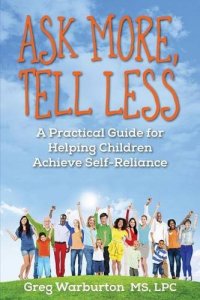
Ask More, Tell Less: A Practical Guide for Helping Children Achieve Self-Reliance

Ask More, Tell Less: A Practical Guide for Helping Children Achieve Self-Reliance

by Greg Warburton

Publisher: Outskirts Press

ISBN: 978-1478708810

Synopsis:

When faced with a misbehaving child, do you find yourself resorting to lecturing, reminding, or even yelling? Do you sometimes feel helpless and panicky after you have tried everything you know to do and your child still seems “out of control” or withdrawn? Do you feel frustrated when nothing you are doing is moving your children to be responsible and achieve their unique potential? Ask More, Tell Less provides a new model of parenting that can help transform the growing-up years. Life will become fulfilling and enjoyable rather than an ongoing, painful collision of wills. Behavior troubles diminish or vanish when children discover that they have the power to make their lives run more smoothly. These methods are not a “cater to the children” approach. Instead, they take the pressure off parents and put the whole family on a positively different road, traveling together in a land of mutual dignity and respect, maturity, and lasting change. Greg Warburton brings time-tested, practical methods out from behind the counselor’s door to enable you to give your children the greatest gift of all: self-reliance. Through artful questioning, you can give them a clear and compelling road map for getting on with growing up in this rapidly changing world.

Critique:

Have you ever said “What in the world were you thinking” to a child? My guess is you didn’t get a very helpful response. Ask More, Tell Less: A Practical Guide for Helping Children Achieve Self-Reliance  by Greg Warburton suggests asking the right questions can move you and your children from their reliance on your help to make good choices to their self-reliance.

Parts of this book were excellent and even introduced a couple of new ideas to me. I loved the idea of teaching kids not just to be honest with others, but honest with themselves. He accurately pointed out that often we lie to ourselves about our bad behaviors. Those lies keep us and our kids from making necessary changes. That is a perspective I don’t believe I have ever heard before and I believe it could be life changing for many kids (and adults).

I also appreciated the amount of time he put into helping parents understand the importance of really listening to your kids and asking questions that will help them reveal their hearts (my words, not his). He gives lots of examples of questions a parent could ask about a wide range of choices, attitudes and behaviors. While I believe some of his questions are not quite as open ended as he believes, they are definitely an improvement over the questions many parents typically ask.

Where I think the book falls a little short is that the author doesn’t really address Bloom’s taxonomy as it would apply to a child’s improved understanding of his/her behavior. The entire book is an attempt to move children from knowing the rules (facts) to understanding why those are rules and why it is important for them to be obeyed. Because the author doesn’t address scaffolding, he just barely touches on the need at times to “tell and lecture” rather than merely ask questions.

The reality is this method is probably most effective with elementary and perhaps middle school aged children (as it is written). Children of preschool age and below aren’t ready for the type of introspection this method requires. They are also still learning what a rule is and which rules they are supposed to follow. Teens would find many of these questions too childish in the way they are expressed. (Ex: “Are you growing up or growing down?”) I think the concept would still work with them, the questions would just need to be reworded to keep from alienating a teen.

My other concern was the author’s continued insistence on self-reliance. While I understand and agree with him to a point, self-reliance gone too far leaves no room for God.* This method also does nothing to address the need for God’s help in breaking bad habits. In fact, the author makes this method for changing a child’s behavior seem a little too easy. Once or twice he alluded to the fact a child did some backsliding, but I would imagine with any deeply ingrained bad habits the backsliding would be more common than was shared.

I also have a few concerns about celebrating “growing up” behaviors. While I do agree children should be celebrated when they master something like breaking a bad habit, the idea of a certificate for every tiny little step in the right direction seems a bit much. Personally, I skew a little more to the “life will not constantly reward you for doing what you are supposed to be doing” end of the scale. I am definitely an encourager, but I am afraid children who have every tiny appropriate action celebrated will go through life disappointed their friends and co-workers aren’t constantly giving them awards for doing what is expected (much less going the extra mile).

Whether you use this exact method or not, the author is correct in his basic premise. Your kids need to move from depending upon you to help them make good decisions to where they can make those godly choices without your help. The author’s questions are a good way to begin helping them make that transition. Having to answer questions that force them to take control of their actions and attitudes is a good first step..

reviewed by Thereasa Winnett of Parenting Like Hannah  ]

* PLEASE NOTE: Self-Publishing Advisor does not endorse any specific faith ot religion.

Here’s what some other reviewers are saying:

I’ve been a child and adolescent psychologist for 30 years, but must admit I found Greg’s approach with young people and their families to be a breath of fresh air and a resource of fresh, doable ideas. It’s a great book for parents, but child-service professionals certainly would benefit from having it on their bookshelf.

In short, what Greg shares works, and it fosters deeper relationships. Greg understands the frustration of parents who struggle with a child’s behavior, and he shows Mom and Dad how to take a deeper look that, more often than not, reveals how an issue is not an attack against them at all. He shows them a perspective and skills that work to resolve REAL problems experienced by REAL parents.

It’s been long know that the best way to confront a youngster about his or her behavior is with a noncoercive approach, otherwise it’s possible to address one problem and end up with three more. (After all, who really LIKES confrontation?) Greg’s approach on HOW to approach that youngster with questions that don’t threaten but rather open up their ability to reflect on their behavior allows the child or teen to “fix” problems themselves. And that’s every parent’s dream.

– Amazon Reviewer James D. Sutton (5/5 stars)

We as parents have a way of telling our kids what they have done wrong instead of listening to why they did what they did. That ends up hurting the parents and the child and their relationship. Make the question as to why they forgot or why they didn’t do something, a positive thing. Sometimes questions that are asked in an angry tone only get you no where but more angry. It takes a lot of practice to learn when and what questions are right to ask. The more you practice this positive approach, the easier and more natural it becomes. When a child is constantly being yelled at because he hasn’t done what he should have, his self esteem goes lower and lowers. Without self esteem and confidence, a person becomes afraid to try new things. They would rather do nothing instead of try and fail. Failing causes people to yell at you. Communication is very important between people. Not just young people but everyone. When you communicate in a positive way, usually the response is positive. Positive thoughts help create self esteem and with self esteem comes confidence and self reliance. You begin to rely on yourself instead of letting everyone take care of what you should be taking care of. When a parent changes, they will find the child changing too. Parenting skills are not easy to acquire. But it is well worth the effort to keep trying. The family as a whole will become happier and healthier.

– Amazon Reviewer gayle pace (4/5 stars)

Book Trailer:

saturday self-published book review

Thanks for reading!  Keep up with the latest in the world of indie and self-published books by watching this space every Saturday!

Self Publishing Advisor

selfpubicon1

Conversations: 3/18/2016

WHAT IF…Reading Became a LOST Art?

Have you communicated with the 30-somethings (or younger) populous by TEXT or TWEET or INSTAGRAM lately? My teacher’s heart cringes and my writer’s heart cries. The art of communicating clearly is taking a big HIT in these times when people believe their time is so limited that they cannot take the time to express themselves well and write out full thoughts and/or sentences. While our (yours and my) children continue to be readers many hold a lukewarm attitude toward the value of reading. They seem to have lost the understanding that their reading abilities will gain them access to the whole world of knowledge. Too many of our grandchildren and great-grandchildren are leaving books on the shelves and accepting “sound-bite” information as the basis for life choices. I have no big answer to this problem other than to encourage excellent writers to KEEP WRITING and KEEP PUBLISHING. Someday, the next generations will return to “the books” to expand their knowledge base beyond song lyrics and media clips.

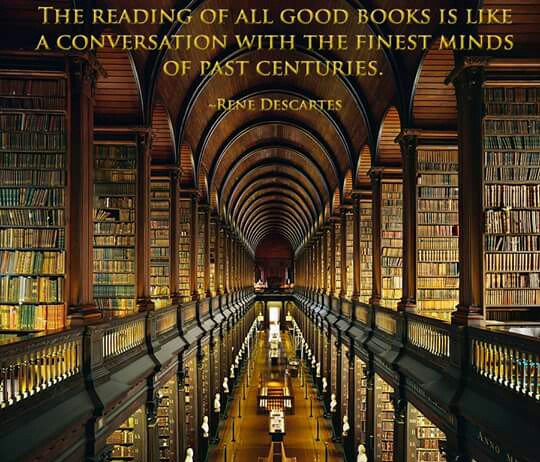
WAY back in the 1600s a French philosopher named Descartes wrote: “The reading of all good books is like conversation with the finest (people) of the past centuries.” And so it is! From his perspective only the “finest minds” wrote books, and he knew that from them we have the opportunity to learn great things on any subject! Plus he wrote with a passion “as if no one had written on these matters before,” and encouraged other writer/thinkers to do the same.

 rene descartes

IF YOU THINK that being a writer is just a job or a bit of a unique career let me share a few statistics with you…

  • There are almost half-a-million words in our English Language (the largest language on earth) and people (those folks who buy and read our books) really need to know them—their meanings—and usage which will improve their lives.
  • Just 15 minutes a day of reading can expose us to more than a million words in a year.
  • Teachers today can barely find 5 minutes a day to devote to reading with individual students—even those who need help.
  • For a person to participate fully in the world and workplace of 2020, they will need powerful literacy abilities that until now have been achieved by only a small percentage of the world’s population.
  • Currently, more than 20 percent of adults read at or below a fifth-grade level. This is far below the level needed to earn a living wage.
  • IF you’re thinking that the challenge of dyslexia is a major cause of the above statistic you’d be wrong! The majority of dyslexic individuals work harder and more creatively to “learn to read” and because of this have been noticed by some of the largest employers on the planet. At NASA, over 50% of their employees are dyslexic. They are deliberately sought after because they have superb problem solving skills and excellent 3D and spatial awareness.

So, HOW can writers make a difference in the midst of these facts? KEEP WRITING! Make each word you place on a manuscript page zing so that people will be drawn to it whether you’re creating Science Fiction adventures or developing a game to teach world history. With almost 50 percent of our Nation’s unemployed youth (ages 16-21) labeled as “functionally illiterate,” we need to write books (and blogs and vlogs and…) that interest them while teaching them the skills they need to obtain good jobs. AND…should a question about writing rules come up, we always have The Elements of Style by Strunk & White which will take us back to basics with the English language. Together we can save the arts of reading and writing! ⚓︎

RoyaleneABOUT ROYALENE DOYLE: Royalene has been writing something since before kindergarten days and continues to love the process. Through her small business—DOYLE WRITING SERVICES—she brings more than 40 years of writing experience to authors who need “just a little assistance” with completing their projects. This is a nice fit as she develops these blogs for Outskirts Press (OP) a leading self-publisher, and occasionally accepts a ghostwriting project from one of their clients. Her recent book release (with OP) titled FIREPROOF PROVERBS, A Writer’s Study of Words, is already receiving excellent reviews including several professional writer’s endorsements given on the book’s back cover.  

Royalene’s writing experience grew through a wide variety of positions from Office Manager and Administrative Assistant to Teacher of Literature and Advanced Writing courses and editor/writer for an International Christian ministry. Her willingness to listen to struggling authors, learn their goals and expectations and discern their writing voice has brought many manuscripts into the published books arena.

In Your Corner : Celebrate National Reading Month With These Marketing Tips! (part three)

Two weeks ago, I started us off on a month-long exploration of one of my favorite subjects: the intersection of reading with writing and publishing, a journey that I continued last week in honor of National Reading Awareness Month.  I said it then but I think this bears repeating: here at Self-Publishing Advisor, we love the fact that there’s an entire month devoted to celebrating the written word–as well as the ways in which we can spread the joy of literacy–and so I would like to invite you to continue joining me in making reading a focus all month long, here in our Thursday blog post slot.  How am I going about that?  Well, for starters, I’m running down my go-to list of tips and tricks for the new and ingenue self-publishing author.  This week, I’ll be starting with …


TIP EIGHT : Craft a “keep in touch” plan

Last week, we examined the benefits to putting together an active mailing list and/or using a Facebook group to keep in touch with your readers through direct messaging.  But what’s next?  Once you have put together your active mailing list, you’ll need to decide how you want to keep in touch.  And by “how,” I’m talking about the content and quality of your communication, not just the platform.  One thing is absolutely, unarguably true: over-sharing can prove more toxic to your message than bad grammar and condescension put together.  I highly recommend that you find a reasonable frequency–for example, a monthly newsletter–to touch base with your readers.  You can write about topics related to the genre of your book or other similar books that you think your readers would enjoy, or you can stick to more of a “behind-the-scenes” glimpse into your writing process, if you feel like you have enough to share without spoiling the reading experience itself.  If you plan on publishing multiple books–say, in a series–your followers would no doubt love updates on the status of each upcoming book, the research you’re doing or interesting things you’ve discovered during the writing process.  Give them just enough to whet their appetite, but not so much that they feel like they have to sift through an essay to find the important facts!

keep in touch

TIP NINE : Go to the Press

And by that, I mean: It’s time to start thinking about putting out a press release.  Any time you have important news to share about your book–such as announcing its publication, the advent of a book signing event, or spreading the news about an award it has won– you should definitely look to your local newspapers, radio stations, and other media sources … but this shouldn’t preclude you from looking further afield, to national media outlets and popular blog sites, for example.  You can use online press release distribution sites or try contacting your local newspaper as a first step, and if you’re working with a hybrid or full-service self-publishing company you should definitely check out their list of marketing options.

press release

TIP TEN : Get your next manuscript off the drawing board

Hollywood scriptwriters and directors often talk about “development hell,” but this term isn’t the exclusive property of the rich and/or famous: it applies to authors of all kinds, too!  We all know the dangers and struggles facing us in the form of the dreaded Writer’s Block, so if you’re ready to start publishing–or you’re getting close–you should definitely try to give yourself the necessary kick in the pants necessary to put the finishing touches on your manuscript and start the publication process today.  Delay hurts no one more than you, and that’s the truth!  Many companies offer publishing packages or offer the services of a Publishing Consultant to assist with this process, and sometimes a little help really is necessary.  There’s no shame in turning to a professional for help if it means your book gets off of the drawing board and into the hands of your readers!

drawing board

TIP ELEVEN : The book must be blogged!

An oft-overlooked component of a successful marketing strategy is the beloved book blogger.  We love them, we read their posts, but we don’t often think of them as partners in our journey to publication.  But they are!  They really, most definitely, can give your book a boost in visibility.  So, my last tip is more of a suggestion, really: Find those book bloggers you need to increase the exposure to your book.  Check out websites such as BookBloggerList.com to find bloggers interested in the genre of your book, and look to the book bloggers you personally admire and find readable.  Find out which bloggers would be open to reading and reviewing your book and contact them–or vice versa.  You might even get a link to your website or your Amazon book page out of it!

I’ll be back next week with some more tips!  And …

… always remember: you are not alone. ♣︎

ElizabethABOUT ELIZABETH JAVOR: With over 18 years of experience in sales and management, Elizabeth Javor works as the Manager of Author Services for Outskirts Press. The Author Services Department is composed of knowledgeable publishing consultants, pre-production specialists, customer service reps and book marketing specialists; together, they all focus on educating authors on the self-publishing process to help them publish the book of their dreams. Whether you are a professional looking to take your career to the next level with platform-driven non-fiction or a novelist seeking fame, fortune, and/or personal fulfillment, Elizabeth Javor can put you on the right path.

Marketing in the Hybrid Publishing World

Two weeks ago, after much consideration, we settled on a simple and straightforward definition for hybrid publishing:

Hybrid publishing is any publishing model that allows authors to enter into direct, flexible, contractual collaborations with industry professionals that in traditional publishing would be indirect (they would be paid by the publishing house, not the author) and are not traditionally available to self-publishing authors.  This includes companies like Outskirts Press, which offers a range of collaborative services, and excludes the so-called “hybrid author,” or someone who has moved from traditional publishing into self-publishing or vice versa.

And last week, in hopes of getting a glimpse into the actual experience, I dove into the stories of two self-publishing authors who have chosen the hybrid publishing track: Norman Smith  of Dog Ear Publishing, and Mirtha Michelle Castro Mármol of Outskirts Press fame.  Smith’s review spoke to what I consider the real strengths of the hybrid publishing experience: constant communication, flexibility, and a real willingness to put the author’s vision at the forefront of the publishing process.  Meanwhile, Mirtha Michelle’s interview highlighted the collaborative nature of hybrid publishing––from writing her book, to finding the company she wanted to go with, to finding a designer for her book’s cover, to connecting with her readers after the fact.

This week, I want to answer a different set of questions, and I want to take us back to marketing, our focus for our Wednesday posts here on Self-Publishing Advisor.  How does hybrid publishing assist an indie author in the realm of marketing a book, for example?  Does it offer tangible benefits?  How can an author know when the expense is paying off?


Value vs. Expense:

As hybrid self-publishing superstar CJ Lyons puts it, “If you are spending more time marketing than you writing a book, then you are probably doing a disservice to your readers by not writing the best book that you can. You can trust your readers and if you are writing a book they love then they will do the marketing for you.”  And it’s true: your readers are the greatest force for influence that you have!  When readers fall in love with a new world or a new book, as you are probably already well aware, they can’t help but want to share the thrill of discovery with their friends, families, and other social connections.

marketing hybrid publishing

Connecting with your readers is, of course, a matter requiring some delicacy in and of itself.  Marketing doesn’t happen by itself; your social media presence, whether you’re a solo act or working with a hybrid self-publishing company, will require work.  You have to balance your personal time and energy budget without falling behind on either sleep or sacrificing valuable time you might spend writing that next book (and that next book is a powerful marketing tool in and of itself, so you don’t want to sacrifice it).  The difference between being a “regular” self-publishing author–assuming, for the moment, that we set aside the massive range of experiences that fall into that category–and being a self-publishing author who chooses to work within the hybrid model boils down to resources.  A good hybrid publishing company will reduce the amount of time and energy and expertise required to keep up a vigorous social media campaign as well as a nationwide marketing plan to something more like light maintenance than heavy work.

marketing hybrid publishing

Within the hybrid model, you the self-publishing author don’t have to be the one running down to Kinkos to print out a massive pile of fliers that you spent weeks designing yourself, or staying up late squinting at a dim computer screen scrolling through tweets about your book.  You pay to let the professionals assist you with that.  Most companies offer a range of marketing products  (like this one from Outskirts Press) and bundles so that you can choose to pay for only the services you need or that you don’t know how to manage yourself, and which allows you to only spend money on truly necessary expenses.  An easy way to know if a product is worth spending money on is to hop on a web forum and ask around after authors of equal expertise in, say, book trailer creation–and see how long it took them to design one.  Multiply the hours they spent by the average going wage for freelance videographers (anywhere between $20 and $50 an hour in USD) and compare against the price for that product.  Run the numbers for each product you’re thinking about purchasing, and make your decisions accordingly.  These figures don’t allow for the expertise you’ll have access to by paying a professional to do them for you, but they do give you a starting point–and we all need one of those!


Thank you for reading!  If you have any questions, comments, suggestions, or contributions, please use the comment field below or drop us a line at selfpublishingadvice@gmail.com.  And remember to check back each Wednesday for your weekly dose of marketing musings from one indie, hybrid, and self-published author to another. ♠

KellyABOUT KELLY SCHUKNECHT: Kelly Schuknecht is the Executive Vice President of Outskirts Press. In addition to her contributions to the Outskirts Press blog at blog.outskirtspress.com, Kelly and a group of talented marketing experts offer book marketing services, support, and products to not only published Outskirts Press authors, but to all authors and professionals who are interested in marketing their books and/or careers. Learn more about Kelly on her blog, kellyschuknecht.com. 10:00 AM

From the Archives: “Statistics Suggest Good News for the Self-Publishing Author”

Welcome back to our Tuesday segment, where we’ll be revisiting some of our most popular posts from the last few years.  What’s stayed the same?  And what’s changed?  We’ll be updating you on the facts, and taking a new (and hopefully refreshing) angle on a few timeless classics of Self Publishing Advisor.

∗∗∗∗∗

[ Originally posted: December 17th, 2008 ]

Bowker, the global leader in bibliographic information management, recently released 2007 book publishing statistics compiled from its Books In Print database. Based on figures from U.S. publishers, Bowker is projecting that U.S. title output  last year increased slightly from 2006 to almost 300,000 books. That’s over a quarter of a million books published in one year alone.

Here’s another interesting statistic, while traditional book publishing was basically flat last year, there was a staggering rise in the reported number of on-demand and short-run books to 134,773, pushing the grand total for projected 2007 U.S. book output to 411,422 books. In fact, Bowker has planned to separate this particular output from its traditional reporting and has begun tracking the On Demand industry segment separately.

What does this mean for you? To begin, your book may not stock in every bookstore. Or any bookstore. And it’s entirely possible that you may not want it to.

As a self-publishing author, these statistics undoubtedly suggest your sales opportunities will continue to grow and become more profitable. Sales are shifting from offline to online. More and more people are becoming comfortable with (and even accustomed to) shopping online. Selling books online is more cost-effective than selling through a typical bookstore, and that means more money in your pocket. It’s no coincidence that Amazon’s book sales numbers mirror the same increases on an annual bases. That’s good news.

It’s been said before on this blog, make sure your self-publishing choice lets you set your own retail price, royalty, and discount to take maximum advantage of shifting consumer trends.

Something to keep in mind as you wrap up your writing and begin the publishing process.

Have fun and keep writing.

by Karl Schroeder

While in many ways the e-book and digital book industries have stabilized, reaching a kind of balance with print publishing in the wake of Hachette’s price-fixing settlement with Amazon, much has changed.  Nielson, for example, is reporting that “in 2014, US publishers sold almost 142.5 million adult fiction titles in the three major print formats (hardback, trade paperback and mass market paperback) and 132 million ebooks (across all platforms).”  To put that in the context of Karl’s original statistics, Publisher’s Weekly and Bowker both reported that earlier, in 2013, “the number of self-published titles rose [by] 16.5%, to 458,564. The increase was due entirely to the release of new print books which rose 28.8% to 302,622 offsetting a decline in self-published e-books which fell 1.6%, to 155,942.”  In less than a decade, then, the number of self-published books outpaced the total number of books of ALL kinds published in the United States in 2007.  Not only that, but there are now more self-published print books alone being published each yer than there were traditionally published books in 2007.
bowker

But what does this mean for you, the indie author, in 2016?

First of all, it means you’re not just on the cutting edge any more–you’re part of a phenomenon.  And because self-publishing is in some ways the new normal, that presents both some very good and some very hard news.  Good news first: there are loads more resources out there and available to you now than there were a decade ago.  You can probably find a “how-to” step-by-step guide for each and every aspect of self-publishing just by hopping on Google and typing in a few keywords.  Need to convert your book to a new format or launch a fresh marketing campaign?  There are entire companies out there that specialize in such things, now.

The hard news is this: self-publishing has more or less lost its novelty.  It’s a stable market niche that has gained a lot of attention and a fair bit of respect over the years, and it’s clearly not going anywhere.  Libraries have policies in place as to whether they can add self-published books to their collections, and bookstores like the Tattered Cover in Denver and the Amazon Bookstores now dedicate entire shelves to self-published titles.  Algorithms have been tweaked.  News has been made.  And all of this presents a bit of a challenge to you, the indie author.  How to stand out in such a crowded marketplace–and for the right reasons?

Luckily, I have one last bit of good news.  Well, I guess it’s more a statement that comes full circle.  If you take care with your book, and give it the time and energy and focused attention that it deserves–or rely upon the assistance and advice of paid professionals to do so–then your book will stand out.  It has always been the case that readers can recognize a well put-together title from across the bookstore, library, and even airport.  A beautiful cover, a polished jacket, a carefully managed marketing campaign: all of these things are within your reach, thanks to the hard work of many who have gone before.  And if you stick around on Self-Publishing Advisor, you just might stumble across the exact insight you need in my Wednesday marketing strategies posts, Elizabeth’s Thursday reflections as a longtime industry expert, Royalene’s Friday perspectives as a successful self-publishing author, and our other posts throughout the week.

If you have any other ideas, I’d love to hear them.  Drop me a line in the comments section below and I’ll respond as quickly as I can.  ♠

KellyABOUT KELLY SCHUKNECHT: Kelly Schuknecht is the Executive Vice President of Outskirts Press. In addition to her contributions to the Outskirts Press blog at blog.outskirtspress.com, Kelly and a group of talented marketing experts offer book marketing services, support, and products to not only published Outskirts Press authors, but to all authors and professionals who are interested in marketing their books and/or careers. Learn more about Kelly on her blog, kellyschuknecht.com.