Conversations: 3/25/2016

WHAT IF… ALL iPhones, iPads, Nooks and Kindle Services Disappeared?

If you grew up in the 1960s—or are a youthful fan of classic TV—you’re probably familiar with THE TWILIGHT ZONE TV series. In stark black and white contrasts those 30 minute “short story dramatizations” offered viewers a wide variety of theories to ponder. My all-time favorite is titled: “Time Enough at Last.” It was adapted from a short story that appeared in a Science Fiction magazine in 1953. This fact alone should encourage all of us as we see what is written and published today can (and does) live into the future.

nonono

“Time Enough at Last” gave us the story of one man (Henry Bemis) who LOVED to READ. He carried a book with him wherever he went. However, he is surrounded by people who think he is foolish “reading all the time,” and they do all they can to prevent him having any time to read. Henry worked in a bank, and one day accidentally got locked inside. It was almost like a dream come true, because he had a book with him! Suddenly, there is an explosion! When Henry is able to pop the loosened door open, he finds the world had been decimated. He was all alone. As he stumbles through the rubble, he reaches some steps and sits down to rest. There is a hardbound book on the step below, and he realizes he’s sitting on the steps of the LIBRARY! BOOKS! ALL the books he could read in a lifetime! BOOKS! GLORIOUS BOOKS! And no one to stop him from reading each and every one!

Of course, there are multiple themes within this one short-story-episode—another one being to beware of our reliance on technology. Yet the one that continues to strike me is the possibility of a culture—a society—that no longer encourages reading. If fact, the societal attitudes toward books in this fiction story points a straight finger at those who attempt to keep people from reading as happens today in too many countries. This concept has stayed with me a whole lot of years, and as I look back I am so THANKFUL to that writer whose words watered the seed of writing—and getting my books published—deep within me.

So it is that I close this month of March with several quotes that have inspired and fortified me during times when I slouched at my writing desk.

  • First Lady, Jacqueline Kennedy, said: “There are many little ways to enlarge your world. Love of books is the best of all.”
  • From Charlie and the Chocolate Factory author, Roald Dahl: “So please, oh PLEASE, we beg, we pray, go throw your TV set away, and in its place you can install, a lovely bookshelf on the wall.”
  • Sci-Fi author, Stephen King said: “Books are a uniquely portable magic.”
  • Singer-songwriter, Taylor Swift says: “Books train your mind to imagine and think big.”


DO WRITERS face challenges? Of course, as do all people of every career and every generation. However, the blessing we have is the ability to use words that create mind-imaginings and allow Readers the opportunity to think big—and BIGGER. The words we choose to write on the pages of our manuscripts have POWER. We must take care to use them wisely as they will impact our own lives—and the world. ⚓︎

RoyaleneABOUT ROYALENE DOYLE: Royalene has been writing something since before kindergarten days and continues to love the process. Through her small business—DOYLE WRITING SERVICES—she brings more than 40 years of writing experience to authors who need “just a little assistance” with completing their projects. This is a nice fit as she develops these blogs for Outskirts Press (OP) a leading self-publisher, and occasionally accepts a ghostwriting project from one of their clients. Her recent book release (with OP) titled FIREPROOF PROVERBS, A Writer’s Study of Words, is already receiving excellent reviews including several professional writer’s endorsements given on the book’s back cover.  

Royalene’s writing experience grew through a wide variety of positions from Office Manager and Administrative Assistant to Teacher of Literature and Advanced Writing courses and editor/writer for an International Christian ministry. Her willingness to listen to struggling authors, learn their goals and expectations and discern their writing voice has brought many manuscripts into the published books arena.

In Your Corner : Celebrate National Reading Month With These Marketing Tips! (part four)

Exactly three weeks ago, I started us off on a month-long exploration of what I revealed to be one of my favorite subjects–the intersection of reading with writing and publishing–in light of the fact that the month of March is National Reading Awareness Month here in the United States.  I continued my series two weeks ago and last week with a number of additional ways in which you, the indie or self-publishing author, can take advantages of the resources on offer to bolster both your existing writing methods and your book sales.  This week, I would like to invite you to continue in joining me in making reading a focus all month long, here in our Thursday blog post slot.  We may have one more week left in the month of March, but I’m holding nothing back–you get only the best of the best, my absolute top tips, here today! 

TIP TWELVE : Give your blog or website a face lift

If you already have a blog or website where you have been promoting your book in advance of its release, there’s no better time than the present to refresh the look and feel or add content.  And by “refresh,” I don’t just mean a couple of small tweaks or optimizations here and there–I mean a complete overhaul.  As in all things, the self-publishing author must demonstrate full willingness to meet readers where they live, rather than expecting them to stumble across one’s book by happenstance.  There are no (or at least, very very few) happenstances in the publishing industry, since everyone and their lawyer is out to make a profit off of gaming the system.  You don’t want to play your readers–in fact, you want to be wholly honest and authentic at all times–but you do want to show them that you care enough about them to design a website or a blog that meets their needs and outperforms their expectations.  Think big, not small, and make sure your site is inviting and reflects who you are as a writer.  

facelift

TIP THIRTEEN : Play well with others

It should come as no surprise that I’m an advocate for sharing.  After all, I didn’t ignore every single admonition to play well with others when I was a child–some of that well-intentioned parental advice rubbed off.  But in the world of self-publishing, there’s nothing more powerful than sharing!  It’s not just a “good idea”–it’s a vital and impactful way of reaching new readers.  The first step to sharing promotions with other indie authors is one of logistics and networking: I recommend getting started by connecting with other independent authors whose work compliments yours or who live nearby.  Local writers’ groups are a fantastic resource for this!  From there, you can discuss how best to share advertising in your local media to promote your books and events.  Sharing an event with another writer is an excellent way to generate more interest among venues and readers.

sharing

TIP FOURTEEN : Take the Grand Tour

In years gone by–that is, from the mid 1600s to the mid 1800s–it was the custom of the European and American elite to send their children on the Grand Tour of the European continent and parts of Asia Minor and Northern Africa.  The point of the Tour was to expose people of taste to the primary object of their taste–the cultural legacy of the West.  But there’s a far better Grand Tour which you can partake in as an indie author!  There are dozens upon dozens of prime opportunities for promoting your book throughout the year outside of your homeland, including the London Book Fair, BookExpo America, Beijing Book Fair and the Frankfurt Book Fair.  But who, you may ask, has the time or money to do that?  Self-publishing may be a recourse for those of humble budgets, but it is also a haven for ingenuity and creative thinking.  You don’t need to stress if you don’t have the time (or money) to travel the world this year: a number of self-publishing companies, including the one I work for (Outskirts Press) offer the opportunity to represent your book at any (or all) of these events throughout the year.  There is usually still some sort of cost associated with this project, of course, but it is a dramatic reduction on what you might pay individually to travel to these places, register for display space and lodging, and for marketing materials.  Just a thought: you can be a world travel vicariously through your book!

That’s it for this week, but I’ll be back next Wednesday with some final tips and ways forward!  And …

… always remember: you are not alone. ♣︎

ElizabethABOUT ELIZABETH JAVOR: With over 18 years of experience in sales and management, Elizabeth Javor works as the Manager of Author Services for Outskirts Press. The Author Services Department is composed of knowledgeable publishing consultants, pre-production specialists, customer service reps and book marketing specialists; together, they all focus on educating authors on the self-publishing process to help them publish the book of their dreams. Whether you are a professional looking to take your career to the next level with platform-driven non-fiction or a novelist seeking fame, fortune, and/or personal fulfillment, Elizabeth Javor can put you on the right path.

Marketing Missteps Episode 1: The Self-Centered Campaign

You’re a self-publishing author, recently come out with a new book, and you’ve already decided to throw yourself into marketing in a serious capacity.  So what next?  Finding that starting point is a tough first act, but it’s always helpful to know a couple of false starts that others have made before you, isn’t it?  That way, at least you know a couple of places not to start, and you can find a path to success that fits your own indie experience, bolstering your skills and steering clear of your weaknesses.

Today, I’m going to begin a new series that will take a close look at several of the most important marketing missteps to avoid; the story doesn’t end here, of course, but hopefully this series will prompt you away from the edge of a few abysses.  One or two of the mistakes I’ll point out may strike you as “common sense” points, but as my dad once whispered to ten-year-old me on a sidewalk corner facing a four-way stop in heavy traffic where nobody could quite figure out the correct right-of-way: “Common sense ain’t so common now, is it?”  Even if a mistake strikes you as obvious, every reminder is a good one!

This week’s post is going to examine one of the most pernicious of all marketing missteps: that of the self-centered campaign.  At its simplest distillation, the self-centered campaign will alienate you from your readers quicker than a ten-year-old at a traffic stop.  Why?  Because readers are smart.  (I find it’s a wise policy to always assume my readers are smarter than I am, and they always seem to notice even the tiniest of continuity errors in my work before I do!)  They will pick up on the arrogance–intentional or unconscious–of an author who makes their marketing campaign all about his or her excellence instead of shining the spotlight on the real stars of the show: the book itself, and the readers who have so cleverly fallen in love with it.

arrogance in marketing

Here’s a hard fact to swallow: Your readers won’t always care about you, the author.  You might be able to persuade them to, a little, over time, simply by virtue of writing excellent social media posts or demonstrating sensitivity to others.  One crucial misunderstanding that self-publishing authors make is believing that they and their readers value the same things.  Hopefully, your readers will care about your humanity and the work you produce, but beyond that is murky waters.  How do we un-murkify them?  By doing the work.  By doing the research.  By figuring out what you do for your readers that no one else can.

To successfully market your indie book, don’t sell the customer your product (or book) … sell them your solution to their needs.  What issues interest your readers?  What subjects compel them?  These are the basic components with which you can build a successful marketing campaign.

Market research, even basic, is more than just helpful.  It’s necessary.  It is the one magical ingredient that will move your strategy away from something self-centered and toward something that is product- and consumer-centered.

But how to get there?  What are the best strategies for research?  One consideration might be to craft a simple survey with SurveyMonkey, or to poll a small focus group.  I recommend steering clear of using friends or family as focus group members, since their personal connections to you will skew how they answer.  And besides, online crowd-sourcing platforms like the aforementioned SurveyMonkey (as well as Facebook Groups and Google Forms) make for an inexpensive replacement for focus groups.  What you ask depends on what you find useful, but it might be worth crafting a few questions that speak to your readers’ genres of interest, the amount of time they spend reading or on social media, and how they like best to engage with fellow fans and their favorite authors.

Whichever avenue you pursue, these basic data-gathering methods should give you new insight into your readers, and help you shape your marketing message to focus less on you and more on the them.


Thank you for reading!  If you have any questions, comments, suggestions, or contributions, please use the comment field below or drop us a line at selfpublishingadvice@gmail.com.  And remember to check back each Wednesday for your weekly dose of marketing musings from one indie, hybrid, and self-published author to another. ♠

KellyABOUT KELLY SCHUKNECHT: Kelly Schuknecht is the Executive Vice President of Outskirts Press. In addition to her contributions to the Outskirts Press blog at blog.outskirtspress.com, Kelly and a group of talented marketing experts offer book marketing services, support, and products to not only published Outskirts Press authors, but to all authors and professionals who are interested in marketing their books and/or careers. Learn more about Kelly on her blog, kellyschuknecht.com. 10:00 AM

From the Archives: “Should You Pay for a Book Review?”

Welcome back to our Tuesday segment, where we’ll be revisiting some of our most popular posts from the last few years.  What’s stayed the same?  And what’s changed?  We’ll be updating you on the facts, and taking a new (and hopefully refreshing) angle on a few timeless classics of Self Publishing Advisor.

∗∗∗∗∗

[ Originally posted: April 15th, 2011 ]

As an author in the self-publishing industry, reviews for your book are very important.  A book published by an unknown author has little chance of gaining attention, while the same book (and the same “unknown” author) with a number of positive reviews can begin to gain momentum.  Those positive reviews can help persuade potential new readers to buy the book and the word-of-mouth continues.

You may have already received reviews from some of your friends or colleagues, so what next?  There are some free review services where you can send a copy of your book.  These services are a great resource; however, because they are free, the reviewers get inundated with books and can’t review every book they receive.  Their services can also take several months and the reviews are not guaranteed to be good.

In addition to free review services, there are some services available where you can pay to be guaranteed a review.  That said, the review is still not guaranteed to be good, but if you are confident in your book (which you should be, after all you wrote and published it!), you shouldn’t need to worry about that.

Here are three pay-for-review services you can start with:

BLUE INK REVIEW

Standard Review is $395 for the review to be completed in 7-9 weeks.

Fast Track Review is $495 for the review to be completed in 4-5 weeks.

BlueInk considers for review any book that has been published (self-published and indie published).  They review e-books, on-demand books, printed books in any format, English translations and English-language submissions from outside the United States, as well as galleys. They do not review manuscripts pre-publication.

FOREWORD CLARION REVIEW

The cost is $305 $499* and turnaround time is 6-8 4-6* weeks.

Open to all books and publishers, Clarion promises an objective 400 – 500 word review/critique with a quick six to eight week turnaround. The review will be posted on the ForeWord website (if the publisher desires), licensed to the three top wholesale databases, and made available to the book’s publisher. This service is ideal for books that haven’t received review attention elsewhere.

KIRKUS INDIE REVIEW


Standard review is completed in 7-9 weeks for $425.
Express review is completed in 3-4 weeks for $575.

The Kirkus Indie program gives independent authors a chance to obtain an unbiased, professional review of their work, written in the same format as a traditional Kirkus review. A book review can be an essential and powerful tool for promoting your book to literary agents, traditional publishing houses, booksellers, and, most importantly, potential readers.

by Kelly Schuknecht

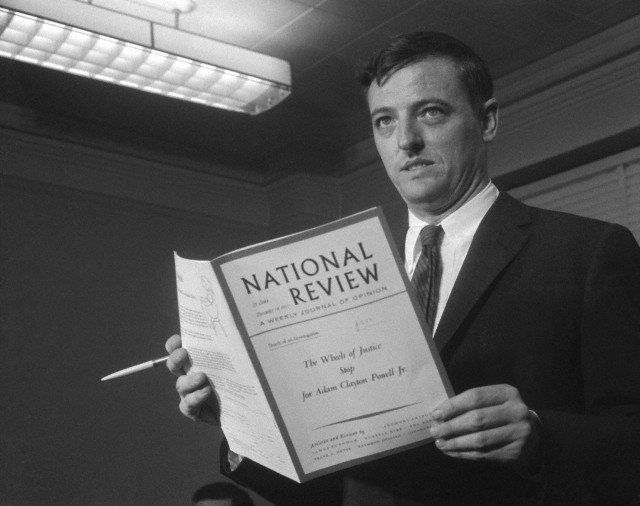
When it comes to reviews, there’s so much to say that it’s almost inevitable that I would have to update and expand upon what I wrote back in 2011–after all, the world doesn’t hold still for anyone, and that’s certainly true of both the internet and the publishing industry, as well!  You will note that I have already made note of several changes in regards to pricing and timing for the ForeWords Clarion review options (marked with an * each time), but what about the larger picture?  Can we still mount a defense for paid reviews in a world where Amazon and Goodreads are king, where product pages provide ream after ream of short, easy-to-digest reviews from laypeople like you and me–and FREE reviews at that?

national review book reviews

If you suspected I might have a simple and short answer for you, I’m sorry to let you down.  Saying “yes” casts aside all of my many thoughts about the value of those unpaid product reviews on Amazon and Goodreads, and saying “no” discounts the ongoing benefits that longform paid reviews still offer.

Let’s start with Amazon and Goodreads.

I’ve written in detail about the virtues of garnering lots of good reviews on Amazon and Goodreads before, specifically in my series on Self-Publishing and Merchandising from May of 2015, where I broke down the distinctions between these kinds of reviews and blog-based reviews.  And the statistics speak with resounding and repeated certainty that readers use the metrics provided by Amazon and Goodreads as one of their first and most important decision-making tools.  If readers search for a title they’re fairly certain they’re going to like, only to find that it has lots of poor reviews on Goodreads or a low star rating on Amazon, they’re not likely to follow through and buy it, no matter what else they’ve read that’s positive.  And if readers stumble across a title by accident that they weren’t actually looking for, but it ends up having fabulous reviews, they’re actually fairly likely to pay money to purchase it!  Search engines like Google have tweaked their algorithms to push books that are rated highly on Goodreads and Amazon to the top of their index, so you should never, never discount the importance of asking friends, family members, and other members of the public to post a positive review to these sites.

And what about paid reviews?

While longform essay book reviews have largely become the province of periodicals with paid subscription models like the London Review of Books or the New York Review of Books, they are far from dying out in terms of popularity–they’ve merely found their niche readership, and a powerful one at that.  It’s hard to estimate the exact impact of one positive longform review, but collectively, consider: the discerning reader needs an evaluation of content, of structure, of tone, and of many other aspects of a book’s nature than what can be provided in a brief burst of opinion on Amazon.  The discerning reader wants to know: what do the experts think?  Not everyone is looking for the lowest common denominator of shared public opinion (or so one of my college professors once opined) … sometimes they want to hear from one learnéd voice, in detail, the full warp and weft of a book.  This is why paid reviews are still worth their money–they reach the discerning reader.  And guess what?  Discerning readers are very likely to be a go-to resource to their friends and families, access points for dozens upon dozens of other new readers.  Discerning readers are amplifiers, advocates, and arbiters of your book’s larger footprint.  So yes, we shouldn’t forget about the paid review.  It has a place in the larger scheme of things, the larger framework of reviews and marketing.

They do not determine or reflect the actual value of your book, but good reviews–both paid and unpaid–do determine who is likely to buy it next.


If you have any other ideas, I’d love to hear them.  Drop me a line in the comments section below and I’ll respond as quickly as I can.  ♠

KellyABOUT KELLY SCHUKNECHT: Kelly Schuknecht is the Executive Vice President of Outskirts Press. In addition to her contributions to the Outskirts Press blog at blog.outskirtspress.com, Kelly and a group of talented marketing experts offer book marketing services, support, and products to not only published Outskirts Press authors, but to all authors and professionals who are interested in marketing their books and/or careers. Learn more about Kelly on her blog, kellyschuknecht.com.

Self-Publishing News: 03.21.2016

This week in the world of self-publishing:

In this March 18th article for Publisher’s Weekly, contributor Jennifer McCartney compiles a list of the titular “house and home” books published so far in 2016 in the tradition of Marie Kondo’s decluttering handbook, The Life-Changing Magic of Tidying Up––a book which became a massive bestseller after its release in 2014.  Of more specific interest to fans of self-publishing, however, is McCartney’s use of an indie favorite to provide context to her list: Francine Jay’s 2010 self-publishing phenomenon, “the minimalist lifestyle guide The Joy of Less,” which according to McCartney “has sold almost 25,000 copies in paperback.”  While Jay’s book has “found a home” with the traditional publishing label Chronicle, and will be releasing a hardcover edition under that same label in April featuring new material, it had its start in the world of self-publishing. “Like many decluttering proponents,” writes McCartney, “Jay is fond of acronyms and advocates the STREAMLINE approach: start over; trash/treasure/transfer; reason for each item; everything in its place; all surfaces clear; modules; limits; if one comes in, one goes out; narrow it down; and everyday maintenance.”  Fans of the original indie pick may be interested to know that the new edition includes a “five-step program” called “the clutter-free family,” which by all accounts “addresses readers at various stages of life, from a newly cohabitating couple to a household that includes teenagers.”  McCartney’s list does not, disappointingly, include any other self-published titles, but you can find out more about The Joy of Less at the book’s Amazon bookpage!

Becky Robertson, in this March 18th article for Quill and Quire, gives a much-needed update on the inaugural Whistler Independent Book Awards, “jointly produced by the Whistler Writing Society and publishing and editorial services company Vivalogue Publishing.” While Quill and Quire, which self-describes as “the magazine of the Canadian book trade,” remains a subscription-only magazine, the full details of the Whistler Independent Book Awards are available from the Tidewater Festival website.  Tidewater, “the first book festival exclusively for independent and self-published authors in western Canada,” now assists in organizing events for the indie publishing across the entire nation of Canada, including the aforementioned Whistler Independent Book Awards, which aim “to recognize excellence in Canadian independent publishing,” and will offer prizes in four categories: fiction, non-fiction, crime fiction and poetry. According to the website, there will be a “single winner in each category, with two additional finalists.”  The awards close for entries on June 3rd, with finalists announced on July 15th and winners announced at a “Literary Cabaret event held as part of the Whistler Writers Festival” in October. If you’re a self-published author of Canadian extraction and are thinking of applying, we’d love to follow your journey! For more information including eligibility requirements and prize details, follow the link.

Taking somewhat of a different tack in her view of self-publishing, Guardian contributor Marta Bausells takes on a specific brand of poet in this March 20th article focusing on Scottish poet Robert Montgomery, who has “consciously made an ‘awkward space’ for himself in between artistic categories.” As Bausells reports, his work “puts poetry in front of people in eye-catching visual formats: from advertising billboards he has covered with poems, to words he has set on fire or lit with recycled sunlight in public spaces––including the Sussex seafront and a Berlin airport.”  Of more recent interest, says Bausells, Montgomery has been working “on tomorrow’s World Poetry Day ‘Pay with a poem’ campaign, through which customers can get coffee in exchange for poetry in cafes across the globe. Montgomery will then collect the public’s poems to create an installation in a secret location.”

3881
From Bausell’s article: “The People You Love at the De La Warr Pavilion in Sussex, in 2010.”

Fascinating stuff, and definitely of an “indie” bent, but more relevant to us here on Self-Publishing Advisor is Montgomery’s words on self-publishing.  As Bausells puts it, he “celebrates the fact that self-publishing is becoming essential online, and that these peer-to-peer demographics mean poets garner audiences that ‘bring their work alive’ before they get a chance to get published.”  Public poetry, according to Montgomery, is at its best when the barriers between poet and public are finally broken down–and there’s no better manifestation of this trend than in self-publishing!  We encourage you to read Bausell’s full article on Montgomery’s rise in popularity here.

spa-news

As a self-publishing author, you may find it helpful to stay up-to-date on the trends and news related to the self-publishing industry.This will help you make informed decisions before, during and after the self-publishing process, which will lead to a greater self-publishing experience. To help you stay current on self-publishing topics, simply visit our blog every Monday to find out the hottest news. If you have other big news to share, please comment below.

KellyABOUT KELLY SCHUKNECHT: Kelly Schuknecht is the Executive Vice President of Outskirts Press. In addition to her contributions to the Outskirts Press blog at blog.outskirtspress.com, Kelly and a group of talented marketing experts offer book marketing services, support, and products to not only published Outskirts Press authors, but to all authors and professionals who are interested in marketing their books and/or careers. Learn more about Kelly on her blog, kellyschuknecht.com.