Self-Publishing News: 5.16.2016

This week in the world of self-publishing:

This piece–written by Tonya Riley for “The Kernel” on The Daily Dot for the week of May 15–explores the rise and fall of one of self-publishing’s most recent features: the community-ranked and community-driven sort-of self-publishing competition website.  If you haven’t heard of InkPop, you  might have heard of Figment or Swoon Reads, both of which operate on a similar principle: would-be authors upload their manuscripts for other authors and readers to vote on and rank, and the top-ranked manuscript goes on to sign a contract with a publishing house.  In the case of InkPop, that was HarperCollins, a “Big Five” publishing house which went on to shutter InkPop in 2012 after publishing only two manuscripts through the platform.  Riley takes an up close and personal look at why InkPop ultimately failed, despite all of the things it did right.  She interviews author Wendy Higgins, one of InkPop’s two success stories, as well as other members of the InkPop forums.  To read her entire article, follow the link!

[CONTENT WARNING: LANGUAGE]

“Sometime last decade,” writes Katie Rife for The A.V. Club in this May 12 news piece, “Amazon introduced Kindle Direct Publishing, which allows aspiring authors to upload their work to Amazon directly, spending less time dealing with the dinosaurs in the publishing industry and more time writing stories about dinosaurs f***ing people.”  Rife, who eschews more politically correct language to make a point, is referencing an earlier article published by The A.V. Club about the careers of two authors of dino-erotica, one of the many subgenres (many of which are, one hopes, more innocently self-aware) that the self-publishing industry and Amazon in particular has made possible.  (No, I won’t provide that other link here.  Hop on Google if you must!)  But Rife has actual news to share, news which has rocked the self-publishing and video communities: “Amazon, being the pervert that it is, isn’t satisfied. It wants video.”  What she means is, Amazon has deliberately placed itself as a competitor to YouTube and therefore YouTube’s parent company, Google.  Amazon’s new platform probably sounds very familiar: users upload videos to Amazon’s “Video Direct” service that they have made or at least own the right to, decide if they want the video to be free, rentable or purchasable, or free on Amazon Prime (which earns income dependent on performance).  As Rife points out, the content of these videos will probably be determined by equal parts self-interest and the whim of the watching public, which could lead to some … er, interesting material.

“As a former gatekeeper, I’m fascinated by the gatekeeper divide in book publishing, where the role gets falsely propped up by supporters of traditional publishing and completely dismissed by those who favor the indie space,” states Brooke Warner of She Writes Press fame in this May 12 HuffPost Books piece.  She pits former Random House editor Daniel Menaker against self-publishing success story Hugh Howey, each of which paints their chosen platform with the language of perfection–particularly as regards “gatekeeping,” or the tendency of people in positions of authority and power to filter the tastes and interests of those under their influence.  “I take issue with both extremes,” writes Warner, whose own website falls somewhere in the middle between traditional and self-publishing models.  She rejects the sexism and predestinate careers of both parties and instead opts to argue that “there’s another gatekeeper arising in our midst that no one is talking about—and that’s the distributor.  And while she goes on to make the contestable argument that self-publishing churns out inferior books, she follows this up by positing it may in fact be a problem of recognition: there is no system in place to ensure that high-quality self-published materials rise to the top and received the acclaim they deserve, raising the tenor of self-publishing overall.  For more of Warner’s fascinating argument, check out the original article at HuffPost Books.


spa-news

As a self-publishing author, you may find it helpful to stay up-to-date on the trends and news related to the self-publishing industry.This will help you make informed decisions before, during and after the self-publishing process, which will lead to a greater self-publishing experience. To help you stay current on self-publishing topics, simply visit our blog every Monday to find out the hottest news. If you have other big news to share, please comment below.

KellyABOUT KELLY SCHUKNECHT: Kelly Schuknecht is the Executive Vice President of Outskirts Press. In addition to her contributions to the Outskirts Press blog at blog.outskirtspress.com, Kelly and a group of talented marketing experts offer book marketing services, support, and products to not only published Outskirts Press authors, but to all authors and professionals who are interested in marketing their books and/or careers. Learn more about Kelly on her blog, kellyschuknecht.com.
Saturday Book Review: “Dawn of Hope”

Book reviews are a great way for self-publishing authors to gain exposure. After all, how can someone buy your book if he or she doesn’t know it exists? Paired with other elements of your book promotion strategy, requesting reviews is a great way to get people talking about what you’ve written.

When we read good reviews, we definitely like to share them. It gives the author a few (permanent) moments of fame and allows us to let the community know about a great book. Here’s this week’s book review, courtesy of Fallen Over Book Reviews:

61LBTNg0FPL

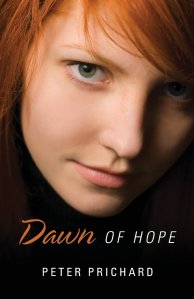
Dawn of Hope

by Peter Prichard

Publisher: Outskirts Press

ISBN: 978-1478746942

Synopsis:

“Excuse me, young lady. We have the ambulance on their way, and they want to know what happened to Drew Winston.” “He said he was going to do me good,” Dawn replied purposefully to the administrative assistant in the high-school office. “I wanted to make sure that everyone in this school knew that would never ever happen.  I pushed him away and tripped him, and as he fell, he hit his head on the corner of a water fountain, which was not my intent. He’s bleeding from his head and is in convulsions.”

Within twenty-four hours of beginning her senior year at Fair Shore High School as a new student, Dawn Mortenson had chosen to fight the town’s acceptance of the bullying and sexual abuse of young women by confronting Drew Winston, the school’s All-American quarterback. Following that confrontation, she received multiple death threats, so her mother had to hire a security firm to protect herself and her daughter. That move did not work, as Dawn was kidnapped soon afterwards and ended up in the hospital.

When Dawn had been released from the hospital, she had already gained a national reputation, which attracted more people who wanted her dead. She survived the bombing of a building she was visiting, which prompted FBI involvement. She stunned the agent who interviewed her, when in answer to his question about people who would like her killed, she was able to provide evidence of over fifty individuals who had specifically threatened her-including a police officer from her hometown, who had told her that he hoped the next attempt on her life would succeed.

Dawn also clashed at times with those who even supported her efforts. A reporter in town had presented himself as someone who wanted to help. In describing why the culture of rape, bullying, and abuse has been tolerated in town, he ended with the statement, “Everybody is seen as winning, male and female alike. It is a great American success story. Fair Shore residents have paid top dollar to join the winning team and are disinclined to raise any questions about the unsavory practices that support its continuation. There is a feeling that ‘boys will be boys.'”

In response, Dawn exploded, “And you choose to support this? Goddamn you. Goddamn all of you. Let’s only hope, Mr. Bruschi, that the success of this ‘everybody-wins’ model spreads to towns all across America. Let’s only hope that, within a few years, tens of thousands of young women can be treated the Fair Shore way and be raped without comment, so that ‘boys can be boys.'” As she turned and headed toward the door, Joseph moved quickly to stop her. “Dawn, don’t leave.” “Go to hell. I thought there was hope with you because of some of the writing you’ve done. That series you did on the woman who overcame severe automobile injuries and resumed her career as an engineer after everybody said she would never work again was powerful.” “She is a remarkably brave young lady.” “And there are a lot of them out there, but your silence is ensuring that they will have to fight that much harder to create the stories they were born to tell.”

Dawn’s battle against the status quo lands a number of friends and enemies either in the hospital, in jail, or in an early grave. She uses rock-and-roll through befriending high-school band members who write their own lyrics that challenge the status quo, along with a combination of personal courage and mental toughness, to change the town forever, although at a huge personal cost.

Critique:

When I started this book I was really getting into and I found myself not putting it down but as I continue reading than I started slowing down. I am not sure why but it became not as interesting to me.  I think maybe because of so many situations that Dawn found herself in it was like really this is happening to her again?

Dawn moved into a new town where football is the big thing in that town. When she is confronted by the star of the football team this is what starts the roller coaster ride. There is more to this town than meets the eye it seems they don’t mind how their football players act because the football team is the best. Dawn doesn’t agree with this and brings their actions to the forefront of everything which in turn makes her a target. Now the way Dawn talked at times and handled situations she didn’t come across as a teenager more like an older adult, which I guess is what the author wanted to go for.

Some of the scenes were like wow and the way it was handled I felt was very grown up for Dawn.

Now Dawn and her mother have a wonderful relationship and I was very impressed with how her mother was behind every decision Dawn decided to make. Though there was one scene that I didn’t really understand why her mother acted that way. Just her anger towards Dawn for voicing her concern really bothered me. I did enjoy how Dawn built people up and voiced her opinions on things but did it in a way that made people look up to her and wanted change. When everything goes down Dawn sees who her true friends are and who are just there to make a name for themselves through her.

I plan on reading book two to see what else will Dawn be doing and how she will be changing towns and the maybe the world with her ideas and opinions.

reviewed by Autumn of Fallen Over Book Reviews ]

Here’s what other reviewers are saying:
Peter Prichard’s Dawn of Hope, is a compelling much needed political treatise masking as a debut novel. He is not so much a master storyteller as he is a veteran activist shouting from a platform. The drama in Dawn of Hope is the little bit of sugar sure indeed helps the medicine go down.

In the tradition of novels like Uncle Tom’s Cabin, Prichard addresses some of the major social injustice issues of our time. Dawn Mortenson, the novel’s heroine battles issues of sexual abuse and violence at in personal, social and political settings of early 21st century America. To do so Prichard’s narrative arc runs through a wealthy suburban Connecticut town, corporate America, NPR and the liberal activist community in its wake This project takes in a great, great deal in nearly 200 pages. Whew.

Part novel, part opera, Dawn of Hope leaves little to the imagination. Dawn, and the other actors in this drama, are clearly drawn with their talents and flaws on full display. The good ones are really good, and the bad ones are insufferably bad. While its hard to imagine any one person being just like Dawn, she is nonetheless a compelling compilation of other young women who have suffered the slings and arrows of outrageous sexism. Throughout the novel Dawn is often bloodied (literarily and figuratively) but she is never bowed. A relentless upward arc that pulls the reader along.

At the end, I was left with the sense we just might have the beginnings of a super heroine series on our hands. Dawn Mortenson can certainly take on other adversaries in the cause of social justice. Prichard now needs to find other settings for her immeasurable talents.

Those who care about gender bias, sexual abuse and social justice won’t be able to put Dawn of Hope down; those on other side of the aisle may have difficulty picking it up. No matter. The encouragement and the inspiration provided to those who do read it may just propel us to a better world.

– Amazon Reviewer Douglas Ferguson

Dawn of Hope is a solid read about an inspiring young woman who is extremely courageous and mature beyond her years. Her keen insight and self awareness enables Dawn to have a positive impact on society and those around her. Kudos to Dawn for embracing her power!

The first half of the book was a page turner and I felt very invested in Dawn’s story. The second half of the book was jam-packed with action and messages, but for me, there were too many fantastical turn of events, so it was hard to keep believing in the awesome idea of Dawn. Perhaps stretching Dawn’s story out over a longer period of time will recharge my early excitement about Dawn – I’m eager to read Prichard’s sequel for this very reason. Tackling many social issues and influences in one small book is an enormous task. Hopefully, by introducing Dawn of the Tobacco Wars and beyond, Prichard can build depth around his many brilliant ideas and continue to make Dawn a relatable heroine.

An excellent first book. I suspect Prichard’s books are going to get even better over time.

– Amazon Reviewer Ex-Hack
Virtual Book Tour

saturday self-published book review

Thanks for reading!  Keep up with the latest in the world of indie and self-published books by watching this space every Saturday!

Self Publishing Advisor

selfpubicon1

Conversations: 5/13/2016

HELPING HANDS, MINDS and HEARTS

Part II

Did I put the cart before the horse? A current client just suggested to me that defining the work of a ghostwriter would be a big help to other people seeking assistance. SO…here goes…

  • First…we are writers who enjoy working behind the scenes FOR our clients. We are quite comfortable to see the client’s name appear on the book and it is our client who receives all the credit (and copyright) to the material we produce for them.
  • Ghostwriters are expert writers who like to help lots of different people (medical doctors, safari guides, missionaries, political activists, chefs, other writers…etc.) complete their book projects.
  • We research, write, rewrite, collaborate, and brainstorm with clients until THE END.
  • We can take a very basic concept (even a one paragraph idea) and RUN with it—writing and developing the idea—while communicating with the client until a full draft manuscript is ready for the client’s review.
  • We can also take a multi-page “draft manuscript” that is incomplete—fill in the missing pieces—and present a “complete draft” to the client.

With seventeen (17) books now listed on my resume, I’ve received some interesting comments about the working relationship my clients and I have enjoyed. Perhaps this list will further define the “role” of a ghostwriter: research-digger; big picture visionary; candid critic; surprising wordsmith; personal coach; listening friend. What is important to remember is that NO TWO projects are ever the same. Each one is developed within the unique parameters set by the topic/concept and the client. IT IS THE Ghostwriters purpose to make the author LOOK GREAT in print and help make their dream of being an author come true!

JUST IN CASE you’re thinking that ghostwriting help is NOT for you, I’ll share a bit of trivia (which can be checked out on the Internet) about a few famous authors who have enjoyed the HELP of a friend.

Raymond Benson may be one of the best known ghostwriters known for his James Bond novels. He is also behind the scene of the Tom Clancy Splinter Cell series, using a pseudonym (David Michaels) for the 1st and 2nd books in that series, after which another ghostwriter has taken up the work.

Author V.C. Andrews was just beginning to build her GARDEN book series when she passed away from cancer. Her family sought out a ghostwriter to complete one book and selected Andrew Neiderman who took over in 1986 and continues writing under V.C. Andrews today.

Business guru Stephen Cover (author of The 7 Habits of Highly Effective People) worked with ghostwriter Ken Shelton.

True story author Chris Gardner (The Pursuit of Happyness which was the basis for the Will Smith movie of the same title) was written “with Quincy Troupe.”

BIG THINGS CAN—and do—happen when writers HELP each other! The heart behind the help also comes in the form of professional book publishers and their staff that includes Ghostwriters, Interior Designers, Cover Designers, and Marketing Specialists. I hope you’re encouraged—today—to seek, select and enjoy the benefits of TEAM-work to see your dreams of publishing come true! ⚓︎

RoyaleneABOUT ROYALENE DOYLE: Royalene has been writing something since before kindergarten days and continues to love the process. Through her small business—DOYLE WRITING SERVICES—she brings more than 40 years of writing experience to authors who need “just a little assistance” with completing their projects. This is a nice fit as she develops these blogs for Outskirts Press (OP) a leading self-publisher, and occasionally accepts a ghostwriting project from one of their clients. Her recent book release (with OP) titled FIREPROOF PROVERBS, A Writer’s Study of Words, is already receiving excellent reviews including several professional writer’s endorsements given on the book’s back cover.  

Royalene’s writing experience grew through a wide variety of positions from Office Manager and Administrative Assistant to Teacher of Literature and Advanced Writing courses and editor/writer for an International Christian ministry. Her willingness to listen to struggling authors, learn their goals and expectations and discern their writing voice has brought many manuscripts into the published books arena.

In Your Corner : Amplifying Your Voice, OR, “What IS a Press Release Anyway?”

Are you ready to amplify your voice? A press release may just be your next step.

I know what you’re thinking: You’ve written your book, and now you’re on track to building a marketing campaign to do it justice. The hard part’s over … right? But it’s never easy getting word out to new readers about a brilliant new book they should be reading, especially for a self-publishing author with limited resources of time and energy to spend building connections and broadcasting the release. But while there are few events you might think worth publicizing with a press release, publishing your book should definitely one of them!

But … what is a press release?

Generally speaking, a press release is a written or visual bundle of information sent to members of the news media in order to announce something newsworthy. They are typically sent to the staff of newspapers, magazines, radio or television stations, and the administrators of various popular websites. If this sounds like a lot of work for one person to organize and distribute, that’s because … it is. But the benefits of a press release are extraordinary: the resulting national and even international exposure cultivates the interest of untold numbers of new readers who otherwise would never hear about your book.

There are a number of ways to go about writing and posting a press release. You can do what I’ve just said, and carry the entire burden yourself, or you can work with a self-publishing company that will partner with you to produce the press release for a small fee.  Every company is different in what it bundles together, but I do know that Outskirts Press (my employer) offers its authors the opportunity to have a professional writer draft a press release as a part of its Book Blast package.

Generally speaking–whichever company you opt to run with–once the first draft has been composed, you can elect to make moderate changes and corrections before the final draft is published. You should then receive a copy to use in your own marketing campaign, while the company makes use of its existing connections to distribute your professional custom press release through the News Wire–an electronic database of around 100,000 media contacts, newsrooms, industry analysts, and freelance writers who choose to receive daily emails regarding press releases that fit certain criteria. If the company you’ve chosen is on top of its game, it will also ensure that a number of popular websites and ezines, magazines like ForeWord Reviews and Publisher’s Weekly as well as newspapers like the Wall Street Journal, New York Times, and USA Today will receive notice of your book’s publication.

This press release will help drive sales by piquing the interest of reviewers, journalists, bloggers, and members of the media and encouraging them to pick up copies of your book. If you read the fine print of your publishing company’s press release package, you might find hidden gems to maximize each distribution, as OP does by optimizing your press release for search engine indexing, and working hard to ensure a speedy one-month start-to-finish turnaround on press releases. Always read the fine print!

Once you have your press release in hand, what next? I’d recommend a PR Publicist, if you have the free capital–it costs a bit, but the payoff is extraordinary, especially for self-publishing authors who don’t yet feel like they have a good handle on publicity and marketing campaigns. Ever and always in search of ways to make your work as an author easier and to help you build a successful marketing campaign worthy of your book, a PR Publicist will assist you distributing your press release to the personal email inboxes of credible book reviewers and editors in print, radio, and television, with connections to multiple trades, ezines, syndicates, and local, regional, and national wires. Unlike many authors, who don’t have the time to cultivate relationships with “influencers” in the publishing world, a PR Publicist’s entire job is to build a powerful distribution circuit that will help but your book on the map with those experts and resources who wield real influence over new readers.

A PR Publicist is not just confined to the digital world. In addition to email distribution, your publicist should follow up your press release with phone calls to key editors, beat writers, and particularly important reviewers to lift your press release to the top of the pile. This kind of detailed and personal contact increases the probability of both interest and coverage by these industry experts, and because these experts have agreed to receive press releases relevant to their interest, these qualify as something altogether more valuable than a “cold call.”

But here, too, I recommend taking a look at the fine print. A good PR Publicist, just like a well-written and widely-distributed press release, can go a long way to raising awareness about your book. But not all PR Publicists and not all press release packages are created equal. I work for Outskirts Press, so I’m definitely not unbiased in recommending who to choose, and in all things I want to place the power of choice back where it should be: in the hands of the author. Do your research, and balance your needs against what you can afford–what will prove most useful to you. You and your satisfaction are my priority, and I want to be here as a resource for you, no matter what course you choose in navigating the world of self-publishing!

You are not alone. ♣︎

ElizabethABOUT ELIZABETH JAVOR: With over 18 years of experience in sales and management, Elizabeth Javor works as the Manager of Author Services for Outskirts Press. The Author Services Department is composed of knowledgeable publishing consultants, pre-production specialists, customer service reps and book marketing specialists; together, they all focus on educating authors on the self-publishing process to help them publish the book of their dreams. Whether you are a professional looking to take your career to the next level with platform-driven non-fiction or a novelist seeking fame, fortune, and/or personal fulfillment, Elizabeth Javor can put you on the right path.

Marketing Missteps Episode 8 : Not Finding Your People

As the weeks go by, our list of marketing missteps grows longer, but here’s the thing: no matter which step you take next, or which foot you put forward, whether it turns out to be a mistake or a blinding success, there are options.  This is because you have chosen to self-publish, and self-publishing by its very nature puts the narrative into your hands at all stages of the process.  And while I do not advocate for underestimating the impact of these missteps I’m chronicling and examining here, I do advocate for not giving up if you happen to make one.  There are ways to overcome disaster–and I’ll write about those, too, in my next series!

The Missteps So Far:

This week, I’ll be looking at a mistake that at first glance might seem like a directive to the Millennial Generation, what with its emphasis on social connectivity and whatnot, but is actually a guidepost for us all.  The misstep?

Not Finding Your People

Many years back, when I was still in college, I took a course on the architecture of Frank Lloyd Wright.  (Yes, yes, I know.)  I’m more than 90% sure that I took the class exclusively because of inglenooks, a strange little architectural quirk endemic to Wright’s earliest buildings.  “And pray, what is this inglenook?” you might ask.  It’s a fireside niche, or place to tuck yourself away in, with a book and a quilt and a hot mug of coffee.  It’s a tiny little retreat that Wright carved out of designs that seemed to leave no room for more experimentation.

Forgive me if architectural anecdotes seem a little out of line with marketing your self-published book, but here’s the thing: niches aren’t just useless ornamentation, whether we’re talking about someone’s home or someone’s book hitting the market.  We need niches.

building blueprint

When it comes to publishing your book, we’re talking about placing something into a market already packed with hundreds of thousands of new books published each year.  It’s more important than ever for authors to understand their niches if they want to sell books, because niches provide access to readers through hyperspecific keyword searches and in the “If you liked this book, you might also enjoy…” tools generated by websites like Amazon, Goodreads, and so forth.

Ideally, authors should figure out what niche their books will fall into before they even write their book, but it’s never too late to put the power of niche marketing at your fingertips.  I’m not just talking about broad sweeping genre categories–like “Western” or “Crime”–but the hyperspecific demographic of who among the world’s millions of devoted readers will really love and devour your book.  Whether your book is in its beginning conceptual stages or is well down the road to publication, it’s well worth sitting down and making a list that takes into account all the major demographic data points: ages, genders, interests, hobbies, and geographic locations.  This will help you narrow down your target audience.  And once you know your target audience, you can start compiling another list of keywords that relate to these people (think “parachute silk” or “dinosaur bones”) and that you can use to flesh out your website and book page metadata to make your book more findable by people interested in these specific things.

I absolutely guarantee that it’s easier to market your book if you sell it as a piece about baking out-of-doors in a kiln oven with all-natural ingredients than to sell it as a simple organic cookbook.  A book that is confident in its niche–in its dedicated readership–is a book that knows where they’re at and how to sell to them.  You want to be the one selling a book that declares:

tumblr_inline_nhma94hBqD1qbk0s4


I suppose, when push comes to shove, what I mean to say is this: you both need to find your people and make them your people.


Thank you for reading!  If you have any questions, comments, suggestions, or contributions, please use the comment field below or drop us a line at selfpublishingadvice@gmail.com.  And remember to check back each Wednesday for your weekly dose of marketing musings from one indie, hybrid, and self-published author to another. ♠

KellyABOUT KELLY SCHUKNECHT: Kelly Schuknecht is the Executive Vice President of Outskirts Press. In addition to her contributions to the Outskirts Press blog at blog.outskirtspress.com, Kelly and a group of talented marketing experts offer book marketing services, support, and products to not only published Outskirts Press authors, but to all authors and professionals who are interested in marketing their books and/or careers. Learn more about Kelly on her blog, kellyschuknecht.com. 10:00 AM