Self-Publishing News: 10.24.2016

And now for the news!

This week in the world of self-publishing:

NaNoWriMo. Over the coming weeks, you’ll be seeing the buzz over this annual tradition–National Novel Writing Month–begin to cascade through your literary networks, then build to a crescendo over the month of November. We’ll be following its progress–and your progress–here on Self Publishing Advisor, in hopes that we can provide yet another resource to assist you in reaching your writing goals, even if they have nothing at all to do with NaNoWriMo itself and the nonprofit organization which has brought it to such international acclaim. After all, the same tips and tricks which help NaNoWriMo participants are the same tips and tricks that all authors need to brush up on every now and again!

“As a NaNoWriMo lover and participant for the last six years, I’ve only ever once completed and won the challenge. Even though I went to college for creative writing and try to write every single day, I still find this competition incredibly difficult. It doesn’t matter if you’ve won the contest multiple times or this year will be your first go, it’s always a new experience and one you’ll have to start preparing for.”

Thus, Weiss presents the titular ten tips, which include (but are not limited to): Using a journal, scheduling your writing times, setting a fun weekly goal, joining a local or digital writing club, and creating an inspiration board. Weiss’s article reads in many ways like a cross between a pep talk and a training session on how to bypass the dreaded Writer’s Block, and I definitely recommend taking a look–even if you’re confronting the dreaded beast outside the parameters of NaNoWriMo. Click the link for the full piece!

If you needed any additional motivation to move forward with either your latest writing project or your plans for NaNoWriMo, this article by Crissi Langwell of The Press Democrat a few days ago lays out a more specific groundwork for making good on your inspiration. Like Alex Weiss, Langwell has participated in NaNoWriMo for a number of years, and her recommendations are born out of that experience. With four published books under her belt, writes Langwell, “my writing process has been affected by this fast-paced way of penning a novel.” Her top recommendations? Plan ahead. (“I know there are writers out there that swear by “pantsing” […] But if you are just starting out as a writer, plotting is the way to go.”) Find ways to make writing your priority. (“Whatever time you like for writing, make that time sacred. No TV. No cellphone. No Facebook. No family. Just you and your story, making things happen. And? Never give up. (“If you throw in the towel before the month is over, you’ll only have regrets. Keep plugging away. Trust me, your whole world will be changed once Dec. 1 is here.”) Sounds like good advice to me. For more of it, check out Langwell’s full piece at the link.

Have I mentioned that NaNoWriMo is a global phenomenon? It is. And as this article from the Tri-Cities community section of the Chicago Tribune points out, this event is “not just a funny sounding word” but a bona-fide movement, and one in which otherwise typical “suburbanites will forgo their favorite TV shows, refuse to return phone calls, skip meals, and bypass sleep if they have to; in an effort to sync their brains to the rate in which they type; to free their thoughts from the constraints of their psyche.” This particular article, which points readers to specific “sprints” and other novel-writing workshops taking place in libraries in the Tri-Cities area, is just one of hundreds out there laying out the possibilities for you if you want to write in the company of others this November. As various of these articles point out, writing with others is one great way to keep ourselves accountable and maintain our forward momentum, so it’s well worth taking a moment to hop online and check to see if your local public library is offering NaNo-related events next month. Mine is, my parents’ is, and my siblings’ libraries are too. The larger the city, the more likely they will be involved, but even some tiny rural libraries are getting on board. And remember–your library won’t know they have an interested group of writers nearby if nobody alerts them! You might be the first to reach out, but I guarantee you’re not alone. If you’re an aspiring facilitator, this might even be a great opportunity to offer your services to the community in hosting a writing sprint!


spa-news

As a self-publishing author, you may find it helpful to stay up-to-date on the trends and news related to the self-publishing industry. This will help you make informed decisions before, during and after the self-publishing process, which will lead to a greater self-publishing experience. To help you stay current on self-publishing topics, simply visit our blog every Monday to find out the hottest news. If you have other big news to share, please comment below.


Kelly

ABOUT KELLY SCHUKNECHT: Kelly Schuknecht is the Executive Vice President of Outskirts Press. In addition to her contributions to the Outskirts Press blog at blog.outskirtspress.com, Kelly and a group of talented marketing experts offer book marketing services, support, and products to not only published Outskirts Press authors, but to all authors and professionals who are interested in marketing their books and/or careers. Learn more about Kelly on her blog, kellyschuknecht.com.

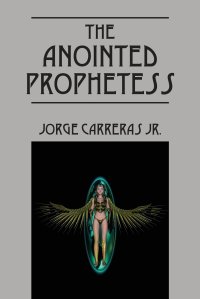
“The Anointed Prophetess” : A Saturday Self-Published Book Review

Book reviews are a great way for self-publishing authors to gain exposure. After all, how can someone buy your book if he or she doesn’t know it exists? Paired with other elements of your book promotion strategy, requesting reviews is a great way to get people talking about what you’ve written.

When we read good reviews, we definitely like to share them. It gives the author a few (permanent) moments of fame and allows us to let the community know about a great book. Here’s this week’s book review, courtesy of EverydayLifes.com:

the anointed prophetess by jorge carreras jr

The Anointed Prophetess

by Jorge Carreras, Jr.

Publisher: Outskirts Press

ISBN: 978-1478741183

Synopsis*:

Fans of The Harem Games, the long awaited sequel has arrived. The Anointed Prophetess begins where The Harem Games ended. The action, in all senses of the word, is far more intense. Not only does Alex have to deal with the affections of more brides, but the threat against his family is far greater. Now instead of amateurs with delusions of grandeur, he must face soldiers armed with high grade military gear and tactics, high level propaganda with the media in collusion, and a reluctant army of convicted criminals on his side. Unfortunately for his enemies, threatening his family is the quickest way to earn his wrath, and as we saw in the Games, his wrath can shake the heavens, literally. This is no game, this is war! Complicated plots, shadowy conspiracies, and brutal combat all precede the truth about the outbreak that nearly brought mankind to extinction, and the response of the survivors, and their descendants.

Critique:

I must admit I have been waiting for the sequel to The Harem Games. I really like the character of Alex and even though this book series has an eerie feel of another such popular book with a similar title I couldn’t help but get sucked in again. This second installment of the series did not disappoint. Filled with even more action and adventure with twists and turns.

I was really taken in by how each character had their own strength and weakness. But as a team they were a power not to be messed with. The characters are all very unique and individual. This book is a real page turner and it keeps a great flow of writing. though as I said it eerily resemble another book series it is an enjoyable read.

reviewed by Rebecca Bryant at EverydayLifes.com ]

Here’s what other reviewers are saying:

first of all l would like to say a big thank you to Jorge carreras Jr for sending me this book and giving me a chance to read it. l was sent this book in exchange for a honest review. l got sent this book by bostick communications who l want to say thank you to them as well. l am glad this book is on my book shelf. l would tell people that you should step outside your comfort zone with books because it is good to add more authors and genres to your reading portfolio even if you do not read books like this l normally do not read like this but l stepped outside my comfort zone with genres and authors l am so glad l did because l have read so many great books. l found this book real easy to get in to and l really enjoyed reading this book. l loved this nook and when l finished reading the story and l found out the author had kindly signed my book and l highly recommend this book to anybody and it was a really enjoyable read and book. l would to read more of this storyline and read more from this author.

Amazon Reviewer donnabookreviews

I was a little confused at first when I started reading( as this is the sequel to The Harem Games) but I quickly caught on as the story continued foreword. I love how the Matriarchy broke their own rules, which lead to the winner fighting back. This would also be a good book to read allowed in classes to teach about the difference between script writing and paragraph writing.

– Goodreads Reviewer Ariel

* = courtesy of the book’s Amazon book page.


saturday self-published book review

Thanks for reading!  Keep up with the latest in the world of indie and self-published books by watching this space every Saturday!

Self Publishing Advisor

selfpubicon1

Conversations: 10/21/2016

INTRIGUE Plus SUSPENSE Plus MYSTERY

Tightens The Threads


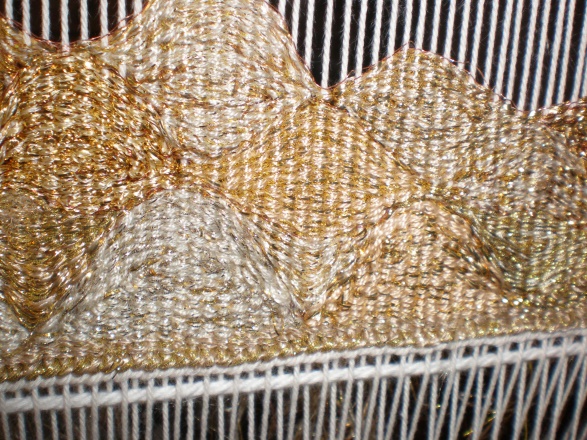
Just yesterday I heard a word I hadn’t heard or seen used for years. The word is Brinkmanship. My definition for it (from the creative writing perspective) is “to bring Readers to the BRINK of solving the mystery, then strategically pulling them away from that answer only to maneuver them onto another path.” When writers hone this skill they produce wonderful adventures that not only challenge our logical thinking abilities but satisfy the soul. Much like the tapestry illustration shown here, the various color hues (characters) and textures (plot/angles) intrigue us and bring us joy.

texture

Agatha Christie is one of the best and most read novelists. She instinctively knew how to weave the threads of Intrigue, Suspense and Mystery into puzzle-patterns creating beautiful whodunits that tantalize us, frustrate us and bring us to the brink of giving up before they allow us to discover the truth. Here are a few of the techniques she used.

Clues: A spot of blue ink is found under the desk. Ah! A clue! Clues provide information to one or more characters and to the Reader. These include tangible objects the blue ink pen found on the suspect’s desk or fingerprints, or a letter clenched in the victim’s hand. And, as in real life, other objects might be collected but have nothing to do with the mystery which become false clues leading our characters (and readers) to wrong conclusions—for a short time.

Red Herrings: the technique that uses an event or statement to overtly mislead characters (and readers). However, this does allow everyone to deduce (logically) whether or not this piece of information has relevance to the story. These red herrings do keep Readers from figuring out what’s really going on sooner than outlined.

The Suspects: Because I enjoy the complexities of well-developed characters this is my favorite part of any novel genre but especially the Mystery. From the tailor to the butler, the undercover police officer to the priest, the chef to the hobo—almost every character in the book could have a reason to be suspected even though slight.

Disguises can also add elements of intrigue and suspense to both characters and the settings (atmosphere/environment) in which we place them. This is a camouflage of either people or places that gives our Readers pause to consider another possible (logical) course in the storyline and keeps those pages turning

Successful authors who employ these techniques—no matter what the genre—often use opening sentences that incorporate several of points. Here is the example of a first sentence in a novel that does just that.

“When the car stopped rolling, Parker kicked out the windshield and crawled through onto the wrinkled hood, Glock first.” Richard Stark, Backflash

Immediately the Reader is presented with several clues, a character/suspect with enough strength to crawl out of a wrecked car with a gun in his hand. When writing skills are honed to the point of creating opening sentences like this one, publishing success is right around the corner. ⚓︎


Royalene

ABOUT ROYALENE DOYLE: Royalene has been writing something since before kindergarten days and continues to love the process. Through her small business—DOYLE WRITING SERVICES—she brings more than 40 years of writing experience to authors who need “just a little assistance” with completing their projects. This is a nice fit as she develops these blogs for Outskirts Press (OP) a leading self-publisher, and occasionally accepts a ghostwriting project from one of their clients. Her recent book release (with OP) titled FIREPROOF PROVERBS, A Writer’s Study of Words, is already receiving excellent reviews including several professional writer’s endorsements given on the book’s back cover.  

Royalene’s writing experience grew through a wide variety of positions from Office Manager and Administrative Assistant to Teacher of Literature and Advanced Writing courses and editor/writer for an International Christian ministry. Her willingness to listen to struggling authors, learn their goals and expectations and discern their writing voice has brought many manuscripts into the published books arena.

In Your Corner: The Proof is in the Pudding

Get it?  We’re going talk about book proofs this week as a part of our ongoing series about choices–the choices you make as a self-publishing author in the midst (and mist!) of an often long and complicated process.  Previous entries in this series have included “Choosing a Self-Publishing Company,” “Choosing a Trim Size for Your Book,” figuring out how to “Know Thyself (& Thy Genre),” “Settling on a Price,” “Choosing a Cover,” and last week’s exploration of what we called “The Guts of the Thing” and which essentially boiled down to interior design–illustrations and formatting.  The assumption with last week’s post was that if you struggle to summon up the skills, time, or energy to worry about the graphic design components of your book, you can theoretically find assistance from exterior (and even paid professional) sources.

But what about proofing your book?

Proofing Your Book

That thing we all hate and try not to think about.

book proofing

Here’s the deal with proofing:

It’s not really something you want to outsource, even to a professional.  Copyediting, yes, but proofing … less so.  This is because the proof is the final step before actual publication, and it’s important that you be the last person to lay eyes on it before it goes to the presses.  It was your vision, after all, that led to its creation–and you want to make sure that it is your vision, in the end, which guides it to completion.

This is the moment of truth.  So how do events unfold?

The printed proof arrives on your doorstep, or in your mailbox, or perhaps you’re overexcited and actually show up at the printer’s to get it.  The point is, it’s in your hot little hands and ready to go.  Almost.

Up to this moment, the book you’ve been dreaming about and actively shaping has only ever been real to you in the way that pixels and Microsoft Word documents are real.  Maybe you’ve printed off a copy, to get a better look at layouts and formatting and illustrations and typography–but that’s not really the same thing as a finished book, is it?

And trust me, after that initial shiver of anticipation passes, it’s time to pull out the red pen, because there’s always something that’s slipped through the cracks and that needs addressing before you click the final keys or give your Publishing Consultant the final go-ahead.  Your proof is, as its name implies, the evidence that you’ve done everything correctly.  Or it ought to be.  As I said, your first proof is usually an exercise in addressing little errors that were invisible on your computer screen or in printouts but that, in printed form, pop off of the page.  It could be an incorrect font, a weird space, typographical errors, a misaligned paragraph–anything.  As perfect as your last manuscript was in digital form, sometimes it doesn’t translate perfectly to the printed page.


What should I watch out for?

First of all, take a deep breath.  Now, let it out.  Proofing can be painful in some ways, mostly because you’re having to spend more time obsessing over the minutiae of your book, but it’s worth it.  A few tips and tricks and mistakes to watch out for, and your book will look and feel as good as if it had gone through the entire rigmarole that traditionally published books have to.

  • Step One: Read your book like a book.

Just go for it.  Read the whole thing through, start to finish, checking for common typographical errors and inconsistencies as you would in reading a normal draft.  Check that the text is complete, and that no paragraphs are missing or sentences cut off by a page break.  Only you, the book’s author, are going to catch omissions like that.  And while you’re reading, keep an eye out for odd or inconsistent use of fonts, punctuation (particularly hyphens and the “curled” version of quotation marks), as well as line and word spacing.  You can pass the book on to someone else to double-check your impression on these last points, too–that never hurts.

  • Step Two: Squint and stare.

Once, in college, I was taking an illustration course and my professor gave me one of the most important pieces of advice I’ve ever heard: “Step back from what you’re working on, squint so that everything is just a touch blurry, and see what’s missing.”  By stepping back and letting things get a touch blurry, you as an author and artist are ignoring the content of the text and seeing it for what it is in addition to being a story: a collection of visual components.  You’ll be better able to spot orphans and widows (single lines at the bottom or top of a page), inconsistencies in running heads and chapter or part titles, and the dimensions and placement of graphic elements like illustrations, page numbers, chapter openers, and so on.  Double check that odd-numbered pages are on the right hand side of the centerfold.  Double check your references and footnotes if you have them–that they’re there, and that they’re on the right page–as well as the consistency of your paragraph indents and other alignments.

  • Step Three: Turn it over. And over.

Try it.  The front and back covers of your books should look exactly as you requested or input them to be, and they should meet your exact specifications of color, contrast, clarity, and placement.  The barcode, ISBN, blurbs, description, biographic information, and other nuts and bolts should all be in place, attractive, and correct in spelling and form like the rest of your book.

*****

Proofing your book isn’t simply a matter of going through the motions.  It’s vitally important that you care about this stage of the process the same way you care about every other stage–if you go through the trouble of correcting a proof and upload your revisions, you’ll have no doubts when it comes time to send your book out into the world to its new readers.  You’ll face whatever comes next with confidence, pride, and a sense of intrepid adventure.  And next week, we’re going to look at what some of those steps might be!

You are not alone. ♣︎


Elizabeth

ABOUT ELIZABETH JAVOR: With over 18 years of experience in sales and management, Elizabeth Javor works as the Manager of Author Services for Outskirts Press. The Author Services Department is composed of knowledgeable publishing consultants, pre-production specialists, customer service reps and book marketing specialists; together, they all focus on educating authors on the self-publishing process to help them publish the book of their dreams. Whether you are a professional looking to take your career to the next level with platform-driven non-fiction or a novelist seeking fame, fortune, and/or personal fulfillment, Elizabeth Javor can put you on the right path.

Bringing in the Harvest!

“The law of harvest is to reap more than you sow.
Sow an act, and you reap a habit. Sow a habit and you reap a character.
Sow a character and you reap a destiny.”

– James Allen


Harvest Celebration: a time of merriment, ample food, music, and a reprieve from the hard work done in the fields during the growing season. A time to reap the fruits of your labor, a time to celebrate the coming to life of what were just a few months ago mere seeds being pushed into the soil.

As an author, you know the feeling. A seed of an idea that you invested hours into watering; you weeded out the grammatical errors; you kept it safe from the cold bouts of dwindling motivation; and you watched it grow from a sapling of a paragraph into a full grown manuscript. The celebration of creativity, of growth, and of life is one that farmers and writers alike can share.

harvest illustration

Harvest Celebration focuses on the tradition of communities coming together. You can use this time of year as a platform to host an event that showcases local authors and that celebrates the creative members of your community. Perhaps showcase the history of authors in your community, or writing that showcases the history of your community itself. Host a reading where people can stand up and share excerpts from their favorite books or poems by local authors or about local history. Collaborate with local farmers, wineries, etc. and try to get food donations to provide those who come to your event.

Another idea: ask local farmers to share some of their favorite poems or stories about farming, or perhaps ask them for samples of their own writing if they have it. If that’s too much socializing or too much of a hassle to collaborate for you, find agricultural writing on your own or with the help of a few close friends. Put together a small book that can be given away at a harvest festival in your area to showcase written expressions about the relationship between human beings and their environment. Authors and poets like Wendell Berry, who was a farmer in Kentucky for much of his life, would make for terrific samples in a piece like this.


“We have the world to live in on the condition that we will take good care of it.
And to take good care of it, we have to know it.
And to know it and to be willing to take care of it,
we have to love it.”

– Wendell Berry

Celebrate what farmers have reaped healthy crops from their harvest, celebrate writers who have reaped wonderful stories and poems from their lived experience, and celebrate your community, and communities around the world, who have allowed for these people to flourish. This Harvest season, may your bellies be full of good food, and may your bookshelves be full of good stories.


Thank you for reading!  If you have any questions, comments, suggestions, or contributions, please use the comment field below or drop us a line at selfpublishingadvice@gmail.com.  And remember to check back each Wednesday for your weekly dose of marketing musings from one indie, hybrid, and self-published author to another. ♠


Kelly

ABOUT KELLY SCHUKNECHT: Kelly Schuknecht is the Executive Vice President of Outskirts Press. In addition to her contributions to the Outskirts Press blog at blog.outskirtspress.com, Kelly and a group of talented marketing experts offer book marketing services, support, and products to not only published Outskirts Press authors, but to all authors and professionals who are interested in marketing their books and/or careers. Learn more about Kelly on her blog, kellyschuknecht.com