Marketing Missteps Episode 4 : Designing your own book cover

Three weeks ago, I began this series to define and explore some of the many important marketing mistakes I’ve made or seen made over my many years of experience in the self-publishing industry.  I say “important” because each of the missteps I’ve listed: Devolving into a self-centered campaigner,  confusing the sales message with the marketing campaign, and waiting till the book is done to start marketing–each of these things can tank your book sales singly and for a long time, and a combination of these mistakes will leave you struggling to recover years in the future.  The worst part is, they’re all incredibly easy to make, and making one or two is no bad reflection on you as a person and writer, but the inevitable consequence of those of us who do know choosing not to share that information.  After all, there are so many hundreds of thousands of blog posts, advice columns, and self-help books out there these days–it seems impossible to filter them all.

That’s why this series is here. These are the Big Ones, the Absolute Disasters, the mistakes you really must work to avoid when possible, and work to minimize if unavoidable. And what’s this week’s misstep, you may very well ask?

Designing your own book cover.

book covers

… or at the very least, designing your own book cover without seeking professional advice.

A book cover is a powerful thing.  It’s the first thing your readers see when they pull books off of the self at their local indie bookstore.  It’s the first thing they see when they Google your name and click on your Amazon author page.  It’s what distinguishes your book, on sight, from every other book on the market–and at the same time, a good cover will clue your readers in on the genre and atmosphere of your book.  It’s one of the most important puzzle pieces in your marketing plan, so crafting a good book cover just isn’t enough.  You need to craft a perfect book cover.

Hiring a graphic designer is worth it.  You’ll hear a lot of waffling on this subject in various corners of the internet, and allowing for the remote possibility that you may be a working graphic designer yourself, perhaps you yourself do have the skill to create something that will knock new readers flat with its beauty and efficacy.  In general, however–and the graphic designers amongst you can affirm this–the best artistic work is done by paid professionals on the clock, working as part of a responsive design team who can provide feedback as the design process is underway.  Graphic designers who have worked in the book industry for years are more than just paid consultants for your book cover: they have been around long enough to know the ins and outs of the big picture, and they are invaluable resources in positioning your book for success in both visual and contextual ways.

The other day, I was browsing the Goodreads giveaway page, and I noticed something.  Every book with a beautiful custom cover that displayed well at the size of a postage stamp had more than a thousand entries–a thousand people vying for copies of that book.  And every book with one of those tacky, generic-looking free template covers?  The numbers fell to somewhere between twenty and forty.  There are of course other mitigating factors (books published by traditional means will have a large-scale marketing campaign funneling more people on to Goodreads in the first place, for example), the trend was noticeable enough to be undeniable.  You want your book to grab people, even in competition with high-powered traditionally published works!

So find yourself a designer, or purchase a package from a hybrid self-publishing company that puts your book in the running for Most Beautiful Book on the Goodreads Giveaway Page.  You want your book to be that book.


book cover design


Thank you for reading!  If you have any questions, comments, suggestions, or contributions, please use the comment field below or drop us a line at selfpublishingadvice@gmail.com.  And remember to check back each Wednesday for your weekly dose of marketing musings from one indie, hybrid, and self-published author to another. ♠

KellyABOUT KELLY SCHUKNECHT: Kelly Schuknecht is the Executive Vice President of Outskirts Press. In addition to her contributions to the Outskirts Press blog at blog.outskirtspress.com, Kelly and a group of talented marketing experts offer book marketing services, support, and products to not only published Outskirts Press authors, but to all authors and professionals who are interested in marketing their books and/or careers. Learn more about Kelly on her blog, kellyschuknecht.com. 10:00 AM

In Your Corner : Celebrate National Reading Month With These Marketing Tips! (summary edition)

Four weeks ago, I set out to gather together my absolute all-time favorite marketing advice––advice I have both given and received over my years as a self-publishing advocate working in sales and management––and today is a good day, because I get to look at it all together.  Over the course of four Thursdays, I have laid out a map––a blueprint––for an indie author’s success on the marketing trail: Fourteen tips you can put to work as you decide upon your own personal priorities as an author and put together your own marketing campaign.

They are:

Part One:

  • GETTING STARTED : Become the local expert.
  • TIP TWO: Get ’em while they’re young
  • TIP THREE: Consider online advertising
  • TIP FOUR: Introduce new formats of your book

Part Two:

  • TIP FIVE : Ask for book reviews
  • TIP SIX: Request peer reviews
  • TIP SEVEN : Create a mailing list or Facebook group

Part Three:

  • TIP EIGHT : Craft a “keep in touch” plan
  • TIP NINE : Go to the Press
  • TIP TEN : Get your next manuscript off the drawing board
  • TIP ELEVEN : The book must be blogged!

Part Four:

  • TIP TWELVE : Give your blog or website a face lift
  • TIP THIRTEEN : Play well with others
  • TIP FOURTEEN : Take the Grand Tour


If you think this list is a long one, consider this: Marketing is no joke.  It’s not an easy thing to do, especially if you’re embarking upon the journey solo.  You’ve already done some mammoth work in finishing your manuscript––in being an author, period––and to be faced with a list like this might seem daunting.  Which is why I didn’t really want to leave you with fourteen tips.  What I really want is to leave you with one.  And so, without further ado, I give you:

THE ONLY TIP YOU’LL EVER NEED: Let others help shoulder the burden

This is both the simplest and the hardest thing of all.  We’re indie authors.  We are accustomed not just to wanting to go it alone, but to having to go it alone.  But the thing is, we’re at a critical and beautiful point in the self-publishing industry’s evolution: every door is open to us, and nobody is looking to slam them shut on someone just starting out, or on a veteran who needs to change things up.  Take a breath.  Take all the time you need.  This is and always will be, your story.  And it will be exactly what you want it to be, even if you have to ask for a little assistance along the way.

There are more resources than ever before available at your Google-savvy fingertips.  There are hybrid self-publishing companies offering incredibly diverse kinds of assistance, tailored to your needs.  There are advocates like me and like many of the people I work with at Outskirts Press who want nothing more than to help you achieve what you want to achieve.  We’re here for you, and we’ll always be here for you.

Now more than ever before, one thing is true:

You are not alone. ♣︎

making a list and checking it twice


ElizabethABOUT ELIZABETH JAVOR: With over 18 years of experience in sales and management, Elizabeth Javor works as the Manager of Author Services for Outskirts Press. The Author Services Department is composed of knowledgeable publishing consultants, pre-production specialists, customer service reps and book marketing specialists; together, they all focus on educating authors on the self-publishing process to help them publish the book of their dreams. Whether you are a professional looking to take your career to the next level with platform-driven non-fiction or a novelist seeking fame, fortune, and/or personal fulfillment, Elizabeth Javor can put you on the right path.


Marketing Missteps Episode 2: Confusing the Sales Message with the Marketing Campaign

Those of you who have been following my Wednesday posts here on Self Publishing Advisor for a while will probably have picked up on a couple of my habits by now, and one of them is diving into series that examine the many facets of an issue under a microscope.  I like to see every angle, follow every lead, and to be thorough.  Which is why, in continuing this new series that began with last week’s post on the subject of “Marketing Missteps” I want to do full justice to the heart of the matter.

What, then, is the heart of marketing?

This is the question that has rightfully dominated boardroom discussions at the top traditional publishing houses as well as the living rooms and kitchens and offices of thousands of entrepreneurial independent authors’ homes. Marketing, when push comes to shove, is about raising both awareness about and motivated interest in your product.  And by “motivated interest,” I mean the kind of interest that leads to product sales.  But note one thing: the sales come after the awareness.  To push for sales with a mercenary if understandable motive is, as an author, to do both your book and your readers a disservice.

To prioritize sales above the human being on the other end of the Facebook group, the email listserv, the Twitter feed, the phone line, the book signing table, and the Goodreads book page is to declare your financial gain to be more important than quality human communication, and art.  Readers, like everyone else in the market for new acquisitions, have a sixth sense about pushy and over-eager sellers.  And here’s a fact:

Your readers want you to be a storyteller, not the stereotype of a used-car salesman.

sales

So, what does “pushy” look like and how can you avoid it?

Many first-time self-publishing authors release a book accompanied by persistent announcements across all social media platforms––and not just cute little notices, but noisy and self-interested announcements.  (And if you’ll remember, we talked about the self-centered marketing campaign last week in detail.)  Marketing is a more subtle endeavor than a Sears Factory Clearance ad, however.  You are entering a crowded market––with around five hundred thousand new books released each year––with every other entry clamoring for readers to spend money.  When you as an indie author begin shouting into the void, cramming shotgun marketing messages into every available Tweet and post and picture and conversation––well, you do nothing but damage.  You have become part of the background noise readers must filter through every day, in search of a story they actually connect with.

And how not to become yet another unheard voice?  Lead with your wit and your humanity.  Look to the authors you admire on social media and their blogs and elsewhere––how much space do they dedicate to explicitly sales-related messaging?  I guarantee you it’s not much.  Instead of constantly pushing links to sales pages, the successful self-publishing author and marketer is increasing the value proposition of both their own personal brand––as an author and person––as well as the value proposition of the their work (published and ongoing).

We’ve mentioned it many times before and elsewhere that the best marketing strategy is to write another book and to talk about that process instead of constantly pushing sales for an already published book––readers will have their interest piqued by a work still in progress in a way they won’t be by something they can simply hop on to Amazon or Goodreads to read detailed reviews about.  The mystery of an unfinished novel is an incredible asset!  Whatever else you do, don’t stop writing––offline.

Don’t confuse sales messaging with a healthy and engaged marketing campaign.  Do remember how you first fell in love with a book, an author, and filling your bookshelves.  That is the kind of positive impulse that you want to tap into.

sales


Thank you for reading!  If you have any questions, comments, suggestions, or contributions, please use the comment field below or drop us a line at selfpublishingadvice@gmail.com.  And remember to check back each Wednesday for your weekly dose of marketing musings from one indie, hybrid, and self-published author to another. ♠

KellyABOUT KELLY SCHUKNECHT: Kelly Schuknecht is the Executive Vice President of Outskirts Press. In addition to her contributions to the Outskirts Press blog at blog.outskirtspress.com, Kelly and a group of talented marketing experts offer book marketing services, support, and products to not only published Outskirts Press authors, but to all authors and professionals who are interested in marketing their books and/or careers. Learn more about Kelly on her blog, kellyschuknecht.com. 10:00 AM

Marketing Missteps Episode 1: The Self-Centered Campaign

You’re a self-publishing author, recently come out with a new book, and you’ve already decided to throw yourself into marketing in a serious capacity.  So what next?  Finding that starting point is a tough first act, but it’s always helpful to know a couple of false starts that others have made before you, isn’t it?  That way, at least you know a couple of places not to start, and you can find a path to success that fits your own indie experience, bolstering your skills and steering clear of your weaknesses.

Today, I’m going to begin a new series that will take a close look at several of the most important marketing missteps to avoid; the story doesn’t end here, of course, but hopefully this series will prompt you away from the edge of a few abysses.  One or two of the mistakes I’ll point out may strike you as “common sense” points, but as my dad once whispered to ten-year-old me on a sidewalk corner facing a four-way stop in heavy traffic where nobody could quite figure out the correct right-of-way: “Common sense ain’t so common now, is it?”  Even if a mistake strikes you as obvious, every reminder is a good one!

This week’s post is going to examine one of the most pernicious of all marketing missteps: that of the self-centered campaign.  At its simplest distillation, the self-centered campaign will alienate you from your readers quicker than a ten-year-old at a traffic stop.  Why?  Because readers are smart.  (I find it’s a wise policy to always assume my readers are smarter than I am, and they always seem to notice even the tiniest of continuity errors in my work before I do!)  They will pick up on the arrogance–intentional or unconscious–of an author who makes their marketing campaign all about his or her excellence instead of shining the spotlight on the real stars of the show: the book itself, and the readers who have so cleverly fallen in love with it.

arrogance in marketing

Here’s a hard fact to swallow: Your readers won’t always care about you, the author.  You might be able to persuade them to, a little, over time, simply by virtue of writing excellent social media posts or demonstrating sensitivity to others.  One crucial misunderstanding that self-publishing authors make is believing that they and their readers value the same things.  Hopefully, your readers will care about your humanity and the work you produce, but beyond that is murky waters.  How do we un-murkify them?  By doing the work.  By doing the research.  By figuring out what you do for your readers that no one else can.

To successfully market your indie book, don’t sell the customer your product (or book) … sell them your solution to their needs.  What issues interest your readers?  What subjects compel them?  These are the basic components with which you can build a successful marketing campaign.

Market research, even basic, is more than just helpful.  It’s necessary.  It is the one magical ingredient that will move your strategy away from something self-centered and toward something that is product- and consumer-centered.

But how to get there?  What are the best strategies for research?  One consideration might be to craft a simple survey with SurveyMonkey, or to poll a small focus group.  I recommend steering clear of using friends or family as focus group members, since their personal connections to you will skew how they answer.  And besides, online crowd-sourcing platforms like the aforementioned SurveyMonkey (as well as Facebook Groups and Google Forms) make for an inexpensive replacement for focus groups.  What you ask depends on what you find useful, but it might be worth crafting a few questions that speak to your readers’ genres of interest, the amount of time they spend reading or on social media, and how they like best to engage with fellow fans and their favorite authors.

Whichever avenue you pursue, these basic data-gathering methods should give you new insight into your readers, and help you shape your marketing message to focus less on you and more on the them.


Thank you for reading!  If you have any questions, comments, suggestions, or contributions, please use the comment field below or drop us a line at selfpublishingadvice@gmail.com.  And remember to check back each Wednesday for your weekly dose of marketing musings from one indie, hybrid, and self-published author to another. ♠

KellyABOUT KELLY SCHUKNECHT: Kelly Schuknecht is the Executive Vice President of Outskirts Press. In addition to her contributions to the Outskirts Press blog at blog.outskirtspress.com, Kelly and a group of talented marketing experts offer book marketing services, support, and products to not only published Outskirts Press authors, but to all authors and professionals who are interested in marketing their books and/or careers. Learn more about Kelly on her blog, kellyschuknecht.com. 10:00 AM

In Your Corner : Celebrate National Reading Month With These Marketing Tips! (part one)

March is National Reading Awareness Month!  Here at Self-Publishing Advisor, we love the fact that there’s an entire month devoted to celebrating the written word–as well as the ways in which we can spread the joy of literacy–and I would like to invite you to join me in making reading a focus all month long, here in our Thursday blog post slot.  

As writers, we’re not just people who produce stories; we also consume them, share them, and advocate on their behalf.  As writers, March of 2016 is the ideal time for you to not only finish your book and start publishing it, but also to promote yourself and your book while encouraging everyone to read.  

Think this sounds like a challenge?  Maybe it is.  But I have some pointed ideas to get you started.  This is doable.  I promise you!  All you need to do is dedicate some time each day this month to pursuing the marketing and promotion tips I’ll be posting here for the next four weeks.

GETTING STARTED : Become the local expert.  

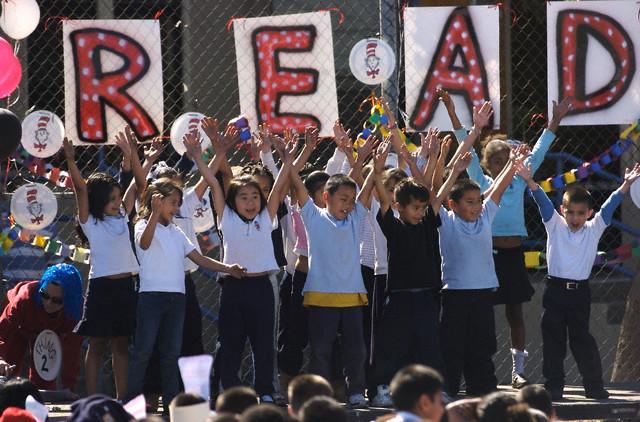
If you haven’t heard of National Reading Awareness Month or know the details of its longstanding connection to Dr. Seuss’ birthday, the history of the National Education Association, and how you can participate … well, it’s time to you pay a visit to the NEA’s website and browse through the plentiful promotional materials, media tips, press release tips and fact sheets the NEA has posted there in order to introduce you and other acolytes to the Read Across America celebration.  

Another tip?  It’s well worth offering to speak at local schools and NEA events, or to local organizations on the importance of childhood reading skills.  Many schools, libraries, bookstores, and other organizations welcome the outside help in putting on events of this kind, and yes–there’s something in it for you, too.  The more you make yourself indispensable to your local literary and literacy-building community, the more likely you are to be called on again in the future, and to get word of your own work before fresh eyes.  Best of all, there’s a great deal of satisfaction in knowing you’re helping to foster the next generation of readers–some of whom may go on to read your book!  Which leads me to ….

First Lady Michelle Obama takes part in Read Across America 2012

TIP TWO: GET ‘EM WHILE THEY’RE YOUNG 

Yesterday was Read Across America Day!  Writers are some of the biggest supporters of this day and event.  While you may have missed the boat for 2016, there’s no better time to prepare for the next year than now, when the opportunities (even the missed ones) are fresh on parents’ and teachers’ minds.  Contact local schools, libraries, and nonprofits to find out how you can help promote reading, writing, and kindergarten readiness in general–not just today, but throughout the entire month of March.  Ask if you might partner with some of them in throwing an event next year, in 2017, and start lining up the logistics.  When it comes to scheduling things in March, which is testing season for many American schools, the earlier you get started the better an outcome you can expect.

Read Across America 2007

TIP THREE: CONSIDER ONLINE ADVERTISING  

The last two tips built upon a foundation of interpersonal networking–that is, meeting people face to face and using this method to benefit everyone.  But what about those readers beyond your immediate sphere of influence?  How can you get them reading–and reading your book in particular?  Here’s a thought: Once your book is published, consider whether it might benefit from any online advertising.  You can set up ads on sites like Facebook, Google and Goodreads easily, or with some assistance from your self-publishing company and the marketing consultants they likely keep on staff.  If you’ve published through a company like Outskirts Press (my own stomping grounds), you can count on their staff to help you make your book more discoverable on Google with something like the Google Books Preview Program.

Reading in Madrid

TIP FOUR: INTRODUCE NEW FORMATS OF YOUR BOOK 

You know how it goes: The more easy a thing is to buy, and the more accessible it is to a large number of people, the more sales of that thing will jump.  It’s a well-demonstrated fact that self-publishing authors can reach a larger audience of readers by offering additional formats such as Kindle, Apple iPad or NOOK editions of your book.  And if you’ve only ever published your book digitally, perhaps it’s time you branched out into Print on Demand (POD) copies of your masterpiece!  Consider which formats you want to offer and add them before or after your hardcover format hits the virtual shelves.  If you feel inexpert in how to make the most of a multiplatform, multiedition publication, don’t hesitate to turn to those with the most wisdom to share: your fellow self-publishing authors!  We’re here for you.

Always remember: you are not alone. ♣︎

ElizabethABOUT ELIZABETH JAVOR: With over 18 years of experience in sales and management, Elizabeth Javor works as the Manager of Author Services for Outskirts Press. The Author Services Department is composed of knowledgeable publishing consultants, pre-production specialists, customer service reps and book marketing specialists; together, they all focus on educating authors on the self-publishing process to help them publish the book of their dreams. Whether you are a professional looking to take your career to the next level with platform-driven non-fiction or a novelist seeking fame, fortune, and/or personal fulfillment, Elizabeth Javor can put you on the right path.