Self-Publishing News: 4.30.2018 – April Round-Up

the word "april" from the wooden letters

And now for the news!

Some highlights from this month in the world of self-publishing, wrapping up what’s new for you and yours in April 2018.

Everybody we know opts to hear the bad news first, so here goes: In 2017, ebook sales dropped for perhaps the first time ever. Writes Adam Rowe of Forbes, this may (MAY) have something to do with that nifty little move publishers made back in 2015 to raise ebook prices: “In 2015, the Big Five publishing houses raised ebook prices to around $8 a book, far higher than the $3-a-book price point independent publishers settled on,” writes Rowe. There’s a lot to unpack in this not-complete-bad-news story, and some of it is even downright good news for self-publishing authors and lovers of the indie press. Says Rowe: “Traditional publishers priced themselves out of the market, and their 10% drop in 2017 is just the latest evidence that the value a traditional publisher adds — whether editing, gatekeeping, or marketing — isn’t as highly valued by ebook buyers as a low pricetag.” Word to the wise: provide unique content, keep your book affordable, and readers will come. Amazon may have an eye on monopoly, but other indie presses and publishers aren’t out of the fight.

And now for the unremittingly good news! It’s that time of year again–time for the CIPA EVVY nominations. If you haven’t already heard of these, here’s what you need to know: each year, the Colorado Independent Publishers Association opens its digital doors for nominations of the best independently published books from the previous year. This year, submissions are accepted up until May 19. Then, on July 31, CIPA will announce the winners in each open category at their annual banquet and celebration. Those interested in entering will pay a fee, however, and the fee climbs the closer you get to the final submission deadline. Those authors who have published with Outskirts Press receive plenty of bonus exposure and benefits, and a nomination to the CIPA EVVY Awards is a requirement for eligibility for the Outskirts Press Best Book of the Year, which is its own special award to be announced later in the year. For more information about the Outskirts Press service, visit them online at https://outskirtspress.com/options/6064_outskirts_press_official_evvy_awards_submission_by_invitation_only.html.


spa-news

As a self-publishing author, you may find it helpful to stay up-to-date on the trends and news related to the self-publishing industry.This will help you make informed decisions before, during and after the self-publishing process, which will lead to a greater self-publishing experience. To help you stay current on self-publishing topics, simply visit our blog every Monday to find out the hottest news. If you have other big news to share, please comment below.


selfpubicon1

Is Print & Online Advertising Worthwhile for Self-Publishing Authors?

print advertising printer head

Rumors of print’s “death” are greatly exaggerated.  Where else but with specific magazines can you find such a passionate and voracious audience in such a specific niche? How else but through advertising in such specific magazines can you reach every single reader/subscriber with such a passionate interest in that niche? You can’t!  In fact, one might argue that the “print is dead” argument is actually narrowing the focus of magazines, targeting its readership, and therefore helping advertisers successfully discover the specific people (customers) they seek.

If you’ve written a book about dogs, for example, do you think advertising in a dog lover’s magazine would be a better, more focused use of your marketing dollars than advertising on, say, Facebook?  Dog lovers read dog lover magazines cover to cover; they save them; they re-read them; they reference them. And best of all, they see your ad over and over! Compare that to an advertisement posted on Facebook that scrolls by faster than the NY subway they’re taking to work while on their mobile devices.

And once you combine those advantages with bundled/packaged deals nearly all magazines offer to also bring your advertisement to their online audience, print & online advertising really is a marketing and promotional opportunity worth considering.

But this kind of marketing is not without its challenges.  First you need to do your research…

    1. Conduct a Google search. Look for appropriate magazines based upon matching their target audience with the target audience of your book. Compile a list of the 5-10 best options.
    2. Determine the magazine’s subscribers/circulation/print-run.  These numbers are all different, so understand their differences.  Advertising managers will likely lean toward quoting “circulation” because they use a formula (typically created by their own marketing department) that multiplies the print-run total by a “passed-along” variable (which is often exaggerated and differs from magazine to magazine). But they cannot exaggerate a print-run number, and that allows you to compare apples to apples when looking at your 5-10 options.
    3. Determine the magazine’s website visitors.  Here you want to compare monthly unique visitors.  Time spent on the site is also a good parameter.
    4. Determine the magazine’s audience and its reach (demographics). In other words, how successfully is the magazine reaching its target market and is that audience a good match for your book?
    5. Determine print specifications.  This will affect your cost.  How big will your advertisement be (full-page, half-page, 1/3 column, etc.)? Will it be in black/white or 2-color or full-color? How frequently will it run (you typically receive cost incentives to contract for multiple impressions up-front).  These specifications are also important for when you (or your professional designer) create the ad. Some smaller magazines may offer to design the ad for you in order to “close the sale”, so be sure to ask. Don’t know how to design an ad? Your publisher may have a solution.
    6. Research the magazines editorial calendar.  All magazines have an editorial calendar and most of them share it with potential advertisers. The editorial calendar allows the advertiser to match their ad with the content destined to bring the largest and most appropriate audience to a specific issue. If your book is about a Black Labrador, not only do you want to advertise in the dog lover’s magazine, but you want to advertise in the issue featuring a Black Labrador on the front cover.
    7. Get the best deal possible. Print magazines may not be “dead” but many are struggling. Their niche audience is great for you, yes, but in many cases are not reaching the heights (in terms of circulation numbers) most magazines were used to last century.  That usually means you can get a great deal by packaging an advertising buy with some online impressions on the magazine’s website.


brent sampson
In 2002, Ernst & Young Entrepreneur of the Year Semi-Finalist Brent Sampson founded Outskirts Press, a custom book publishing solution that provides a cost-effective, fast, and powerful way to help authors publish, distribute, and market their books worldwide while leaving 100% of the rights and 100% of the profits with the author. Outskirts Press was incorporated in Colorado in October, 2003.
In his capacity as the Chief Executive Officer and Chief Marketing Officer, Brent is an expert in the field of book publishing and book marketing. He is also the author of several books on both subjects, including the bestseller Sell Your Book on Amazon, which debuted at #29 on Amazon’s bestseller list.

Tuesday Book Review: “Molly’s Rocker”

Book reviews are a great way for self-publishing authors to gain exposure. After all, how can someone buy your book if he or she doesn’t know it exists? Paired with other elements of your book promotion strategy, requesting reviews is a great way to get people talking about what you’ve written.
When we read good reviews, we definitely like to share them. It gives the author a few (permanent) moments of fame and allows us to let the community know about a great book. Here’s this week’s book review:

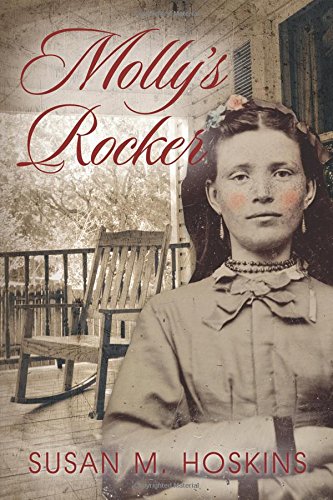
molly's rocker susan hoskins

download

Molly’s Rocker

by Susan M. Hoskins

ISBN: 9781478789741

Synopsis*:

Molly was born the youngest of seven children and the only girl on a tobacco farm in rural Kentucky. Though there’s a lot of love in Molly’s life, family tragedy follows her from childhood through marriage. Molly is left destitute after the betrayal of her husband’s son but she refuses to abandon her dearest friend, Henry Jackson, the son of former slaves. With no land or income, they must survive alone by their wits, enduring the wrath of townspeople who rail against the bond of a white woman with a man of color.

Inspired by the life of her husband’s grandmother, author Susan M. Hoskins wrote Molly’s Rocker as a book to be enjoyed by grandparents with their grandchildren. As warm as Little Women, Molly’s favorite book, Molly’s Rocker, also shares crucial lessons about the tragedy of racism, sexism, and other ways society forms inequalities. Hoskins helps even the youngest of readers understand the frightening connection between tobacco and slavery and what transpired in rural America following the Civil War.

 * courtesy of Amazon.com

Featured Review

“Molly’s Rocker” by Susan M. Hoskins tells the tale of Mary Molly (Van Meter) Fry.  Known by friends and family as simply Molly, the story takes us through Molly’s life from the age of 7 all the way through the end of her life.  The story opens and closes in the present, with her grandson and his wife sorting through old junk in the attic of the family property.  In the process they find an old grand rocking chair and recordings made by Molly, detailing her life as a child and beyond.

The summary of the book as posed by the back jacket supposes that readers are going to read a story about racism and civil rights in late 19th and early 20th century America, something akin to “To Kill A Mockingbird” perhaps, however, that prominent storyline does not really come into play until the last 50 or so pages of the book.  Really, the book takes readers through life as a lower-class farm girl in Kentucky. Readers learn with Molly how to manage house, farm, and family while upholding strong Christian morals and decorum.

While the initial summary is misleading, “Molly’s Rocker” is a decent story.  Molly is a likeable and relatable character who reminds me of Laura Ingalls from the “Little House” books I loved as a child.  Molly goes through her life learning how important the power of love is in raising a family and maintaining a community.  I think this is what the author tried to show when the ideas regarding racism began arising in the latter part of the novel.  The character in question she focuses on in this regard is Henry Jackson, who was born just after Lincoln emancipated the slaves.  He works for a prominent family and comes to be close friends with Elijah Fry, who marries one of the daughters of his employer, and later remarries Molly after the death of his first wife Mary, during the birth of their third child.

A tragedy occurs in the town that sparked because of a struggle between a drunken white man and a young black serving boy who accidentally spilled some water during his duties as a waiter.  The man, who turns out to be running for the Senate, gets physical with the boy, which causes others to join the fray in attempts to restore a peaceful atmosphere.  Instead, a fire is started that rips through the entire town, killing at least two people.  After this, which takes place in the beginning of the 19th century, more dialogue about the evils of racism enter into the text and context of the story.  In all, I don’t think the message assumed by the book summary is that actual message the author was trying to portray.  She still portrayed a good one, as life lessons about love, family, and hard work and strife are always worthy things to learn.

“Molly’s Rocker” by Susan M. Hoskins is a book that can be enjoyed by a wide audience of readers, most likely female in gender, from ages of ten to 80.  Since the book details Molly’s entire life, there is something to appeal to readers of all aspects of life.  Young and old, innocent and wise all have something to learn from the prose.

– reviewed by Megan Weiss on Reader Views

Other Reviews

“Molly’s Rocker” by Susan M. Hoskins is a beautiful narrative about the courageous and inspirational Molly Fry. Molly endured more in her lifetime than most people ever experience, yet she persevered with dignity and grace, a loving heart, and a gentle soul. Molly was truly a woman ahead of her time and “Molly’s Rocker” is a brilliant testament to her life.

The author and her husband Larry discover Molly’s rocker one day while cleaning out the attic. Molly is Larry’s grandson and the son of Molly’s youngest daughter, Tula Mary. Larry remembers his grandmother coming to live with them after a fire destroyed her home. The rocker was the only thing to survive the fire. After seeing the rocker, Larry remembers some old tapes, narrated by his grandmother when she lived with them. These tapes provide precious insight into Molly’s life and the life of Elijah Fry, and how a twist of fate brought the couple together.

Growing up on a Kentucky tobacco farm in the late 1800s, Molly has to quit school at a very early age to care for her family when her mother is taken by consumption. As the new woman of the house, Molly implements some radical changes regarding the roles of males and females and vows to run the farm as an equal to her pa. The reader sees glimpses of Molly’s independent nature and impartiality early on in the story, and when she takes a stand with her father, insisting that women and men should eat at the same time (as opposed to the females waiting for their men-folk to finish their meals), I knew I was going to enjoy learning more about her. One of my favorite lines in the book is Molly’s declaration, “I wasn’t sure what would become of me as the years went by, but there was one thing I knew for sure that night. I was never gonna eat cold eggs again.” Don’t you just love her?!

Readers also learn the story of Elijah Fry, who comes to be Molly’s husband, by what can only be deemed as providence. Though Elijah has a rough start in life, he flourishes under the loving upbringing of his aunt and uncle, becoming a respected member of the community. His tragic past leaves him with trust issues however, and his only real friend is Henry Jackson, the son of former slaves.

Elijah and Molly raise a family, and have a successful tobacco farm. Life is good for awhile, until an unforeseen tragedy leaves Molly and Henry Jackson in dire straits. The two pool their resources to make ends meet, and their friendship causes quite a stink with the bigots and small-minded members of the community. Molly once again shows courage and integrity in the face of those trying to drive them out of town.

This story is absolutely amazing! It encompasses so many issues that are sadly, still relevant today. From feminist issues to racial tensions, the author manages to cover some serious ground in a seamless, thoughtful read.

Whenever I read historical fiction I get so wrapped up in the lives of the characters that I want to know everything about them. Where they lived, environmental conditions, cooking methods used, along with popular food items of the period, clothing styles, education – you name it, I want to know about it. Hoskins has excelled in writing a novel that authentically depicts every aspect of the time period. The characters have depth and integrity, and the dialogue is dead on, taking the reader straight back to another time, place and century. I contentedly imagined myself walking amongst the characters as I was reading.

I am truly in awe of “Molly’s Rocker” by Susan M. Hoskins. Imagine love inspiring a story through an old rocking chair that almost founds its way to a local flea market. I highly recommend this book to fans of historical fiction, coming of age stories, and those wanting to experience the life and times of a different era.

 – reviewed by Sheri Hoyte for Reader Views

I wasn’t quite sure this book was the genre I was looking for. I had read a few of this author’s other mysteries and this did not sound anything like them. I quickly found myself absorbed into the very fabric and folksy details of Molly and her circle of family and friends lives. It was a captivating read . It was interesting to watch Molly through the years affect her family. This is a book that has a few book club discussion questions to mull over a few cups of coffee.

– reviewed on Amazon by T. Packer

I loved this book. It reminded me of The Little House on the Prairie. It is set in the late 1800s around Elizabethtown, Kentucky. It’s based on real people and places, but the author has taken license to invent a storyline and create characters that enhance the tale. In one sense it is old-fashioned; yet, it deals with controversial issues that we still face today. I really liked the dialect that comes from the mouths of some characters. I find it difficult to enter into some fiction, but this one got me. I was close to tears several times. The author writes with an authentic voice that drew me into the scenes. It’s an adult book; but middle school kids would probably enjoy it (though it does deal with some adult matters). I had read one of the author’s previous novels–of the thriller genre, so I knew she could write. Molly’s Rocker was a joy to read.

 – reviewed on Amazon by E. W. McLaughlin

Book Trailer


tuesday book review

Thanks for reading!  Keep up with the latest in the world of indie and self-published books by watching this space!

Self Publishing Advisor

selfpubicon1

Self-Publishing News: 4.23.2018 – Publishing Trends Roundup

the word "april" from the wooden letters

And now for the news!

Some highlights from this month in the world of self-publishing, specifically regarding publishing trends within the publishing industry, and their implications for all authors!

From our neighbors in the still-snowy northlands comes this heartwarming story of Rahma Mohamed, who aims to reshape the publishing landscape by boosting diversity in representation. Her reason? As a Canadian of Somali descent and a mother, Mohamed was motivated by a moment two years ago in which her daughter, then only four years old, saw an Elsa costume (replete with golden hair and light skin) and “pleaded with her mother to buy it so she would look ‘beautiful.'” With little representation of people of color, much less African-American Muslims, in children’s literature it can be extremely difficult for children to find themselves in mainstream children’s literature (from picture books through young adult literature) and identify with the characters. Mohamed has set out, by way of self-publishing her own children’s book, to help tip the balance towards a more diverse, inclusive, and joyful publishing industry. This trend towards diversification and representation isn’t new–it made serious gains over the last five years–but every author who chooses to tackle this thorny issue is, like Mohamed, pushing us further in the right direction. This article comes to us by way of Kashmala Fida of Edmonton’s The Star.

We’ve written about Rupi Kaur before here on Self Publishing Advisor, the self-publishing poet of great Instagram fame who swept North America and the world with her book, milk and honey, which was first released in 2014 and gained serious notoriety in 2016. milk and honey was, after blockbuster success, picked up for a reprint by a traditional publishing house, but the backstory to this book is a celebration of the independent, artistic soul of self-publishing. As Katherine Diaz Villegas of ScadConnector hints at in the title of her article (which is in many ways a nuanced review of the book itself), the Internet’s obsession with Kaur may have as much to do with where we are in this cultural moment as it does with Kaur’s actual content, which is moving in and of itself. Writes Villegas, “Kaur is an authentic and important voice to women, especially those in their teenage years or any transition period. She writes about serious themes of life, love, sex, femininity, oppression, growth and culture. Yet, she writes them in a way that includes self-reflection and acceptance, showcasing strength as she stands up for who she is.” If those lines sounds familiar, it may be because of the national Women’s March which took place recently or the heavy press surrounding the #MeToo and #NeverAgain movements online. Whatever your stance on matters like those Kaur writes about, it’s clear that we are now in a time and place where conversations about them are going mainstream. And self-publishing has in no small part enabled us to get there, by allowing authors with out-of-the-mainstream ideas to publish and reach wider audiences than ever before … and to, perhaps, fuel new movements.


spa-news

As a self-publishing author, you may find it helpful to stay up-to-date on the trends and news related to the self-publishing industry.This will help you make informed decisions before, during and after the self-publishing process, which will lead to a greater self-publishing experience. To help you stay current on self-publishing topics, simply visit our blog every Monday to find out the hottest news. If you have other big news to share, please comment below.

selfpubicon1

In Your Corner: What is so important about editing?

edit editing red pen

Whether you are a self-publishing fiction author, online social network professional, or compulsive blogger, errors in your writing can be a source of discredit, if even implicitly. For example, an industry professional recently noted an example where an author titled an article, “What is your worse fear?

As can often happen, comments exploded following it’s publication. English majors came out of the woodwork to argue usage and the article gained the author attention, but perhaps not the kind intended. Comments didn’t pertain to content, but instead focused on whether or not the author was proficient with the English language. That’s not, in general, what authors want others to take away from their work.

While publishing online has many benefits, technology often allows us instantaneous revision. Book publishing, including self-publishing, is much more permanent. It really is worthwhile to make sure your writing is bomb-proof. Below are five tips you can employ to drastically decrease the chance of mistakes finding their way into your business writing, whether it be a proposal, a website, or a newsletter.

1 – Use an editor

The most common mistakes are minor, such as misspellings or incorrect use of punctuation. Other common errors are incorrect word use (their, they’re, there; or worse, worst, borscht, etc.). A professional editor is adept at noticing and correcting these kinds of mistakes. Your book will reach many human hands; use a human editor.

2 – Get a second, even third, set of eyes

Since you are overly familiar with your own work you are much more likely to miss obvious mistakes because your mind already knows what it is supposed to say, rather than what it actually reads.  So even if you opt away from a professional editor, which most good self-publishing services provide, anyone who reviews your writing will find mistakes you invariably miss. When someone else reads your work, they have no preconceived notions about your writing. At the same time, human behavior will often motivate them to find fault. Use that to your advantage. In addition to finding mistakes, other people may offer constructive criticism to improve your writing overall. Take nothing personally.

3 – Revisit

Do you wait long enough after writing something to begin editing it? Many writers edit their work as they write it. Not only does this slow down the creative process, it increases the chance that your mind will ignore blatant errors in deference to your intentions. Once your brain thinks a paragraph is free from errors, it tends to overlook any new errors that are introduced during the rewriting process. Put your writing away for several hours, days, or weeks (depending upon your deadlines) and revisit it later. After some time away from your work, you will be more likely to read the words as they appear on the page, not as you envisioned them in your mind. The mind is error-free, the page is not.

4 – Read Backwards

Reading your material backwards makes it seem entirely different and fools your mind into ignoring the intention and only concentrating on the reality. Furthermore, your critical view of the writing at its most technical level will not be corrupted by the flowing exposition you have massaged into sparkling prose. When you read your manuscript backwards, it becomes a collection of words. Without contextual meaning, the brain has nothing to focus upon other than the words themselves. Mistakes literally jump off the page.

5 – Read Out Loud

When you read words aloud, your brain must slow down and concentrate on the material. How fast can you read: The quick brown fox jumped over the lazy dog? Now, how fast can you read it out loud? It takes at least twice as long, and those precious milliseconds sometimes make all the difference between a typo that is missed, and one that is caught and corrected. As a popular Internet posting informed us as far back as 2003, it deosn’t mttaer in waht oredr the ltteers in a wrod are, the olny iprmoetnt tihng is taht the frist and lsat ltteer be in the rghit pclae. The rset can be a toatl mses and you can sitll raed it wtihuot any porbelm. Tihs is bcuseae the huamn mnid deos not raed ervey lteter by istlef, but the wrod as a wlohe. But try raednig tihs out luod and see how far you get. An extra bonus for reading your material out loud is that you may discover stumbling blocks like awkward sentence structure and choppy dialogue. Strong business writing is not only dependent on error-free prose; it must be crisp and clear.

You are not alone. ♣︎


Elizabeth

ABOUT ELIZABETH JAVOR: With over 20 years of experience in sales and management, Elizabeth Javor works as the Director of Sales and Marketing for Outskirts Press. The Sales and Marketing departments are composed of knowledgeable publishing consultants, customer service reps and book marketing specialists; together, they all focus on educating authors on the self-publishing process to help them publish the book of their dreams. Whether you are a professional looking to take your career to the next level with platform-driven non-fiction or a novelist seeking fame, fortune, and/or personal fulfillment, Elizabeth Javor can put you on the right path.