
Welcome back to our Tuesday segment, where we’ll be revisiting some of our most popular posts from the last few years. What’s stayed the same? And what’s changed? We’ll be updating you on the facts, and taking a new (and hopefully refreshing) angle on a few timeless classics of Self Publishing Advisor.
∗∗∗∗∗
[ Originally posted: November 10th, 2009 ]
This posts and blog exists to help you make the best informed choices for the future of their books. Whether you’re still in the conceptualization phase or searching for a publisher, these are tips, each worthy of careful consideration.
For example, take a moment and write out your personal publishing goals…
For many authors, these 7 are the most important:
1) Keeping 100% of your rights and creative control to your book
2) Keeping 100% of your author royalties
3) Unlimited wholesale and retail availability
4) Additional marketing support and services
5) Publishing imprint and ISBN flexibility
6) High-quality book design
7) Complete print-run flexibility (1 to 1000s)What would you add to this list?
I don’t know about you, but when we first published this piece on Self Publishing Advisor, we created a bit of cognitive dissonance; while the seven items listed are indeed advantages, they’re not necessarily advantages which show themselves on a shelf (unless you’re filling a shelf with 1000 copies of your book, which is quite a shelf indeed). Instead, we gave you a list of seven fantastic, but more general, advantages to self-publishing.
So, what are the advantages a self-published book might find on a shelf against other, more traditionally published books?
Many people are accustomed to thinking of self-publishing books as at rather a disadvantage, rather than an advantage, on such a shelf. This is because yes, once upon a time, the cover designs available to indie authors were far more limited in customizability than those available to their traditional competitors. After all, traditionally published authors have the full weight of their publishing houses behind them, with their marketing teams, their graphic designers, and their many other well-financed technical experts on staff.
But things have changed. So even if in terms of covers, the playing field is rather more level than tipped to advantage either traditional or indie authors, there are other ways at which indie books can–and often do–rise above the competition. First of all, there’s the local angle. Many bookstores and libraries privilege local authors over the general horde; all you have to do is bring this to the proprietor’s attention. This “local advantage” also works on potential readers, too. Don’t underestimate the immediate impact that this one simple factor can have on your ideal readers!
There are other advantages your indie book can have “out on the table,” of course! Because you control the price, you also control the price tag. The appeal of an affordable number should not be underestimated. But most of all, your book’s cover is your avatar in the world, a representation of you, and a truer one than any publication company could create. That alone is enough to make it stand out.

Thanks for reading. If you have any other ideas, I’d love to hear them. Drop me a line in the comments section below and I’ll respond as quickly as I can. ♠



 this genre. Author Rachel Dupree-Grant offers her true life story—Being Strong in the Faith—that demonstrates it is possible to rise from poverty and climb the ladder of success no matter the obstacles or abuses or storms that are thrown against you. Through every situation she believes God is a Healer and a mountain mover. Rachel includes Scriptures and prayers that help us all grow in Faith and “be strong.”
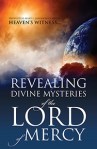 Author, Mary Johnson-Gordon, writes of her personal experiences in Revealing Divine Mysteries of the LORD of Mercy. With boldness she informs us that her book publishing is mandated by God so that all people will know of His extreme—and very real—love for us. Detailing her visions and transport into Heavenly realms where she is taught many things we close the book praying for such a close walk with God. The revelations are, indeed, inspiring and have led me to consider my own writer’s calling—the skills God has planted in me to be an active part of His plans.
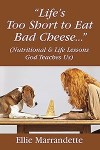 Marrandette offers us sensible Biblical principles in Life’s Too Short To Eat Bad Cheese, as she shows us how to restore and maintain our health and vitality. I love her quote on Amazon: “…people needlessly consume ‘sticks and twigs’ or drink tasteless protein shakes when God has already given us a perfect dietary plan in Genesis.” I don’t know about you, but all my life I’ve heard that “if you just quit eating chocolate and cheese you’ll lose weight.” Finding this author’s book give a whole new perspective for me.


 Self Publishing Advisor