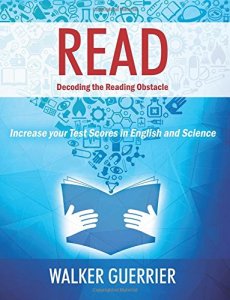
Saturday Book Review: “Read: Decoding the Reading Obstacle – Increase Your Test Scores in Reading and Science”

Book reviews are a great way for self-publishing authors to gain exposure. After all, how can someone buy your book if he or she doesn’t know it exists? Paired with other elements of your book promotion strategy, requesting reviews is a great way to get people talking about what you’ve written.

When we read good reviews, we definitely like to share them. It gives the author a few (permanent) moments of fame and allows us to let the community know about a great book. Here’s this week’s book review, courtesy of Midwest Book Review:

Read: Decoding the Reading Obstacle - Increase Your Test Scores in Reading and Science by Walker Guerrier

Read: Decoding the Reading Obstacle – Increase Your Test Scores in Reading and Science

by Walker Guerrier

Publisher: Outskirts Press

ISBN: 9781478776253

Synopsis*:

This book is design for top students, who have the desire to go above and beyond. I call them the seeds of greatness. The students I grew up who have used this approach are now doctors, scientists, and writers. These particular students became an engineer and doctor. Once you start using this book, your intellect will never be the same. This approach will help you attain your highest potential. Students all over the world use this book as a key to their success.

 * courtesy of Amazon.com

Critique:

A consumable workbook, “Read: Decoding the Reading Obstacle” is especially recommended for both public school, private school, and home-schooling curriculums, and as an ideal, effective, and ‘user friendly’ do-it-yourself study skills improvement manual for college students.

reviewed on the Education Bookshelf of Midwest Book Review ]


saturday self-published book review

Thanks for reading!  Keep up with the latest in the world of indie and self-published books by watching this space every Saturday!

Self Publishing Advisor

selfpubicon1

Conversations: 3/17/2017

MARCH INTO SPRING

WITH A SPRING IN YOUR WRITING STEP Part III

Today I continue with examples of books written by authors who publish in the genre of Inspiration/Faith and who meet my criteria of educational reading that enhances the education of all writers no matter what genre we write.

Many of these authors are sharing their own true stories, revealing the miracles that have taken place in their lives and the lives of people they know. I will admit that this was a genre I avoided for years. I’m not sure why—other than the fact that I was never encouraged to investigate theses book on our library shelves. However, once I connected with several real authors who have published in this category, I can’t seem to get enough of them.

Finding strength and courage to meet life’s challenges is a main topic of royalene1this genre. Author Rachel Dupree-Grant offers her true life story—Being Strong in the Faith—that demonstrates it is possible to rise from poverty and climb the ladder of success no matter the obstacles or abuses or storms that are thrown against you. Through every situation she believes God is a Healer and a mountain mover. Rachel includes Scriptures and prayers that help us all grow in Faith and “be strong.”

royalene2Author, Mary Johnson-Gordon, writes of her personal experiences in Revealing Divine Mysteries of the LORD of Mercy. With boldness she informs us that her book publishing is mandated by God so that all people will know of His extreme—and very real—love for us. Detailing her visions and transport into Heavenly realms where she is taught many things we close the book praying for such a close walk with God. The revelations are, indeed, inspiring and have led me to consider my own writer’s calling—the skills God has planted in me to be an active part of His plans.

My third example today offers practical and healthy living guidance. Author Ellie royalene3Marrandette offers us sensible Biblical principles in Life’s Too Short To Eat Bad Cheese, as she shows us how to restore and maintain our health and vitality. I love her quote on Amazon: “…people needlessly consume ‘sticks and twigs’ or drink tasteless protein shakes when God has already given us a perfect dietary plan in Genesis.” I don’t know about you, but all my life I’ve heard that “if you just quit eating chocolate and cheese you’ll lose weight.” Finding this author’s book give a whole new perspective for me.

As these examples “testify” the Faith and Inspiration genre is wide open to a variety of topics which expands even wider when writers realize this includes the categories of Business, Building, Education, Politics, Personal Relationships and oh, so many more.

And why should we think of great success in this Faith/Inspiration genre? Have you heard about the miraculous publishing story of a little book called The Shack? The author will quickly tell you that he’s just as amazed as anyone about its success. It was on The New York Times Best Seller’s list from June 2008 until early 2010—and the movie was just released this month!

So…let your own Faith be heard! Write! Publish! Be blessed!  ⚓︎


Royalene

ABOUT ROYALENE DOYLE: Royalene has been writing something since before kindergarten days and continues to love the process. Through her small business—DOYLE WRITING SERVICES—she brings more than 40 years of writing experience to authors who need “just a little assistance” with completing their projects. This is a nice fit as she develops these blogs for Outskirts Press (OP) a leading self-publisher, and occasionally accepts a ghostwriting project from one of their clients. Her recent book release (with OP) titled FIREPROOF PROVERBS, A Writer’s Study of Words, is already receiving excellent reviews including several professional writer’s endorsements given on the book’s back cover.  

Royalene’s writing experience grew through a wide variety of positions from Office Manager and Administrative Assistant to Teacher of Literature and Advanced Writing courses and editor/writer for an International Christian ministry. Her willingness to listen to struggling authors, learn their goals and expectations and discern their writing voice has brought many manuscripts into the published books arena.

In Your Corner: Nom de Plume (Part III)

Two weeks ago, I began a quick series on the merits of using a nom de plume–otherwise known as a pen name, otherwise known as a pseudonym–under which to self-publish your next book. The series continued last week, with an examination of the drawbacks of using such a cover, and concluded with the question:

So: You’re ready. What next?

And … here we go.

masked unmasked nom de plume pseudonym pen name

If you’ve decided to adopt a pseudonym, there are a few steps you should take to ensure you do it right. (And by right, I mean correctly!)

  1. Choose wisely. Once you’ve selected a pen name, yup, you’re stuck with it. Or rather, you will want to be stuck with it for a whole host of reasons to do with convenience and consistency, so make sure it’s not a name that ages poorly or that you will grow out of in a year or two. Don’t go overboard in making up a name so memorable that it comes off as goofy to others. Use friends and family that you trust as a sounding board for pseudonym ideas–they’ll let you know if they catch a whiff of something goofy immediately, since your reputation is important to them.
  2. Choose something unique. Don’t settle for your first idea; your pen name should be unique, so it’s well worth your time to do a little searching through Google and so forth in order to check that your pseudonym of choice is not already used by another writer (past or present) since you want to avoid confusion. Also: steer clear of imitating famous names. Stephen King will not be happy when he hears you’ve stolen his name, and you’re favorite dead author wants you to know her estate will be calling to sue, even though she’s long gone. Hunt through the U.S. Trademark Office website to make doubly sure you won’t get into any hot water for duplication, conscious or unconscious.
  3. Put a ring on it. Or, you know, your personal domain. Search for available domain names before committing to a pseudonym, and then buy it. Also make sure to file a Fictitious Business Name Statement if you’re likely to receive payments made out to your nom de plume instead of your real name. This is a real thing, and you should do it.
  4. Put your mouth where your money is. I know, I know, this is a total reversal of the usual statement. But once you put money down on a domain name, you want to make good on that expenditure. Put your pseudonym on your book’s cover and on your copyright notice. It is worth putting the notice in both your real and pen names.
  5. Keep your publisher in the loop. I know this sounds obvious, but it’s crucial that you be in touch with your self-publishing company at every step of this process. They’re the ones who will catch a lot of the flack if something goes wrong, but they also can do a lot to make sure your pseudonym is a success. Talk with them! And if total anonymity is your desire, then you’ll want to make that clear to them, possibly even going so far as to set up a corporation, LLC, or other entity in order to sign your contract under a name other than your real one. But that’s expensive, and complicated. If you are content with being anonymous only to the general public and fully frank with your publisher, there’s little need for that step.
  6. Register that copyright. Look, this might sound like an extra detail, but it’s 100% worth the fiddly work. You really ought to register the copyright of your work under your real name, your pseudonym, or both. There are different ways of going about this, but my personal recommendation is to lean towards “both.” That way, all of your bases are covered and you’ll never be caught out in a tricky legal situation where you can’t prove that your works are, well, products you made yourself.

No matter what, the decision about choosing a pen name rests with you, the self-publishing author, and while there are several potential missteps you might make, good intentions go a long way in the world of words. The one crucial thing you’ll need to do in choosing a pseudonym is to choose it sooner rather than later, especially if secrecy is something you want to weave into your relationship with your publisher. But the sooner you settle on a name, the sooner you can get your cover designs settled, and your copyright paperwork filed, and so on and so forth. “The early bird publishes in a timely fashion” would seem to be the moral of our story this week!

Do you have any questions about pseudonyms that we can answer here on SPA? I’d love to tackle them, or to hear you weigh in on your past experiences with pseudonyms, good or bad. We’re here for you, as a listening ear and a resource.

You are not alone. ♣︎


Elizabeth

ABOUT ELIZABETH JAVOR: With over 18 years of experience in sales and management, Elizabeth Javor works as the Manager of Author Services for Outskirts Press. The Author Services Department is composed of knowledgeable publishing consultants, pre-production specialists, customer service reps and book marketing specialists; together, they all focus on educating authors on the self-publishing process to help them publish the book of their dreams. Whether you are a professional looking to take your career to the next level with platform-driven non-fiction or a novelist seeking fame, fortune, and/or personal fulfillment, Elizabeth Javor can put you on the right path.

Decluttering…Ambitiously!

This week I’d like to take a look at the ways in which we can “declutter ambitiously,” or find ways to set realistic and simple goals for ourselves–including for decluttering! If you had a New Year’s resolution list that was far too grand for your lifestyle, now may be a time to take a look at your goals for the day, week, month or year and refine them to something more accomplishable.

calendar planning


  • Draw up some numbers


How many social media posts do you want to make per week?

How many blogs?

How many pages or chapters do you want to finish per month?

Do you want to have a completed book by the end of the year? Or multiple books?

These goals are very simple and easy to measure. Once you have these numbers down on paper, you can begin to create a schedule that will promote progress towards these now clearly defined goals.

If you want to get three blogs done per week, pick three days that best work with your schedule to do them and treat it like a homework assignment due on Mondays, Wednesdays and Fridays, for example. If you want a book done by the end of the year and you envision it having around twenty chapters, make sure you’re getting a chapter done every two weeks at least–you’ll need to give yourself extra time for editing of course!

  • Use a calendar!

This can be the calendar on your phone or computer or a good ole fashioned paper one. Use the data from step one to make yourself a schedule. Actively engage with this schedule rather than just look at it. When you complete tasks, use a symbol that shows you did so and reward yourself based on your consistency and progress.

This is also useful for noting when you may be realistically too busy to write some weeks, allowing you to stack your writing on other weeks when holidays, busy days at work, family vacations, etc., come up.

If you do use a calendar that is synced with your phone and computer, use the alerts that are available to prompt you and remind you of the commitments you made to your writing. Do not expect to be able to do all of your writing, blogging and marketing in one day, and do not clutter your schedule by even kidding yourself that that is a reasonable workload…which leads to my next point.

  • Set reasonable goals

For some people, writing 500 words a day is a walk in the park. For others, perfectionists and otherwise that might take a couple of days. If you’re honest with yourself you can avoid a cluttered schedule that just gets more and more backed up each day you fail to reach your goals each day. We all know what happens when we get overwhelmed by the idea of falling short of our overambitious goals–we grow anxious and are almost unable to work at all. This horrible paralysis can be avoided by just understanding yourself and being honest with yourself as a writer.


Thank you for reading!  If you have any questions, comments, suggestions, or contributions, please use the comment field below or drop us a line at selfpublishingadvice@gmail.com.  And remember to check back each Wednesday for your weekly dose of marketing musings from one indie, hybrid, and self-published author to another. ♠


Kelly

ABOUT KELLY SCHUKNECHT: Kelly Schuknecht is the Executive Vice President of Outskirts Press. In addition to her contributions to the Outskirts Press blog at blog.outskirtspress.com, Kelly and a group of talented marketing experts offer book marketing services, support, and products to not only published Outskirts Press authors, but to all authors and professionals who are interested in marketing their books and/or careers. Learn more about Kelly on her blog, kellyschuknecht.com


From the Archives: “Traditional Publishing: Hard Facts”

Welcome back to our Tuesday segment, where we’ll be revisiting some of our most popular posts from the last few years.  What’s stayed the same?  And what’s changed?  We’ll be updating you on the facts, and taking a new (and hopefully refreshing) angle on a few timeless classics of Self Publishing Advisor.

∗∗∗∗∗

[ Originally posted: October 17th, 2008 ]

We are in ongoing exploration of the advantages leading self-publishing options offered for publishing authors. Collectively, what are the advantages of self-publishing in general over the long established alternative? Here are some hard facts on Traditional publishing.

7 – Traditional publishers lose money on over 85% of the books they publish, so they only accept 2% of those that are submitted.

6 – They typically accept manuscripts only from established authors who have demonstrated a proven track record.

5 – Authors lose all control of their content during the editing process.

4 – Authors must still invest an enormous amount of time, energy, and money promoting a traditionally-published book.

3- Authors typically receive 5-10% royalty on the wholesale price of the book, and from that have to give 15-25% to their agent. Do the math.

2 – The majority of books published by old-fashioned publishers go out of print within 3 years. Many books that are stocked on book shelves remain stocked for as little as five weeks before being returned, unsold, to the publisher.

1- Old-fashioned publishers acquire all rights to your book and keep them, even when the book goes out of print or the publisher goes out of business!

– by Karl Schroeder

On Advances & Other Things

First off, it’s worth noting that the numbers are all over the board here, and that while the industry’s most reliable source of yearly hard data–the annual Author Earnings Report–isn’t out for this year yet (which makes sense, since we’re only a few months in) it isn’t set up to gauge that kind of question to begin with. Publishers understandably have a vested interest in fogging up the data around advances, especially how many people actually earn them back, because the facts of the matter are such that:

  • It’s a much smaller number than Karl reported back in 2008, probably closer to the 2 to 5% range;
  • Advances protect some authors from facing their own losses, but they also cheat some well-performing authors out of representative royalties in a classic case of “settling for a misleadingly presented benefit”;
  • A high percentage of unmet advances equals a lot of waste, and in an industry which is barely scraping by as-is, this would be a major blow to certain publishers’ reputations as champions of the everyman;
  • A high percentage of unmet advances also equals a slippage in the market, and publishers have to maintain intense competition with each other in order to attract that small number of well-performing authors who do make back their advances, and in so doing make a profit for the publisher as well. Lose a couple of big-name authors because their reputation is slipping, and the rest might flee as well … and the publishing house go under.

So it’s not data that publishers really want to broadcast.

All of this to say, publishers do indeed prefer established authors who have proven track records as blockbuster bestsellers, and newer or more typically performing (“midlist”) authors are left to struggle along with substandard marketing and promotional help, because the publisher doesn’t believe investing more will pay off. These midlist authors must carry the burden of self-promotion themselves, even if they supposedly have the might and muscle of a major publishing house behind them. Only the guaranteed successes are guaranteed significant assistance, and there are very few guaranteed successes, aren’t there?

Control will always be an issue. Perhaps you might consider giving up control, if you knew that you were putting your book into good hands of great skill and leaving your book with a team who really had its best interests at heart. But publishing houses aren’t like that; they have to think about the bottom line at all times, because the industry is so competitive and they’re so often at risk of losing everything. So they make the call on your book cover, maybe even your book title, and on all sorts of marketing and promotional decisions which you may or may not agree with in the first place–because they have to keep the machine moving, and the assembly line in motion.

You might have guessed the preferable option, seeing as how we’re a blog about self-publishing. But we don’t just have a vested interest; we want to lay out all the options, with all the facts, so that you can choose the one best suited to you. And if you know your book is a guaranteed blockbuster success, then traditional publishing may well be a good route for you! But if you’re publishing a book with narrower appeal, maybe more specialized material, or with the goal of reaching a certain fandom–well, self-publishing is an effective and efficient way of doing that, while ensuring you retain full creative control.

That, we can get behind. (And we do … a lot. Sorry about that!)

hard facts child

Thanks for reading.  If you have any other ideas, I’d love to hear them.  Drop me a line in the comments section below and I’ll respond as quickly as I can.  ♠


Kelly

ABOUT KELLY SCHUKNECHT: Kelly Schuknecht is the Executive Vice President of Outskirts Press. In addition to her contributions to the Outskirts Press blog at blog.outskirtspress.com, Kelly and a group of talented marketing experts offer book marketing services, support, and products to not only published Outskirts Press authors, but to all authors and professionals who are interested in marketing their books and/or careers. Learn more about Kelly on her blog, kellyschuknecht.com.