In Your Corner: Common Spelling Mistakes & How To Avoid Them

typo errors spelling mistakes

Have you ever made a spelling mistake?

Well, you’re human (probably), so I’m going to guess that you have. I definitely have. Just the other day, a friend went through a chapter of my latest manuscript and pointed out at least five typos and other errors which had slipped entirely by me.

So, how do we avoid these pesky little guys, spelling mistakes?

The first step is to recognize them for what they are: your brain being highly efficient, not deficient. Research indicates that typos and other errors rarely come from a lack of knowledge or training, but rather from the brain being focused on something else, like narrative, plot, characters, time management, and so on and so forth. These are higher order processes, really quite sophisticated, and as such they take a lot of brain power which otherwise might be spent looking for other things, like typos. Your brain is a beautiful and efficient thing, with certain priorities it doesn’t always share with you, but that’s okay. Just … don’t kick yourself too hard for each typo your friends catch when they read your manuscript. (Yes, I tell myself this, too. Every day.)

The second step is to know which mistakes are the most common. That way, you’ll be–yes–more efficient at catching them. There are struggles that come from words being similar in shape and sound but having different meanings, like foreword and forward. This is called a homophone error. One implies direction (forward) and one is a structural component of a book which serves as a preface or introductory note, usually including the “whys” and “wherefores” of the thing. Complimentary and complementary are also homophones. One means to deliver praise (complimentary) and one means to accessorize well or that one thing works well with another, as in complementary colors. These kinds of errors are what Google was invented for; never be ashamed to look up a word if you’re afraid you might not be catching all of its nuances!

Other common errors include trouble with suffixes and morphemes (substituting “-able” and “-ible” or “-ance” and “-ence”), defying the so-called ‘laws’ of spelling (i before e except after c, u always follows q, et cetera), mixing up how to pluralize tricky words ending in f or y, and composing adverbs. These are common struggles, particularly for people who did not learn English as their first language, and the only way to improve on these is to keep writing. A lot. And to keep a reference guide on hand, like this Business Insider article on these language acquisition-related errors. And again, don’t feel shame about hopping on Google for these.

The third step is to fix the errors yourself, if you can. Don’t rely on spell check for this, since Microsoft Word and other word processors rarely understand nuance, or know how a whole sentence fits together and which words do not fit. (Sometimes it will highlight perfectly acceptable sentences as grammatically broken, and not highlight sentences which need some work.) You should always proofread your work, but you want to make sure you do this after you finish getting all of the ideas out of your head. Some people prefer to set aside five or ten minutes after each daily writing session for this process, but the ideal time is after the whole manuscript is done and you can sit down and do it all at once. That way, you won’t struggle with continuity issues. Also, it’s just … more efficient! Keep a reliable resource to hand–something more comprehensive than that BI article, like the Chicago Manual of Style (there are pocket editions) or the Associated Press Style Book. I really like the MLA Pocket Style Manual, which is what I used in college. They’re updated every couple of years, these resources, so update your collection appropriately.

The fourth and final step is knowing when to let go. As in, when it will be more useful and efficient to place your manuscript into the hands of a professional editor. Trust me, this is no easy decision! The tendency is to feel resentment, or fear that the editor will change the material substance of your work in a way that will make it … less yours. But that’s not what editors are for, much less copyeditors, the professionals who dedicate their lives to examining other peoples’ writing on the sentence level. Know the difference before you go in–we’ve written about editors vs. copyeditors here on SPA before–and choose accordingly. But do choose! Friends and family make for excellent first readers, but you really do need that trained eye on your work if you want to catch the peskiest of all errors, because your readers will find (and mind) them even if your friends and family don’t.

Writing is hard. Finding errors is harder still. But …

You are not alone. ♣︎


Elizabeth

ABOUT ELIZABETH JAVOR: With over 18 years of experience in sales and management, Elizabeth Javor works as the Manager of Author Services for Outskirts Press. The Author Services Department is composed of knowledgeable publishing consultants, pre-production specialists, customer service reps and book marketing specialists; together, they all focus on educating authors on the self-publishing process to help them publish the book of their dreams. Whether you are a professional looking to take your career to the next level with platform-driven non-fiction or a novelist seeking fame, fortune, and/or personal fulfillment, Elizabeth Javor can put you on the right path.

Decluttering…Your Bookshelves!

Being a bibliophile doesn’t necessarily mean you should also exhibit traits of a hoarder. We’ve all been there, we found a book in a free bin outside the library, or picked up a book for a penny at a thrift store. Free, or nearly free, is always too good to pass up. However, if that same book has been sitting on your shelf for years now and you still haven’t touched it, or don’t intend to, it might be time to part ways with it, donating it to another free bin or free library.

Thinning bookshelves isn’t an easy task. We always convince ourselves that we’re going to read that book eventually, just not now. Or that that book we read that was absolute garbage is for some reason worth holding onto. A book on the shelf becoming a sort of notch on the belt, exemplifying your ultimate reading prowess.

organizing bookshelves

The best way to begin the process of thinning one’s bookshelves is to first come up with an organization strategy. Pull all the books off your shelf and organize by category and then alphabetically within that category. Or pick a different organization method that best suits you! As you do this, come to terms with books that you need to part ways with. That DIY crochet book that you bought ten years ago with the intention to learn the art of yarn braiding should probably get put in this pile, because we all know you never even bought a spool of yarn. If you’re the kind of person who just adores reading romance novels, you probably don’t need to keep all one hundred and fifty separate books with basically the same plot lines that you plowed through in a day due to the excitement and ease with which they read.

What you’re looking for when you’re thinning the shelves is what books actually inspire you to be a better writer. By all means, if you’re trying to write DIY books or romance novels, the above paragraph certainly does not apply to you. However, if you’re a fiction writer or a children’s book author, stick to a bookshelf full of authors you draw inspiration from. As fun as smut can be, we all know a truly beautiful or classic book when we see it. I love being able to walk over to my bookshelf and pick up a copy of Emerson’s Essential Writings and see what I underlined or highlighted from it when I was in college. When I go home to my parent’s house though, and am confronted with the books I store there, I am always amazed to find the strange books I hold onto–from a distance of course–that mean almost nothing to me. If you’re not lucky like me and have parents who you can outsource your hoarding to, put those books in a “bring to my parents house for ‘storage’ box”…wink wink. If that box just so happens to make it to a thrift store or other type of donation center…so be it!


Thank you for reading!  If you have any questions, comments, suggestions, or contributions, please use the comment field below or drop us a line at selfpublishingadvice@gmail.com.  And remember to check back each Wednesday for your weekly dose of marketing musings from one indie, hybrid, and self-published author to another. ♠


Kelly

ABOUT KELLY SCHUKNECHT: Kelly Schuknecht is the Executive Vice President of Outskirts Press. In addition to her contributions to the Outskirts Press blog at blog.outskirtspress.com, Kelly and a group of talented marketing experts offer book marketing services, support, and products to not only published Outskirts Press authors, but to all authors and professionals who are interested in marketing their books and/or careers. Learn more about Kelly on her blog, kellyschuknecht.com

From the Archives: “5 Tips to Improve Your Writing this Summer”

Welcome back to our Tuesday segment, where we’ll be revisiting some of our most popular posts from the last few years.  What’s stayed the same?  And what’s changed?  We’ll be updating you on the facts, and taking a new (and hopefully refreshing) angle on a few timeless classics of Self Publishing Advisor.

∗∗∗∗∗

[ Originally posted: June 15th, 2015 ]

Summer is the perfect time to work on your writing projects and start the self-publishing process. Each week this month, I will offer advice to help you achieve your writing goals this summer. Be sure to check out the last two posts: Kick Off Summer with Self-Publishing and Self-Publishing Authors, Take A Vacation.

This week I’ll share five writing tips to help you achieve your writing goals this season:

1. Read, read, and read some more.

Summer is the perfect time to catch up on your reading wish list and reread some of your favorites. As you sit by the pool or lounge on the beach, be sure to have a stack of books with you. Read a variety of materials over the summer — books in your genre, classic books, books you normally wouldn’t read, newspapers, magazines, even children’s books. Reading is one of the best ways to improve your craft and find inspiration.

2. Browse Pinterest.

Now, you might be thinking that Pinterest is just a way to avoid actually writing, but it can be a great resource for writers. You can use it to collect inspiration for your stories as well as promote yourself and your work. The key is to be strategic in how you spend your time when on the website.

3. Practice writing.

While it’s important to work on your writing project, it’s always fun and smart to take time to just work on the craft of writing. Read a book or blog about improving your craft. Do short writing prompts. Join a writing group. Try writing something in a different genre. All of this “playing” can improve and inspire your writing projects.

4. Try something new.

Novelty is important for writers because the best characters and stories are often inspired by simply living life. This summer take time to try new things. Go to a new restaurant. Visit a museum. Go to a sporting event. Take a class. It doesn’t matter what it is. It just has to be something you’ve never done before.

5. Create a writing space.

Where you work impacts your productivity and creativity. While everyone’s ideal work space is different, it is important to set up an area in your home, or find a place you can go to, that helps you get in the mood to write. Make it clutter free. Hang quotes or photos that are inspirational. Have all of the materials you need in one place. Play some inspiring music.

I’d love to know, what are your doing this summer to improve your writing?

We’ve talked a bit recently (more recently than 2015!) about preparing for the upcoming summer, and I’m back today to synthesize past, present, and future–wait, that sounds a little too grand a statement. But, well, in a sense it’s accurate.

Do these points still hold true? Yes they do. And while there are other tips which might improve your writing this summer (in particular, you might swap out hopping on Pinterest for hopping on any other visual or social media platform), there is nothing to replace the more basic precept of expanding your taste and range (by reading), gathering information and inspiration (by browsing online), practicing, experimenting, and protecting your writing process (by protecting your writing space … and time).

if there was one “tip” I would add to my list this spring, as we transition into planning for summer, it’s this: Struggle. And don’t fight it … outsmart it. As Anne Lamott writes in Bird by Bird, writing is as much a process of foundering as it is of succeeding, and anyone who tells you otherwise is selling something. She writes:

“But how?” my students ask. “How do you actually do it?”
You sit down, I say. You try to sit down at approximately the same time every day. This is how you train your unconscious to kick in for you creatively. So you sit down at, say, nine every morning, or ten every night. You put a piece of paper in the typewriter, or you turn on the computer and bring up the right file, and then you stare at it for an hour or so. You begin rocking, just a little at first, and then like a huge autistic child. You look at the ceiling, and over at the clock, yawn, and stare at the paper again. Then, with your fingers poised on the keyboard, you squint at an image that is forming in your mind — a scene, a locale, a character, whatever — and you try to quiet your mind so you can hear what that landscape or character has to say above the other voices in your mind.”

Listen to those “other voices” this spring and summer. There will always be distractions and things competing with your desire or ability to write, but the fact that they exist does not make you a failure, the same way that actually being impeded by them doesn’t make you a failure. You will find your way through the thicket, and you’ll do it at your own pace and with the unique imagination which makes your work stand apart.

summer reading

Thanks for reading.  If you have any other ideas, I’d love to hear them.  Drop me a line in the comments section below and I’ll respond as quickly as I can.  ♠


Kelly

ABOUT KELLY SCHUKNECHT: Kelly Schuknecht is the Executive Vice President of Outskirts Press. In addition to her contributions to the Outskirts Press blog at blog.outskirtspress.com, Kelly and a group of talented marketing experts offer book marketing services, support, and products to not only published Outskirts Press authors, but to all authors and professionals who are interested in marketing their books and/or careers. Learn more about Kelly on her blog, kellyschuknecht.com.

Saturday Book Review: “I Wonder: A Book for Children, Parents and other Grownups”

Book reviews are a great way for self-publishing authors to gain exposure. After all, how can someone buy your book if he or she doesn’t know it exists? Paired with other elements of your book promotion strategy, requesting reviews is a great way to get people talking about what you’ve written.

When we read good reviews, we definitely like to share them. It gives the author a few (permanent) moments of fame and allows us to let the community know about a great book. Here’s this week’s book review, courtesy of Books, Reviews, Etc:

I Wonder: A Book for Children, Parents and other Grownups by Jane Altman

I Wonder: A Book for Children, Parents and other Grownups

by Jane Altman

Publisher: Outskirts Press

ISBN: 9781478765820

Synopsis*:

This book is a treasure! It is unusual in its endearing and educational verses and illustrations for children and in its engaging and varied pieces for parents – and other grownups. The rhymes are appealing, the illustrations are wonderful and the writings range from heartfelt to very funny. All in all a must read.

 * courtesy of Amazon.com

Critique:

The author has written this book as if it were a poem. It will probably be recognized since it is similar to “Twinkle, Twinkle, Little Star”. Children will get into the swing of the book in no time. The beginning of each verse is a question about the different animals, such as, “How I wonder little bat, being blind in the dark, how you fly like that.” This allows the children to stop and think about it. The adults can talk about the bat and how it lives with the child. It’s a learning experience. With each verse there is a colorful illustration of the animal. There is a nice little page that has a frame where your child can put his or her own picture. Very cute. Then there is a magical fantasy story “The Glow-Stones” which allows children to see the magic where adults have a hard time slipping into that fantasy of magic.

In Part Two, there is poetry for the adults.Some are pieces about the future and how the child will feel when certain events happen.Some of the poems are on everyday things such as flowers. Then there is a funny piece which will make you chuckle and think. A wonderful book that is great to bring parent and child together for a reflection of the past and a look into the future. A book that every grown up and child should have on their book shelf to read and re-read.

I received this complimentary copy from the author, Jane Altman in exchange for my unbiased review. No other compensation took place.

I would give this book 4 STARS.

reviewed by Gayle Pace of Books, Reviews, Etc ]

Here’s what some other reviewers are saying:

In “I Wonder,” Jane Altman has created a poem that children will feel is familiar from the start. It has a similar structure to that of “Twinkle, Twinkle, Little Star” that will help young readers easily catch on to the rhythm of the text. Each verse opens up the possibility for discussion about the various animals that are mentioned, elephants, mice, bats, etc. And the illustration for the final verse also allows the child to paste a photo of him/herself into the book and making it very personal. There is also a fantasy story titled “The Glow-Stones,” which portrays the ability of children to perceive the magical when adults only see the commonplace.

Within the second part of the book, Altman has a collection of poetry that is tailored for the adults in the family. Some are nostalgic in tone – pieces wondering over how children will grow up, how one would feel on the very last day of the one-hundredth year of life, or why youth fades away. Others reflect on more everyday occurrences such as admiring flowers or pondering why grass can be so much work to maintain. And then there is the comedic piece about an undergarment that t’aint fittin’ any longer. The whole book feels like a peek into someone’s journal and catching their changing moods from day to day.

This is a book meant to be read together and enjoyed together.

– The Fairview Review

Four out of five stars.

The first section of part one contains a series of four line rhymes that generally have the same rhythm, one that reminded me of the song “Twinkle twinkle little star.” The structure is an image referencing the rhyme on the left side with the text on the right. There are fourteen such items, all but the last referring to animals. The last one is designed to reference the young reader.

The next section of part one is a short story about a small village near the ruins of a very old castle. No one ever goes into it and no one seems to care about it. When a young man decides to leave the village and go out in the world, a stone in the castle glows at him, so he stops to grab it and then takes it with him. Something similar happens when a young woman also starts her journey out of the village.

The two people then marry other people and have children, the story continues after their deaths when their children are going through their belongings and find what appear to be nondescript stones. They all return to the ancestral village and the children then see things in the castle that their parents cannot.

Part two is given the designation that it is for the parents and grownups and is a set of short segments of more complex verse. There are rhymes having various orders where the matches occur. For example, the section of verse called “What to Do?” has three line segments where the first two lines rhyme as well as the third lines of sequential sections. They are designed to be read to children, they will sound pretty good if the proper intonation is applied.

This is a good book for children, one that children will enjoy having read to them, for they have a natural affinity for rhyming verse.

– Charles Ashbacher Reviews


saturday self-published book review

Thanks for reading!  Keep up with the latest in the world of indie and self-published books by watching this space every Saturday!

Self Publishing Advisor

selfpubicon1

Conversations: 3/31/2017

MARCH INTO SPRING

WITH A SPRING IN YOUR WRITING STEP Part V

This week closes out my march into spring series looking at various book genres that meet my criteria of educational reading—while enhancing our writing skills. I’ve chosen the genre of Children’s Books because—as a parent, grandparent, great-grandparent—I’ve learned so much from our children and the books they love reading. However, I must warn you. Should you, too, delve into the shelves of Children’s book section of library or bookstore, you may get stuck there, too. With so many excellent books to tell you about, I’ve had difficulty selecting just a few.

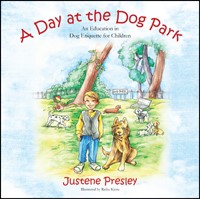
A Day at the Dog Park by Justene Presley is fun to read, educational for children (and adults) royalene6and gives writers a peek into “ordinary days” that just might be useful in “scene development” for your novels.
Everyone loves to imagine a child enjoying the day with a favorite pet dog. Meet Carter and his dog, Snickers. Carter’s mom takes them to the dog park, and their enjoyable day provides fun as well as practical lessons about the best way to make new dog friends. Carter explains that there are lots of different types of dogs, and goes through a six-step method for meeting a new dog. Carter also shares advice about what not to do.

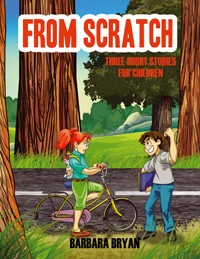
royalene7Author Barbara Bryan has published several books including this one titled: FROM SCRATCH, Three Short Stories. The theme is “Everyone Needs a Helping Hand.” I love this concept because I’ve always found it hard to ask for help. AND YET, being a writer/author I, too, have sought help to develop writing skills from character development to book marketing and more. But it’s not always easy to admit that we need help…and it’s valuable to learn when to offer help, too.
In these three wise and charming stories, Bryan explores the idea of helping from different viewpoints. You’ll meet three characters who fit this common theme in different ways. Catherine needs help, but doesn’t know how to ask for it…and she finds it in an unexpected way. Rooster gets some complaints about his cock-a-doodle behavior, but he realizes what’s really important when he’s called upon to save his family. And Wiley finds out that being rude and unhelpful to others can leave you out in the cold…literally. DID you notice that word viewpoints? Understanding the perspective of the characters we’re creating is a key component to making our novels great!

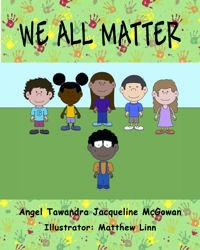
I just had to add this book: WE ALL MATTER by Angel McGowan. Not only is this an royalene8excellent story about a boy who is being overlooked and ignored by his classmates, which makes him feel all alone, it is authored by a young woman I would love to meet someday. McGowan broke into the publishing world at the age of fifteen and has been winning awards ever since. Her ability to expose the bare bones of issues that are harmful to our children (of all ages) will make a big difference in the lives of future generations!

As you turn to the next page of Mikey’s story he is so overwhelmed that he breaks his silence and blurts out exactly how lonely he’s been feeling. What happens next… (Oops! Better not give that away.)

Each of these books are written from passionate hearts—from writers who see the world with a unique perspective—like you. Don’t hold back! Write! Publish! Offer the world another chance to learn.  ⚓︎


Royalene

ABOUT ROYALENE DOYLE: Royalene has been writing something since before kindergarten days and continues to love the process. Through her small business—DOYLE WRITING SERVICES—she brings more than 40 years of writing experience to authors who need “just a little assistance” with completing their projects. This is a nice fit as she develops these blogs for Outskirts Press (OP) a leading self-publisher, and occasionally accepts a ghostwriting project from one of their clients. Her recent book release (with OP) titled FIREPROOF PROVERBS, A Writer’s Study of Words, is already receiving excellent reviews including several professional writer’s endorsements given on the book’s back cover.  

Royalene’s writing experience grew through a wide variety of positions from Office Manager and Administrative Assistant to Teacher of Literature and Advanced Writing courses and editor/writer for an International Christian ministry. Her willingness to listen to struggling authors, learn their goals and expectations and discern their writing voice has brought many manuscripts into the published books arena.