Saturday Book Review: “The Bird That Didn’t Want To Be A Bird”

Book reviews are a great way for self-publishing authors to gain exposure. After all, how can someone buy your book if he or she doesn’t know it exists? Paired with other elements of your book promotion strategy, requesting reviews is a great way to get people talking about what you’ve written.

When we read good reviews, we definitely like to share them. It gives the author a few (permanent) moments of fame and allows us to let the community know about a great book. Here’s this week’s book review, courtesy of Penny Minding Mom:
71lZwmhDOPL

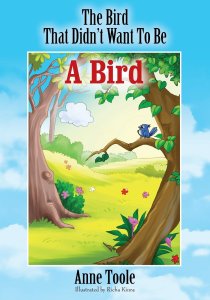
The Bird That Didn’t Want To Be A Bird

by Anne Toole

Publisher: Outskirts Press

ISBN: 978-1478756378

Synopsis:

Little bird wanted something else to be, Instead of a bird in a tree. He knew what he had to do, so off he flew, to search for another kind of animal he would rather be. Read the story and you shall see, which animal he chose to be. Read the story and you shall see.

Critique:

Have you ever wished to be someone else? In today’s world of social media it seems that everyone is putting their “best self” forward.  It’s all to easy to become jealous and wish to be someone else…even if it’s just for a little while!  We have to step back and remember that we are exactly who we need to be!

“The Bird That Didn’t Want To Be A Bird” by Anne Toole, is the story of a little bird who doesn’t want to be a bird.  He dreams of being something else…anything but a bird.  Little bird goes off on a journey to find out exactly what kind of animal he would rather be.  Which animal will he choose?

“The Bird That Didn’t Want To Be A Bird” has an important message for us all about self acceptance.  It’s all to easy to believe that being someone else would make us happier.  As little bird explores the world about him, he soon learns that all those things he once thought so wonderful about everyone else just weren’t the things that would make him happy.  Just like little bird, we need to look closely about the things we “think” we need to be happy. What makes someone else happy, just might not be the thing that is perfect for us.

The illustrations are adorable, full of bright colours.  The text is easily read.  The book is written in rhyme but I did find that some of the “rhymes” just didn’t work when I read the story aloud to the kids.

The kids and I started a conversation about the things we love and the things that we don’t like so much about ourselves. We talked about what to do about those things that we really dislike ourselves.  Are they things we can change?  How do we work towards changing while still loving ourselves for who we are?  We discovered that some of the things we think are our faults are those very things that someone else loves about us.

“The Bird That Didn’t Want To Be A Bird” is a great story for children of all ages about loving ourselves. For more information on this book check out Outskirts Press.

reviewed on Penny Minding Mom ]

Here’s what other reviewers are saying:

Children all dream of what they want to be when they grow up. Some want to be firefighters, others imagine being sports stars or actors. Playing make-believe is a great way to try out different roles, and so are looking at characters in stories and TV shows or movies. This particular story shows a little bird who has decided that he doesn’t want to be a bird, even though his mother tells him that a bird is what he is meant to be. So he explores the area and checks out the other creatures, trying to find one that he would enjoy spending the rest of his life in their place.

As older readers will guess, there is no other life that would suit the little bird better than the one he already has. Human beings have a lot more choices open to them than animals, obviously, but trying to be something you’re not is still something we have to deal with. Developing a sense of identity and being comfortable “in the skin you’re in” is a life skill we all need. The story is told in rhyme and supported with brightly colored illustrations. Some of the wording may seem a bit awkward to adult readers, but the target audience of beginning readers will probably not notice.

Author Anne Toole was a first grade teacher and ESOL instructor before she began writing children’s books. She understands the issues that children deal with on a daily basis – making friends, what makes them special, fitting in, etc. This is the type of story that parents, teachers, and guidance counselors can read with a child (or a group), and then discuss the moral of the story.

– Amazon Reviewer Suzanne R. Costner

A rhyming book about being happy with who you are. A young bird tells his mother he does not want to be a bird. So he ventures out into the world to explore being a different animal. What he finds out is that every animal has positive qualities he likes but they also have qualities that do not suit him well. In the end he decides that being a bird is what is best for him. The book is easy to read and filled with dolch sight words for emergent readers.

– Amazon reviewer Yvonne Mullen

saturday self-published book review

Thanks for reading!  Keep up with the latest in the world of indie and self-published books by watching this space every Saturday!

Self Publishing Advisor

selfpubicon1

In Your Corner : Putting the Pieces Together

Figuring out how to navigate the world of book marketing can be a hazardous task, with many unmarked dangers–and shortcuts to safe passage–awaiting the self-publishing author. Over the last three weeks, I have introduced some of those campaign components which I happen to think are vital and important:

The problem, of course, is that while all of these probably sound like good ideas, they also require a lot of work.  And by “a lot of work,” I mean they require both time and a fairly discrete set of skills––each.  That is, the skills and even equipment required to craft that polished press release may have very little natural overlap with the skills and equipment required to craft an impactful video trailer.

“Well, what about Google?” you ask, and fairly.  “What about YouTube?  Can’t I look up some tutorials and put something together myself?”

Yes, yes you can!  And there are some really fantastic free guides out there.  I always recommend looking to the “making-related” articles in peer-reviewed periodicals like Publisher’s Weekly and WIRED throughout the year, even when you’re not working on a specific project, to see what sorts of new ideas and tools are being put out there.  And the quality of instruction on YouTube videos has improved greatly!  I’m not going to lie: the Internet is my go-to place when I need to learn how to do something for the first time, whether it’s to refine my (practically nonexistent) origami skills or how to snake my toilet.  (Don’t ask.)

But some of the “barriers to entry,” as we like to call them, are still up–even with the Internet and YouTube and Google in play.  I successfully snaked my toilet … after an hour of “practicing.”  (Read: “flailing wildly.”)  I know I didn’t have an hour to burn that day, but the toilet needed to be done.  And snaking is a relatively simple task compared to some of the many involved in, say, acquiring the rights to an audio file you want to play behind your book trailer video.  Or tracking down email addresses for booksellers, reviewers, and other industry influencers to create an email distribution list.  Templates and virtual instructions can sometimes fail us at crucial moments–or inflate the time required to accomplish what needs accomplishing beyond what we can spare.

If only there was somewhere we could turn that provided professional insight and assistance with our marketing campaigns!  Okay, okay, I know it’s a little on the nose, but I really do recommend paying for at least one consultation with a PR Publicist when you’re looking to put out a press release, a graphic designer or videographer when you’re crafting your book trailer video, and someone on the inside–with real experience–when it comes to tracking down credible book reviewers.

There are, as always, several ways you can go about this–you can contact these people individually, or you can opt to pay for a bundle of services that put all of these professionals under one roof (digitally speaking, at least).  Do your research, shop around for the best deals, and weigh your priorities against your marketing budget.  (Yes, you need one of those!)  Do what needs to be done to get you back to what you really love–writing–and cuts down on the time you spend fumbling around with that toilet snake.

You are not alone. ♣︎

ElizabethABOUT ELIZABETH JAVOR: With over 18 years of experience in sales and management, Elizabeth Javor works as the Manager of Author Services for Outskirts Press. The Author Services Department is composed of knowledgeable publishing consultants, pre-production specialists, customer service reps and book marketing specialists; together, they all focus on educating authors on the self-publishing process to help them publish the book of their dreams. Whether you are a professional looking to take your career to the next level with platform-driven non-fiction or a novelist seeking fame, fortune, and/or personal fulfillment, Elizabeth Javor can put you on the right path.

In Your Corner : Celebrate National Reading Month With These Marketing Tips! (part four)

Exactly three weeks ago, I started us off on a month-long exploration of what I revealed to be one of my favorite subjects–the intersection of reading with writing and publishing–in light of the fact that the month of March is National Reading Awareness Month here in the United States.  I continued my series two weeks ago and last week with a number of additional ways in which you, the indie or self-publishing author, can take advantages of the resources on offer to bolster both your existing writing methods and your book sales.  This week, I would like to invite you to continue in joining me in making reading a focus all month long, here in our Thursday blog post slot.  We may have one more week left in the month of March, but I’m holding nothing back–you get only the best of the best, my absolute top tips, here today! 

TIP TWELVE : Give your blog or website a face lift

If you already have a blog or website where you have been promoting your book in advance of its release, there’s no better time than the present to refresh the look and feel or add content.  And by “refresh,” I don’t just mean a couple of small tweaks or optimizations here and there–I mean a complete overhaul.  As in all things, the self-publishing author must demonstrate full willingness to meet readers where they live, rather than expecting them to stumble across one’s book by happenstance.  There are no (or at least, very very few) happenstances in the publishing industry, since everyone and their lawyer is out to make a profit off of gaming the system.  You don’t want to play your readers–in fact, you want to be wholly honest and authentic at all times–but you do want to show them that you care enough about them to design a website or a blog that meets their needs and outperforms their expectations.  Think big, not small, and make sure your site is inviting and reflects who you are as a writer.  

facelift

TIP THIRTEEN : Play well with others

It should come as no surprise that I’m an advocate for sharing.  After all, I didn’t ignore every single admonition to play well with others when I was a child–some of that well-intentioned parental advice rubbed off.  But in the world of self-publishing, there’s nothing more powerful than sharing!  It’s not just a “good idea”–it’s a vital and impactful way of reaching new readers.  The first step to sharing promotions with other indie authors is one of logistics and networking: I recommend getting started by connecting with other independent authors whose work compliments yours or who live nearby.  Local writers’ groups are a fantastic resource for this!  From there, you can discuss how best to share advertising in your local media to promote your books and events.  Sharing an event with another writer is an excellent way to generate more interest among venues and readers.

sharing

TIP FOURTEEN : Take the Grand Tour

In years gone by–that is, from the mid 1600s to the mid 1800s–it was the custom of the European and American elite to send their children on the Grand Tour of the European continent and parts of Asia Minor and Northern Africa.  The point of the Tour was to expose people of taste to the primary object of their taste–the cultural legacy of the West.  But there’s a far better Grand Tour which you can partake in as an indie author!  There are dozens upon dozens of prime opportunities for promoting your book throughout the year outside of your homeland, including the London Book Fair, BookExpo America, Beijing Book Fair and the Frankfurt Book Fair.  But who, you may ask, has the time or money to do that?  Self-publishing may be a recourse for those of humble budgets, but it is also a haven for ingenuity and creative thinking.  You don’t need to stress if you don’t have the time (or money) to travel the world this year: a number of self-publishing companies, including the one I work for (Outskirts Press) offer the opportunity to represent your book at any (or all) of these events throughout the year.  There is usually still some sort of cost associated with this project, of course, but it is a dramatic reduction on what you might pay individually to travel to these places, register for display space and lodging, and for marketing materials.  Just a thought: you can be a world travel vicariously through your book!

That’s it for this week, but I’ll be back next Wednesday with some final tips and ways forward!  And …

… always remember: you are not alone. ♣︎

ElizabethABOUT ELIZABETH JAVOR: With over 18 years of experience in sales and management, Elizabeth Javor works as the Manager of Author Services for Outskirts Press. The Author Services Department is composed of knowledgeable publishing consultants, pre-production specialists, customer service reps and book marketing specialists; together, they all focus on educating authors on the self-publishing process to help them publish the book of their dreams. Whether you are a professional looking to take your career to the next level with platform-driven non-fiction or a novelist seeking fame, fortune, and/or personal fulfillment, Elizabeth Javor can put you on the right path.

Marketing in the Hybrid Publishing World

Two weeks ago, after much consideration, we settled on a simple and straightforward definition for hybrid publishing:

Hybrid publishing is any publishing model that allows authors to enter into direct, flexible, contractual collaborations with industry professionals that in traditional publishing would be indirect (they would be paid by the publishing house, not the author) and are not traditionally available to self-publishing authors.  This includes companies like Outskirts Press, which offers a range of collaborative services, and excludes the so-called “hybrid author,” or someone who has moved from traditional publishing into self-publishing or vice versa.

And last week, in hopes of getting a glimpse into the actual experience, I dove into the stories of two self-publishing authors who have chosen the hybrid publishing track: Norman Smith  of Dog Ear Publishing, and Mirtha Michelle Castro Mármol of Outskirts Press fame.  Smith’s review spoke to what I consider the real strengths of the hybrid publishing experience: constant communication, flexibility, and a real willingness to put the author’s vision at the forefront of the publishing process.  Meanwhile, Mirtha Michelle’s interview highlighted the collaborative nature of hybrid publishing––from writing her book, to finding the company she wanted to go with, to finding a designer for her book’s cover, to connecting with her readers after the fact.

This week, I want to answer a different set of questions, and I want to take us back to marketing, our focus for our Wednesday posts here on Self-Publishing Advisor.  How does hybrid publishing assist an indie author in the realm of marketing a book, for example?  Does it offer tangible benefits?  How can an author know when the expense is paying off?


Value vs. Expense:

As hybrid self-publishing superstar CJ Lyons puts it, “If you are spending more time marketing than you writing a book, then you are probably doing a disservice to your readers by not writing the best book that you can. You can trust your readers and if you are writing a book they love then they will do the marketing for you.”  And it’s true: your readers are the greatest force for influence that you have!  When readers fall in love with a new world or a new book, as you are probably already well aware, they can’t help but want to share the thrill of discovery with their friends, families, and other social connections.

marketing hybrid publishing

Connecting with your readers is, of course, a matter requiring some delicacy in and of itself.  Marketing doesn’t happen by itself; your social media presence, whether you’re a solo act or working with a hybrid self-publishing company, will require work.  You have to balance your personal time and energy budget without falling behind on either sleep or sacrificing valuable time you might spend writing that next book (and that next book is a powerful marketing tool in and of itself, so you don’t want to sacrifice it).  The difference between being a “regular” self-publishing author–assuming, for the moment, that we set aside the massive range of experiences that fall into that category–and being a self-publishing author who chooses to work within the hybrid model boils down to resources.  A good hybrid publishing company will reduce the amount of time and energy and expertise required to keep up a vigorous social media campaign as well as a nationwide marketing plan to something more like light maintenance than heavy work.

marketing hybrid publishing

Within the hybrid model, you the self-publishing author don’t have to be the one running down to Kinkos to print out a massive pile of fliers that you spent weeks designing yourself, or staying up late squinting at a dim computer screen scrolling through tweets about your book.  You pay to let the professionals assist you with that.  Most companies offer a range of marketing products  (like this one from Outskirts Press) and bundles so that you can choose to pay for only the services you need or that you don’t know how to manage yourself, and which allows you to only spend money on truly necessary expenses.  An easy way to know if a product is worth spending money on is to hop on a web forum and ask around after authors of equal expertise in, say, book trailer creation–and see how long it took them to design one.  Multiply the hours they spent by the average going wage for freelance videographers (anywhere between $20 and $50 an hour in USD) and compare against the price for that product.  Run the numbers for each product you’re thinking about purchasing, and make your decisions accordingly.  These figures don’t allow for the expertise you’ll have access to by paying a professional to do them for you, but they do give you a starting point–and we all need one of those!


Thank you for reading!  If you have any questions, comments, suggestions, or contributions, please use the comment field below or drop us a line at selfpublishingadvice@gmail.com.  And remember to check back each Wednesday for your weekly dose of marketing musings from one indie, hybrid, and self-published author to another. ♠

KellyABOUT KELLY SCHUKNECHT: Kelly Schuknecht is the Executive Vice President of Outskirts Press. In addition to her contributions to the Outskirts Press blog at blog.outskirtspress.com, Kelly and a group of talented marketing experts offer book marketing services, support, and products to not only published Outskirts Press authors, but to all authors and professionals who are interested in marketing their books and/or careers. Learn more about Kelly on her blog, kellyschuknecht.com. 10:00 AM

Marketing BASICS : Investing in a Little Advice

Your book isn’t just a product, as neat and simple as that might seem to make things when it comes to marketing; it’s much, much more.  It is, in every way and shape and form, an investment.

  • you have already invested valuable time, energy, and other resources in writing it; and
  • you will continue to invest valuable time, energy, and other resources in marketing it.

More importantly, however, you should constantly monitor how you are spending these resources in respect to spreading the word and promoting it to fans and followers and readers alike.  In a impossibly cool and detached financial sense, you need to know when you’re spending more on your book than you should be––and then be prepared to take action.  (Though, let’s face it, who of us is ever cool and detached about our precious offspring of the imagination?  Not I.)  The Return on Investment (ROI) of your book should always reflect a balanced approach and a sustainable increase of returns.


Welcome back to my series on marketing B.A.S.I.C.S.!  This is the fifth in a series of blog posts where I tackle the fundamentals of marketing in hopes of making things a little more manageable for you, the self-publishing author.  Four weeks ago I launched the series with this introductory post, followed by:

This week, as you might have guessed, we’re taking a look at:

  • I. “Investing in a Little Advice.”

So, what happens when your investment isn’t paying off?

First off, I’d like to remind you that no matter what profit you make off of your book in financial terms, it’s an absolutely fantastic thing that you’ve done!  You’ve written a book!  You’ve published it!  You’ve sent it out into the world for others to be changed by!

Secondly, I’d like to clear up a myth about self-publishing: you don’t have to go through it alone.  Let me phrase it a little differently:

There’s nothing wrong with asking for help.

I wish I had known this sooner––I wish I’d felt convicted of the truth of this sooner.  I’ll be the first to admit that one of the greatest appeals to me of self-publishing is that it provides a platform to and a haven for the fierce individualist, exactly the sort of person to incur the wrath of Traditional Publishing for wanting too much artistic control, among other things.  But the truth of the matter is that self-publishing is for everyone, including the insecure first-time author, including the burnt-out and disillusioned veteran author, including the technologically-challenged author, including the risk-averse author, including authors who find themselves at the end of the rope and in desperate need of assistance.

The indie community isn’t just a community of self-assured and confident entrepreneurs; we’re far more diverse than that.  And the indie community is a remarkably non-judgmental, unsnobby collection of people, in possession of vast and varied resources and an overwhelmingly supportive, generous spirit.  I promise you, if you hop on to a forum or listserv or social media group dedicated to indie authors and pose a question, you will be inundated with advice and shared resources.

Of course, sometimes what you really need is targeted advice.  If you have been posting promotional material to a blog or social media platform for a long time with very little engagement, or if you’ve been spending hours upon hours obsessing over marketing only to sell very few books, it’s time you sought professional advice.  But where to begin?  Even just a quick Google search for “Consultant for self-publishing a book” turns up “About 7,330,000 results,” which says a lot about the growth in this sector of the publishing industry––even once Google’s many duplicates, oblique references, outdated listings, and other “wrong” search results are set aside.  Seven million results!

There are a lot of marketing consultation websites out there geared toward you, the self-publishing author, ranging from freelance consultants (including many who’ve transitioned from being publishing consultants within Traditional Publishing) to personal marketing assistants with hybrid/self-publishing companies.  Freelance consultants can be excellent, but it’s difficult to know which ones have the know-how you need.  The benefit of going through a hybrid/self-publishing company is that every consultant has been vetted for expertise, experience, and the quality of their insight.  That’s a pedigree worth exploring.

marketing consultant

No illusions here: when it comes to seeking professional advices on marketing your book, you’ll have to spend some money.  Remember how I spoke about your book as an investment?  So too any money you spend on marketing is the same.  The only difference is, exchanging money to save yourself the time and energy and frustration of sorting out all the details on your own is what we might call a “fair market value.”  It’s worth it, in other words, to see your book’s future set on a solid foundation and to use your time far more effectively in writing the next book.


Thank you for reading!  If you have any questions, comments, suggestions, or contributions, please use the comment field below or drop us a line at selfpublishingadvice@gmail.com.  And remember to check back each Wednesday for your weekly dose of marketing musings from one indie, hybrid, and self-published author to another. ♠

KellyABOUT KELLY SCHUKNECHT: Kelly Schuknecht is the Executive Vice President of Outskirts Press. In addition to her contributions to the Outskirts Press blog at blog.outskirtspress.com, Kelly and a group of talented marketing experts offer book marketing services, support, and products to not only published Outskirts Press authors, but to all authors and professionals who are interested in marketing their books and/or careers. Learn more about Kelly on her blog, kellyschuknecht.com.