Ringing in the Holidays!

The trees have shed their colorful fall foliage, the air has grown crisp, the kids are back in school, and you know what that means? The holidays are just right around the corner. This is a time of year to celebrate, not only because it means the return of pumpkin spice lattes and apple crisp, but because it is a time of year devoted to giving thanks, sharing delicious food and thoughtful gifts, and it is a time to gather with and spend time with those we love and cherish.

You can further celebrate this time of year as an author by innovating your marketing strategies, as there are certain advantages to marketing this time of year that aren’t available to you on just any summer day.

With an increased amount of shoppers trying to fill stockings and fill out the base of their Christmas trees, it is imperative that you’ve nailed down who exactly your audience is. Is your book a children’s book? Make sure your book is made available in local toy stores and maybe put some flyers up in local day care centers, libraries, and schools. Also, think of how great your book could be as a stocking stuffer for family members; being generous with your book this time of year could lead to more readers not only within your family, but whoever your family ends up sharing it with as well.

This is also a great time of year for holiday giveaways online. Vamp up your blog with relevant tags, and host your giveaways there! Post on pages relevant to your story–this could be anything from a Facebook page of the state your book takes place in, a Facebook group of readers that your book might appeal to, or maybe even to a Facebook event in your area that fits the theme of your book.

Remember that Christmas stockings are often full of Amazon gift cards; do you have an ebook to offer all these new potential buyers? Going digital means that there were literally be MILLIONS of people who will have access to your book, who never would’ve come across it otherwise. If you already have an ebook version, ask your readers for a priceless holiday gift: a good review online.

We know here at Outskirts Press how busy this time of year is. We know that you’re also out shopping for you families, preparing turkey feasts for your families, carving pumpkins for your porches, etc. etc. Don’t hesitate to treat yourself to the gift of our services that can help you with these marketing tasks that are so important this time of year!

holiday sales marketing

At Outskirts, we have a marketing package that includes a custom press release, an author platform setup through social media, a book trailer with social network distribution, AND you get 5 hours with your own personal marketing elf…I mean, assistant. This is a great way to ensure you don’t miss out on the perks of holiday marketing, but also ensuring that you don’t miss out on the holiday cheer because you’re too busy worrying about marketing your book!

Click here to find out more:
http://outskirtspress.com/book-marketing.html


Thank you for reading!  If you have any questions, comments, suggestions, or contributions, please use the comment field below or drop us a line at selfpublishingadvice@gmail.com.  And remember to check back each Wednesday for your weekly dose of marketing musings from one indie, hybrid, and self-published author to another. ♠


Kelly

ABOUT KELLY SCHUKNECHT: Kelly Schuknecht is the Executive Vice President of Outskirts Press. In addition to her contributions to the Outskirts Press blog at blog.outskirtspress.com, Kelly and a group of talented marketing experts offer book marketing services, support, and products to not only published Outskirts Press authors, but to all authors and professionals who are interested in marketing their books and/or careers. Learn more about Kelly on her blog, kellyschuknecht.com

From the Archives: “Determining What Book Readers Want”

Welcome back to our Tuesday segment, where we’ll be revisiting some of our most popular posts from the last few years.  What’s stayed the same?  And what’s changed?  We’ll be updating you on the facts, and taking a new (and hopefully refreshing) angle on a few timeless classics of Self Publishing Advisor.

∗∗∗∗∗

[ Originally posted: July 20th, 2010 ]

Your book content – fiction, non-fiction, children’s, religious – naturally presumes a value to readers intending to be entertained or learn something from your work. How do they decide they want to read your book?

They don’t. You do. Sound like an incredible power? It is. Its name: Marketing

When Thomas Edison turned 16 do you suppose he wanted a Tesla Roadster? Probably not. In order to want something you need to know it exists. One definition of marketing is convincing a a mass of people to want what you have. That puts you, the author of your book, in the cat bird’s seat. Who knows your book better than you, after-all.

How readers know about books has changed a great deal over the past decade, and my guess is that trend will continue. With Amazon, Twitter, Podcasts, Bookfinder, etc. we no longer rely on a single-minded source for telling us about books. A good CEO (the self-published author) knows how to leverage the expertise of others and delegate work. Consider the long-term. Research self-publishers with ongoing marketing support and services. Being published is rarely even enough.

– by Kelly Schuknecht

“Readers are not sheep, and not every pen tempts them.”
Vladimir Nabokov, Lectures on Literature

“Why are we reading, if not in hope of beauty laid bare, life heightened and its deepest mystery probed? Can the writer isolate and vivify all in experience that most deeply engages our intellects and our heats? Can the writer renew our hope for literary forms? Why are we reading if not in hope that the writer will magnify and dramatize our days, will illuminate and inspire us with wisdom, courage, and the possibility of meaningfulness, and will press upon our minds the deepest mysteries, so we may feel again their majesty and power?”
Annie Dillard, The Writing Life

***

When we talk about knowing what we want and making our readers want it to, it’s not quite the same thing as the sales pitch for selling a car. (Although sometimes I envy car salesmen their confidence.)  When we talk about selling our readers on our book, we’re talking about something more grand and with farther-reaching effects–we’re talking about selling that reader on a dream.  We’re not simply marketing, as nice and simple of a descriptive term that might be. We’re in the business of changing the trajectories of peoples’ interests … with nothing more or less than the power of words.

know what you want

Which is not to discount the profound importance of marketing in the world of self-publishing! Marketing isn’t optional for the self-publishing author–it’s absolutely vital. How else will new readers know that your book exists? How else will they know where to track it down and buy it?

You can’t sell readers on a dream if they don’t know it exists.

So how do you keep your marketing strategy from dipping into the hazardous waters of the car salesman’s sales pitch? Several thoughts:

  • Be authentic. We dislike car salesmen as a stereotype at least because we’ve been taught to perceive them as fake.
  • Actually care. Care about your reader. Remember, writing and selling a book isn’t just about your bottom line. It’s making sure your book is received by its ideal audience at the ideal moment. Money is great, but it shouldn’t be the sole purpose of what authors do–and your readers can sense when it is. Prioritize your readers’ needs by putting yourself in their shoes. What is their native habitat? Where do they feel safe? How can you reach them where they already live?
  • Be engaged. You might not be able to respond to every tweet and Facebook comment you receive as an author, but making an effort to respond to readers regularly on the platforms they love is a great signal that you’re not some aloof writer who’s out of touch with the world you live in.
  • Give back. There are a lot of fun ways to do this that drum up your marketing base, too–giving is, in fact, necessary to receive. Consider giveaways, donations, free webinars or live chats, and all of those other ways in which you as an author can interact with your readers in a way that’s fresh and honest and mindful of their needs.

Remember, too, that marketing doesn’t have to be boring. You’re not selling a car. You’re selling your book. And your book is amazing!

Thanks for reading.  If you have any other ideas, I’d love to hear them.  Drop me a line in the comments section below and I’ll respond as quickly as I can.  ♠


Kelly

ABOUT KELLY SCHUKNECHT: Kelly Schuknecht is the Executive Vice President of Outskirts Press. In addition to her contributions to the Outskirts Press blog at blog.outskirtspress.com, Kelly and a group of talented marketing experts offer book marketing services, support, and products to not only published Outskirts Press authors, but to all authors and professionals who are interested in marketing their books and/or careers. Learn more about Kelly on her blog, kellyschuknecht.com.

In Your Corner: Know Thyself (& Thy Genre)

Over the last couple of weeks, I’ve spent some time looking a few of the many choices authors have to make during the self-publication and marketing processes, starting with the Big Whopper (“Choosing a Self-Publishing Company“) and then moving into choices regarding the text itself (“Choosing a Trim Size for Your Book“).  This Thursday, however, I’m writing less about making a choice than I am about detecting past choices you may not have been aware you were making … and then totally exploiting them for marketing purposes.

Let me explain.

You Don’t Choose A Genre So Much As Discover It:

It Probably Only Matters for Marketing Anyway

Thinking back over the history of publishing, I can’t begin to count the number of times a book has been rejected as “too weird” or “too out-there” when really, the issue at hand was the fact that the book in question didn’t fit neatly into one of the prescribed genres (Fiction, Non-Fiction, Fantasy/Science Fiction, Western, Biography, etc).  And the marketing folks at a traditional publisher know: it’s hard to market something that doesn’t fit neatly into a category, because doing so requires flexibility and out-of-the-box thinking.  Hybrid thinking.  Opinions are changing, slowly, but not fast enough within the Big Five traditional publishing houses.

Self-publishing gives you a third way. You don’t have to pick a genre while writing, but you can take advantage of a book’s genre or genres plural by approaching genre as a diagnosis after the fact, and an expedition in search of what the Atlantic’s Noah Berlatsky calls “a ‘web of resemblances’ created by intertexual references” that are “constituted basically by social and cultural agreement,” quoting John Rieder and Jason Mittel.  It’s a hunt for markers that point you toward certain resemblances … resemblances you can capitalize on for their social currency.

genre

The diagnosis process is simple:

  1. What books have you read that influenced your work in a measurable way?
  2. What books on the shelves in bookstores now bear resemblance to yours in style and content?

Once you sketch out a couple of lists to answer this question, it’s time to hit the bookstore and your library.  Libraries tend to scale the number of genre sections they stock according to how much shelf space they have, so bigger libraries will have finer distinctions between genres, while bookstores tend to pick the genres they’re going to stock according to what’s popular.  If you survey both your local Barnes & Noble, Tattered Cover, or (*gasp*) actual real-life physical Amazon Bookstore as well as your local public library, you’ll pick up on some of the more common genres out there, including:

  • Action/Adventure
  • Biography
  • Fantasy/Sci-Fi
  • Horror
  • “Literary” Fiction
  • Mystery
  • Thriller/Suspense
  • Romance
  • Self-Help
  • Westerns
  • Women’s fiction

But the list could be a lot, lot longer.  I haven’t, for instance, mentioned more obscure genres like Steampunk and Grimoire.

Once you’ve found the shelf or shelves on which you could picture your book sitting in a bookstore or library, you’re ready to start integrating genre into your publishing and marketing processes.  Now, your book may have “resemblances” to any number of genres, but for simplicity’s sake it’s a good idea to pick just one or two that have left very clear thumbprints on your text.  You can take a quick poll of your early readers, or consult the professionals, for what they find most striking about the style and tone and voice of your book if you end up stuck for answers.  And before committing to your genre or genres, you’ll want to consider your readership.  What are they likely to connect to the most in terms of language?

Genre safely discovered and stowed away for future use, it’s time to start putting it to work.  The language of genre is rich with possibility in terms of “buzzwords” for marketing purposes, so sow them liberally amongst your back-cover blurbs, your press releases, your Amazon and Goodreads listings, your website and blog posts, as well as your social media interactions.  (Genres like #biopunk and #horrorlit make for great hashtags, don’t you think?)

There are lots of ways to use genre once your book is already written and ready to meet the world…but remember, it’s all a matter of timing.  You don’t need to write your entire book to meet a genre’s proscriptive requirements…just your promotional materials.  Genre can be confining, so it’s best to bring it into play only after the creative work is already done.  In my opinion.

You are not alone. ♣︎


Elizabeth

ABOUT ELIZABETH JAVOR: With over 18 years of experience in sales and management, Elizabeth Javor works as the Manager of Author Services for Outskirts Press. The Author Services Department is composed of knowledgeable publishing consultants, pre-production specialists, customer service reps and book marketing specialists; together, they all focus on educating authors on the self-publishing process to help them publish the book of their dreams. Whether you are a professional looking to take your career to the next level with platform-driven non-fiction or a novelist seeking fame, fortune, and/or personal fulfillment, Elizabeth Javor can put you on the right path.

Conversations: 9/16/2016

THE MANUSCRIPT IS JUST ABOUT FINISHED

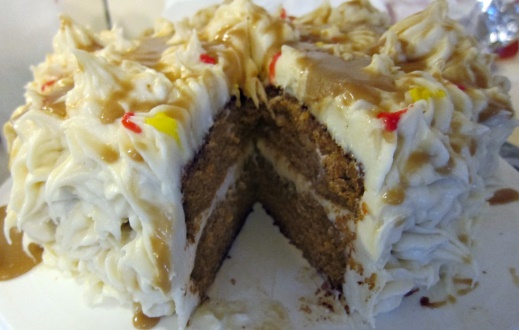
It’s Time to Think About adding the Frosting!

cake with frosting

Just last week I went to a writers’ workshop and within the first two minutes of the speaker’s presentation she said, “From the minute you sit down to begin your first book, you need to be thinking about marketing.” OH, my! I printed my first book in 2004, self-published my second book in 2015, and have a good start on book number three. With the help of several very creative friends, I’ve dipped my toes into the marketing river, but it’s not a comfortable place for me. I really don’t know many writers who are (honestly) comfortable wearing marketing shoes.

So, today, I’m encouraging every writer I know to think about the book you’re beginning—or about to finish—as if it were a delicious cake just waiting to be tasted and enjoyed. If it were sitting in the bakery with no frosting covering it, how many people would buy it? All the other frosted and decorated cakes would appeal to buyers first. Your cake/book would sit there for a long time—maybe not be selected at all.

If you’re a self-published author you may be familiar with the concept of “optional assistance” publishing companies offer to help launch our books into the world. One such option for most of my clients has been the Professionally Designed Book Cover. This is really the frosting-on-the-cake! I remember working with a client who knew the image she wanted to present on her book cover. We spent hours discussing it. She wanted to have it ready to submit with the manuscript, and did not want to add the expense of using the publisher’s Designer. So, she had me “spend” hours researching potential images—multiple illustrations—and finally selected two possibilities. When her manuscript was sent in, with the cover images, the Designer showed her the two she’d selected. He also showed her a proposed option—his interpretation of what she wanted. WOW! That book cover “popped!” It was immediately clear to both of us that when her book was placed on a shelf, it would be quickly noticed.

We both learned a valuable lesson that day—to consider what the publisher can offer us in the areas where we are weak. Our time is a valuable commodity, as is our brain-power which we need to begin the next book(s). If we need editing assistance (see last week’s blog), marketing inspiration or help with developing a video trailer that will catch the attention of today’s Readers who search the Internet before making the book-purchase selections, then that’s what we must do.

Even if you have a contract with a traditional publisher, you may need to seek out assistance in the marketing arena. These publishing houses may introduce the book and give authors a nudge into the world of book-promotion, but they rarely offer additional help beyond that. Their book will go out of print after only a few years if the sales don’t keep it alive.  (This is not the case with self-publishing companies. For a very modest yearly “storage fee” your book will be available as long as you want it to be.)

So it is that I encourage you to build up that layer of frosting/visibility as thick as you can for the book you’ve worked so hard to deliver. ⚓︎


Royalene

ABOUT ROYALENE DOYLE: Royalene has been writing something since before kindergarten days and continues to love the process. Through her small business—DOYLE WRITING SERVICES—she brings more than 40 years of writing experience to authors who need “just a little assistance” with completing their projects. This is a nice fit as she develops these blogs for Outskirts Press (OP) a leading self-publisher, and occasionally accepts a ghostwriting project from one of their clients. Her recent book release (with OP) titled FIREPROOF PROVERBS, A Writer’s Study of Words, is already receiving excellent reviews including several professional writer’s endorsements given on the book’s back cover.  

Royalene’s writing experience grew through a wide variety of positions from Office Manager and Administrative Assistant to Teacher of Literature and Advanced Writing courses and editor/writer for an International Christian ministry. Her willingness to listen to struggling authors, learn their goals and expectations and discern their writing voice has brought many manuscripts into the published books arena.

The Book Beautiful: Front & Back Matter (It Matters!)

So you’ve written a manuscript, thus the ‘meat’ of your book is complete. However, you want to happily sandwich that meat between what we call ‘front matter’ and ‘back matter.’ Front matter includes things like the half-title, the title page, the copyright page, a dedication, acknowledgements, a table of contents, and perhaps other things such as an epigraph, a preface, an introduction, or a prologue. The back matter can include an index, an appendix, and other material that doesn’t belong in the meat of the book, but that you’d like to include to feel you have a complete book.

First, let’s break down what front and back matter should include and how to make them look professional and appropriate. We’ll begin by tackling the different types of front matter you can choose to include.


  • Half Title –  As writers, you’re probably (and hopefully!) avid readers yourself, so you know that typically the first page of a book tends to just contain the title of the book. No author name, no other clutter, just a straightforward, bold texted title.
  • Title Page – The title page will also include the title of the book, but it will also include a subtitle (if you have one), the author’s name, as well as the name of the publishing company of the book. Other details that are often found on this page would be the location of the publishing house, the year the book was published, and perhaps even an illustration.
  • Copyright Page – You’ll usually find the copyright page by simply flipping the title page, and it will have a copyright notice, edition information, cataloging data, publication information, legal notices, and your book’s ISBN.
  • Dedication Page – This page will typically follow your copyright page and can be as simple as…


For my dearest mother Mary: R.I.P.

Or they can be witty…

“I dedicate this book to George W. Bush, my Commander-in-Chief, whose impressive career advancement despite remedial language skills inspired me to believe that I was capable of authoring a book.”

Pedram Amini, ‘Fuzzing: Brute Force Vulnerability Discovery’

Or they can be touching…

“Dear Pat,

You came upon me carving some kind of little figure out of wood and you said, “Why don’t you make something for me?”

I asked you what you wanted, and you said, “A box.”

“What for?”

“To put things in.”

“What kind of things?”

“Whatever you have,” you said.

Well, here’s your box. Nearly everything I have is in it, and it is not full. Pain and excitement are in it, and feeling good or bad and evil thoughts and good thoughts- the pleasure of design and some despair and the indescribable joy of creation.

And on top of these are all the gratitude and love I have for you.

And still the box is not full.”

–John Steinbeck, ‘East of Eden


  • Acknowledgements Page – This is where you can express your appreciation for all of those who helped you create the book.
  • Table of Contents – The table of contents is where you list all the major divisions within your book, more often than not in the form of chapters. The length of your book will determine how detailed your table of contents will need to be–a longer book will typically require a more detailed table of contents to assist your reader in navigating the piece.
  • Epigraph – An epigraph is a quotation that you can choose to devote an entire page to (usually facing the table of contents), or that you can choose to put at the start of the first chapter.
  • Preface – A preface is place for the author to explain how the book came into being and is often signed and dated by the author.
  • Introduction – Here the author can explain the goals of the work, place the work in context, or explain the organization and scope of the work.
  • Prologue – A prologue is told from the voice of a character in the book, and not the author’s own. It is typically used in a piece of fiction to set the scene for the story that is about to unfold.

As for the back matter of your book,

  • Index – An index will act as a guide to the book itself; it provides an alphabetized list of terms in the text and will indicate where in the text these terms were used.
  • Appendix – An appendix will provide supplementary details about your book such as corrections, updates, and details.


Now these are merely suggestions for what you can choose to include in the front and back matter of your book. What is most important is that what you do include looks professional and is well formatted. Pick up multiple books from your shelf and take a look at the front and back matter for a point of reference. While you’ve probably skipped over it on most books you’ve read, think how much more legitimate books with these sections look than books without them. These parts of publishing may seem tedious, but as I’ve said before, they are what will transform your manuscript into a book.


Thank you for reading!  If you have any questions, comments, suggestions, or contributions, please use the comment field below or drop us a line at selfpublishingadvice@gmail.com.  And remember to check back each Wednesday for your weekly dose of marketing musings from one indie, hybrid, and self-published author to another. ♠


Kelly

ABOUT KELLY SCHUKNECHT: Kelly Schuknecht is the Executive Vice President of Outskirts Press. In addition to her contributions to the Outskirts Press blog at blog.outskirtspress.com, Kelly and a group of talented marketing experts offer book marketing services, support, and products to not only published Outskirts Press authors, but to all authors and professionals who are interested in marketing their books and/or careers. Learn more about Kelly on her blog, kellyschuknecht.com