Marketing BASICS : Ascertaining Your Ideal Reader

Welcome back to Wednesdays on Self Publishing Advisor, where we tackle the intricacies of marketing each and every week in the hopes of making your life as an indie, hybrid, or self-publishing author just a little bit easier.  This is actually the third post in a series examining marketing B.A.S.I.C.S.––yes, that’s an acronym! but more on that later––with a particular emphasis on marketing for new or first-time authors.  It all began two weeks ago with this introductory post, and continued last week with an in-depth look at the “B” in B.A.S.I.C.S.: “Building an Online Presence.”  This week, we’re ready for a new letter and a new sub-topic.  What does the letter “A” stand for, then?  Simple: “Ascertaining Your Ideal Reader.”  This is one of the most important and foundational of steps to crafting a successful marketing strategy.

What is this “Ideal Reader” business??

Your ideal reader is not simply the person who buys your book; he or she is the person who falls in love with the world your book creates and actively looks for ways to participate in that world, whether by following you (the author) on social media or sharing your book with others.  They’re not invested solely out of obligation––which is to say, they’re most likely not members of your immediate family or friend circle.  As wonderful as your existing network of relationships is, and as useful as your friends and family can be––as cheerleaders and amplifiers in your marketing campaign––they first fell in love with you and not your book, and that is always going to be a complicated tightrope to walk.

Your ideal reader, on the other hand, is a fan; but more than this, he or she is engaged with your book outside of the text as defined by letters inked on a page or pixels shadowing a screen.  Your ideal reader will slide your book into a back pocket while walking the dog or slip it into the diaper bag when taking the kids to story hour at the library; she’ll talk about it over the headset while duking it out with her friends on the Xbox or he’ll pass his dog-eared battered copy on to a friend or someone will drop it reluctantly by a Little Free Library––not giving it up because they didn’t have a use for it anymore, but rather giving it up because they’re fairly certain someone else might need it very much indeed.  These people are your mediators, your access, and your ambassadors to the world.

What does an ideal reader have to do with marketing, anyway?

As with any product, your book needs someone to buy it.  You can try to move copies by being absurdly wealthy and getting your superPAC to buy and then distribute thousands of volumes to local libraries in the vague hope that people will discover it while browsing and magically translate that discovery into a sudden impulse to buy more copies and distribute them to friends and family––but I’d be lying if I told you this is a time-honored or even remotely effective strategy.  Time and again, authors who meet their own personal benchmarks for “success” (and the word means something different to everyone) point to these sudden spikes or “strategic bulk” purchases as unethical, while grassroots support from middle or low-income readers who actually love your book enough to buy it despite limited resources tends to lead to long-term sustainable sales.  It goes without saying that people who have a personal, political, or financial stake in promoting your book are useful … but they can also unintentionally sabotage your success if they make your book about themselves, or about anything other than untrammeled storytelling.  And in order to find your grassroots supporters, you have to know where they live (so to speak), and the language they use (literally but also figuratively) to share what they love.

How do I track down my ideal reader, then?

Your ideal reader, if you’re an author of nonfiction, can be identified according to what problem he or she is trying to solve––whether that problem is the reader’s dependency on sugar for energy (a dietary self-help book, perhaps) or the upcoming dinner he’s throwing for the in-laws (a Mediterranean cookbook, perhaps) or her desire to fill a gap in her understanding (of particle physics, or a history of bipartisan politics in America, or the internal hierarchy of multinational corporations).  If you’re an author of fiction, your ideal reader is defined as someone who, when looking for new material to read, is drawn to the type of content or genre or characterization or form which you like to write––in other words, your ideal reader is someone whose tastes in consumption corresponds directly with your tastes in production.  There are many other people who might read your book and enjoy it or benefit from it, but they are baptized into the fold rather than the founders of it.

ideal readers self-publishing

Now, your book many bend genre traditions.  It may be so utterly innovative that the usual metrics of comparison––genre, plotting, etc––break down entirely.  And that’s entirely wonderful, even if it makes identifying your ideal reader just a touch more difficult.  If this is the case for you, instead of trying to jam your book into the confines of a neat description, ask yourself: What do I like to read?  What works of art and music and film move me?  Where do like to go to discover new reading material?  These make for the simplest and most effective path to finding your readers.


Once you find your ideal reader, what next?  Well, you make it worth their while to buy your book.  And that’s where next week’s blog post comes in.  Make sure to check back here next Wednesday!  There’s so much more to come.


Thank you for reading!  If you have any questions, comments, suggestions, or contributions, please use the comment field below or drop us a line at selfpublishingadvice@gmail.com.  And remember to check back each Wednesday for your weekly dose of marketing musings from one indie, hybrid, and self-published author to another. ♠

KellyABOUT KELLY SCHUKNECHT: Kelly Schuknecht is the Executive Vice President of Outskirts Press. In addition to her contributions to the Outskirts Press blog at blog.outskirtspress.com, Kelly and a group of talented marketing experts offer book marketing services, support, and products to not only published Outskirts Press authors, but to all authors and professionals who are interested in marketing their books and/or careers. Learn more about Kelly on her blog, kellyschuknecht.com.

Back to the Basics of Marketing

Over the last couple of months, I’ve used this Wednesday blog slot to talk about a lot of different things.  Many of them have been marketing related, and many of them have been inspired by topics that self-publishing authors may find useful before the marketing process begins––for example, my series on e-readers––but I’d like to step back, if you will join me, and refocus on what has traditionally made Wednesdays on Self-Publishing Advisor unique.

earlobe

I’d like to take us back to the basics of marketing for self-publishing authors.  Where does an author new to self-publishing get started?  How might an experienced indie author re-infuse a lackluster marketing campaign with new energy and more effective strategies for self-promotion?  This is the heart and soul, the real meat, of what I want to get at here.

The first order of business is, of course, to listen:

  • What topics would you like me to cover here?

  • Where are your marketing methods running into trouble, and …

  • Where are they succeeding?

  • Where do you turn for advice and resources for self-promotion?

My first instinct is, of course, to launch us back into this subject with a defense of marketing for self-publishing authors, but … let’s face it: we’re already here.  We’re already convinced that we need to sell our books, and we’re already fully aware that the heavy lifting falls on us as authors to make that happen.  What’s useful––what’s really useful––is information on how to make marketing better, or more effective.  Easier.  We want, and need, the tips and tricks of the trade, without having to waste time on trial and error in a world (and a market) that waits for no man or woman.

And no, there’s never going to be a day when publishing and selling a book is as easy as clicking a button and sending it into the aether––for indie authors as well as traditionally-published authors––despite what all of the corporate jingles and advertisements would have us believe.  There’s never going to be a day where we don’t have to pay for publication, whether we’re talking about sacrificing years of our time before release as well as our rights and royalties (as with traditional publishing), or whether we’re talking about sacrificing years of our time and energy after release to marketing and self-promotion (as with self-publishing), or whether we’re talking about sacrificing money to skip the lines but retain the professional marketing campaign (as with hybrid publishing).

There’s always a cost … but the payoff is worth it.  We have to remember that.  You have to remember the fact that there’s a book inside of you that needs to be read, that could indeed change someone’s life.  And it will change your life, too, to know that your book is out there in the world and exists in a universe outside of your own mind.  And that book is worth reading.  It’s worth buying.

The trick is in getting the word out there.  The trick is to raise awareness.  And that is exactly what I’m going to help you do in the coming weeks as we dive back into the deep end of the Marketing Maelstrom that is … your life as a newly minted self-published author!


Thank you for reading!  If you have any questions, comments, suggestions, or contributions, please use the comment field below or drop us a line at selfpublishingadvice@gmail.com.  And remember to check back each Wednesday for your weekly dose of marketing musings from one indie, hybrid, and self-published author to another. ♠

KellyABOUT KELLY SCHUKNECHT: Kelly Schuknecht is the Executive Vice President of Outskirts Press. In addition to her contributions to the Outskirts Press blog at blog.outskirtspress.com, Kelly and a group of talented marketing experts offer book marketing services, support, and products to not only published Outskirts Press authors, but to all authors and professionals who are interested in marketing their books and/or careers. Learn more about Kelly on her blog, kellyschuknecht.com.

In Your Corner : On Marketing


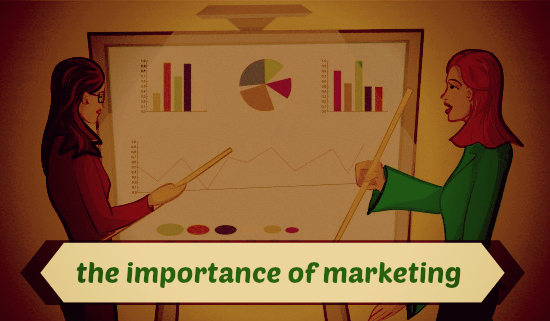
importance of marketing

Marketing, for the self-publishing author, is a many-headed hydra and prompts endless questions and dilemmas.  Major publishing houses have plenty of time and money to throw into marketing (although they would argue otherwise), particularly in comparison to you or me and any other self-publishing author out there.  They hire people whose entire careers revolve around taking care of the marketing process for their A-list authors, an enviable prospect because all we really want to do is write more books, right?  And yet, instead, we have both the blessing and the burden of running our own publicity campaigns.

Sometimes, I wake to a new day packed full with plans and routines to balance against each other, and I wonder:

  1. Aren’t we always told that the hardest part of writing a book is writing the first paragraph?  (Whoever says such things has clearly never attempted to tackle the tricky beast of self-promotion.)
  2. Are there ideas I can steal from others about how to be more effective, so that I have more time to spend on what I actually love?  (Which is, of course, writing.)
  3. Who gave the world permission to make me wake up to an empty coffee pot?

In all seriousness, though: the way we approach marketing, as self-publishing authors, matters.  Because it’s not optional.  It’s not something we can get away without doing.  We won’t sell books, and we won’t make room in our lives for the next book, either, if we don’t give some of our time over to marketing.

As Gareth Howard over at Infinity Publishing puts it: “Would you bake a delicious cake and not even eat it?  Would you revise for important exams and not bother sitting them?  Would you book an exotic vacation only to stay at home, wasting that precious deposit?”  The answer is, of course, no.  No, you wouldn’t want to waste the precious time and energy you’ve invested in crafting a beautiful manuscript–you want it to be read.  You want your ideas to reach your readers!  And sadly, we still haven’t figured out a way to guarantee authors that their books will just magically sell once they’re published.  There’s still a vital legwork and elbow-grease component to the whole thing.

You do, thankfully, have an advantage over the enormous publishing houses with their big budgets and their paid professionals: You can make it personal.  You can lend the marketing process a human touch, and you can take advantage of the most effective means of self-promotion known to humankind: your existing social network.  You can also pick the things you do well, and reach out for professional help (with a shout-out to my day job) only when you really need it.  The key is, of course, being prepared to work and work hard to achieve your marketing goals.

Others here on the SPA blog have written about marketing before, and have presented a number of ideas on how we can all be more effective at self-promotion as self-publishing authors.  This holiday season, however, I’d like to issue a specific challenge to you (and myself!): Let’s figure out the next workable, manageable, and sustainable step that we can use to bolster our existing strategies.  It’s no good if we have lofty goals that we never reach, so let’s be specific even while we’re also being optimistic.  I bet you my best unsharpened pencil that we can do better in 2016!

There is, of course, a danger in all of this:

Once we acknowledge just how important marketing is, the process has a tendency to take over our lives and erode away all semblance of spare time we might have.  Fortunately, there are a whole host of resources out there for you–to get you started, and to help you along once you’re already partway down the path.  And of course, I’m here for you too–and the SPA email as well as comments section is always open to lend you a listening ear.

You’re not alone. ♣︎

ElizabethABOUT ELIZABETH JAVOR: With over 18 years of experience in sales and management, Elizabeth Javor works as the Manager of Author Services for Outskirts Press. The Author Services Department is composed of knowledgeable publishing consultants, pre-production specialists, customer service reps and book marketing specialists; together, they all focus on educating authors on the self-publishing process to help them publish the book of their dreams. Whether you are a professional looking to take your career to the next level with platform-driven non-fiction or a novelist seeking fame, fortune, and/or personal fulfillment, Elizabeth Javor can put you on the right path.

The Current State of E-Readers | An Author’s Guide (Part III )

Did you know that Barnes & Noble sells an e-reader?  If you haven’t stopped by one of their brick and mortar stores in the last few years, you might never have known.  This is because the tablet in question never quite got the sales momentum that its primary rivals, the Kindle and the iPad, had automatically built in.  (More on that in a moment.)  And the NOOK, as Barnes & Noble has dubbed their creation, already seems to be on the way out.  I stopped by a Barnes & Noble while driving through central Montana, and … gone are the enormous beautiful displays, the wide sweeps of banners and posters emblazened with larger-than-life-size images of the tablet, its logo, and cheery recommendations on what ebook to read next.  It looks as though we’re back to basics when it comes to our favorite (by default, since it’s our only) big brick and mortar bookstore!

But what about the NOOK?  Should you as an author care about the rise and fall of this non-gargantuan piece of technology?  The short answer is yes.  The reasons why can never quite be summarized as a “short answer,” but I’ll do my best to stick to the important bits.

William Lynch, Chief Executive Officer of Barnes & Noble, holds up the new Nook Tablet at the Union Square Barnes & Noble in New York

The first NOOK was launched in October 2009, almost exactly six years ago.  By 2011, the NOOK had captured approximately 13.4% of the total global market share for e-reading devices.  But as 

The NOOK store still does brisk business.  This is in part because readers still love a good physical book in hand, and B&N is now the only large remaining bookseller, and therefore it has both a solid built-in captive audience for its internal promotions.  It may also be attributable in part to the parent company’s deft hand at package deals and perqs.  (If you bring your NOOK into a B&N store, you have free access to their entire ebook collection while there!  Who knew?  Not me, until I started researching for this blog post!)  Here are the numbers according to number-crunching website Statista.com:

NOOK sales according to Statista

As you can see, NOOK sales are certainly, shall we say, “plunging.”  But Statista still reports approximately $263.8 million dollars in sales for 2015 to date, and that’s not an insignificant percentage of the total ebook market.  The real concern, for you as an indie or self-published author, is whether any of those sales translate into profits for authors outside of the traditional Big Five publishing houses.  And that data simply isn’t available, though anecdotal evidence seems to indicate that the NOOK store is not the most profitable place to publish your ebook.  Which is not to say that it’s not a worthwhile place … however, it’s far more likely you’ll connect with a greater number of new readers through the Amazon Kindle store or through Apple’s iTunes/iBooks interface.  This is because most search engines and indexing algorithms will promote results in these two digital stores over that of Barnes & Noble, for whatever reason (and there may be several reasons, some shady and some legitimate, and some mere rumors).  And although Kindle sales have fallen and tablet sales seem to have plateaued across the entire global market, Amazon and Apple have both proven innovative and flexible enough to roll with the punches, and their devices have held up better to changing market demands.

Half of your job as a self-published author is to tackle matters of self-promotion and marketing with the business acumen of an entire PR department and the ruthlessness of a CEO.  Is a strategy proving ineffective?  On the chopping block it goes.  Is one particular edition of your book not selling?  Out the window, sayonara.  Is a social media platform or blogging interface sucking up more of your time than seems worthwhile when balanced against outreach to new readers?  It may be time to refocus.  This is why it’s so vital that you know what’s going on with the NOOK before you decide whether or not you want to pay a hybrid publishing company to publish or spend hours of your own time agonizing over the creation of an ebook edition to sell on the NOOK Store.  If your book is already moderately successful, you may find that it helps round out your total bundle of offerings.  But if you’re just starting out and you don’t have much of a budget, you may want to stick with options that are guaranteed failsafes.

Don’t despair for the NOOK.  Just don’t be sucked into thinking that, just because Barnes & Noble has been around a long time (and now enjoys a certain kind of monopoly over the physical bookstore market), readers will pay back your investment in the NOOK store with any kind of enthusiasm.  As the ebook and ereader markets mature, one thing is becoming increasingly clear: more iterations of the same device will not equate to more ebooks sold and read.  In fact, readers are turning back in droves to the physical book … and that’s not such a bad thing, in the long run.

Thank you for reading!  If you have any questions, comments, suggestions, or contributions, please use the comment field below or drop us a line at selfpublishingadvice@gmail.com.  And remember to check back each Wednesday for your weekly dose of marketing musings from one indie, hybrid, and self-published author to another. ♠

KellyABOUT KELLY SCHUKNECHT: Kelly Schuknecht is the Executive Vice President of Outskirts Press. In addition to her contributions to the Outskirts Press blog at blog.outskirtspress.com, Kelly and a group of talented marketing experts offer book marketing services, support, and products to not only published Outskirts Press authors, but to all authors and professionals who are interested in marketing their books and/or careers. Learn more about Kelly on her blog, kellyschuknecht.com.

From the Archives: “Using Listmania to Promote your Self-Published Book”

Welcome back to our new Tuesday segment, where we’ll be revisiting some of our most popular posts from the last few years.  What’s stayed the same?  And what’s changed?  We’ll be updating you on the facts, and taking a new (and hopefully refreshing) angle on a few timeless classics of Self Publishing Advisor.

∗∗∗∗∗

[ Originally posted: August 22nd, 2008 ]

If your self published book is available on Amazon.com, there are a lot of ways to promote it.  Since Amazon sales should account for a large percentage of your overall book sales, this site is a good place to concentrate a lot of your efforts.

I’m going to tell you about creating a “listmania” list on Amazon. Have you ever noticed when you browse for something on Amazon, there are lists that are related to that subject that are mentioning other books and/or products?

By strategically listing products on your lists, (including YOURS of course), you can start to generate more traffic to your book listing.

Here’s how YOU can create just such a list:

Sign up for an Amazon Author Connect account if you don’t have one yet. Or sign-in to your current account.

Click on your personal “store” on the top tabs. Then select “Your Profile” from the sub-menu.

You will see lots of things you can personalize, including your bio and your online photograph.

But scroll down and you will see a section called “Listmania!” And this is where you create a listmania list.

Creating a Listmania List is a good way to increase exposure for your book.

Obviously, you want to ensure that your book is on your list.

But the real trick to a successful Listmania list depends upon the OTHER books you put on your list, the ones written by other people.

There are two ways to go about it.

1 – Adding books to your list that are applicable to your subject. The idea behind this concept is easy — if someone reads your list because they were browsing a similar book, they’ll be more apt to buy YOUR book because they’re interested in the subject.

2 – On the other hand, you can add very popular books to your list, since more people may have a chance of seeing it, even if fewer of them will be interested in your book.

I recommend creating multiple lists and trying different tactics to see which is more successful. Amazon lets you track the number of times your list was viewed. Use these numbers to create better lists in the future.

If you have more specific questions about creating a listmania list, the Amazon FAQ will help you.

Amazon Listmania

So here’s the thing: Listmania doesn’t really exist anymore!  Back in 2013, Amazon ceased offering support and guidance on using the Listmania interface, and it was entirely dismantled and rendered unusable over the months following.  (Adrienne Dupree over at Leave The Corporate World Behind even wrote a lovely little lament to mark its final passing.)  And this fact means that, on the one hand, we have to throw the baby out with the bathwater when it comes to our original post … but on the other hand, this presents the perfect opportunity to present you with new and fresh ways of utilizing Amazon for your self-promoting and self-marketing ends (as a self-publishing author).

First, we need to break down exactly what Listmania offered the average author.  Essentially, this featured compiled lists–and this makes sense, given its name–but it was not to be confused with Amazon’s wish lists, gift lists, and registries, or even Goodreads’ Listopia lists (which still exist).  These lists were designed to focus a reader’s attention on products that were similar or in some way related to products that a customer had already been viewing. By strategically listing popular products on your lists, including your own book, you were–in theory–able to generate more traffic to your book listing when people viewed your Listmania lists.  This brings us full circle to that one key word I’ve been lobbing around a lot lately: findability.  An Amazon Listmania list was supposed to render you and your book more findable, but to many people it remained just another one of the giant retailer’s many algorithmic mysteries.

And yet … findability remains important.  There simply are better ways of going about it!

Here are my top 3 recommendations for filling that gaping hole in your heart once occupied by Amazon Listmania:

  1. Start a Pinterest page.  Not just any Pinterest page, mind.  (And I’ve written about Pinterest recently in depth, so I won’t make like a broken record and repeat myself too much here.)  Whip up a Pinterest page (or “pin” to a “board”) where you collect together other books along with other somehow related objects that your ideal reader might want to purchase.  For example, someone who reads Hugh Howey’s Wool might want to pick up some tickets to tour the Titan Missile Museum outside of Tucson, or perhaps some Wool-inspired art prints.
  2. Create a public Amazon Wishlist.  This is easy to do, and it serves much the same function as a Listmania list–only, you’ll have to do a touch more legwork to advertise the list’s existence, since these wishlists aren’t necessarily designed to be searchable.  For more information, hop on over to the Amazon how-to page for wishlists, and peruse at your leisure.  Each wishlist is shareable across any platform you might wish, and you can snag a web link to copy and paste into emails or Twitter, Tumblr, Facebook, Instagram, or any other kind of social media feed you can imagine.
  3. Take a stab at an entirely new social media platform.  The reason why Listmania disappeared is that nobody was using it, or at least, too few people were using it to make it worth Amazon’s efficiently allocated time to advertise and maintain.  It had a function, but it wasn’t one that really connected with Amazon’s user base.  To make yourself findable these days, you must needs throw yourself into the post-millennial age, and go where your readers are.  I’m not necessarily an advocate of just trying anything–you should always do a little cross-demographic market research to see if your readers actually are the sort who use Snapchat or Instagram or Tumblr or Twitter–but as a good friend told me last week, “Just doing what you’ve always done and expecting things to improve is a special kind of lunacy. Sometimes you have to innovate.”  So–innovate, with calm but cautious optimism. ♠
KellyABOUT KELLY SCHUKNECHT: Kelly Schuknecht is the Executive Vice President of Outskirts Press. In addition to her contributions to the Outskirts Press blog at blog.outskirtspress.com, Kelly and a group of talented marketing experts offer book marketing services, support, and products to not only published Outskirts Press authors, but to all authors and professionals who are interested in marketing their books and/or careers. Learn more about Kelly on her blog, kellyschuknecht.com.