Easy Breezy Summer Publishing (Part 1)

july 5th fifth

We all know that self-publishing and independence go together, right? Or at least, that’s the general idea, and the ultimate goal. We kick off the constraints of the traditional publishing houses, their heavy-handed contracts and royalties disputes, and waft our way over to the Elysian fields of indie bliss ….

But that’s not how self-publishing works, is it? Yes, you’re independent, but independence comes with a price tag. And this isn’t some fatalistic attempt to push you, our readers, towards traditional publishing (believe me! we hate it as much as you do!). The fact remains, however, that when it comes to self-publishing, you get what you pay for, and the rest you accomplish through elbow grease.

So … how does one market as an independent, self-publishing author? Is it even possible to rival the promotional work of the Big Five when all you have is a halfway decent laptop, debatable graphic design skills, and very little free time? How do we break free from Big Business but still sell books?!

The simple answer is: it’s hard … but totally possible. And we’ll dive into some of the pros, cons, and various logistics over the Wednesdays to come. Stay tuned for more musings on a marketing theme! (And say that ten times fast.)

Tomorrow, Royalene will be talking about how self-publishing intersect with the personal freedoms we so value here on our side of the pond. Watch her space for more excellent “independence” advice on Friday mornings this summer!


Thank you for reading!  If you have any questions, comments, suggestions, or contributions, please use the comment field below or drop us a line at selfpublishingadvice@gmail.com.  And remember to check back each Wednesday for your weekly dose of marketing musings from one indie, hybrid, and self-published author to another. ♠


Kelly

ABOUT KELLY SCHUKNECHT: Kelly Schuknecht is the Executive Vice President of Outskirts Press. In addition to her contributions to the Outskirts Press blog at blog.outskirtspress.com, Kelly and a group of talented marketing experts offer book marketing services, support, and products to not only published Outskirts Press authors, but to all authors and professionals who are interested in marketing their books and/or careers. Learn more about Kelly on her blog, kellyschuknecht.com

From the Archives: “By virtue of the term: Self-publishing”

Welcome back to our Tuesday segment, where we’ll be revisiting some of our most popular posts from the last few years.  What’s stayed the same?  And what’s changed?  We’ll be updating you on the facts, and taking a new (and hopefully refreshing) angle on a few timeless classics of Self Publishing Advisor.

∗∗∗∗∗

[ Originally posted: October 14th, 2010 ]

Digital democracy. iTunes changed the record business forever. Blogs have reshaped the landscape of traditional print news. YouTube challenged the way television and advertising CEO’s communicated with the viewing public. Who would have thought even ten years ago that a majority of users would value a user-generated encyclopedia over Britannica?

Technology has quickly and powerfully changed the way we think, enjoy, communicate, and create. Across each industry one thing holds – a democratization effect – where artists make the rules.

On-demand and digital self-publishing is equally shaking things up. As the WSJ notes, “once derided as ‘vanity’ titles by the publishing establishment, self-published books suddenly are able to thrive by circumventing the establishment.”

“Playing God” in his book Mickey Mantle is Going to Heaven, former Yankee pitcher opted to self-publish in order to maintain his content control. A wise move that is rumored to have been opted into a movie project reuniting Matt Damon and Ben Affleck.

democracy definition

The democratization of self-publishing is a big deal, even seven years after we originally mentioned it. With our current grab-bag of print on demand services, self-publishing companies and vanity presses alike, we have an enormous quantity of titles available to readers for affordable consumption–and while few of them get printed in any quantity, is that really an undesirable thing? I mean on a large scale, not an individual one. Clearly it’s better for the individual to have more money in the wallet than otherwise. But a democratic system is a diversified one, with products and services to meet every preference. And that’s where we are, more or less!

So how does this democratization help authors? As someone who has dabbled in both nonfiction and memoir, here’s one way:

Traditionally, nonfiction authors were required to draft outlines and preliminary chapters, submit these to agents and publishing houses for review, and hope that someone would like that material enough to give them an advance–money to help them do the research required to write the rest of the book. Research, generally speaking, is expensive–especially because for nonfiction it usually requires travel, lodging, meals, and subscription or access fees to information repositories like museums and so forth to complete. Many wonderful nonfiction books have not been written simply because authors weren’t able to give publishers a real sense of what their book was about because the money had to come first in order to really do so….

Self-publishing, however, has co-evolved with a whole host of crowdsourcing options. I have at least one friend who financed her book over Kickstarter with some success, and others who have been even more creative. (But that’s for another post. Soon, I promise.) These alternate revenue streams mean that self-publishing authors don’t have to wait on anyone’s say-so, and they don’t have to sacrifice any creative control over the research, writing, and publishing experience to an institution which will always value its own success over its authors’. So nonfiction authors, in this situation specifically, benefit a great deal from not being dependent on an advance. The same holds true for fiction authors in all of the most important ways, and you only have to follow the career of poet Rupi Kaur to see how self-publishing can indeed be more than congenial to that third great genre.

Of course, the idea and status “commercial author” may be on the way out, or at least these authors who’ve chosen to struggle through the traditional publishing model may have diminished opportunities. Fewer authors each year see the virtue in being one of these so-called “starving artists,” who make their way in the world based on an antiquated publishing model which never treated them well in the first place. This is okay. It’s also okay to be a starving artist, by the way. I just wouldn’t want to be one, and it’s no longer the only model of a successful artist anymore.

Self-publishing still has its flaws. But anything that makes publishing possible for more authors, more affordably, and guarantees them more rights and freedoms, is a democratizing influence. And I love democracy! The fact that self-publishing also makes reading more affordable and a more diverse experience can only lead to good things.


Fun Note: A quick foray on Google reveals that as of 2015, at least, Peterson’s book is still under development by Affleck and Damon, so that’s another ray of good news.

Thanks for reading.  If you have any other ideas, I’d love to hear them.  Drop me a line in the comments section below and I’ll respond as quickly as I can.  ♠


Kelly

ABOUT KELLY SCHUKNECHT: Kelly Schuknecht is the Executive Vice President of Outskirts Press. In addition to her contributions to the Outskirts Press blog at blog.outskirtspress.com, Kelly and a group of talented marketing experts offer book marketing services, support, and products to not only published Outskirts Press authors, but to all authors and professionals who are interested in marketing their books and/or careers. Learn more about Kelly on her blog, kellyschuknecht.com.

In Your Corner: Know Thyself … And Thy Readers!

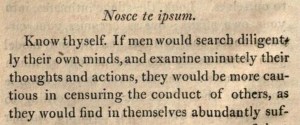
There once was an ancient Greek aphorism: “Know thyself!” It was inscribed over the entrance, or forecourt, of the Temple of Apollo at Delphi–where the ancients used to go in search of supernatural wisdom or before battle, in hope of a cheerful word from the oracle. Socrates the philosopher invoked it, and therefore millions have read it down through the years:

socrates know thyself

What does Socrates and the Delphic maxims have to do with self-publishing? Quite a lot actually, if you ascribe to my theory, which is that to sell books you must know your readers and how to target them precisely, and if you want to know your readers you had best know yourself pretty thoroughly, too.

Perhaps I’ve been influenced by the resurgence of interest in mindfulness, which these days is often closely associated with meditation, spirituality, and environmental justice. Those are all great things, and while I think self-understanding is probably a crucial part of all three of these things, they’re not what I’m primarily interested in today. Today, I’m interested in examining the nexus between self-published authors and their readers, a nexus which we are bound and required to understand if we want to break even on our publishing expenses. In this context, being mindful of both your own self and your readers is critical.

(Boy, do I feel callous saying that. But it’s true.)

The fact of the matter is: selling books is dependent upon this peculiar relationship, and as many counselors and therapists are likely to tell you, while you can’t control the other person or persons in a relationship, you can control what you do.

So how do you get to know thyself?

  1. Make comparisons. Not, like, in terms of quality of your book! But identify a handful of books which are similar to your upcoming one in theme and content, and start jotting down characteristics which they seem to share. And … yes, you need to do this before your book comes out. Ideally, long before your book comes out. It will help you frame your promotional work as you start seeing what material these authors are putting out–blog posts, newsletters, YouTube video updates, etc–to reel in their readers. Experiment with these modes, and hone a few new skills. Nowhere does Socrates say that the self is monolithic and unchanging!
  2. Listen up. Yeah, this one seems totally obvious, but a lot of authors tend to find a system that they feel comfortable with and stick to it, even as it slowly becomes apparent that they’re not actually reaching their readers. So, listen. Listen, and be willing to alter your attack vector when it comes to marketing. Don’t keep doing a thing just because you like it or because you’re comfortable with it. Your feelings don’t sell books; your readers’ do. A part of self-knowledge is understanding what you’re feeling at any given moment, and simultaneously recognizing that others may or may not share these feelings.
  3. Go for the soft sell. Self-publishing is all about the relationship between you and your readers, and you’ll get nowhere by pushing your agenda (selling books) over developing real and authentic relationships with your readers. If you’re not willing to partner with your readers in this endeavor, then that’s something you ought to know about yourself, and adjust accordingly. As in, find yourself a marketing coach or perhaps even a social media manager to do some of this work for pay.
  4. Plug the gaps. Not like a boy with his thumb in a hole in a dike (man, where did my parents come up with some of their little anecdotes? It’s amazing what sticks!) but as a student of the self and and of relationships. Where are your weaknesses? A hint: usually they’re somewhere close by when you find yourself uncomfortable with some particular aspect of the publishing and marketing processes. Pay attention to feelings of discombobulation and discomfort, and either by yourself or with an expert sit down and start drawing up a list of skills to develop or strategies to adhere to in order to accommodate these weaknesses. For me, structuring my day-to-day routine is a nightmare, and this leads to spotty engagement online. That’s a weakness. But it’s a weakness that, like most other weaknesses, can be dealt with using a jot of foresight and good planning.

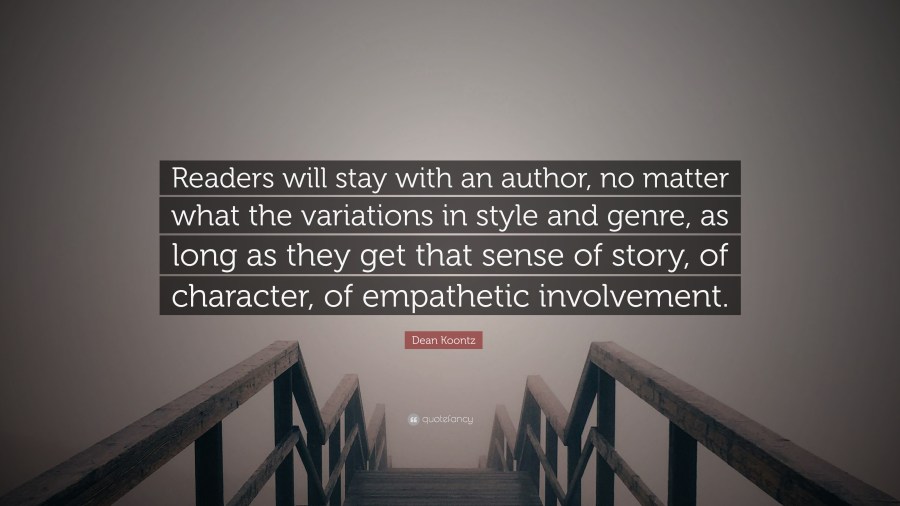
If you know yourself, you’re most of the way down the path to knowing how to reach your readers. And as Dean Koontz says:

dean koontz readers quote

You are not alone. ♣︎


Elizabeth

ABOUT ELIZABETH JAVOR: With over 18 years of experience in sales and management, Elizabeth Javor works as the Manager of Author Services for Outskirts Press. The Author Services Department is composed of knowledgeable publishing consultants, pre-production specialists, customer service reps and book marketing specialists; together, they all focus on educating authors on the self-publishing process to help them publish the book of their dreams. Whether you are a professional looking to take your career to the next level with platform-driven non-fiction or a novelist seeking fame, fortune, and/or personal fulfillment, Elizabeth Javor can put you on the right path.

From the Archives: “The Vook? Yes, Vook.”

Welcome back to our Tuesday segment, where we’ll be revisiting some of our most popular posts from the last few years.  What’s stayed the same?  And what’s changed?  We’ll be updating you on the facts, and taking a new (and hopefully refreshing) angle on a few timeless classics of Self Publishing Advisor.

∗∗∗∗∗

[ Originally posted: January 27th, 2010 ]

There will likely be a good deal of hype this week about a cool new multimedia option called the Vook.

What will this do to the self-publishing industry, and will yours be the first independently published piece available?

Whatever happened to Vook, with all of its big dreams and potential for self-publishing authors?

vook

Well … it’s complicated.

Once upon a time, Vook began as a response to what NYTimes author Motoko Rich called an “increasingly elastic” notion of what makes a book … well, a book, and as publishers began to “mash together text, video and Web features in a scramble to keep readers interested in an archaic form of entertainment.” His words, not mine. (I don’t think books are archaic, at all!) Still, a Vook offers … more.

Take, for example, several ‘vooks’ which Rich details in his article, vooks published in partnership with the traditional Big Five publishing house, Simon & Schuster:

In one of the Simon & Schuster vooks, a fitness and diet title, readers can click on videos that show them how to perform the exercises. A beauty book contains videos that demonstrate how to make homemade skin-care potions.

Not just how-tos are getting the cinematic work-up. Simon & Schuster is also releasing two digital novels combining text with videos a minute or 90 seconds long that supplement — and in some cases advance — the story line.

In “Embassy,” a short thriller about a kidnapping written by Richard Doetsch, a video snippet that resembles a newscast reveals that the victim is the mayor’s daughter, replacing some of Mr. Doetsch’s original text.

And even when he published his article in 2009, Rich was recounting some degree of success, at least on the part of the author, publishing partner, and Vook itself:

Bradley J. Inman, chief executive of Vook, said readers who viewed prototypes of “The 90-Second Fitness Solution” by Pete Cerqua or “Return to Beauty” by Narine Nikogosian “intuitively saw the benefits of augmenting how-to books with video segments.” Mr. Inman said readers then “warmed to” the fictional editions.

Jude Deveraux, a popular romance author who has written 36 straightforward text novels, said she loved experimenting with “Promises,” an exclusive vook set on a 19th-century South Carolina plantation in which the integrated videos add snippets of dialogue and atmosphere.

Ms. Deveraux said she envisioned new versions of books enhanced by music or even perfume. “I’d like to use all the senses,” she said.

So what happened to the Vook? Well, as we reported in 2015, it became something else. Not for lack of enthusiasm or some sense of failure, but after successfully raising financing in 2010, partnering with major publishing houses in 2011 and 2012 to release several popular vooks, launching a brand-new self-publishing platform in 2012, acquiring a digital imprint (Byliner) in 2014, and rebranding itself in 2015 as … Pronoun.

Which was promptly acquired by Macmillan.

That’s what happened to Vook. Instead of becoming something great and unique and a friendly face in the self-publishing community, it took another path. Pronoun still purports to be a self-publishing platform, but the jury’s still out on whether it will make enough of a profit for the Big Five publisher to continue providing it as a service down the road. When it comes to traditional publishers buying out self-publishing platforms, historically, things have not gone all that well. You only have to look to Penguin’s acquisition of Author Solutions in 2012, which got lost in the shuffle when Penguin and RandomHouse merged the following year. It still exists, but authors have seen a steady decline in the variety and quality of services offered, while Penguin-RandomHouse has primarily used the service as an “audition” tool rather than a genuine self-publishing service. In other words, the parent company isn’t all that interested in seeing your book hit the market unless it’s likely to make them a lot of money. And what if you weren’t interested in writing a blockbuster?

Seems mighty limiting to me. So we’ll see where Vook goes from here.

Thanks for reading.  If you have any other ideas, I’d love to hear them.  Drop me a line in the comments section below and I’ll respond as quickly as I can.  ♠


Kelly

ABOUT KELLY SCHUKNECHT: Kelly Schuknecht is the Executive Vice President of Outskirts Press. In addition to her contributions to the Outskirts Press blog at blog.outskirtspress.com, Kelly and a group of talented marketing experts offer book marketing services, support, and products to not only published Outskirts Press authors, but to all authors and professionals who are interested in marketing their books and/or careers. Learn more about Kelly on her blog, kellyschuknecht.com.


From the Archives: “Traditional Publishing: Hard Facts”

Welcome back to our Tuesday segment, where we’ll be revisiting some of our most popular posts from the last few years.  What’s stayed the same?  And what’s changed?  We’ll be updating you on the facts, and taking a new (and hopefully refreshing) angle on a few timeless classics of Self Publishing Advisor.

∗∗∗∗∗

[ Originally posted: October 17th, 2008 ]

We are in ongoing exploration of the advantages leading self-publishing options offered for publishing authors. Collectively, what are the advantages of self-publishing in general over the long established alternative? Here are some hard facts on Traditional publishing.

7 – Traditional publishers lose money on over 85% of the books they publish, so they only accept 2% of those that are submitted.

6 – They typically accept manuscripts only from established authors who have demonstrated a proven track record.

5 – Authors lose all control of their content during the editing process.

4 – Authors must still invest an enormous amount of time, energy, and money promoting a traditionally-published book.

3- Authors typically receive 5-10% royalty on the wholesale price of the book, and from that have to give 15-25% to their agent. Do the math.

2 – The majority of books published by old-fashioned publishers go out of print within 3 years. Many books that are stocked on book shelves remain stocked for as little as five weeks before being returned, unsold, to the publisher.

1- Old-fashioned publishers acquire all rights to your book and keep them, even when the book goes out of print or the publisher goes out of business!

– by Karl Schroeder

On Advances & Other Things

First off, it’s worth noting that the numbers are all over the board here, and that while the industry’s most reliable source of yearly hard data–the annual Author Earnings Report–isn’t out for this year yet (which makes sense, since we’re only a few months in) it isn’t set up to gauge that kind of question to begin with. Publishers understandably have a vested interest in fogging up the data around advances, especially how many people actually earn them back, because the facts of the matter are such that:

  • It’s a much smaller number than Karl reported back in 2008, probably closer to the 2 to 5% range;
  • Advances protect some authors from facing their own losses, but they also cheat some well-performing authors out of representative royalties in a classic case of “settling for a misleadingly presented benefit”;
  • A high percentage of unmet advances equals a lot of waste, and in an industry which is barely scraping by as-is, this would be a major blow to certain publishers’ reputations as champions of the everyman;
  • A high percentage of unmet advances also equals a slippage in the market, and publishers have to maintain intense competition with each other in order to attract that small number of well-performing authors who do make back their advances, and in so doing make a profit for the publisher as well. Lose a couple of big-name authors because their reputation is slipping, and the rest might flee as well … and the publishing house go under.

So it’s not data that publishers really want to broadcast.

All of this to say, publishers do indeed prefer established authors who have proven track records as blockbuster bestsellers, and newer or more typically performing (“midlist”) authors are left to struggle along with substandard marketing and promotional help, because the publisher doesn’t believe investing more will pay off. These midlist authors must carry the burden of self-promotion themselves, even if they supposedly have the might and muscle of a major publishing house behind them. Only the guaranteed successes are guaranteed significant assistance, and there are very few guaranteed successes, aren’t there?

Control will always be an issue. Perhaps you might consider giving up control, if you knew that you were putting your book into good hands of great skill and leaving your book with a team who really had its best interests at heart. But publishing houses aren’t like that; they have to think about the bottom line at all times, because the industry is so competitive and they’re so often at risk of losing everything. So they make the call on your book cover, maybe even your book title, and on all sorts of marketing and promotional decisions which you may or may not agree with in the first place–because they have to keep the machine moving, and the assembly line in motion.

You might have guessed the preferable option, seeing as how we’re a blog about self-publishing. But we don’t just have a vested interest; we want to lay out all the options, with all the facts, so that you can choose the one best suited to you. And if you know your book is a guaranteed blockbuster success, then traditional publishing may well be a good route for you! But if you’re publishing a book with narrower appeal, maybe more specialized material, or with the goal of reaching a certain fandom–well, self-publishing is an effective and efficient way of doing that, while ensuring you retain full creative control.

That, we can get behind. (And we do … a lot. Sorry about that!)

hard facts child

Thanks for reading.  If you have any other ideas, I’d love to hear them.  Drop me a line in the comments section below and I’ll respond as quickly as I can.  ♠


Kelly

ABOUT KELLY SCHUKNECHT: Kelly Schuknecht is the Executive Vice President of Outskirts Press. In addition to her contributions to the Outskirts Press blog at blog.outskirtspress.com, Kelly and a group of talented marketing experts offer book marketing services, support, and products to not only published Outskirts Press authors, but to all authors and professionals who are interested in marketing their books and/or careers. Learn more about Kelly on her blog, kellyschuknecht.com.