Self-Publishing News: 3.14.2016

This week in the world of self-publishing:

It’s not often that self-publishing makes a mark on a major East Coast newspaper, especially one known for covering international politics and economic affairs, but this week self-publishing is the byword everywhere, including this March 10 article by Jeffrey Trachtenberg and Felicia Schwartz that appeared in the Wall Street Journal.  Why the big fuss?  Well: “Three major U.S. book publishers, several trade groups and others in the publishing industry have signed a petition urging the White House and Congress to end the Cuba trade embargo for books and educational materials.”  So far you might be forgiven for thinking that the Big Five were the driving force behind this petition, but bear with me for a minute.  “The petition,” write Trachtenberg and Schwartz, “argues that the embargo ‘runs counter to American ideals of free expression’ and lifting it would be ‘consistent with the will of the American people.'”  This, of course, is fully in line with the independent streak so fiercely guarded by the anti-gatekeeping indie publishing movement, and as it turns out, self-publishing authors have come out in force to support the petition.

While only WSJ subscribers can read the full article, the story has been picked up by a variety of other news outlets, including the Huffington Post, specifically this HuffPost Books article by Mark Coker, the founder of SmashWords––a distributer of independently published ebooks––and a driving force behind the petition.  As he earlier wrote on the SmashWords blog, Coker says the petition was inspired by a visit to Cuba, where he discovered that “it’s extraordinarily expensive and difficult for Cuban publishers to gain access to even the simplest raw materials of bookmaking, such as paper and ink. And for self-published authors, even if they had access to self-publishing services or book printers, the set-up fees of such print services would be prohibitively expensive.”  Says Coker, “Cuba has an adult literacy rate that is nearly 100%. Compare that to the the US where adult literacy is only about 80%. Cuba has a rich literary heritage. They value books.”  To deliberately quash literary entrepreneurship in Cuba is to suppress a priceless literary heritage––as well as future potential.  To read more about the petition, you can visit the WSJ article here, the HuffPost Books article herethe SmashWords blog here, and the corresponding public White House petition here.

“Independent publishing doesn’t mean what it used to,” writes Brooke Warner in this March 11 for Publisher’s Weekly.  She goes on to explain that today, “when people talk about ‘indie’ authors, they’re talking not about authors published on small presses but about a thriving movement of self-published authors who are green-lighting their own work and riding the wave of a movement that’s far from peaking.”  This movement is so distinct, she argues, that it well deserves the title of “revolution”!  “Self-published authors have been working for years to improve their own standards, and the results are impressive,” writes Warner, who publishes via She Writes Press and SparkPress, is president of Warner Coaching Inc., as well as an independently published author herself.  As such, she’s perfectly positioned to declare with authority: “If the past 16 years are any indicator of what’s to come, we better hold on. We’re in the middle of a sea change, and indie authors and publishers are not only forging new territory, they’re leading the way.”  For the rest of her piece, visit the original article here.

You might have heard the name “Data Guy” floating around during conversations about the digital book market, particularly in the context of Author Earnings, an annual report and nonprofit organization run by said Data Guy.  Well, in this March 13th article by Michael Kozlowski for the Good e-Reader, Kozlowski records the keynote presentation to the 2016 Digital Book World conference as given by the heretofore anonymous Data Guy, including screenshots of each slide.  (You can also view the original presentation on the Author Earnings webpage.)  Aside from some necessary boilerplate material and a couple of unabashed slides dedicated to justifying the work done by AE, Data Guy spent the vast majority of the presentation focusing on how the current market statistics on ebook sales as given by Amazon and other retailers skew indie authors’ expectations and, possibly, undercuts their ability to contextualize their experiences within the framework of a larger, more realistic, picture.  As it turns out, the shift from print to digital poses a significant challenge to data collection, given that sales have largely shifted from the Big Five traditional publishing houses to a new monopoly held by Amazon, Barnes & Noble, the Apple Store, and Kobo … or so they would have us think.  As it turns out, a large proportion of ebook sales and distribution is now happening independently of these sites, and these sites are famous for underreporting relevant information to begin with.  Data Guy demonstrated how greater transparency and advocacy can do a world of good for indie authors, and I highly recommend reading his full keynote at the link!

As a counterpoint to certain points made by Data Guy in his keynote presentation as reported above, Ángel González of the Seattle Times reports in this March 9th article that “Sales of e-books from major publishers have waned since 2014, the year in which many of them gained the right to price their digital titles sold through Amazon—and jacked up prices.”  Says González, “Those moves suddenly made books printed on dead trees a better deal. But that doesn’t mean the e-book market is stagnant. Far from it.”  As González goes on to say, many of the Big Five traditional publishers are publishing their quarterly sales figures along with announcements that they are seeing a drop in digital sales after Amazon and Hachette resolved their price-fixing dispute last year, and as a result print sales are up.  The general consensus seems to be that if you can buy a book in physical form off of a bookstore shelf for roughly the same price as purchasing an ebook online, why not cave to the superior attractions of a full bookshelf over a full iPad?  And while many indie authors do sell their books in multiple formats, including print, many focus their efforts on the digital market for obvious reasons of economy of launch funds and ease of distribution.  In short, these sales figures have great significance for many indie authors.  Somewhere between the Data Guy’s optimistic keynote and González’s report on the dire predictions out of the traditional sector, we must be able to find a balance.


spa-news

As a self-publishing author, you may find it helpful to stay up-to-date on the trends and news related to the self-publishing industry.This will help you make informed decisions before, during and after the self-publishing process, which will lead to a greater self-publishing experience. To help you stay current on self-publishing topics, simply visit our blog every Monday to find out the hottest news. If you have other big news to share, please comment below.

KellyABOUT KELLY SCHUKNECHT: Kelly Schuknecht is the Executive Vice President of Outskirts Press. In addition to her contributions to the Outskirts Press blog at blog.outskirtspress.com, Kelly and a group of talented marketing experts offer book marketing services, support, and products to not only published Outskirts Press authors, but to all authors and professionals who are interested in marketing their books and/or careers. Learn more about Kelly on her blog, kellyschuknecht.com.
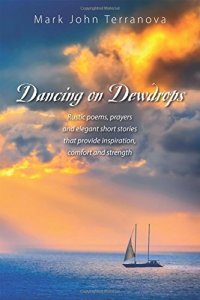
Saturday Book Review: “DANCING ON DEWDROPS”

Book reviews are a great way for self-publishing authors to gain exposure. After all, how can someone buy your book if he or she doesn’t know it exists? Paired with other elements of your book promotion strategy, requesting reviews is a great way to get people talking about what you’ve written.

When we read good reviews, we definitely like to share them. It gives the author a few (permanent) moments of fame and allows us to let the community know about a great book. Here’s this week’s book review, courtesy of Books, Reviews, Etc:

Dancing on Dewdrops

Dancing on Dewdrops:  Rustic Poems, Prayers and Elegant Short Stories

That Provide Inspiration and Strength

by Mark John Terranova

Publisher: Outskirts Press

ISBN: 978-1478747185

Synopsis:

Experience the Exuberant Journey of Dancing on Dewdrops Dancing on Dewdrops is an entrancing collection of poems, prayers, and short stories that capture the utter joy of youth, wrestle with the inherent elements of change, and offer strength and solace-all while celebrating life across several generations. The rustic poetry, prayers, humor and short stories for children that teach values will appeal to all ages. Dancing on Dewdrops provides inspiration and comfort, delivering lasting imagery and leaving an indelible imprint on the heart and human spirit.

Critique:

This is a lovely book of poetry, prayers and short stories. Some of the stories bring about the emotions of joy, sadness, hope and some are humorous. It’s not just for people that love poetry but anyone that needs a moment of peace. A moment to reflect. A moment to really think about the different poems and short stories. It is a heart warming book that you can read one poem at a time or read several in an evening. When you’re feeling a little down, take the book off the shelf and find a poem or short story to bring you some comfort and hope. This is also good for children. It has some life value lessons. Take the time to stop and think about each one as you read it. It’s a lot of food for thought. You may find yourself thinking of what you’ve read long after you’ve read it.

I would give this book 4 STARS.

reviewed by Gayle of Books, Reviews, Etc  ]

Here’s what another reviewer is saying:

There are two sections to this book, the first is a collection of short poems and the second a set of short stories. I found the poems nice and the short stories great, the poems cover many topics, but most refer to a boy growing up where there were open spaces to play in.

The short stories are in two categories, the first relate youthful experiences of the author when he and his brother went fishing with their father. His father worked six and seven days a week and spent nearly all his extra money indulging his hobby of saltwater fishing. The stories are not about bringing back a major catch, the topics are epic failures when what can go wrong did go wrong. Especially when inexperienced children are taken on fishing trips. The stories are amusing as often what goes wrong is far funnier than events that go right.

The second set of stories are two nature stories written for children. The first is about a community of panda bears in China and how they came together to select a new leader. In this selection process, the current leader Wise Bear is being challenged by Strong Bear. Their names indicate which characteristic is most dominant in each of the candidates. Each of them is issued a challenge and their solution strategies are a lesson in wisdom over strength.

The second story for children is about the community of butterflies in a time of drought. With very little water available one of the butterflies forms an alliance with a dragonfly in order to locate one of the few wells that has not dried up. Accessing the well is not easy, for it is in the middle of an open field surrounded by trees containing a large flock of birds that like to eat butterflies. Only through cooperative efforts between the swarms of butterflies and dragonflies can the problem be solved. This is a lesson in the value of cooperative behavior, not only between the members of a family but also between disparate groups that share a common purpose.

While the poems are good, the last two stories are excellent tales for children. Assigning human characteristics to animals always has a strong appeal to children and this book is worth purchasing just for that feature.

– Goodreads Reviewer Charles


saturday self-published book review

Thanks for reading!  Keep up with the latest in the world of indie and self-published books by watching this space every Saturday!

Self Publishing Advisor

selfpubicon1

Conversations: 3/11/2016

WHAT IF…ALL Books Were Banned?

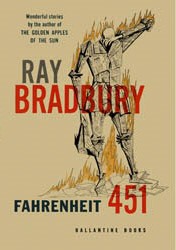
Ray Bradbury (one of my favorite Sci-fi authors) says, “There are worse crimes than burning books. One of them is not reading them.” In 1953 he wrote a novel titled: Fahrenheit 451 (the temperature needed to ignite paper), which became a must read classic almost immediately. The future of America portrayed in these pages does, indeed, paint a sad picture. However, it ends with HOPE when the main character makes his way into the countryside and finds book lovers who live there—who have memorized books—for the time when people are ready to rediscover their value.

bradbury

IF you haven’t read this marvelous novel before, I won’t tell you the ending. Yet, as an author and writing coach, I will suggest you look for one of Bradbury’s main themes which is so beautiful written/woven throughout the book: the cycles of life and living. All writers of all genres can benefit from understanding this concept at greater and greater levels throughout their writing careers. The concept of “to everything there is a season,” is played out in real life each and every day—in our own lives and our Readers’ lives—and must be developed in the actions and events of our characters’ lives.

Another of my favorite authors, Dr. Seuss, offers a quote that should give all writers encouragement: The more that you read, the more things you will know. The more you learn, the more places you’ll go.” On the surface, these points may not seem to relate to Bradbury’s Fahrenheit theme. Yet relating reading (the great value of reading) to learning and going places IS the hope of all writers who develop their stories (either fact or fiction) with the heart of their Readers in mind—giving them the opportunity to GO where their feet cannot take them.

Last week I gave you the statistics of Readers who purchase fiction (53%) and non-fiction (43%) books. In the fiction category, fifty-five percent (55%) is bought by women and forty-five (45%) by men. Of all those who read fiction, their favorite genres are mystery/suspense (19%), leaving the remainder of the eighty-one percent (81%) to enjoy each of our preferred genres—which definitely gives each author/writer a strong foundation from which to promote our books. And yet, IF the day comes when banning books is the norm rather than the exception, HOW would be deal with it?

As a parent, grandparent and great-grandparent, I admit that I’ve essentially “banned” specific books from the shelves of my children. There is a safety zone needed when it comes to young minds that are not yet developed to the point of clear and logical thinking. However, in recent years I’ve come to wonder whether there really are some books—that promote ugly and dehumanizing ideas—that should never even be published. Many traditional and self-publishing houses are accepting the role of “parent” in this respect, and I applaud them!

As I close today, I will leave you with thoughts (quote) from Alice Walker, author of The Color Purple, who faced some hefty criticism: “Great literature is help for humans. It is medicine of the highest order…It can lift them [readers] into a new realization of their own power, beauty, love, courage.…[having] the best interests of all of us humans at heart. That we grow, change, challenge, encourage, love fiercely in the awareness that real love can never be incorrect.”

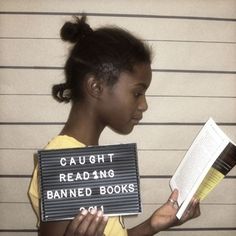
banned book week

Great authors will always receive censure—just look at the centuries of detractors who have tried to “ban” the Bible. When authors create works that are in “the best interests of all us humans,” their/your books will remain “until the end of time.” Go Forth! READ! Write! Publish!

⚓︎

RoyaleneABOUT ROYALENE DOYLE: Royalene has been writing something since before kindergarten days and continues to love the process. Through her small business—DOYLE WRITING SERVICES—she brings more than 40 years of writing experience to authors who need “just a little assistance” with completing their projects. This is a nice fit as she develops these blogs for Outskirts Press (OP) a leading self-publisher, and occasionally accepts a ghostwriting project from one of their clients. Her recent book release (with OP) titled FIREPROOF PROVERBS, A Writer’s Study of Words, is already receiving excellent reviews including several professional writer’s endorsements given on the book’s back cover.  

Royalene’s writing experience grew through a wide variety of positions from Office Manager and Administrative Assistant to Teacher of Literature and Advanced Writing courses and editor/writer for an International Christian ministry. Her willingness to listen to struggling authors, learn their goals and expectations and discern their writing voice has brought many manuscripts into the published books arena.

In Your Corner : Celebrate National Reading Month With These Marketing Tips! (part two)

Last week, I started us off on a month-long exploration of one of my favorite subjects: the intersection of reading with writing and publishing!  It’s almost too easy, given that March is National Reading Awareness Month, too.  And as I said last month: here at Self-Publishing Advisor, we love the fact that there’s an entire month devoted to celebrating the written word–as well as the ways in which we can spread the joy of literacy–and I would like to invite you to continue joining me in making reading a focus all month long, here in our Thursday blog post slot.  


March may not typically be a month you think of to get started on a major project, or finish pushing said project through the publishing pipeline, but really, there’s no better time: the weather is getting warmer but where I live it’s still quite slushy and prohibitive to long road trips––perfect!  I always try to make use of this halfway-survivable weather to knock out some major projects while also taking some short local expeditions to my favorite spots in order to shake off the winter blues.

Sometimes, however, especially when I’m bouncing back from the Winter Blues, I find myself searching around a bit for a good starting point, or a way to pick back up the threads I dropped before the holiday frenzy set in, and before I got wrapped up in everything that follows (sending kids off to school, dealing with tax season, and so on).  So, I did a little brainstorming and came up with some more tips for kicking things back into gear, and making good on the potential promised by such an ambitious theme as National Reading Awareness Month!  (You can read my first four tips here.)

TIP FIVE : Ask for book reviews  

Research has shown that positive reviews makes a book sell better.  In fact, reviews written by people who have read your book often carry more weight than reviews by recognized experts!  Just think: the last time you went hunting for a new book to read, which held the most weight for you?  The blurb on the back cover?  Celebrity endorsements?  A four or five-star review on Goodreads and Amazon?  A really thorough and useful review on one of those sites?  Or word-of-mouth recommendation?  Most people would rank these metrics in reverse order, with one notable exception: a high star rating on Amazon and Goodreads is a defining factor between those people who click through to read reviews and those who keep scrolling on by.

So how do you get reviews?  We’ve written about them before here on Self-Publishing Advisor (here, for example) but in summary: be proactive.  Very few authors can rely on reviewers coming to them!  There are plenty of ways to drive book reviews, but the most important ones include offering giveaways in exchange for reviews, soliciting reviewers through easily-googled book review index websites, and simply asking for them.  You can ask for reviews even before your book is published by offering to send the reviewer a digital copy of your book.  The key to all of these interactions is not to come off as pushy or fake.  Reviewers tend to respond well to simple requests, either favorably or with regret at not being available.

USA, New Jersey, Jersey City, View across the shelf showing girl (8-9) reading book

TIP SIX: Request peer reviews

Remember how effective word-of-mouth recommendations are?  Well, another way to get the review ball rolling is to ask friends who have already read your manuscript to write a review.  Because they have a personal connection with you, the author, they’re far more likely to do so––and far more likely to become advocates for your book––if you ask them to take on official review duties.  Since writing these reviews can be time-consuming and they may suffer low confidence if they’ve had little or no review-writing experience, you might have a couple of really good sample reviews (of your book or someone else’s) on hand for them to look at.  That way, they’ll know some of the standard language used in reviews, and also get a sense for how diverse and unique each review can be!  The point of asking your peers to review your book is to get little pops of personality bleeding through the pixels of your Amazon book page––readers love the authenticity of a person who admits a real human connection to an author, and speaks honestly from that privileged position, with all the insight into the book’s backstory that they’re now privy to. 

Businessmen working together
TIP SEVEN : Create a mailing list or Facebook group  

Last but not least––for this week, anyway––you should actively seek out readers who might be interested in reading your book.  You are probably already doing this at both personal or professional meetings as well as at conferences, book club meetings, your kids’ Mother Goose sessions at the library, and so on.  The next step is to turn these casual conversations into something a bit more structured and organized; ask if you can send these potential new readers information about your book, then add them to your mailing list.  You can use the built-in mailing list features in desktop-based versions of Microsoft Outlook, or you can look to the Cloud and to web-based softwares like MailChimp.  I don’t necessarily think of social media as a substitution for these valuable programs, but you should also consider creating a Facebook group in addition to your mailing list, and take full advantage of the intersectionality of that platform––through Facebook alone, you can schedule events, send private messages and post public announcements, upload pictures, and find new readers.  Well worth a little exploration, I think!

Small Business Revolution - Bluegrass Youth Ballet

I’ll be back next week with some more tips!  And …

… always remember: you are not alone. ♣︎

ElizabethABOUT ELIZABETH JAVOR: With over 18 years of experience in sales and management, Elizabeth Javor works as the Manager of Author Services for Outskirts Press. The Author Services Department is composed of knowledgeable publishing consultants, pre-production specialists, customer service reps and book marketing specialists; together, they all focus on educating authors on the self-publishing process to help them publish the book of their dreams. Whether you are a professional looking to take your career to the next level with platform-driven non-fiction or a novelist seeking fame, fortune, and/or personal fulfillment, Elizabeth Javor can put you on the right path.


Dispatches From The Hybrid Publishing Experience

Last week, we took a cursory first glance at the hybrid publishing experience, in hopes of defining it with a touch more clarity than has been the norm.  Our final conclusion?  The simplest and most straightforward definition of hybrid publishing might be as follows:

Hybrid publishing is any publishing model that allows authors to enter into direct, flexible, contractual collaborations with industry professionals that in traditional publishing would be indirect (they would be paid by the publishing house, not the author) and are not traditionally available to self-publishing authors.  This includes companies like Outskirts Press, which offers a range of collaborative services, and excludes the so-called “hybrid author,” or someone who has moved from traditional publishing into self-publishing or vice versa.

(You can catch up by reading the full original post here.)

But what does it feel like to publish through the hybrid model?  What is the experience like?  I thought we might glance over some of the statements that have been made about hybrid publishing by the authors who choose it themselves––a couple of collected dispatches, if you will!  Here are the two dispatches I keep coming back to:

dispatches

I have just finished my third book with Dog Ear Publishing, and if there is a fourth–not likely–I’d not hesitate to go with them again.

To try to find a publisher for my first book was intimidating. I tend to research everything from buying a can opener to buying a new car, so I went to the omnipotent internet–and promptly got overwhelmed. There are dozens and dozens of publishers, of course, all spouting promises and rewards, so I was pretty much in the dark. I found that Dog Ear Publishing seemed to have generally favorable reviews, as well as a package that seemed to fit my needs, but a lot of other companies appeared competitive. But sooner or later one has to fish or cut bait–so I crossed my fingers and pushed the button and they took my money, just like that.

I was assigned to Amber, who proved to be a gem, patiently answering all my questions both promptly and understandably. But alas, she wanted to start a family, and I was switched to Adrienne. I didn’t like that–at first–but she didn’t miss a beat and proved to be an apparent clone. All went reasonably well and the book became a best seller. (Well, at least in my family.)

The second time I went with Dog Ear Publishing was because of these two women, but it was also smoother because I learned to make it a bit easier by more care on my end–strive hard to get the copy as close to right the first time, learn from one’s mistakes, allow for the inevitable exception, that sort of thing.

The third time I went to Dog Ear Publishing for the same reasons, but did wonder what would happen as a few wrinkles showed up. Again, both Amber and Adrienne took turns holding my hand and guiding me though, and I certainly needed them, because of two particular situations: One, for the cover I wanted to use one of my own photos, but the contrasts in tone and subject matter made it difficult to include the title/author in clear type. But Amber was relentlessly patient, repeatedly having the design dept. come up with some adjustment till we finally got it right.

Second, when the five comp copies came, they were acceptable–almost. They were very readable, but some pages did have a noticeable lighter font. I didn’t know if Dog Ear would agree with my assessment, but it was my baby, so I pushed for a reprint. I was surprised to find no pushback whatsoever. They did ask for sample photos of the text to validate the differences, but then quickly reprinted and sent me five new copies as well as extras to cover a few that had already been sold.

So there you have it–and perhaps I should have placed this first–Dog Ear provided;

Varied and useful packages, including developing a website for me and getting the books on Amazon and other outlets, and providing PR materials as per contract. Outstanding customer support on all levels. Knowledgeable, professional, and patient caretakers (Amber and Adrienne especially). Prompt and thorough responses to a multitude of questions, and a willingness to truly “work with” the author.

I love this review, not just because it gives one specific company a good review, but because it speaks to the real strengths of the hybrid publishing experience: constant communication, flexibility, and a real willingness to put the author’s vision at the forefront of the publishing process.  That’s amazing!

MMCM: One day I had an encounter with a boyfriend I’d had in years past, and we talked about what had gone wrong between us. It was already too late for us, so after I went home that day I wrote a letter to say all the things I hadn’t been able to say to him in person. When I read it over the next day I really loved it, so I decided: all of these poems that I’m putting together are connected to these men I have loved–past and present, you know, since I still love them–and I decided to write the stories that go along with the poems.

[…]

OP: How did you discover Outskirts Press?

MMCM: I had a conversation with a literary department at an agency I currently work with, and they told me ‘Yeah, we can do the book. We can submit it to different publishers.’ But they said, ‘Realistically, this could take up to two years, and if we were you–you already wrote it, you’re already promoting it, you’re already building a fan base. You should go ahead and self-publish.’ I started looking into different self-publishing companies, but I immediately liked that Outskirts wasn’t Barnes & Noble or Amazon. I didn’t know much about the publishing world, but I just knew I didn’t want to drive myself crazy. I looked into different companies as well, but Outskirts was what felt right, and I went with my gut.

OP: Artist Deanna First helped create the cover of your book. It’s an intriguing piece–how did it come to be?

MMCM: Deanna is a really amazing fashion illustrator. I found her online, through a blogger friend of mine. I loved how soft and mystical her art was. I live in Los Angeles, but I went to New York for a wedding and for New York Fashion Week, and I met up with her. I had a vision of what I wanted, and she totally understood what I was trying to do. I sent her a copy of the book, and an image of myself that I really loved, and told her to make the artwork her own. She sent me three proofs one day, with variations in color and lettering, and as soon as I saw it–her art was so, so beautiful. I chose the version with black because I felt it was symbolic for a chased chapter, a closed book. I was starting a new life at that point, and the art expressed a sort of mourning. Since Letters is an intense book, with lots of ends of loves, it fit.

OP: What do you find to be the most rewarding aspect of becoming a published author?

MMCM: The most rewarding part is and will always be the ability Letters has to touch people. It’s crazy because I didn’t think people really read books anymore. But for me, having these girls go and buy my book, and spend their twenty dollars or so on Letters–it’s amazing, that someone believes in things still. People say my book has helped them heal, and that it has touched them, and that they have read and reread the book five or six times. It’s not a long book, but still! That’s the best feeling.

A lot of girls and guys have hit me up, saying I inspired them to write again. It’s so great, because I’ve had people inspire me throughout my life, so it’s kind of like I’m paying it forward. I love showing people that things are possible. When I first saw Jennifer Lopez in a movie, you know, I was like–wow, a Latin girl on screen! I was being represented. It was so powerful. If I can be an inspiration to someone to write, to publish a book, that’s beautiful.

What I love so much about Mirtha Michelle Castro Mármol’s account (above) is that she speaks so clearly and directly about how hybrid publishing can bring an author’s whole and complete vision into the world.  She describes her vision, and how she collaborated with the staff of Outskirts Press to bring it into being––from writing the book, to finding the company she wanted to go with, to finding a designer for her book’s cover, to connecting with her readers after the fact.  For Mirtha Michelle, you simply can’t divorce the publisher from the published experience, and I think that’s a beautiful thing.


And there you have it!  Two of the most insightful dispatches from inside the world of hybrid publishing … when it goes well.  Next week, I’ll take us full circle back to marketing––and answer the questions: How does hybrid publishing assist an indie author in the realm of marketing a book?  Does it offer tangible benefits?  How can an author know when the expense is paying off?  Watch this spot next Wednesday for more about this new and growing niche in the self-publishing industry!


Thank you for reading!  If you have any questions, comments, suggestions, or contributions, please use the comment field below or drop us a line at selfpublishingadvice@gmail.com.  And remember to check back each Wednesday for your weekly dose of marketing musings from one indie, hybrid, and self-published author to another. ♠

KellyABOUT KELLY SCHUKNECHT: Kelly Schuknecht is the Executive Vice President of Outskirts Press. In addition to her contributions to the Outskirts Press blog at blog.outskirtspress.com, Kelly and a group of talented marketing experts offer book marketing services, support, and products to not only published Outskirts Press authors, but to all authors and professionals who are interested in marketing their books and/or careers. Learn more about Kelly on her blog, kellyschuknecht.com.