Marketing BASICS : Selling Readers ON Your Book, Not Just Selling Your Book to Readers

Welcome back to my series on marketing B.A.S.I.C.S. here at Self Publishing Advisor, of which this is the fourth installation.  Three weeks ago I got the series underway with this introductory post, followed by an exposition on the “B” in B.A.S.I.C.S. (“Building an Online Presence“).  Last week, I answered the burning question of “What does the letter “A” stand for, then?” with a not-so-simple answer tackling various ways and means of “Ascertaining Your Ideal Reader.”  This week, as you might have guessed, we’re taking a look at the next letter in B.A.S.I.C.S. as we examine just how to go about Selling readers ON your book––and not just selling your book TO readers.  If the distinction seems a touch unclear, consider it this way: there are a lot of reasons why people do or do not buy specific books, and it only rarely can be defined as ONLY a financial transaction.  Ultimately, a book’s larger success can be credited to the author’s creation (and after, cultivation) a fan following made up of readers who really love and connect to the book.

As I mentioned last week, this series emphasizes marketing for new or first-time authors, but this point––this letter “S”––carries a lot of meaning for even the most experienced of authors.  There’s no point in an author’s professional career––even a blockbuster success of a career––where free passes are handed out.  No matter what stage of the self-publishing process you are at, you must continually strive to connect to your readers, and to create a product that is more than just attractive to them––you must strive to create a product, a book, that blows them away.  Each and every time.  This, too, is one of the most important and foundational of steps to crafting a successful marketing strategy.
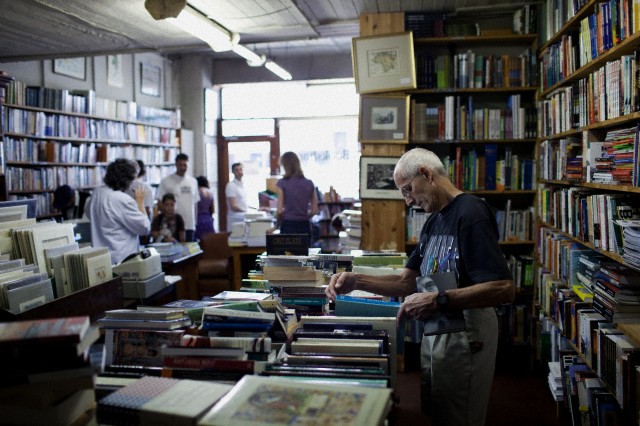
selling a book

So, how DO I sell readers on my book?

  • Even before you publish your book, build community.  Spread the word!  Launch countdowns and promotions (like giveaways of Advance Reader Copies, or ARCs) on social media early.  And don’t forget to reach out!  Many first-time self-publishing authors find their most passionate advocates to be other members of the indie community.  Why?  Not only do they understand the rigors and narrative of self-publishing, but they’re by and large a welcoming bunch with extensive and generous networks––networks made up, in part, of avid readers looking for their next great book.  You shouldn’t approach the indie publishing community, online or off, as a chance to steal eggs from someone else’s basket, though: humility is a quality that belongs in the self-publishing community every bit as much as it does in fairy tales.  And, seeing a little of themselves in you, many established indie authors will be willing to put in a kind word for you with their readers.  One day, you’ll be able to pay it forward in the same way.


  • Share.  You’re not just selling a book––you’re selling the larger narrative surrounding your book, and that narrative intersects with your own life in ways that you won’t always be able to predict.  A key ingredient to selling readers on your book is to follow in Steve Job’s footsteps and be your own product’s biggest fan; your book is a beautiful and wonderful thing, and your enthusiasm for can be positively infectious.  Never be ashamed to share with your readers your passion for what you’ve created, and to do so in as many creative ways as you can think of: radio and blog interviews, posts to Twitter and Instagram and Tumblr and Vine that reveal the “behind the scenes” elements that give a book its own life and render you, the author, into an interesting character in your own right.  (And trust me, you ARE interesting!  You’ve written a book, after all.  You’ve put a piece of yourself out in the world for other people to engage with and respond to.  Whoa.)


  • And last but not least: Publish the book that you would want to buy.  If you’re only halfway sold on the concept, execution, or presentation of your book … well, let’s just say that readers are usually looking for the same things in the books they buy as authors really want to see in the books they publish.  Give every detail of the process––from conception through creation to final publication––the same level of care and attention that you might give to a priceless work of art.  The comparison is only fair, as your book is art.  And I, for one, can’t wait to read it.

Thank you for reading!  If you have any questions, comments, suggestions, or contributions, please use the comment field below or drop us a line at selfpublishingadvice@gmail.com.  And remember to check back each Wednesday for your weekly dose of marketing musings from one indie, hybrid, and self-published author to another. ♠

KellyABOUT KELLY SCHUKNECHT: Kelly Schuknecht is the Executive Vice President of Outskirts Press. In addition to her contributions to the Outskirts Press blog at blog.outskirtspress.com, Kelly and a group of talented marketing experts offer book marketing services, support, and products to not only published Outskirts Press authors, but to all authors and professionals who are interested in marketing their books and/or careers. Learn more about Kelly on her blog, kellyschuknecht.com.

Marketing BASICS : Ascertaining Your Ideal Reader

Welcome back to Wednesdays on Self Publishing Advisor, where we tackle the intricacies of marketing each and every week in the hopes of making your life as an indie, hybrid, or self-publishing author just a little bit easier.  This is actually the third post in a series examining marketing B.A.S.I.C.S.––yes, that’s an acronym! but more on that later––with a particular emphasis on marketing for new or first-time authors.  It all began two weeks ago with this introductory post, and continued last week with an in-depth look at the “B” in B.A.S.I.C.S.: “Building an Online Presence.”  This week, we’re ready for a new letter and a new sub-topic.  What does the letter “A” stand for, then?  Simple: “Ascertaining Your Ideal Reader.”  This is one of the most important and foundational of steps to crafting a successful marketing strategy.

What is this “Ideal Reader” business??

Your ideal reader is not simply the person who buys your book; he or she is the person who falls in love with the world your book creates and actively looks for ways to participate in that world, whether by following you (the author) on social media or sharing your book with others.  They’re not invested solely out of obligation––which is to say, they’re most likely not members of your immediate family or friend circle.  As wonderful as your existing network of relationships is, and as useful as your friends and family can be––as cheerleaders and amplifiers in your marketing campaign––they first fell in love with you and not your book, and that is always going to be a complicated tightrope to walk.

Your ideal reader, on the other hand, is a fan; but more than this, he or she is engaged with your book outside of the text as defined by letters inked on a page or pixels shadowing a screen.  Your ideal reader will slide your book into a back pocket while walking the dog or slip it into the diaper bag when taking the kids to story hour at the library; she’ll talk about it over the headset while duking it out with her friends on the Xbox or he’ll pass his dog-eared battered copy on to a friend or someone will drop it reluctantly by a Little Free Library––not giving it up because they didn’t have a use for it anymore, but rather giving it up because they’re fairly certain someone else might need it very much indeed.  These people are your mediators, your access, and your ambassadors to the world.

What does an ideal reader have to do with marketing, anyway?

As with any product, your book needs someone to buy it.  You can try to move copies by being absurdly wealthy and getting your superPAC to buy and then distribute thousands of volumes to local libraries in the vague hope that people will discover it while browsing and magically translate that discovery into a sudden impulse to buy more copies and distribute them to friends and family––but I’d be lying if I told you this is a time-honored or even remotely effective strategy.  Time and again, authors who meet their own personal benchmarks for “success” (and the word means something different to everyone) point to these sudden spikes or “strategic bulk” purchases as unethical, while grassroots support from middle or low-income readers who actually love your book enough to buy it despite limited resources tends to lead to long-term sustainable sales.  It goes without saying that people who have a personal, political, or financial stake in promoting your book are useful … but they can also unintentionally sabotage your success if they make your book about themselves, or about anything other than untrammeled storytelling.  And in order to find your grassroots supporters, you have to know where they live (so to speak), and the language they use (literally but also figuratively) to share what they love.

How do I track down my ideal reader, then?

Your ideal reader, if you’re an author of nonfiction, can be identified according to what problem he or she is trying to solve––whether that problem is the reader’s dependency on sugar for energy (a dietary self-help book, perhaps) or the upcoming dinner he’s throwing for the in-laws (a Mediterranean cookbook, perhaps) or her desire to fill a gap in her understanding (of particle physics, or a history of bipartisan politics in America, or the internal hierarchy of multinational corporations).  If you’re an author of fiction, your ideal reader is defined as someone who, when looking for new material to read, is drawn to the type of content or genre or characterization or form which you like to write––in other words, your ideal reader is someone whose tastes in consumption corresponds directly with your tastes in production.  There are many other people who might read your book and enjoy it or benefit from it, but they are baptized into the fold rather than the founders of it.

ideal readers self-publishing

Now, your book many bend genre traditions.  It may be so utterly innovative that the usual metrics of comparison––genre, plotting, etc––break down entirely.  And that’s entirely wonderful, even if it makes identifying your ideal reader just a touch more difficult.  If this is the case for you, instead of trying to jam your book into the confines of a neat description, ask yourself: What do I like to read?  What works of art and music and film move me?  Where do like to go to discover new reading material?  These make for the simplest and most effective path to finding your readers.


Once you find your ideal reader, what next?  Well, you make it worth their while to buy your book.  And that’s where next week’s blog post comes in.  Make sure to check back here next Wednesday!  There’s so much more to come.


Thank you for reading!  If you have any questions, comments, suggestions, or contributions, please use the comment field below or drop us a line at selfpublishingadvice@gmail.com.  And remember to check back each Wednesday for your weekly dose of marketing musings from one indie, hybrid, and self-published author to another. ♠

KellyABOUT KELLY SCHUKNECHT: Kelly Schuknecht is the Executive Vice President of Outskirts Press. In addition to her contributions to the Outskirts Press blog at blog.outskirtspress.com, Kelly and a group of talented marketing experts offer book marketing services, support, and products to not only published Outskirts Press authors, but to all authors and professionals who are interested in marketing their books and/or careers. Learn more about Kelly on her blog, kellyschuknecht.com.

Marketing BASICS : Building an Online Presence

As I mentioned in last week’s post, I’m taking Wednesdays back to the B.A.S.I.C.S. of marketing for your self-published book.  And step one of every really effective marketing strategy in the silicon age requires us to tackle the “B” in B.A.S.I.C.S.: Building an Online Presence.  Given that you’re reading this blog post on the web, I’m going to assume you have already been initiated into the manifold wonders of the internet age, but I’m also going to assume that you’re starting your latest book marketing campaign from the ground up––which is to say, you’re looking to begin with that all-important keystone of any such strategy: motivation.

SIDE NOTE

I’m not going to lie: marketing your self-published book is hard.  Really hard.  It will requires a lot of time, energy, and trust––trust in yourself and your own capacity to make wise choices that fit your own project.  Without this trust, authors risk losing focus as they get sucked into a whirlpool of self-doubt and second-guessing.  I recommend skipping this arduous process entirely by embracing your own insight and the sometimes radical notion that you really can make good choices.  I know that you can, and I’m a perfect stranger!  Just think: you may be fixating at present on some of your own limitations, but you also have a front-row seat to your personal portfolio of strengths and skills!  Let’s put them to work in marketing.

BACK TO THE PROGRAM

The real reason to begin your book marketing campaign with a strong web presence is the simple fact that a comprehensive bundle of platforms––such as an author website, a blog site, as well as accounts on Facebook, Goodreads, Twitter, and even Instagram or Snapchat––is both an effective and inexpensive way to reach new readers.  We’ve written about many of these platforms before here on Self Publishing Advisor, in last year’s Social Media Primer and as far back as 2013 with Wendy’s discourse on improving blogs, but the fact remains that authors are presented with something of a moving target.

New platforms are becoming available all of the time, while less popular ones or ones that have outlived their usefulness are archived or excised from the web altogether.  This is why I used the key phrase “comprehensive bundle of platforms” above: to indicate that an effective presence requires a flexible, adaptable set of options––and above all, the freedom to experiment with emerging technologies as well as the courage to abandon unhelpful ones.  My own recent experiences with Twitter and Snapchat make for a good illustration; I’ve found a healthy and important niche for my Twitter use in broadcasting updates and news about my current work and upcoming publications, but I haven’t quite found a marketable use for Snapchat.  I tried, enjoyed it for a spell, and could even see quite a lot of potential there … but I could never quite invest in it the creative energy required to make it a success.  So I shut my account down in order to spend that time more effectively on platforms that better fit with my personality and web usage.

TWO TIPS

  • Your websites and blogs should be streamlined and easy to navigate; they must both catch a visitor’s eye and capture a visitor’s interest in regards to content, as well as make it easy for even the most unfamiliar of visitors to learn about and buy your book.  In building your websites, you can choose from among a whole host of free services, including WordPress (which is what we use), or Blogspot, or Tumblr, but whatever route you take you ought to consider purchasing your own domain name.  Make it something intuitive and easy to remember; many authors choose to use either their pen-names or the titles of their books as domain name inspiration.
  • Consistency is key.  Whether we’re talking about blog posts or social media updates, creating a sense of routine and reliability is important.  It both makes you more findable (especially if you integrate the tricks of SEO or Search Engine Optimization into your postings) and more trustworthy.  You  might even work up a schedule of what sorts of materials to post on which days of the week, as we do here at Self Publishing Advisor.  You know from following this blog in the past that every Monday we run through the major self-publishing related news items of the week, and every Saturday we run a book review compendium of a self-published book.  Because you know this, you already know that a) you can trust us to post new material on a regular basis, and b) which days of the week you’re most interested in spending some quality time on our website.

So that’s the “B” in B.A.S.I.C.S. … or at least, that’s a place to start!  There’s so much more to come.


Thank you for reading!  If you have any questions, comments, suggestions, or contributions, please use the comment field below or drop us a line at selfpublishingadvice@gmail.com.  And remember to check back each Wednesday for your weekly dose of marketing musings from one indie, hybrid, and self-published author to another. ♠

KellyABOUT KELLY SCHUKNECHT: Kelly Schuknecht is the Executive Vice President of Outskirts Press. In addition to her contributions to the Outskirts Press blog at blog.outskirtspress.com, Kelly and a group of talented marketing experts offer book marketing services, support, and products to not only published Outskirts Press authors, but to all authors and professionals who are interested in marketing their books and/or careers. Learn more about Kelly on her blog, kellyschuknecht.com.

In Your Corner : On Marketing


importance of marketing

Marketing, for the self-publishing author, is a many-headed hydra and prompts endless questions and dilemmas.  Major publishing houses have plenty of time and money to throw into marketing (although they would argue otherwise), particularly in comparison to you or me and any other self-publishing author out there.  They hire people whose entire careers revolve around taking care of the marketing process for their A-list authors, an enviable prospect because all we really want to do is write more books, right?  And yet, instead, we have both the blessing and the burden of running our own publicity campaigns.

Sometimes, I wake to a new day packed full with plans and routines to balance against each other, and I wonder:

  1. Aren’t we always told that the hardest part of writing a book is writing the first paragraph?  (Whoever says such things has clearly never attempted to tackle the tricky beast of self-promotion.)
  2. Are there ideas I can steal from others about how to be more effective, so that I have more time to spend on what I actually love?  (Which is, of course, writing.)
  3. Who gave the world permission to make me wake up to an empty coffee pot?

In all seriousness, though: the way we approach marketing, as self-publishing authors, matters.  Because it’s not optional.  It’s not something we can get away without doing.  We won’t sell books, and we won’t make room in our lives for the next book, either, if we don’t give some of our time over to marketing.

As Gareth Howard over at Infinity Publishing puts it: “Would you bake a delicious cake and not even eat it?  Would you revise for important exams and not bother sitting them?  Would you book an exotic vacation only to stay at home, wasting that precious deposit?”  The answer is, of course, no.  No, you wouldn’t want to waste the precious time and energy you’ve invested in crafting a beautiful manuscript–you want it to be read.  You want your ideas to reach your readers!  And sadly, we still haven’t figured out a way to guarantee authors that their books will just magically sell once they’re published.  There’s still a vital legwork and elbow-grease component to the whole thing.

You do, thankfully, have an advantage over the enormous publishing houses with their big budgets and their paid professionals: You can make it personal.  You can lend the marketing process a human touch, and you can take advantage of the most effective means of self-promotion known to humankind: your existing social network.  You can also pick the things you do well, and reach out for professional help (with a shout-out to my day job) only when you really need it.  The key is, of course, being prepared to work and work hard to achieve your marketing goals.

Others here on the SPA blog have written about marketing before, and have presented a number of ideas on how we can all be more effective at self-promotion as self-publishing authors.  This holiday season, however, I’d like to issue a specific challenge to you (and myself!): Let’s figure out the next workable, manageable, and sustainable step that we can use to bolster our existing strategies.  It’s no good if we have lofty goals that we never reach, so let’s be specific even while we’re also being optimistic.  I bet you my best unsharpened pencil that we can do better in 2016!

There is, of course, a danger in all of this:

Once we acknowledge just how important marketing is, the process has a tendency to take over our lives and erode away all semblance of spare time we might have.  Fortunately, there are a whole host of resources out there for you–to get you started, and to help you along once you’re already partway down the path.  And of course, I’m here for you too–and the SPA email as well as comments section is always open to lend you a listening ear.

You’re not alone. ♣︎

ElizabethABOUT ELIZABETH JAVOR: With over 18 years of experience in sales and management, Elizabeth Javor works as the Manager of Author Services for Outskirts Press. The Author Services Department is composed of knowledgeable publishing consultants, pre-production specialists, customer service reps and book marketing specialists; together, they all focus on educating authors on the self-publishing process to help them publish the book of their dreams. Whether you are a professional looking to take your career to the next level with platform-driven non-fiction or a novelist seeking fame, fortune, and/or personal fulfillment, Elizabeth Javor can put you on the right path.

How to Get Your Self Published Book Reviewed on Amazon

Book reviews are a great way to boost your sales and credibility because readers often turn to online reviews by their peers. Online book reviews are like virtual word of mouth marketing; they can significantly impact your self publishing success. People value other people’s recommendations, and Amazon is one of the most popular sources for online book reviews. Here is how to get your self published book reviewed on Amazon.

1) Identity online book reviewers.

Search online for book reviewers. Look for potential reviewers on Amazon’s Top Reviewers list, and try Googling the Amazon reviewer’s name, which will often point you toward their Facebook page or other contact information. Be sure to look for reviewers who review books similar to yours. You don’t want to spend time soliciting reviewers who won’t be interested in your book.

2) Contact reviewers.

Reach out to people who write book reviews and ask them to review your book. Be sure to send them a FREE copy. (It can be a digital version.) Do not send the book before the reviewer as responded and agreed to review your book.

3) Use your contacts.

Besides people who regularly review books for Amazon, you could ask other people to post a review. Consider asking family members, friends, colleagues, social media followers, etc.  When using this approach, be sure to encourage people to be honest in their reviews. Readers don’t want to read generic reviews by family members and friends who feel obligated to say they like your book.

4) Value honesty.

Not every review is going to be positive. Welcome criticism and use it to improve. Readers will be suspicious if every review is positive. No book is loved by everyone, and readers appreciate genuine reviews.

According to Amazon, if you spend two or three days contacting about 300 potential Amazon reviewers, you can expect to receive about 40 to 50 responses, and wind up with perhaps 35 reviews, a quite satisfactory result. So start contacting reviewers today, and watch your book sales improve!

To learn more about Amazon book reviews, click here.

ABOUT JODEE THAYER: With over 20 years of experience in sales and management, Jodee Thayer works as the Manager of Author Services for Outskirts Press. The Author Services Department is composed of knowledgeable customer service reps and publishing consultants; together, they all focus on educating authors on the self-publishing process in order to help them publish the book of their dreams. Whether you are a professional looking to take your career to the next level with platform-driven non-fiction or a novelist seeking fame, fortune, and/or personal fulfillment, Jodee Thayer can put you on the right path.