In Your Corner : Celebrate National Reading Month With These Marketing Tips! (part one)

March is National Reading Awareness Month!  Here at Self-Publishing Advisor, we love the fact that there’s an entire month devoted to celebrating the written word–as well as the ways in which we can spread the joy of literacy–and I would like to invite you to join me in making reading a focus all month long, here in our Thursday blog post slot.  

As writers, we’re not just people who produce stories; we also consume them, share them, and advocate on their behalf.  As writers, March of 2016 is the ideal time for you to not only finish your book and start publishing it, but also to promote yourself and your book while encouraging everyone to read.  

Think this sounds like a challenge?  Maybe it is.  But I have some pointed ideas to get you started.  This is doable.  I promise you!  All you need to do is dedicate some time each day this month to pursuing the marketing and promotion tips I’ll be posting here for the next four weeks.

GETTING STARTED : Become the local expert.  

If you haven’t heard of National Reading Awareness Month or know the details of its longstanding connection to Dr. Seuss’ birthday, the history of the National Education Association, and how you can participate … well, it’s time to you pay a visit to the NEA’s website and browse through the plentiful promotional materials, media tips, press release tips and fact sheets the NEA has posted there in order to introduce you and other acolytes to the Read Across America celebration.  

Another tip?  It’s well worth offering to speak at local schools and NEA events, or to local organizations on the importance of childhood reading skills.  Many schools, libraries, bookstores, and other organizations welcome the outside help in putting on events of this kind, and yes–there’s something in it for you, too.  The more you make yourself indispensable to your local literary and literacy-building community, the more likely you are to be called on again in the future, and to get word of your own work before fresh eyes.  Best of all, there’s a great deal of satisfaction in knowing you’re helping to foster the next generation of readers–some of whom may go on to read your book!  Which leads me to ….

First Lady Michelle Obama takes part in Read Across America 2012

TIP TWO: GET ‘EM WHILE THEY’RE YOUNG 

Yesterday was Read Across America Day!  Writers are some of the biggest supporters of this day and event.  While you may have missed the boat for 2016, there’s no better time to prepare for the next year than now, when the opportunities (even the missed ones) are fresh on parents’ and teachers’ minds.  Contact local schools, libraries, and nonprofits to find out how you can help promote reading, writing, and kindergarten readiness in general–not just today, but throughout the entire month of March.  Ask if you might partner with some of them in throwing an event next year, in 2017, and start lining up the logistics.  When it comes to scheduling things in March, which is testing season for many American schools, the earlier you get started the better an outcome you can expect.

Read Across America 2007

TIP THREE: CONSIDER ONLINE ADVERTISING  

The last two tips built upon a foundation of interpersonal networking–that is, meeting people face to face and using this method to benefit everyone.  But what about those readers beyond your immediate sphere of influence?  How can you get them reading–and reading your book in particular?  Here’s a thought: Once your book is published, consider whether it might benefit from any online advertising.  You can set up ads on sites like Facebook, Google and Goodreads easily, or with some assistance from your self-publishing company and the marketing consultants they likely keep on staff.  If you’ve published through a company like Outskirts Press (my own stomping grounds), you can count on their staff to help you make your book more discoverable on Google with something like the Google Books Preview Program.

Reading in Madrid

TIP FOUR: INTRODUCE NEW FORMATS OF YOUR BOOK 

You know how it goes: The more easy a thing is to buy, and the more accessible it is to a large number of people, the more sales of that thing will jump.  It’s a well-demonstrated fact that self-publishing authors can reach a larger audience of readers by offering additional formats such as Kindle, Apple iPad or NOOK editions of your book.  And if you’ve only ever published your book digitally, perhaps it’s time you branched out into Print on Demand (POD) copies of your masterpiece!  Consider which formats you want to offer and add them before or after your hardcover format hits the virtual shelves.  If you feel inexpert in how to make the most of a multiplatform, multiedition publication, don’t hesitate to turn to those with the most wisdom to share: your fellow self-publishing authors!  We’re here for you.

Always remember: you are not alone. ♣︎

ElizabethABOUT ELIZABETH JAVOR: With over 18 years of experience in sales and management, Elizabeth Javor works as the Manager of Author Services for Outskirts Press. The Author Services Department is composed of knowledgeable publishing consultants, pre-production specialists, customer service reps and book marketing specialists; together, they all focus on educating authors on the self-publishing process to help them publish the book of their dreams. Whether you are a professional looking to take your career to the next level with platform-driven non-fiction or a novelist seeking fame, fortune, and/or personal fulfillment, Elizabeth Javor can put you on the right path.

In Your Corner : What do I need to know about Co-op Ads?

For those of you who may be new to the indie publishing world, the co-op advertisement is an invaluable tool to add to your self-marketing toolbox.

But what is a co-op advertisement in the first place?  

As Dan Poynter of ParaPublishing notes, “Book promotion is expensive. The challenges are that books are a low-ticket item (they do not cost much so you have to sell a bunch to pay for the promotion), their subjects are targeted to a small group of people (an individual title is not needed by everyone), and there is no recurring consumption (customers do not buy a new copy of the same book every trip to the grocery store).”  (Emphasis mine.) What’s the answer?  As my grandmother used to say around the holidays, “Many hands make light work.”  And many authors can band together to amplify their individual advertising impact.

Simply put, co-op ads are a way for you to experience all the benefits of a large-scale print marketing campaign without the sponsorship of a major heavyweight Big Five publishing house, and without having to lay out a whole lot of cash to do so.

teamwork

You may already be aware of what all is involved in getting your book’s name and/or cover out there into national magazines and newspapers.  You may also be aware that print advertisements like the ones that run in the New Yorker and Ladies Home Journal are expensive!  One full-page advertisement in the New York Times book review section requires a person or company to shell out around $40,00o–and that’s fairly typical.  Many other journals, print magazines, and newspaper inserts are just as expensive.  And while the NYT doesn’t come cheap, it does reach around forty million readers–so the cost for reaching each of those readers is less than one-tenth of one cent.  This is a good deal, sort of.  Not many of us self-publishing authors have $40,000 just lying around in a duffel bag.  (And if we did, well, we would probably be dealing with far greater problems than a marketing campaign!)

Expensive as these ads are, they’re not beyond your reach.  Not if you choose to become a part of co-op advertising, which allows you to share premium exposure in household name magazines and periodicals with other self-publishing authors.  By doing so, you have access to all of the benefits of national marketing without having to bear the full burden of expense.

How do you get involved in co-op advertising?  You can always try to wrangle up something on your own, of course–with other, perhaps local, authors–but that’s a lot of money and hassle to manage.  Certain hybrid self-publishing companies, like Outskirts Press, offer a range of co-op options and possibilities.  Every company offers different options, of course, but Outskirts specifically offers the option to sign up for co-op advertising in the Boston Review, Publisher’s Weekly, Bookmarks and ForeWord magazines, and the New York Times Sunday Book Review.  The best part?  Co-operative advertising doesn’t drum up competition between authors.  As with many other aspects of the self-publishing process, Poynter believes that “it is easy to band together with compatible, non-competing products to lower costs, save time and gain more attention in the market place.”  Now that’s a message I can get behind!

Always remember: you are not alone. ♣︎

ElizabethABOUT ELIZABETH JAVOR: With over 18 years of experience in sales and management, Elizabeth Javor works as the Manager of Author Services for Outskirts Press. The Author Services Department is composed of knowledgeable publishing consultants, pre-production specialists, customer service reps and book marketing specialists; together, they all focus on educating authors on the self-publishing process to help them publish the book of their dreams. Whether you are a professional looking to take your career to the next level with platform-driven non-fiction or a novelist seeking fame, fortune, and/or personal fulfillment, Elizabeth Javor can put you on the right path.

In Your Corner : What You Need to Know About Book Fairs

Book fairs are wonderful.  They are also terrifying.  Where else can you find tens of thousands of highly passionate literary fiends massing together to further the art form that is the book?  Where else can you find teeming crowds of people determined to find their next bit of reading material, and eager to simply browse among hundreds of tables of books and authors on display in order to find it?  Simply put: nowhere.  The book fair is an experience unparalleled by anything else in the reading and writing world, and because it most often reflects the best aspects of the writing and reading and publishing processes, it has quickly evolved to make room for you, the self-publishing author.  Many self-publishing platforms and hybrid publishing companies send representatives to book fairs.  Many, like Outskirts Press, will even sponsor booths in order to feature self-published books at home and abroad.

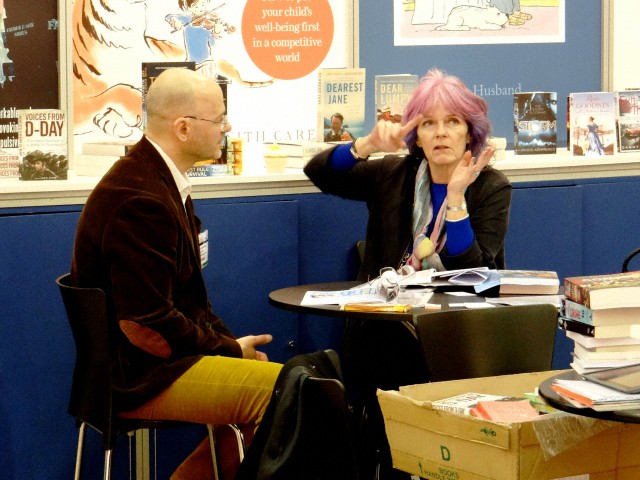
London Book Fair
 

Case in point, the 2014 London Book Fair is world-renowned & well-attended.


So, what do you need to know about book fairs?

First, you need to know your audience. 

What kind of person attends a book fair?  Interestingly, the London Book Fair has already answered that question and thoroughly; according to the LBF website, the 2015 event drew exhibitors from 60 countries and some 25,000 attendees from 124 countries.  In attendance also were around 900 members of the media, also from all over the world.  Since Planet Earth only sports around 196 countries at the moment, this means that the London Book Fair managed to represent at least 60% of the world’s population in some way, shape, or form!  Not every book fair can lay claim to such a draw, of course, but it serves as a good example of the power of books to bring people together.

There is no one-size-fits-all description for who attends a book fair.  The LBF welcomes “anyone who is involved with the creation, distribution, sale or treatment of content.  Authors, talent scouts, editors, designers, digital gurus, all walk the floor, meeting, talking, observing, discovering.”  I’d like to re-emphasize the digital gurus part of that sentence, since the LBF had 400 delegates at the Publishing for Digital Minds Conference.  If you’re a self-publishing author who’s looking to make a break into digital formats–or perhaps digital formats are your only or preferred option–there is still room for you at a book fair!  Whether you go as an attendee, a vendor, or wholly solo, the conversations you begin and the display zone in which your book is featured will reflect your digital-friendly nature.  Often, fair-goers will pause, snap a picture of a QR code, and queue new ebooks for immediate or future download–on the spot!  That’s the power of the digital-friendly book fair.

London Book Fair

Second, you need to know you belong there.

I know that it’s easy to think of book fairs as the stomping ground of the New York Times bestseller list and not for midlist authors–much less self-starting indie authors!  But making the leap to recognizing the value and worthiness of your book to keep those Big Names company at a book fair is an important one to make.  I can’t necessarily teleport to your location and give you a pep talk, but I can use this space to encourage you, I hope.  Your book is wonderful.  It needs to be read.  Critical acclaim and a blurb in notoriously biased magazines or ranking in notoriously rigged bestseller lists  doesn’t make a book better or more inherently deserving.  It just means someone with the right access to people and time and resources put out a book perfectly timed to fit into the publishing machine.

But you’re already a rebel.  You’re already striking out on your own, dispensing with the false and burdensome values of traditional publishing.  You and your book are free to take advantage of scaffolding like book fairs without being shackled to the rest of it, and your book is a bonafide example of an author designing and creating and publishing exactly what he or she envisioned.  That kind of artistic integrity creates its own gravity, its own magnetic attraction to readers.  Fair-goers will pick up on that authenticity right away!

Third, you need to make your book the star of the show.

What’s the trick to making sure fair-goers notice your book?  Creating intimacy in a warehouse-like environment.  If this sounds like an impossible task, let me be the first to assure you that it’s not.  Take a look around you whenever you next step foot in a mall or retail space, public library, or family-friendly health clinic.  How do those professionals section off space and create a warm and welcoming atmosphere?  Take note of what you personally respond to–because your ideal readers will most likely respond to the same.

London Book Fair

Often a busy or crowded space isn’t the most comfortable environment to spend time talking or browsing for new reading material.  Think of Starbucks–and of bookstores like Denver’s the Tattered Cover.  Both of these companies use small nooks to great effect, and it’s not by just packing in a lot of stuff and posters and wallpapering the whole area with product information.  A book fair is not a bookstore; it doesn’t revolve around books.  A book fair revolves around authors and the worlds that they create.  People can order whatever they like off of Amazon and have it in their hands with far less expense of time and energy and money than attending a book fair–but people still flock to them!  And why?  Because they want to participate in the social world of books.  They want to meet the people who make books happen.  They want to meet you.

So, how do you make your book the star of the show?  You winnow down your display and your presence to the absolute essentials, and you focus on building human connections with the people there.  And the London Book Fair is just the beginning–your book could just as easily find new readers in Beijing or Frankfurt!  All you need is the confidence to go, and perhaps the support of those who have gone before.

Always remember: you are not alone. ♣︎

ElizabethABOUT ELIZABETH JAVOR: With over 18 years of experience in sales and management, Elizabeth Javor works as the Manager of Author Services for Outskirts Press. The Author Services Department is composed of knowledgeable publishing consultants, pre-production specialists, customer service reps and book marketing specialists; together, they all focus on educating authors on the self-publishing process to help them publish the book of their dreams. Whether you are a professional looking to take your career to the next level with platform-driven non-fiction or a novelist seeking fame, fortune, and/or personal fulfillment, Elizabeth Javor can put you on the right path.

In Your Corner : Loving Your Self-Publishing Company

What does it mean to love self-publishing?  It’s one thing to love the theory of going indie: the creative control, the rights and royalties, the community spirit, and everything else that goes along with making your own way on your own schedule at your own page.  But it’s another thing to love the experience of going indie, and as our veteran self-publishing readers can attest, this experience depends in large part on the company you choose to self-publish through.

Has Amazon KDP moved past its “Big Bad” corporate image to provide personable services?  Will Kobo Writing Life treat you right?  Has AuthorHouse overcome its checkered past?  How do Smashwords, Lulu, and hybrid publishing companies like Outskirts Press measure up?  For those of you who are just starting out down this road for the first time, the answers to these questions may hold the key to unlocking the joyous, fervent love-affair you never expected to have.  I’m speaking, of course, about your love affair with your self-publishing company.

loving your self publishing company

I’d like to offer you a list of characteristics I think make for the ultimate lovable self-publishing company and also make for the most positive self-publishing experience.  What should you, the eager author, look for as you research what options are out there?

  • Expertise.  A company that says it knows what it’s about is all well and good, but a company that actually knows what it’s about makes for a far superior experience.  Since this year is a presidential election year here in the USA, bear with me a second: it might prove helpful to think of your publishing candidates the way you would your political ones.  What do you look for in your future president?  Know-how, that’s what.  Companies that lack this crucial characteristic slide headfirst into problems of honesty, accountability, schedule-keeping, transparency, reliability, and trustworthiness.  When researching your options, you can get a good sense of a company’s expertise by watching for those tell-tale symptoms of a company in retreat––a company that throws up smokescreens to disguise its lack of expertise.
  • Experience.  Coming on the tails of its close cousin, Expertise, this characteristic is of equal importance.  You simply won’t feel confident in your choice if you know you’re a living and breathing guinea pig for a wet-behind-the-ears company looking to build its portfolio.  And if you don’t feel confident, well, you won’t find yourself falling in love anytime soon.  As you carry out your research, watch for testimonials provided both by the company on its own website and by past clients elsewhere.  It’s easy to find out if a company has the necessary experience, since authors love to blog about what they love and hate; all you need is Google!  (And some spare time.)  The benefit of going with a hybrid self-publishing company is, in my mind, that you only have to research one vendor (the company itself), whereas if you take time to research your cover and interior book designers, editors, publishing coaches, website designers, copywriters, eBook and print on demand experts, and marketing specialists … well, you’re looking at a substantial investment of time and energy.  With a hybrid self-publishing company, these experts are vetted for their skills and reliability already.
  • Diverse offerings.  Your book is a work of art, and every work of art has its own special demands.  One of my college professors once compared books to babies, not just because authors feel a deep emotional connection with them, but because they seem to take on lives of their own and often prove as troublesome and demanding as a fractious toddler.  Because your book by its very nature requires special treatment, you as an author need to trust your self-publishing company to provide diverse customizable offerings to fit it––and you.  And while some self-publishing platforms might be willing to work with you on creating something totally custom from the ground up over the course of a dozen panicked phone calls, it’s better to start with set of offerings that you can winnow down to something close to what you want––and customize from there.
  • Flexibility.  Is this self-publishing company going to be a pleasure to work with?  Are they going to be calm, flexible, and eager to please––or are they going to be stubborn, inflexible, and resistant to your suggestions?  Are they willing to revisit decisions you’ve already made, or change course in the middle of the design process if you find this is what your book requires?  At the heart of a company’s openness to flexibility is its fundamental perspective on the nature of books.  If a company looks at your book as merely a product it is bringing to market, then of course it’s going to look for the fastest, most expedient way to do so.  If that company, however, understands that your book is a masterpiece and you are a partner rather than a problem or an obstacle in the way of publication, its representatives will work with you rather than around you.
  • Soul. “Inside us there is something that has no name, that something is what we are,” wrote José Saramago in his book Blindness.  When you go looking for a self-publishing company, you’re not just looking for an entity that ticks all the boxes in your “looking-for” list; you’re looking for a company with that little something extra, that thing which moves a person or a company out of the realm of “things I’d be okay with” to “things I feel a deep connection to.”  You’re not looking for a company.  You’re looking for company along the journey.  You’re looking for a good match between you and professionals who know what they’re about, and who share your heart and vision for your book.  If this sounds a little like you’re looking to fall in love with someone, then you’re not far off!

Happy Valentine’s Day!

Always remember: you are not alone. ♣︎

ElizabethABOUT ELIZABETH JAVOR: With over 18 years of experience in sales and management, Elizabeth Javor works as the Manager of Author Services for Outskirts Press. The Author Services Department is composed of knowledgeable publishing consultants, pre-production specialists, customer service reps and book marketing specialists; together, they all focus on educating authors on the self-publishing process to help them publish the book of their dreams. Whether you are a professional looking to take your career to the next level with platform-driven non-fiction or a novelist seeking fame, fortune, and/or personal fulfillment, Elizabeth Javor can put you on the right path.

In Your Corner : Super Bowl 50 Edition

Will you be watching the Denver Broncos go toe-to-toe with the Carolina Panthers this Sunday?  Super Bowl 50 promises to be quite the event, and not just for the teams on the field––or their fans far and wide, or the support teams, or the cities which are represented, or even the disappointed followers of teams that didn’t make it.  The Super Bowl, like many other big sporting events in America and abroad, has the power to bring people together.  And whenever people gather together, whether it’s for Super Bowl 50 or some other occasion, you as an author have a unique opportunity to gather something else: stories.

superbowl50_banner

My favorite moment in many of the books I read and movies I watch is when a family gets together and the drama ends up spilling into the kitchen.  There’s something special about having all the generations represented, with their conflicting memories and versions of reality and worldviews.  These moments usually lay the foundation for some kind of resolution later in the story––resolution that smacks of reconciliation, and the importance of family (for better or worse).  The Swiss Family Robinson was among my favorite books as a child, and now as an adult I see the same thing happening in Isabel Allende, Kate Morton, Louise Erdrich, and Jonathan Franzen’s books––and the list goes on and on.  Some of my best storytelling memories––both as speaker and listener––revolve around my grandparent’s dinner table.  These are the moments we can’t afford to miss, as authors.

Am I recommending that you bring an exploitative reportorial mind to family gatherings?  No.  As writers we do have some obligation to report on reality––whether through the intimations of fiction or the facts of nonfiction––but we are not reporters.  (Unless, of course, that is your bread and butter profession.)  We do not inhabit those moments as objective observers, but rather intimate witnesses, and participants.  These stories have the potential to mean something to your readers (as inspiration for fiction, or the backbone of a memoir) precisely because you’re not objective.  They mean something to others only because they first mean something to you.

As an author, you have to strike the balance between participant and recorder.  It’s worth noting that some authors do not ask permission of family members and friends before writing about them (claiming that this allows more freedom of expression and less fear of even well-intentioned censorship), while others firmly advocate for asking permission out of respect.  I happen to be one of the latter, but I do recognize that it can be awkward to pull people aside to ask if it’s okay if I write down some of their stories.  A little awkwardness seems worth it to me, however, to know that I’m doing justice to the wishes as well as the words of the people who inspire me.

A couple of years back, when a relative of mine entered the hospital during her final days of struggling with cancer, my whole family came together––far flung cousins and aunts and nephews and great-grandchildren.  People had traveled from the far reaches of the country and in some cases, from abroad.  And something magical happened: the stories began to unspool themselves all around us.  I’ve never learned so much about my family’s history and legacy as I did in those days––and while it was magical, I wish it had been something other than suffering to have brought us together.  This isn’t exactly a recommendation to shout “Carpe Diem!” and add pressure to organize family reunions to all of the other responsibilities you face, but I do hope all of you find a whole host of precious shared moments that are rich with storytelling––whether this weekend watching the Super Bowl, or elsewhere––to enjoy in the coming years.

Always remember: you are not alone. ♣︎

ElizabethABOUT ELIZABETH JAVOR: With over 18 years of experience in sales and management, Elizabeth Javor works as the Manager of Author Services for Outskirts Press. The Author Services Department is composed of knowledgeable publishing consultants, pre-production specialists, customer service reps and book marketing specialists; together, they all focus on educating authors on the self-publishing process to help them publish the book of their dreams. Whether you are a professional looking to take your career to the next level with platform-driven non-fiction or a novelist seeking fame, fortune, and/or personal fulfillment, Elizabeth Javor can put you on the right path.