News From the Self-Publishing World: 10/12/15

This week in the world of self-publishing:

We’ve mentioned the self-publishing and English-language translation phenomenon by Carl-Johan Forssén Ehrlin, The Rabbit Who Wants to Fall Asleep, before.  Yes, it’s now a solid success in the traditional industry as well, since its purchase and republication by one of the Big Five publishing houses–but once a self-published book, always a self-published book.  Right?  Right.  (We will always toast our fellow indie writers’ successes, even when those successes move them into a new mode.)  Well, it probably comes as no surprise that the press surrounding Forssen Ehrlin’s book has only continued to grow rowdier and rowdier as critics celebrate the book’s careful craft and grounding in scientific research and the field of child psychology. This week, Leanne Italie of the HeraldNet writes that the author was “as surprised as anybody that the book snowballed so quickly soon after climbing the Amazon rankings in the UK in August, where the site made it one of its weekly deals and helped hook Ehrlin up with a publicist who helped him arrange interviews there.”  All this goes to show that the debate of whether Amazon is an author’s best friend or enemy still has quite a lot of ground to cover!

Sharon Short over at My Dayton Daily News had a chance to sit down with self-publishing sensation Chris Woodyard for an interview published on October 8th.  (You already know how wonderful a good interview is for a discouraged indie author or someone seeking entry into the world of self-publishing!)  Woodyard, who is widely known for her spirit-haunted works of hybrid fiction, speaks directly to the evolution of the self-publishing industry since she first began in 1991–when the internet itself remained a somewhat “new” thing for the average middle-class (and non-military) citizen.  Says Woodyard, “There definitely wasn’t as much available as there is today. I met a representative from a printing company who helped me find a local typesetter and I found a printer in Cincinnati who’d produce the books. I did everything a traditional print publisher would do — hiring the typesetter, visiting the print company to review proofs, setting up a basic business model.”  Today, she’s quick to point out, authors have a whole host of options to choose from.  “Now, writers who want to self-publish can have ‘print on demand’ copies created through various services — if five people want the book, five can be printed; 20 buyers, 20 copies, and so on. Or they can opt to skip printing all together and create ebooks,” Woodyard tells us.  “That wasn’t the case in 1991. After my first “Haunted Ohio” was printed, the minimum print run of books was delivered to my garage.”  And a minimum print run amounted to 10,000 copies!  Luckily, Woodyard has sold her books, and with a little help from the internet has even managed to find an audience for her Ohio-based ghost stories outside of her home state.  That’s an encouraging thought indeed!  Check out Short and Woodyard’s full conversation at the link.

Last Thursday, Business Insider contributor Rob Price published an article about the newly updated interface of the blog platform Medium, whose founder and CEO Ev Williams also happens to be one of the cofounders of Twitter.  According to Price, Williams announced last Wednesday “that the company is introducing ‘a slew of updates to bring Medium to the next level and in the process make it more powerful, more fun, and more democratic.'”  As with other blogging platforms, like Tumblr and LinkedIn Pulse, it may not immediately seem like a big deal for indie and self-publishing authors, but … it is:

As Williams points out, everyone from Bono to Melinda Gates to author John Green has posted to the site in the last few weeks. The company says more than 20,000 people publish on Medium each week.

Medium’s clean interface also makes it a favourite for brands and promotional blogs looking to get their message out: “Medium has become a dumping ground for a different generation’s press releases,” my colleague Biz Carson wrote last month. In addition to its self-publishing tools, it has a number of in-house publications — including tech vertical Backchannel.

For more information, check out Price’s full article–and if you give Medium a chance, check in with us here at Self Publishing Advisor from time to time.  We’re definitely intrigued!

It’s not just J.K. Rowling keeping our spirits up these days (although she certainly remains wonderful).  Cultured Vultures columnist Andrez Bergen writes that while publishing is “still something Ben-Hur might shy from” for a variety of reasons, “it’s too easy to be put off by the wall that seems to stand between an amateur scribe and his debut publication. If I have any advice at all worth its salt, it would be this: persevere, be downright stubborn, believe in your craft, and be prepared to kick on doors (nicely) rather than knock sheepishly.  And in a worse-case-scenario, set up a shell-company to (self) publish and keep the secret under wraps.”  Bergen’s only half joking, here.  There are so many existing options these days, with dozens or possibly even hundreds of indie and hybrid and self-publishing companies to choose from–but there’s always room for innovation.  So if you can’t find exactly what you’re looking for, don’t forget that you will always have a cheer squad in me and in us here at Self Publishing Advisor if you choose to invent something from scratch.  Such as a self-publishing company of your own!  You can count on us to follow your adventure from start to finish with great interest, because we care.  We care that you are represented the way you want to be, by people and a brand that puts you first and profits second.


As a self-publishing author, you may find it helpful to stay up-to-date on the trends and news related to the self-publishing industry.This will help you make informed decisions before, during and after the self-publishing process, which will lead to a greater self-publishing experience. To help you stay current on self-publishing topics, simply visit our blog every Monday to find out the hottest news. If you have other big news to share, please comment below.

KellyABOUT KELLY SCHUKNECHT: Kelly Schuknecht is the Executive Vice President of Outskirts Press. In addition to her contributions to the Outskirts Press blog at blog.outskirtspress.com, Kelly and a group of talented marketing experts offer book marketing services, support, and products to not only published Outskirts Press authors, but to all authors and professionals who are interested in marketing their books and/or careers. Learn more about Kelly on her blog, kellyschuknecht.com.

Weekly Self-Published Book Review: “Small Government My A**”

Book reviews are a great way for self-publishing authors to gain exposure. After all, how can someone buy your book if he or she doesn’t know it exists? Paired with other elements of your book promotion strategy, requesting reviews is a great way to get people talking about what you’ve written.

When we read good reviews, we definitely like to share them. It gives the author a few (permanent) moments of fame and allows us to let the community know about a great book. Here’s this week’s book review, courtesy of the Midwest Book Review:

Small Government My A**

Small Government My A**

Kevin Loesch

Publisher: Outskirts Press

ISBN: 9781478739036

Synopsis:

The new generation of freedom is here! In his debut book, Kevin Loesch tackles various issues affecting the United States today from a unique point of view. From the Constitution and Bill of Rights, to social issues, Loesch holds nothing back in his fight with the conservative wing of the Republican party and what they get wrong or don’t understand from a Libertarian point of view. You will find out why some of their policies conflict not only with their stances or claims against small government into people’s personal lives, but that of the Founding Fathers as well.

Critique:

The debut political book by Colorado editorialist Kevin Loesch, Small Government My A**: Things Conservatives Say & Do That Aggravate Libertarians is a sharp criticism of the conservative wing of America’s Republican party, from a Libertarian point of view. No topic is too hot to touch; Loesch discusses legalizing drugs and how the “war on drugs” has overcrowded the prison system; why he regards whistleblowers such as Chelsea Manning, Edward Snowden, and Julian Assange as heroes; why America needs separation of church and state and why conservative’s efforts to undermine that division are misguided and harmful; why he feels conservatives are not serious about balancing the budget; and much more. Whether one agrees with Loesch’s views or not, he makes compelling, reasoned, and snappy arguments, worthy of extended contemplation. “It is a shame that more Republicans aren’t like Amash or Ron and Rand Paul. If they were truly concerned about the out of control spending, they would cut military spending as well. As I stated earlier, the United States does have a huge spending problem, especially when it comes to the military, which dwarfs the rest of the world.

[ reviewed by Susan Bethany ]

Here’s what some other reviewers are saying:

While author Kevin Loesch bashes both major political parties in the United States in Small Government My A**, the majority of his fire is directed at the Republicans. His position is that of a strong libertarian and his arguments against Republicans are based on their deceptive hypocrisy. Republicans spout their rhetoric against big government while repeatedly voting for the expansion of government, passing bills such as the Patriot Act that effectively eliminates many constitutional rights. Loesch also criticizes liberals about expanding the role of government, but as he states it, “At least they are honest about it.”

The libertarian point of view is, unfortunately, one of the few in the United States that is voicing objections against the expansion of government power and the march towards involving the country in even more foreign entanglements. Loesch is a big fan of Ron Paul, describing some of his positions as well as the flak Paul took when he said things like advocating the pulling of American troops out of countries such as Japan and Germany. Loesch directs the fiercest ire against the George W. Bush administration and the wars in Iraq and Afghanistan. On occasion he defends President Obama over the mess he inherited from the Bush administration, but only a little.

In many ways the libertarians and Loesch are political idealists in the sense that they are right, but they are battling enormous political opposition heavily entrenched in both major parties. Since he attacks both major parties, there are things in this book that both sides will like and others that they will dislike. He states many things that are the way things should be. Unfortunately, in the given political climate and the continued fear-mongering atmosphere, the liberties that have been lost are likely gone forever.

– Reader’s Favorite Reviewer Charles Ashbacher

A MUST READ PAGE TURNER! THE FIRST BOOK BY THIS NEW AUTHOR IS PROVOCATIVE, CONTROVERSIAL AND DISTURBING. IT MAY CHANGE THE READER’S VIEW ON WAR, POLITICS AND JUSTICE. THIS SHOULD BE REQUIRED FOR EVERY THINKING PERSON’S LIBRARY. IT WILL BE DISCUSSED FOR YEARS TO COME. DON’T MISS THIS ONE AND LOOK FORWARD TO THE NEXT BOOK BY THIS GIFTED AUTHOR.

– Amazon Reviewer james w michon

Outskirts Press also released a book trailer for Loesch’s book, found here:


Thanks for reading!  Keep up with the latest in the world of indie and self-published books by watching this space every Saturday!

Self Publishing Advisor

selfpubicon1

Conversations With A Self-Publishing Writer: 10/09/2015

THE NOAH WEBSTER LEGACY – PART II

Noah Webster was (as the saying goes) a complicated man. After graduating from Yale with a B.A. degree in 1778 he couldn’t seem to hold a job. He was qualified to teach the basic liberal arts studies (back in a one-or-two-room school house) but wanted to study Law so he resigned. In order to go back to school—being instructed by Oliver Ellsworth (the future Supreme Court Chief Justice)—he needed financial income so again began teaching full-time. However, the load of teaching and law studies was too much to handle. History tells us that he fell into a depression when quitting both positions.

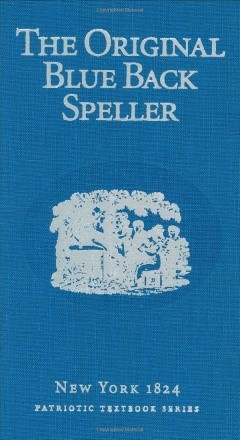
blue book speller

How many writers have experienced this emotional component of reaching for their dreams only to discover the heaviness of the challenge as they’ve balanced full-time jobs while developing their book or book series? This is rarely discussed, and yet Webster is an excellent example of fighting his way back—tapping into his educated, emotional and passionate self which he expressed in writing.

As the Revolutionary War continued, George Washington passed through the New Haven area and Webster (who played the flute) joined a group of supporters/students who serenaded Washington and his troops. Shortly thereafter, Webster, his brothers and father tried to join the Battle of Saratoga in New York but by the time they got there, the battle had been won by the American troops.

  • Thus it happened that Noah turned to writing as a way to channel his patriotic ambitions and he began writing a series of articles for a New England newspaper encouraging citizens and their American Revolution resolve.
  • Between 1783-1785 he also wrote his “Blue-Backed Speller” spending most of his time getting it published and announced. (It was later published in 1824 as “The Original Blue Back Speller: A Patriotic Textbook Series.”)
  • At the same time he was writing these books, Webster was also working on copyright legislation to protect the works of all writers.
  • “His relentless book promotion pioneered now common techniques like the author tour, the fabricated blurb and the aggressive stoking of manufactured controversy,” says New York Times book reviewer Jesse Sheidlower, the editor at large of the Oxford English Dictionary and the president-elect of the American Dialect Society.
  • Webster was known for writing constantly under various pseudonyms. Doing so he would often praise his own works and deconstruct the arguments of his critics. This is still being done today on the Internet under the label of “sock puppetry.”

So here is what I’ve learned from Noah Webster today: (1) write myself out of melancholy; (2) focus my writing efforts on subjects that tap into my passions, compassions, interests and ambitions; (3) don’t hesitate to self-publish; (4) use every avenue available to promote my books; and (5) if necessary, be willing to face critics with straightforward discussion.

Webster strongly promoted what he called American-English building an American linguistic style of spelling and pronunciation that lives and continues to grow to this very day. Without intentionally setting out to do so I believe he has given all writers permission to utilize our language in new ways; to create new words and combined words and related definitions; to write beyond our current skills, develop concepts for generations yet unborn, and publish in paper books, on the Internet and venues yet to be discovered. ⚓︎

RoyaleneABOUT ROYALENE DOYLE: Royalene has been writing something since before kindergarten days and continues to love the process. Through her small business—DOYLE WRITING SERVICES—she brings more than 40 years of writing experience to authors who need “just a little assistance” with completing their projects. This is a nice fit as she develops these blogs for Outskirts Press (OP) a leading self-publisher, and occasionally accepts a ghostwriting project from one of their clients. Her recent book release (with OP) titled FIREPROOF PROVERBS, A Writer’s Study of Words, is already receiving excellent reviews including several professional writer’s endorsements given on the book’s back cover.  

Royalene’s writing experience grew through a wide variety of positions from Office Manager and Administrative Assistant to Teacher of Literature and Advanced Writing courses and editor/writer for an International Christian ministry. Her willingness to listen to struggling authors, learn their goals and expectations and discern their writing voice has brought many manuscripts into the published books arena.

The Current State of E-Readers | An Author’s Guide (Part II)

Last week, I launched us into a new series about e-readers, and the pros and cons of using each different e-device (don’t worry, this won’t be quite the epic saga that the Beginner’s Guide to Social Media primer turned out to be!).  This week, I’ll be taking a closer look at perhaps one of the most talked-about e-readers of all time, the Kindle.  No doubt you’ve heard a lot about Amazon’s entry into the e-book sphere before, and elsewhere, in part because it was launched by a massive company still on the upswing in popularity, with the built-in infrastructure to ensure a strong debut––and in part because it remains a solid performer, especially in its newer incarnation, the Kindle Fire.

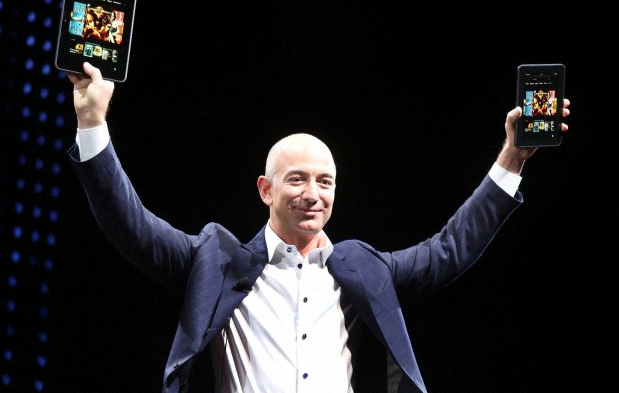
jeff bezos with the kindle
Amazon CEO Jeff Bezos with the new Kindle Fire HD

Just how many people own a Kindle?  A 2014 Forbes article reported that “roughly 43.7 million Kindle devices had been cumulatively sold till the end of 2013,” but, well, Amazon isn’t really talking, except when it’s super proud of itself, so the data Forbes was using may or may not be representative.  Even though in 2014 the Pew Research Center was marking an uptick in e-reader (specifically, Kindle) and everyone seemed, for the most part, highly optimistic about e-readers and therefore e-book distribution, some more recent data seems to indicate a plateauing of that trend … if not a slight reversal.  According to an article by Business Insider contributor James Cook, “for the first time ever the number of tablets shipped has decreased”––and Amazon’s Kindle line has been the hardest hit, with a decrease of some 69.9% in respect to shipments.  That’s a lot.  And the numbers are still so new that few tablet users are speculating yet as to why the Kindle has taken the brunt of the market change.  Is it because users have grown bored, or because Amazon hasn’t reinvented the wheel since the Kindle Fire was released two years (or two lifetimes, in today’s rapid-fire technology-hungry universe)?  But wait––what about the Kindle Paperwhite (the “Kindle 3”)?  Why does nobody seem to be getting on the Paperwhite train?  Is it because people are actively migrating away from Amazon, or from tablet computers, or from e-books?  The numbers seem to be holding mostly steady for e-books downloaded and read, so what’s the deal?

I’ll let you know as soon as I know.

Still, in the meantime, here’s what you need to know about the Kindle (Fire and Paperwhite):

They’re beautiful devices, designed and manufactured specifically to make thumbing through your digital library as tactile and responsive a practice as running a hand across a physical bookshelf––or at least, these e-readers are about as close as you can get without engaging your sense of smell.  (They do, however, make use of your fingertips and your ears as well as your eyes.  There’s some benefit to a multimodal interface, in terms of absorption of information, or so I’ve been told.)

And don’t forget that while sales may have dropped this last year (and significantly), the Kindle and Kindle Fire have out-sold almost every other dedicated e-reading device out there.  There are millions––dozens of millions––of Kindles out there already in use.  So yes, it still remains completely and absolutely worthwhile to sell your book as an e-book edition through the Kindle Store.  The total number of units sold alone should indicate this, but as the aforementioned Pew Research Center report also says, 3 in 10 American adults read an e-book last year, most of them on a tablet or dedicated e-reading device.  That’s a lot of e-books, my friends.  And Jim Tierney over at Loyalty360 reports that Amazon Prime Membership jumped by 53% in 2014––to around 40,000,000 (that’s 40 million) total adults.  And what with the advent of the Kindle Lending Library––a controversial offering, to be sure––Prime subscribers can opt to read certain select e-books for free.  That’s a lot of potential future readers.

Not much has changed when it’s come to the disadvantages of owning a Kindle, except for the fact that Amazon has taken away any grounds for complaint about the graphics, display quality, and user interface.  Their customer support system is pretty nifty, too, and users seem to like it.  No, you still can’t take the Kindle into the bathtub with you, and you probably don’t want to hurl it off the edge of a parking garage unless you actually want to watch it break, but these tablets do qualify as robust, insofar as tablets are allowed to.  Lending books to friends is possible, but still not quite intuitive.  Universities are starting to get on board with letting students use e-book editions for courses, but this still remains an underutilized possibility.  And no, it’s not an actual book you can hold in your hand and sniff for that “old-book” smell.  (But that’s what perfume is for, right?!)

I’m not about to try and sell you on buying a Kindle––or any e-reader, for that matter––but I do think it’s worth oohing and aaahing a little over the modern creature comforts technology has provided us.  An interlinked dictionary that I can access while reading?  Handy.  Highlighting and bookmarking?  Essential.  And much more difficult to “lose” when we’re speaking of a digital item.  And it’s nice, too, to have the option of reading multiple file formats on the same dedicated e-device without having to switch between apps.  PDFs?  No problem.  TXT?  DOC?  The Kindle’s got you covered.  And for now, people aren’t quite tossing them in a blender just to watch sparks fly, so I wouldn’t quite put up the crime scene tape just yet––if Amazon has proven anything, it’s proven just how much it loves to be on top!

Thank you for reading!  If you have any questions, comments, suggestions, or contributions, please use the comment field below or drop us a line at selfpublishingadvice@gmail.com.  And remember to check back each Wednesday for your weekly dose of marketing musings from one indie, hybrid, and self-published author to another. ♠

KellyABOUT KELLY SCHUKNECHT: Kelly Schuknecht is the Executive Vice President of Outskirts Press. In addition to her contributions to the Outskirts Press blog at blog.outskirtspress.com, Kelly and a group of talented marketing experts offer book marketing services, support, and products to not only published Outskirts Press authors, but to all authors and professionals who are interested in marketing their books and/or careers. Learn more about Kelly on her blog, kellyschuknecht.com.
From the Archives: “Using Listmania to Promote your Self-Published Book”

Welcome back to our new Tuesday segment, where we’ll be revisiting some of our most popular posts from the last few years.  What’s stayed the same?  And what’s changed?  We’ll be updating you on the facts, and taking a new (and hopefully refreshing) angle on a few timeless classics of Self Publishing Advisor.

∗∗∗∗∗

[ Originally posted: August 22nd, 2008 ]

If your self published book is available on Amazon.com, there are a lot of ways to promote it.  Since Amazon sales should account for a large percentage of your overall book sales, this site is a good place to concentrate a lot of your efforts.

I’m going to tell you about creating a “listmania” list on Amazon. Have you ever noticed when you browse for something on Amazon, there are lists that are related to that subject that are mentioning other books and/or products?

By strategically listing products on your lists, (including YOURS of course), you can start to generate more traffic to your book listing.

Here’s how YOU can create just such a list:

Sign up for an Amazon Author Connect account if you don’t have one yet. Or sign-in to your current account.

Click on your personal “store” on the top tabs. Then select “Your Profile” from the sub-menu.

You will see lots of things you can personalize, including your bio and your online photograph.

But scroll down and you will see a section called “Listmania!” And this is where you create a listmania list.

Creating a Listmania List is a good way to increase exposure for your book.

Obviously, you want to ensure that your book is on your list.

But the real trick to a successful Listmania list depends upon the OTHER books you put on your list, the ones written by other people.

There are two ways to go about it.

1 – Adding books to your list that are applicable to your subject. The idea behind this concept is easy — if someone reads your list because they were browsing a similar book, they’ll be more apt to buy YOUR book because they’re interested in the subject.

2 – On the other hand, you can add very popular books to your list, since more people may have a chance of seeing it, even if fewer of them will be interested in your book.

I recommend creating multiple lists and trying different tactics to see which is more successful. Amazon lets you track the number of times your list was viewed. Use these numbers to create better lists in the future.

If you have more specific questions about creating a listmania list, the Amazon FAQ will help you.

Amazon Listmania

So here’s the thing: Listmania doesn’t really exist anymore!  Back in 2013, Amazon ceased offering support and guidance on using the Listmania interface, and it was entirely dismantled and rendered unusable over the months following.  (Adrienne Dupree over at Leave The Corporate World Behind even wrote a lovely little lament to mark its final passing.)  And this fact means that, on the one hand, we have to throw the baby out with the bathwater when it comes to our original post … but on the other hand, this presents the perfect opportunity to present you with new and fresh ways of utilizing Amazon for your self-promoting and self-marketing ends (as a self-publishing author).

First, we need to break down exactly what Listmania offered the average author.  Essentially, this featured compiled lists–and this makes sense, given its name–but it was not to be confused with Amazon’s wish lists, gift lists, and registries, or even Goodreads’ Listopia lists (which still exist).  These lists were designed to focus a reader’s attention on products that were similar or in some way related to products that a customer had already been viewing. By strategically listing popular products on your lists, including your own book, you were–in theory–able to generate more traffic to your book listing when people viewed your Listmania lists.  This brings us full circle to that one key word I’ve been lobbing around a lot lately: findability.  An Amazon Listmania list was supposed to render you and your book more findable, but to many people it remained just another one of the giant retailer’s many algorithmic mysteries.

And yet … findability remains important.  There simply are better ways of going about it!

Here are my top 3 recommendations for filling that gaping hole in your heart once occupied by Amazon Listmania:

  1. Start a Pinterest page.  Not just any Pinterest page, mind.  (And I’ve written about Pinterest recently in depth, so I won’t make like a broken record and repeat myself too much here.)  Whip up a Pinterest page (or “pin” to a “board”) where you collect together other books along with other somehow related objects that your ideal reader might want to purchase.  For example, someone who reads Hugh Howey’s Wool might want to pick up some tickets to tour the Titan Missile Museum outside of Tucson, or perhaps some Wool-inspired art prints.
  2. Create a public Amazon Wishlist.  This is easy to do, and it serves much the same function as a Listmania list–only, you’ll have to do a touch more legwork to advertise the list’s existence, since these wishlists aren’t necessarily designed to be searchable.  For more information, hop on over to the Amazon how-to page for wishlists, and peruse at your leisure.  Each wishlist is shareable across any platform you might wish, and you can snag a web link to copy and paste into emails or Twitter, Tumblr, Facebook, Instagram, or any other kind of social media feed you can imagine.
  3. Take a stab at an entirely new social media platform.  The reason why Listmania disappeared is that nobody was using it, or at least, too few people were using it to make it worth Amazon’s efficiently allocated time to advertise and maintain.  It had a function, but it wasn’t one that really connected with Amazon’s user base.  To make yourself findable these days, you must needs throw yourself into the post-millennial age, and go where your readers are.  I’m not necessarily an advocate of just trying anything–you should always do a little cross-demographic market research to see if your readers actually are the sort who use Snapchat or Instagram or Tumblr or Twitter–but as a good friend told me last week, “Just doing what you’ve always done and expecting things to improve is a special kind of lunacy. Sometimes you have to innovate.”  So–innovate, with calm but cautious optimism. ♠
KellyABOUT KELLY SCHUKNECHT: Kelly Schuknecht is the Executive Vice President of Outskirts Press. In addition to her contributions to the Outskirts Press blog at blog.outskirtspress.com, Kelly and a group of talented marketing experts offer book marketing services, support, and products to not only published Outskirts Press authors, but to all authors and professionals who are interested in marketing their books and/or careers. Learn more about Kelly on her blog, kellyschuknecht.com.