From the Archives: “Quality and Control in Self-Publishing”

Welcome back to our Tuesday segment, where we’ll be revisiting some of our most popular posts from the last few years.  What’s stayed the same?  And what’s changed?  We’ll be updating you on the facts, and taking a new (and hopefully refreshing) angle on a few timeless classics of Self Publishing Advisor.

∗∗∗∗∗

[ Originally posted: November 14th, 2008 ]

A very informative article was recently published outlining one author’s success self-publishing over traditional publishing, most notably in terms of higher net royalties on book sales. In fact, the case study recorded significantly higher royalties on a lower quantity of book sales along that self-publishing route.

The book pricing advantages of self publishing is no stranger to this blog, nor the increasingly successful population of authors who follow that path. But this particular article also mentioned that writers should never have to pay for publishing upfront.

Unfortunately, I’ve seen authors who have been pulled in by that concept, but end up publishing an often poorly produced book sold back to them at highly marked-up costs. (Publishers are businesses and need to make money, after all.) So that model really only puts poorly produced books right back in the hands of authors, not readers.

The successful alternative does involve upfront publishing fees, which opens a direct contract between authors and publishers including quality, professional production on books that are competitively sold in the marketplace, where readers buy books. Make sure your self-publishing choice includes those things like cover design, interior formatting, and full distribution. Also, as I’ve mentioned before – and the significance here is worth the redundancy – make sure your publisher offers pricing flexibility (control) and 100% royalties on book sales.

I hope that helps. Have fun and keep writing…

– by Karl Schroeder

Well, Karl’s not wrong. He wasn’t wrong all the way back in 2008–nine years ago!–and he’s not wrong now. (Of course, this will come as no surprise to those of you who have read some of his backlist posts for Self Publishing Advisor.) Quality is determined by many independent and interrelated factors, and one of the most important of those factors is control. Control of the artistic process, the publishing process, and the distribution process too. Lose your access to influence any of these three steps, and you’re at risk of spending money you didn’t anticipate on processes over which you have very limited control.

quality infographic

I love this infographic from Empathy Lab, because even though they specialize in e-commerce and responsive web design–subjects only tangentially relevant to our interests–they have spent years putting together quality infographics representing ways in which to both qualify and quantify their systems and products. Here, they’ve created an infographic by which any business might measure quality, based on a flexible framework which incorporates everything from inputs, outputs, values, and employees.

While this may not be the most finely-tuned visual for self-publishing, specifically, many of the principles here helpfully capture the spirit of what Karl first wrote in 2008: You must first decide what your priorities are, and how quality is both a product of and a shaping influence upon, what you do. Only then can you decide how much money to invest, and where to invest it, in the self-publishing process. A hint: For most of us, it’s going to be some sort of up-front cost which gives us access to premium publishing services and full royalties, full creative control, and full authority on what happens to our books–because this is your brand, after all.

Take a moment to let Karl’s words sink in, and spend a little time with Empathy Labs’ infographic. See if you can sketch out some thoughts on how your own book and publishing experience is coming together–and let us know how that’s going! We’d love to hear from you and be a resource for you.

Thanks for reading.  If you have any other ideas, I’d love to hear them.  Drop me a line in the comments section below and I’ll respond as quickly as I can.  ♠


Kelly

ABOUT KELLY SCHUKNECHT: Kelly Schuknecht is the Executive Vice President of Outskirts Press. In addition to her contributions to the Outskirts Press blog at blog.outskirtspress.com, Kelly and a group of talented marketing experts offer book marketing services, support, and products to not only published Outskirts Press authors, but to all authors and professionals who are interested in marketing their books and/or careers. Learn more about Kelly on her blog, kellyschuknecht.com.

Self-Publishing News: 2.6.2017

And now for the news!

This week in the world of self-publishing:

Because I love the juxtaposition of these two articles on Amazon in relation to self-publishing, I’m going to present them both and let the readers formulate their own opinion on this corporate conglomerate. First, we’ll start with an article by Doris Booth that analyzes the ways in which Amazon “vigorously promotes its 70% royalty plan over its 35% plan to compensate authors on the sale of their e-books.”

But, 70% is DOUBLE 35% you say. Diving deeper, however, Booth unveils how the promotion of the higher royalty package is actually misleading.

“Believe it or not, the writer earns more money on the 35% plan than on the 70% plan. Why? Because the 70% plan is based on the publisher’s net income and the 35% plan is based on the gross sales price of the book. A book priced at $9.99 based on 70% of the publisher’s net income earns you $3.15. The same book based on 35% of the gross sales price yields $3.50.” – Booth

With that in mind, and also considering the fact that amazon puts a ceiling of $9.99 for the price of the ebooks using the 70% plan, while authors using the 35% plan can pick the price at which they’d like to sell their work.

More interestingly, the 70% plan grants Amazon exclusive rights to your piece, meaning you cannot sell it on ANY other platform, even if that platform was simply your own website. You grant them this exclusivity and you receive nothing up front. That’s right, “the author who signs the exclusive deal has just given away his or her entire content for free to Amazon, at least initially,” says Booth.

Further, when/if you do get paid by Amazon, it will not be based on the sale of the individual copies of your book, but rather, on the number of pages read by those who purchased it. So if your book sold for $9.99, but the reader only got 15 pages in, “your royalties will be calculated upon how many pages of your book are read, divided by the number of other books read that month.” Booth continues on with a more staggering statistic; “In hard-to-find data, Digital Book World reported not long ago that Amazon Kindle’s monthly individual author payout equaled $1.38.” One dollar and thirty-eight cents per month, you couldn’t buy a can of Coca-Cola with that.

I would definitely encourage authors to do their research, perhaps beginning with the piece above by Booth, before deciding where to self-publish their work. If choosing Amazon, carefully read the plans and what they offer you as a client, and don’t be too easily persuaded by larger numbers that are hiding larger inadequacies as far as returns go.

One lucky author is going to receive £20,000 as the Kindle Storyteller Prize winner in 2017. “The prize is open to any author who publishes their book through Kindle Direct Publishing between February 20 and May 19 this year,” says Tristan Fane Saunders, “Entries from any genre are eligible – including fiction, non-fiction and collections of short stories – so long as they are more than 5,000 words and previously unpublished.” So, if after reading the previous article and you do decide to publish with Kindle Direct Publishing on Amazon, you could end up with a pretty big paycheck.

The incentive to offer a prize like this? Saunders seems to allude to dwindling Kindle sales and a general decline in ebook sale, “having shrunk 2.4% over the previous year.”

Whatever your opinion on Amazon might be, it has provided a streamlined way for authors to directly publish their work online. Be it for better or worse, being able to get your story published is often half the battle, and Amazon turned that battle into a breeze.


spa-news

As a self-publishing author, you may find it helpful to stay up-to-date on the trends and news related to the self-publishing industry. This will help you make informed decisions before, during and after the self-publishing process, which will lead to a greater self-publishing experience. To help you stay current on self-publishing topics, simply visit our blog every Monday to find out the hottest news. If you have other big news to share, please comment below.


Kelly

ABOUT KELLY SCHUKNECHT: Kelly Schuknecht is the Executive Vice President of Outskirts Press. In addition to her contributions to the Outskirts Press blog at blog.outskirtspress.com, Kelly and a group of talented marketing experts offer book marketing services, support, and products to not only published Outskirts Press authors, but to all authors and professionals who are interested in marketing their books and/or careers. Learn more about Kelly on her blog, kellyschuknecht.com.

Saturday Book Review: “My Truths: A Collection”

Book reviews are a great way for self-publishing authors to gain exposure. After all, how can someone buy your book if he or she doesn’t know it exists? Paired with other elements of your book promotion strategy, requesting reviews is a great way to get people talking about what you’ve written.

When we read good reviews, we definitely like to share them. It gives the author a few (permanent) moments of fame and allows us to let the community know about a great book. Here’s this week’s book review, courtesy of Midwest Book Review:

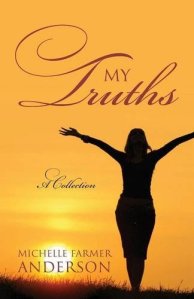
my truths a collection michelle farmer anderson

My Truths: A Collection

by Michelle Farmer Anderson

Publisher: Outskirts Press

ISBN: 978147877793

Synopsis*:

“My Truths” is a masterpiece that reminds us of our humanity. This book welcomes you to partake in a meal that will most certainly nourish your soul; an open invitation to sit at the table with victory and defeat as you turn each page, as you read each phrase. Spend quality time in a world, the architecture planted firmly on a solid soil of magical words. The building, a smorgasbord of positive light and negative energy, all saturated with a very real passion for writing and a zest for living. The contradictions are deliberate and they play along with the theme of life… the ultimate support and unconditional love of a mother in HER clashes with the feeling of not belonging in OUTSIDER. The redemption of WINNING which speaks to insecurities ultimately overshadowed by strengths to BAD BOY- a potpourri of what could have been, and what might be. POISON is a haunting take on the drug epidemic and TOMBSTONE TALKS takes us to a cemetery where we can trust the secrets won’t be shared. My Truths is a book about life, death and everything in between.

 * courtesy of Amazon.com

Critique:

“My Truths” in poetic verse delves into many different aspects of life. Anderson has a unique style that takes readers on a journey thru many things we all take for granted. She deals with children, mothers and daughters, grandparents and romantic relationships. There is much to enjoy in “My Truths” that will hold readers interest to the last poem.


reviewed by Gary Roen of Midwest Book Review ]

Here’s what some other reviewers are saying:

This is a great collection of personal, yet relatable, thoughts and feelings. Each poem offers a different perspective on a person or time in Michelle’s life. Some pieces are deep and emotional, while others are inspiring and uplifting. A little something for every moment in life- great mix! You won’t be disappointed!

– Amazon Reviewer Amazon Customer

Written in an inspiring lyrical form. “My Truths” is a wonderful read for any occasion; to feed the spirit and to contemplate. Each poem transmits a personal touch of faith, hope and unique experience.

– Amazon Reviewer Amazon Customer


saturday self-published book review

Thanks for reading!  Keep up with the latest in the world of indie and self-published books by watching this space every Saturday!

Self Publishing Advisor

selfpubicon1

Conversations: 2/3/2017

FOUR DOZEN ROSES—FOR WRITERS—I

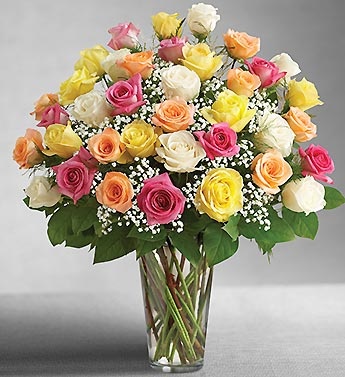
February (and the last week of January) is a season that is full of family birthdays for me. My Mother’s birthday started the celebrations rolling and she loved roses. When someone admired her centerpiece vase full of red, yellow and white roses, she was always pleased. However if anyone happened to mention that “a rose by any other name would smell as sweet,” she would gracefully argue the point. Often she took several roses from the vase and requested that each rose be smelled individually so that her visitor would realize the subtle differences. There was even one variety of rose (which I can’t seem to recall at the moment) that had no scent at all, yet was most exquisite. In my Mother’s world, each individual rose—no matter which bush it came from—was uniquely beautiful and brought joy into our home.

roses

So it is with each individual writer who writes with Passion and Purpose—which is exactly what I’m hoping you are doing. In the spirit of beautiful roses and beautiful writing you’ll find my first dozen roses for you below—things to consider as you build your writing career!

  1. READ a LOT of books in the genre you’re writing in! When you find something in one of those books that you don’t like about it—make a note about it—so you can avoid doing the same thing in your book.
  2. READ the occasional book that connects with your writing/story interests, but is from a different genre.
  3. Set yourself up for SUCCESS! Decide what time of day is the best for your creative mind to kick in and flow. Then set your writing schedule accordingly. This could be an everyday schedule, a 5-days-a-week schedule, 3-days a week. Being aware of the needs your life demands of you will (yes, WILL) give you the time you need to write.
  4. Then—if your schedule tells you it’s time to be writing—go write! Don’t allow moods the power to remove a day of writing.
  5. Do your best to relax while writing. If you’re a spiritual person, mediate or pray before you begin—or simply practice some deep breathing (to bring oxygen to your brain)—and begin.
  6. Prepare yourself to work hard. Writing and becoming a published author is not an easy career.
  7. Always, ALWAYS, back up your files on a disc and/or memory stick.
  8. Think about your audience. Who is that one person who will understand your story because they’ve lived it? Or because they’re dreaming about living it? IF you don’t know who this person is you’ll run the risk of boring them to sleep.
  9. Consider making your first notes (files) by hand. Those wonderful legal-pads of lined yellow paper are excellent tools and as you type them into a computer file the creative embellishments will flow with ease.
  10. Begin to write one-liners about the theme of your story(s). What words express this theme? Could you write an essay about the essence of it?
  11. Develop your characters TO THE MAX. Let them tell you who they are and what makes them This means ALL of your characters. IF you bring a character on stage you must know at least the basics about them.
  12. Develop the setting (environment) where your characters live. Use LOTS of descriptive words and detail as you break-out each specific setting in relation to each character’s timeline.

Next week: The second dozen!⚓︎


Royalene

ABOUT ROYALENE DOYLE: Royalene has been writing something since before kindergarten days and continues to love the process. Through her small business—DOYLE WRITING SERVICES—she brings more than 40 years of writing experience to authors who need “just a little assistance” with completing their projects. This is a nice fit as she develops these blogs for Outskirts Press (OP) a leading self-publisher, and occasionally accepts a ghostwriting project from one of their clients. Her recent book release (with OP) titled FIREPROOF PROVERBS, A Writer’s Study of Words, is already receiving excellent reviews including several professional writer’s endorsements given on the book’s back cover.  

Royalene’s writing experience grew through a wide variety of positions from Office Manager and Administrative Assistant to Teacher of Literature and Advanced Writing courses and editor/writer for an International Christian ministry. Her willingness to listen to struggling authors, learn their goals and expectations and discern their writing voice has brought many manuscripts into the published books arena.

In Your Corner: How to Rewrite WITHOUT Going Off the Deep End

We’ve all been there, haven’t we? FAcing the manuscript, the first draft, with the question “What’s next?” dying on our lips, and a growing realization sitting like a lead weight in our bellies: Rewriting. That’s what comes next. The Elysium Fields of publication seem to hurtle themselves back into the distance, once so close we could almost touch them, and that’s how we find ourselves staring at our computer screens at six in the morning, wondering how not to tear out our hair over the rewrite process.

I have some thoughts on that.

  • Take a clue from your normal writing habits.

This is assuming you have writing habits, of course. I’m an extremely disorganized writer, which means I’m writing at all times of days, usually in my pajamas with a cup of tea, but sometimes with a bowl of pretzels. Still, take a clue. Rewriting is often a point of contention because it doesn’t feel like “real writing”–it feels more like butchering something you produced while doing “real writing.” So put yourself in the same creative space, frame of mind, and habitual place as you would if you were generating new material–and make the leap to recognizing rewriting as an opportunity for creativity, too. Maybe if you feel the way you do about “real writing,” you can trick yourself into resenting it less! That’s my theory, anyway.

  • Pay attention to your body.

Some of the writers I went through school with ascribed to the “starving artist” stereotype, churning out reams of paper on old-school typewriters at 3 AM fueled solely by cigarettes and certain controlled substances. These authors were incredibly productive–to a point. They were also complete emotional wrecks who could do nothing else with their days than write (often disorganized) manuscripts. But you and I? We can’t afford to burn the candle at both ends, to let ourselves be eaten up by life-destroying fuels like these. We have lives and families to take care of, that we delight in taking care of, when we’re not writing. So writing, of course, has to take its place among an ever-changing, always difficult to manage, list of priorities … and the only way to manage them all is not to go off the deep end. So: pay attention to your body. You will produce your best work, and leave the most room for life outside of writing too, if you take care of this collection of bones and blood vessels and brain cells to the best of your ability. Write healthy, with a full meal under your belt and a full night’s sleep just over with. Don’t rely on anything that’s not good for you to be your brain fuel–even the seemingly harmless caffeine, which in point of fact is a strong bowel irritant and likely to break up your concentration with a half dozen bathroom breaks each writing session. (It also, naturally, will dehydrate you–even if you’re constantly chugging caffeinated liquids.)

  • Alternate between a “GET-UR-DONE” attitude & a more forgiving one.

Look, for some people, it’s never going to be fun, this rewrite thing. But constantly punishing yourself for not getting it done is counter-productive, and will leave you feeling more and more dissatisfied with the whole process over time, just as constantly forgiving yourself for not working on it will also snowball into a giant lump of self-loathing and regret. So: set yourself some deadlines, and carve out some time just to slam away at that keyboard. But also: establish some boundaries within which you can forgive yourself for not being as productive as you’d like, and etc. Always remember that rewriting, like “real writing,” requires moderation in all things. So alternate between those driven and those relaxed modes of working, and you’ll find yourself chipping away at the monolithic manuscript, despite your fear of the thing.

  • Accept change.

Duh, right? Only … no. This is actually the hardest part: reconciling your original vision for a book with what’s coming off of the page before you. There’s no more obvious place or time for this to happen than during the rewrite, when your analytical mind is hard at work trying to sew up loose ends and fix flaws. But producing something with a mind of its own isn’t a flaw–it’s a natural consequence of creating interesting characters who evolve past your original vision and into something greater, more complex, and … different. If you can, take a step back and admire the reality of what you’ve written instead of wasting time and energy bemoaning the departure from your intent. Then approach your book the way a professional editor might, from a mindset of: “This is what I’ve been given to work with, so how can I make it the best possible version of itself?” instead of feeling cheated of something different. You’re your own harshest critic, remember? And whatever you’ve put on the page, predicted or not, changed or not, is magnificent and wonderful–and we’re proud of you for it. Work with and not against this new and wonderful thing! You won’t regret it.

rewriting

You are not alone. ♣︎


Elizabeth

ABOUT ELIZABETH JAVOR: With over 18 years of experience in sales and management, Elizabeth Javor works as the Manager of Author Services for Outskirts Press. The Author Services Department is composed of knowledgeable publishing consultants, pre-production specialists, customer service reps and book marketing specialists; together, they all focus on educating authors on the self-publishing process to help them publish the book of their dreams. Whether you are a professional looking to take your career to the next level with platform-driven non-fiction or a novelist seeking fame, fortune, and/or personal fulfillment, Elizabeth Javor can put you on the right path.