Saturday Book Review: “The Conversations We Never Had”

Book reviews are a great way for self-publishing authors to gain exposure. After all, how can someone buy your book if he or she doesn’t know it exists? Paired with other elements of your book promotion strategy, requesting reviews is a great way to get people talking about what you’ve written.

When we read good reviews, we definitely like to share them. It gives the author a few (permanent) moments of fame and allows us to let the community know about a great book. Here’s this week’s book review, courtesy of Midwest Book Review:
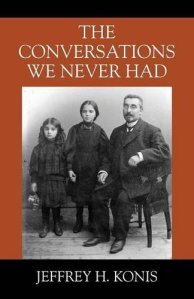
the conversations we never had jeffrey konis

The Conversations We Never Had

by Jeffrey H. Konis

Publisher: Outskirts Press

ISBN: 9781478767299

Synopsis*:

This is the dream of a grandson, who had taken his grandmother for granted, to have a second chance, the opportunity to learn about his family from the only person in the world who knew them, who remembered them. My father remembers nothing about his real parents for they were dead by the time he was nine. Olga, his mother’s younger sister, survived the Holocaust, found my father hiding on a farm in Poland and later brought him to America to raise as her own. He never asked her any questions about his parents. Though I later moved in with Olga for a period of time, I repeated history and never asked her the questions my father never asked. Olga has been gone for more than twenty years, along with everything she could have told me, leaving me with a sense of guilt and profound regret. The Conversations We Never Had is a chronicle of my time spent with Grandma “Ola” and tells the stories she might have shared had I asked the questions.

 * courtesy of Amazon.com

Critique:

The Conversations We Never Had is about the regrets of a son who wishes he’d probed more of his family history while its elders were still able to tell him about the past; but it doesn’t end with the burial of his Grandmother Olga, the last person to have known his father’s Holocaust experiences in Europe.

Instead, it blossoms into an investigation of what was, a realization of what could have been, and a family history that incorporates not only conversations made; but those which should have taken place.

How did the family matriarch make the kinds of decisions that would allow her family to survive, adopting and bringing her nephew (the author’s father) to a new country? How did his father survive under impossible conditions, and how did she find him after the war to bring him to a new life? The author’s regrets of not asking the right questions, only to piece together truths from a patchwork of possibilities decades later, is wonderfully portrayed: “Grandma Ola was the only person in the world who could give me some insight into my father, what he was like as a child, a son – to an extent – as a student, though I knew he must have been exceptional in this regard, given that he overcame a language barrier, simultaneously learning English and the sciences, among his other courses; he did this successfully enough to go to medical school. And yet I never had an in-depth conversation with Grandma about my dad and, for the life of me, I have no idea why I didn’t. At least I could, and did, ask my father these questions as I navigated my way through the biased nature of his responses, to get as much truth as possible.”

Many Holocaust family stories come from the horse’s mouth in the form of reminiscences of parents and grandparents translated through the memories and notes of their descendants. Jeffrey H. Konis adds a new twist to this approach in covering not only the conversations that took place; but those which were unsaid.

As he surveys issues of Jewish livelihood and independence (among many other subjects), Konis comes to realize the forces that shaped and led to his career and life choices, and brings readers into a world enlightened by these discussions of Jewish heritage past and how they were passed down and, in turn, translated into life decisions made by future generations.

The precise links between these translations and applications past to present are enhanced by the author’s introspective assessments of what is presented to him, and what it means for his own life: “If I couldn’t find a Jewish girl to marry, the selection would be greatly enhanced were I to allow myself to marry someone who converted. But what about everything Grandma was just telling me, that even one who has converted is still not the same as one who was brought up Jewish? It made me think of something my dad once said about Grandma Ola. He told me that, yes, she had raised him like a son, but she wasn’t his mother. He said it wasn’t the same.”

The result is more than another Holocaust survival story: it’s a perceptive and examining survey of how ideals, thoughts, traditions and culture are handed down in families, surveying the types of questions asked and those left unsaid, and their impact.

Readers of Holocaust literature and biography will find themselves drawn to the family and personalities surrounding Jeffrey H. Konis and will be particularly delighted to understand how Jewish traditions and family messages helped him shape his own decision-making process.

reviewed by Diane C. Donovan of Midwest Book Review ]

Here’s what some other reviewers are saying:

Jeffrey Konis’ book “The Conversations We Never Had” was a beautiful reflection of a man’s relationship with his ailing grandmother’s sister, who acted as his grandmother throughout his life. Over many conversations, Konis was able to tease out memories of her life and upbringing in pre-WW2 Germany, as the spectre of Nazism started to overtake Germany, with all of the horrors that entailed. These stories helped Jeffrey better understand his grandmother and her sister, as well as his father’s temperament, which was enlightening. “The Conversations We Never Had” highlights the importance of talking with our elders before it is too late, to gain some of their wisdom and to hear the stories which shaped their lives and personalities. It was a lovely tribute to Konis’ forebears, and I would love to read it again.

– Amazon Reviewer Janelle Collins

They were of a generation that longed to forget, that shied away from discussing the horrors inflicted upon their people, and hardly, if ever, voluntarily offered up stories around the Sunday dinner table.Talking about such a painful time brought back the pain. So it is no wonder that Konis’ grandmother, Ola, pushed on with her life, loved her family and chose to live for the day and remain silent on her past and how the Holocaust tore her family apart. Inevitably, though, the author comes to realize and deeply regret the missed opportunity to have those telling conversations about the Holocaust with Ola when she passes away. Konis, however, bases many of the conversations in the book on fact, having a vital resource in his father, who was 9 years old when the Nazis invaded his town. It is a fascinating read and I was quickly drawn in by his depiction of Ola’s youth, her sister and her father. The book certainly makes one stop and think and regret those lost opportunities and conversations with our elders.

– Amazon Reviewer Pamela J.

saturday self-published book review

Thanks for reading!  Keep up with the latest in the world of indie and self-published books by watching this space every Saturday!

Self Publishing Advisor

selfpubicon1

Conversations: 2/17/2017

FOUR DOZEN ROSES—FOR WRITERS—III

There is a book on the self of my local library that enjoys what I call “staying power.” The title: Cheaper by the Dozen fits right into my theme this month of beautiful things, excellent writing and good lessons learned when we write with passion and purpose. This novel was first printed in 1948, made into its first movie in 1950, then a second movie in 1952, followed by the stage play in 1992, and two more recent movies in 2003 and 2005. Although several of the tips listed below apply to the Cheaper by the Dozen novel, stage play and films, the authors recognized the passion and purpose in the lives of these characters and the love and laughter we Readers appreciate.

Here is my third dozen roses for you to consider…

roses

  1. IF you’re considering using a Narrator to tell your story, you must develop this person with as much detail as you’ve done for all the other characters.
  2. Be prepared to re-write and re-re-write until you’re heart and head tell you it’s time to let this book fly.
  3. Words are the writer’s friend—and enemy. If you don’t know the definition and usage of a word DO NOT USE IT.
  4. Don’t allow yourself to be derailed by ideas for other The simple fact that you ARE a creative writer/thinker opens the door to many other book ideas while you’re developing the current book. KEEP FOCUSED ON THIS ONE BOOK.
  5. IF you have an idea about another book, write a one-line concept sentence into a notebook that is SET ASIDE specifically for these ideas.
  6. Many authors have discovered that their dreams will guide them, especially when they feel stuck. It might be necessary to have a notebook or tape recorder beside your bed.
  7. Find a reading/writing friend who trust, and who will sit and talk with you about “the story” you’re writing. You do not have to take their comments literally. However, they will help you move the story forward.
  8. Don’t even try to creatively write a chapter and simultaneously edit it. These are two separate processes and where you can find personal enjoyment in both.
  9. Value yourself as a writer and value what you’re writing. These words your building into a book will define your writing career and, in many ways, define you.
  10. Take laughter breaks! Play with your children. Go to a movie. Take a nice walk with the dog. Have a picnic with your sweetheart! Not only will you feel better physically and emotionally, but your inspiration quota will increase!
  11. Remember: Every novel is about people. We all have quirks and one or two of your characters may be very “quirky.” However, too much quirky-ness is not an easy thing for Readers to enjoy.
  12. As you’re writing visualize the people/characters IN THE MOVIE. Go back to your very detailed, very descriptive backgrounds you’ve written about each character. Is there an actor (past or present) who fits? Listen to their on-screen dialog and watch their actions and reactions.


NEXT WEEK: the fourth dozen. ⚓︎


Royalene

ABOUT ROYALENE DOYLE: Royalene has been writing something since before kindergarten days and continues to love the process. Through her small business—DOYLE WRITING SERVICES—she brings more than 40 years of writing experience to authors who need “just a little assistance” with completing their projects. This is a nice fit as she develops these blogs for Outskirts Press (OP) a leading self-publisher, and occasionally accepts a ghostwriting project from one of their clients. Her recent book release (with OP) titled FIREPROOF PROVERBS, A Writer’s Study of Words, is already receiving excellent reviews including several professional writer’s endorsements given on the book’s back cover.  

Royalene’s writing experience grew through a wide variety of positions from Office Manager and Administrative Assistant to Teacher of Literature and Advanced Writing courses and editor/writer for an International Christian ministry. Her willingness to listen to struggling authors, learn their goals and expectations and discern their writing voice has brought many manuscripts into the published books arena.

In Your Corner: Doing the Subtitle … Right

subtitle

Subtitles are tricky things, aren’t they?

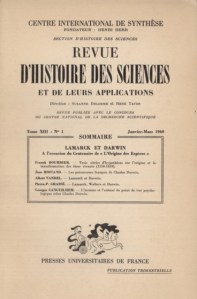
No, we’re not talking about the ones at the bottom of that Netflix show you’ve been binge-watching lately (though we totally get it). We’re talking about book subtitles, those handy descriptive phrases which come after the colon in a book’s title on the front page. They often hint at a book’s content in terms of subject or theme or atmosphere, but each author approaches the subtitle differently. For example, you have the original fancy-pants subtitle, invented pretty much around the same time as the novel and the bound book. A classic example is pretty much anything scientific from the 19th Century, such as Revue D’Histoire Des Sciences: Et De Leurs Applications ….

subtitles

More current examples might include:

  1. Tangled In Life: A Lainey Kelso Mystery, by Mary Meckler (in which the subtitle clarifies the book’s genre as well as indicating that it is part of a series);
  2. Wednesdays With Jerry: A teacher, a student, and lessons to bring about the greatest of life’s stories, by Eane Huff (in which the subtitle sketches out some basic content points as well as placing the book as an inspiration memoir);
  3. Turnings: Love In A Time of War, by Chloe Canterbury (in which the subtitle sets the tone and names the stakes of the book);
  4. When KIWIs Flew: The Diary of a Mad Airline Entrepreneur, by Bob Iverson (ditto, only in this case the subtitle also hints at the book’s style and atmosphere too–light, wild, and intensely funny); and
  5. BULLYING: Applying Handwriting Analysis to Detect Potential Danger Signs and Effects, by David J. DeWitt, CGA (in which the subtitle takes a very serious approach to describing the book’s field of study, as is appropriate for a book which will keep company with peer-reviewed journals, textbooks, and medical handbooks).

As you can see, subtitles perform a variety of different functions–some of them more specifically coded for a particular genre than others, as in the case of strictly descriptive subtitles in the research-driven nonfiction area and more emotive subtitles in the case of fiction. (This would hold true for poetry, too.) Subtitles may not be the first thing potential readers see when they first pick up a copy of your book, but they’re an important follow-up punch to a well-crafted cover, and serve as a bridge between your title and the blurbs and descriptions which readers will find on your back cover. They often make a difference in whether a shopper will commit to buying your book on a deeply instinctual level!

There are, of course, some instances in which a subtitle is not necessary: when the author is a celebrity (and has widespread name recognition, like Kim Kardashian) or famous within a specific field and the book is addressed to people in that field (such as a book written by a famous doctor for doctors), and when a book is a straight-up literary fiction novel. Of course, these authors may still choose to take advantage of the benefits of a subtitle! (We won’t hold it against them.)

A good subtitle is succinct, to-the-point and crystal clear. Subtitles are not the zone for hazy atmospheric inferences and poetic rambles! A strong one will duplicate nothing in the regular title, but will instead expound upon what may be found between covers. The best subtitles provide a digital boost, too, in that they’re a playground for keywords which will better enable readers to find your book (and buy it, of course). Keyword-enriched subtitles make your book marketable, and this is not a benefit to be ignored!

And a side note:

Your book’s title is not protected by copyright, so neither is your subtitle. Its role must be to capture the interest of your audience and to make your book stand out among its peers on a crowded bookshelf, so it’s well worth taking a gander through some of your local libraries and bookstores to see what titles are already trending. You want yours to resonate with current trends–but also to strike a note of contrast, to set your book apart.

My recommendation? Don’t come up with your subtitle until after your book is complete. And if you feel insecure about the direction your title and subtitle are headed, don’t hesitate to reach out. We’re here for you! And we love being your sounding board.

You are not alone. ♣︎


Elizabeth

ABOUT ELIZABETH JAVOR: With over 18 years of experience in sales and management, Elizabeth Javor works as the Manager of Author Services for Outskirts Press. The Author Services Department is composed of knowledgeable publishing consultants, pre-production specialists, customer service reps and book marketing specialists; together, they all focus on educating authors on the self-publishing process to help them publish the book of their dreams. Whether you are a professional looking to take your career to the next level with platform-driven non-fiction or a novelist seeking fame, fortune, and/or personal fulfillment, Elizabeth Javor can put you on the right path.

Decluttering … The Desk & Workspace

In the coming weeks, we’re going to be drawing some lessons from Marie Kondo’s book, The Life-Changing Magic of Tidying Up: The Japanese art of decluttering and organizing. Kondo’s approach is based on a “secret” she claims starts with discarding things you don’t actually use or need and proceed by organizing your space “thoroughly [and] completely, in one go.” Kondo goes so far as to assert that, “A dramatic reorganization of the home causes correspondingly dramatic changes in lifestyle and perspective. It is life transforming.”

So as a writer, I wanted to see what lesson Kondo’s “magic of tidying up” had to offer. First off, I’d like to discuss how writers can declutter their workspaces, be that a desk or an entire room they write in.

cluttered desk tidying up

1) A cluttered desk means a cluttered mind.


This is simple. If there are things on your desk that you are not actively working on, or that are not helping you in some way with the task at hand, remove them! Having to shuffle through piles of bills or checks or having to worry about spilling a bottle of nail polish or a half full cup of coffee that’s now ten days old and definitely has mold growing on it, is absolutely going to affect your productively. For me, a messy workspace equals a great amount of stress. I spend half of the time that I should be working thinking about how I really need to clean. When you’re writing and have useless thoughts like that weighing you down, your writing will come across as inhibited and will probably lack the focus and precision that can actually captivate your readers.

2) A cluttered room will also mean a cluttered mind.

If you’re lucky enough to have a whole room devoted to your writing space, make sure you organize it in such a way that it promotes creativity, provides a sense of comfort and that drive productivity.

  • With regards to creativity: Keep books of authors who really inspire you on a shelf in this room. If you have another artistic hobby that can help you get the creative juices flowing when you’re feeling writer’s block such as music or painting, keep room for those activities in there as well. Then when you’re feeling stumped, you can walk over to a blank canvas and let a paintbrush speak where words have failed you, or let your guitar sing out a calming melody. This way you have access to other things that keep your creative juices flowing–rather than resorting to Facebook or Twitter when you’re at a loss.
  • With regards to comfort: You ultimately want to feel comfortable in your work space. If your chair is ratty and uncomfortable, you’ll subconsciously be focused on how numb your rear end is going while you’re writing, which who knows, could make for some interesting writing, but I doubt it. Have a chair, or a giant bouncy ball, or a bean bag–or whatever sitting apparatus you find most appealing–that you like sitting in. Use lighting that is not too invasive or flourescent that will just remind you of how life in a cubical might be. If you like playing music while you write, have a stereo playing in the background.
  • With regards to productivity: Keeping only the essentials on your desk will be the first step (scroll up to number 1 on this list if you’ve already let what I said escape you). Some things that promote productivity are the tools of the trade: if you write on a notepad, have one of those and a pen. If you’re a laptop kind of gal or girl, have that out and make sure that desktop isn’t cluttered with 1,000 windows of recipes for dinner, iMessenger conversations and eBay bidding wars. If you’re a list maker: utilize a bulletin board (or the more crude, tack it right to the wall approach) with a list of what you want to accomplish for each coming work session. Remove items you’ve completed, pat yourself on the back, tidy your desk after you’ve had a mad writing session, and get ready to do it all again next time!

Remember that there are very few spaces in life that get to be “just ours.” We often share space with family, friends, coworkers, etc. Make your little writing corner a haven, a place you love being in and get excited about entering. Clutter will make this space feel like a burden that needs to be dealt with, rather than a place you go to do what you love. So this week: DECLUTTER!


Thank you for reading!  If you have any questions, comments, suggestions, or contributions, please use the comment field below or drop us a line at selfpublishingadvice@gmail.com.  And remember to check back each Wednesday for your weekly dose of marketing musings from one indie, hybrid, and self-published author to another. ♠


Kelly

ABOUT KELLY SCHUKNECHT: Kelly Schuknecht is the Executive Vice President of Outskirts Press. In addition to her contributions to the Outskirts Press blog at blog.outskirtspress.com, Kelly and a group of talented marketing experts offer book marketing services, support, and products to not only published Outskirts Press authors, but to all authors and professionals who are interested in marketing their books and/or careers. Learn more about Kelly on her blog, kellyschuknecht.com

From the Archives: “Book Review Leads for the Self Published Author”

Welcome back to our Tuesday segment, where we’ll be revisiting some of our most popular posts from the last few years.  What’s stayed the same?  And what’s changed?  We’ll be updating you on the facts, and taking a new (and hopefully refreshing) angle on a few timeless classics of Self Publishing Advisor.

∗∗∗∗∗

[ Originally posted: September 12th, 2008 ]

Getting your book reviewed is an important part of book promotion for the self-published author.

If you are seeking book reviews: BookPleasures.com is a website you may want to investigate. They’ve been known to write book reviews and even interview authors for additional exposure. There is more information on their site at www.bookpleasures.com

Another opportunity exists at http://www.reviewyourbook.com where you can submit your book for a possible free review and listing on their website. There’s no fee (that I could see) and every little bit helps.

If you’ve written a travel log, or a book that fits the description of “travel log” (a memoir involving a foreign locale, for example), you may also want to look into: sketchandtravel.com

Good luck and have fun!

– by Kelly Schuknecht

A lot of time has passed since 2008 when I first posted some go-to reviewing resources to our blog, and while some stalwarts are still in business (including BookPleasures and SketchandTravel) several others are no longer in operation–at least not in any incarnation which would be useful to you, our readers. Hence the line through one of the sites listed above.

There are, however, quite a few new and wonderful resources, many of which remain free, including:

  1. www.ReadersFavorite.com (free!)
  2. www.digitalbooktoday.com (offers a slew of options, some paid, some free)
  3. www.SelfPublishingReview.com (charges a fee, with multiple packages)
  4. www.IndieReader.com (expensive, but offers a “rush” option which is useful)
  5. IndieBRAG at www.bragmedallion.com (charges a small fee, ebooks only)
  6. www.BlueInkReview.com (charges a small fee, but flexible)
  7. www.MidwestBookReview.com (charges a small fee, but gives great exposure)

There are, of course, a thick pile of reviewers who are always willing to review in exchange for free book copies, but these are scattered throughout the internet and in no one place.

Just because a book review is free doesn’t mean it’s the only review you’ll want … or need. So consider your options–all of your options!–and pursue the ones that are both time and cost effective for you!

(And if you have any review websites we’ve missed that you’d like to see posted here, drop me a line!)

book review

Thanks for reading.  If you have any other ideas, I’d love to hear them.  Drop me a line in the comments section below and I’ll respond as quickly as I can.  ♠


Kelly

ABOUT KELLY SCHUKNECHT: Kelly Schuknecht is the Executive Vice President of Outskirts Press. In addition to her contributions to the Outskirts Press blog at blog.outskirtspress.com, Kelly and a group of talented marketing experts offer book marketing services, support, and products to not only published Outskirts Press authors, but to all authors and professionals who are interested in marketing their books and/or careers. Learn more about Kelly on her blog, kellyschuknecht.com.