Conversations: 6/16/2017

WRITE THEIR STORIES:

Developing the Biography, Part III

SO…what are the most important things to include in a biography without getting lost in the research? Most writers I know literally love doing research no matter what genre they’re currently working in. However, researching the lives of people who are no longer living—and, yes, those who are still on the planet—can be intriguing to the point of obsession. If you’ve ever delved into your own genealogy you know exactly what I’m talking about.

The best way I’ve found to keep on track is to prepare a question outline then briefly answer each one. This is what it looks like.

  • Who is my client? The actual person I’m writing for? OR a relative of theirs? OR is this an assignment from a publishing house? What are their expectations for the length of the book and the due dates for 1st draft, 2nd draft and final?
  • What is the purpose of this biography? Is the focus on infant to early adulthood? Their career? Their ministry? Their “fall” into a troubled life?
  • When (what time period) did they live in? Does the client want specific information about what was happening in the world during these years?
  • Where will I be developing this work? Has the client hired me to visit the locations where the subject lived between birth and death?
  • Why? WHY have I accept this project? Do I have a personal interest in this subject/person or certain elements of their lives?

Once I’ve briefly answered those questions, I move forward to my next set of queries. These are very basic and, again, answer them as briefly as possible.

  • Who is the subject of this book? Name. Place and date of birth and death (if applicable).
  • What is this person’s “claim to fame?” Major achievement(s).
  • When did they attend school? Which schools? Any outstanding awards?
  • Where did they live? Did their community acknowledge them in any way? Did their name appear in local newspapers? Why?
  • Why did they choose their career path? Or…were there multiple careers? Any significant contributions to those fields?

With the responses to these set of questions you will be creating a Basic Timeline of this person’s life. These facts will keep your manuscript from wandering. Although sidebar pieces of information—that relate to a different time in the subject’s life—are often added throughout a biography, it is essential for the writer to be extremely clear about when things happened. If the when-facts become jumbled a biography becomes useless.

At this point of manuscript development I suggest writers contact their client and review the direction they want the book to go. ASK them who they want this book to speak to—who will be the reading audience. This is another critical piece of information for the writer because it sets the TONE for your work—how you will creatively shape the story you’re about to write.

Biography writing is an exciting genre and one that will utilize every writing skill you have. It is also a genre much sought after by libraries around the world giving the writer/biographer an excellent platform from which to promote all your writing abilities. I encourage every writer to develop at least one biography in their career. It is, indeed, an amazing journey! ⚓︎

copywriting vs. proofreading


Royalene

ABOUT ROYALENE DOYLE: Royalene has been writing something since before kindergarten days and continues to love the process. Through her small business—DOYLE WRITING SERVICES—she brings more than 40 years of writing experience to authors who need “just a little assistance” with completing their projects. This is a nice fit as she develops these blogs for Outskirts Press (OP) a leading self-publisher, and occasionally accepts a ghostwriting project from one of their clients. Her recent book release (with OP) titled FIREPROOF PROVERBS, A Writer’s Study of Words, is already receiving excellent reviews including several professional writer’s endorsements given on the book’s back cover.

Royalene’s writing experience grew through a wide variety of positions from Office Manager and Administrative Assistant to Teacher of Literature and Advanced Writing courses and editor/writer for an International Christian ministry. Her willingness to listen to struggling authors, learn their goals and expectations and discern their writing voice has brought many manuscripts into the published books arena.

In Your Corner: What’s in it for you at the book fair?

What’s in it For You?

Book fairs are great! … but they can also be terrifying, or worse, difficult to access for the average self-publishing author.  Combine tens of thousands of highly passionate librarians and booksellers, teeming crowds of readers, not to mention casual browsers and you have an unparalleled opportunity for exposure!  The book fair is unequaled by anything else in the reading and writing world, and because it most often reflects the best aspects of the writing and reading and publishing processes, it has plenty of room for you, the self-publishing author.

Many self-publishing platforms and hybrid publishing companies send representatives to book fairs.  Many, including Outskirts Press, even sponsor booths in order to feature self-published books at home and abroad–face-out, not spine-out! And more than anything else in terms of presentation, face-out exposure sells books!

Audience Matters.

What kind of person attends a book fair?  Interestingly, the London Book Fair has already answered that question and thoroughly; according to the LBF website, the 2015 event drew 1,591 exhibitors from 60 countries and some 25,000 attendees from 118 countries.  In attendance also were around 900 members of the media, also from all over the world.  Since Planet Earth only sports around 196 countries at the moment, this means that the London Book Fair manages to represent at least 60% of the world’s population in some way, shape, or form–each year!  And the LBF is just one book fair among many.

You belong there.

Your book is wonderful. It needs to be read. You may be a bit of a rebel: you’re already striking out on your own, dispensing with the false and burdensome values of traditional publishing, after all. But you and your book are free to take advantage of scaffolding like book fairs without being shackled to the rest of it, and your book is a bonafide example of an author designing and creating and publishing exactly what he or she envisioned.  That kind of artistic integrity creates its own gravity, its own magnetic attraction to readers.  Fair-goers will pick up on that authenticity right away!

Your book ought to be the star of the show.

Often a busy or crowded space isn’t the most comfortable environment to spend time talking or browsing for new reading material.  Think of Starbucks–and of bookstores like Denver’s the Tattered Cover.  Both of these companies use small nooks to great effect, and it’s not by just packing in a lot of stuff and posters and wallpapering the whole area with product information.  A book fair is not a bookstore; it doesn’t revolve around books.  A book fair revolves around authors and the worlds that they create.  People can order whatever they like off of Amazon and have it in their hands with far less expense of time and energy and money than attending a book fair–but people still flock to them!  And why?  Because they want to participate in the social world of books.  They want to meet the people who make books happen.  They want to meet you and your book.

So, how do you make your book the star of the show?  You winnow down your display and your presence to the absolute essentials–with full face-out exposure–and you focus on building human connections with the people there. All you need is the confidence to go, and perhaps the support of those who have gone before.

You are not alone. ♣︎


Elizabeth

ABOUT ELIZABETH JAVOR: With over 18 years of experience in sales and management, Elizabeth Javor works as the Manager of Author Services for Outskirts Press. The Author Services Department is composed of knowledgeable publishing consultants, pre-production specialists, customer service reps and book marketing specialists; together, they all focus on educating authors on the self-publishing process to help them publish the book of their dreams. Whether you are a professional looking to take your career to the next level with platform-driven non-fiction or a novelist seeking fame, fortune, and/or personal fulfillment, Elizabeth Javor can put you on the right path

Growing Pains: Part VII

When a business starts to grow, it should reasonably take up more space. This could be space on your desk, in your schedule and just in your life in general. When something begins to take up more space, sometimes the next logical step is to literally give it more space. With that in mind, this week, I’d like to explore the topic of expanding your business to another location.

Because it is 2017, I’d like to begin by saying that this other location need not be in physical space, but can also occupy the virtual reality we all seem to spend so much time in nowadays. If you don’t already have a website for your books, products and services, do yourself a favor and get one. Online marketing is crucial in this day and age, as a significant amount of shopping done today is online. If you’re not online, you’re simply missing out on one of the largest customer bases there is, period.

Further, a website is not always enough. A lot of people get their news and advertisements and ideas of what to buy via social media, thus, expanding your product to these other outlets is a fantastic idea. The more your page is “liked” or “shared,” the more it will show up on more people’s feed, and the higher the chances you have of exposure for your business. Be shameless with the use of hashtags and tagging of people and companies relevant to your work. This is another helpful way for people to find out about your work. Expanding into the digital world has got to be one of the most profitable and lucrative moves you can make as a business owner.

If you find yourself needing to expand your business in actual physical space, this is a whole different ball game. Expanding in this way can be as simple as asking for a display in a lock coffee shop, toy store, library, women’s shelter, Post Office, etc.  Make sure your displays are aesthetically pleasing and call to customers who may not be in that establishment for books, but may find themselves picking it up just out of curiosity. You want your display to have the same zest and pull that you want your cover design to have. Get creative, handcraft a wooden display or ask a handy friend to make one for you. Your display should add to the ambiance of the establishment its in, rather than be a nuisance pile of books with an 8 and a half by 11 sheet of paper next to it scotch taped to the counter.

If you actually need more physical space just to store your back stock of products such as books, manuscripts, files, etc., consider getting a storage unit or devoting a room in your house to just that. Nothing drives me crazier than a bunch of stacks of books and loose papers in my work space, and I think creativity will falter in such an environment. Always give yourself the space you need to both work and operate as a business!

bookshelves
Filling the shelves.

Thank you for reading!  If you have any questions, comments, suggestions, or contributions, please use the comment field below or drop us a line at selfpublishingadvice@gmail.com.  And remember to check back each Wednesday for your weekly dose of marketing musings from one indie, hybrid, and self-published author to another. ♠


Kelly

ABOUT KELLY SCHUKNECHT: Kelly Schuknecht is the Executive Vice President of Outskirts Press. In addition to her contributions to the Outskirts Press blog at blog.outskirtspress.com, Kelly and a group of talented marketing experts offer book marketing services, support, and products to not only published Outskirts Press authors, but to all authors and professionals who are interested in marketing their books and/or careers. Learn more about Kelly on her blog, kellyschuknecht.com

From the Archives: Putting Authors in the Driver’s Seat

Welcome back to our Tuesday segment, where we’ll be revisiting some of our most popular posts from the last few years.  What’s stayed the same?  And what’s changed?  We’ll be updating you on the facts, and taking a new (and hopefully refreshing) angle on a few timeless classics of Self Publishing Advisor.

∗∗∗∗∗

[ Originally posted: September 12, 2008 ]

As we discussed previously, property rights in book publishing is one important consideration in finding the path that best meets your goals.

In all forms of art—painting, woodwork, sculpture, writing—ownership exists. At many levels.  A painter paints a picture. Owns the picture.  Sells the picture.  A sculptor molds a bust.  Owns the bust.  Sells the bust.

Ownership changes but the picture does not.  The bust does not.

In the Traditional sense, authors sell their work to publishing houses for an advance on royalties. Those publishers then, owning the material, can do whatever they want with your writing—cut paragraphs, chapters, change the title even.

Imagine crafting a beautiful landscape only to have someone paint over it.

The good news is many custom self publishing options currently offer non-exclusive contracts now.  The non-exclusive part keeps authors the driver’s seat and preserves the essence and origination of the writing.  It’s your work, thoughts, ideas, and stories, after all.

Have fun and keep writing!

– by Karl Schroeder

contract

So what is a non-exclusive contract, anyway? And what are the pros and cons?

A lot of my friends are great authors who really pour their hearts and souls into their work and I am truly lucky. Why? Because having worked in the industry for so long on both ends of the self-publishing process–author and publisher–and focused both on strict marketing and sales to careful copyright consideration, I have learned a great deal and get to help these, my friends, out.

In short, non-exclusivity means you are not locked into an exclusive contract; you are free to cancel or publish your book elsewhere at the same time.

Here’s an example: say you have been publishing your book with any given self-publishing company for a while, and you have an opportunity to get thousands of copies of your book printed cheaply by a different publisher or printer, either a traditional publishing house or another self-publishing company with better rates. You still want to keep selling your book on Amazon and Barnes & Noble using your existing book distribution system–one ought not to waste an effective system, or already printed books–but you just don’t want to pass up the opportunity to sell thousands more for a better price. Luckily, you can do both–that’s the point of non-exclusive contracts!

Now, if a traditional publishing house discovers your book after you’ve already self-published, what happens next? Very likely, your new publishers will want you to sell your book to them in return for exclusive rights. They would want to make sure that no other publisher or printer would be able to sell or print your book. You won’t violate their contract if you already have a non-exclusive contract, but you won’t be able to sign yourself onto a new one once you’ve committed to the traditional publisher.

Generally speaking, though, you won’t have to worry about the timing. Most self-published books are not picked up by traditional publishers … but nothing is impossible, and you ought to be prepared for anything!

Thanks for reading.  If you have any other ideas, I’d love to hear them.  Drop me a line in the comments section below and I’ll respond as quickly as I can.  ♠


Kelly

ABOUT KELLY SCHUKNECHT: Kelly Schuknecht is the Executive Vice President of Outskirts Press. In addition to her contributions to the Outskirts Press blog at blog.outskirtspress.com, Kelly and a group of talented marketing experts offer book marketing services, support, and products to not only published Outskirts Press authors, but to all authors and professionals who are interested in marketing their books and/or careers. Learn more about Kelly on her blog, kellyschuknecht.com.

Self-Publishing News: 6.12.2017

And now for the news!

Some highlights from this month in the world of self-publishing, specifically newly released self-published books!

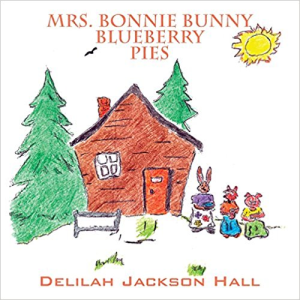
  • Mrs. Bonnie Bunny Blueberry Pies

mrs bonnie bunny's blueberry pies delilah jackson hall

This week, I’d like to highlight some exciting titles coming hot off the Outskirts Press, starting with Mrs. Bonnie Bunny Blueberry Pies–a book which has made it to the Amazon Featured Book of the week list! In this thrilling children’s book, Outskirts Press author Delilah Jackson Hall tells the tale of Mrs. Bonnie Bunny and her famous blueberry pies (for which she wins yearly awards at the Fall Festival). These famous pies get Mrs. Bonnie Bunny some negative attention, however, when the Bunny clan and a few other mischievous friends of theirs decide to sabotage Bonnie and snatch her pies from the window sill before she can enter them in this year’s Fall Festival! Watch the scandal unfold amongst these critters and see the truth behind it all “in the most unlikely of places.”

  • Stan, the Little Turtle

stan the little turtle anne toole

Outskirts Press author Anne Toole is up next with another children’s book, Stan the Turtle. A true introvert, Stan the Turtle upset his mother by never wanting to meet the other critters that lived near his family. Instead, Stan insists on swimming on day long, all by his lonesome. This tale of an introvert takes an unexpected turn with Stan’s mom disappears, nowhere to be found, and Stan has no critter friends to help him find her! Will he be able to gain their favor and get help in his search for mother turtle? Read this amazing story to find out and “discover what important lesson little Stand learns.”

  • Good Morning, How Are You?

good morning how are you dr papijazz

Next up is Dr. Papijazz’s children’s title, Good Morning, How Are You?, a story which features Richard the Rooster. Richard discovers that being different can be a great thing, and that each and every one of us has some unique talent that we may need some help discovering. Downtrodden Richard had yet to tap into his unique talent and was feeling sad and lonely, going to bed in the dumps. However, one morning, a beautiful sunrise greets Richard and he is overcome with joy and simultaneously overcomes his depression. In that moment, Richard discovers his unique talent, and lets out a loud crow, teaching other birds around the globe that they can do the same!

  • Old Dog New Tricks

old dog new tricks marie-yolaine williams

In Old Dog New Tricks, Marie-Yolaine Williams paints a heartfelt story of a shelter dog who got a second chance. Hoping to encourage people to adopt shelter dogs, dog lover Marie-Yolaine wrote the tale of Boscoe, an 11-year-old dog who winds up at a shelter, competing with cute puppies for a potential new home. While most families come in and swoon over puppies, Boscoe’s ears perk up when a family finally comes in looking for an older dog. Read this wonderful, EVVY Award winning story to find out if Boscoe finds a forever home.

!


spa-news

As a self-publishing author, you may find it helpful to stay up-to-date on the trends and news related to the self-publishing industry.This will help you make informed decisions before, during and after the self-publishing process, which will lead to a greater self-publishing experience. To help you stay current on self-publishing topics, simply visit our blog every Monday to find out the hottest news. If you have other big news to share, please comment below.

KellyABOUT KELLY SCHUKNECHT: Kelly Schuknecht is the Executive Vice President of Outskirts Press. In addition to her contributions to the Outskirts Press blog at blog.outskirtspress.com, Kelly and a group of talented marketing experts offer book marketing services, support, and products to not only published Outskirts Press authors, but to all authors and professionals who are interested in marketing their books and/or careers. Learn more about Kelly on her blog, kellyschuknecht.com.