Growing Pains: Part VII

When a business starts to grow, it should reasonably take up more space. This could be space on your desk, in your schedule and just in your life in general. When something begins to take up more space, sometimes the next logical step is to literally give it more space. With that in mind, this week, I’d like to explore the topic of expanding your business to another location.

Because it is 2017, I’d like to begin by saying that this other location need not be in physical space, but can also occupy the virtual reality we all seem to spend so much time in nowadays. If you don’t already have a website for your books, products and services, do yourself a favor and get one. Online marketing is crucial in this day and age, as a significant amount of shopping done today is online. If you’re not online, you’re simply missing out on one of the largest customer bases there is, period.

Further, a website is not always enough. A lot of people get their news and advertisements and ideas of what to buy via social media, thus, expanding your product to these other outlets is a fantastic idea. The more your page is “liked” or “shared,” the more it will show up on more people’s feed, and the higher the chances you have of exposure for your business. Be shameless with the use of hashtags and tagging of people and companies relevant to your work. This is another helpful way for people to find out about your work. Expanding into the digital world has got to be one of the most profitable and lucrative moves you can make as a business owner.

If you find yourself needing to expand your business in actual physical space, this is a whole different ball game. Expanding in this way can be as simple as asking for a display in a lock coffee shop, toy store, library, women’s shelter, Post Office, etc.  Make sure your displays are aesthetically pleasing and call to customers who may not be in that establishment for books, but may find themselves picking it up just out of curiosity. You want your display to have the same zest and pull that you want your cover design to have. Get creative, handcraft a wooden display or ask a handy friend to make one for you. Your display should add to the ambiance of the establishment its in, rather than be a nuisance pile of books with an 8 and a half by 11 sheet of paper next to it scotch taped to the counter.

If you actually need more physical space just to store your back stock of products such as books, manuscripts, files, etc., consider getting a storage unit or devoting a room in your house to just that. Nothing drives me crazier than a bunch of stacks of books and loose papers in my work space, and I think creativity will falter in such an environment. Always give yourself the space you need to both work and operate as a business!

bookshelves
Filling the shelves.

Thank you for reading!  If you have any questions, comments, suggestions, or contributions, please use the comment field below or drop us a line at selfpublishingadvice@gmail.com.  And remember to check back each Wednesday for your weekly dose of marketing musings from one indie, hybrid, and self-published author to another. ♠


Kelly

ABOUT KELLY SCHUKNECHT: Kelly Schuknecht is the Executive Vice President of Outskirts Press. In addition to her contributions to the Outskirts Press blog at blog.outskirtspress.com, Kelly and a group of talented marketing experts offer book marketing services, support, and products to not only published Outskirts Press authors, but to all authors and professionals who are interested in marketing their books and/or careers. Learn more about Kelly on her blog, kellyschuknecht.com

From the Archives: Putting Authors in the Driver’s Seat

Welcome back to our Tuesday segment, where we’ll be revisiting some of our most popular posts from the last few years.  What’s stayed the same?  And what’s changed?  We’ll be updating you on the facts, and taking a new (and hopefully refreshing) angle on a few timeless classics of Self Publishing Advisor.

∗∗∗∗∗

[ Originally posted: September 12, 2008 ]

As we discussed previously, property rights in book publishing is one important consideration in finding the path that best meets your goals.

In all forms of art—painting, woodwork, sculpture, writing—ownership exists. At many levels.  A painter paints a picture. Owns the picture.  Sells the picture.  A sculptor molds a bust.  Owns the bust.  Sells the bust.

Ownership changes but the picture does not.  The bust does not.

In the Traditional sense, authors sell their work to publishing houses for an advance on royalties. Those publishers then, owning the material, can do whatever they want with your writing—cut paragraphs, chapters, change the title even.

Imagine crafting a beautiful landscape only to have someone paint over it.

The good news is many custom self publishing options currently offer non-exclusive contracts now.  The non-exclusive part keeps authors the driver’s seat and preserves the essence and origination of the writing.  It’s your work, thoughts, ideas, and stories, after all.

Have fun and keep writing!

– by Karl Schroeder

contract

So what is a non-exclusive contract, anyway? And what are the pros and cons?

A lot of my friends are great authors who really pour their hearts and souls into their work and I am truly lucky. Why? Because having worked in the industry for so long on both ends of the self-publishing process–author and publisher–and focused both on strict marketing and sales to careful copyright consideration, I have learned a great deal and get to help these, my friends, out.

In short, non-exclusivity means you are not locked into an exclusive contract; you are free to cancel or publish your book elsewhere at the same time.

Here’s an example: say you have been publishing your book with any given self-publishing company for a while, and you have an opportunity to get thousands of copies of your book printed cheaply by a different publisher or printer, either a traditional publishing house or another self-publishing company with better rates. You still want to keep selling your book on Amazon and Barnes & Noble using your existing book distribution system–one ought not to waste an effective system, or already printed books–but you just don’t want to pass up the opportunity to sell thousands more for a better price. Luckily, you can do both–that’s the point of non-exclusive contracts!

Now, if a traditional publishing house discovers your book after you’ve already self-published, what happens next? Very likely, your new publishers will want you to sell your book to them in return for exclusive rights. They would want to make sure that no other publisher or printer would be able to sell or print your book. You won’t violate their contract if you already have a non-exclusive contract, but you won’t be able to sign yourself onto a new one once you’ve committed to the traditional publisher.

Generally speaking, though, you won’t have to worry about the timing. Most self-published books are not picked up by traditional publishers … but nothing is impossible, and you ought to be prepared for anything!

Thanks for reading.  If you have any other ideas, I’d love to hear them.  Drop me a line in the comments section below and I’ll respond as quickly as I can.  ♠


Kelly

ABOUT KELLY SCHUKNECHT: Kelly Schuknecht is the Executive Vice President of Outskirts Press. In addition to her contributions to the Outskirts Press blog at blog.outskirtspress.com, Kelly and a group of talented marketing experts offer book marketing services, support, and products to not only published Outskirts Press authors, but to all authors and professionals who are interested in marketing their books and/or careers. Learn more about Kelly on her blog, kellyschuknecht.com.

Self-Publishing News: 6.12.2017

And now for the news!

Some highlights from this month in the world of self-publishing, specifically newly released self-published books!

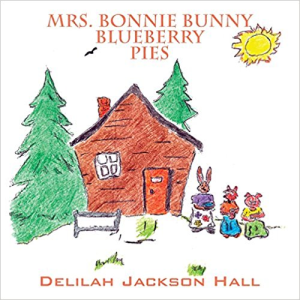
  • Mrs. Bonnie Bunny Blueberry Pies

mrs bonnie bunny's blueberry pies delilah jackson hall

This week, I’d like to highlight some exciting titles coming hot off the Outskirts Press, starting with Mrs. Bonnie Bunny Blueberry Pies–a book which has made it to the Amazon Featured Book of the week list! In this thrilling children’s book, Outskirts Press author Delilah Jackson Hall tells the tale of Mrs. Bonnie Bunny and her famous blueberry pies (for which she wins yearly awards at the Fall Festival). These famous pies get Mrs. Bonnie Bunny some negative attention, however, when the Bunny clan and a few other mischievous friends of theirs decide to sabotage Bonnie and snatch her pies from the window sill before she can enter them in this year’s Fall Festival! Watch the scandal unfold amongst these critters and see the truth behind it all “in the most unlikely of places.”

  • Stan, the Little Turtle

stan the little turtle anne toole

Outskirts Press author Anne Toole is up next with another children’s book, Stan the Turtle. A true introvert, Stan the Turtle upset his mother by never wanting to meet the other critters that lived near his family. Instead, Stan insists on swimming on day long, all by his lonesome. This tale of an introvert takes an unexpected turn with Stan’s mom disappears, nowhere to be found, and Stan has no critter friends to help him find her! Will he be able to gain their favor and get help in his search for mother turtle? Read this amazing story to find out and “discover what important lesson little Stand learns.”

  • Good Morning, How Are You?

good morning how are you dr papijazz

Next up is Dr. Papijazz’s children’s title, Good Morning, How Are You?, a story which features Richard the Rooster. Richard discovers that being different can be a great thing, and that each and every one of us has some unique talent that we may need some help discovering. Downtrodden Richard had yet to tap into his unique talent and was feeling sad and lonely, going to bed in the dumps. However, one morning, a beautiful sunrise greets Richard and he is overcome with joy and simultaneously overcomes his depression. In that moment, Richard discovers his unique talent, and lets out a loud crow, teaching other birds around the globe that they can do the same!

  • Old Dog New Tricks

old dog new tricks marie-yolaine williams

In Old Dog New Tricks, Marie-Yolaine Williams paints a heartfelt story of a shelter dog who got a second chance. Hoping to encourage people to adopt shelter dogs, dog lover Marie-Yolaine wrote the tale of Boscoe, an 11-year-old dog who winds up at a shelter, competing with cute puppies for a potential new home. While most families come in and swoon over puppies, Boscoe’s ears perk up when a family finally comes in looking for an older dog. Read this wonderful, EVVY Award winning story to find out if Boscoe finds a forever home.

!


spa-news

As a self-publishing author, you may find it helpful to stay up-to-date on the trends and news related to the self-publishing industry.This will help you make informed decisions before, during and after the self-publishing process, which will lead to a greater self-publishing experience. To help you stay current on self-publishing topics, simply visit our blog every Monday to find out the hottest news. If you have other big news to share, please comment below.

KellyABOUT KELLY SCHUKNECHT: Kelly Schuknecht is the Executive Vice President of Outskirts Press. In addition to her contributions to the Outskirts Press blog at blog.outskirtspress.com, Kelly and a group of talented marketing experts offer book marketing services, support, and products to not only published Outskirts Press authors, but to all authors and professionals who are interested in marketing their books and/or careers. Learn more about Kelly on her blog, kellyschuknecht.com.

Conversations: 6/9/2017

WRITE THEIR STORIES:

Developing the Biography, Part II

WHEN I became interested in writing Biographies (sometimes called Memoirs) I had no idea how to find a client who wanted their stories told. So I filed away the best idea resources I’d collected for that genre and got busy writing other projects. About a year later I received a phone call from the editor of a small newspaper. I’d sent a brief “thank you” note to her applauding their cover story about a local woman linotype operator and how a neighbor was helping her write a book about her life. This editor informed me that my note would appear in their “Letters to the Editor” column the following month. She would also be including my business website and contact information because “we need more people like you who will help folks write their life histories.” WOW! Such a nice surprise; it still warms my heart when I recall the exchange.

That one contact led to eleven (11) queries. Although only one became an actual client that year, I am forever grateful for being nudged into the biography-autobiography-memoir writing business. Until you’ve experienced it yourself, it is difficult to understand the depth of joy and satisfaction it brings to the “writing assistant.” And, that is what we become: writing coach and editor, research assistant, creative storyteller, hand-holder and friend/brother/sister/counselor.

SO…how do you set yourself up as a writer of biographies?

I much prefer the personal contact avenues—as you might guess from the example above. However, if you’ve considered writing “for” other people, you’ve probably created a website and may be a member of one or more Facebook writing communities. Other ideas are:

  • Research FREELANCE WRITING sites where you can submit your resume for FREE.
  • Consider your own interests while asking yourself “What makes a person famous enough to make the effort to write a biography?” Do you have biographies on your bookshelf? I have several biographies of authors I admire. Is there an author you admire who doesn’t have a biography (or autobiography) out in the world yet? Might be worth it to contact them.
  • Look at a variety of Literary Agencies that specialize in biographies (or other genres you enjoy). If you’ve ever talked with an agent, you already have an idea how many queries they receive from people who need help. Send them your resume with an excellent cover letter.
  • Check out your favorite traditional and self-publishers and query them about becoming part of their ghostwriting team. You will need to read every word in their “contractor agreements” then decide for yourself if that is what you want. They are an excellent resource because people who need professional writing assistance will contact their favorite publisher for advice.

IF you are just beginning to test the waters of biography writing, you may need that surprise one-on-one meeting that leads to signing a client. Someone recently mentioned to me that they found their first biography client in a college library. The peaceful and intellectually stimulating environment allowed her to become acquainted with several staff librarians and one of them handed her the contact information for someone “needing help to write their grandfather’s biography.”

For me, biography/memoir writing is a very personal experience. It is the respect we have for the individuals we write for that makes the pages come alive. Our lives will be quite different than those we’re writing about and it’s critically important not to “put a modern-day spin” on what they’re sharing. Through this process we become better writers and—I believe—better human beings. As you connect with each new biography client, may the leather of their shoes and the ground along their path bless you with new insights. ⚓︎

writing poetry in the woods, national poetry month 2016


Royalene

ABOUT ROYALENE DOYLE: Royalene has been writing something since before kindergarten days and continues to love the process. Through her small business—DOYLE WRITING SERVICES—she brings more than 40 years of writing experience to authors who need “just a little assistance” with completing their projects. This is a nice fit as she develops these blogs for Outskirts Press (OP) a leading self-publisher, and occasionally accepts a ghostwriting project from one of their clients. Her recent book release (with OP) titled FIREPROOF PROVERBS, A Writer’s Study of Words, is already receiving excellent reviews including several professional writer’s endorsements given on the book’s back cover.

Royalene’s writing experience grew through a wide variety of positions from Office Manager and Administrative Assistant to Teacher of Literature and Advanced Writing courses and editor/writer for an International Christian ministry. Her willingness to listen to struggling authors, learn their goals and expectations and discern their writing voice has brought many manuscripts into the published books arena.

In Your Corner: Where (& Where NOT) to Sell Your Book

Typically, a (midlist, traditionally-published) book tour can only last so long–about three months, on the average–and that same book has about the same length of time to linger around brick-and-mortar bookstores like Barnes & Noble before being shuffled off to (midlist, traditionally-published) book heaven. There are exceptions to the rule, of course, and those rare blockbuster successes like Harry Potter and John Grisham’s latest book will never know these trials. But what about self-published books and self-publishing authors? It’s hard enough to get your book on any shelf, period, so how do you figure out which shelves matter the most, given the limited times that various retailers will be interested in stocking it?

I would offer up the following list of places to consider NOT selling your book:

  1. Big box stores. I read somewhere recently that around seventy percent of American adults haven’t stepped inside a bookstore for the last ten years. Blame the skyrocketing usefulness of digital services if you like, but the point is … most people aren’t going to find your book if it’s only for sale in a bookstore, particularly a big box store like … well, Barnes & Noble and now Amazon’s physical bookstores (Amazon’s algorithms are always sure to privilege Kindle Direct-published titles, anyway). The greatest problem of all with big box stores is, however, simply this: they won’t go to bat for you. There are too many other competing concerns, and they’re not likely to take the time to care about your individual success in the midst of all that. This isn’t to say you shouldn’t try at all to stock your book at B&N and elsewhere, but be prepared to have your books returned to you after some months if you don’t actively promote your book in each location yourself. We’ve mentioned it elsewhere on the blog, but stores may not even be willing to stock your book if you don’t give them a free return option.
  2. Independent bookstores. This one might get me into trouble with some other self-publishing authors, but my point is that independent bookstores are for the most part incredibly crowded places, with thousands of competing titles jammed into a small space. I would posit that the indie bookstore is a fantastic place to hold a reading, but a difficult place to sell books if you yourself are not present at a book launch party or a reading in order to promote it. Indies don’t have the budget to do that for you, and as with all other sales locations you should expect to bear the brunt of the marketing.
  3. Restaurants and wine bars. There can be ways to make a restaurant or wine bar or coffee shop or other “edible” establishment a happy home for your book, but usually only as a live event space–for readings and launch parties and such. Problematically, however, these locations tend to charge for such events, often a hefty sum, and the cost can outweigh the advantages–especially if there is a library or civic space nearby where you can hold your reading for free. If you’re going to sell at a restaurant, be ready to have to compete with lots of other activity and noise OR to be sectioned away from the main public area and therefore unable to draw newcomers in. It’s hard to feed serendipity when there’s a wall between you and the front door!
  4. Online. Not all algorithms are created equal, right? Amazon has come under fire in the last few months for deliberately downplaying indie and self-published works that were produced by other publishers than their own Kindle Direct service, and Barnes & Noble’s Nook store has never seen the same level of traffic as their amorphous competitor. You should not expect for your book to sell, magically, online without extensive marketing on your part and careful attention to where you sell. As in a lot of other facets of self-publishing, you want to sell through people who will go to bat for you. The folks over at Outskirts Press seem like a great example of such a company, and their online bookstore is easy to find and navigate.
  5. Under your bed. There are plenty of ways to NOT sell your book, but hiding them under the bed and expecting them to sell without you having to put in some serious elbow grease is perhaps the worst of all. The other entries on this list of “NOTs” is still a better place to start than here, in the realm of neglect. Promote, promote, promote!

… but of course, every challenge has its flip side. I would offer up this second list, in increasing order of value, as a compendium of places to DEFINITELY sell your book:

  1. Local indies. Look, I know what I said about independent bookstores on list #1. But local indies are another story. A nearby town has three of them, and they constantly compete to get visiting and local authors to stop by and sign books, host readings, and generally be a presence in their stores. It’s a mutually beneficial partnership, and many of the problems of the general indie bookstore disappear when you’re able to stop by multiple times a month and make yourself a part of the life of your local indies. They’re often willing, even, to pass word along about your other local events–readings at libraries and such. The three local indies I mentioned above all network with the big city library to take some of the pressure off in hosting parts of the annual state book festival. When things are local, they become fertile ground for long-lasting relationships.
  2. Local libraries. For many of the same reasons as with local indies, local libraries are fantastic places to sell your book. Not just at book launch parties and readings, although those too are fantastic, but possibly even at the front desk or via the community bulletin board. The point is, again, to keep yourself an active presence at the library, to stop by both at planned and unplanned moments to engage with the library patrons and staff. To cultivate relationships. One little local library I visit regularly had a special relationship with a local historian who published books about the town, and always had one or two copies of his book on hand to sell for him. When he passed away, those books suddenly became very hot property in the community, and the library hosted a farewell memorial with his family. I won’t say this particular arrangement is a common occurrence, but it’s a possibility.
  3. Local businesses. There are all kinds which might be willing to partner with you, either by putting up posters or keeping a couple of copies by the register–hair salons, museums, art galleries, specialty stores, you name it! Wherever people browse slowly, that’s an opportunity. And it’s all the better if you have a personal connection with the staff at these businesses, so that they’re interested in picking up the books themselves and having a read. The more people who know what’s inside the covers of your book and who stand behind counters in authority positions, the better, I say! The author who had that special relationship with his library? His books really move at the local city museum, too. There ought to be at least one place which just fits so perfectly for you, right?
  4. Elevators. You will have heard of the “elevator pitch” if you’ve hung around authors or businessfolk at all, and I can’t overemphasize the importance of having one of your own. There are countless opportunities to deliver a thirty-second spiel as you’re going about your daily life, your weekly routine, and your monthly once-offs! It’s all in the mindset, and flipping that switch which turns you from a regular everyday commuter to a self-promoting self-publishing author. It’s often a conscious decision, and it’s not always easy–we all want to just zombie around and relax, every now and then. Social interactions can be awkward enough as it is! But every day is full of opportunities, and if you’re sensitive to them and the mood of the person stuck in that hypothetical elevator with you, you might just have a potential future fan on your hands.
  5. Online. Yeah, yeah, I know this made my list of “NOTs” earlier. But it’s more about how you go about it and where you do that going-aboutness. And as always, think in terms of relationships. Where can you cultivate relationships so that you’ll be creating a team of people willing to promote your book with you? Very likely, social media will play an important role–but only if you’re willing to spend the time to cultivate real and actual, authentic interactions with your followers. So long as you’re dependent upon people you trust and care about–your fans–and not some faceless algorithm, you have a very good chance of growing your reach and selling some books along the way.
Girl (6-7) standing in front of bookshelf
Girl (6-7) standing in front of bookshelf — Image by © Sasha Gulish/Corbis

You are not alone. ♣︎


Elizabeth

ABOUT ELIZABETH JAVOR: With over 18 years of experience in sales and management, Elizabeth Javor works as the Manager of Author Services for Outskirts Press. The Author Services Department is composed of knowledgeable publishing consultants, pre-production specialists, customer service reps and book marketing specialists; together, they all focus on educating authors on the self-publishing process to help them publish the book of their dreams. Whether you are a professional looking to take your career to the next level with platform-driven non-fiction or a novelist seeking fame, fortune, and/or personal fulfillment, Elizabeth Javor can put you on the right path.