Saturday Book Review: “Gramma Darling”

Book reviews are a great way for self-publishing authors to gain exposure. After all, how can someone buy your book if he or she doesn’t know it exists? Paired with other elements of your book promotion strategy, requesting reviews is a great way to get people talking about what you’ve written.

When we read good reviews, we definitely like to share them. It gives the author a few (permanent) moments of fame and allows us to let the community know about a great book. Here’s this week’s book review, courtesy of The Fairview Review:
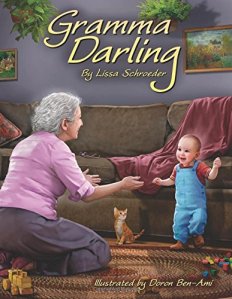
Gramma Darling by Lissa Schroeder

Gramma Darling

by Lissa Schroeder

Publisher: Outskirts Press

ISBN: 978-1478757900

Synopsis*:

It is truly extraordinary, the difference one woman can make in the life of a child. Beautifully written and stunningly illustrated, this delightful book for children, parents, and grandparents paints a nostalgic picture of unhurried summer days at a dear grandmother’s house. Seen and felt through the eyes of a child, every discovery is full of innocence and wonder; from an attic brimming with treasures to running through the fields at twilight catching fireflies. You will laugh and remember your own childhood and feel as though you are there sharing in all the small adventures of her little world; the baby birds, the gardening, the stormy days, and bedtime baths. And through it all, in the background, is Gramma Darling and her laughter. You sense the atmosphere of nurturing, protection, and worth that she provides; and far more importantly, you get a glimpse into the wisdom of a woman whose genuine genius for simply loving, inspires wholehearted lifetime devotion. It will leave you uplifted and looking for ways to spend quality time with the little ones in your own life.

Critique:

Schroeder’s reminiscences of childhood days spent at her grandmother’s house make a wonderful picture book. Whether it is the memory of playing in the enclosed front porch during a rain storm while Gramma works at her sewing machine, or Gramma tucking kids in at the end of another long summer day, the memories are full of love and warmth. Anyone lucky enough to have a grandmother like Gramma Darling will feel an instant kinship with the remembrance of delicious desserts made with lots of love or the safety of performing a song or skit knowing that she is always there to applaud. The circular nature of the story is a reflection of the “circle of life,” with the book opening on the scene of a grandchild just learning to walk across the rug and into Gramma’s arms, and closing with a similar scene -but this time with a great-grandchild toddling into those arms.

Doron Ben-Ami’s illustrations are so clear and crisp readers may double-check to make sure that they are not really looking at photographs. The happiness on the children’s faces as they explore in Gramma’s yard, the pleasure on her face as she watches them eat her homemade pie, and the love beaming from her smile as she waits for those hesitant steps to carry her grandchild across the room and into her arms are all captured perfectly. This is a book that will become a family tradition among readers. And what’s better than snuggling in a grandmother’s lap for a read-aloud? (Although offering the recipe for Gramma Darling’s Chocolaty Cherry Cake is also very nice.)

[ reviewed by Suzanne Costner at The Fairview Review ]

Here’s what other reviewers are saying:

Remember Grandma and how she was a second Momma to you at times. I remember spending so much time with Grandma especially on the weekends. She lived down the street from us. She had such an influence on me and my sister. This book by Ms Schroeder is simply a loving book that will bring back so many good memories of your own Grandma. The story is based on actual memories. It is the author’s way of honoring a wondering, inspiring and influential person in her life. I remember going to Grandma’s on Saturday. First it was the day you went to town and the grocery store. What a thrill it was when Grandma would take you to Kresgee’s Five and Dime Store and you would get a lemonade at the soda fountain. Then after shopping you would go home and the afternoon was for baking. What wonderful pastries, cookies and treats. This book will take you through the author’s wonderful memories of a childhood spent with Grandma. You.as the reader, will relate so much to this wonderful story of times past, but times fondly remembered. You’ll remember how much Grandma loved you and you definitely will feel it as you turn these pages. Along with the story are some lovely illustrations, simply lovely. At the end of the book is the recipe for Gramma Darling’s Chocolaty Cherry Cake. I tried it and it is yummy. This is a wonderful book to add to a child’s bookshelf and a must for adults also.

– Amazon Reviewer gayle pace

Author Lissa Schroeder has written a beautiful book about her beloved grandmother entitled Gramma Darling. She takes us back to the time when she was young and enjoyed many happy visits with her gramma at her house in a little town in Minnesota. The story is lovingly told and will take you back to your youth if you have ever played in trees, caught fireflies, helped your grandma bake pies or snuggled under a warm quilt in your grandma’s old house with a creaky step! If all children in the world could enjoy the kind of visits this author had with her grandma, there is no doubt the world would be a much better place. And while the story is good and will sweep you and your children away to Schroeder’s life as a child, what set this book apart are the illustrations. They are quite simply some of the best I have even seen and they breathe life into the book on every page. If it were up to me this book would be nominated for both the Newberry and Caldecott book awards it’s that impressive. Gramma Darling is a wonderful journey you can take with your children, grandchildren or the kids in your classroom. Not only is it an engaging story but a visual feast for the senses. I can whole heartedly recommend this book for children roughly ages ten and under. Five Stars.

– Amazon Reviewer terrylynn

Book Trailer:

* = courtesy of the book’s Amazon book page.

saturday self-published book review

Thanks for reading!  Keep up with the latest in the world of indie and self-published books by watching this space every Saturday!

Self Publishing Advisor

selfpubicon1

Conversations: 7/15/2016

WISE COUNSEL—WITH MUSCLE III

The truism that “Two—and sometimes more—are better than one,” is definitely accurate when coming to marketing anything—especially our books! I, for one, have been quite overwhelmed with the promotion and publicizing of my book which was published last year. SUDDENLY the reality hit me that I was now in the business of selling my book—my product. I’ve been “back-doored” into operating a business that is taking way too much of my time. So, what to do?  Hire and assistant! If I don’t, I’ll burn out and all my creative ideas for the next book will burn UP!

Talking with a few of my author friends, I discovered several things about the Business of Books.

  1. The business WORLD of book publishing and marketing is evolving so rapidly that even the giant traditional publishers and very famous authors cannot keep up with it all.
  2. Most established authors not only have a Marketing Assistant, they have a “marketing team” through their publishing house—multiple minds searching for better ways to sell books.
  3. Self-publishing authors who have published with a self-publishing business often have access to marketing assistance which can include:
    1. Very basic marketing included in a publishing package which sets up a website and sends out a basic press release.
    2. Offers an introduction to Marketing Assistants who are definitely qualified and usually have had experience working with several authors.
  4. Personally self-published authors are “independent” authors with no automatic assistance. The writers I’ve known who have gone down this route usually publish their work for a small niche of people (family or co-workers) and seldom wish to market their work beyond that.

One of my new author friends has been talking to me about hiring a Virtual Marketing Assistant—an Internet Specialist who understands the world of digital marketing. My first response to her was, “This sounds like the same thing as working with a Personal Marketing Assistant. I’m talking with a very intelligent and Internet-savvy gentleman now who has a lot of good references.” She was not impressed by the details I gave her. Her continued arguments have not persuaded me. I much prefer meeting with and/or talking with a real person, rather than a “virtual” one—even though I know there IS a real person behind the typed messages being received.

sales marketing

Bottom line, each author needs to do a bit of research into this concept of finding and hiring a Marketing Assistant, then make your own decision which way to go.  But “go” you must, before you suffer the physical and mental burn out that comes from trying to do what we cannot do well. I’m making my list of pros and cons. Here’s what it looks like:

Pros: I don’t like to research genre outlets. I don’t like doing “cold calls” to bookstores. I don’t like creating group email lists and sending out messages each month. I don’t have time to “refresh” the website every week. And, there are probably more marketing things that could be done, but I don’t know what they are. I know I’m losing income by not doing everything I can to promote my book.

Cons: Adding this assistant to my budget.

Conclusion: If this book is to be successful (financially and being read), it is time to invest in a Marketing Assistant. ⚓︎

RoyaleneABOUT ROYALENE DOYLE: Royalene has been writing something since before kindergarten days and continues to love the process. Through her small business—DOYLE WRITING SERVICES—she brings more than 40 years of writing experience to authors who need “just a little assistance” with completing their projects. This is a nice fit as she develops these blogs for Outskirts Press (OP) a leading self-publisher, and occasionally accepts a ghostwriting project from one of their clients. Her recent book release (with OP) titled FIREPROOF PROVERBS, A Writer’s Study of Words, is already receiving excellent reviews including several professional writer’s endorsements given on the book’s back cover.  

Royalene’s writing experience grew through a wide variety of positions from Office Manager and Administrative Assistant to Teacher of Literature and Advanced Writing courses and editor/writer for an International Christian ministry. Her willingness to listen to struggling authors, learn their goals and expectations and discern their writing voice has brought many manuscripts into the published books arena.

In Your Corner : Summer Goals (Pt 2)

A Question of Energy

Last week, I started this blog series on summer goals by revealing mine (to write, and to structure my writing … loosely at least).  Everyone has different needs and goals in the summer, however, because every author’s life looks radically different from the next person’s.  One thing remains constant, however:

It takes energy to write.

And in the summertime, that energy is a complicated thing to channel.  On the one hand, the days are longer.  More daylight means more time to write (or the illusion of more time) because there are more hours in the day to take care of the basic what-have-yous of summer life, including mowing the lawn and going for an evening ramble through the neighborhood.  More time outside in that daylight equates to more Vitamin D (or so my family doctor tells me), and more Vitamin D means an uptick in mood and–you guessed it–energy!

welding energy

So far, so good.

But there’s trouble in paradise.  (There always is.  Ask John Milton.)  Just because we have more energy and (the illusion of) more time in summer, we also have an increase in demands.  You heard me: the myth of a languid summer is one we absorb from a literary canon in which people go for long vacations, long walks on the beach, languid soaks in the hot tub, or whatever else they can dream up.  The problem with this is: most of us have to work.  The world looked a little different when we were still in school (and when resumes for college didn’t mandate packing our high school schedules with summer programs), and the world still looks rather different for people of means.  But the fact of the matter is, most self-publishing authors aren’t middle schoolers or millionaires.

Statistically speaking, most self-publishing authors (that we know of, at least) are of an age and demographic that they both work and have families to wrangle.  And while jobs are as diverse as the people who work them, I can safely say that my own job is busiest in summer–by far.  And with school out for the summer, wrangling kids to and from various social activities, sporting events, and so forth occupies a lot of my (supposedly languorous) time.

I guess what I’m trying to say is this:

Protect Your Time. Treat Energy as a Finite, Precious Resource.

What does your energy budget look like?  When are you at your absolute best?  That’s the time you want to set aside to write.  For me, it’s the early morning hours.  Now, I know my basic instinct is to try and knock out everything on my to-do list first thing as soon as I wake up, to leave “more time for things I love later,” but the problems with this theory are that–

  1. the to-do list never ends;
  2. I burn myself out by midday; and
  3. I never feel like starting something new at the end of the day, when everything is quiet at last.

If I’m not careful, my best hours are over and gone before I know it.  Even worse, if I start prioritizing a to-do list instead of my writing, I end up being not much of a writer.  Luckily, my family understands this and they want to support me in my writing, so every evening as we negotiate the details for the next day, we make sure to set aside a little time first thing in the morning for me to do the thing I love–so that I can better be the person they love (and let’s face it, be a more happy and loving person in general).  I also have to remember that sleeping and eating well are vital components to feeling well and retaining energy throughout the day.  I know we all feel the pull towards strong coffee and starch after the lunch hour when our blood sugar is crashing–but I’m here to tell you we can do better, together.  More on that later!

You are not alone. ♣︎

ElizabethABOUT ELIZABETH JAVOR: With over 18 years of experience in sales and management, Elizabeth Javor works as the Manager of Author Services for Outskirts Press. The Author Services Department is composed of knowledgeable publishing consultants, pre-production specialists, customer service reps and book marketing specialists; together, they all focus on educating authors on the self-publishing process to help them publish the book of their dreams. Whether you are a professional looking to take your career to the next level with platform-driven non-fiction or a novelist seeking fame, fortune, and/or personal fulfillment, Elizabeth Javor can put you on the right path.

Six Steps to Hosting a Successful Book Reading Event!

As an established author, one may come to notice a seemingly inevitable plateau or decline in book sales as time goes on. There are ways, however, to re-engage your fan base and reinvigorate your marketing strategies. One terrific, simple way to do this is to arrange a book reading at your local bookstore, library, coffee shop, university or school, etc.

It is important–whether or not your book is hot off the press–to keep your audience engaged, but also to keep yourself actively engaged in promoting and selling your book. Not only do fans of your work want to see you in person, a book reading can also drum up potential fans who would not have otherwise heard of your piece!

So…the question you may have is, how does one prepare for a book reading?

Come Prepared

  1.  Pick 4 or 5 captivating passages to really draw in your audience. Practice reading these passages to friends, to a mirror, or even to your cat if you feel so inclined. If you want to utilize the camera feature on your smartphone or computer, you can even film yourself to see how your performance will appear to others.

Be Confident, Comfortable, and Relatable

  1.  A great way to relate to your potential readers is to provide your personal reasons for writing the story, or the inspiration behind it. Make sure to come up with key talking points if you’re going to take this approach so that you can talk freely without a  script–appearing confident and comfortable will further inspire people to give your book a chance!

Keep Your Audience Engaged

  1. Make sure to keep a close eye on your audience: if you’ve only made it through some of your material but notice that the crowd is getting restless or checking their phones, change gears and do a Q & A to keep them actively participating. If you’re too busy staring down at your script or book, you’ll miss important body language cues that could help you gauge where you should direct your attention, or perhaps encourage you to take up a more captivating tone or to make better eye contact.

Don’t waste a precious opening by reading out a long list of names, thanking those who helped you publish your book and risk putting your audience to sleep–instead, lure them in, grab their attention, answer their questions, THEN thank whoever you need to thank.

Anticipate Obvious Questions

  1. Don’t fumble when people ask you “What does the title mean?” or “Was the character inspired by a real person?”, etc. etc.

Also, repeat the questions to the audience, you want everyone to know what you’re responding to, not just the person posing the question.

Don’t Be Afraid to Get Creative with Location

  1. Remember that bookstores are not the only places to find potential readers. There are a myriad of potentially relevant locations for you to speak at which could span from a woman’s shelter to a community garden to a prison, etc. etc. If your book is about long distance hiking, try a local gear store. The key is, start close to home!

Get the contact information for whatever venue you’re looking to speak at: manager’s name, phone number, and email are great places to start! Describe how your book reading could benefit the business by drawing in customers, resonate with the store’s target customers, increase the likelihood that those there for the book reading will also shop at the store after the event.

Advertise Your Event!

  1. Make sure to publicize your event: flyers, social media posts, mention it in your blog, send a press release to local shopping guides or community calendars.

Remember above all else, it is not up to book stores to sell books, but authors themselves! Be active in the process of marketing and selling your book and the success of your book sales will reflect your hard work!

book reading
[ book readings are a great way to drum up interest in your book! ]

Thank you for reading!  If you have any questions, comments, suggestions, or contributions, please use the comment field below or drop us a line atselfpublishingadvice@gmail.com.  And remember to check back each Wednesday for your weekly dose of marketing musings from one indie, hybrid, and self-published author to another. ♠

KellyABOUT KELLY SCHUKNECHT: Kelly Schuknecht is the Executive Vice President of Outskirts Press. In addition to her contributions to the Outskirts Press blog at blog.outskirtspress.com, Kelly and a group of talented marketing experts offer book marketing services, support, and products to not only published Outskirts Press authors, but to all authors and professionals who are interested in marketing their books and/or careers. Learn more about Kelly on her blog, kellyschuknecht.com. 10:00 AM

From the Archives: “Self-Publishing: The New Black”

Welcome back to our Tuesday segment, where we’ll be revisiting some of our most popular posts from the last few years.  What’s stayed the same?  And what’s changed?  We’ll be updating you on the facts, and taking a new (and hopefully refreshing) angle on a few timeless classics of Self Publishing Advisor.

∗∗∗∗∗

[ Originally posted: January 28th, 2009 ]

Last Friday I happened to run into a new friend at a coffee shop down the street from my home. She also works in the publishing industry as a consultant, but more on the traditional model side. We enjoy running in to each other and talking shop.

This last run-in she mentioned a new author for which she’s providing ghostwriting and consulting services. Amy was evidently reserved in progressing with the project and I pressed for a bit more information. As it turned out, this particular author Amy was working with has a timely book topic on the table with a pressing eagerness to see it published; and with business savvy, the author wanted to see an attractive return on investment.

“Okay, what concerns do you have?” I asked. Amy first responded that shopping for an agent to pick up the book would push the timeline way back, and then between the agent’s and then the publisher’s cut, what could she reasonably expect to provide as an incentive to her author.

I couldn’t help but smirk. With self-publishing, authors retain exclusive control and full royalties, while having their books published in full-service style – start to finish – in around 12 weeks. Amy’s look was one of almost disbelief. When I mentioned all of these things along with the advantage of unlimited on-demand, international distribution offered by the best full-service self-publishing options she was noticeably, informed.

If you are an author, or publishing professional, revisit this question: What are your publishing goals? For many authors, the most important goals are:

1) Keeping 100% of your rights and creative control to your book
2) Keeping 100% of your author royalties
3) Setting your own retail price, profit, and author discount
4) Publishing a high-quality book that is available worldwide

I hope that helps. Keep writing…

– by Karl Schroeder

When we think of the expression “___ is the new black” in 2016, we envision something entirely different from what Karl intended back in 2009–thanks in large part to Jenji Kohan’s hit Netflix Original Series, Orange is the New Black, now four seasons strong on that video streaming website and renewed for at least another three.  The series, based on a memoir released in 2010, follows a seemingly unexceptional 30-something woman as she enters a woman’s penitentiary for a crime committed in her youth–but of course she’s not the point.  She’s the audience’s excuse to fall in love with all of her wild and wonderful fellow prisoners, learn their backstories, and so on.  And without the limitations of broadcast television, the show’s producers are more than a little on the nose with their depictions of sex, violence, and abuse.  All of this has made the show a worldwide phenomenon … and sidetracked the original reference implied by “___ is the new black” in much the same way that “Kleenex” has come to replace “tissue” as America’s word of choice, in the face of an overwhelmingly popular product.

But you’re not here for a long analysis of Orange is the New Black or even, it must be admitted, Kleenex.  You’re here because you want to know what has happened since 2009 to update our undestanding of self-publishing.  And the expression, not the show, is my avenue into that subject.

The expression “___ is the new black” traces its roots as far back as the end of WWII, and the tasteless few who managed to be flippant about wearing anything other than the standard-issue colors of economic depression and institutionalized grief–or in other words, anything other than black or a very dark grey.  According to Wikipedia (and other sources), the term was most often used in the 1980s, when mass consumer culture began to offer the average Westerner a glut of affordable options in fashion and home design.  When you can wear clear plastic shoes instead of black leather, you know you’ve crossed some sort of cultural Rubicon!

In titling his original post “Self Publishing: The New Black,” Karl was deliberately aligning self-publishing with these trends in order to demonstrate its rapid rise to viability as a competitor to the traditional publishing platform–a full year before the inspiration for Jenji Kohan’s television show was released into the world.  And he was right: like Kleenex, like Orange is the New Black, self-publishing has shot through the roof in terms of popularity.  And the similarities go farther: all of these things (Kleenex, OITNB, and self-publishing) have become household terms due to their popularity.  Almost everyone will know what you mean if you mention one of them.  As products of a capital market, they have staying power.

There are implications to the original usage of “___ is the new black” that I’d be more than willing to retire.  Namely, implications that the subject in question–self-publishing–is faddish and therefore will fall victim to the rapidly-changing dictates of popular fashion.  (And c’mon, we’re always going to need Kleenex.)  It’s not such a bad thing that the expression is now most often associated with an instant cult classic of a television show that shows no signs of losing its devoted audience … but even if it did, self-publishing isn’t going anywhere.  In fact, every round of data and statistics released by Digital Book World and other organizations tracking self-publishing indicates that indie publishing is here to stay!  There’s never been a better time to get on board.

Thanks for reading.  If you have any other ideas, I’d love to hear them.  Drop me a line in the comments section below and I’ll respond as quickly as I can.  ♠


KellyABOUT KELLY SCHUKNECHT: Kelly Schuknecht is the Executive Vice President of Outskirts Press. In addition to her contributions to the Outskirts Press blog at blog.outskirtspress.com, Kelly and a group of talented marketing experts offer book marketing services, support, and products to not only published Outskirts Press authors, but to all authors and professionals who are interested in marketing their books and/or careers. Learn more about Kelly on her blog, kellyschuknecht.com.