Self-Publishing News: 1.16.2017

And now for the news!

This week in the world of self-publishing:

Since there’s not much going on in the world of self-publishing this week, I thought it’d be nice to follow up on the article we covered last week entitled, “Self-Publishing: An Insult to the Written Word”, as Huffington Post just released an article with a counter argument titled, “Self-Publishing: An Insult to the Written Word or a Boon to the Industry?”

In this article, Samita Sarkar–a self-published author herself–defends the industry with anecdotal and researched defenses for the industry that Gough had spent an entire article belittling. Sarkar points to the more intimate connectedness self-published authors can achieve with their audience, the freedom they experience with regards to subject matter and the opportunity they have to become their own small-scale printing press.

What Gough called the “burden” of editing independent authors work, Sarkar calls a pleasure and an honor. “These authors are investing in their book and realize that they need professional help to improve on their work and make it more enjoyable for their readers and more marketable,” she says, “Why put them down for that?”

Sarkar finishes the article by critiquing Gough for her heavy focus on the idea that the art of writing itself “has been cheapened by self-publishing,” she goes on, “But self-publishing can help to give people a voice. It provides them an outlet that they may otherwise never have had so they can connect with other people. Isn’t that what art is all about?”

Of course it is. Art is about creative expression. Maybe you don’t prefer the cubist art of Picasso, but instead find yourself more drawn to the High Renaissance art of Leonardo da Vinci; whether or not you have a palate for a particular type of art does not mean that one or the other isn’t art by definition. There are readers that will prefer self-published books and there are readers who will steer clear of them, don’t ever silence yourself because of those who don’t like your work, but keep writing for those who will continue to love and appreciate it.


spa-news

As a self-publishing author, you may find it helpful to stay up-to-date on the trends and news related to the self-publishing industry. This will help you make informed decisions before, during and after the self-publishing process, which will lead to a greater self-publishing experience. To help you stay current on self-publishing topics, simply visit our blog every Monday to find out the hottest news. If you have other big news to share, please comment below.

Kelly

ABOUT KELLY SCHUKNECHT: Kelly Schuknecht is the Executive Vice President of Outskirts Press. In addition to her contributions to the Outskirts Press blog at blog.outskirtspress.com, Kelly and a group of talented marketing experts offer book marketing services, support, and products to not only published Outskirts Press authors, but to all authors and professionals who are interested in marketing their books and/or careers. Learn more about Kelly on her blog, kellyschuknecht.com.

Saturday Book Review: “Courageous Footsteps: A WWII Novel”

Book reviews are a great way for self-publishing authors to gain exposure. After all, how can someone buy your book if he or she doesn’t know it exists? Paired with other elements of your book promotion strategy, requesting reviews is a great way to get people talking about what you’ve written.

When we read good reviews, we definitely like to share them. It gives the author a few (permanent) moments of fame and allows us to let the community know about a great book. Here’s this week’s book review, courtesy of Midwest Book Review:

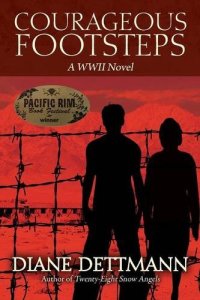
Courageous Footsteps: A WWII Novel diane dettmann

Courageous Footsteps: A WWII Novel

by Diane Dettmann

Publisher: Outskirts Press

ISBN: 9781478755586

Synopsis:

PACIFIC RIM BOOK FESTIVAL WINNER!

Courageous Footsteps is a historical novel about two teenagers, Yasu and Haro Sakamoto, who, along with their family, are imprisoned in a Japanese internment camp in eastern California during WWII. Surrounded by barbwire fences, Yasu and her brother struggle to make sense out of their young lives. They long to return to the life they enjoyed in Glenville, California, but instead are forced to endure hardships and make choices that will change their lives forever. Awarded runner-up in the Great Midwest Book Festival in the young adult category, this piece of America’s history is an informative, eye-opening read for adults too.

Critique:

The majority of novels about World War II are directed to adult audiences, but Courageous Footsteps is a story for teens and presents the experiences of Yasu and Haro Sakamoto, who are removed (along with their family) from their Glenville, California home and interred in a concentration camp.

All ages will find Courageous Footsteps a gripping, eye-opening approach, for several reasons. One is its ability to provide a stark contrast between the comfortable, middle-class American lifestyle experienced by the family at the novel’s opening with life behind barbed wire fences after they are removed from their home.

Few other novels, adult or teen, so adequately portray the emotions, daily experiences, and struggles of the Japanese during this period of time. From the moment Pearl Harbor is bombed and war is declared with the Japanese to the President’s orders to take away their lives, Courageous Footsteps progresses swiftly and documents the quick rise of fear and its accompanying prejudice, which place the family in constant danger and flux.

Nearly overnight, the Sakamotos become enemies of the people and are attacked, beaten, and maligned by strangers who only see their Japanese faces and not their American identities. Their personal possessions (radios, guns, cameras, binoculars) are confiscated by the Army in the name of national security, the family is forced to do the best it can under prison conditions, and camp regulations take over their formerly-free lives.

How does a family stay together and preserve their shattered dreams under such conditions? Courageous Footsteps is as much a story of this survival process as it is a documentation of one girl’s evolving determination to escape this impossible life and resume her dreams.

Teens and new adult audiences alike will find Courageous Footsteps evocative, compelling, and hard to put down.

reviewed on Donovan’s Bookshelf of Midwest Book Review ]

Here’s what some other reviewers are saying:

Book really made me think about what these American born Japanese American citizens went thru at the hands of our government. How sad the way they were treated. This book evolves the characters so well with just enough info about them and not so much that you get bogged down with their personalities. Just a marvelous book that gives so much insight into what the Nisei’s went thru. How they worked so hard to build their lives and then to have it taken away and have them herded into these camps, how badly they were treated and how awful the conditions. OMG I admire and respect them for their perseverance and how they all worked together and were so respectful of their parents. Haro worked hard and applied himself and fought hard for this country after how badly he was treated. It was a different time…you won’t find many kids today with this kind of respect for their parents nor their work ethic. Just an amazing and enlightening book! Can’t wait for the sequel!

– Amazon Reviewer Karen Grossaint

The internment of Japanese Americans during WWII is a period of history which I was not familiar with. I had read magazine articles but they only touched the surface. Ms. Dettmann’s book is a real eye opener! I had no clue what my fellow Japanese Americans faced and the atrocities they lived through! While this book is a historical fiction novel, I had to continually remind myself of just that. The author’s extraordinary writing skills made it read like a true story. The characters and their experiences seemed so real.

After the attack on Pearl Harbor, the Japanese were rounded up and arrested like common criminals. They were forced in to camps against their will and remained there until the end of the war. The reader follows the painful journey the Sakomoto family through the eyes of their teenage daughter Yasu. They were law-abiding American citizens in 1941. They owned a small business in Glenville, California. Being a close knit family, they had a deep love for one another and their country. The quiet, peaceful life they had known changed quickly after the bombing. Persecution from fellow townspeople and even friends was immediate and harsh. Their lives became endangered in the very area and by the people that had been a part of their happiness.

My heart broke for young Yasu. Being a teenager is hard enough, but to face adolescence with such rejection and hostility was excruciating. Her sweet family continued to trust their country and government right up to their arrests. The gentle humble spirits of the Japanese were a great contrast as to how most Americans would have responded to this extreme discrimination.

I had no clue the camp conditions were so degrading and horrific. My first thought was about the concentration camps of the Jews. These camps were not as severe as Hitler’s, but they were shocking. There was filth, crowding, squalid living conditions, poor food, such as I would never have dreamed could take place in America. The author took me into the camp, to walk daily with the Sakamotos, living their experiences and allowing my heart of feel their emotions.

Though each era had different details, I saw a common thread running through history in the injustice toward other groups: the slavery of African Americans, the Chinese in the early 1900’s, the Jews, and the Japanese. People that had done no wrong but were victims of fear and misunderstanding.

I do disagree with this being labeled as a “young adult fiction”. This book is for teens and adults too! A must read for all! Watch for a sequel!

– Amazon Reviewer Moonpie

 AUTHOR INTERVIEW


saturday self-published book review

Thanks for reading!  Keep up with the latest in the world of indie and self-published books by watching this space every Saturday!

Self Publishing Advisor

selfpubicon1

Conversations: 1/13/2017

WRITER SEEKS SUPPORT TEAM

Have you collected several years-worth of Writer’s Digest magazines anhelp!d multiple editions of the Writer’s Market? Have you gone to Writer’s Conferences, sat in the back row and collected every handout? Have you walked bookstore aisles searching for that one writing advice book that would motivate you to actually publish what you’ve written? These are, indeed, excellent resources and you’ll learn many things through listening to their articles and fact-finding pieces and reading each chapter. However, they are not the hands-on, personally invested assistants that we all need in our writing lives at various strategic moments. I’ve been told that the journey I’ve taken in my writing career is similar to that of many authors—even the famous ones. So it is that I hope the following examples of my personal experiences will encourage you to seek and accept help along your own writing path.

  • Stories popped into my head ALL the time and I never found/took the time to write them down except for the occasional basic concept which I filed Then a neighbor mentioned that our local county library was hosting a writing workshop—and I signed up! The instructor was an experienced author whose encouraging manner led to the completion of my first published short story!
  • That library workshop group of people grew in solidarity as we invested in each other during the next several 8-week sessions. Then times—and county library budget—changed and we learned that there would be no more workshops in the foreseeable future. SO—we established our own Writers-at-Work group and the instructor joined us as one of the working This group remains loosely connected today—after close to 45 years together! We will never stop mentoring each other!
  • One particular short story caught my husband’s eye. It is a Christmas story titled DEPLOYED, and its storyline touched several of my author-friends as well. With his big nudge and support we printed 500 copies and donated the majority of them to encourage military units as they were deployed. Later, I published it on Amazon/Kindle, and am now developing it into a novel. This would not be happening if I’d never surrounded myself with my Personal Support Team.
  • As I grew in writing skills and knowledge, and my supporters grew in their nudging skills, I became an Advance Writing teacher! What an amazing experience to work with high school students! Their imaginations inspired each other, I was inspired, too! Those are the years that I began setting aside notes for a different kind of book which eventually became FIREPROOF PROVERBS, A Writers Study of Words—self-published with Outskirts Press.
  • When the teaching season of my life concluded, a new door opened, and I started working with beginning authors to edit, critique, and prepare their projects for publication—and that has been my writing life for the past ten years. With the publication of each author’s book I am again blessed beyond measure!

So there you have it—a personal example of one writer who has experienced the multiple benefits of supportive people throughout one writing career. I call this the TEAM EFFECT, similar to the concept of a ripple effect as each individual nudges you along and widens your horizons making your writing better!

About my decision to self-publish? I simply did not want to wait years to be accepted by a traditional publishing house as I queried and/or worked with an agent who would receive part of my royalty. Instead, I did my research into self-publishing companies, talked with other authors who have self-published, and then selected Outskirts Press. Their Author Consultant, Publishing Consultant, and Design Specialist were excellent additions to my Support Team. When the time comes, I’ll be publishing with them, again! ⚓︎


Royalene

ABOUT ROYALENE DOYLE: Royalene has been writing something since before kindergarten days and continues to love the process. Through her small business—DOYLE WRITING SERVICES—she brings more than 40 years of writing experience to authors who need “just a little assistance” with completing their projects. This is a nice fit as she develops these blogs for Outskirts Press (OP) a leading self-publisher, and occasionally accepts a ghostwriting project from one of their clients. Her recent book release (with OP) titled FIREPROOF PROVERBS, A Writer’s Study of Words, is already receiving excellent reviews including several professional writer’s endorsements given on the book’s back cover.  

Royalene’s writing experience grew through a wide variety of positions from Office Manager and Administrative Assistant to Teacher of Literature and Advanced Writing courses and editor/writer for an International Christian ministry. Her willingness to listen to struggling authors, learn their goals and expectations and discern their writing voice has brought many manuscripts into the published books arena.

In Your Corner: Hook, Line, and Sinker

fishing reading hook

Hooking your reader is, shall we say, important. There. I don’t want to dance around the point, because that is the point–when it comes to getting a potential reader to become an actual reader, or better yet, an actual reader who buys your book, you don’t wan to hedge around the issue. You want to go straight at it, and nail it down with a few well-placed expert strategies.

So how does one hook a reader?

As with actual fishing–the kind involving scales and tails flopping in the bottom of your boat–there are different methodologies and categories of fishing, and within those categories there are umpteen number of hook varieties.

There’s what you do with the text itself.

Don’t worry, I won’t draw out the analogy much farther, and I won’t compare any one strategy to fly fishing vs reel fishing vs net fishing vs spear fishing. I will leave those distinctions to your imagination instead and simply say this: The first line has to count. And the first paragraph. And the first page. In the digital age more than ever before, a book has to sink its teeth into a reader immediately. Gone are the days of Tolstoy, sad as this is to say, when readers were more likely to give a book a couple hundred (or thousand, even) pages before passing judgment. These days, we are all bound by the necessity to impress in an online preview, such as the “Look Inside!” feature provided on Amazon.

It’s not such a bad thing; pithy first lines and impactful first pages are not the worst thing in the world, and neither is a reader’s predilection to choose a sure hit over uncertainty. I like to think of the root cause as something other than simply that tendency towards “instant gratification” which many people tend to levy against younger people as a kind of weaponized term; when it comes to picking books, people of all ages tend to make their choices much the same way. No, I like to think of the “first line fever” as the natural and healthy response to a world simply saturated with possible books to read.  People have to narrow the list somehow, and previews are an effective, efficient way to do this. (Ever been overwhelmed just walking into a bookstore or library with how many good books there are out there that you’ll never have a chance to read, simply because of time and quantity? I have.)

Self-published books have long been known for their first lines, as Andy Weir’s The Martian exemplifies. (I won’t repeat it here, since it includes some language.) Indie authors have the freedom to push boundaries and that can result in some pretty wonderful things, so if you’re looking to ramp up your opening pages, take the time to immerse yourself in examples that worked and which you admire. Many people will point you towards Jane Austen and the classics; but remember, they had a different audience.

But there’s also what you do with the book once it’s written.

I’m talking about marketing, as you might have guessed. But I’m also talking about presentation. If first lines are about first impressions, so too is your back cover copy, your cover design, and your online presence. To quickly and effectively hook a reader, you want to present yourself and your book as easy to access. Make sure your social media platform is well-developed and that your website and book page listing on Amazon are as rich with information and as sharply-written as your first page. As I mentioned earlier, it doesn’t pay to beat around the bush when it comes to presenting your work to the world. And if your book looks beautiful online and in the hand when someone pulls it off of a bookstore shelf, they are so much more likely to pick it up.

I suppose, really, at the base of everything I’ve said here is the assumption that you’ll be self-publishing in a world gone so thoroughly digital that most book purchases are made online. There are a lot of politics and high feelings surrounding this issue, but it is the current state of things, and worth paying attention to no matter where you fall on the matter. And if you still haven’t found your hook (or hooks) and are struggling to figure out the next step, we’re here for you in the comment section below and would love to point you towards even more specific strategies.

You are not alone. ♣︎


Elizabeth

ABOUT ELIZABETH JAVOR: With over 18 years of experience in sales and management, Elizabeth Javor works as the Manager of Author Services for Outskirts Press. The Author Services Department is composed of knowledgeable publishing consultants, pre-production specialists, customer service reps and book marketing specialists; together, they all focus on educating authors on the self-publishing process to help them publish the book of their dreams. Whether you are a professional looking to take your career to the next level with platform-driven non-fiction or a novelist seeking fame, fortune, and/or personal fulfillment, Elizabeth Javor can put you on the right path.

Planning for 2017: Success?

After taking time to consider occasions that will lead to the need for damage control, this week we’re going to redefine what “success” means in respect to our goals, and as a concept in general. While the assumption is often that “success” means completing a new book or successfully marketing an already finished one, this one-size fits all definition does not look good on, or flatter the strengths and weaknesses of each unique author.

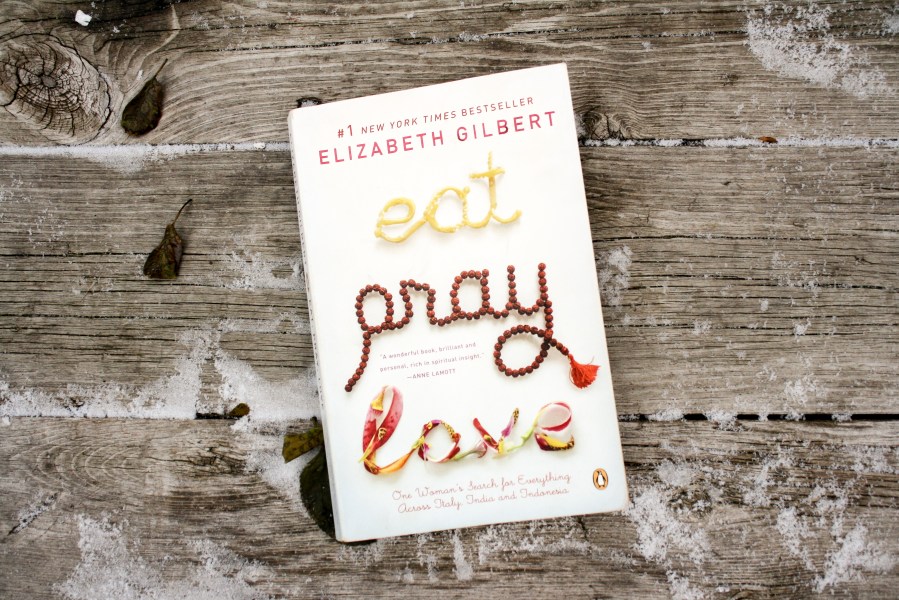
The author of “Eat, Pray, Love”, Elizabeth Gilbert, interestingly experienced the “success” of her book to provoked the same sense of anxiety and discomfort that is often associated with failure. She explained that the success carried a large looming cloud of expectations from her readers that she feared she wouldn’t be able to live up to in her next book. “Failure catapults you abruptly [into] the blinding darkness of disappointment,” Gilbert said. “Success catapults you just as abruptly, just as far, into the equally blinding glare of fame, recognition, and praise.”

For Gilbert, your subconscious cannot tell the difference between these two opposing poles, because they are both so far from the spectrum of our everyday, normal existence. Taking that into account, I think it is important to transform the idea of success into something more normal, more everyday, rather than something that just comes from world-wide recognition for our work.

eat pray love elizabeth gilbert

Re-conceptualizing Success

While finishing a book or having it fly off the shelves should be appreciated as a success, this is a very long-term and difficult goal to achieve. To put this into perspective, let’s say you were training for a marathon and never considered any of your training days leading up to it as successful because they weren’t the big day–logging those miles is going to start to feel hollow and unrewarding. Sure, that first training run over ten miles isn’t a marathon, but that is a huge success compared to sitting on your couch at home, and should be celebrated as such!

Having your vision of success span from the time you begin your project, to the time you complete it will definitely keep you in a better head space and keep you more motivated and excited with each leap and bound you make! Hence why we like to stress the importance of dividing up that overarching goal into smaller, more bite-sized pieces that you can achieve along the way and count as successful mile markers to your grand finale, which may be a finished book.

What are some short-term mile-markers that should be perceived as successes for a writer?

  • An outline completion
  • A chapter completion
  • A first draft completion
  • A marketing plan
  • Winning a writing competition
  • Writing an awesome Tweet, blog post, or other social media post that gets a lot of traffic
  • Your first piece of fan mail
  • Your first royalty check
  • Getting a gleaming endorsement for your back cover
  • And countless other examples.

Let’s make success part of our everyday. Let’s make small goals for ourselves that we can objectively look at and say, “You know what, I succeeded today” when we’ve accomplished them. Success doesn’t have to be this epic thing that becomes almost intimidating, as Gilbert describes it in her TED talk, and nor does failure. If we become at home in our everyday successes and failures, the monumental ones won’t seem so shocking to us.

“Success means doing the best we can with what we have. Success is the doing, not the getting; in the trying, not the triumph. Success is a personal standard, reaching for the highest that is in us, becoming all that we can be.”

– Zig Ziglar


Thank you for reading!  If you have any questions, comments, suggestions, or contributions, please use the comment field below or drop us a line at selfpublishingadvice@gmail.com.  And remember to check back each Wednesday for your weekly dose of marketing musings from one indie, hybrid, and self-published author to another. ♠


Kelly

ABOUT KELLY SCHUKNECHT: Kelly Schuknecht is the Executive Vice President of Outskirts Press. In addition to her contributions to the Outskirts Press blog at blog.outskirtspress.com, Kelly and a group of talented marketing experts offer book marketing services, support, and products to not only published Outskirts Press authors, but to all authors and professionals who are interested in marketing their books and/or careers. Learn more about Kelly on her blog, kellyschuknecht.com