In Your Corner : Resolutions for 2016 That Every Aspiring Author Should Make (pt 1)

What’s your goal for 2016?  New Year’s provides an opportunity to assess what has and has not worked in 2015 and resolve to make 2016 the best year yet, and for writers this opportunity is especially important.  To that end, over the coming weeks I would like to focus on a number of ways in which authors can meet their New Year’s resolutions for and through self-publishing.

writing goals


This week, I’d like to examine four goals.  I’m going to list them here, and then break them down individually–because let’s face it, nothing’s quite so simple as a list of neat bullet points when we’re talking about real life and especially real life for an author!

  1. Set goals.
  2. Facilitate goals.
  3. Make writing a priority.
  4. Read, read, read.


So, what does it mean to set goals?  What are the implications of a goal-driven self-publishing experience?  I have to admit, I find it nearly impossible to keep even a modest resolution–much less a lofty one–without clearly defined benchmarks to reach and methods to follow.  My first recommendation for you, the aspiring author, is this: If your resolution is to finish your memoir in 2016, make sure you break that resolution down into concrete, manageable steps.  If it’s to publish a cookbook, chart out the steps to making that happen.  If it’s to pen a romance novella, be sure to go about it in a structured way.  Leaving room for creativity in your writing doesn’t mean leaving room for things to fall apart in terms of planning and organization–and in fact, many of the authors I work with find that tangible, manageable goals help rather than hinder the creative process.

On to the second point.  What does it mean to facilitate goals.  To facilitate something means, loosely, “to make (something) easier : to help cause (something)” to happen, and to remove any hurdles that might prevent you from keeping your resolutions.  My job description boils down to facilitation, to helping authors get from point A to point B with the greatest ease and the least inconvenience possible.  Your job, as an author, is to make sure nothing gets in the way of your writing–and in the way of your writing reaching your readers.  I recommend reconsidering, if time is an issue, the number of hours that you work or your social commitments.  You need both time and energy to meet your goals, and those resources don’t just manifest out of thin air.  Someone once told me: “I think every person has a kind of emotional budget for the day.  You wake up, and you have a certain amount of energy, and you have exactly 24 hours.  You have to balance that budget by the end of the day and set up your budget for the next day.”  If you spend all of your time and energy on other things, you’ll have–literally–nothing to spare for the writing and publishing processes.

And that third step you already know to be non-negotiable: Make writing a priority.  You’ve heard all the tips and tricks before, some of them here on Self-Publishing Advisor: Take a break from TV and social media, and set aside a time to write every day.  Whether you post creatively on Twitter or write your spouse a juicy love letter, regular writing is guaranteed to feed your creative side and improve your craft.  There are loads of online writing courses and how-to guides to self-publishing available for free these days, and there are online communities and forums dedicated to providing support and encouragement to aspiring authors.  Every person will find help from different sources–there’s no one-size-fits-all when it comes to writing and publishing–but one fact remains true for everyone.  There is no cheating when it comes to writing original content; it all has to come from somewhere.  And if you don’t carve out room for writing to be a priority … it won’t happen.

And last but not least: Read, read, read.  The number one piece of advice best-selling authors offer to other writers is to read as much and as widely as possible:

“If you want to be a writer, you must do two things above all others: read a lot and write a lot.”
— Stephen King

and:

“If you want to write, if you want to create, you must be the most sublime fool that God ever turned out and sent rambling. You must write every single day of your life. You must read dreadful dumb books and glorious books, and let them wrestle in beautiful fights inside your head, vulgar one moment, brilliant the next. You must lurk in libraries and climb the stacks like ladders to sniff books like perfumes and wear books like hats upon your crazy heads. I wish you a wrestling match with your Creative Muse that will last a lifetime. I wish craziness and foolishness and madness upon you. May you live with hysteria, and out of it make fine stories — science fiction or otherwise. Which finally means, may you be in love every day for the next 20,000 days. And out of that love, remake a world.”

— Ray Bradbury

and last but not least:

“Be awesome! Be a book nut!”

— Dr. Seuss

See what I mean?  Reading may be the last item on today’s list of resolutions, but it’s by far the most foundational practice for you to succeed as a writer.  Books are your friends, both the ones that you write and the ones that you read, and your fellow book-lovers make the staunchest of allies in a world that can sometimes make it difficult to get out of bed in the morning, much less check items off the to-do list and meet your New Year’s resolutions.

But always remember: you are not alone. ♣︎

ElizabethABOUT ELIZABETH JAVOR: With over 18 years of experience in sales and management, Elizabeth Javor works as the Manager of Author Services for Outskirts Press. The Author Services Department is composed of knowledgeable publishing consultants, pre-production specialists, customer service reps and book marketing specialists; together, they all focus on educating authors on the self-publishing process to help them publish the book of their dreams. Whether you are a professional looking to take your career to the next level with platform-driven non-fiction or a novelist seeking fame, fortune, and/or personal fulfillment, Elizabeth Javor can put you on the right path.

Conversations: 1/1/2016

IT’S A NEW DAY! NEW MONTH! NEW YEAR!


What Now? That’s the question before me and maybe it’s the question you’re asking yourself as 2016 slips into existence. After several years (nine-plus to be a little more exact), I published my first major book in 2015 and ever since people have been asking me WHEN the next book is coming out. REALLY? My labor with that one book has exhausted me!  And yet—there are several scenarios that are brewing in my innards.  So WHAT NOW?  Well, because I have at least three (3) BIG IDEAS, I’ve decided to flesh out each one just enough so that I can reach a point-of-no-return on ONE of them and complete it before year’s end.  Here are the steps I’ve begun…

new ideas new year

1st Week in January…

Monday…Select your clearest book concept.

  • Write one sentence that defines the heart of this story—the theme—the BIG IDEA that will grab Readers. Rewrite this sentence as many times as needed to satisfy Then place it in the file folder for this book concept and relax.

Tuesday…

  • Write 3-5 sentences about the main character and the main supporting What is their ancestral heritage? Family makeup/dynamic? Faith background and current belief? Physical appearance—hair color, eye color, clothing style, etc. BE SPECIFIC and brief. If you have a specific film actor in mind to “play” these characters, google them and add their photo to that description. Then, again, place these in the file folder…and relax.

Wednesday…

  • Write one paragraph that describes THE main setting. Keep this paragraph short using very specific imagery. Use the thesaurus! PAINT the setting you want a film-maker to design with color, texture and tone. If there is more than one geographic locale, write this paragraph about the main locale. Then add one sentence about other locales. Google photos of these locations will be helpful. Add to page(s), place in the folder…and relax.

Thursday…

  • Create the conflict chart. I like to use the peaks-and-valleys graph although recently I’ve used the circle-within-a-circle illustration starting with the 1st conflict at the center of the circle, then adding “rings” for each new conflict point. If you’ve read newspaper reports about these types of conflict (home invasions, natural disasters, wars, murders, etc.) research examples and add the site address and/or photo of the encounter. Keep this day’s efforts focused ONLY on the elements of conflict. Then, again, place this information in your folder…and relax.

Friday…

  • The above diagram doubles as my PLOT graph—with the addition of one written paragraph that offers me ideas about how my main character (and supporters) will act/react to these conflict events—AND—suggests THE END—or at least how I think it will end.


2nd Week in January…REPEAT above elements for the 2nd Book Idea.

3rd Week in January…REPEAT above elements for the 3rd Book Idea.

4th Week in January…REPEAT above elements for the 4th Book Idea.


By February 1st excitement will be flowing in your veins! It may be difficult to select ONE project to complete—however—you must. Author Rick Warren is quoted saying, “When you understand that life is a test, you realize that nothing is insignificant in your life.” This is especially true for the characters we bring to life in THEIR life stories. Happy New Year, my writing friends. May the days and months before you lead to PUBLISHED SUCCESS!  ⚓︎


RoyaleneABOUT ROYALENE DOYLE: Royalene has been writing something since before kindergarten days and continues to love the process. Through her small business—DOYLE WRITING SERVICES—she brings more than 40 years of writing experience to authors who need “just a little assistance” with completing their projects. This is a nice fit as she develops these blogs for Outskirts Press (OP) a leading self-publisher, and occasionally accepts a ghostwriting project from one of their clients. Her recent book release (with OP) titled FIREPROOF PROVERBS, A Writer’s Study of Words, is already receiving excellent reviews including several professional writer’s endorsements given on the book’s back cover.  

Royalene’s writing experience grew through a wide variety of positions from Office Manager and Administrative Assistant to Teacher of Literature and Advanced Writing courses and editor/writer for an International Christian ministry. Her willingness to listen to struggling authors, learn their goals and expectations and discern their writing voice has brought many manuscripts into the published books arena.

In Your Corner : Christmas Traditions!

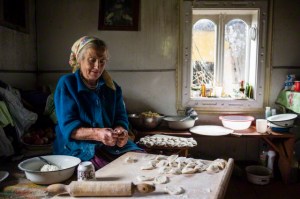
In this busy world, our equally busy lives can sometimes get in the way of passing along traditions to our family.  Publishing a novel, a memoir, a cookbook, or some other piece of writing is an oft-neglected but rewarding way to pass on our traditions–as well as our special holiday stories–to family members and to our friends!

pierogies pierogi varenyky

For example, take the cookbook.  There are infinite varieties and forms that the cookbook can take–no two cookbooks look or feel or read the same, even if they overlap in terms of recipes.  Why is that?  Well, for one, a cookbook is first and foremost an artifact of its author’s personality, history, culture, and interests.  The most interesting cookbooks, in my opinion, are not the ones produced by Williams Sonoma (as swoon-worthy as we all find their copper pots to be) or even Cooks Illustrated (although, let’s face it, we like the science).  Books produced by committee may have their strengths, but they don’t lock in the same quality of story.

Take these three cookbooks, for example, all of them put out by Outskirts Press:

We have Sleeping with the Seven Fishes: An Italian Christmas Cook Book (2013) by Mike KC; Firewood, Family & Friends Cookbook (2010) by Cheryl Paninder; and the Easy as Hell Dinner Party Cookbook (2013) by Bill Bjorkman with Michael Cilella of the Cox Roosevelt Inn.  And as you can tell from first glance, they’re all radically different books!  One is geared specifically towards the holidays, one towards the cozy kind of relationships we prize during the holidays, and one towards the home cook with ambitions at throwing a gourmet extravaganza.  (I’ll leave it up to you to decide which is which!)

What’s most important to note about these books, however, isn’t the covers themselves but what the covers and titles and typography–and all of the other graphical elements–combine to imply about the stories behind the individual books.  These are the things that are worth taking note of as a self-publishing author–and whether you’re thinking of publishing a cookbook or some other type of book, the same principle holds true–because these are the things that grab a reader’s attention in the bookstore and compel that person to carry your book all the way to the check-out clerk.  Authorship isn’t exactly a cult of personality, but it can sometimes be useful to think of a published book the same way you might think of a person going in for a high-stakes job interview: presentation matters, because it conveys a lot about that book’s/person’s backstory.

 And for better or worse, people connect with story.

 
spiral cut ham

The Christmas holidays is an especially important time to be thinking about helping to preserve your family’s history and legacy by self-publishing a book.  That’s because Christmas, perhaps more than any other holiday, is rich with oral storytelling traditions, baking traditions, and narrative traditions of all kinds.  You can both collect new material for your book and enjoy the rich conversations that will inevitably collect around the news that you’ve got a book in the works.  And sometimes, at Christmas as at other times of year when our relationships with the past are the hinge upon which our lives turn, we can all do with a little reminder:

It is my hope and wish that you enjoy a wonderful, relaxing Christmas–a Christmas thickly textured with the best kinds of traditions!


Merry Christmas!  

You are not alone. ♣︎

ElizabethABOUT ELIZABETH JAVOR: With over 18 years of experience in sales and management, Elizabeth Javor works as the Manager of Author Services for Outskirts Press. The Author Services Department is composed of knowledgeable publishing consultants, pre-production specialists, customer service reps and book marketing specialists; together, they all focus on educating authors on the self-publishing process to help them publish the book of their dreams. Whether you are a professional looking to take your career to the next level with platform-driven non-fiction or a novelist seeking fame, fortune, and/or personal fulfillment, Elizabeth Javor can put you on the right path.

From the Archives: “Conversations With A Self-Publishing Writer 12/20/13”

Welcome back to our new Tuesday segment, where we’ll be revisiting some of our most popular posts from the last few years.  What’s stayed the same?  And what’s changed?  We’ll be updating you on the facts, and taking a new (and hopefully refreshing) angle on a few timeless classics of Self Publishing Advisor.

∗∗∗∗∗

[ Originally posted: December 20th, 2013 ]

‘Tis the SEASON to……BELIEVE.

You may recall from a previous blog—or two—that I’m working on a children’s book series.  So…fairly often, my thoughts tune-in to those stories “dancing like sugar plums” in my head.  This season of Christmas and Hanukkah cheer is no different, especially as I realize that my great-grandchildren are “aging” rapidly.  So it is that I’ve gone to the bookstore shelves and selected two of my favorite storybooks—written by other authors—to share with them on Christmas Eve.

The theme or technique I most enjoy in storybooks is when writers personify animals, allowing them to offer a perspective that children easily grasp and “grownups” might have lost the capacity to imagine.  This Friday-before-Christmas, I offer you one more story—a legend really—a bit of generational tradition-telling reminiscent of Native American oral-histories—written by yours truly for all my children—author/clients included.

THAT NIGHT a handsome Nubian Ibex—Samuel—stood on the high point of a knoll watching the shepherds and their flocks in the rock-strewn meadow below.  His masked friend, Barney Owl, was restless and had just circled his favorite perching-tree for a third time.  With a twist of his large antlers and a twitch of his tail, Samuel signaled to Barney, What bothers you, friend?  With a flutter of wings and a high pitched shriek, Barney gave the warning: A crackling is in the air—the heavens are about to open.  Samuel lifted his head and sniffed the cold air.  He shook his huge antlers and pawed at the ground sending the message: There’s no hint of rain.

At that very moment a brilliant light removed the darkness from the night and rainbow spears of sound filled the air!  Voices of thundering melody fell upon their ears waking every living creature.  An announcement was being made—in every language of creation.  “The Babe is born!  Your King has come!  He sleeps in Bethlehem; the earth is now His home.”

The shepherds fell to knees and hands; and sheep scattered the rocks and sand.  Barney Owl flew to Samuel’s back, marching to-and-fro; pushing him to GO!

The unseen singing voices raised to higher pitch, then softened to mellow notes as Samuel blinked.  And so they went—Samuel with friend Barney Owl—followed by squirrel, and mouse and racing deer—wooly sheep, goats and gazelle—and bevies of beautiful birds flying at all altitudes.  They seemed to be dancing to the crescendo of voices—voices that vaulted from meadow to mountain tops.

Then they were there—in the Presence of the King—a wee-tiny Babe wiggling to see.  It was brave Michael Mouse who first touched His Hand.  The whole of the gathering pulled in a deep breath.  Then Hoopie, the bird, let go a melodious coo-oo—that started everyone singing in words they never knew.  The language of humans came from their throats—as the Babe laughed and giggled with each new note.

This One Night when Light came to earth—brought a gift to animals of every kind—voices to use and words to speak—in Praise of their King—their Creator and Friend.  Their harmony soared with the Angels of Heaven—then softened to humming as the Babe’s eyes closed.

One tear was then seen in the eye of the Owl.  He knew this gift would fade at sunrise.  “Samuel,” Owl whispered in the Ibexes’ ear.  “Let us all stay here—and sing while we can—so this miracle will be passed forward in the memory of man.”

by Royalene Doyle

ibex

Christmas is just days away, and there’s no better time to bring back a classic Royalene post than three days out from the big event.  There’s something touching, something profoundly moving, in the words of that final paragraph–even for those of us indie authors who may not celebrate the holiday as a religious event.  What better way to close out a year than with a little meditation, a little reflection on the importance of joy and memory to all of our lives?

One of my own personal favorites when it comes to Christmas stories is the short story “Finding Christmas: An Australian Christmas Story,” written by Annie Bryant.  It’s sweet, as all Christmas tales are, but it manages to steer clear of saccharine in part because it revolves around a little boy named Joey and his experiences on a farm Down Under–and the details Bryant weaves in help keep the story grounded in his world.

The story begins:

Where do you find Christmas in your family? Is it hidden within the pages of your favourite story book? Maybe it’s wrapped up in a gift made especially for someone you love? Or perhaps, it can be found amongst the delicious smells of a Christmas feast? Well, this is the story of a little boy who went on his own search for Christmas….and you’ll never guess what he found!

I’ll leave it up to you to read the rest, since I don’t want to spoil either Bryant’s rich voice or the story’s ending.  Suffice it to say, you won’t regret taking a couple of minutes to peruse the full version.  Bryant, who self-publishes her stories first and foremost as songs, draws upon the imagery of her home country, which may not seem like the perfect conduit for a traditional Christmas in the Northern Hemisphere–except that, by stripping away our stereotypes of snow and cozy fires and church spires in winter, she manages to get at the real heart of what the holiday is about: discovery, human compassion, and connection with others.

I hope your Christmas season is as richly textured as those we read about in stories, and has an equally happy ending. ♠

barn owl


KellyABOUT KELLY SCHUKNECHT: Kelly Schuknecht is the Executive Vice President of Outskirts Press. In addition to her contributions to the Outskirts Press blog at blog.outskirtspress.com, Kelly and a group of talented marketing experts offer book marketing services, support, and products to not only published Outskirts Press authors, but to all authors and professionals who are interested in marketing their books and/or careers. Learn more about Kelly on her blog, kellyschuknecht.com.

In Your Corner : The Gift of Self-Publishing

Today, if you’ll let me, I’d like to speak a little bit about the gift of self-publishing–about how it’s a gift not to have to wait for an agent to accept your book, how you no longer need to give away your rights, and how with self-publishing, you’re in control of your book, your creation.  I want to speak about how self-publishing is a gift that keeps on giving to–quite literally–everyone who is touched by the process, from authors to readers to–yes, I mean it when I add–those who publish through or work within the boundaries of traditional publishing.

christmas gift self publishing

A Gift to Authors

I’ve already mentioned the fact that, with self-publishing, you maintain full creative control over your masterpiece from start to finish.  You also retain your rights, your royalties, and total control over your book.  The profit goes where it should go (into your pocket), the look and feel is exactly what you dictate, and you get the satisfaction of knowing you have brought your original vision into the world exactly how you wanted to, full-fledged and ready to meet its ideal readers.

A Gift to Readers

And let’s not neglect to give those readers their moment in the sun!  With self-publishing exploding onto the market in recent years, there’s an ever-more-broad and ever-more-diverse range of books for readers to choose from, new discovery tools to use to find new books, and ever-evolving ways to read those books.  I’m talking about e-readers and ebooks, smartphones and tablets, social media platforms and websites like Wattpad and Fanfiction.net.  Many of these websites lack the “respectability” of a professional product only in the eyes of purists; by and large, people are coming around to the idea that what makes for good reading and good writing boils down to personal taste–and there’s absolutely no reason to denigrate another person’s preferred reading material.  I’m even talking about websites like LinkedIn and Etsy, which smart authors and smart readers are repurposing to serve as new conduits for self-published works.  More options doesn’t always equate to more reading, but many of the tech-savvy silicon generation are connecting the dots and teaching each other how to leap that gap.

A Gift to Traditional Publishing

By broadening the field to make room for more authors and more works, self-publishing has raised the bar for the entire publishing industry.  Traditional publishing houses have been forced to adapt, evolve, and rise to the challenge presented by a diversified, richly textured market.  They can no longer sit back and take it easy when it comes to dominating sales; instead, the traditional industry is turning away from relying on mass-marketed and mass-printed books and towards so-called “niche” offerings.  This is good news for everyone, because niches are petri dishes for innovation and further change.  Authors can experiment more, readers can expect to find more cutting-edge work on bookstore shelves, and so on.  Which leads beautifully to my next point:

A Gift to the Marginalized

When reinvention is the name of the game, even the stodgiest of stodgy institutions tends to open its doors–or at the very least, crack a window––to let in texts or conversations that might previously have been deemed unacceptable or controversial.  As Zetta Elliot writes for the School Library Journal, “Like racism in police forces across this nation, racism in publishing is cultural and systemic.”  And why is racism a problem, specifically, in the publishing industry?  Miral Sattar of Mediashift puts it another way:

Ever since the birth of my daughter last fall I’ve become more acute to the fact that we live in a whitewashed world, and I don’t want her to go through the same experiences that I did as a child. I became more conscious about buying books that tell stories with characters from varying backgrounds. It’s hard to come by these books from traditional publishers since less than 6 percent of books published in 2012 had diverse characters. You have to look really really really hard or resort to buying books that have talking animals.

Sattar, who grew up in a Pakistani-American household, writes of attending publishing conferences and often finding herself the only woman much less the only woman of color in a room.  Like Elliot, she has felt the sting of underrepresentation, and understands what it means to grow up almost entirely locked out of the day-dreams and fantasies that others so take for granted.  (Astronauts, anyone?  President of the United States?  Mage in a fantasy universe?)   And skin pigmentation is just one reason that traditional publishers have historically used as an excuse to not publish certain books (and it’s a terrible reason, let’s face it).  With a new film adaptation of Annie and the advent of the new Hamilton musical, it might seem like we are making progress on this front–but authors like Elliot and Sattar warn of the dangers of complacency, especially since there are so many other factors that publishers still use and abuse in the same fashion.

Here’s the good news, though: self-publishing has become a safe-haven for authors of color, neurodivergent authors, and authors keen to address civil rights issues.  And readers are hungry for these books, hungry enough to prompt traditional publishers to get in on the movement.  Change to any institution so dead-set in its habits will be hard-won and slow, but it is happening.  If you have felt that there was no room for your work in the market, cast your eyes upon self-publishing!

You’re not alone. ♣︎

ElizabethABOUT ELIZABETH JAVOR: With over 18 years of experience in sales and management, Elizabeth Javor works as the Manager of Author Services for Outskirts Press. The Author Services Department is composed of knowledgeable publishing consultants, pre-production specialists, customer service reps and book marketing specialists; together, they all focus on educating authors on the self-publishing process to help them publish the book of their dreams. Whether you are a professional looking to take your career to the next level with platform-driven non-fiction or a novelist seeking fame, fortune, and/or personal fulfillment, Elizabeth Javor can put you on the right path.