In Your Corner : The lonely road to self-publication

The road to self-publication is many things, and “frightening” can certainly register as one of those things, especially when you throw the word “lonely” into the mix.  Maybe it’s because we’re human beings and we’re hardwired to crave the affirmation and support that community brings, but there are few expressions in the English language that hold as much potential to inspire fear as “striking out on my own” or its close cousin, “in uncharted territory.”  And while it’s true that there are many other people out there self-publishing these days, there’s no exact way to translate that “head knowledge” into “heart knowledge” if it hasn’t been made real to us in personal experience––which is one of the reasons, I think, why digital communities hold so much potential for the self-publishing author.

frightened

Chances are that you or I will run across few others who will choose to self-publish over the course of our lifetimes, so where else are we going to turn for feedback or even for some basic know-how than the internet?  Blogs like Self Publishing Advisor and hybrid self-publishing companies like Outskirts Press provide important bridges to a successful and meaningful self-publishing experience for those of us who find ourselves stymied or at a loss, or even just lonely.

In this, my first post here, I’d first like to clear the air: it’s completely alright to be scared to self-publish.  Your feelings, whatever they happen to be, are one hundred percent valid.  My job, both as a contributor to this blog and––separately––as Manager of Author Services for Outskirts Press, is to be your ally, cheer squad, sounding board, and advocate all at the same moment.  Everyone faces discouragement at some point when bringing a big project through from its beginning stages to its final execution and delivery, and self-publishing is no different.  But the challenges you’ll face or are already facing must be addressed as the specific things that they are, peculiar to your own individual experience.

There is no such thing as a cookie-cutter self-publishing experience.  But there are such things as insecurity, and fear, and trepidation.  These feelings are real, no matter what the reality of the situation is and whether they are built upon a factually accurate perception of what’s going on with your book.  And I can’t change what you feel simply by telling you “things are otherwise than how you see them in this moment.”  I’m lucky enough to have the (hopefully unbiased and wholly objective) perspective of someone whose work hinges upon being able to honestly and earnestly remind authors they’re not alone, and to simply be there, time and time again, when the authors I work with need someone in their corner.

It doesn’t hurt that I work for a company I really believe in.  As an employee at Outskirts Press, I don’t have to fudge on the details to make a sales pitch: we really are there to help authors before, during, and after publication.  Authors really do get to keep their profits, they’re really not stuck waiting for agents to like their books enough to publish them, and they really, truly, are not alone … even when it comes to the marketing process, which can often feel like the most isolating part of the whole experience, as the post-publication phase requires self-publishing authors to take responsibility for the course of their own careers in ways that more traditional avenues don’t.

Outskirts Press aside, self-publishing is now more common than traditional publishing––even though, sometimes, it certainly doesn’t feel like it.  (And there are a whole host of reasons why perception doesn’t line up with reality on this one, many of which can be traced back to the traditional publishing industry and its stranglehold on media outlets and therefore the larger public conversation.)  Self-publishing authors have a collective voice that resonates much more clearly now than it used to, maybe, but we still face an uphill battle when it comes to dealing with those fears and insecurities I mentioned earlier.  I’m here for you, though, and every week here on SPA I will keep on affirming your decision to self-publish and backing up those affirmations with a veritable onslaught of cold hard inspiring and encouraging facts, data, anecdotes, and proofs that I’ve amassed over a lifetime of experience in the self-publishing industry.  I hope you’ll check in every Thursday, and use the comments section, below, to ask questions and respond with your own insights.

You’re not alone. ♣︎

ElizabethABOUT ELIZABETH JAVOR: With over 18 years of experience in sales and management, Elizabeth Javor works as the Manager of Author Services for Outskirts Press. The Author Services Department is composed of knowledgeable publishing consultants, pre-production specialists, customer service reps and book marketing specialists; together, they all focus on educating authors on the self-publishing process to help them publish the book of their dreams. Whether you are a professional looking to take your career to the next level with platform-driven non-fiction or a novelist seeking fame, fortune, and/or personal fulfillment, Elizabeth Javor can put you on the right path.

From the Archives: “Using Listmania to Promote your Self-Published Book”

Welcome back to our new Tuesday segment, where we’ll be revisiting some of our most popular posts from the last few years.  What’s stayed the same?  And what’s changed?  We’ll be updating you on the facts, and taking a new (and hopefully refreshing) angle on a few timeless classics of Self Publishing Advisor.

∗∗∗∗∗

[ Originally posted: August 22nd, 2008 ]

If your self published book is available on Amazon.com, there are a lot of ways to promote it.  Since Amazon sales should account for a large percentage of your overall book sales, this site is a good place to concentrate a lot of your efforts.

I’m going to tell you about creating a “listmania” list on Amazon. Have you ever noticed when you browse for something on Amazon, there are lists that are related to that subject that are mentioning other books and/or products?

By strategically listing products on your lists, (including YOURS of course), you can start to generate more traffic to your book listing.

Here’s how YOU can create just such a list:

Sign up for an Amazon Author Connect account if you don’t have one yet. Or sign-in to your current account.

Click on your personal “store” on the top tabs. Then select “Your Profile” from the sub-menu.

You will see lots of things you can personalize, including your bio and your online photograph.

But scroll down and you will see a section called “Listmania!” And this is where you create a listmania list.

Creating a Listmania List is a good way to increase exposure for your book.

Obviously, you want to ensure that your book is on your list.

But the real trick to a successful Listmania list depends upon the OTHER books you put on your list, the ones written by other people.

There are two ways to go about it.

1 – Adding books to your list that are applicable to your subject. The idea behind this concept is easy — if someone reads your list because they were browsing a similar book, they’ll be more apt to buy YOUR book because they’re interested in the subject.

2 – On the other hand, you can add very popular books to your list, since more people may have a chance of seeing it, even if fewer of them will be interested in your book.

I recommend creating multiple lists and trying different tactics to see which is more successful. Amazon lets you track the number of times your list was viewed. Use these numbers to create better lists in the future.

If you have more specific questions about creating a listmania list, the Amazon FAQ will help you.

Amazon Listmania

So here’s the thing: Listmania doesn’t really exist anymore!  Back in 2013, Amazon ceased offering support and guidance on using the Listmania interface, and it was entirely dismantled and rendered unusable over the months following.  (Adrienne Dupree over at Leave The Corporate World Behind even wrote a lovely little lament to mark its final passing.)  And this fact means that, on the one hand, we have to throw the baby out with the bathwater when it comes to our original post … but on the other hand, this presents the perfect opportunity to present you with new and fresh ways of utilizing Amazon for your self-promoting and self-marketing ends (as a self-publishing author).

First, we need to break down exactly what Listmania offered the average author.  Essentially, this featured compiled lists–and this makes sense, given its name–but it was not to be confused with Amazon’s wish lists, gift lists, and registries, or even Goodreads’ Listopia lists (which still exist).  These lists were designed to focus a reader’s attention on products that were similar or in some way related to products that a customer had already been viewing. By strategically listing popular products on your lists, including your own book, you were–in theory–able to generate more traffic to your book listing when people viewed your Listmania lists.  This brings us full circle to that one key word I’ve been lobbing around a lot lately: findability.  An Amazon Listmania list was supposed to render you and your book more findable, but to many people it remained just another one of the giant retailer’s many algorithmic mysteries.

And yet … findability remains important.  There simply are better ways of going about it!

Here are my top 3 recommendations for filling that gaping hole in your heart once occupied by Amazon Listmania:

  1. Start a Pinterest page.  Not just any Pinterest page, mind.  (And I’ve written about Pinterest recently in depth, so I won’t make like a broken record and repeat myself too much here.)  Whip up a Pinterest page (or “pin” to a “board”) where you collect together other books along with other somehow related objects that your ideal reader might want to purchase.  For example, someone who reads Hugh Howey’s Wool might want to pick up some tickets to tour the Titan Missile Museum outside of Tucson, or perhaps some Wool-inspired art prints.
  2. Create a public Amazon Wishlist.  This is easy to do, and it serves much the same function as a Listmania list–only, you’ll have to do a touch more legwork to advertise the list’s existence, since these wishlists aren’t necessarily designed to be searchable.  For more information, hop on over to the Amazon how-to page for wishlists, and peruse at your leisure.  Each wishlist is shareable across any platform you might wish, and you can snag a web link to copy and paste into emails or Twitter, Tumblr, Facebook, Instagram, or any other kind of social media feed you can imagine.
  3. Take a stab at an entirely new social media platform.  The reason why Listmania disappeared is that nobody was using it, or at least, too few people were using it to make it worth Amazon’s efficiently allocated time to advertise and maintain.  It had a function, but it wasn’t one that really connected with Amazon’s user base.  To make yourself findable these days, you must needs throw yourself into the post-millennial age, and go where your readers are.  I’m not necessarily an advocate of just trying anything–you should always do a little cross-demographic market research to see if your readers actually are the sort who use Snapchat or Instagram or Tumblr or Twitter–but as a good friend told me last week, “Just doing what you’ve always done and expecting things to improve is a special kind of lunacy. Sometimes you have to innovate.”  So–innovate, with calm but cautious optimism. ♠
KellyABOUT KELLY SCHUKNECHT: Kelly Schuknecht is the Executive Vice President of Outskirts Press. In addition to her contributions to the Outskirts Press blog at blog.outskirtspress.com, Kelly and a group of talented marketing experts offer book marketing services, support, and products to not only published Outskirts Press authors, but to all authors and professionals who are interested in marketing their books and/or careers. Learn more about Kelly on her blog, kellyschuknecht.com.

The Current State of E-Readers | An Author’s Guide (Part I)

We’ve crossed the Rubicon, dear readers.  There’s no going back, when it comes to the print vs. digital divide, at least if we’re speaking on the commercial level.  There are quite substantial numbers of readers who are introduced to books via their smartphones and computer screens and then move into the musty world of mahogany bookshelves and neighborhood used-book stores … but these numbers represent not so much a desertion of one form for another, but rather the natural progression of addicts who will simply, and always, want more–more good words strung together, more stories in their hands, more eyes to peer through and lives to live in the way that only literature makes possible.

I’m here to speak about e-books and e-readers this week and in the weeks to come.  We’ve just finished a tour-de-force marathon of social media platforms spanning several months, so it’s time for a bit of a change of pace … but without sacrificing our desire to examine trends and patterns and possibilities with the fine eye of a book connoisseur.

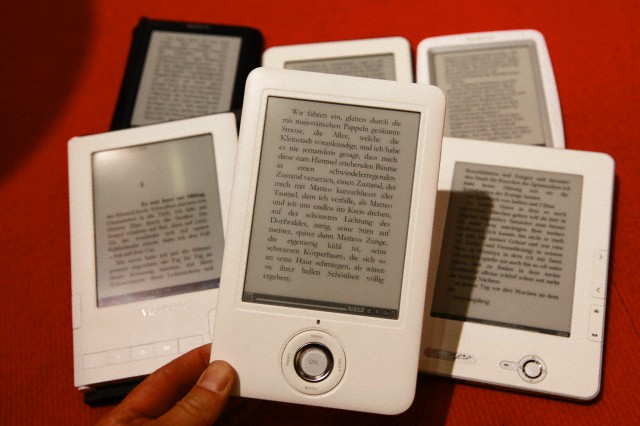
ereaders

The data is in, and readers have spoken.  As this infographic (courtesy of Publishing Technology and Nielson BookScan) shows, e-book sales dropped slightly from an all-time high in early 2014, but they’re not going anywhere fast.  (I should also note that the initial speculations for this year seem to indicate continued stability.)  The digital market has matured, and readers are simply spreading their pocket change around, and being more selective as they do so.  Essentially, it’s not just “still” useful to publish your books in digital form, but it’s actually more useful than ever–readers now know how to find what they like, as the information infrastructure–including indexing search engines like Google and Bing, and social media platforms with a literary bent like Goodreads–has matured alongside the market itself.

ebooks vs print

But how does an author, especially an indie, hybrid, or self-published author, go about figuring out how to navigate both the debate and the process?  Well, first, you have to know a little bit about e-books and e-readers themselves.

And so we dive off into the deep end of a new series.  This time I’m going to walk you through the process by examining each big player in the e-reading market (past and present and future, at least so far as I can see it), from Kindles to Nooks to iPads to chips implanted into your brain.  Okay, okay, I’m kidding about that last one … for now.  In all seriousness, I hope that this series will be of use to you as you take next steps into the oft-hazy world of digital publication!

Thank you for reading!  If you have any questions, comments, suggestions, or contributions, please use the comment field below or drop us a line at selfpublishingadvice@gmail.com.  And remember to check back each Wednesday for your weekly dose of marketing musings from one indie, hybrid, and self-published author to another. ♠

KellyABOUT KELLY SCHUKNECHT: Kelly Schuknecht is the Executive Vice President of Outskirts Press. In addition to her contributions to the Outskirts Press blog at blog.outskirtspress.com, Kelly and a group of talented marketing experts offer book marketing services, support, and products to not only published Outskirts Press authors, but to all authors and professionals who are interested in marketing their books and/or careers. Learn more about Kelly on her blog, kellyschuknecht.com.

An Indie Author’s Social Media Primer | Flickr

Remember when I wrote a primer for indie and self-published authors looking to make their debuts on Instagram?  Well, I’m back this week with a new primer geared towards those of a visual bent.  But instead of looking at one of the Big Five (Facebook, Twitter, Tumblr, Pinterest, and Instagram), I’m going to take a quick gander at one of the less talked-about tools in the indie author’s toolbox: Flickr!

flickr

There are, of course, several key differences between Instagram and Flickr.  If you’ll remember, the top 5 “best practices” I recommended for Instagram users were to (1) “Go for the gut;” (2) “Think regular, but not too regular;” (3) “You’re in the inspiration business, so share yours;” (4) “Use the hashtags and @username functions;” and last but not least, (5) “Don’t posture.”  While intuition, inspiration, reliability, authenticity, and metadata remain important when you make the leap to Flickr, the platform is so different that their manifestations must also be.  In fact, I’d suggest we rethink what makes a Flickr image “social” altogether.

Debunking the Great Flickr Myth: “It’s just a place to store photos.”

While it certainly is a place to store photos, Flickr isn’t just a high school locker we pack full to overflowing.  Other visually-oriented social media websites like Instagram or Pinterest “capture” their users by making it easy to interact with photos and share items within the platform itself, and while you can certainly share links to Instagram and Pinterest content, the format of said sharing creates a hit-or-miss prospect when it comes to non-users viewing your material.  That is, someone may choose to follow a link … or they may not.  You may also end up with duplicates of all of your pictures if you have Instagram set to upload photos directly to dedicated Facebook albums.  Not ideal, right?

A lot of people think Flickr is just another cloud storage option, like Dropbox, only complicated by the fact that you can also comment on and interact with the photos on Flickr itself.  Is it trying to be a social media platform, or cloud storage, or what?  When you approach Flickr with the expectation that it will look and feel and function like either Pinterest or Google’s outmoded Picasa Web Album system, you’re bound to get bogged down in a messy and unintuitive tangle of groups and discussion boards and so on.

It’s so much better just to skip all of that chaos and focus on what Flickr does really well, and what it can specifically do for you, an indie or self-published author.

Top 5 Best Practices:

1. Embed, embed, embed.  One of Flickr’s absolute best features is its embedability.  What do I mean by this?  I mean you can copy either a hyperlink for an individual photograph, or a hyperlink for an entire slideshow, and integrate this code into your blog or website to display continually there.  Why is this useful?  First off, you can create either one-off blog posts which feature beautiful high-resolution images (a Flickr specialty)––as The Daily Beast’s Nicole Villeneuve has done in her “Moveable Feast” article––or you can create a slideshow as a permanent feature of your website, as the University of Michigan’s School of Public Health demonstrates here.  While other social media platforms may enable you to interact with your friends’ photographs within the contained environment of their networks, Flickr fills in the gaps by breaking your images out into any web forum imaginable.

2. Ramp up the quality.  Instagram’s strength is that it relies upon timeliness, and a certain “in the moment” quality that brings immediacy and spontaneity to the table.  Flickr, on the other hand, allows its users to upload truly high-quality photographs with minimal compression and data loss (comparatively, at least).  Other social media platforms capitalize on users’ general satisfaction in simply sharing an image, no matter what quality that image is, quickly and easily.  But Facebook compresses all images by as much as 80 percent, which results in a great deal of fuzz and blur.  Flickr displays images at full resolution, making for giant and gorgeous incarnations of your photos in well-curated, smoothly synced pages.  It isn’t just a place where “hip” amateurs upload happy snaps; it’s a digital home for serious photographers.  Take advantage of both Flickr’s 1 terabyte of free storage and its cachet!

3. Think like a designer.  Perhaps this one’s a little … unconventional, but Elite Truong recently wrote a lovely article for Poynter that provides a lot of great pointers on how authors can learn a little from their more visually-inclined fellow artists––and I’m feeling inspired.  Think of Flickr as a medium, just as you do the white page of your word processor (or the physical paper of your notebook!).  How can you build narratives with images that reflect or complement the narrative you’ve already shaped into a book?  You don’t have to become a watercolorist or a professional photographer overnight––but, but––you can definitely steal a hand from their playbook when it comes to connecting with new audiences or better connecting with existing ones.

4. Cross-link your description fields.  As with any other website, Flickr is rich in possibility when it comes to metadata.  You can tag and even geotag your images, add titles and descriptions, and direct viewers to click on hyperlinks that lead back to your personal website.  You can create thematic sets, albums, and slideshows; each new collection that you curate generates its own wave of metadata, which renders you more findable.  There’s so much metadata on Flickr, in fact, that sometimes it can be a struggle to decide just where to begin.  The description field?  Definitely.  The title?  Oh, yes.  You can even tweak some of the camera settings (like aperture and focal length) that are displayed alongside your images.

5. Think “Portfolio” rather than “Scrapbook.”  This is not to say that scrapbooks aren’t awesome.  They are.  They simply aren’t a one-size-fits-all tool for every situation.  Sometimes, you need a beautifully-built, professionally-presented, visually stunning home for your images.  And whether you, as an author, are posting behind-the-scenes pictures of your writing space, or perhaps high-resolution illustrations of certain pages of your upcoming children’s book, or even art prints of certain favorite quotes from your works, there’s no better way to get new readers to do a double take than with a Flickr slideshow.  A handy rule of thumb might be: If a picture is something you simply want to share, then Instagram or Facebook may be well and good; if it’s something you want to sell, then Flickr will showcase your product to maximum visual impact.

Most Overlooked Feature:

Let’s face it, Flickr as a whole is an overlooked feature.  Sure, it may be making a bit of a comeback since its makeover at the hands of former Yahoo! executive Marissa Mayer, but it’s still not the first social media platform that authors think of when they’re looking to branch out into something new.  And as I mentioned before, there are some ways in which it converses easily with other platforms––there are groups, discussion boards, metadata fields, and profile pages to fill out––and ways in which it stands out.

When push comes to shove, Flickr is not a substitute for any of the Big Five, simply because its many users don’t quite amount to the critical mass of millions or even billions that the upper crust of social media websites has locked in.  Its specialized tools are, however, an asset and a credit to a much-needed niche if you happen to be looking for something a little … glossier … than Instagram.

I hope you’ll join me in building this Social Media Primer!  If you have any questions, comments, suggestions, or contributions, please use the comment field below or drop us a line at selfpublishingadvice@gmail.com.  And remember to check back each Wednesday for your weekly dose of social media know-how. ♠

KellyABOUT KELLY SCHUKNECHT: Kelly Schuknecht is the Executive Vice President of Outskirts Press. In addition to her contributions to the Outskirts Press blog at blog.outskirtspress.com, Kelly and a group of talented marketing experts offer book marketing services, support, and products to not only published Outskirts Press authors, but to all authors and professionals who are interested in marketing their books and/or careers. Learn more about Kelly on her blog, kellyschuknecht.com.

An Indie Author’s Social Media Primer |LinkedIn

If you’re not already a member of LinkedIn, perhaps you’re familiar with the following scenario: you wake up on a lovely Monday morning, high-tail it in to work with only minutes to spare before your shift at the factory plant or in the cubicle farm or out at the library begins; you pull up Microsoft Outlook to check your email and set up your day’s schedule, only to find … thirteen emails from friends who want to “add” you to their “professional network on LinkedIn”?  What in blazes does that mean?  Is it a scam or something?

linkedin email

No, it’s not a scam–I promise!  The emails are just an incredibly weird side effect and the only negative feature I know of to setting up a LinkedIn account.  (When new LinkedIn users have the chance to add friends to their network, the website mines their email contacts to generate networking possibilities, and doesn’t visually make it clear which of the folks you click on to connect with already have accounts and which ones do not).  So while the emails may clutter up your inbox, they’re not meant to be malicious–either on the part of LinkedIn, or the friends who send them.

linkedin

All this begs the question: What exactly is LinkedIn, and how can a self-published or self-publishing author best make use of the platform?  This social networking website touts itself as “The World’s Largest Professional Network,” is run by CEO Jeff Weiner (of Yahoo! fame) and a board chaired by founder Reid Hoffman (of PayPal and SocialNet.com fame) with the purported goal of connecting users interested in more career-driven networking than is made possible by, say, Facebook and Instagram.  It seems to be doing a fairly good job of achieving this end, as its approximately 364-million-strong user base can attest.  Any self-published author looking for a new weapon in his or her repertoire should definitely keep LinkedIn at the top of the shortlist!

Debunking the Great LinkedIn Myth: “It’s all work, and no play.”

LinkedIn certainly attracts a different user base from, say, Snapchat–but that doesn’t mean its users aren’t making full use of the platform’s more “social” aspects for recreation and enjoyment.  And as this article on the Daily Dot points out, industry professionals are being led into blogging and socializing by the platform–book lovers and self-publishing author’s don’t have to fight or struggle to carve out a niche … it already exists.  Users log in to LinkedIn, on average, less frequently than the average Facebook user (according to Mashable in 2013, the average Facebooker checked the app 15 times a day).  But engagement on LinkedIn is, contrary to some folks expectations, extraordinarily high.  This may be because LinkedIn is a destination website, a place to go rather than a place to go through to get somewhere else or to burn some free time.  Users see LinkedIn as a tool, and they’re more likely to actually read the blog posts (for example) that they see on there than ones they might stumble across elsewhere.

But what is a self-published author to do?  Setting up a LinkedIn profile will benefit anyone, but what are some ways that an author can make special use of the platform?

Top 5 Best Practices:

1. Groups, groups groups.  Other social media platforms have group discussion boards–last week, for example, I specifically pointed out Etsy’s group features–but not all groups are created equal.  What may seem perfunctory or underdeveloped or a programming afterthought elsewhere has been brought close to perfection on LinkedIn.  You can tell that group memberships and discussions were a priority of the website’s developers, as the interface is clean and smooth and easy to interact with.  You can find or create groups, manage groups, join groups, and participate in groups you’re interested in without worrying about the content being dumped straight into indexing search engines for everyone running a Google search to see–LinkedIn’s algorithm is much more picky in what it offloads than, say, Goodreads’.  You can customize the privacy settings of the groups you manage, rendering some public and free to join, and others private or invitation only.  And all that I said above about user engagement being high on LinkedIn?  There’s no better place to see this engagement lived out in the round than in LinkedIn’s many active groups.  So: join a few!  Start a few discussions!

2. Keep tabs on the “Topics” page.  A simple search shows a beautifully put-together page in the Topics section of LinkedIn dedicated to none other than the subject of self-publishing.  These Topics pages serves as a kind of constantly-updated newsletter of everything posted to the website–articles, blog posts, groups discussions, presentations, companies, and industry trends–that relates.  You can find what characteristics or “skills” LinkedIn users engaged in self-publishing share (“Creative Writing” and “Editing” the top two–no surprise there!), or you can access a slideshow on “How to Write a Book in 10 Days” … just to provide two examples among many.  Don’t underestimate LinkedIn’s Topics!

3. Make it your first stop on the research train.  Are you looking to self-publish and you haven’t decided what company best represents your interests?  Many indie, hybrid, and self-publishing companies keep active LinkedIn pages, and you can take full advantage of this by connecting with the company itself or any of its employees who also have LinkedIn profiles.  Outskirts Press is a great example of a hybrid publishing company with a rich LinkedIn presence–many of its authors, author representatives, and executives are present there.  You can do your due diligence with ease, just by perusing a company’s profile and exploring the information presented there.  Want to know if you can trust a company to provide the best quality print on demand books for you?  Want to find agents, editors, or other collaborators?  Check LinkedIn.

4. Boost your credibility.  As I’ve mentioned already, LinkedIn attracts users who are highly engaged but who are also looking specifically to build business-oriented networks.  Accounts are reviewed by LinkedIn staff to verify that users are not using fake or ridiculous names, which is just one layer of the self-reinforcing professionalism that makes LinkedIn special.  If you want to create a brand around your name as a self-published author, there’s literally no better place to get started.  Creating a polished LinkedIn profile that takes full advantage of the metadata and the form available (enter as much information as possible to make yourself as findable as possible!) will allow you to feel confident that a publisher or agent who Googles your name comes up with something that confirms your reliability, credibility, and professionalism.  There’s not much more you can do to help yourself stand out from the pack!

5. Use the Pulse.  Just over a year ago, LinkedIn opened up its “Pulse” blogging platform to all users–a privilege that had previously been reserved for about 500 key “Influencers.”  Perhaps because it began with such constraints, Pulse retains some of its aura as a voice for the truly expert, and it’s a beautiful illustration of how a blog can indeed be seamlessly wound up with a social network.  Pulse offers all or most of the features you might find on a blog platform like WordPress, with great customizability and the option to include hyperlinked text.  Posts on Pulse automatically display as both a part of your user profile and your connections’ home page feeds.  They show up in search engine results, too.  The best part about Pulse is that you don’t have to use it as a blog if you don’t want to–you can use it as a secondary publishing platform.  Because Pulse allows for beautiful long-form posts, you could feasibly offer whole chapters or even an entire book (in chapters) for your connections to read!

Most Overlooked Feature:

The “Projects” section of your LinkedIn profile is an excellent–and under-utilized!–feature that you should definitely take a second look at.  Why?  Because it’s not just a spot to list ongoing works in progress … it’s a fully linkable and functional tool.  You can connect a project to an Amazon book listing, an author webpage, and to its actual editorial or publishing team!  I mean, how neat.

linkedin projects

Best of all, the projects section is a dedicated space, which means that the information you input there won’t get shuffled off of your profile page or lost in the aether.  Unless you choose to remove it, a book you list as a project becomes a permanent feature of both your page and the page of any other collaborators who confirm their connection to it!

I hope you’ll join me in building this Social Media Primer!  If you have any questions, comments, suggestions, or contributions, please use the comment field below or drop us a line at selfpublishingadvice@gmail.com.  And remember to check back each Wednesday for your weekly dose of social media know-how. ♠

KellyABOUT KELLY SCHUKNECHT: Kelly Schuknecht is the Executive Vice President of Outskirts Press. In addition to her contributions to the Outskirts Press blog at blog.outskirtspress.com, Kelly and a group of talented marketing experts offer book marketing services, support, and products to not only published Outskirts Press authors, but to all authors and professionals who are interested in marketing their books and/or careers. Learn more about Kelly on her blog, kellyschuknecht.com.