Self-Publishing News: 5.28.2019

May -wooden carved name of spring month. Calendar on business office table, workplace at yellow background. Spring time

And now for the news!

Some highlights from this month in the world of self-publishing!

This week, Publishers Weekly contributor Matia Burnett profiles indie success story, Gurpreet Kaur Sidhu, who wrote her first book in the seventh grade (heavily inspired by Harry Potter, like many of us!) and who always found in writing a way of both retreating from and reframing her relationship to the off-the-page world. Writes Burnett, “As Sidhu came of age and pursued a career in business management—serving as assistant manager at a Fortune 500 company—she continued to find a haven from life’s stresses and disillusionments through writing creatively.” Burnett allows us a closer look at Sidhu’s latest book, a self-published title simply titled Storm. Her journey was, as with many indie and self-published authors, far from straightforward:

Sidhu set out to publish her novel traditionally. “In the very beginning, I was dead set on getting an agent and having my work published through a big publishing house,” she says. But she was pragmatic in her approach, weighing the pros and cons of traditional publishing and self-publishing. The latter won out.

“After getting rejected over 50 times, I decided that if I wanted the world to read my work, I wasn’t going to wait around or be dead by the time they discovered Storm,” Sidhu says. She also recognized that she’d need some expert advice in order to effectively navigate the world of self-publishing and hired an editor and a publicist—a move that she strongly recommends for first-time authors.

In an age of plentiful gadgets and gizmos, finding useful expertise to navigate all of the options is indeed a move that we here at Self Publishing Advisor could get behind, as well. You can find out more about Sidhu’s book by following the link to the Publishers Weekly article, above.

(Hint: Step 6 is to self-publish.) Tarun Varshney writes a straightforward what-to (a necessary prequel to any how-to) in this week’s Entrepreneur that provides, if only as a final flourish, an endorsement of self-publishing for those authors struggling to find publishing homes for their manuscripts. Writes Varshney, there are definitely some structural and sentence-level work that can be done to render your work more appealing to traditional publishing houses, but there are also some manuscripts that are better suited—whether in content or form—for an indie approach.

Rejection doesn’t mean: your book is bad. There could be other reasons:

a. publisher doesn’t know how to sell your book and fears to invest money
b. publisher’s book publishing target for the year has been completed
c. a literary agent is fully occupied
d. a literary agent is not active at that time

So, do not think about the flaws in your work. Your work is in the best possible shape if you have followed steps properly. Go for print-on-demand model. So you can invest along the way based on the response from readers.

Varshney also reminds readers of Entrepreneur that ultimately, the polish and shine isn’t what brings a book financial success—it’s connecting with readers. And connecting with readers, as Varshney puts it, is “all about awareness about you and your book.” Boosting awareness requires as much time and energy as writing, but there are ways forward through the workload—as we have written about on this very website!


spa-news

As a self-publishing author, you may find it helpful to stay up-to-date on the trends and news related to the self-publishing industry.This will help you make informed decisions before, during and after the self-publishing process, which will lead to a greater self-publishing experience. To help you stay current on self-publishing topics, simply visit our blog each month to find out the hottest news. If you have other big news to share, please comment below.

icon logo self publishing advisor

Self-Publishing News: 5.21.2019

May -wooden carved name of spring month. Calendar on business office table, workplace at yellow background. Spring time

And now for the news!

Some highlights from this month in the world of self-publishing!

This week, Forbes came through for self-publishing authors in a big way, with this article by ForbesWomen contributor MeiMei Fox bringing a bit of sunshine into our lives. Fox’s premise is fairly self-explanatory, given the article’s title, but her content is well worth a deep read or two. “These days,” Fox opens the article, “aspiring authors don’t have to rely on the miracle of finding a literary agent and securing a deal with a traditional publishing house. Self-publishing makes it easy to get your words out there – the tricky part is ensuring that your work gets read. That requires self-promotion.” She touches base with three bestselling self-published authors who happen to be women, all three of whom “have built highly successful careers […] while also being sure to create entire brands around their literary creations to generate income and further secure their fan base.” Those authors are Crystal Swain-Bates, an accomplished children’s book author dedicated to closing the diversity gap in publishing, Kristen Ashley, successful author to numerous romance novels that embrace body positivity and a richer perception of womanhood than is common in the genre, and Penny Reid, who first got into self-publishing because traditional publishers rejected her romance work as having “too many thoughts and used too many big words,” which says a lot about what publishers think women want and are capable of digesting. Each of the authors Fox covers provides some strategic advice to authors (of any gender) looking not only to get into self-publishing but to market their books successfully. Fox’s article closes with a list of eight suggestions on how to do just that.

While many self-publishing authors who are not male might bristle at this article title, this article provided by Prime Press to the Good Men Project opens with a statement of fact: “According to a study published by ResearchGate, men cover at least 72.62% of all the published books recorded since 2010. In the digital publishing world, nothing much will surprise you as well.” Publishing has been growing more diverse of late, of course, and self-publishing provides a democratizing influence over the process as it makes room for diverse authors, women authors, and voices from the margins—but it’s true, men are still in the lead when it comes to overall quantity of voices. As Prime Press puts it, “a whopping 31% of e-book sales on Amazon’s Kindle Store are self-published books, with at least 51% of it written by male authors. This is not surprising since literature spent centuries being a male-dominated arena. There are more male authors receiving recognition, financial success, and hold positions in relevant associations.” But that percentage—51%—is a lot closer to parity than in traditional publishing! The article goes on to profile a number of male self-publishing authors, including Mitch Miller, Robert Gallent, Paul Halme, and Brad Gilmore, each of whom has had great success in self-publishing. Well worth a look!


spa-news

As a self-publishing author, you may find it helpful to stay up-to-date on the trends and news related to the self-publishing industry.This will help you make informed decisions before, during and after the self-publishing process, which will lead to a greater self-publishing experience. To help you stay current on self-publishing topics, simply visit our blog each month to find out the hottest news. If you have other big news to share, please comment below.

icon logo self publishing advisor

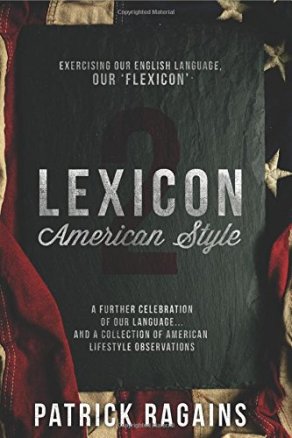
Self-Published Book Review: “Lexicon: American Style 2”

Book reviews are a great way for self-publishing authors to gain exposure. After all, how can someone buy your book if he or she doesn’t know it exists? Paired with other elements of your book promotion strategy, requesting reviews is a great way to get people talking about what you’ve written.
When we read good reviews, we definitely like to share them. It gives the author a few (permanent) moments of fame and allows us to let the community know about a great book. Here’s this week’s book review:

lexicon 2 american style patrick ragains

2016 reader views reviewers choice award

Lexicon: American Style 2

by Patrick Ragains

ISBN: 9781478701170


Synopsis*:

Entertaining as well as educational, Patrick Ragains’ Lexicon: American Style 2 is a comprehensive eighty-one chapters. Each one discusses a unique element of American English and American lifestyles and his introduction pays tribute to America’s greatest lexicographer Noah Webster, Jr. Through Ragains sharp, often humorous, breakdown of words, names, and phrases, he encourages others to be able to communicate more effectively. By separating each segment of American English for thorough examination, Ragains hopes to help readers better understand and articulate their common language.

 * courtesy of Amazon.com

Featured Review

It has been proven that one of the most effective ways to learn and retain information is to do so while being entertained. Thus, the goal of this book…to improve the reader’s grasp and usage of the English language while evoking smiles, smirks, even raised and furrowed brows. It is quite simply a fun, informative read.

Let’s call this written exercise a ‘Flexicon’…a flexing of our American English lexicon. Lexicon: American Style II is a further examination and celebration of our Americanized version of the Kings English. The first half of the book is a breakdown of how we commonly use our words, phrases and names to communicate in these United States.

In addition, Lexicon II is also a collection of humorous American lifestyle observations. The second half of the book labeled, ‘Observations From the Carpool Lane’ features a wide-ranging group of essays regarding the common, sometimes mystifying, experiences most of us share as modern day American citizens.


Want to learn better English vocabulary but find textbooks are boring? Then read Lexicon: American Style 2 because I promise you will not be disappointed! Lexicon: American Style 2 is a fascinating, intriguing, and hilarious reference guide that will have you learning as well as laughing at the same time! Patrick Ragains is a magnificent author because he has found a gap in the market and filled it with a brilliant book. What is the hole in the market? The gap in the market is a fun, hilarious learning guide that actually works!

Lexicon: American Style 2 is book two in Patrick Ragains reference series. I have not read the first book (yet!), so I would already write that you can read this book without reading the first. It is an incredible, fluid, informative guide that will inspire readers to learn and laugh at the same time. Lexicon: American Style 2 is a study of words in the English language. However, this is no ordinary reference guide because Patrick Ragains manages to explore these themes and words entertainingly by including them in brilliant, hilarious stories and sentences! Ragains explains in his description of his book that most people learn and retain information better, while they are having fun. This has clearly struck a chord with Ragains, and that is why he has written an entertaining, fun, learning story for all those that love to laugh while learning!

I really do admire Patrick Ragains for his flawless ability to write an exceptional learning book while incorporating many hilarious themes. This is incredibly hard to do because the author’s funny nature has to shine off the page and it is always dreadful when you read a book to find that the author is in fact not funny at all. However with Lexicon: American Style 2, you are guaranteed a funny guide because the author’s sense of humor and his hilarious sentences shine off the page and will make you laugh like crazy!

As I am obsessed with the English language and bettering my knowledge, I have no choice but to award Lexicon: American Style 2 a dazzling Five Stars! Not only is its story hilarious, but it is also unique and very informative. The reader will be able to retain a host of vocabulary from this book, and some of it is very advanced. This is incredibly useful for those who work in professional fields as well as students. It truly is the perfect fun, reference guide so please book lovers, read this phenomenal book!

Thank you so much for reading book lovers! I appreciate it so much and love discussing wonderful books with all of you so please, comment below and let me know your thoughts on Lexicon: American Style 2; do you see yourself reading this book? Let me know all of those brilliant thoughts of yours below! Thank you so much again for reading!  

– reviewed by Aimee Ann for RedHeadedBookLover.com

Other Reviews

“Lexicon American Style 2,” by Patrick Ragains is the second book in a series that covers the American way of communicating. A great deal can be learned about American culture in this text. This information doesn’t just cover America as a whole, but also the different subcategories that might be found in different states or regions.  The author literally covers topics from A to Z. I hate to use the word “literally,” because it is so over used, but the topics actually do range from A to Z and beyond! I found myself gaining an understanding of what words or phrases mean in parts of the country that are unfamiliar to me. Acronyms, idioms, metaphors, oxymorons, etc., they can all be found between these pages. There is also some great advice for creating an online dating account. While I am not in need of one of these accounts, at this time anyway, I found the advice presented to be quite informative.

Foreigners who plan on traveling to the United States will find “Lexicon American Style 2,” to be a great resource to use while traveling around. Perhaps a better understanding of our American terminology could help prevent an international crisis from occurring or escalating!  I am also considering giving this book out as Christmas gifts for my friends who have everything. They will really enjoy this one! I have an English as a Second Language instructor on my Christmas list. Perhaps, she will consider using Lexicon American Style 2, as a textbook for her class. It would also make a great bathroom reader for families who have low fiber diets and have to take time to sit around and read, whether they want to or not.

In all seriousness, I do believe that reading “Lexicon American Style 2,” by Patrick Ragains will improve our use of American English. I enjoyed gaining a lot of new information and also having a chance to check my own usage. The area that I found particularly helpful was in the discussion of redundancies. Hopefully, my writing skills will improve a bit. Having a chance to gain knowledge while laughing out loud is wonderful! Readers will find this information extremely interesting and highly entertaining.

– reviewed by Paige Lovitt on Reader Views

A word nerd’s dream that entertains as it educates. Ideal as a coffee table conversation starter or back bathroom reader. 81 independent, spirited chapters regarding the wonder of our English language and our unique American lifestyle. Dedicated to America’s premiere lexicographer and visionary patriot Noah Webster, Jr.

A continuation of Lexicon: American Style, author Ragains leaves no part of our American English unturned as he romps from Acronyms to Zombies (A to Z). Creative, clever, funny, at times bawdy and controversial, Lexicon: American Style 2 will challenge your perspective and expand your vocabulary arsenal.

– reviewed on BookReviewBuzz.com


tuesday book review

Thanks for reading!  Keep up with the latest in the world of indie and self-published books by watching this space!

Self Publishing Advisor

selfpubicon1

Self-Publishing News: 5.14.2019

May -wooden carved name of spring month. Calendar on business office table, workplace at yellow background. Spring time

And now for the news!

Some highlights from this month in the world of self-publishing!

In this recent article for the Irish Examiner, contributor Margaret Jennings converses with Frank Kelly, a printer who provides services to self-publishing authors. Kelly, who often partners with older authors looking to publish for the first time after retirement, pushes back against the lingering threads of stigma still tied to the process, especially when it comes to older writers. Writes Jennings,

You don’t have to “have a creative bone in your body”, he says, to witness the joy of seeing your name in print. Memoirs, biographies, family histories, local historical society compilations, are also all very popular projects and demand the focussed [sic] application of collating information in a chronological order.

All this is very good for the ageing process, he says.“It’s great for our whole well-being and longevity: it exercises the brain; it gives you a purpose in life, and a sense of achievement. We should always have something to look forward to, that’s my own personal philosophy — it’s the simple things that keep you going in life.”

For positive brain-ageing, writing focuses the mind, but also encourages the self-discipline to sit down and write a few pages every evening, he argues: “Instead of sitting down and watching a box-set, like a couch potato, in the evening, do a chapter a day, or write four pages a day; make a commitment to do something.”

In addition to the benefits associated with writing, Jennings (and Kelly) also note that publishing, separately from writing, has its own advantages: publishing provides a legacy, while promoting a new book with a launch party gives the author a specific time and place to boost their connectedness within their own community. Sounds pretty good to us!

In this week’s issue of the University of Melbourne’s Pursuit, Dr. Beth Driscoll digs into the development of what she calls microgenres, or “ultra-specific tags and categories” which are affixed to various books as they are published in order to render them more easily findable by readers. According to Dr. Driscoll, while “Genre has never been a very stable concept […] that hasn’t stopped it shaping the book industry and driving readers’ choices,” and the rise of microgenres isn’t all bad. Writes Dr. Driscoll, “they have effects that are social, textual, and industrial. Genres prompt social gatherings like cosplay at conventions. Genres influence what happens on the pages of books”—and “In an industry where all publishing is to some extent digital, microgenres, categories and tags all feed algorithms and make titles discoverable.” This is good news for readers. But what about self-publishing authors? As someone who has gone through the process herself, Dr. Driscoll knows a bit. “It’s often authors, these days, who choose how to categorise their own books,” she writes; in order to explore just what the experience looks and feels like, Dr. Driscoll and her fellow researchers co-wrote a comic erotic thriller about self-publishing and then … self-published it. Under a pseudonym, of course. They picked their codes and microgenres and then released into the world. The project is ongoing, writes Dr. Driscoll, but some results are already in:

As author-publishers, we have found that ultra-specific tags and categories can feel limiting, like putting creative work into ever-tinier boxes. But they can also feel generative and exciting, as they suggest new pathways for a book to travel along.

What our self-publishing adventure highlights is that microgenres help books and readers find one another in a global, digital age. Microgenres feed the algorithms that can push books towards niche bestseller charts or reading communities, and then springboard them into wider readerships.

Despite, or perhaps because of, the challenging instability and adaptability of ‘genre’, it is an ever-more powerful tool to help books circulate.

As you write and publish your own works, it’s worth keeping the power (and pitfalls) of microgenres in mind.


spa-news

As a self-publishing author, you may find it helpful to stay up-to-date on the trends and news related to the self-publishing industry.This will help you make informed decisions before, during and after the self-publishing process, which will lead to a greater self-publishing experience. To help you stay current on self-publishing topics, simply visit our blog each month to find out the hottest news. If you have other big news to share, please comment below.

icon logo self publishing advisor

In Your Corner: Summer is Coming

Look, we know summer is just around the corner, and we also know you’ve all been mainlining the latest season of *ahem* a certain popular fantasy show, so here’s our thirty-second shout-out:

brace-yourselves-summer-is-coming-quick-meme-com-4945958

Okay, now that that‘s done, we can move on from wisecracks to talking about preparing for summer book sales and marketing plans.

As a self-published author, you’re no doubt already well-aware that book sales are seasonal. According to this excellent report from Springer (which is dedicated to taking a numbers approach to publishing), the winter holidays remain the season with the highest book sales, followed by summer. The report writers state that:

In early January, the lowest median sales over the years is close to 15,000 copies a week, a number higher than the highest median sales of any other time of the year except late December. For fiction, a similar but less pronounced peak is observed during the summer months with median sales surpassing 10,000, likely due to book purchases in preparation for the summer vacation. In nonfiction, there is no such summer peak. During these periods of elevated sales a book needs to sell more copies to make it to the New York Times bestseller list than during other months. We also note that in general, fiction books sell more copies than nonfiction, a gap which is largest during summer and decreases considerably during the holiday season, where the sales of both fiction and nonfiction are significantly elevated.

The writers also point out that not only are “the first year sales are the most important for a hardcover,” but also that “most fiction books have their peaks strictly in the first 2–6 weeks [… while] for nonfiction, even though peaks at weeks 2–5 are common, the peak can happen any time during the first 15 weeks.” While on a surface level this might lead one to believe that it would be smart to time a book’s publication with an upcoming sales peak, the reverse may actually be the case. As the Springer report’s authors point out, one has to sell a lot more books during a sales peak than at any other time of year to hit bestseller lists—or see a boost in the Amazon sales rankings. This is because there is more competition during sales peaks (winter holidays for nonfiction, and both summer and winter holidays for fiction). Your sales ranking, for those who may not know, shows how high you rate compared to other authors and books in the same category—the lower the number, the more popular you or your book is. (There are separate rankings for authors and books.)

A book can see successful sales at any time of year, of course, and a refined marketing plan is probably more of a determining factor when it comes to sale than time of year of publication, but it’s well worth keeping certain questions in mind: Can you make effective use of your sales ranking (on Amazon and elsewhere)? That may just be a deciding factor in what you choose to do next in your summer marketing plan.

Next time, I’m going to break those sales rankings down for you, and demonstrate how you can use your Amazon sales ranking to better market and sell your self-published book!

You are not alone. ♣︎

Do you have ideas to share? Please don’t hesitate to drop us a line in the comments section, and I’ll make sure to feature your thoughts and respond to them in my next post!

Elizabeth

ABOUT ELIZABETH JAVOR: With over 20 years of experience in sales and management, Elizabeth Javor works as the Director of Sales and Marketing for Outskirts Press. The Sales and Marketing departments are composed of knowledgeable publishing consultants, customer service reps and book marketing specialists; together, they all focus on educating authors on the self-publishing process to help them publish the book of their dreams. Whether you are a professional looking to take your career to the next level with platform-driven non-fiction or a novelist seeking fame, fortune, and/or personal fulfillment, Elizabeth Javor can put you on the right path.