In Your Corner : Resolutions for 2016 That Every Aspiring Author Should Make (pt 3)

Two weeks ago, I kicked off a new series for Self Publishing Advisor geared toward addressing a single and seemingly simple question:

What’s your goal for 2016?

Many of you probably have a few goals already lined up, consciously or unconsciously.  I know I do.  But you might also be of a similar strain to mine in that many of your goals, historically, have been doomed by a perfect storm of ambition, short-sightedness, and limitations of time, energy, and other resources.  When it comes to your books, however, failure is not an option.  Your book needs to be written, and your book needs to be read!  So how do we make this happen?  Over the last two weeks, I’ve covered the first seven steps to turning your New Year’s literary resolutions into reality:

  1. Set goals.
  2. Facilitate goals.
  3. Make writing a priority, and
  4. Read, read, read.
  5. Master at least the basics of social media.
  6. Research deeply, and
  7. Connect with other authors.

Today, I’d like to look at the next four steps:

  1. Embrace a good critique.
  2. Learn to love rewrites.
  3. Try something new, and
  4. Stop comparing your achievements with others.

collaboration

Let’s take a closer look at these points!

What does it mean to “embrace” a good critique?  We all want to improve our craft but find it difficult to be objective about our work without fixating on the flaws, large and small, that we as authors are bound to spot.  You may be one of the lucky ones who doesn’t obsess over these cracks in the pavement, but if you are, I can’t begin to recommend joining a critique group highly enough.  (Check out my comments last week about using social media to find your fellow writers.)  Not only is constructive criticism a writer’s best friend, but it’s the bedrock foundation of the rewrite!

And what’s this I’m hearing about rewrites?  On the scale of editing to revising to rewriting, editing involves a great deal of “tweaking” but rewriting involves the most intensive kind of substantial alterations.  Many people who self-identify as “pantsers”––authors who write the first draft quickly and without a lot of research or reference to an outline and so on––are the most in need of rewrites … but that doesn’t mean that a careful planner and strategic author can’t benefit from the freedom that only radical changes can offer!  No matter what kind of author you are, you must make rewrites, edits, and revisions a normal part of your writing process.  It helps to set your work aside for a few weeks before tackling revisions, but trust me … it’s worth doing.

rewrites

So I guess it’s time to try something new.  Are you feeling uninspired by the space opera novel you’re working on?  How about that Western or that crime novella?  If you find yourself facing the dreaded Writer’s Block and your love for writing endangered by boredom or frustration with how things are turning out with your current project, it’s time to mix things up and experiment with writing in other genres.  Doing so may reignite your passion for that romance novel or that book of poems … and stretching your creative wings is never a waste of time!

And lastly (for this week), it’s time to stop comparing your achievements with the achievements of others.  Every writer wants to be a published author, but each author’s journey is unique.  You must concentrate on your own goals, and your own personal definition of “success,” and remember what Teddy Roosevelt once said: “Comparison is the thief of joy.”

theodore roosevelt comparison is the thief of joy

Only once we lay aside our insecurities and our fear of failure can we truly thrive as authors, rediscovering day after day what it is that drives us to do what we do––write!

Always remember: you are not alone. ♣︎

ElizabethABOUT ELIZABETH JAVOR: With over 18 years of experience in sales and management, Elizabeth Javor works as the Manager of Author Services for Outskirts Press. The Author Services Department is composed of knowledgeable publishing consultants, pre-production specialists, customer service reps and book marketing specialists; together, they all focus on educating authors on the self-publishing process to help them publish the book of their dreams. Whether you are a professional looking to take your career to the next level with platform-driven non-fiction or a novelist seeking fame, fortune, and/or personal fulfillment, Elizabeth Javor can put you on the right path.

Marketing BASICS : Ascertaining Your Ideal Reader

Welcome back to Wednesdays on Self Publishing Advisor, where we tackle the intricacies of marketing each and every week in the hopes of making your life as an indie, hybrid, or self-publishing author just a little bit easier.  This is actually the third post in a series examining marketing B.A.S.I.C.S.––yes, that’s an acronym! but more on that later––with a particular emphasis on marketing for new or first-time authors.  It all began two weeks ago with this introductory post, and continued last week with an in-depth look at the “B” in B.A.S.I.C.S.: “Building an Online Presence.”  This week, we’re ready for a new letter and a new sub-topic.  What does the letter “A” stand for, then?  Simple: “Ascertaining Your Ideal Reader.”  This is one of the most important and foundational of steps to crafting a successful marketing strategy.

What is this “Ideal Reader” business??

Your ideal reader is not simply the person who buys your book; he or she is the person who falls in love with the world your book creates and actively looks for ways to participate in that world, whether by following you (the author) on social media or sharing your book with others.  They’re not invested solely out of obligation––which is to say, they’re most likely not members of your immediate family or friend circle.  As wonderful as your existing network of relationships is, and as useful as your friends and family can be––as cheerleaders and amplifiers in your marketing campaign––they first fell in love with you and not your book, and that is always going to be a complicated tightrope to walk.

Your ideal reader, on the other hand, is a fan; but more than this, he or she is engaged with your book outside of the text as defined by letters inked on a page or pixels shadowing a screen.  Your ideal reader will slide your book into a back pocket while walking the dog or slip it into the diaper bag when taking the kids to story hour at the library; she’ll talk about it over the headset while duking it out with her friends on the Xbox or he’ll pass his dog-eared battered copy on to a friend or someone will drop it reluctantly by a Little Free Library––not giving it up because they didn’t have a use for it anymore, but rather giving it up because they’re fairly certain someone else might need it very much indeed.  These people are your mediators, your access, and your ambassadors to the world.

What does an ideal reader have to do with marketing, anyway?

As with any product, your book needs someone to buy it.  You can try to move copies by being absurdly wealthy and getting your superPAC to buy and then distribute thousands of volumes to local libraries in the vague hope that people will discover it while browsing and magically translate that discovery into a sudden impulse to buy more copies and distribute them to friends and family––but I’d be lying if I told you this is a time-honored or even remotely effective strategy.  Time and again, authors who meet their own personal benchmarks for “success” (and the word means something different to everyone) point to these sudden spikes or “strategic bulk” purchases as unethical, while grassroots support from middle or low-income readers who actually love your book enough to buy it despite limited resources tends to lead to long-term sustainable sales.  It goes without saying that people who have a personal, political, or financial stake in promoting your book are useful … but they can also unintentionally sabotage your success if they make your book about themselves, or about anything other than untrammeled storytelling.  And in order to find your grassroots supporters, you have to know where they live (so to speak), and the language they use (literally but also figuratively) to share what they love.

How do I track down my ideal reader, then?

Your ideal reader, if you’re an author of nonfiction, can be identified according to what problem he or she is trying to solve––whether that problem is the reader’s dependency on sugar for energy (a dietary self-help book, perhaps) or the upcoming dinner he’s throwing for the in-laws (a Mediterranean cookbook, perhaps) or her desire to fill a gap in her understanding (of particle physics, or a history of bipartisan politics in America, or the internal hierarchy of multinational corporations).  If you’re an author of fiction, your ideal reader is defined as someone who, when looking for new material to read, is drawn to the type of content or genre or characterization or form which you like to write––in other words, your ideal reader is someone whose tastes in consumption corresponds directly with your tastes in production.  There are many other people who might read your book and enjoy it or benefit from it, but they are baptized into the fold rather than the founders of it.

ideal readers self-publishing

Now, your book many bend genre traditions.  It may be so utterly innovative that the usual metrics of comparison––genre, plotting, etc––break down entirely.  And that’s entirely wonderful, even if it makes identifying your ideal reader just a touch more difficult.  If this is the case for you, instead of trying to jam your book into the confines of a neat description, ask yourself: What do I like to read?  What works of art and music and film move me?  Where do like to go to discover new reading material?  These make for the simplest and most effective path to finding your readers.


Once you find your ideal reader, what next?  Well, you make it worth their while to buy your book.  And that’s where next week’s blog post comes in.  Make sure to check back here next Wednesday!  There’s so much more to come.


Thank you for reading!  If you have any questions, comments, suggestions, or contributions, please use the comment field below or drop us a line at selfpublishingadvice@gmail.com.  And remember to check back each Wednesday for your weekly dose of marketing musings from one indie, hybrid, and self-published author to another. ♠

KellyABOUT KELLY SCHUKNECHT: Kelly Schuknecht is the Executive Vice President of Outskirts Press. In addition to her contributions to the Outskirts Press blog at blog.outskirtspress.com, Kelly and a group of talented marketing experts offer book marketing services, support, and products to not only published Outskirts Press authors, but to all authors and professionals who are interested in marketing their books and/or careers. Learn more about Kelly on her blog, kellyschuknecht.com.

From the Archives: “Top 5 Considerations for Effectively Pricing Your Self-Published Book”

Welcome back to our Tuesday segment, where we’ll be revisiting some of our most popular posts from the last few years.  What’s stayed the same?  And what’s changed?  We’ll be updating you on the facts, and taking a new (and hopefully refreshing) angle on a few timeless classics of Self Publishing Advisor.

∗∗∗∗∗

[ Originally posted: February 3rd, 2011 ]

“Is my book too expensive?”

“Am I selling myself short?”

Traditionally-published authors usually don’t have any control over the price of their book. As a self-published author, though, how can you make sure you have priced your book appropriately? There is no hard and fast rule, unfortunately. However, here are a few things to consider while coming up with a pricing strategy for self-publishing a book:

  1. How much royalty will you earn from every book sale? If you’re planning on writing full-time, you want to make sure you’re making a sustainable amount per book ($1.50 – $2.75 is reasonable).
  2. What is your target market? Is your intended reader a teenager or an affluent attorney? You want to keep your audience in mind so that you don’t price yourself out of the market. You won’t be very successful if your ideal reader can’t afford to buy your book.
  3. Where do you want to sell your book? Trade discounts often determine where a book is sold. Most online retailers are fine with a short trade discount (less than 40%). However, big box stores, such as Borders, Barnes&Noble, etc. require at least a 50% discount (in addition to a solid marketing plan and full return-ability) to consider carrying your book. If you can’t imagine self-publishing your book without it being stocked on the shelves of your nearest B&N, you should consider going with 50% (though it will cut down on your royalties).
  4. How has your competition priced their books? Research books similar to yours. Make sure the page count is similar, it was published recently, and hopefully self-published. You don’t want to price your book too high above (or too low beneath) these books.
  5. Have you asked an expert? Now is not the time to guess. This is your livelihood. Your best bet is to employ the services of someone who is already familiar with the self-publishing industry, like a Publishing Consultant. These people know the book business, and they can help you with questions like these.

DISCUSSION: How did you decide on a price for your book?

by Elise L. Connors

I absolutely love Elise’s post on ebook pricing, especially since most of the points hold steady in the face of a rapidly changing market.  There’s very little that’s the same in 2016 as it used to be in 2012 when it comes to the world of self-publishing in digital formats––except for this!  And while some figures may require updating––and Borders has gone altogether out of business––I cannot think of better advice than what Elise gave us in these five simple points.

online shopping

One recent event has, of course, dramatically altered the parameters by which you should set your ebook’s price: Hachette won its suit against Amazon.  What does this mean?  Why should indie authors care about a battle between an online retailer and a traditional publishing company?  I can think of several reasons.

One: Amazon is far and away the largest online retailer of ebooks, outpacing Barnes & Noble by leaps and bounds and leaving Apple’s iBook store and the Google Play store to contend for the last percentages of the market with their book subscription services and bundles.

And two: Hachette’s win means that Amazon no longer gets to keep ebook prices artificially low––justifiably low, in Amazon’s opinion––as the prices of ebooks put out by the Big Five traditional publishing houses cannot be reduced by the third party online seller.  As a consequence, ebook prices have been soaring––as the Big Five set higher prices to rake in more profit, many self-publishing authors are following suit because of the luxury principle; they don’t want their books to be assumed inferior in quality just because they’re less expensive.

A lot of factors go into your price-setting decision.  Are you looking mostly for exposure?  If you are, then selling your book at a dramatically reduced price (say, a $0.99 deal) may well get your book in front of more pairs of eyes than if you price it higher (say, around $9.99).  A low price might also help lure in readers who are itching to try a new book but only have a little free cash to risk.  But a low price cuts into your royalties, and for Amazon especially the highest royalties (around 70%) come when you price your book around the $2.99 sweet spot.  You may lose a few risk-conscious readers, but you only need one reader to purchase your book to every two who turn away in order to break even in your royalties when you boost your price to $2.99.

Your book’s genre and length can also play a role.  Remember Elise’s fourth point, above?  If you’ve written a book that falls neatly to a particular genre (or perhaps, relates un-neatly to several) then you should take a long look at how similar novels of a similar length and style are being priced.  All books are wonderful things and no genre is inherently more “literary” than another, but a pragmatic author must recognize that human perception is flawed and nowhere near as egalitarian as we’d like.  This is to say, romances, Westerns, science fiction, and fantasy tend to be priced more cheaply than, say, a travelogue or political exposé.  You don’t want to price your book outside of your ideal reader’s expected range.

In a lot of ways, it’s easy to lose sight of your vision for your book when the price dominates conversation.  Here’s my advice for pricing an ebook in 2016: Do your research, consult an expert, and make the call.  Don’t spend too much time deliberating, or you’re missing out on the most important thing that you as an author can be doing: writing another book!  ♠

KellyABOUT KELLY SCHUKNECHT: Kelly Schuknecht is the Executive Vice President of Outskirts Press. In addition to her contributions to the Outskirts Press blog at blog.outskirtspress.com, Kelly and a group of talented marketing experts offer book marketing services, support, and products to not only published Outskirts Press authors, but to all authors and professionals who are interested in marketing their books and/or careers. Learn more about Kelly on her blog, kellyschuknecht.com.

Self-Publishing News: 1.18.2016

This week in the world of self-publishing:

“They say everyone has at least one good book in them,” writes Toby Walne for ThisIsMoney.co.uk in his January 16th article, “and thanks to the internet there is no longer an excuse not to get it published.”  He is speaking, of course, about the ebook revolution, which has long been entangled with both the digital revolution, the millennial generation, and self-publishing.  Walne interviews author and expert Damien Fahy, “who runs money saving website MoneytotheMasses and is author of an ebook entitled 30 Day Money Plan” to get an idea for what indie authors should be looking to do in 2016.  Says Fahy, “just getting published is not enough – you must also think how you are going to get people to buy your book.”  Fahy and Walne walk readers through a series of recommendations––how to go about giving away free copies of your book for review, how to offer your book in multiple formats through a variety of online platforms, and when not to close the door on a publishing company (to name a few)––before closing with a commentary on crowdfunding possibilities.  For more information, see the original article here.

Jennifer McCartney of Publisher’s Weekly pulls no punches in this January 15th article, which lays the groundwork for what many industry experts believe we can expect of the coming year.  McCartney begins her preview with a brief retrospective, touching upon the self-publishing “successes” and general market trends of 2015 with particular mention given over to Andy Weir’s The Martian, Jamie McGuire’s Beautiful Redemption, Paul Kingsnorth’s The Wake, and the popularization of crowdfunding for self-publishing authors.  But McCartney doesn’t dwell on the past for long; most of her piece is dedicated to emerging possibilities.  She names McGuire as just one of a long list of authors who are either switching from traditional publishing to self-publishing or who are supplementing their traditionally-published books with side projects which are published through indie platforms––and in McCartney’s eyes, this is just the tip of the iceberg.  What else does she expect to see in 2016?  Preorders and “microtargeted subgenres” will continue to be important in driving sales for self-publishing authors; short stories and box subscription deals are growing in popularity as readers switch over to reading on their mobile devices; and the ever-present struggle to balance print and digital sales in a market where brick-and-mortar stores and public libraries remain mostly hostile to keeping self-published books on the shelf will remain at the forefront of indie challenges.  For the rest of McCartney’s article, click here.

In our second of two articles released in this week’s Publisher’s Weekly, Jane Friedman presents PW‘s readers with a series of models for indie publication in order to address the fundamental problem of newcomers to the market: “it’s hard to know whom to hire, how much to invest, and what type of marketing and publicity will make a difference.”  Her five “strategic” models are:

  1. “Reach Out Directly to an Established Audience”
  2. “Always Be Producing”
  3. “Produce Across Multiple Mediums or Channels”
  4. “Know the Right People or Start Meeting Authors with Pull,” and to create the
  5. “Right Concept at the Right Time for a Specific Market”

Friedman, who “teaches digital media and publishing at the University of Virginia and is the former publisher of Writer’s Digest,” is something of an expert on the matter––and luckily for everyone, she doesn’t just list bullet points but rather spends a fair bit of time deconstructing each point for the interested reader.  For all of that wonderfully useful information, don’t forget to follow the link!


spa-news

As a self-publishing author, you may find it helpful to stay up-to-date on the trends and news related to the self-publishing industry.This will help you make informed decisions before, during and after the self-publishing process, which will lead to a greater self-publishing experience. To help you stay current on self-publishing topics, simply visit our blog every Monday to find out the hottest news. If you have other big news to share, please comment below.

KellyABOUT KELLY SCHUKNECHT: Kelly Schuknecht is the Executive Vice President of Outskirts Press. In addition to her contributions to the Outskirts Press blog at blog.outskirtspress.com, Kelly and a group of talented marketing experts offer book marketing services, support, and products to not only published Outskirts Press authors, but to all authors and professionals who are interested in marketing their books and/or careers. Learn more about Kelly on her blog, kellyschuknecht.com.

Saturday Book Review: “I Love Grass”

Book reviews are a great way for self-publishing authors to gain exposure. After all, how can someone buy your book if he or she doesn’t know it exists? Paired with other elements of your book promotion strategy, requesting reviews is a great way to get people talking about what you’ve written.

When we read good reviews, we definitely like to share them. It gives the author a few (permanent) moments of fame and allows us to let the community know about a great book. Here’s this week’s book review, courtesy of the Midwest Book Review:

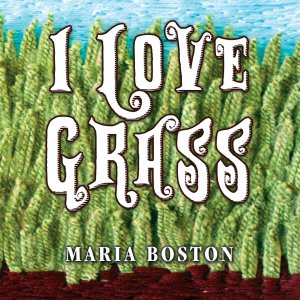
I Love Grass by Maria Boston

I Love Grass

by Maria Boston

Publisher: Outskirts Press

ISBN: 9781478725688

Synopsis:

Do you love grass?

There are so many things to love about grass. We can love the way it looks, the way it smells – even the way it changes its green from season to season! Read on to add to your experiences with grass.

Maria Boston has always written children’s stories. She pulls on her rich experiences from her own and her daughters’ childhoods. “I Love Grass” is her first published book. She lives in Virginia with her two daughters and their dog.

Critique:

I Love Grass is a textured, craft-filled, illustrated essay on grass for children age 6 and up. Carefully photographed works of textured needlecraft and carpet samples present colored illustrations of a gentle narrative description of grass, progressing through the seasons, exploring the rich colors, different flowers and plants that grow in grass, and living inhabitants of the grass such as bugs, insects, or even humans. I Love Grass is a multimedia celebration of grass, presented in fastidious portraits of creative craft and yarn needlework, incorporating joyous observations of each vision of all the different shades and kinds of grass.

reviewed on the Easy Reader Shelf at MBR ]

Here’s what some other reviewers are saying:

I just received this book and had to review it right away. I absolutely loved it. I review a lot of children books, so I think I know when I see a good one, and I have to say, this is a good one.

First, I have to say I really love the art work in this book. All the pictures are out of yarn. The houses, bench, grass, sky, ground, flowers, etc. It really adds to the creativity of I Love Grass. Each time the “grass” changes, you get to see from the different colors of yarn. I believe this will really hold a child’s attention when they see it. There is also a little grass design on all the pages with words. It is just a beautiful book.

Second, the story. It is just as cute as the book. You can really tell how passionately the author feels about grass and how much she really wants one to love it just the same. Her words are simple, so a younger reader can read it to themselves. One can also learn from it as the author explains the different changes and seasons and shows it along with the pictures in the book. The book isn’t very long so young children’s attention won’t be lost.

I really enjoyed reading this book. I think everyone should get I Love Grass for their kids. They will love it and want to read it over and over again.

– Amazon Reviewer Allergykidmom

I don’t have young children but saw this book on a friend’s coffee table and after reading it, I wanted a copy for myself. What caught my attention was the amazing imagery. It is absolutely beautiful!!! The author created all the images out of yarn. How creative! I couldn’t put it down.

So I read it to my cousin, who is more than 40 years younger than me (see how I didn’t give my age away?) She loved it! She asked me to read it a few more times that night so I’m thinking children really like this children’s book as much as I do.

If you are a fan of table books and or have young children, I don’t think you can go wrong with this book. As an adult, it inspired me to get my creativity on! (I hide it when my young cousins visit though. Don’t want icky, sticky children’s fingerprints all over it!)

– Amazon Reviewer Miss G

There are so many things to love about grass. We can love the way it looks, the way it smells – even the way it changes its green from season to season! Read on to add to your experiences with grass.  I Love Grass is a refreshing return to life’s simple pleasures. The book brings out the nature-lover in every child by calling their attention to this, and other, wonders of Earth.

I Love Grass returns young readers to a simpler time of wonderment over the marvels of the natural world. The newly released book by children’s author Maria Boston is published by Outskirts Press.

The first in a new series of children’s books, I Love Grass offers an alternative focus to today’s juvenile reader. The book draws their attention from the mind-numbing stimuli of electronics and computer-generated graphics back to organic things of beauty. It’s the story of one child’s excitement over something so simply ethereal – an oft-unnoticed and unappreciated patch of grass. Through this overlooked foliage, the young girl learns to appreciate the beauty of Earth’s abundance, and revels in the quiet presence of nature.

Parents will appreciate the lessons in I Love Grass, a book that inspires quiet introspection and helps lay the foundation necessary to build future generations of environmentally conscious adults.

– Blogger Apple Blossom of The Blended Blog

Book Trailer:


saturday self-published book review

Thanks for reading!  Keep up with the latest in the world of indie and self-published books by watching this space every Saturday!

Self Publishing Advisor

selfpubicon1