From the Archives: A Reader Views Book Awards Retrospective

Welcome back to our Tuesday segment, where we’ll be revisiting some of our most popular posts from the last few years.  What’s stayed the same?  And what’s changed?  We’ll be updating you on the facts, and taking a new (and hopefully refreshing) angle on a few timeless classics of Self Publishing Advisor.

∗∗∗∗∗

[ Originally posted: March 16th, 2009 ]

Last week Reader Views announced the official winners of their 2008 Literary Awards and just in time for National Reading Month.

The Reader Views annual literary awards were established to honor writers whoself-published or had their books published by a subsidy publisher, small press, university press, or independent book publisher geared for the North American reading audience.

If you’re looking for something good to read this month, why not try one of these award winning books: Click here to view Reader Views winners.

AND

[ Originally posted: November 14th, 2012 ]

As a self-publishing author, it is important to constantly market your book and improve your credibility. One of the best ways to accomplish both of those tasks is entering your book into contests. Winning awards shows potential readers that your book is worthwhile and that you are a serious author, and it often results in great publicity as well. One of my favorite book award contests for self publishing authors is the Reader Views Literary Book Award. Here are all of the details.

What is the Reader Views Literary Book Award?

The annual literary awards were established to honor writers who self-publishedor who had their books published by a subsidy publisher, small press, university press, or independent book publisher.  POD books are accepted.

Who is eligible?

Reader Views Literary Awards are open to all authors  regardless of residency; however, the books must be published in the English language and targeted for the North American market. Works published by major book publishers are not eligible.  Books must  have a 2012 copyright date.  Submission for more than one category or more than one title is acceptable.  Books that have racist themes will be not be accepted.

Three finalists will be chosen in each fiction and non-fiction category. First and second place winners will be awarded in each category. Third place will receive an honorable mention. One finalist, the top score in each area, will be chosen in each regional and global category. Each winner will receive a certificate.

Finalists will be announced in Reader Views’ weekly e-mail newsletter on March 4, 2013 and the winners on March 25, 2013.

For more information, visit http://readerviews.com/Awards.html.

I’d love to know, have you entered your book into the Reader Views Literary Awards before or are you planning to do so this year? Tell us about it in the comments below.

Well, it’s that time of year: Reader Views have released their list of finalists for their 2015/16 Literary Book Awards, with winners and placements to be announced in upcoming weeks.

readerviews

We’ve been following Reader Views and the awards in question for some time, as you’ll see in the first post above, which ran on Self-Publishing Advisor back in 2009.  We’ve kept up with them, too, and in 2012 I took a moment to break down what, exactly, the awards are all about.  (Hint: You.)  And the good news is, in the interim Reader Views has kept up its good work, delivering year after year of high-quality indie finalists for their subscribers to discover and enjoy.  Books appearing in the final rounds of competition see, as a matter of course, spikes in popularity and sales–and this is exactly the kind of exposure that you should pursue as a part of your holistic marketing strategy!

It’s for Authors

Luckily, submitting your book for consideration remains as easy in 2016 as it was in 2009 and 2012, and all the information you might need to do so can be found at the Reader Views website, under the “Literary Awards” tab.  Submission dates change from year to year, of course, so it’s always worth double-checking what this year’s requirements are (particularly if you’re a time-traveler and stumble across this in some other year than 2016)!

It’s for Readers, Too

That’s right!  As I’ve already mentioned, the exposure finalists and winners alike receive throughout the submission and consideration process reaps all sorts of rewards for authors–but it has a wonderful side-effect of benefiting readers of indie and self-published works in equal share.  How?  First and foremost, the competition generates lists.  Several lists!  Lists of nominees, lists of finalists, and lists of winners and their placements.  Each list serves as a siren call to readers looking for something new to add to their to-read bookshelves and to their Amazon shopping carts. By raising awareness about such a carefully curated list of high-quality indie works, Reader Views broadens the discerning reader’s horizons.

It’s Worth a Look

A lot of book awards are the province of institutionalized hierarchies enforced and policed by the traditional publishing industry–but Reader Views is something else altogether.  In the spirit of discovering the undiscovered, recognizing the unrecognized, and treasuring the undervalued, the Reader Views Literary Book Awards filter through the noise of a crowded self-publishing market to find the very best of the best–and then they present their findings to the public, free of charge and free of any agenda other than celebrating the good work done by good authors.  That’s an agenda I can get behind–and I think you can, too!

Thanks for reading.  If you have any other ideas, I’d love to hear them.  Drop me a line in the comments section below and I’ll respond as quickly as I can.  ♠

KellyABOUT KELLY SCHUKNECHT: Kelly Schuknecht is the Executive Vice President of Outskirts Press. In addition to her contributions to the Outskirts Press blog at blog.outskirtspress.com, Kelly and a group of talented marketing experts offer book marketing services, support, and products to not only published Outskirts Press authors, but to all authors and professionals who are interested in marketing their books and/or careers. Learn more about Kelly on her blog, kellyschuknecht.com.

Self-Publishing News: 4.4.2016

This week in the world of self-publishing:

In the world of self-publishing, we know just how important precedents can be–and we have a lot to learn about and deal with when it comes to the legal ramifications of going solo.  And well–another precedent has just been set, as reported in this April 1st article for the National Law Review by Jeffrey Neuburger, a Partner in the New York office as well as co-head of the Technology, Media & Communications Group and a member of the Privacy & Data Security Group.  In short, Neuburger is an expert.  He knows what he’s about, and he takes the conversation about self-publishing’s future seriously.

Writes Neuburger, “We live in a world that has rapidly redefined and blurred the roles of the ‘creator’ of content, as compared to the roles of the ‘publisher’ and ‘distributor’ of such content.”  And what exactly is the nature of this precedent?  In short: “This past month, an Ohio district court ruled that several online self-publishing services were not liable for right of publicity or privacy claims for distributing an erotic (and so-called “less than tasteful”) book whose cover contained an unauthorized copy of the plaintiffs’ engagement photo because such services are not publishers.”  The plaintiff brought suit not just against the author but against Amazon’s Kindle Digital Publishing, Barnes & Noble’s Nook Press, and Smashwords.  Luckily for self-publishing, the suit was dismissed on the grounds that the author had signed agreements with all three companies stating he owned the rights to all material he published–and therefore bore sole responsibility for violating the plaintiff’s privacy.  But the implications, should a similar case be brought against self-publishing authors and companies in the future, are massive.  And in an industry that is increasingly hybridizing–with companies offering book cover design packages among many others–the boundaries become even more blurred.

Have you ever wondered if there might be a hidden cost to the self-publishing industry’s near-rampant success?  Well, there is one, but it might not be what you think: The rise of self-publishing and the high demand for uber-cheap stock photos of steamy men to grace the covers of new (self-published) romance novels has cut the bottom out of the industry that used to supply these photos.  Or at least that’s what Laura Holson argues in this March 30th article for the New York Times Business Day.

The demand for steamy cover photos has never been higher–but indie authors aren’t willing or able to pay what traditional publishing companies have paid in the past, so the (mostly male) cover models make less per photo.  Holson quotes Liz Pelletier, “the chief executive of the romance novel company Entangled Publishing” as saying: “I never thought I would say this […] but I am so tired of looking at men’s abs. I don’t know if these ones are sexier than those other ones.”

Most telling of all is the average income for these models, and Holson singles out a Mr. Baca to illustrate the difficulties facing them now: “Few romance models, if any, make enough money to eke out a living. Mr. Baca, for example, works at the Housing Authority of the Santa Clara County, Calif., as a customer-service clerk. And although he has an agent, he said he earned only $20,000 in his best year. This, despite the fact that he is a tireless self-promoter who fancies himself the next Fabio.”  And appeared on the cover of Playgirl in 2004. While you may or may not be a romance novelist in addition to being a self-publishing author, Holson’s article serves as a useful reminder that every change in the status quo or in a market trend is bound to have some kind of human cost.  To read the rest of Holson’s article, follow the link.

In his March 31st interview with self-publishing sensation Elyse Salpeter for The Island Now, Adedamola Agboola begins with the author’s rocky path to improvement. “I wasn’t always a great writer but I had great ideas,” Agboola quotes Saltpeter as saying, after recounting her early humiliation at the hands of an unkind schoolteacher.  And more importantly, Saltpeter never gave up: “Since 2011,” writes Agboola, “Salpeter has self-published nine books in four different genres from thrillers, horror, fantasy to young adult novels.” Nine books!  And all of them brought into existence as the final product of a creative mind set at liberty to realize its full potential–without the limitations and criticisms systemic to traditional publishing.  But Saltpeter didn’t start with self-publishing; as Agboola recounts, she published her first book through the traditional imprint of Coolwell Press.  But over time, her relationship with her editors deteriorated, and after they “trashed” another round of drafts, it took “almost 15 years to hit [her] strides” again–and she did so by going indie.  While Saltpeter is honest about the challenges facing self-publishing authors in a crowded marketplace, she sticks by her decision.  For more information about Saltpeter and her latest book, The Call for Mount Someru, you can access Agboola’s full interview here.


spa-news

As a self-publishing author, you may find it helpful to stay up-to-date on the trends and news related to the self-publishing industry.This will help you make informed decisions before, during and after the self-publishing process, which will lead to a greater self-publishing experience. To help you stay current on self-publishing topics, simply visit our blog every Monday to find out the hottest news. If you have other big news to share, please comment below.

KellyABOUT KELLY SCHUKNECHT: Kelly Schuknecht is the Executive Vice President of Outskirts Press. In addition to her contributions to the Outskirts Press blog at blog.outskirtspress.com, Kelly and a group of talented marketing experts offer book marketing services, support, and products to not only published Outskirts Press authors, but to all authors and professionals who are interested in marketing their books and/or careers. Learn more about Kelly on her blog, kellyschuknecht.com.

Saturday Book Review: “What Was I Thinking? Volume 1: My Brainy Best Friend”

Book reviews are a great way for self-publishing authors to gain exposure. After all, how can someone buy your book if he or she doesn’t know it exists? Paired with other elements of your book promotion strategy, requesting reviews is a great way to get people talking about what you’ve written.

When we read good reviews, we definitely like to share them. It gives the author a few (permanent) moments of fame and allows us to let the community know about a great book. Here’s this week’s book review, courtesy of The Fairview Review:

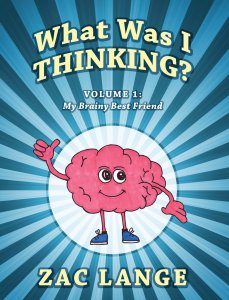
What Was I Thinking? Volume 1: My Brainy Best Friend

What Was I Thinking?

Volume 1: My Brainy Best Friend

by Zac Lange

Publisher: Outskirts Press

ISBN: 978-0996849005

Synopsis:

As everyone who has ever been a kid knows, mistakes and accidents are a part of growing up. “What Was I Thinking?” is a series that examines and finds solutions to an endless list of experiences that are universal to both children and families using the incredible tool of brainpower. It is told from the engaging, humorous, and relatable perspective of a young boy in the process of figuring out his place in the world, and whose creative mind, Brain, is his own best friend. “What Was I Thinking? Volume 1” encourages kids to celebrate their brains and their amazing potential. It also teaches the importance of using those powerful brains to think before acting, and to consider consequences both good and bad. Ultimately, the series wants to help kids be aware of their own thought processes, so they can make positive decisions for any given situation in their own lives. Hopefully, there will be fewer and fewer times when they have to ask themselves, “What was I thinking?”

Critique:

“As much as I love my brain, sometimes it seems like it takes a break for a while and forgets to tell me.” Who hasn’t had that feeling at one time or another? The narrator of the story imagines his brain snoozing in a hammock under some palm trees while taking a break. That is the reason he decides to kick a ball inside the house and winds up breaking his mother’s favorite vase. As soon as his mother sees the damage she asks, “What were you thinking?” Of course he didn’t think, he just did it. And then, when the damage is done, his brain decides to show up again. Kids and parents alike will recognize such a familiar situation and the results. Our narrator and his brain come up with a plan to avoid this trouble in the future; a plan which begins with STOP and THINK.

Readers will find plenty to laugh about in the story and the illustrations. The boy and his brain do everything together (except when Brain takes those unexpected breaks). A picture of the boy when he was a baby shows his brain nearby, also wearing a diaper. When the boy is at the playground, he is on one end of the see-saw and his brain is on the other. His mother is also shown in humorous ways. When she hears the vase break and runs into the room, she is shown dressed as a police officer and the boy is in a prison uniform. When he claims it was an accident, the picture shows his mother behind the desk at “Moms’ Olde Tyme Excuse Shoppe” pointing to ‘No Sale” because she does not buy his excuse. (That’s probably my favorite of the illustrations.)

Youngsters will enjoy the story line and see the similarities to their own experiences. Parents and teachers will appreciate the suggestion to stop and consider consequences before acting. Talking about what happens in the story can lead to a very helpful discussion on thinking things through instead of acting impulsively. It could also spark a class discussion where students might share their own memories of times when they should have taken a moment to consider their actions, but didn’t.

Recommended for children up through elementary school age, as well as the adults who care for them.

reviewed Suzanne Costner of The Fairview Review  ]

Here’s what another reviewer is saying:

Everyone has one and believe it or not you cannot function without one
You need to love it, admire it and use it wisely in order to succeed in life
It is always with you helping to guide you to make the right choices
It is your very best friend and you are never alone without this precious thing. Everyone loves friends, mom’s brownies or even just hanging out with friends. But, how any of us realize that our Brains share our feelings too and without it we would not be able to think!

Using your brain you can tell when something is sad, funny or just plain fun
Look at the pictures and see just how your brain helps you when you need to feel loved and wanted. Sometimes great things happen and it’s your brain that lets you know. Check out what happens when the bulb stays lit and you realize you have a great and fantastic idea. Great ideas come and guess where you get them? You experience things together so it is wise to take care of yourself and keep your best pal, your brain healthy!

You love to play with your friends and even have fun exploring outside and having adventures and my favorite things that helps keep my brain active, healthy and smart is reading lots of books just like this one and the ones the boy in the book is showing up that he is reading too. But, sometimes we are careless and mistakes happen when we forget to consult our brain and we accidentally kick something and our mother’s flower vase breaks and the flowers and water splatter all over the place. The author of this great book will now teach all children and parents some valuable lessons when this happens so that he understands that mistakes happen but it’s how we handle them in the present and hoping to avoid more in the future. You start by making a thinking chart and placing the words and heading it with Thought Process! Interesting as this is the first step to remembering what to do and not to do. Number one says: Do it when you admit to yourself that you forget to think before you did something and just did it! Excuses do not always work so sometimes we need to rethink our actions and create something to help us to remember. When you are not sure of what you do wrong check with you brain and find out! Ask “Where were you brain when I messed up? Hopefully the two of you will come to some sort of solution and figure out where you both went wrong!

After much deliberation and thinking and rethinking both our narrator, our little boy and of course our brain with the help of our creative author came up with what young children and even adults need to do before something else happens. Check out the Special List that gives you three steps that will help keep you out of trouble. If you stop and think decide if this could hurt and could doing this get you in trouble before you do it you might not do the wrong thing. If the answers to the last two questions happen to be YES: DON’T DO IT! The author continues with examples of how you can implement this great list to keep you out of trouble and not has to deal with mom’s consequences.

Each time you do something and if you are not sure stop and think, look at the chart, think again and figure out if you should do it or not. Check with your brain, remember no one is perfect, check out the checklist and see add who will be happy as a result of what you have learned and if you remember to Think before doing something. Learning is the best and soaking up as much knowledge and information will keep you and your brain healthy, smart, growing and having fun together now and forever. So, create your own checklist of who you want to make happy besides you and you can add things to your list like: Will I get a consequence if I do this? Will my parents be disappointed in me? Will I let myself down? Is there someone I can ask about what I am about to do before I do it and get into trouble? Stop: Look: Think and Listen. This is a great book for teachers to help children avoid getting consequences in school. This is great for parents to teach children how to understand the differences between doing the right thing and the wrong. Great for discussion groups and teachers and parents can even create lists of things that I do that are great and things that I know I should avoid and look at the lists to make sure you are not doing the ones that will get you in trouble. This is a great book for everyone. What Was I Thinking: I was thinking that I just read a great FIVE GOLDEN BRAIN BOOK! Your brain is what keeps you alert, alive, thinking and in the know: Keep reading, keep learning and keep out of trouble.

– Amazon Reviewer Amazon Customer

Book Trailer:


saturday self-published book review

Thanks for reading!  Keep up with the latest in the world of indie and self-published books by watching this space every Saturday!

Self Publishing Advisor

selfpubicon1

Website Glitch Addressed : 4.1.2016

Dear Readers,

There was a glitch with the schedule this morning, and those of you who subscribe to the blog will notice that you got a little early “preview” of tomorrow’s book review–only for the actual post to disappear.  Well, I have only good news for you: the universe has re-aligned, the book review will reappear as if by magic at its designated time tomorrow, and we have every hope that the technology we love so much will continue to behave.

so full of questions

Thanks for all for your patience, and thank you for reading!  Keep up with the latest in the world of indie and self-published books by watching this space every day.

Self Publishing Advisor

selfpubicon1

Conversations: 4/1/2016

THE MUSIC OF WORDS

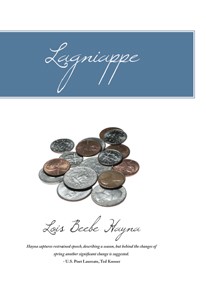
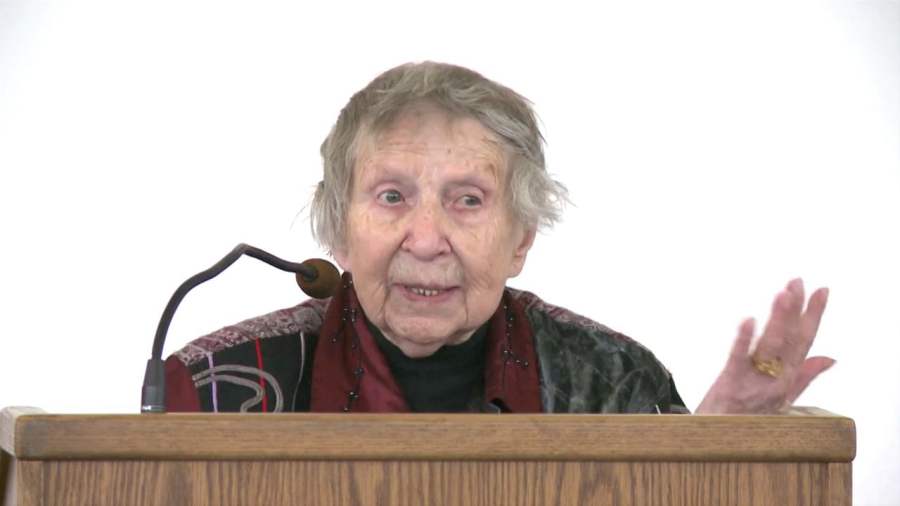
It was in early 2014, I believe, that I mentioned my creative writing mentor, Lois Beebe Hayna, in my blogs. She had just turned 101 years young and was actively writing and selecting poems to publish her next book of poetry titled Lagniappe (released in December 2014). The word lagniappe means a little bit extra. Lois tells us that she feels she’s been given extra time in this life to write poetry, and that’s exactly what she intends to continue doing. Today at 103, she ignores the physical challenges of losing her hearing and eyesight, and continues to create her unique music with words.

Lagniappe-206x300

This month marks the 20th anniversary of National Poetry Month, and I can think of no better way to honor the great poets of history—past, present, and future—than by sharing Lois’ story of becoming a highly respected poet and mentor to anyone who knows her and reads her works. The following is how Lois speaks about her writing life “in brief” calling it “a cautionary tale.”

Lois Beebe Hayna
[ Lois Beebe Hayna ]
“If you want your life to include writing or painting or any of the vocations which don’t produce a paycheck, nobody’s going to make it easy for you. Nobody’s even going to take you seriously until after you’ve somehow done it. In my case, friends and neighbors had plenty of reasons to caution me. I grew up in a one-parent family in the tiny village of Vesper, up in the center of Wisconsin. It was the middle of the Depression—that big one—and I think we knew no one who was not worried about his future. Even the best of farmers were going bankrupt.

I went from our two-room school which did offer good teaching, to high school in neighboring Wisconsin Rapids, and then I taught a one-room rural school, fortunate to be hired. During that winter I learned I’d been awarded a partial scholarship which allowed me to enter the University of Wisconsin at Madison. Aside from great classes and wonderful teachers—among them S.I Hayakawa and Helen C. White, William Sumner, and R.E.N. Dodge, I met other writers and even published a few poems.

The Depression was still on. A degree helped no one find work, and certainly nobody was paying for poetry, then or now. We drifted into low-paying jobs or no-paying research, or, as in my case, got married; which introduced me to the southern states.

After three children and many moves, I found myself newly-divorced in Denver, Colorado, at a time when luckily for me, jobs had become available, never mind that for someone with no training or experience, the pay scale was dismal. But the children grew up. I remarried, and somehow, though I still read poetry avidly, I thought my chance for writing was past.

Only a remark from a college classmate sent me back to see if I still had anything to say, or any skill in saying it. I was in my early sixties. I was that close to never writing anything.”

SO POETS! Writers of one or multiple styles! Follow this example. NEVER QUIT! Hang in there and keep writing! And don’t hesitate to self-publish! Should you be as blessed as Lois Hayna and live into your 100s, you’ll deeply enjoy holding ALL your books in your hands! And, so will your fans! ⚓︎

RoyaleneABOUT ROYALENE DOYLE: Royalene has been writing something since before kindergarten days and continues to love the process. Through her small business—DOYLE WRITING SERVICES—she brings more than 40 years of writing experience to authors who need “just a little assistance” with completing their projects. This is a nice fit as she develops these blogs for Outskirts Press (OP) a leading self-publisher, and occasionally accepts a ghostwriting project from one of their clients. Her recent book release (with OP) titled FIREPROOF PROVERBS, A Writer’s Study of Words, is already receiving excellent reviews including several professional writer’s endorsements given on the book’s back cover.  

Royalene’s writing experience grew through a wide variety of positions from Office Manager and Administrative Assistant to Teacher of Literature and Advanced Writing courses and editor/writer for an International Christian ministry. Her willingness to listen to struggling authors, learn their goals and expectations and discern their writing voice has brought many manuscripts into the published books arena.