From the Archives: “7 THINGS TO KNOW ABOUT TRADITIONAL PUBLISHERS”

Welcome back to our Tuesday segment, where we’ll be revisiting some of our most popular posts from the last few years.  What’s stayed the same?  And what’s changed?  We’ll be updating you on the facts, and taking a new (and hopefully refreshing) angle on a few timeless classics of Self Publishing Advisor.

∗∗∗∗∗

[ Originally posted:June 18th, 2010 ]

Things every author consider when considering self-publishing vs. the old-fashioned model…

7 – Traditional publishers lose money on over 85% of the books they publish, so they only accept around 2% of those that are submitted.

6 – They typically accept manuscripts only from established authors who have demonstrated a proven track record.

5 – Authors lose content control of their work during the editing process.

4 – Authors must still invest an enormous amount of time, energy, and money promoting a traditionally-published book.

3- Authors typically receive 5-10% royalty on the wholesale price of the book, and from that have to give 15-25% to their agent. Do the math.

2 – The majority of books published by old-fashioned publishers go out of print within 3 years. Many books that are stocked on book shelves remain stocked for as little as five weeks before being returned, unsold, to the publisher.

1- Old-fashioned publishers acquire all rights to your book and keep them, even when the book goes out of print or the publisher goes out of business. Yikes.

Publishing is hard and weird, and the process takes far more energy and attention than it rightfully should.  If you’re lingering in the balance between opting in to the traditional publishing mechanism or choosing to pursue a self-publishing option, this list from 2010 may just provide the last swing vote.  To pretend that we are unbiased would be disingenuous, I know, but isn’t there another side to this list?  Isn’t there some dirty laundry to air about indie, hybrid, and self-publishing companies, too?

Yes, no doubt.  That’s the honest answer.  The self-publishing model isn’t for everyone, and there are certainly the requisite number of soulless opportunists who have spotted a new means to exploit newcomers, as there are in any industry, but for the most part I do find that the people who work with and alongside self-publishing authors are a good lot.  They’re genuinely interested in helping you succeed–according to your own standards and expectations, not under the unrealistic ones set by traditional publishing.

So here’s my claim for the day, with a proviso:

When self-publishing is done right and all of the people involved in a project operate by the foundational tenets of the indie spirit, the experience provides authors the exact opposite experience of traditional publishing.

7: Self-publishing has no gatekeepers, censors, or men in suits wagging their fingers at innovation.

6: Anyone can self publish, no matter their background or prior experience with publishing (traditionally or otherwise).

5: Authors retain full artistic and legal control over their work.

4: Authors get to see a direct proportional relationship between the time, energy, and money they spend promoting and marketing their book–and sales figures.

3: With no middleman to split the earnings, self-publishing authors can keep anywhere up to 100% of their own royalties.  That’s, well, a lot better.

2: Self-publishing authors have a weapon in their artillery that traditionally published authors do not which resolves both the overstocked and the understocked problems facing traditionally published authors and their distributers: Print on Demand (POD).  Because you can always go back and print more copies of your book, there’s no danger of running out.  And because you get to choose how many books you print in the first place and how they’ll be distributed, you’re not shipping crates of untouched books to distributers who will never be able to move copies.  Precision targeted sales, that’s what POD enables!

1: Nobody will ever own your work except you.  Nobody.


When you cast things in a certain light, it gets really and truly hard to see the benefits of opting in to a broken system that has yet to meet the rapidly-evolving needs of a digital market where they live.  And I’m not just saying this because I’m biased–I am biased, 100%–but because I’ve been through the wringer of traditional publishing.  I know what it’s like.  Like most self-publishing authors, I’ve dipped my toe into the world of traditional publishing and come away angry, hurt, and disappointed.  And I’m committed to making sure as many authors get to move on to far better and more positive things, as I have.  I’m committed to making sure authors know they have another, better option.

And yes, it’s called self-publishing.

Thanks for reading.  If you have any other ideas, I’d love to hear them.  Drop me a line in the comments section below and I’ll respond as quickly as I can.  ♠

Self-Publishing News: 5.9.2016

This week in the world of self-publishing:

“‘I decided to choose my own magic and publish my book,'” writes Brittany Britto for the Baltimore Sun in this May 6th article, quoting indie author Elodie Nowodazkij, whose first self-published romance novel (One, Two, Three) hit the internet in 2014.  Nowodazkij, who had queried at least thirty agents the year before and received so-called “kind” rejections across the board, is one of seven self-publishing authors, experts, and entrepreneurs whose journeys Britto anthologizes in her article.  “The success of a self-published book, as with any book, can vary depending on any number of factors, including timing, topic and genre,” says Britto, citing marketing expert Penny Sansevieri.  And while some indie authors still founder, an increase in the diversity of platforms available and the general maturation of the indie publishing impulse provides as many if not more opportunities than it does hazards.  Britto’s article, while it uses local Baltimore authors as inspiration, forms a lengthy exploration of the topic on a national and even international scale, with many insightful references, anecdotes, and questions asked and answered.  To read the full piece, follow the link.

In her latest addition to Inverse‘s “Job Hacks” series of articles (in which the media insight company “shake[s] down experts for the insights they cultivated on their way to the top of their field”), Lauren Sarner takes a look at the backstory of Joseph Devon, a “Self-published novelist before self-publishing was big, [and] co-creator of The Writer’s Arena, an iron chef-style competition forum for authors.” The interview, published on May 4th, delves into Devon’s approach to self-publishing before self-publishing even became (as the Tumblr kids put it) “a thing” … and he did it by giving everyone, traditionally published, self-published, and altogether new authors “an even playing field.”  Engagement on The Writer’s Arena is up, with disagreements over winning pieces and authors thoughtfully fostered within healthy boundaries and managed by careful moderation.  “I actually self-published way back in 2000, which isn’t that far but in the world of self-publishing, it is,” Sarner quotes Devon as saying. “But then as the internet came along, people starting creating more tools and it became a lot easier. There’s still a lot of challenges—it may not be for everyone—but I fell in love with the notion of how to create an audience and the marketing side of things.” Devon has been there from the beginning, as Sarner makes clear, and his evolution as an author/entrepreneur has deep ties to the evolution of the internet as a digital space.  For more of his interview with Sarner, click here!

“LinkedIn is considering introducing its own version of Facebook’s Instant Articles, a feature that would allow publishers to host content directly on LinkedIn instead of posting links that direct people back to their own sites,” writes Alex Kantrowitz in this May 5th piece for BuzzFeed News.  We’ve written about LinkedIn Pulse here on Self-Publishing Advisor before, but this latest acquisition or evolution could provide indie authors with still more practical benefits.  Quotes Kantrowitz: “‘Publishers remain a very important part of our content ecosystem and we are in regular conversations with them about new ways to work together,’ a LinkedIn spokesperson said in response to a BuzzFeed News request for comment on the effort. ‘Our goal is to ensure we get the right content in front of the right member at the right time to deliver the best member experience possible.'”  This is good news for indie authors precisely because it provides access to a flexible, responsive platform for publication that allows for the distribution of timely written material–the arena of all things indie.  You may or may not see any new end-user tools added to the existing Pulse platform, but the potential reach of posts to said platform may expand as partnerships with other publishing media develop.  All the more reason to tap into this resource as soon as possible!


spa-news

As a self-publishing author, you may find it helpful to stay up-to-date on the trends and news related to the self-publishing industry.This will help you make informed decisions before, during and after the self-publishing process, which will lead to a greater self-publishing experience. To help you stay current on self-publishing topics, simply visit our blog every Monday to find out the hottest news. If you have other big news to share, please comment below.

KellyABOUT KELLY SCHUKNECHT: Kelly Schuknecht is the Executive Vice President of Outskirts Press. In addition to her contributions to the Outskirts Press blog at blog.outskirtspress.com, Kelly and a group of talented marketing experts offer book marketing services, support, and products to not only published Outskirts Press authors, but to all authors and professionals who are interested in marketing their books and/or careers. Learn more about Kelly on her blog, kellyschuknecht.com.

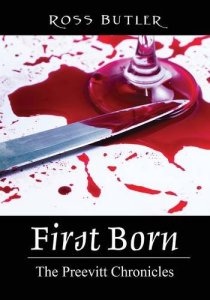
Saturday Book Review: “First Born : The Preevitt Chronicles”

Book reviews are a great way for self-publishing authors to gain exposure. After all, how can someone buy your book if he or she doesn’t know it exists? Paired with other elements of your book promotion strategy, requesting reviews is a great way to get people talking about what you’ve written.

When we read good reviews, we definitely like to share them. It gives the author a few (permanent) moments of fame and allows us to let the community know about a great book. Here’s this week’s book review, courtesy of Books, Reviews, Etc:

5109WOsl1lL

First Born : The Preevitt Chronicles

by Ross Butler

Publisher: Outskirts Press

ISBN: 978-1478771722

Synopsis:

She thought that life in a new town would be boring; boy, was she wrong! Fifteen-year-old Ruth Daniels has never had a lucky break due to being a lifelong orphan living in Michigan, but she ends ups going from a orphan to a family girl after she gets adopted by a widowed businessman and moves to New Jersey to live with him and his family, including a stereotypical teenage brother, a snobby sister and two twins. Yep, that’s all there is to it. Soon after her arrival, she starts school and almost instantly ends up with two new friends: Rachel Evans, a redheaded senior, and Justin Reynolds, a quiet, lonely and withdrawn sophomore. The latter of whom Rachel seems to hate with a vengeance. As Ruth and Justin’s friendship begin to evolve, Rachel starts to stalk and attack them almost constantly, and Justin knows why: He’s a human/animal hybrid called a Preevitt, he and Rachel are longtime mortal enemies, and Ruth is now part of their longtime war that also includes Justin’s twin siblings, Jaz and Wheeler.

Critique:

Ruth Daniels from Michigan evolves from an orphan to an adopted daughter of a widowed Businessman. Him and his family are in New Jersey.  Ruth moves to New Jersey with her new family. What a family.  We have twins,  a typical brother who is a teenager and a real uppity sister.  That’s the family.  Quite a change for Ruth.  She has always been an orphan.  After she moves to New Jersey she starts high school and immediately makes two new friends. Justin Reynolds is an introvert, and a sophomore.  Ruth then makes friends with a senior, redheaded Rachel Evans.   Rachel isn’t happy with the friendship that Ruth and Justin are developing.  Right off she detests Justin. Rachel goes on the attack, especially against Justin.  What is it about Justin?  Why are Rachel and Justin at odds with each other?  Is there a secret between them? Will this war between Justin and Rachel affect Ruth? The author takes you into another world.  One minute the world is as you live in.  The next, you’re facing another world. The book is fast paced as the author takes you into some well developed characters’ lives.  As you turn the pages, you’re not quite sure what you will find next.  This isn’t your typical high school friendship. This isn’t a jealousy issue.  This is way more.  The author starts out with a quiet story about Ruth and it slowly gains momentum until you’re in another world.  What does Preevitt mean?  Read and find out. Good book for teens and adults.

I would give this book 4 STARS.

reviewed by Gayle Pace of Books, Reviews, Etc ]

Here’s what other reviewers are saying:

In this Urban Fantasy, we read the story from the perspective of a moody, disgruntled and contrary fifteen year old. She was orphaned at an early age, and when the orphanages closed down, she lived with her elderly social worker. She is adopted by a family in New Jersey, far away from Michigan. She doesn’t want to go, but has no choice. Once she is there and meets her family, she settles down slightly. Starting a new school, she meets new friends and starts her new life.

With a very fast-pace and a severe case of insta-love, this book tells the story of Preevits and Mugglers. Now Preevits may sound bad, but they have nothing on the Mugglers. And then, of course, you have bad Preevits thrown into the mix too.

Finishing on a high, with a possible link to a further book, this is a book for readers of YOUNG adult, with a paranormal twist.

– Amazon Reviewer Merissa (Archaeolibrarian)

And last but not least, an excerpt from the author’s Smashwords interview:
What is the greatest joy of writing for you?
The greatest joy of writing for me is putting down what I want to see on paper and throw it to the world for all to see. It’s basically me being myself and not worrying about being called for it. I can as funny, biting and sarcastic as I want to be and no one can take that from me. That’s one of the greatest joys of being a writer.
What are you working on next?
My next book is now being written. It’s A Satirical Western called “How The West went South”. It’s about an 18-year old guy who, after saving the life of the U.S. Senator is rewarded with a job as a U.S. Marshall and the hijinks that ensure afterwards. It’s already in the works and I’ll release more info when I’m ready to.
Who are your favorite authors?
Eoin Colfer, (The Artemis Fowl Series, “The Wish List” and “The Supernaturalist”) Rick Riordan, (Percy Jackson and the Olympians) Cassandra Clare, (The Shadowhunter Chronicles) and James Patterson, (The Maximum Ride Series)
What is your writing process?
My writing process involves me writing one book, I get it published and distributed, then I start work on my next one while still attending promotion events to market it. Many authors try to write several books at once. I prefer to keep it simple.

saturday self-published book review

Thanks for reading!  Keep up with the latest in the world of indie and self-published books by watching this space every Saturday!

Self Publishing Advisor

selfpubicon1

Conversations: 5/6/2016

HELPING HANDS, MINDS and HEARTS

Whether a writer considers they are a novice or experienced writer, or even an expert writer, we all come to a season when the book we’re attempting to develop falls flat. The project may be the best idea on the planet, but if its completion seems to have reached a point of no return DON’T GIVE UP!

The positive impact of your book is not lost! It is simply time to join forces with a ghostwriter, a partner who can tap in to your vision and help you reach the FINISH LINE.

Finding the right ghostwriter to assist you has been likened to finding the right marriage partner. Although this writing relationship may not exist for a lifetime the connection between writer and ghostwriter must be compatible. Here are a few things to look for when discussing your project with a potential writing partner:

  1. It is preferred to meet with and interview the ghostwriter in person. However, if this is not possible, telephone conversations can provide you with enough information to make your selection. I have worked with several clients long-distance—as well as neighbors—and we’ve enjoyed great success in the completion of their projects.
  2. Ask for information about their past projects. If referrals are available—authors who will talk with you about their experience with this ghostwriter—this is the best resource.
    • Responsibility and Reliability are two key components in a writing partner. When talking with the referred authors, ask about the quality of the ghostwriter’s work and their ability to write in the author’s voice.
    • Your budget is important, too. Although the former clients may not choose to reveal their personal payment plan, you can ask them if they felt they received poor—fair—good—or excellent value for the amount paid.
  3. As you talk about your project, listen carefully to the ghostwriter’s responses.
    • Is the ghostwriter knowledgeable about your genre of choice?
    • Does the ghostwriter hear what you are saying about the book’s topic? Characters? Plot? Setting?
    • Does the ghostwriter seem to grasp the essence of what you want to communicate to your readers?
    • Do you find it easy to talk with them—as if you are already friends?
  4. As the author of your project, you have a distinct writing voice. If you have quickly established a comfortable rapport with the ghostwriter, chances are good that they will be able to identify your writing voice and use it to enhance your project. This is vital to the authenticity of your book.
  5. Your writing partner must have an excellent “handle” on the English language.
    • Grammar, sentence structure, and punctuation all hold a valuable place in communicating with the Reader. However, I’m one of those people who believe that the concept of communication is the key component in the use of grammar and spelling skills. This skill must be used in maintaining the author’s voice throughout the book.
    • If you are writing a technical document for publication at the university-level of academia, you definitely need a ghostwriter who has that experience.
    • If you are writing in the genre of historical fiction, romance, mystery, science fiction, memoir, pet stories, cookbooks, etc. then the ghostwriter who loves language for its communication value is the preferred choice.

Bottom line: Harmony between author and ghostwriter is essential and produces excellence. So if you feel shackled and unable to move forward with your book project, ASK for HELP! Seek out the partnership of an excellent ghostwriter and GET THAT BOOK FINISHED!  Then GET IT PUBLISHED! The best advice I ever received was…NEVER QUIT! Because the most difficult books to produce are the ones that will make the biggest difference in the “book world.” ⚓︎


RoyaleneABOUT ROYALENE DOYLE: Royalene has been writing something since before kindergarten days and continues to love the process. Through her small business—DOYLE WRITING SERVICES—she brings more than 40 years of writing experience to authors who need “just a little assistance” with completing their projects. This is a nice fit as she develops these blogs for Outskirts Press (OP) a leading self-publisher, and occasionally accepts a ghostwriting project from one of their clients. Her recent book release (with OP) titled FIREPROOF PROVERBS, A Writer’s Study of Words, is already receiving excellent reviews including several professional writer’s endorsements given on the book’s back cover.  

Royalene’s writing experience grew through a wide variety of positions from Office Manager and Administrative Assistant to Teacher of Literature and Advanced Writing courses and editor/writer for an International Christian ministry. Her willingness to listen to struggling authors, learn their goals and expectations and discern their writing voice has brought many manuscripts into the published books arena.

In Your Corner : The Crimes & Good Times of Book Review World

So, what exactly is the big deal about book reviews?  Why are they so important to self-publishing authors like you and me?  Everyone who’s every published, self-published, or thought about writing a book seems to have an opinion, but I’m interested in facts.  And the facts are in!  As it turns out, readers turn to the book reviews on websites like Amazon and Goodreads for help in choosing between the dozens upon dozens upon millions of books they might purchase. And after looking at the hundreds of newly published books in the Biography or Romance genre just last month, it’s easy to understand why a five-star review on your Amazon book page might sway readers to purchase it over different book with only two or three stars.  Which leads me to another vital question: how do you get those reviews?

One option is to ask for them–and to ask for them direct from the source. There are all kinds of excellent ways to make use of your existing social connections–on or offline–and you should definitely use them to contact potential reviewers on Facebook, Twitter, and your other social media platforms.  (Authors hang out on Snapchat and Tumblr too, you know!)  

You’ve probably heard that some websites even offer free reviews in return for copies of your book, but just how good are they at reaching new readers?  The answer in most cases happens to be not very.  Readers can quickly and easily get a glimpse of what their friends and the general public thinks about a certain book by taking a look on Amazon and Goodreads, both of which combine the sum total of posted reviews together into one single one-to-five-star average, and pick out particularly popular reviews to highlight.  Accessing these snapshots of a book’s success or struggle is as simple as a few basic keystrokes on Google.

Many readers, however, are looking for something more reputable and more thorough than a blindly-given and blindly-received two-sentence review on a website geared entirely towards pushing product.  These readers are looking for reputability, reliability, and the kind of insightful observations that only the very best reviewers offer.  And as a self-publishing author or someone who works with indie authors–I’m talking to myself every bit as much as I’m talking to you at this point–nothing quite equals an impartial book review from a credible source.  Getting your hands on these vitally important reviews can also pose a significant challenge for a self-publishing author who may lack the resources to sift these credible sources from common shysters, and the confidence to approach the most highly-acclaimed reviewers.

There are, of course, options: companies like my employer, Outskirts Press, offer packages that can quite literally save your bacon when it comes to gathering in the creme de la creme of book reviews.  Our package is called the  “Book Blast,” and it should save the aspiring author untold time, effort, and potential disappointment in pursuing the right kind of reviews.  The effective kind of reviews.  But don’t get me wrong!  I love Outskirts and its author-centered company ethic, but I’m not just here to hawk a sales promotion on unsuspecting readers.  You have to find the path that best suits your needs, help or no help, cost or no cost–but the fact remains you’ll need reviews, a lot of reviews and the best kind of reviews–in order to boost your book’s visibility and drive your sales.  Do your research, and dig deep to find those credible, highly-rated reviewers who have a guaranteed interest in reviewing self-published titles–and sit back to watch as your confidence blossom as your book finds its final audience.

You are not alone. ♣︎

ElizabethABOUT ELIZABETH JAVOR: With over 18 years of experience in sales and management, Elizabeth Javor works as the Manager of Author Services for Outskirts Press. The Author Services Department is composed of knowledgeable publishing consultants, pre-production specialists, customer service reps and book marketing specialists; together, they all focus on educating authors on the self-publishing process to help them publish the book of their dreams. Whether you are a professional looking to take your career to the next level with platform-driven non-fiction or a novelist seeking fame, fortune, and/or personal fulfillment, Elizabeth Javor can put you on the right path.