Conversations: 7/1/2016

WISE COUNSEL—WITH MUSCLE I

You’ve probably heard the phrase, “Writers write because they have to.” If you’re reading this blog, I know you’ve not only heard this statement, you’re feeling it right now. So it is that the world will never be without writers and the works they produce. Sadly, however, too many of these excellent and noteworthy pieces may never reach the hands of the Readers who will enjoy them and/or benefit from them. Why?  Because we’re writers not publishers or marketing experts.

Not long ago, I was talking with a friend about my newly self-published book which took me nine (9) years to finish. He asked me for my business card so he could remember the title and purchase it online. Business card? I wrote the title on a sticky note and we parted as he congratulated me on completing such an extensive project. Today, I have a business card showing the cover of my book on one side, the title and my contact info on the other side.

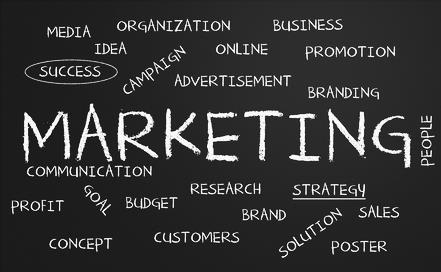
That conversation really got me motivated to get my book marketing plan on track. But, of course, first I had to develop one! I did a quick google search, and found this illustration. I’m one of those visual/tactical learners, so this picture of what I needed to do has really helped me. I hope it will give you some focus, too.

Immediately, my eye went to the circled word: SUCCESS. Yep, that’s a main goal I’m reaching for. And the next word I noticed is the underlined word strategy. Okay, I know the definition of the word—to develop a plan, or approach. However, my writer’s idea box about just how to go about doing that was empty. And all those other words listed on this illustration intimidate me even more—except for the word PEOPLE. A definite goal of mine is to introduce this book to everyone!
marketing

Reviewing the remaining words, I took a yellow notepad and started making a list. Media. Promotion. Campaign. Advertisement. Branding. Communication. Business/Profit/Budget. Research. Sales. Customers. When I reached the word SOLUTION, I realized that I was not the solution to my marketing dilemma. Even if I went back to school and took hours of marketing classes, I realized that marketing is not my natural gift. I needed specialized assistance and I needed it now. Then I recalled a conversation I’d had with my publishing consultant when self-published my book. She told me that she could help me connect with one of their Marketing Specialist! Why I hadn’t thought of that before, I don’t know. But I was already feeling a big sense of relief.

I am now happily back to work on my next book. No longer am I anxious about spending all my time plotting and planning the ways and means of promoting my book. Plus, with everything my Marketing Assistant—and new friend—is doing, I’m learning more about being an Author Entrepreneur. Much like my neighbor, who is a photography artist, I’m now showcasing my work in multiple unique book galleries. Those PEOPLE I was hoping to connect with are now reading my book. Being a writer/author has become fun again. ⚓︎

RoyaleneABOUT ROYALENE DOYLE: Royalene has been writing something since before kindergarten days and continues to love the process. Through her small business—DOYLE WRITING SERVICES—she brings more than 40 years of writing experience to authors who need “just a little assistance” with completing their projects. This is a nice fit as she develops these blogs for Outskirts Press (OP) a leading self-publisher, and occasionally accepts a ghostwriting project from one of their clients. Her recent book release (with OP) titled FIREPROOF PROVERBS, A Writer’s Study of Words, is already receiving excellent reviews including several professional writer’s endorsements given on the book’s back cover.  

Royalene’s writing experience grew through a wide variety of positions from Office Manager and Administrative Assistant to Teacher of Literature and Advanced Writing courses and editor/writer for an International Christian ministry. Her willingness to listen to struggling authors, learn their goals and expectations and discern their writing voice has brought many manuscripts into the published books arena.

In Your Corner : Why Pampering Yourself (& Your Book) Isn’t Such a Bad Thing

When I say “pamper,” I’m guessing one or two images immediately pops into your mind. Luxury in today’s world means manicures and pedicures, gourmet meals, superyachts, and never having to wait in line at the DMV.  Most importantly, perhaps, it is seen as something unattainable by all save a select few who hit the genetic lottery or who are otherwise incredibly lucky.  But most people don’t get to live this life.  Most people aren’t millionaires.  To most people, self-publishing authors included, life is a constant series of negotiations between risk and reward, where “success” equates to keeping one’s head above water a little while longer, and “failure” means losing the house.  Luxury and pampering is saved for special life events, like honeymoons and year-end vacations, only to illustrate even more clearly how impossible it is to attain these things easily and sustainably.

All this is true. But it shouldn’t stop you, a self-publishing author, from receiving the best services available in the design, formatting, and publication of your book.
manicure pedicuregourmet meal

I’m talking about premium options.  And while it’s easy to see why some of these options, like cover enhancement on your book’s Amazon listing, are desirable.  But it’s harder to see, I’d guess, why it’s worth pampering yourself with these options when they’re a kind of luxury.  You can publish your book without them.  So why pay for something you don’t strictly need?  It’s the same old risk vs reward balancing act I mention, above, isn’t it?

I happen to think that certain luxuries are not just attainable for the common author but are revolutionary to that author’s marketing and sales experience.  The problem with premium options on Amazon is that they truly are a kind of pampering–in that they’re not something the common author can do by him or herself.  They take special access to the Amazon publication system, special design skills, and a killer instinct for the constraints of the form.  Basically, the financial obstacles may be easily overcome and the social ones too, but there remains an expertise gap to cross.

Which is why I strongly recommend paying, just this once, for that little luxury–a payment that recoups enormous dividends in the self-publishing author’s sales figures.  If you’re wondering about the specifics, premium options on Amazon allow readers to see your book featured in a larger and more eye-catching setup in their keyword search results, to see inside your book and read some front-page material in a preview … and to see your book cover right away, rather than waiting the four weeks or so that it ordinarily takes the images to be processed.  These are not small advantages–they are the make-or-break features that often determine whether a new reader clicks their way into learning more about your book and, of course, buying it!

The tweaks may be small, but the effects are huge.  They’re at least worth researching, and given my background at Outskirts Press I of course recommend starting with reading up on the enhancement options they offer there.  But no matter who you choose, keep your eyes and ears open to new ideas and new opportunities to “pamper” yourself.  You’re worth it.  Your book is worth it.  You deserve the best!

You are not alone. ♣︎

ElizabethABOUT ELIZABETH JAVOR: With over 18 years of experience in sales and management, Elizabeth Javor works as the Manager of Author Services for Outskirts Press. The Author Services Department is composed of knowledgeable publishing consultants, pre-production specialists, customer service reps and book marketing specialists; together, they all focus on educating authors on the self-publishing process to help them publish the book of their dreams. Whether you are a professional looking to take your career to the next level with platform-driven non-fiction or a novelist seeking fame, fortune, and/or personal fulfillment, Elizabeth Javor can put you on the right path.

Marketing Master Strokes Episode 4: Play Well With Others

We launched into a new series three weeks ago, the moment when we agreed to stop thinking about the many ways we can mess up the marketing process (Marketing Missteps) and pivoted instead to thinking about the many ways we can succeed instead (hence, this series: Marketing Master Strokes).  Our first master stroke required us to  be all ears (listening to the stories of others, and keeping an open mind to actually changing your own approach), and our second required us to  be willing to reach our readers where they live (setting aside the ego in order to adapt our outreach methods to best suit our readers), and our third master stroke was all about the incentives!  Or rather, why making your work look appealing as a product using special deals, discounts, and giveaways is a good idea.

But that’s all boilerplate.  What you’re really here for–what you’re really interested in this week–is figuring out what our fourth master stroke will be. And no beating around the bush, here it is:

Playing Well With Others

“It is a truth universally acknowledged, that a single man in possession of a good fortune must be in want of a wife,” wrote Jane Austen in the opening lines of Pride and Prejudice. But an even more pertinent truth, one that is in fact played out over the course of Austen’s novel and every other masterpiece of the global literary canon is this: Success, no matter how a person defines it, relies upon building human connections. Smart men and women, business leaders, and CEOs of major corporations know that this means playing well with others–even though this doesn’t mean pandering or compromising your vision and work ethic.

playing

So what does this look like for the self-publishing author?  Building personal connections with fans and fellow authors and industry experts over social media is one thing, but that isn’t all a person can do, right?  Partnership is more than just tweeting at each other occasionally and tagging each other on Facebook posts.

Partnership Means Collaboration–Real Collaboration

And most self-publishing authors, no matter where they’re at in their publishing journey, could benefit from strong, dynamic, and useful collaboration.  It’s important not to neglect social media–it’s a vital and important step in reaching out to other authors and figuring out what your common interests are–and there’s a lot to be said for other surface-level inquiries to local bookstores, libraries, and event venues.  (And don’t neglect nonprofits, PEO groups, and other passion/interest groups–they may not have a permanent physical address, but if they choose to back you as an author, there’s no one better to have in your corner than a set of really capable, really driven people–like those who run these groups!)

Collaboration can look like:

  • pairing up with another author or multiple authors to host a book discussion or workshop together;
  • gathering several other authors together and applying to run a booth at a local book fair, or a panel at a “con” (convention);
  • conducting interviews with other authors and sharing them on each other’s websites, providing insight into the authorial process; and
  • co-writing short stories or novellas together, to be distributed as giveaways or free to the public online.

I’m sure you can think of many other good ideas!  The point is to think outside of the box, and to predict what your readers will want before they want it–and of course, to have a lot of fun while at it.  There’s nothing more refreshing than discovering like-minded authors and building a community that supports and champions each others’ work.  Trust me: even the most introverted and anti-social author needs people, and on terms that benefit everyone.  Playing well with others isn’t just some buzzword or catchphrase to get your attention.  Successful authors all point to collaboration and partnership as one of the hallmarks of their process, and that’s why it ranks as one of our master strokes.

Go play!


Thank you for reading!  If you have any questions, comments, suggestions, or contributions, please use the comment field below or drop us a line atselfpublishingadvice@gmail.com.  And remember to check back each Wednesday for your weekly dose of marketing musings from one indie, hybrid, and self-published author to another. ♠

KellyABOUT KELLY SCHUKNECHT: Kelly Schuknecht is the Executive Vice President of Outskirts Press. In addition to her contributions to the Outskirts Press blog at blog.outskirtspress.com, Kelly and a group of talented marketing experts offer book marketing services, support, and products to not only published Outskirts Press authors, but to all authors and professionals who are interested in marketing their books and/or careers. Learn more about Kelly on her blog, kellyschuknecht.com. 10:00 AM

From the Archives: “self-publishers raking it in…”

Welcome back to our Tuesday segment, where we’ll be revisiting some of our most popular posts from the last few years.  What’s stayed the same?  And what’s changed?  We’ll be updating you on the facts, and taking a new (and hopefully refreshing) angle on a few timeless classics of Self Publishing Advisor.

∗∗∗∗∗

[ Originally posted: January 30th, 2009 ]

That was the subject line of a recent email sent to me by my good friend and author currently writing and teaching writing at the University of Massachusetts.

I had yet to see the New York Times article he was referencing. Despite our professional inclinations, email conversations between Mr. Anderson and I generally involve topics like beer, music, or YouTube videos.

I was interested in what brought Mr. Anderson’s attention away from his highbrow academia to the world of self-publishing. His email read only one line – something like ‘looks like you’re in for a raise…’ followed by the link to Wednesday’s Times article, “Self-Publisher’s Flourish as Writers Pay the Tab.”

Good news for self-publishing authors…

The Article opens stating that booksellers, hobbled by the current economic situation, are struggling to lure readers. And with traditional publishers and brick and mortar retailers exercising cutbacks and layoffs, readers are still finding their way to books. And the fact that they are suggests that one aspect of the industry is, according to the Times, “…actually flourishing.”

Of course the article discusses some of those alleged downsides of self-publishing (there are some less attractive options out there), but concludes with a quote from Louise Barker, publisher of the traditional house, Pocket Books, “Self-Publishing is no longer a dirty word.”

Ms. Barker’s Pocket Books recently contracted Lisa Genova, an author profiled on this blog previously. Despite the suggestions from many industry professionals, including her agent, that self-publishing would destroy her chances at success, Genova’s book, Still Alice, saw considerable independent success prior to being picked up by Pocket Books on a 6 figure contract.

Barker goes on to comment that publishers now trawl for new material by looking at reader’s comments online about self-published books.

Self-publishing is truly changing the way we write, read, and retail books. That is good news for authors.

Have fun. Keep writing.

– by Karl Schroeder

Is self-publishing “truly” changing the way we write, read, and retail books?  Or is something else?  Truth be told, Karl’s post made a lot of sense in the context of 2009 … and not so much in 2016.  After all, seven years and innumerable things have happened–the world is a fundamentally different place, and the technologies we use to engage with that world are equally different.  Two examples illustrate this fact perfectly:

Consider the Rise & Plateau of the Espresso Book Machine

There’s no greater way to mark the passage of time than to recount the stories of empires risen and gone, their vast empires now ruins eaten away by time and the elements.  That’s perhaps a bit dramatic when we’re talking about emerging technologies on a seven-year span, but sometimes it kind of feels like it!  And there’s no better illustration of the emergence of new technologies in the publishing world–the self-publishing world–than the Espresso Book Machine, a fabulous little engine of progress that allows authors to print physical copies of their books on demand while taking no more time than–you guessed it–drinking an espresso.  Their fast, their effective, they’re a great addition to college libraries like the University of Arizona–in short, there aren’t a lot of downsides.

espresso book machine

But the Espresso Book Machine hasn’t revolutionized self-publishing.  Or rather, it hasn’t revolutionized the industry and then stayed a centerpoint of the process.  Like so many new and wonderful things, it serves as a symbol of what’s possible for authors and readers alike–but is too clunky, too expensive to install, and too massive a physical object, to be widely adopted.  In many ways, the evolution and miniaturization of hardware and the constant improvements to open-source software have outpaced any one technology’s relevance.  And so the Espresso Book Machine–while still worth the expense and space issues to some institutions–is not likely to ever see as much interest again as when it premiered.  Unless, of course, its manufacturers determine how to create 3D printers that can print physical books in the comfort of the average person’s home.

Consider, Too, the Rise & Fall of the Dedicated E-Reader

You know this story–we’ve been covering it here at Self-Publishing Advisor from the beginning, when e-readers were game-changers, bringing transportability and easy storage to entire libraries of books, putting the power of the internet in the hands of tech-savvy readers.  Like the Espresso Book Machine, e-readers changed what we thought possible for books and self-publishing.  You didn’t need to publish a physical book at all!  You could collect hundred or even thousands of titles and take them all with you wherever you went!  You could get rid of those bookshelves at last but still be a big reader!  You could make literacy fun and accessible to kids!  You could cure the income disparity anywhere by handing out free tablets!

William Lynch, Chief Executive Officer of Barnes & Noble, holds up the new Nook Tablet at the Union Square Barnes & Noble in New York

The problem, if you want to call it that, is that technologies necessarily age.  Even the really, really good ones–the ones that change the face of self-publishing.  So e-readers filled a gap in peoples’ technology and literary needs for a while, but then they didn’t anymore because smartphones leveled up the playing field once again.  Over the course of five years, e-readers went from “the next hot thing” to “old news, man.”

In short, yes, self-publishing changes things.  But the technologies we associate most closely with self-publishing–these “great leaps forward” in our ability to reach new readers–may actually be the consequence of technology evolving.  Many of the things we thought would fix our deepest problems–the stigma of not being traditionally published, the gap in marketing power between self-published and traditionally published authors–remain largely untouched.  We have to face the fact that, despite our best attempts, self-publishing authors are not, by and large, “raking it in.”  Sometimes, like Lisa Genova or Andy Weir, we find success–and are stolen away into the traditional publishing matrix.  Luckily, we have staunch self-publishing advocates like Hugh Howey at our backs these days, and other authors who may dabble in traditional publishing but whose hearts remain firmly in the indie camp.

We have come a long way, but it wasn’t entirely our own work that got us here–it was the work of countless engineers and technicians, innovating technologies that may or may not serve us in the future.  Self-publishing authors still remain at a disadvantage, and still must seize upon emerging technologies–remaking them or at least adapting them to fit our own needs.

What Will the Next Big Step Forward Be?

Thanks for reading.  If you have any other ideas, I’d love to hear them.  Drop me a line in the comments section below and I’ll respond as quickly as I can.  ♠


KellyABOUT KELLY SCHUKNECHT: Kelly Schuknecht is the Executive Vice President of Outskirts Press. In addition to her contributions to the Outskirts Press blog at blog.outskirtspress.com, Kelly and a group of talented marketing experts offer book marketing services, support, and products to not only published Outskirts Press authors, but to all authors and professionals who are interested in marketing their books and/or careers. Learn more about Kelly on her blog, kellyschuknecht.com.

Self-Publishing News: 6.27.2016

This week in the world of self-publishing:

“Against all expectations, the traditional book is making a comeback,” writes Chris Mitchell in a June 27 article for The Australian Business Review.  No small publishing market backwater, Australia has long stood as a laboratory for new trends and technologies–and as a healthy chunk of the global market, with access to east European and Asian markets as well as serving as a gateway to the Southern Hemisphere.  As with many other facets of life–such as the environment–Australia often sees changes coming long in advance of others (disasters included) … and the disruptive effects persist there long after they recede elsewhere around the world.  But there’s good news as far as publishing is concerned: the global panic over the digital takeover is beginning to abate Down Under, as the nation’s paper and hardback copies make a comeback.  Says Mitchell:

Last year, for the first time in nearly a decade, book sales rose in Australia — by 2.4 per cent to $979 million. Add $410m in education sales and leading Australian publishers are starting to see a way through the digital disruption of the past ­decade.

They also see a stabilising of digital book sales globally. ­E-books appear to have plateaued at 20 per cent of the market in the English-speaking world.

What does this mean to the self-publishing author, Down Under and abroad?  In keeping with the other coverage we’ve given this issue, it seems as though good news for traditional publishing is almost always good news for self-publishing, too.  (Despite traditional publishing’s tendency to cast it as an “us vs. them” debate.)  A stable market, in which every niche has found stability, is a wonderful thing for self-publishing authors!  And while “Australian book retailers are generally seen to have a long way to go to become as good at selling their stock online as retailers in the US and Britain,” writes Mitchell,
“The rise of Booktopia, the country’s largest independent online bookstore, has shown how this can be done well.”  Australians are canny about balancing the niches!  For more of Mitchell’s original article, click here.

We’ve written about SELF-e before on Self Publishing Advisor, but Ben Muir of The Chronicle has a brand-new (June 24) update!  After summarizing the publishing experience (which seems, more often than not, to be a choice between the traditional route and some variant of the self-publishing route) Muir goes on to introduce SELF-e as some kind of “middle ground.”  SELF-e, which can be found at self-e.libraryjournal.com, is “a website that lets libraries distribute the work of independent authors, and offer an array of genres and content for subscribing patrons.”  Sponsored by the online version of Library JournalSELF-e is one of several–and one of the most successful, to date–options available for self-publishing authors attempting to get their books onto the shelves–physical or digital–of their local library.  The mechanics of the SELF-e process are simple: Authors upload their books in what Muir calls a “painless” process, and once libraries purchase subscriptions to SELF-e, their readers access SELF-e through Biblioboard, a  companion site to Library Journal that operates much like other digital libraries.  Muir writes specifically to announce Timberland Public Library’s decision to invest in SELF-e, a good sign that libraries and their users are still finding this sort of platform useful.  For more information, follow the linkfollow the link!

There’s some very good news for self-publishing authors who choose to pursue audio editions of their books, writes Ryan Joe for Publisher’s Weekly on June 24: “For the second consecutive year, sales of audiobooks grew around 20% in 2015, totaling about $1.77 billion, according to the Audio Publishers Association (APA).”  And this “boom,” writes Joe, “is due to the explosion of digital audio, which has made audiobooks more accessible.”  Muir names three platforms offering digital audio options for the discerning author: Audible’s Audiobook Creation Exchange (ACX), the Deyan Institute, and Author’s Republic, owned by Audiobooks.com, and there are various hybrid publishing companies that offer audio packages.  And a lot of authors are headed in this direction, reports Audible’s EVP and publisher, Beth Anderson: already, some 58,000 authors and narrators have booked gigs through her website alone–and while Audible and Amazon are both hefty household names, smaller audiobook publishers are also seeing remarkable success.  There are many benefits to choosing to publish an audiobook, as Joe goes on to describe, including targeting new reader bases and demographics.  For his entire article, check it out on Publisher’s Weekly online!


spa-news

As a self-publishing author, you may find it helpful to stay up-to-date on the trends and news related to the self-publishing industry.This will help you make informed decisions before, during and after the self-publishing process, which will lead to a greater self-publishing experience. To help you stay current on self-publishing topics, simply visit our blog every Monday to find out the hottest news. If you have other big news to share, please comment below.

KellyABOUT KELLY SCHUKNECHT: Kelly Schuknecht is the Executive Vice President of Outskirts Press. In addition to her contributions to the Outskirts Press blog at blog.outskirtspress.com, Kelly and a group of talented marketing experts offer book marketing services, support, and products to not only published Outskirts Press authors, but to all authors and professionals who are interested in marketing their books and/or careers. Learn more about Kelly on her blog, kellyschuknecht.com.