Conversations: 7/29/2016

WISE COUNSEL—WITH MUSCLE V

To be totally honest with you, I’ve written these last few blogs more for myself, than for other writers. It often happens that way for me especially when I’m researching a topic that touches me personally. Needing to hire and work with a Marketing Assistant is one of those issues. So I’ll go a step further before closing out this theme and ask this question: Am I the only one who has a hard time asking for help?

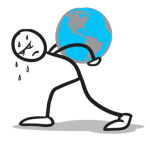
atlas

Sometimes I feel that way especially when I see TEAMS of people working together to promote someone else’s books. However, now I’ve done a little research on the troubles people have asking for help I hope it makes you feel better, because I do. Here’s a few things I’ve learned.

Many, MANY of us have grown up with society teaching us their seat-of-your-pants, “pull yourself up by your bootstraps,” philosophy of life. Parents, grandparents, aunts, uncles, and next-door neighbors have informed us that they walked 40 miles to school—one way—then came home and plowed 20 acres. Nobody helped them and they didn’t ask for any help, either! EXCLAMATION POINT! A good work ethic is a value we all appreciate. However when whole groups within society have given up and walked away from their dreams because they would not ask for assistance, we need to find a better balance of work-play-receiving help-and helping others.

Actually, we’re already pretty good at seeking help, it just hasn’t been identified as such. Obtaining the education we needed to be writers is an excellent form of asking for help. Learning how to use our computers, how to effectively search the world-wide-web for background of fiction and non-fiction books, and how to feed ourselves nutritional foods to keep our brains sharp are unseen ways we’ve all sought help. But should we now follow that same path and spend hours/days/months researching ways to market our books—or take college courses on marketing—so that we can “do it all ourselves” even if we don’t have the natural aptitude?

A good friend recently asked me to babysit her son while she went grocery shopping “in peace.” Of course I was glad to do it, and enjoyed playing trains and reading together as he eagerly told me what would happen even before I turned the next page. Driving home I started imaging a wild and whacky children’s book series! Really? If I’m not willing to ask for help in marketing my current book, WHY should I start writing a series?

together

You’ll be glad to know that I have started a research file on Marketing Assistants—individuals and businesses—and have made a few query calls. I’m listening to their promo-information “talking points” about their skills and abilities and making a list of the ones that will help me with my book within its genre. I’ve talked with my publishing consultant at the company where I self-published and she’s given me two name of their Marketing Assistants. I am ready to accept that hand-up the marketing mountain. How about you? ⚓︎

RoyaleneABOUT ROYALENE DOYLE: Royalene has been writing something since before kindergarten days and continues to love the process. Through her small business—DOYLE WRITING SERVICES—she brings more than 40 years of writing experience to authors who need “just a little assistance” with completing their projects. This is a nice fit as she develops these blogs for Outskirts Press (OP) a leading self-publisher, and occasionally accepts a ghostwriting project from one of their clients. Her recent book release (with OP) titled FIREPROOF PROVERBS, A Writer’s Study of Words, is already receiving excellent reviews including several professional writer’s endorsements given on the book’s back cover.  

Royalene’s writing experience grew through a wide variety of positions from Office Manager and Administrative Assistant to Teacher of Literature and Advanced Writing courses and editor/writer for an International Christian ministry. Her willingness to listen to struggling authors, learn their goals and expectations and discern their writing voice has brought many manuscripts into the published books arena.

In Your Corner : Summer Goals (Pt 4)

Three weeks ago, we started our summer goals blog series by laying out our writing goals–or at least, by talking about a few of my own.  And with the understanding that every author lives a very different life and faces very different challenges from the next–an therefore my goals should not necessarily be taken as anyone else’s without first affirming they make sense to that author’s circumstances–I listed them:

  1. Write, and
  2. Structure my writing … loosely.

(These goals make much more sense in context, I promise.)  And two weeks ago, we discussed energy and energy budgets, looking into how we wake up each moment with a finite amount of the stuff and have to use it and conserve it much as we do other finite resources.  I made an argument that we ought to take care of our bodies as much as we do our work and our minds–and that all three of these are actually part of the same struggle.  This argument that bled through to last week’s post, in which we concluded that if we don’t keep our bodies healthy, our writing will suffer.

Which brings me to today’s topic:

What to Do When You Achieve Your Goals


First of all, congratulations!  Meeting your goals is a big deal!  Secondly, we have to pose the question: what next?  This is the hardest part of the authorial process, coming up with a plan for your next step.

achieving goals

It’s easy to get lost here, in the in-between, because it’s just so easy to enjoy the afterglow, the freedom to binge on Netflix and Masterpiece Theatre.  It’s easy to allow the well-deserved relaxation period to last just a little too … long.

If I have one recommendation for what needs to happen next once you’ve achieved your goals, it’s that you be proactive.  Don’t surrender to inertia.  Watch the clock, and time your “down” period (or periods, as may be).  Draw up lists.  Weigh the options: is it time to write a sequel?  Or should you start with a new original idea?

Don’t kick yourself if you’ve reached a point of burnout, either.  Being an author isn’t all about writing books, in the end, and there are plenty of things you can do–as an author!–that don’t involve writing.  If you are looking for a break or a change of pace, consider switching gears and spending some weeks or months focusing exclusively on perfecting the aesthetics of your book–and of course, on marketing it.  It’s worth blocking out a few days on your yearly calendar for this sort of thing anyway, but it fits beautifully as a next step after you’ve reached your writing goals.

Set up some book readings and signings at your local indie bookstores and libraries.  Network with your fellow authors and other industry professionals who can help you further along the path to self-publishing success.  Attend a conference.  Keep writing fun by keeping all of your options open–and by choosing the ones that help you define and redefine your own goals.  It’s okay for the “next step” to be a bit messy and vague, for a while–as long as you find your forward momentum.

It’s never wasted time if you consider all of your actions a part of one single whole!

You are not alone. ♣︎

ElizabethABOUT ELIZABETH JAVOR: With over 18 years of experience in sales and management, Elizabeth Javor works as the Manager of Author Services for Outskirts Press. The Author Services Department is composed of knowledgeable publishing consultants, pre-production specialists, customer service reps and book marketing specialists; together, they all focus on educating authors on the self-publishing process to help them publish the book of their dreams. Whether you are a professional looking to take your career to the next level with platform-driven non-fiction or a novelist seeking fame, fortune, and/or personal fulfillment, Elizabeth Javor can put you on the right path.

Book Readings: They’re About Relationships, Not Just Sales

This month we’ve been exploring the topic of preparing for and giving a book reading to help boost your marketing, your self-confidence, and to expand your comfort zone. The best way to gain a standing in your fans (and potential fans minds) is to see and hear you stand before them and share your story with them. Once you’ve given a passionate reading of your story before an audience, your readers will see the passion inside you that drove you to write the story in the first place, creating a connection that readers don’t often get to have with authors of their favorite books.

book reading
Lauren Weisberger reads at Books & Books (FL), July 19

If you think about it, as readers, we often get so consumed by the story and the characters that the author never comes to mind. I personally think that well-written pieces should have that effect on readers, one where the reader feels as though they’re inside the story and can’t hear the author’s, but only the character’s voices. However, once I’ve already fallen in love with a story, I find myself looking into these authors to find out more about them. I want to know how they knew so much about the history of jazz music in New Orleans, or about the intricacies of youth tennis academies, the mechanics of telephone switchboards, or the cobblestone streets of European cities. It gets to the point where I would give anything to sit down and pick the author’s brain to see if any of the characters in their stories were autobiographical, or if they grew up in the city the story took place in, etc. etc.

Just think of people who haven’t randomly stumbled upon your story, haven’t had the chance to have already been consumed by it, and don’t know anything about you. A book reading is your chance to convince those readers that they must have this book, that they must read it, and that they must also tell their fellow bibliophiles all about it.

While performing a reading with the kind of passion that can captivate an audience may terrify some more asocial writers, know that you’re not alone. I often dread social obligations and parties, choosing to shadow a more extroverted, socially affluent friend – however, that’s often because those gatherings are focused on small talk and catching up that I find generally uncomfortable and forced. The opportunity to speak, uninterrupted about something you love seems less intimidating for just that reason – I don’t have to force anything, it’s something I naturally love speaking about. A book reading allows me to prepare what to say in advanced in a way that doesn’t seem contrived, but is just a given part of the expected performance. When I am forced to interact with my audience, it is on the level of answering questions about something that I am deeply passionate about, which is my writing. For these reasons, while preparing for a putting on a book reading may bring about feelings of anxiety and general unease, know that the sense of satisfaction you’ll receive from having the opportunity to give your story a voice, and to gain readers who will stick with you for life will make it all worth it.


Thank you for reading!  If you have any questions, comments, suggestions, or contributions, please use the comment field below or drop us a line atselfpublishingadvice@gmail.com.  And remember to check back each Wednesday for your weekly dose of marketing musings from one indie, hybrid, and self-published author to another. ♠

KellyABOUT KELLY SCHUKNECHT: Kelly Schuknecht is the Executive Vice President of Outskirts Press. In addition to her contributions to the Outskirts Press blog at blog.outskirtspress.com, Kelly and a group of talented marketing experts offer book marketing services, support, and products to not only published Outskirts Press authors, but to all authors and professionals who are interested in marketing their books and/or careers. Learn more about Kelly on her blog, kellyschuknecht.com. 10:00 AM

From the Archives: “Self-publishing – Authors become the Gatekeepers”

Welcome back to our Tuesday segment, where we’ll be revisiting some of our most popular posts from the last few years.  What’s stayed the same?  And what’s changed?  We’ll be updating you on the facts, and taking a new (and hopefully refreshing) angle on a few timeless classics of Self Publishing Advisor.

∗∗∗∗∗

[ Originally posted: September 29th, 2009 ]

In a recent blog post, literary agent Nathan Bransford wrote of on-demand printing and distribution:

“No warehouses, no catalogs, no print runs. Online vendors, as we’ve seen, will sell anything. In this scenario, does the Author of the Future, especially one with a built-in audience, really need a publisher? Well… yes. Maybe.”

Bransford goes on to argue in favor of the author/publisher relationship, stating that the role of the publisher lies in the dirty work – copy editing, cover design, distribution, marketing, etc. We know that writing and publishing is often the easy part – the real execution comes in getting books effectively into the marketplace. That is where real self-publishing options stand out. Be prepared to pay for the services you and your publishing consultant determine best suited for your goals. In the long-run, you’ll thank your self. And so will the readers who have the privilege of enjoying your work.

Bransford: “But publishers would have to be extremely author-friendly — they would be providing a service, not relying on their traditional role as gatekeepers and distributors. Publishers won’t be able to rely, as they have traditionally, on the fact that authors need them in order to reach their audience, just as authors won’t be able to rely on publishers losing money on most of the books they publish.”

Keep your eyes and ears open. Self-publishing is on the way.

– by Karl Schroeder

Gatekeeping.  If you’ve spent much time around the literature of either traditional publishing or self-publishing, you’ll have heard the term “gatekeeping”–and often.  This is because it’s a big deal, regulating and potentially even censoring the works that others read for work and pleasure.

Publisher’s Weekly came to the phenomenon’s defense back in 2014 (“In Praise of Editors, Agents, and Every Other Gatekeeper in Publishing“), Self-Publishing Review called for it to stop just this last month (“Indie Author Gatekeeping Has To Stop“), while Porter Anderson of Thought Catalog and Hugh Howey of The Wayfinder both claim that self-publishing authors and companies alike have introduced new forms of gatekeeping to replace the old (“In Self-Publishing, The Gatekeepers Are Dead. Long Live The Gatekeepers!” and “Gatekeepers for Indie Publishing,” respectively).

And that’s just to list a few of the many, many, many hundreds of articles, blog posts, and other opinion as well as peer-reviewed pieces out there on the subject.  The furor over gatekeeping has far from died down since Karl first wrote his blog piece in 2009, some seven years ago.  If anything, the ferocity of debate has only been heightened by time, although some of the vim and vigor can no doubt be attributed to living during a politically charged time (on all issues, not just presidential) in which language has become a polarizing weapon (if it wasn’t already such before).  But there are other considerations too: the world of publishing, and the dynamic relationships between print and digital, traditional and hybrid and indie publishing, not to mention readers and authors via social media, has crossed a rubicon.

Several rubicons.

So, much has changed … except our ongoing concerns over what constitutes “rightful” or “allowable” control over what gets published and how, and who exerts that control.

Consider the fact that you, a self-publishing author, have a role to play in this drama.  You choose to publish, to believe your story is worth putting out there into the world, come what may.  (It is.)  You choose to hold your self-publishing company and awards panels and yes, even your readers, to a high standard of ethical behavior.  You fight for equal rights to publish, especially those who didn’t come to the table with the same resources or privileges as you.

Consider the fact that you, a reader, have an equally important role to play.  We’ve written in the distant past about controlling the market by controlling how and where you spend your hard-earned cash … and this is just a quick reminder that the market isn’t defined solely by top-down control from gatekeepers, or even by bottom-up grassroots gatekeeping.  It’s not really defined at all, but rather exists somewhere in the hazy tension between these two forces.

Karl’s 2009 post was accurate–to a point.  Self-publishing authors do control what they pursue publishing, at least.  But editors, publishers, and self-publishing companies exercise their right to reject or embrace those authors’ manuscripts, another obvious and visible kind of control.  And last but not least, readers control which authors (and publishers, and self-publishing companies) get a cut of their paychecks.  It’s a complicated relationship, and it’s not likely to streamline itself soon.

Thanks for reading.  If you have any other ideas, I’d love to hear them.  Drop me a line in the comments section below and I’ll respond as quickly as I can.  ♠


KellyABOUT KELLY SCHUKNECHT: Kelly Schuknecht is the Executive Vice President of Outskirts Press. In addition to her contributions to the Outskirts Press blog at blog.outskirtspress.com, Kelly and a group of talented marketing experts offer book marketing services, support, and products to not only published Outskirts Press authors, but to all authors and professionals who are interested in marketing their books and/or careers. Learn more about Kelly on her blog, kellyschuknecht.com.

Self-Publishing News: 7.25.2016

And now for the news!

This week in the world of self-publishing:

“Authors of thrillers and mysteries who have endured the woes of traditional publishing may find that the indie route is the best way to go,” declares Nicole Audrey Spector in this July 22 article for Publisher’s Weekly.  The phenomenon of genre fiction authors finding success within the liberations of self-publishing is nothing new: romance and fantasy/science fiction writers have a long and storied relationship with going rogue in order to escape both the stigmas and the constraints unfairly imposed by the gatekeepers of Western literary canon.  And while crime fiction may come as a surprise to some, but Spector writes that “crime fiction lends itself well to self-publishing, in part because authors can pump out a ton of books in a relatively short time while building and engaging with an active audience online.”  Of course, it’s not without its challenges, Spector notes: “It’s a lot of work, but well worth it for those crime authors whose careers have taken off as a result.”  And those ranks are expanding, as more indie crime writers navigate the muddy waters of self-marketing to become “authorpreneurs.”  For the full story, check out Spector’s article at the link!

Anything with “Maverick women writers” in the title is bound to catch my eye!  Self-publishing has long provided refuge for the marginalized and the oppressed, given voice to those who have no means of their own and no access to the traditional publishing model, so it should come as no surprise that indie publishing has come to attract its fair share of women cut from a different cloth.  Says Maria Corte for Quartz in this July 22 article, chronicling the successes of authors like H.M. Ward, whose nice-guy Damaged series was too “weird” to fit comfortably within the bounds of traditional publishing.  Forced into self-publishing by the nature of her books, Ward met almost immediate (and overwhelming) success–books in the NYT bestseller list, massive sales–all while turning down offers from traditional publishers who wanted to capitalize on her now-proven success.

“Romance novels, home of heavy lids, hot breaths, and grabbed wrists, have long been the embarrassing secret money-maker of the book industry,” writes Corte, “But today, a renegade generation of self-published authors like Ward are redefining the romance novel, adapting to digital in a way that has long-lasting lessons for the book industry.”  The average American reads just 12 books a year, notes Corte, but those who fall in love with the romance genre tend to read far more (including one reader who owns up to reading 5 romance novels a week).  However you look at it, good news for the mavericks turns out to be good news for everyone–the more books a reader consumes, the more they support the publishing industry as a whole, traditional  and indie.  For more of Corte’s article, follow the link.

This week’s last big piece of news comes from Publisher’s Weekly, in Mark Coker’s annual list of trends to watch published on July 22.  “The future of publishing is fraught with opportunity and peril,” Coker warns before launching into his list; making note of the fact that many authors (self-publishing and otherwise) lack a complete understanding of market trends (past and present) and that these trends play a large hand in shaping the success or failure of a book’s sales.

But there’s plenty of good news in store for self-publishing authors, too, says Coker.  One of his ten trends centers on the democratization of publishing and distribution as a direct result of self-publishing: “Ten years ago, agents and publishers were the bouncers at the pearly gates of authordom,” writes Coker.  “Publishers controlled the printing press and the access to retail distribution. Today, thanks to free e-book publishing platforms, writers enjoy democratized access to e-book retailers and readers.”  That’s a rather rousing endorsement if ever I saw one!  And indie authors keep raking in the good news; three more of the ten trends include “The rise of indie authorship,” “Indie authors are taking market share,” and (happily) “The stigma of self-publishing is disappearing.”  It’s also worth noting that Coker closes with one final bit of good news: “Indie authors are writing the next chapter of their industry’s story,” he says.  It’s not all fun and games, however, and Coker warns against the continued power Amazon plays in undermining the individual self-publishing authors’ potential.  For more information, check out the original article here.


spa-news

As a self-publishing author, you may find it helpful to stay up-to-date on the trends and news related to the self-publishing industry.This will help you make informed decisions before, during and after the self-publishing process, which will lead to a greater self-publishing experience. To help you stay current on self-publishing topics, simply visit our blog every Monday to find out the hottest news. If you have other big news to share, please comment below.

KellyABOUT KELLY SCHUKNECHT: Kelly Schuknecht is the Executive Vice President of Outskirts Press. In addition to her contributions to the Outskirts Press blog at blog.outskirtspress.com, Kelly and a group of talented marketing experts offer book marketing services, support, and products to not only published Outskirts Press authors, but to all authors and professionals who are interested in marketing their books and/or careers. Learn more about Kelly on her blog, kellyschuknecht.com.