From the Archives: “The Book Doctor talks ‘Copyright’ Protection”

Welcome back to our Tuesday segment, where we’ll be revisiting some of our most popular posts from the last few years.  What’s stayed the same?  And what’s changed?  We’ll be updating you on the facts, and taking a new (and hopefully refreshing) angle on a few timeless classics of Self Publishing Advisor.

∗∗∗∗∗

[ Originally posted: June 2nd, 2010 ]

Self-publishing affords author the advantage of 100% content and property rights control, which makes copyright protection an important element to consider when choosing your publisher. Bobbie the “Book Doctor” Christmas shares some helpful tips…

Q: When I send my manuscript to readers or agents, should I put the copyright c in a circle on the title page, on every page, or anywhere at all? Should a date be there also?

A: I tend to trust people and therefore do not put a copyright mark on my manuscripts, because the laws of copyright protect us—that is, we own the rights to all our intellectual property the moment we create it. Also, agents and publishers who see a copyright mark may think the person who sent the manuscript is un-knowledgeable or paranoid, because it is not necessary to officially register the copyright until the work is laid out and ready to be published in book form.

If, however, you feel more comfortable marking your manuscripts with a copyright mark, the traditional method for showing a copyright is to use the symbol c in a circle or write the word “Copyright.” Either form should then be followed by the year and your first and last name, all on one line. It should appear on the title page only, and because it is not standard to have a copyright mark on a manuscript, there is no standard for where on the title page to put it. I would probably put it two lines below the name of the author on the title page.

Do not, however, go to the trouble of registering the copyright with the government until the book is about to be published. The content will no doubt change between the time you write it and it gets published, so wait until the book is in its final form before paying to register the copyright.

– by Bobbie Christmas

I’ll be honest with you here:

After decades of working in the self-publishing industry–as an author myself and as an advocate for other authors–copyright is still hard.  And messy.  And confusing.  For Americans at least, it shouldn’t be–the basic principles of copyright were determined (and governed) by the United States Constitution and other international copyright agreements, and have therefore been around a while.  For the the most part, after all of my experience, I feel like I can muddle along on a day-to-day basis, repeating the basic definition to myself:

Copyright is a legal right created by the law of a country that grants the creator of an original work exclusive rights for its use and distribution. This is usually only for a limited time. The exclusive rights are not absolute but limited by limitations and exceptions to copyright law, including fair use. A major limitation on copyright is that copyright protects only the original expression of ideas, and not the underlying ideas themselves.

(Thanks, Wikipedia.)

The thing is, despite having a fairly solid understanding of what my own “original work” and “intellectual property” looks like, there are a swarm of details like the one Bobbie addresses above that end up being so complicated I can’t memorize all of the details.  And because copyright laws are serious–and I want to respect both my own work as well as the work of others–I want and even need to have full command of the necessary information to honor copyright requirements.

copyright

Which is why having the right resources on hand to turn to is important.  A good copyright resource, like the Owl at Purdue for grammar and academic writing requirements, will be detailed and thorough, easy to navigate, and always just one click away.  It really does take a load off when you’re in a pinch and need to know the answer right now.

When it comes to resources on copyright, I have a few recommendations:

  • Poets & Writers has a website dedicated to “Copyright Information for Writers” which strikes just the right balance between simplicity and responsiveness.  You have the option of starting a “Topic,” or essentially posting your own query to the P&W community for responses.
  • UW Copyright Connection may just be the most successful resource at breaking down the various complexities of copyright for authors looking to answer specific questions. The Connection looks and feels much like a Wiki–only it’s dedicated to authors, so there’s no need to skim through the white noise of irrelevant information to find the answers you need.
  • The Book Designer has a series of good posts about copyright, including one titled “Self-Publishing Basics: The Copyright Page” that specifically addresses, well, the copyright page.  It addresses Bobbie’s comments above, and then fills in some of the white space around them.
  • The Huffington Post is also getting into the copyright game by addressing the self-publishing author’s unique relationship with copyright.  Check out the article, “Legal Issues in Self-Publishing: What Authors Need to Know” for more information.
  • Wikipedia.  It’s less of a cop-out than you think, trust me, especially if you’re looking for the historical background to certain copyright restrictions.  Sometimes the why is buried in the how it came about, and knowing the reasons for a restriction often make it easier to live within. Wikipedia also has a page dedicated to Authors Rights.

Thanks for reading.  If you have any other ideas, I’d love to hear them.  Drop me a line in the comments section below and I’ll respond as quickly as I can.  ♠


KellyABOUT KELLY SCHUKNECHT: Kelly Schuknecht is the Executive Vice President of Outskirts Press. In addition to her contributions to the Outskirts Press blog at blog.outskirtspress.com, Kelly and a group of talented marketing experts offer book marketing services, support, and products to not only published Outskirts Press authors, but to all authors and professionals who are interested in marketing their books and/or careers. Learn more about Kelly on her blog, kellyschuknecht.com.

Self-Publishing News: 7.18.2016

And now for the news!

This week in the world of self-publishing:

In some cases, an article’s title can mislead, and in other cases, an article’s subtitle can reveal a whole lot more than expected.  This is certainly true of a July 11 article by Aaron Pressman in Fortune, which at first glance might seem to be a bad-news memo but in actual fact is rather packed with hopeful news for the indie author.  The subtitle?  “But growing sales of self-published e-books may offset the drop.”  So in other words, readers continue to read, books continue to sell, and the only change that matters is that self-publishing authors get both a larger slice of the total market and a larger slice of their own royalties (as well as all of those other benefits to going solo).  According to Pressman, 11% drop in e-book sales reported by traditional publishers is in large part the result of the Big Five publishing houses attempting to curb online retailer Amazon’s influence over the market by controlling (read: boosting) their own e-book prices.  Not only is this ploy failing, but it’s failing rather quickly–leaving a real demand amongst avid readers for affordably-priced e-books to fill the gap.  And self-publishing authors, as Pressman documents, continue to step up.  For more of Pressman’s fascinating article, follow the link!

Pretty insane, right?  Not according to Jennifer Blanchard in her July 12 article for the Huffington Post.  According to Blanchard, death is set to come for us all–and just dreaming about being the author she’d always wanted to become wasn’t cutting it.  (“[Y]ou probably thought I was going to say I’m doing it because I’m dying and want to rush and get my books out there before I kick the bucket. And well, you wouldn’t be totally wrong.  I am dying.  But so are you.”)  At the time she made the decision to publish 9 new books, she already had 5 self-published through Amazon and was making $30-$40 a month.  She articulates her dream–and the dreams of many unpublished authors out there–for success as wanting “the big time”:

 I want a huge catalog of self-published books, nonfiction and novels. I want a massive, raving fanbase full of ideal readers who buy all my books. I want a traditional publisher to come to me with a million-dollar book deal. I want Hollywood knocking down my door for the movie rights.

But, she says, she and her dreams were not “aligned.”  She was “playing small.”  And so Jennifer Blanchard decided to change things–and within months of making a public commitment, she was raking in the dividends.  “I became an Amazon Best-Selling author,” she says, and “In June, I sold 1,007 books. In a 30-day period.”  All without changing a thing about how she writes and what she writes.  The only change, Blanchard reports, is that she chose to write and publish more books.  “I created this kind of success because I decided to. Plain and simple,” she writes.  For the entire story, click here.

“A self-published book took the top slot on the most recent iBooks bestseller list,” reports John Maher in this July 14 update for Publisher’s Weekly.  The book in question is Kendall Ryan’s Hitched, Volume 1.  Hitched, the first title in Ryan’s “Imperfect Love” series, took the #1 spot on this week’s list for all ebooks sold through the iBooks Apple store–a truly impressive feat, when you think about it.  It’s not the only  self-published title to make the top 20, with the second volume of Hitched making #15, but it’s the only one to break the top 10.  Billie Taylor’s self-published novel Just Friends sits comfortably at #13, Brenda Rothert’s His at #16, and Find Me by Laurelin Paige holds its own at #18.  Whether or not this wonderful showing for indie authors can be attributed to the trends in ebook sales documented by Aaron Pressman, above, remains unclear–but you can bet this list will continue to demonstrate a strong showing for indie authors of all brands over the coming months.  You can find the original list here.


spa-news

As a self-publishing author, you may find it helpful to stay up-to-date on the trends and news related to the self-publishing industry.This will help you make informed decisions before, during and after the self-publishing process, which will lead to a greater self-publishing experience. To help you stay current on self-publishing topics, simply visit our blog every Monday to find out the hottest news. If you have other big news to share, please comment below.

KellyABOUT KELLY SCHUKNECHT: Kelly Schuknecht is the Executive Vice President of Outskirts Press. In addition to her contributions to the Outskirts Press blog at blog.outskirtspress.com, Kelly and a group of talented marketing experts offer book marketing services, support, and products to not only published Outskirts Press authors, but to all authors and professionals who are interested in marketing their books and/or careers. Learn more about Kelly on her blog, kellyschuknecht.com.
Saturday Book Review: “Gramma Darling”

Book reviews are a great way for self-publishing authors to gain exposure. After all, how can someone buy your book if he or she doesn’t know it exists? Paired with other elements of your book promotion strategy, requesting reviews is a great way to get people talking about what you’ve written.

When we read good reviews, we definitely like to share them. It gives the author a few (permanent) moments of fame and allows us to let the community know about a great book. Here’s this week’s book review, courtesy of The Fairview Review:

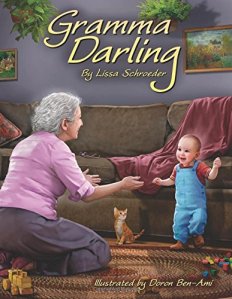
Gramma Darling by Lissa Schroeder

Gramma Darling

by Lissa Schroeder

Publisher: Outskirts Press

ISBN: 978-1478757900

Synopsis*:

It is truly extraordinary, the difference one woman can make in the life of a child. Beautifully written and stunningly illustrated, this delightful book for children, parents, and grandparents paints a nostalgic picture of unhurried summer days at a dear grandmother’s house. Seen and felt through the eyes of a child, every discovery is full of innocence and wonder; from an attic brimming with treasures to running through the fields at twilight catching fireflies. You will laugh and remember your own childhood and feel as though you are there sharing in all the small adventures of her little world; the baby birds, the gardening, the stormy days, and bedtime baths. And through it all, in the background, is Gramma Darling and her laughter. You sense the atmosphere of nurturing, protection, and worth that she provides; and far more importantly, you get a glimpse into the wisdom of a woman whose genuine genius for simply loving, inspires wholehearted lifetime devotion. It will leave you uplifted and looking for ways to spend quality time with the little ones in your own life.

Critique:

Schroeder’s reminiscences of childhood days spent at her grandmother’s house make a wonderful picture book. Whether it is the memory of playing in the enclosed front porch during a rain storm while Gramma works at her sewing machine, or Gramma tucking kids in at the end of another long summer day, the memories are full of love and warmth. Anyone lucky enough to have a grandmother like Gramma Darling will feel an instant kinship with the remembrance of delicious desserts made with lots of love or the safety of performing a song or skit knowing that she is always there to applaud. The circular nature of the story is a reflection of the “circle of life,” with the book opening on the scene of a grandchild just learning to walk across the rug and into Gramma’s arms, and closing with a similar scene -but this time with a great-grandchild toddling into those arms.

Doron Ben-Ami’s illustrations are so clear and crisp readers may double-check to make sure that they are not really looking at photographs. The happiness on the children’s faces as they explore in Gramma’s yard, the pleasure on her face as she watches them eat her homemade pie, and the love beaming from her smile as she waits for those hesitant steps to carry her grandchild across the room and into her arms are all captured perfectly. This is a book that will become a family tradition among readers. And what’s better than snuggling in a grandmother’s lap for a read-aloud? (Although offering the recipe for Gramma Darling’s Chocolaty Cherry Cake is also very nice.)

reviewed by Suzanne Costner at The Fairview Review ]

Here’s what other reviewers are saying:

Remember Grandma and how she was a second Momma to you at times. I remember spending so much time with Grandma especially on the weekends. She lived down the street from us. She had such an influence on me and my sister. This book by Ms Schroeder is simply a loving book that will bring back so many good memories of your own Grandma. The story is based on actual memories. It is the author’s way of honoring a wondering, inspiring and influential person in her life. I remember going to Grandma’s on Saturday. First it was the day you went to town and the grocery store. What a thrill it was when Grandma would take you to Kresgee’s Five and Dime Store and you would get a lemonade at the soda fountain. Then after shopping you would go home and the afternoon was for baking. What wonderful pastries, cookies and treats. This book will take you through the author’s wonderful memories of a childhood spent with Grandma. You.as the reader, will relate so much to this wonderful story of times past, but times fondly remembered. You’ll remember how much Grandma loved you and you definitely will feel it as you turn these pages. Along with the story are some lovely illustrations, simply lovely. At the end of the book is the recipe for Gramma Darling’s Chocolaty Cherry Cake. I tried it and it is yummy. This is a wonderful book to add to a child’s bookshelf and a must for adults also.

– Amazon Reviewer gayle pace

Author Lissa Schroeder has written a beautiful book about her beloved grandmother entitled Gramma Darling. She takes us back to the time when she was young and enjoyed many happy visits with her gramma at her house in a little town in Minnesota. The story is lovingly told and will take you back to your youth if you have ever played in trees, caught fireflies, helped your grandma bake pies or snuggled under a warm quilt in your grandma’s old house with a creaky step! If all children in the world could enjoy the kind of visits this author had with her grandma, there is no doubt the world would be a much better place. And while the story is good and will sweep you and your children away to Schroeder’s life as a child, what set this book apart are the illustrations. They are quite simply some of the best I have even seen and they breathe life into the book on every page. If it were up to me this book would be nominated for both the Newberry and Caldecott book awards it’s that impressive. Gramma Darling is a wonderful journey you can take with your children, grandchildren or the kids in your classroom. Not only is it an engaging story but a visual feast for the senses. I can whole heartedly recommend this book for children roughly ages ten and under. Five Stars.

– Amazon Reviewer terrylynn

Book Trailer:

* = courtesy of the book’s Amazon book page.


saturday self-published book review

Thanks for reading!  Keep up with the latest in the world of indie and self-published books by watching this space every Saturday!

Self Publishing Advisor

selfpubicon1

Conversations: 7/15/2016

WISE COUNSEL—WITH MUSCLE III

The truism that “Two—and sometimes more—are better than one,” is definitely accurate when coming to marketing anything—especially our books! I, for one, have been quite overwhelmed with the promotion and publicizing of my book which was published last year. SUDDENLY the reality hit me that I was now in the business of selling my book—my product. I’ve been “back-doored” into operating a business that is taking way too much of my time. So, what to do?  Hire and assistant! If I don’t, I’ll burn out and all my creative ideas for the next book will burn UP!

Talking with a few of my author friends, I discovered several things about the Business of Books.

  1. The business WORLD of book publishing and marketing is evolving so rapidly that even the giant traditional publishers and very famous authors cannot keep up with it all.
  2. Most established authors not only have a Marketing Assistant, they have a “marketing team” through their publishing house—multiple minds searching for better ways to sell books.
  3. Self-publishing authors who have published with a self-publishing business often have access to marketing assistance which can include:
    1. Very basic marketing included in a publishing package which sets up a website and sends out a basic press release.
    2. Offers an introduction to Marketing Assistants who are definitely qualified and usually have had experience working with several authors.
  4. Personally self-published authors are “independent” authors with no automatic assistance. The writers I’ve known who have gone down this route usually publish their work for a small niche of people (family or co-workers) and seldom wish to market their work beyond that.

One of my new author friends has been talking to me about hiring a Virtual Marketing Assistant—an Internet Specialist who understands the world of digital marketing. My first response to her was, “This sounds like the same thing as working with a Personal Marketing Assistant. I’m talking with a very intelligent and Internet-savvy gentleman now who has a lot of good references.” She was not impressed by the details I gave her. Her continued arguments have not persuaded me. I much prefer meeting with and/or talking with a real person, rather than a “virtual” one—even though I know there IS a real person behind the typed messages being received.

sales marketing

Bottom line, each author needs to do a bit of research into this concept of finding and hiring a Marketing Assistant, then make your own decision which way to go.  But “go” you must, before you suffer the physical and mental burn out that comes from trying to do what we cannot do well. I’m making my list of pros and cons. Here’s what it looks like:

Pros: I don’t like to research genre outlets. I don’t like doing “cold calls” to bookstores. I don’t like creating group email lists and sending out messages each month. I don’t have time to “refresh” the website every week. And, there are probably more marketing things that could be done, but I don’t know what they are. I know I’m losing income by not doing everything I can to promote my book.

Cons: Adding this assistant to my budget.

Conclusion: If this book is to be successful (financially and being read), it is time to invest in a Marketing Assistant. ⚓︎

RoyaleneABOUT ROYALENE DOYLE: Royalene has been writing something since before kindergarten days and continues to love the process. Through her small business—DOYLE WRITING SERVICES—she brings more than 40 years of writing experience to authors who need “just a little assistance” with completing their projects. This is a nice fit as she develops these blogs for Outskirts Press (OP) a leading self-publisher, and occasionally accepts a ghostwriting project from one of their clients. Her recent book release (with OP) titled FIREPROOF PROVERBS, A Writer’s Study of Words, is already receiving excellent reviews including several professional writer’s endorsements given on the book’s back cover.  

Royalene’s writing experience grew through a wide variety of positions from Office Manager and Administrative Assistant to Teacher of Literature and Advanced Writing courses and editor/writer for an International Christian ministry. Her willingness to listen to struggling authors, learn their goals and expectations and discern their writing voice has brought many manuscripts into the published books arena.

In Your Corner : Summer Goals (Pt 2)

A Question of Energy

Last week, I started this blog series on summer goals by revealing mine (to write, and to structure my writing … loosely at least).  Everyone has different needs and goals in the summer, however, because every author’s life looks radically different from the next person’s.  One thing remains constant, however:

It takes energy to write.

And in the summertime, that energy is a complicated thing to channel.  On the one hand, the days are longer.  More daylight means more time to write (or the illusion of more time) because there are more hours in the day to take care of the basic what-have-yous of summer life, including mowing the lawn and going for an evening ramble through the neighborhood.  More time outside in that daylight equates to more Vitamin D (or so my family doctor tells me), and more Vitamin D means an uptick in mood and–you guessed it–energy!

welding energy

So far, so good.

But there’s trouble in paradise.  (There always is.  Ask John Milton.)  Just because we have more energy and (the illusion of) more time in summer, we also have an increase in demands.  You heard me: the myth of a languid summer is one we absorb from a literary canon in which people go for long vacations, long walks on the beach, languid soaks in the hot tub, or whatever else they can dream up.  The problem with this is: most of us have to work.  The world looked a little different when we were still in school (and when resumes for college didn’t mandate packing our high school schedules with summer programs), and the world still looks rather different for people of means.  But the fact of the matter is, most self-publishing authors aren’t middle schoolers or millionaires.

Statistically speaking, most self-publishing authors (that we know of, at least) are of an age and demographic that they both work and have families to wrangle.  And while jobs are as diverse as the people who work them, I can safely say that my own job is busiest in summer–by far.  And with school out for the summer, wrangling kids to and from various social activities, sporting events, and so forth occupies a lot of my (supposedly languorous) time.

I guess what I’m trying to say is this:

Protect Your Time. Treat Energy as a Finite, Precious Resource.

What does your energy budget look like?  When are you at your absolute best?  That’s the time you want to set aside to write.  For me, it’s the early morning hours.  Now, I know my basic instinct is to try and knock out everything on my to-do list first thing as soon as I wake up, to leave “more time for things I love later,” but the problems with this theory are that–

  1. the to-do list never ends;
  2. I burn myself out by midday; and
  3. I never feel like starting something new at the end of the day, when everything is quiet at last.

If I’m not careful, my best hours are over and gone before I know it.  Even worse, if I start prioritizing a to-do list instead of my writing, I end up being not much of a writer.  Luckily, my family understands this and they want to support me in my writing, so every evening as we negotiate the details for the next day, we make sure to set aside a little time first thing in the morning for me to do the thing I love–so that I can better be the person they love (and let’s face it, be a more happy and loving person in general).  I also have to remember that sleeping and eating well are vital components to feeling well and retaining energy throughout the day.  I know we all feel the pull towards strong coffee and starch after the lunch hour when our blood sugar is crashing–but I’m here to tell you we can do better, together.  More on that later!

You are not alone. ♣︎

ElizabethABOUT ELIZABETH JAVOR: With over 18 years of experience in sales and management, Elizabeth Javor works as the Manager of Author Services for Outskirts Press. The Author Services Department is composed of knowledgeable publishing consultants, pre-production specialists, customer service reps and book marketing specialists; together, they all focus on educating authors on the self-publishing process to help them publish the book of their dreams. Whether you are a professional looking to take your career to the next level with platform-driven non-fiction or a novelist seeking fame, fortune, and/or personal fulfillment, Elizabeth Javor can put you on the right path.